TESTING ELECTRONIC
COMPONENTS
RECAP
CAN YOU GIVE THE BASIC ELECTRICAL TERMS?
OBJECTIVES OF THE LESSON
1. IDENTIFY THE PARTS OF AN ANALOGUE MULTI
TESTER;
2. MEASURE SOME ELECTRONIC COMPONENTS; AND
3. PRACTICE SAFETY WHILE MEASURING ELECTRONIC
COMPONENTS.
WHY DO WE NEED TO CONDUCT THE TEST OF
ELECTONIC COMPONENTS?
• PROTECTS AGAINST THE RISK OF ELECTRICAL SHOCK
• HELPS INCREASE THE SHELF LIFE, PERFORMANCE, ACCURACY
AND EFFICIENCY OF DEVICES
• TO ENSURE THE SAFETY OF THE PEOPLE IN THE WORKPLACE
COMING INTO CONTACT WITH THE APPLIANCE, WHILE ALSO
MINIMIZING THE RISK OF AN ELECTRICAL HAZARD.
WHAT DO WE TEST?
WHAT DO WE USE IN TESTING ELECTRONIC
COMPONENTS?
WHAT IS MULTI- TESTER
multimeter or a multi-tester- also known as a volt/ohm
meter or vom.
-an electronic measuring instrument that combines
several measurement functions in one unit.
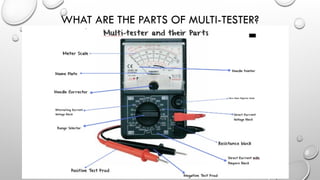
WHAT ARE THE PARTS OF MULTI-TESTER?
INITIAL STEPS IN USING ANALOG MULTI TESTER
‐
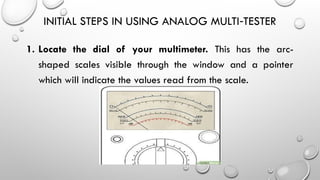
1. Locate the dial of your multimeter. This has the arc-
shaped scales visible through the window and a pointer
which will indicate the values read from the scale.
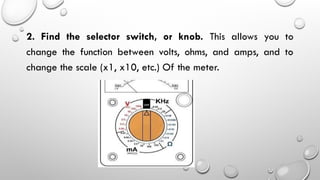
2. Find the selector switch, or knob. This allows you to
change the function between volts, ohms, and amps, and to
change the scale (x1, x10, etc.) Of the meter.
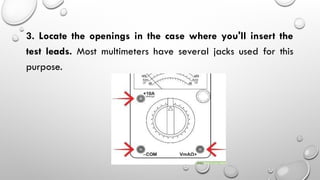
3. Locate the openings in the case where you'll insert the
test leads. Most multimeters have several jacks used for this
purpose.
4. Locate the test leads. There should be two test leads or
probes. Generally, one is black and the other red. These are
used to connect to whatever device you're planning on testing
and measuring.
5. Find the battery and fuse
compartment. This is usually
found on the back but is also
sometimes on the side of some
models. This holds the fuse (and
possibly a spare), and the
battery that supplies power to
the meter for resistance tests.
6. Find the zero adjustment
knob. This is a small knob usually
located near the dial that is
labeled "ohms adjust," "0 adj," or
something similar. This is used only
in the ohms or resistance range,
while the probes are shorted
together (touching each other).
MEASURING RESISTANCE
LETS CHECK YOUR KNOWLEDGE!!
Meter Scale
Name Plate
Needle Corrector
Alternating Current
Voltage Block
Range Selector
Positive Test Prod Negative Test Prod
Direct Current Mille
Voltage Block
Resistance Block
Direct Current Voltage
Block
Zero Claws Register
Knob
Needle Pointer

CSS- Quarter 4 TESTING ELECTRONIC COMPONENTS.pptx

  • 1.
  • 2.
  • 3.
    CAN YOU GIVETHE BASIC ELECTRICAL TERMS?
  • 4.
    OBJECTIVES OF THELESSON 1. IDENTIFY THE PARTS OF AN ANALOGUE MULTI TESTER; 2. MEASURE SOME ELECTRONIC COMPONENTS; AND 3. PRACTICE SAFETY WHILE MEASURING ELECTRONIC COMPONENTS.
  • 5.
    WHY DO WENEED TO CONDUCT THE TEST OF ELECTONIC COMPONENTS? • PROTECTS AGAINST THE RISK OF ELECTRICAL SHOCK • HELPS INCREASE THE SHELF LIFE, PERFORMANCE, ACCURACY AND EFFICIENCY OF DEVICES • TO ENSURE THE SAFETY OF THE PEOPLE IN THE WORKPLACE COMING INTO CONTACT WITH THE APPLIANCE, WHILE ALSO MINIMIZING THE RISK OF AN ELECTRICAL HAZARD.
  • 6.
  • 7.
    WHAT DO WEUSE IN TESTING ELECTRONIC COMPONENTS?
  • 8.
    WHAT IS MULTI-TESTER multimeter or a multi-tester- also known as a volt/ohm meter or vom. -an electronic measuring instrument that combines several measurement functions in one unit.
  • 9.
    WHAT ARE THEPARTS OF MULTI-TESTER?
  • 10.
    INITIAL STEPS INUSING ANALOG MULTI TESTER ‐ 1. Locate the dial of your multimeter. This has the arc- shaped scales visible through the window and a pointer which will indicate the values read from the scale.
  • 11.
    2. Find theselector switch, or knob. This allows you to change the function between volts, ohms, and amps, and to change the scale (x1, x10, etc.) Of the meter.
  • 12.
    3. Locate theopenings in the case where you'll insert the test leads. Most multimeters have several jacks used for this purpose.
  • 13.
    4. Locate thetest leads. There should be two test leads or probes. Generally, one is black and the other red. These are used to connect to whatever device you're planning on testing and measuring.
  • 14.
    5. Find thebattery and fuse compartment. This is usually found on the back but is also sometimes on the side of some models. This holds the fuse (and possibly a spare), and the battery that supplies power to the meter for resistance tests.
  • 15.
    6. Find thezero adjustment knob. This is a small knob usually located near the dial that is labeled "ohms adjust," "0 adj," or something similar. This is used only in the ohms or resistance range, while the probes are shorted together (touching each other).
  • 16.
  • 28.
    LETS CHECK YOURKNOWLEDGE!!
  • 29.
    Meter Scale Name Plate NeedleCorrector Alternating Current Voltage Block Range Selector Positive Test Prod Negative Test Prod Direct Current Mille Voltage Block Resistance Block Direct Current Voltage Block Zero Claws Register Knob Needle Pointer

Editor's Notes

  • #8 a typical multimeter may include features such as the ability to measure voltage, current and resistance. multimeters may use analog or digital circuits— analog multimeters and digital multimeters (often abbreviated dmm or dvom.)