FUNCTIONS OF FARM
IRRIGATION SYSTEMS
What is the function of farm
irrigation systems?
The primary function of farm irrigation
system is to supply crops with
irrigation water in the quantities and at
the time it is need.
Specific functions:
• Diverting water from the water source.
• Conveying it to individual fields within the
farm
• Distributing it within each field
• Providing a means for measuring and
regulating flows
Reasons for an Irrigation
Plan
• A project plan enables the designer to
layout the irrigation system in the most
cost effective way. The plan is used to
generate a material list and to evaluate
the anticipated project cost.
• The plan provides step by stem
information on system installation.
Information on crop spacing, sprinklers,
pumping requirements, pipeline sizes
and lengths should be included on the
plan.
• Specification design standards and work
schedules as set out a plan form the
basis of any contractual agreements
between the installation contractor and
the farmer.
• The plan provides a record for further
reference. It can be used for overall farm
planning and identifies limits of
expansion potential.
Essential Features of a
Plan
TOPOGRAPHIC DATA
• The field shape must be accurately
drawn showing pertinent obstructions,
features and evaluation details.
WATER SOURCE CAPACITY
• The water supply must be clearly
indicated showing location and available
capacity.
Depending On Water Source, A
Well Log Or Water License
Must Accompany The
Irrigation Plan
SOIL AND CROP CHARACTERISTICS
• Soil and crop limitations must be
accounted for reduce runoff and deep
percolation by mismanagement of the
irrigation system.
DESIGN PARAMETERS
• Soil water holding capacity, maximum
application rate and climatic data must
be used to select the correct irrigation
system design.
DESIGN DATA
• The nozzle selected, operating pressure,
discharged rate and sprinkler spacing
must all be shown on the plan.
Different Designs of
Irrigation System
•Surface Irrigation
•Sprinkler Irrigation
•Drip or Trickle Irrigation
Surface Irrigation- water is
applied to the field in the
either the controlled or
uncontrolled manner.
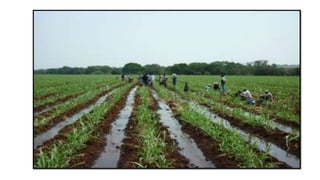
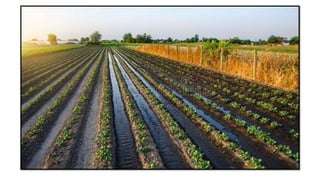
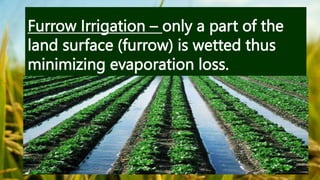
Furrow Irrigation – only a part of the
land surface (furrow) is wetted thus
minimizing evaporation loss.
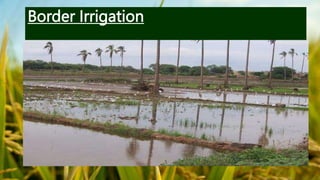
Border Irrigation
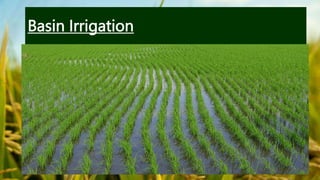
Basin Irrigation
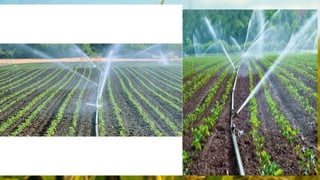
Sprinkler Irrigation- water is
ideal in areas where water is
scare. A sprinkler system
conveys water through pipes
and applies it with a minimum
amount of losses
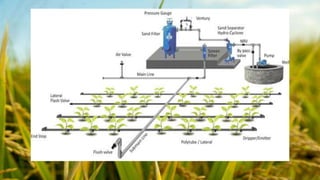
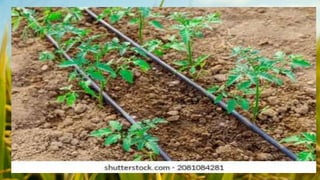
Drip or Tickle Irrigation- and
involves dripping water onto the
soil at very low rates (2-20
litres/hour) from a system of small
diameter plastic pipes fitted with
outlets called emitters or drippers.
Advantages
• Water is applied directly to the crop
• Water is conserved
• Weeds are controlled because only the
places getting water can grow weeds
• There is a low pressure system
• There is slow rate of water application
somewhat matching the consumptive use.
Application rate can be as low as 1-12 l/hr.
• There is reduce evaporation, only potential
transpiration is considered.
• There is no need for a drainage system.
Self-Check

IRRIGATION SYSTEMS.pptx

  • 1.
  • 2.
    What is thefunction of farm irrigation systems?
  • 3.
    The primary functionof farm irrigation system is to supply crops with irrigation water in the quantities and at the time it is need.
  • 4.
    Specific functions: • Divertingwater from the water source. • Conveying it to individual fields within the farm • Distributing it within each field • Providing a means for measuring and regulating flows
  • 5.
    Reasons for anIrrigation Plan
  • 6.
    • A projectplan enables the designer to layout the irrigation system in the most cost effective way. The plan is used to generate a material list and to evaluate the anticipated project cost.
  • 7.
    • The planprovides step by stem information on system installation. Information on crop spacing, sprinklers, pumping requirements, pipeline sizes and lengths should be included on the plan.
  • 8.
    • Specification designstandards and work schedules as set out a plan form the basis of any contractual agreements between the installation contractor and the farmer.
  • 9.
    • The planprovides a record for further reference. It can be used for overall farm planning and identifies limits of expansion potential.
  • 10.
  • 11.
    TOPOGRAPHIC DATA • Thefield shape must be accurately drawn showing pertinent obstructions, features and evaluation details.
  • 12.
    WATER SOURCE CAPACITY •The water supply must be clearly indicated showing location and available capacity.
  • 13.
    Depending On WaterSource, A Well Log Or Water License Must Accompany The Irrigation Plan
  • 14.
    SOIL AND CROPCHARACTERISTICS • Soil and crop limitations must be accounted for reduce runoff and deep percolation by mismanagement of the irrigation system.
  • 15.
    DESIGN PARAMETERS • Soilwater holding capacity, maximum application rate and climatic data must be used to select the correct irrigation system design.
  • 16.
    DESIGN DATA • Thenozzle selected, operating pressure, discharged rate and sprinkler spacing must all be shown on the plan.
  • 17.
  • 18.
  • 19.
    Surface Irrigation- wateris applied to the field in the either the controlled or uncontrolled manner.
  • 22.
    Furrow Irrigation –only a part of the land surface (furrow) is wetted thus minimizing evaporation loss.
  • 23.
  • 24.
  • 25.
    Sprinkler Irrigation- wateris ideal in areas where water is scare. A sprinkler system conveys water through pipes and applies it with a minimum amount of losses
  • 27.
    Drip or TickleIrrigation- and involves dripping water onto the soil at very low rates (2-20 litres/hour) from a system of small diameter plastic pipes fitted with outlets called emitters or drippers.
  • 30.
    Advantages • Water isapplied directly to the crop • Water is conserved • Weeds are controlled because only the places getting water can grow weeds • There is a low pressure system
  • 31.
    • There isslow rate of water application somewhat matching the consumptive use. Application rate can be as low as 1-12 l/hr. • There is reduce evaporation, only potential transpiration is considered. • There is no need for a drainage system.
  • 32.

Editor's Notes

  • #8 Pertinent obstructions such as roads, trees, gas, oil, water, telephone or transmission lines must be also be indicated.
  • #14 Irrigation reservoirs also require water management branch licensing.
  • #25 In basin irrigation, water is flooded in wider areas The area is normally lat
  • #27 Fully portable system Semi portable system Fully permanent system