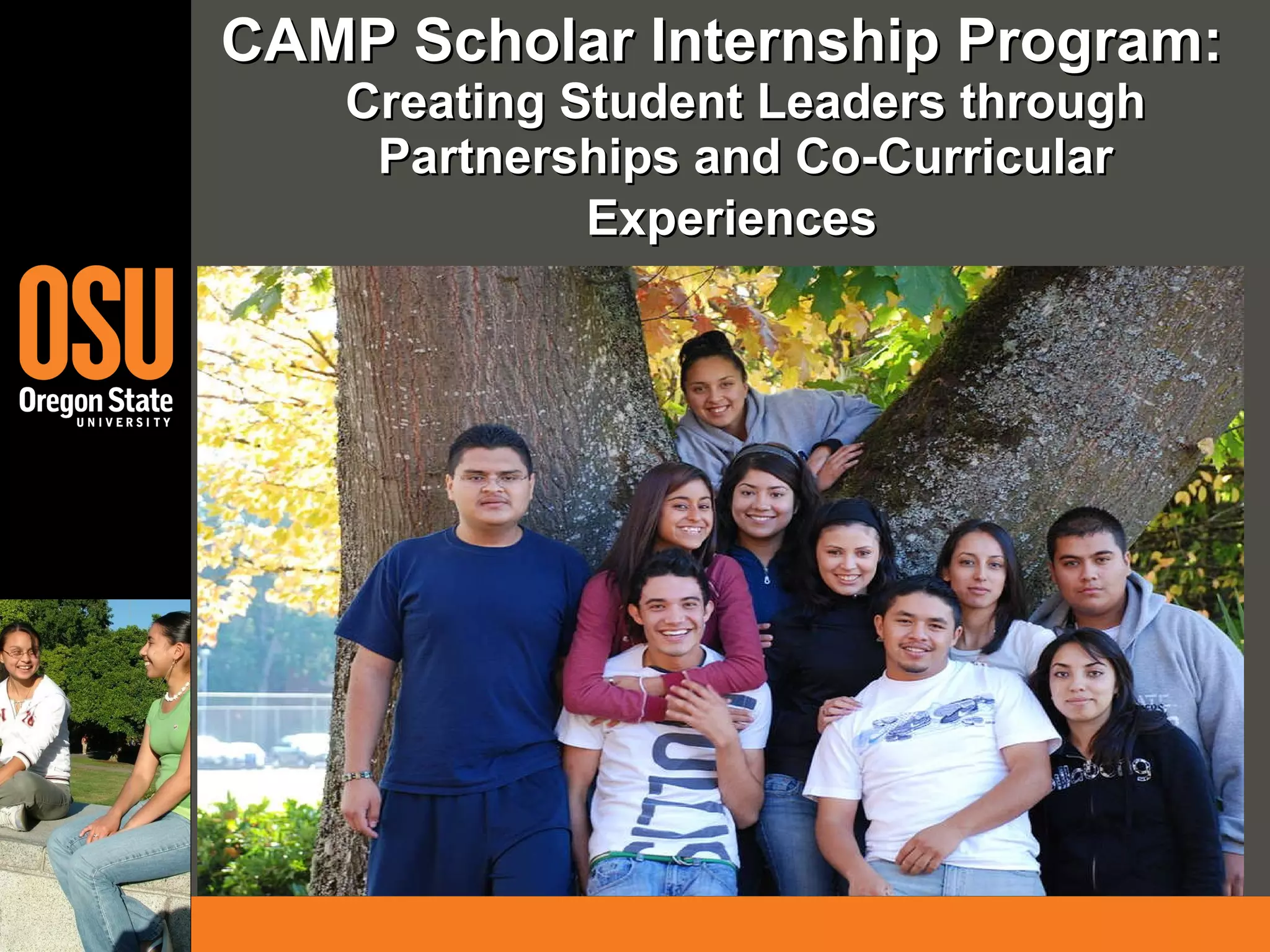
CAMP Scholar Internship Program:   Creating Student Leaders through Partnerships and Co-Curricular Experiences
Overview Introduction History of program in the CAMP grant Our collaborative partnership Theory – connection to new model Old model vs. new model Details of new model  Success and challenges Assessment of the new model  Implications for the profession
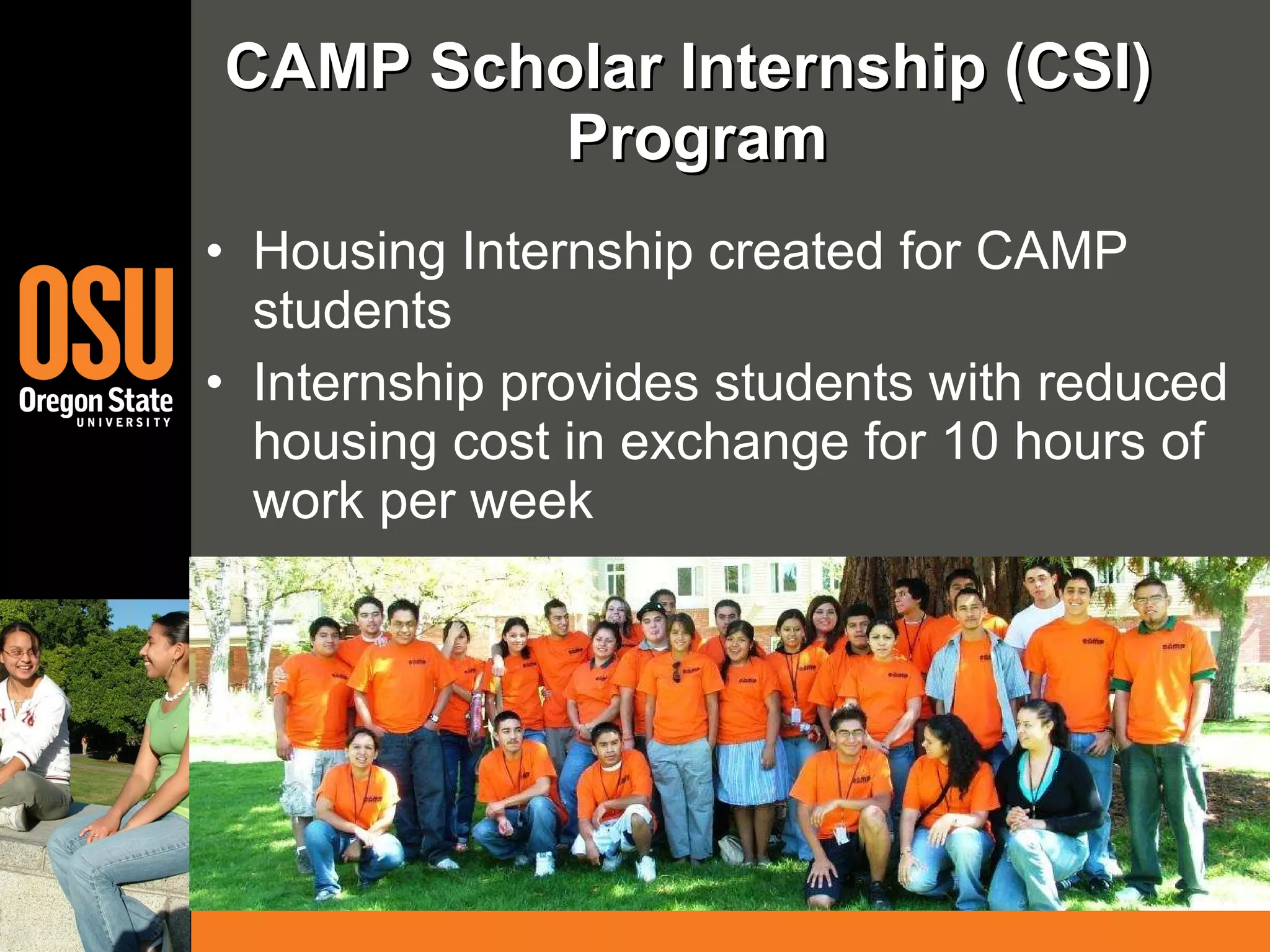
CAMP Scholar Internship (CSI)  Program Housing Internship created for CAMP students Internship provides students with reduced housing cost in exchange for 10 hours of work per week
HISTORY Original OSU grant established in 1982. OSU refunded in 2004. The internship program was written into our grant in  partnership  with University Housing and  Dining Services (UHDS) OSU CAMP grant currently in Y5 Interns in the last 5 years: 32  Intern Mentors in the last 5 years: 3 Model was redesigned for year 5
Theory Marginality and Mattering  (Schlossberg, 1989) Marginal: A feeling of not belonging or that we do not matter Dimensions of Mattering: Importance Ego-Extension (Our accomplishments or failures will impact others feelings) Dependence (feeling needed) Appreciation
Theory  Continued ..   Involvement theory (Astin, 1984) Involvement is the amount of physical and psychological energy that the student devotes to an academic experience.  Involvement refers to behavior.  What they do versus what they think or feel.  Involvement is in both time and seriousness/attention given to an activity.  The more a student puts into an activity the more they will get out of it.
Theory  Continued… Challenge and Support Theory  (Stanford,1966) A student’s success is dependent largely on the degree of challenge and support that exists in the student’s university environment whereby too much challenge is overwhelming and too little challenge is debilitating. If a student is not challenged, the student may retreat readiness of being challenged. Students strive to restore equilibrium.
Leading Questions How do we create environments or programs that help students feel that they matter?  How do we get students involved? How do we a create a program that challenges our students in their growth but also sufficiently supports them?
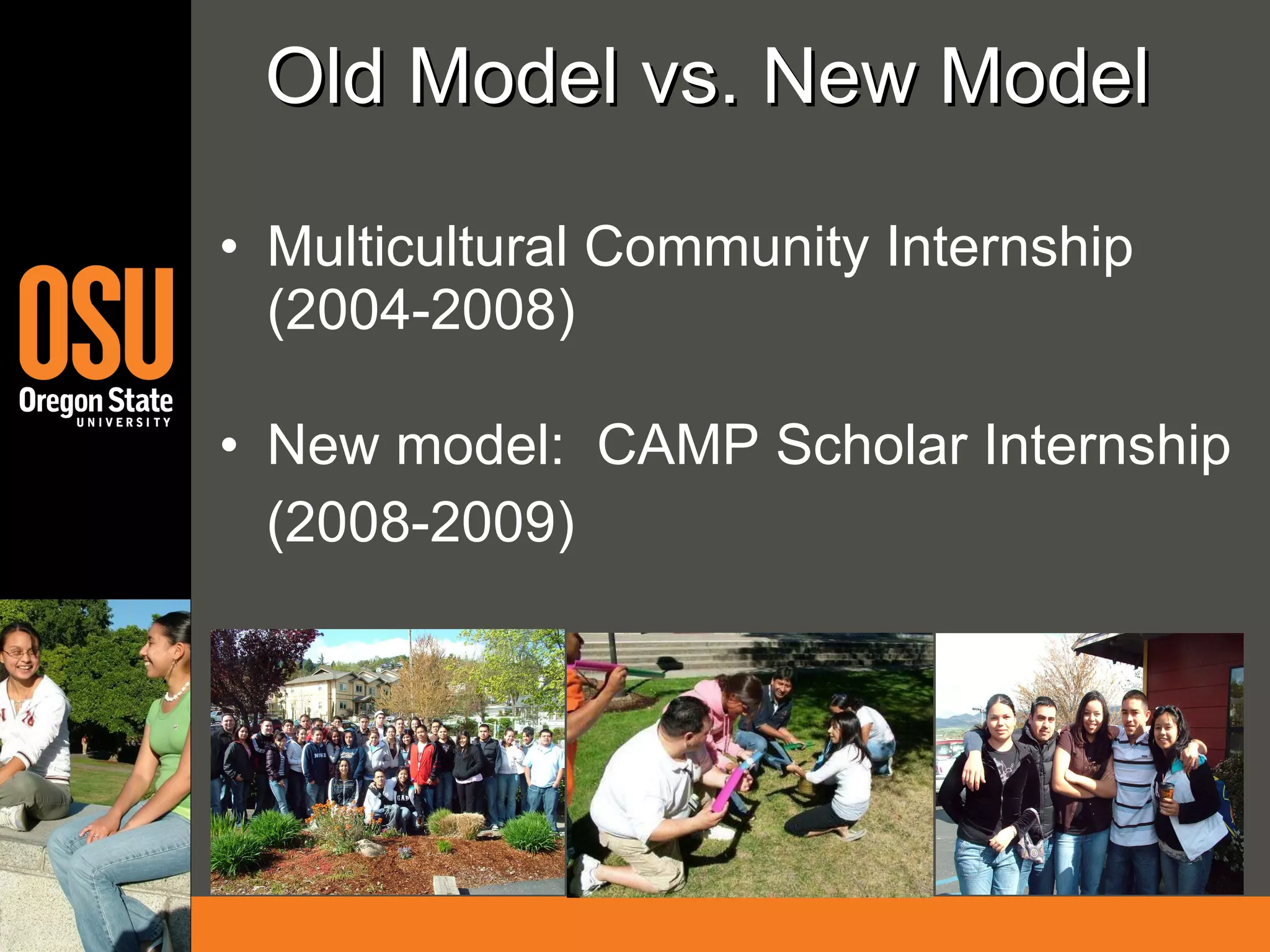
Old Model vs. New Model Multicultural Community Internship (2004-2008) New model:  CAMP Scholar Internship (2008-2009)
Details of New Model Compensation for the program Internships – new structure Curriculum – focus on tools and identity  Capstone project Clear learning outcomes*
Details  continued.. Learning Outcomes: Identity development Practice and experience as a professional Explore leadership qualities Learn to develop and identify resources Academic success
Success and Challenges MCI Mentor perspective  on the  old model: Placed as the cultural resource “go to person” in the residence hall No office hours, students worked on their own.  No structured time.  Ratio of 10 to 1 for support from their mentor Students had an opportunity to meet lots of people, learn resources, and build relationship with residence hall staff Students had the opportunity to learn and research other cultures
Success and Challenges Successes Permanent home Opportunities for mentorship from professionals in University Housing and Dining Opportunity to gain work experience in an office setting – also builds confidence for future positions Exploring identity –Understanding being a student of color at PWI Tools for dealing with white privilege and racism  Opportunity to explore a professional career Students will leave program with a portfolio
Success and Challenges Challenges Site Supervisors have many other obligations  Students resistance to information Short-term exploration of internships New program – not sure what will come up under new model
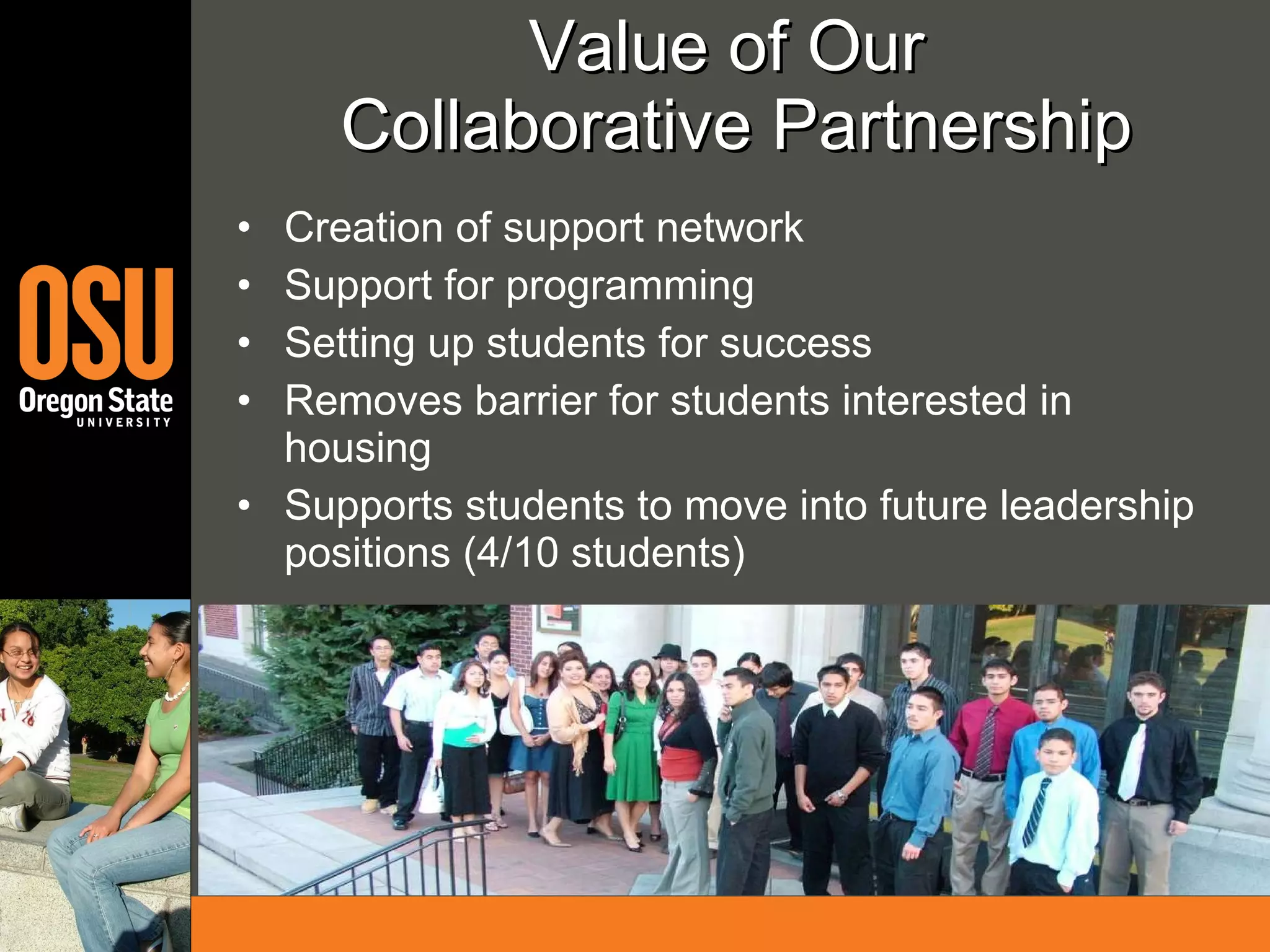
Value of Our  Collaborative Partnership Creation of support network Support for programming  Setting up students for success Removes barrier for students interested in housing Supports students to move into future leadership positions (4/10 students)
Why set up an internship? Provides students with a valuable residential experiences Provides students with skills to address oppression Professional skills to use in a work setting Gives students a sense of belonging (Mattering) and creates a place of involvement Reduce financial stress Model is a strategy for retention
Key to Success – Creating Collaborative Relationships Building relationships with colleagues across campus Find opportunities for programming or serving on a committee – opportunities to ask how to work together? Meeting regularly – to maintain relationships Getting to know your campus and resources that can help your program or vice versa
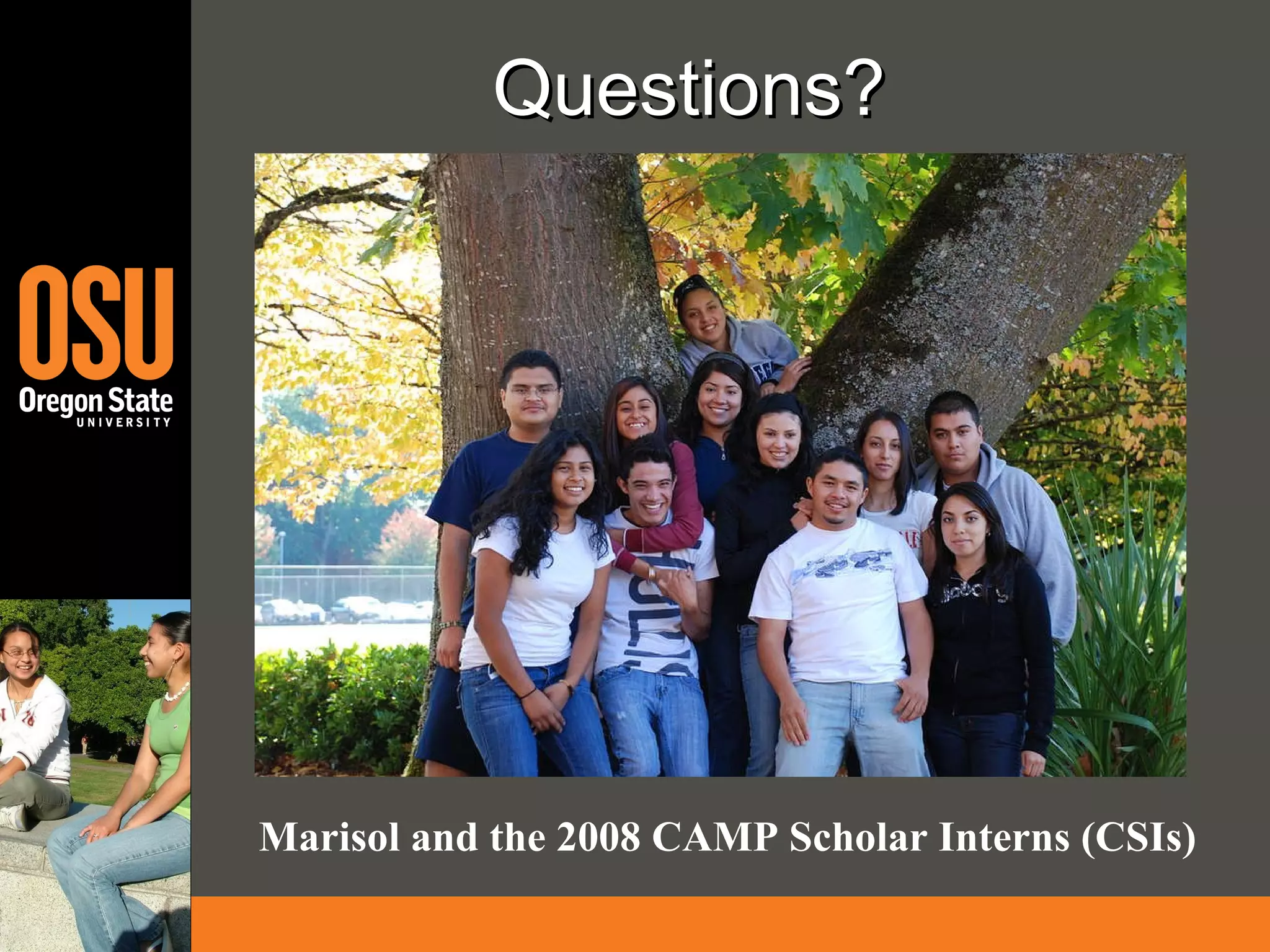
Questions?   Marisol and the 2008 CAMP Scholar Interns (CSIs)

csiiiiiiii

  • 1.
    CAMP Scholar InternshipProgram: Creating Student Leaders through Partnerships and Co-Curricular Experiences
  • 2.
    Overview Introduction Historyof program in the CAMP grant Our collaborative partnership Theory – connection to new model Old model vs. new model Details of new model Success and challenges Assessment of the new model Implications for the profession
  • 3.
    CAMP Scholar Internship(CSI) Program Housing Internship created for CAMP students Internship provides students with reduced housing cost in exchange for 10 hours of work per week
  • 4.
    HISTORY Original OSUgrant established in 1982. OSU refunded in 2004. The internship program was written into our grant in partnership with University Housing and Dining Services (UHDS) OSU CAMP grant currently in Y5 Interns in the last 5 years: 32 Intern Mentors in the last 5 years: 3 Model was redesigned for year 5
  • 5.
    Theory Marginality andMattering (Schlossberg, 1989) Marginal: A feeling of not belonging or that we do not matter Dimensions of Mattering: Importance Ego-Extension (Our accomplishments or failures will impact others feelings) Dependence (feeling needed) Appreciation
  • 6.
    Theory Continued.. Involvement theory (Astin, 1984) Involvement is the amount of physical and psychological energy that the student devotes to an academic experience. Involvement refers to behavior. What they do versus what they think or feel. Involvement is in both time and seriousness/attention given to an activity. The more a student puts into an activity the more they will get out of it.
  • 7.
    Theory Continued…Challenge and Support Theory (Stanford,1966) A student’s success is dependent largely on the degree of challenge and support that exists in the student’s university environment whereby too much challenge is overwhelming and too little challenge is debilitating. If a student is not challenged, the student may retreat readiness of being challenged. Students strive to restore equilibrium.
  • 8.
    Leading Questions Howdo we create environments or programs that help students feel that they matter? How do we get students involved? How do we a create a program that challenges our students in their growth but also sufficiently supports them?
  • 9.
    Old Model vs.New Model Multicultural Community Internship (2004-2008) New model: CAMP Scholar Internship (2008-2009)
  • 10.
    Details of NewModel Compensation for the program Internships – new structure Curriculum – focus on tools and identity Capstone project Clear learning outcomes*
  • 11.
    Details continued..Learning Outcomes: Identity development Practice and experience as a professional Explore leadership qualities Learn to develop and identify resources Academic success
  • 12.
    Success and ChallengesMCI Mentor perspective on the old model: Placed as the cultural resource “go to person” in the residence hall No office hours, students worked on their own. No structured time. Ratio of 10 to 1 for support from their mentor Students had an opportunity to meet lots of people, learn resources, and build relationship with residence hall staff Students had the opportunity to learn and research other cultures
  • 13.
    Success and ChallengesSuccesses Permanent home Opportunities for mentorship from professionals in University Housing and Dining Opportunity to gain work experience in an office setting – also builds confidence for future positions Exploring identity –Understanding being a student of color at PWI Tools for dealing with white privilege and racism Opportunity to explore a professional career Students will leave program with a portfolio
  • 14.
    Success and ChallengesChallenges Site Supervisors have many other obligations Students resistance to information Short-term exploration of internships New program – not sure what will come up under new model
  • 15.
    Value of Our Collaborative Partnership Creation of support network Support for programming Setting up students for success Removes barrier for students interested in housing Supports students to move into future leadership positions (4/10 students)
  • 16.
    Why set upan internship? Provides students with a valuable residential experiences Provides students with skills to address oppression Professional skills to use in a work setting Gives students a sense of belonging (Mattering) and creates a place of involvement Reduce financial stress Model is a strategy for retention
  • 17.
    Key to Success– Creating Collaborative Relationships Building relationships with colleagues across campus Find opportunities for programming or serving on a committee – opportunities to ask how to work together? Meeting regularly – to maintain relationships Getting to know your campus and resources that can help your program or vice versa
  • 18.
    Questions? Marisol and the 2008 CAMP Scholar Interns (CSIs)

Editor's Notes

  • #3 Wendy does first 4, Marisol last 4 points
  • #5 Marisol will do this slide
  • #6 Marisol.
  • #9 Wendy and Marisol?
  • #10 Marisol and Weendy
  • #11 Wendy- * Old model student came up with indv. Learning out comes but there were no program learning outcomes developed.
  • #12 Marisol
  • #13 Wendy
  • #14 Wendy and Marisol
  • #15 Marisol and Wendy.
  • #17 Wendy and Marisol
  • #18 Marisol and Wendy