Service-Learning Big Trees Come From Little Seeds
The Laws of Planting/Reaping = The Laws of Service Learning You have to sow in order to reap You reap what you sow You reap more than you sow
Begin With the End in Mind Why do we plant? Why do we want a service learning program?
First Steps Joined Indiana Campus Compact in 2006 Conducted a “really mini” S-L conference Before 2006, Ivy Tech Columbus had zero classes participating in service-learning The first year as members of ICC, we had  ___  classes perform S-L Most awareness and champions  resulted from personal contact
What is Service-Learning? Common Language – get on this right away! 3 Parts (PAR) Plan Act Reflect 2 Types Direct Indirect
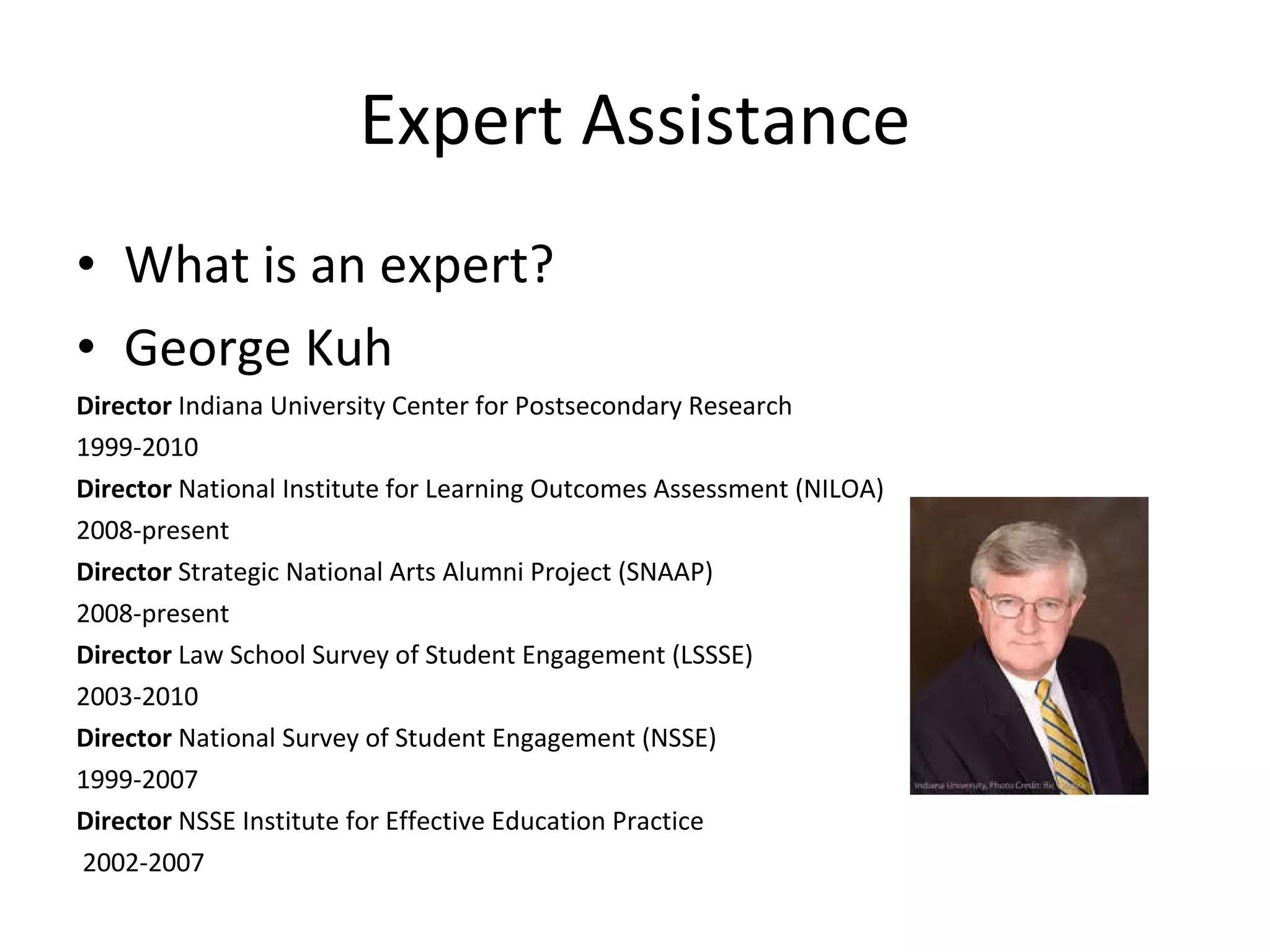
Expert Assistance What is an expert? George Kuh Director  Indiana University Center for Postsecondary Research  1999-2010  Director  National Institute for Learning Outcomes Assessment (NILOA)  2008-present  Director  Strategic National Arts Alumni Project (SNAAP) 2008-present  Director  Law School Survey of Student Engagement (LSSSE) 2003-2010  Director  National Survey of Student Engagement (NSSE)  1999-2007  Director  NSSE Institute for Effective Education Practice 2002-2007
George D. Kuh Ivy Tech Community College 2 nd  Annual Learning College Conference February 14, 2008 Ivy Tech  pictures are “Courtesy of Ivy Tech Community College High Impact Activities  :   What They Are, Why They Work,  and Who Benefits
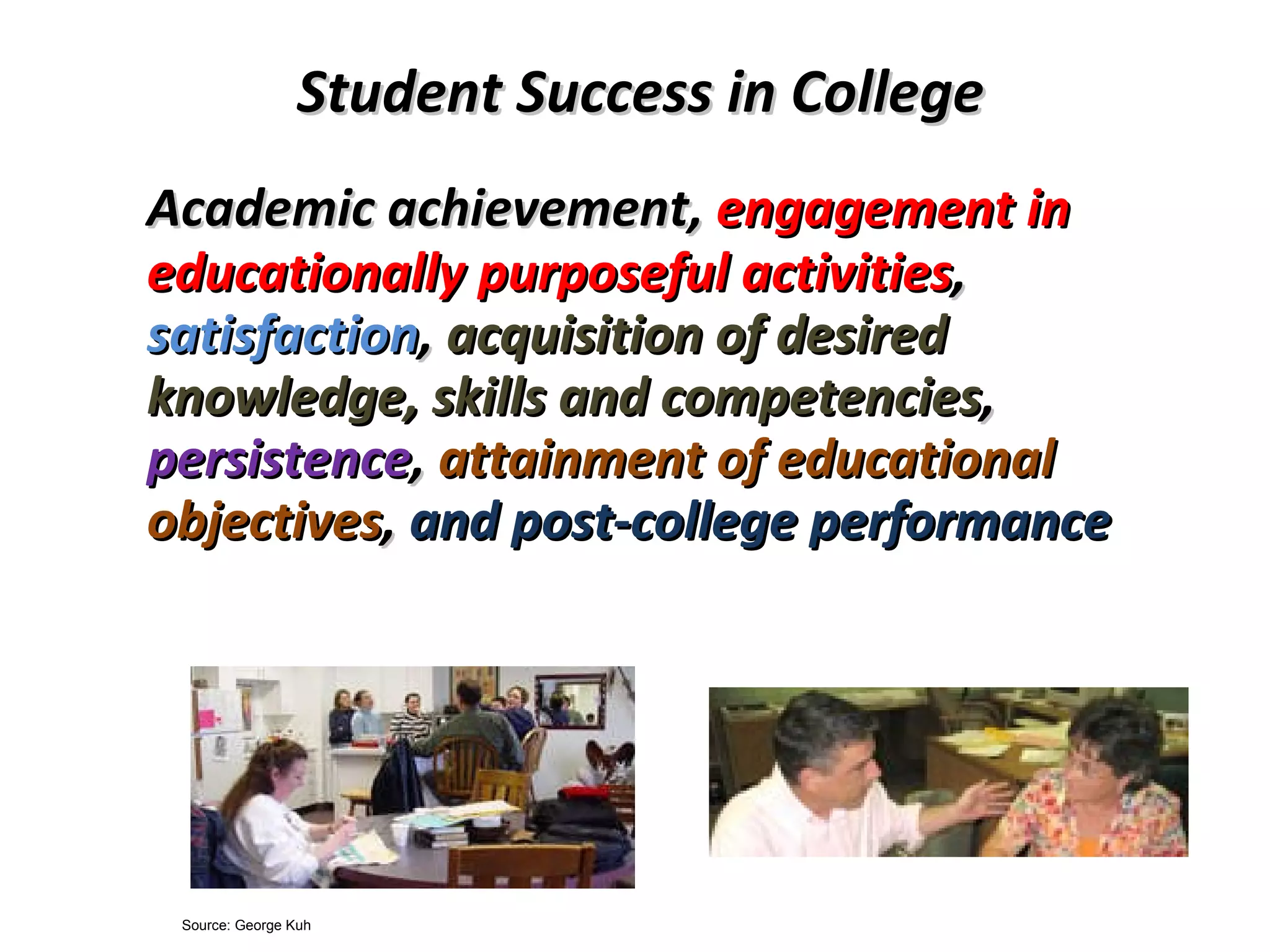
Student Success in College Academic achievement,  engagement in educationally purposeful activities ,  satisfaction ,  acquisition of desired knowledge, skills and competencies ,  persistence ,  attainment of educational objectives ,  and post-college performance   Source: George Kuh
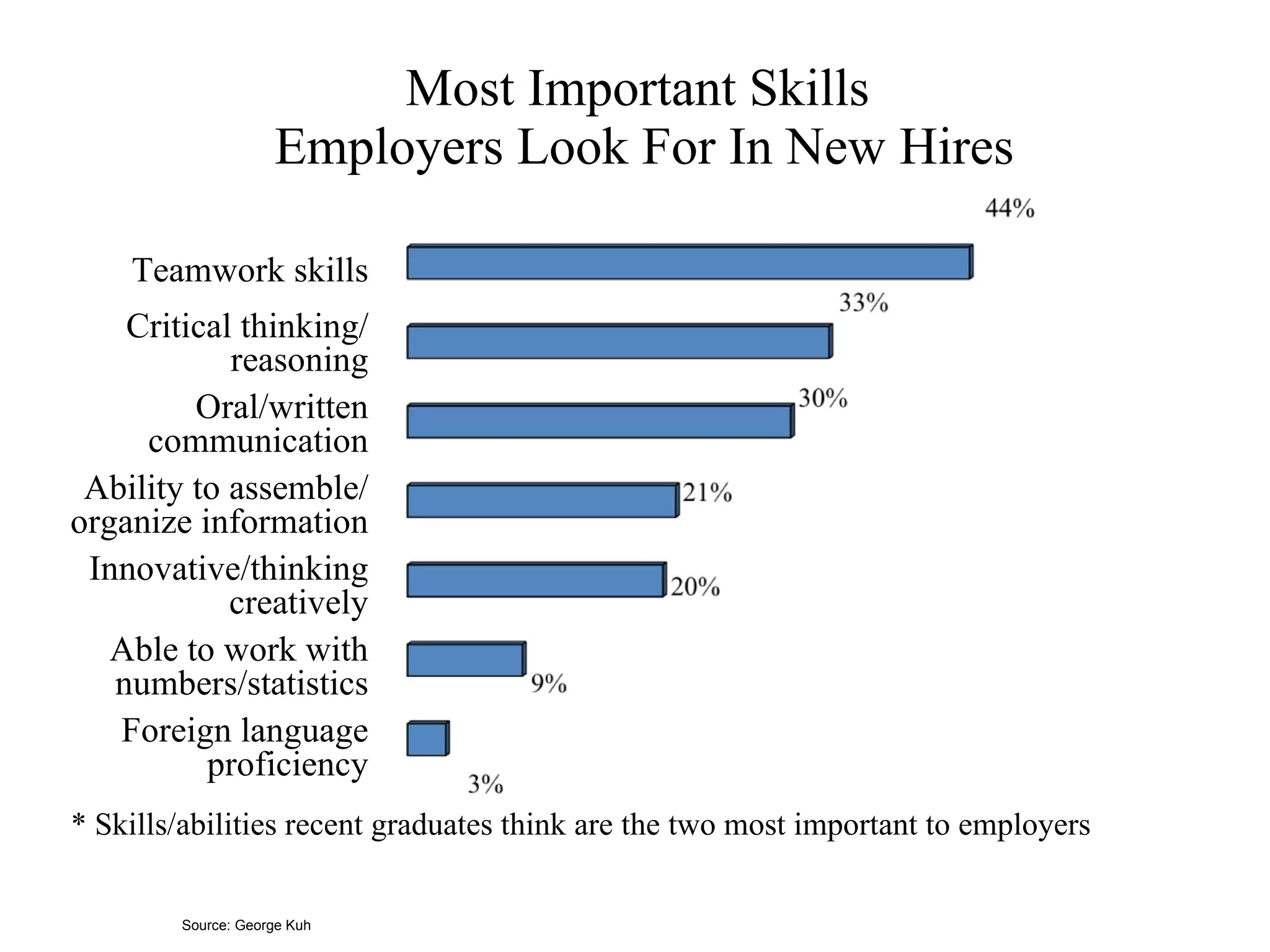
Most Important Skills  Employers Look For In New Hires Teamwork skills Critical thinking/ reasoning Oral/written communication Ability to assemble/ organize information Innovative/thinking creatively Able to work with numbers/statistics Foreign language proficiency * Skills/abilities recent graduates think are the two most important to employers Source: George Kuh
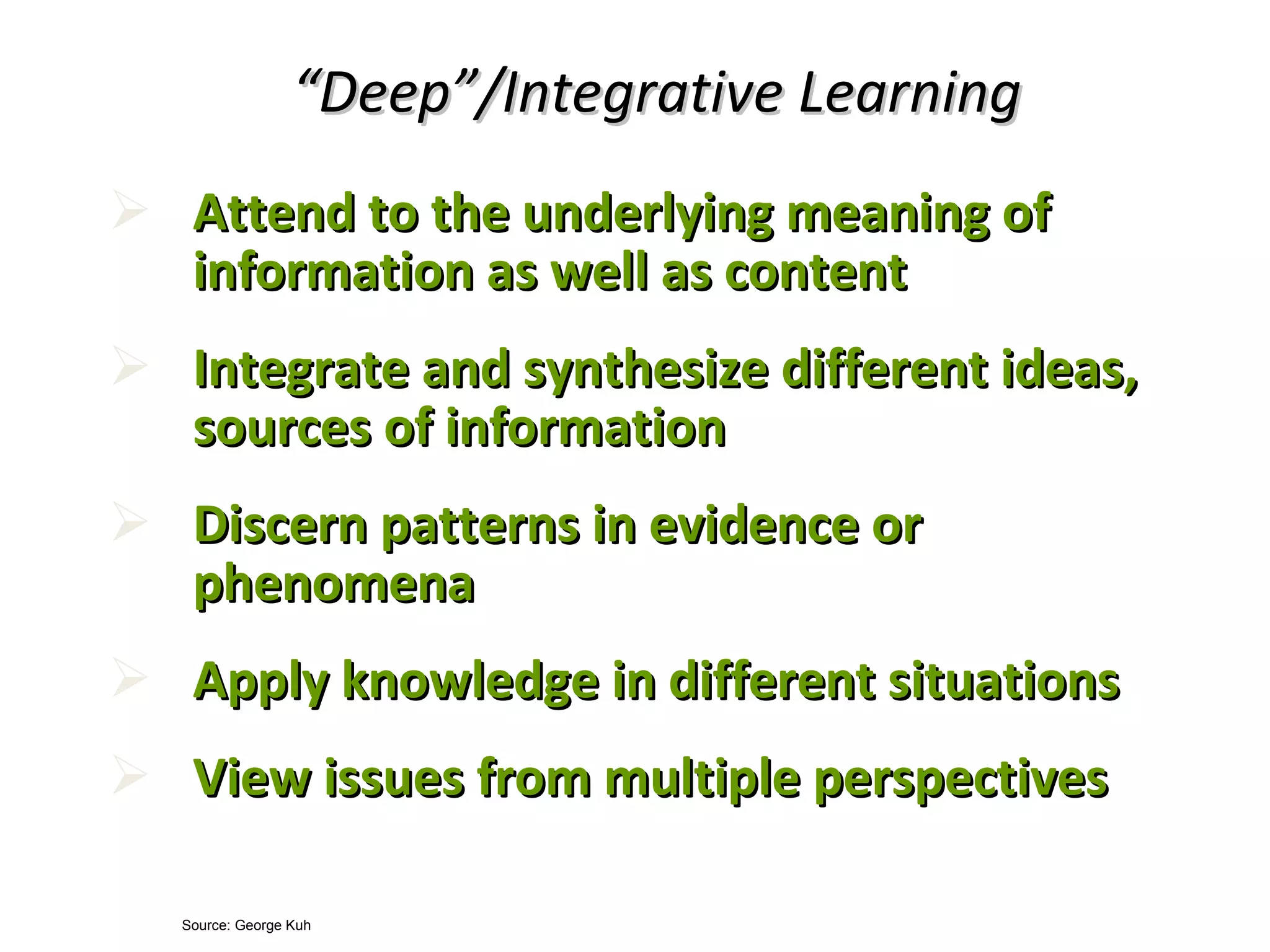
“ Deep”/Integrative Learning Attend to the underlying meaning of information as well as content Integrate and synthesize different ideas, sources of information Discern patterns in evidence or phenomena Apply knowledge in different situations View issues from multiple perspectives Source: George Kuh
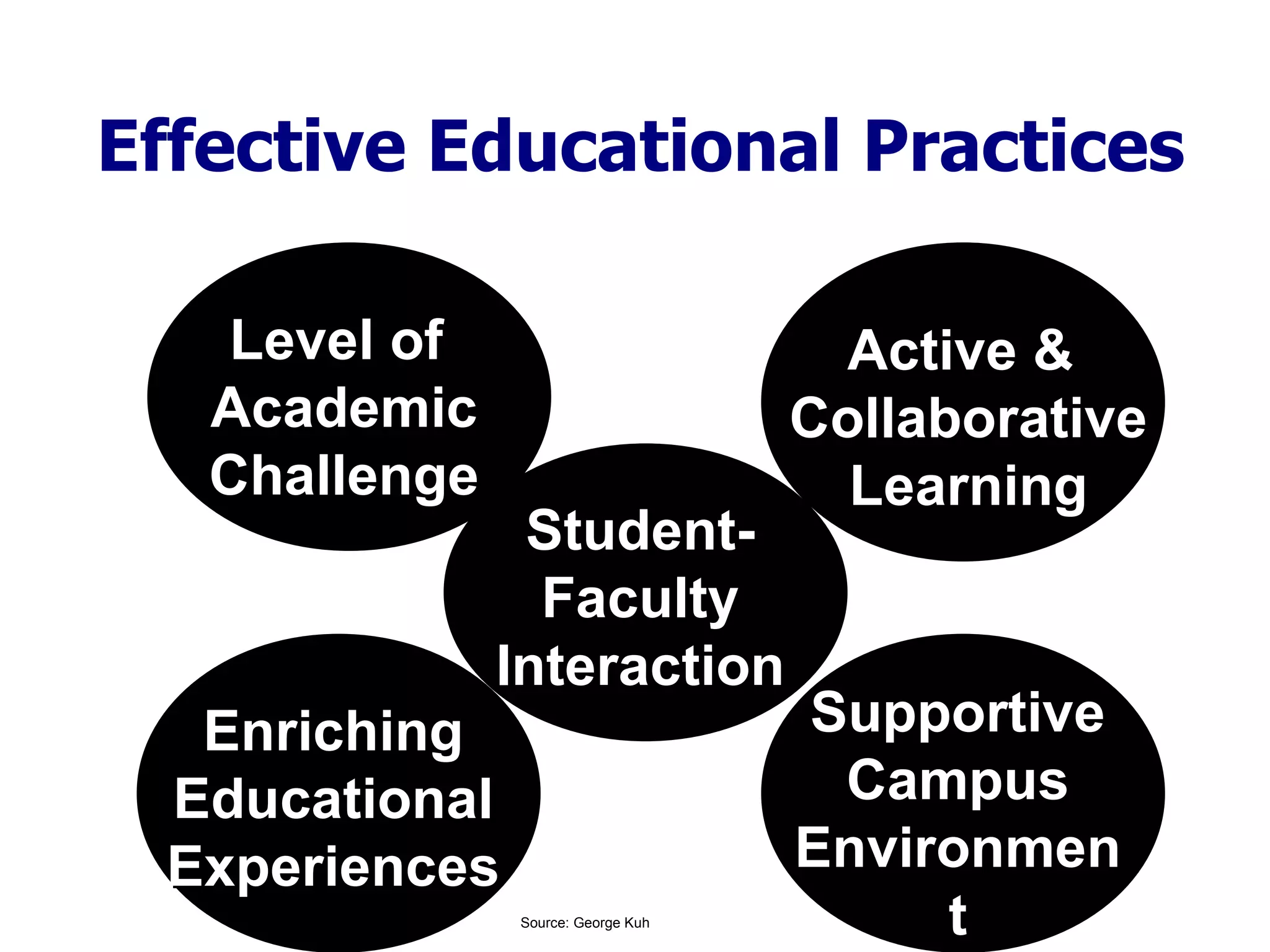
Effective Educational Practices Level of  Academic Challenge Active &  Collaborative Learning Enriching Educational Experiences Supportive Campus Environment Student- Faculty Interaction Source: George Kuh
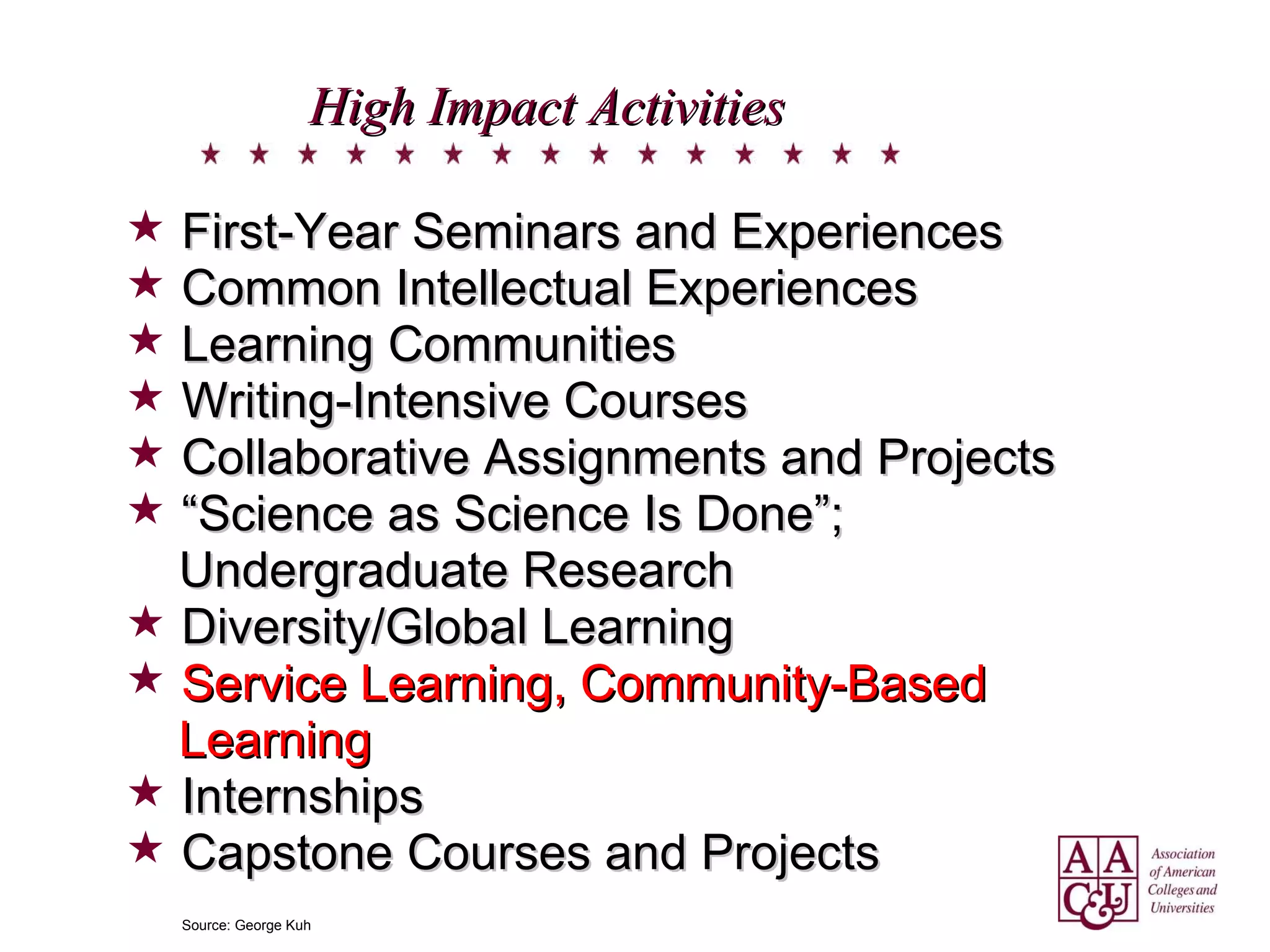
High Impact Activities First-Year Seminars and Experiences  Common Intellectual Experiences Learning Communities Writing-Intensive Courses Collaborative Assignments and Projects “ Science as Science Is Done”; Undergraduate Research Diversity/Global Learning Service Learning, Community-Based Learning Internships Capstone Courses and Projects Source: George Kuh
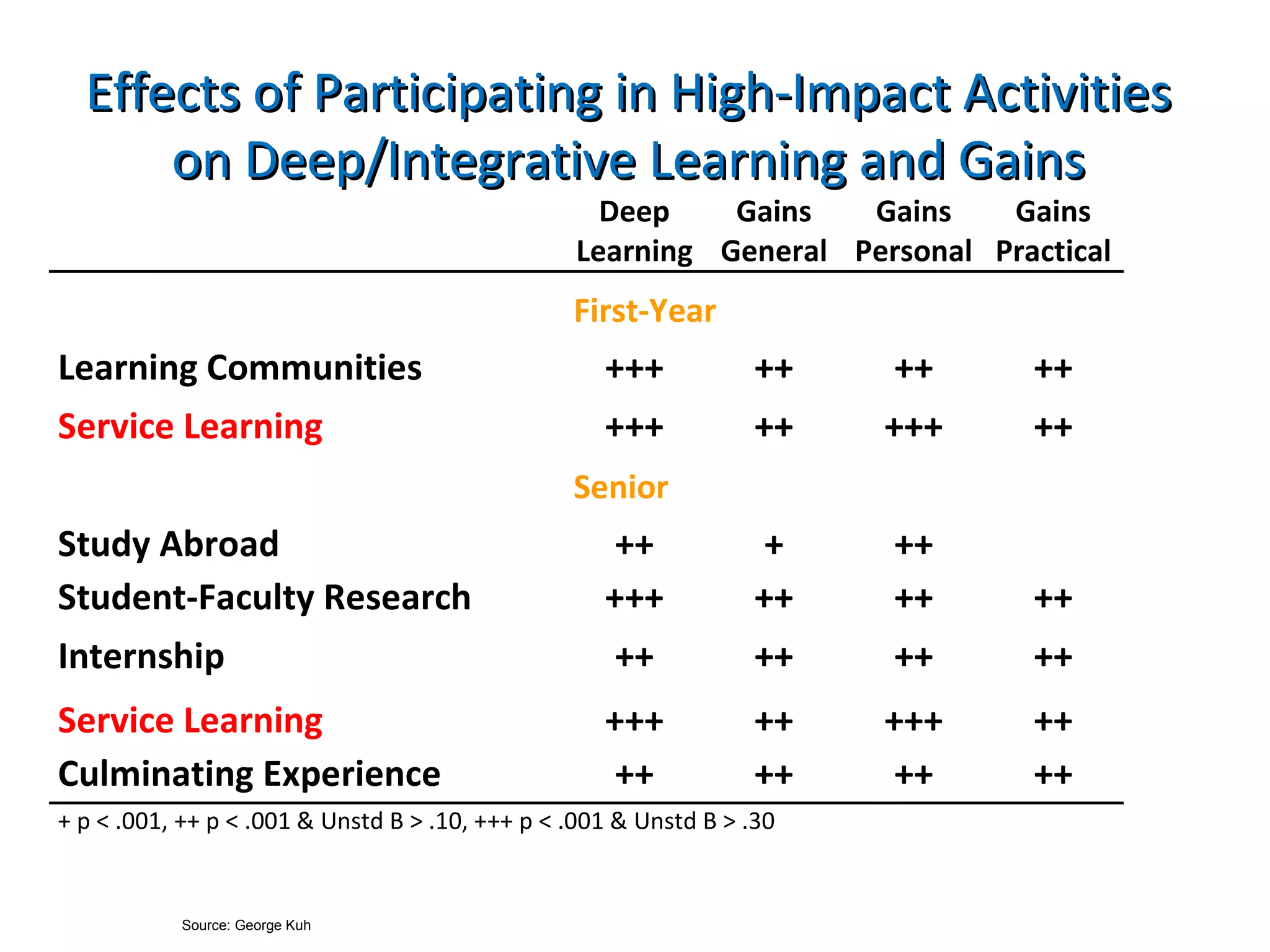
Effects of Participating in High-Impact Activities on Deep/Integrative Learning and Gains Source: George Kuh
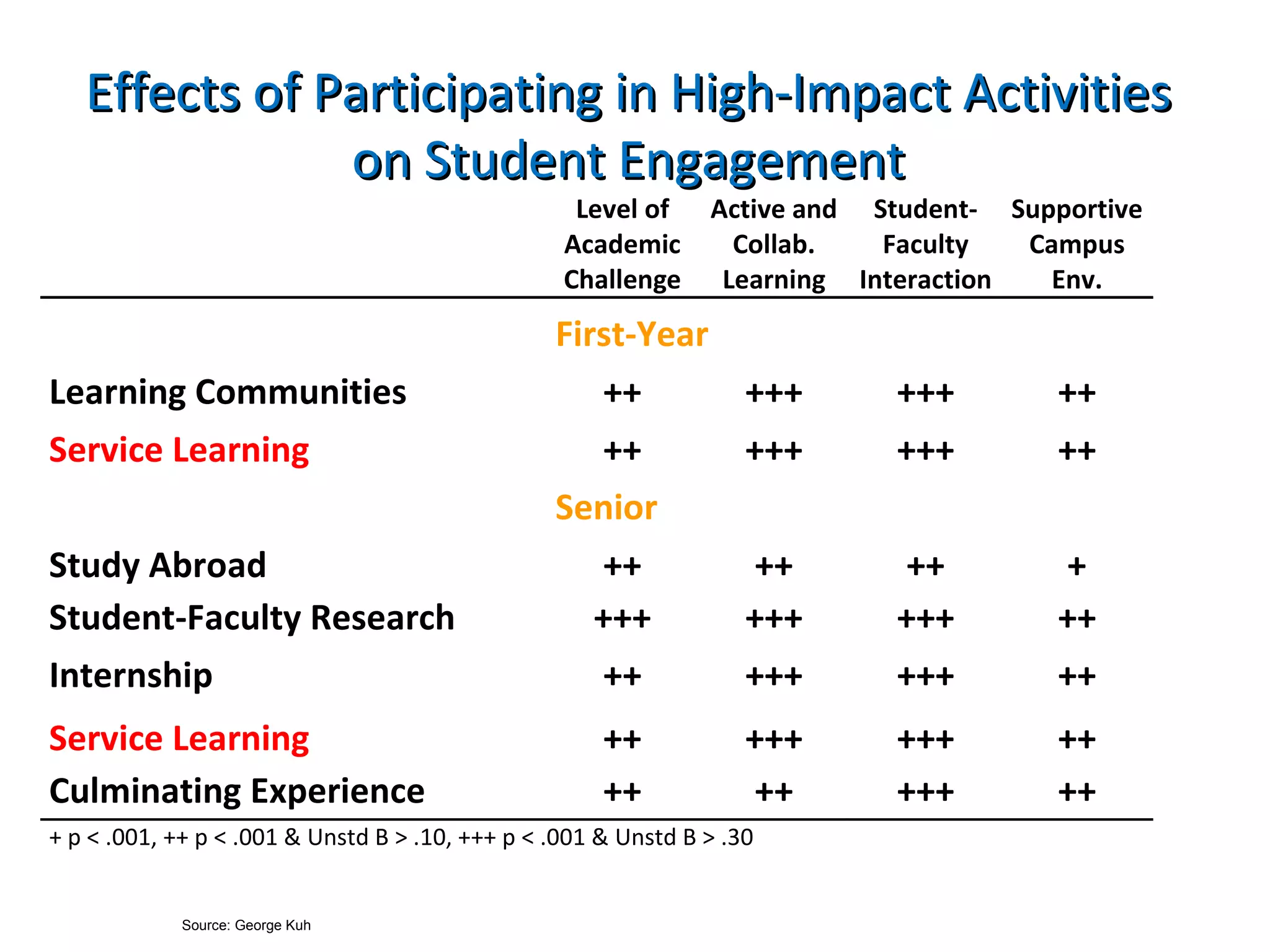
Effects of Participating in High-Impact Activities on Student Engagement Source: George Kuh
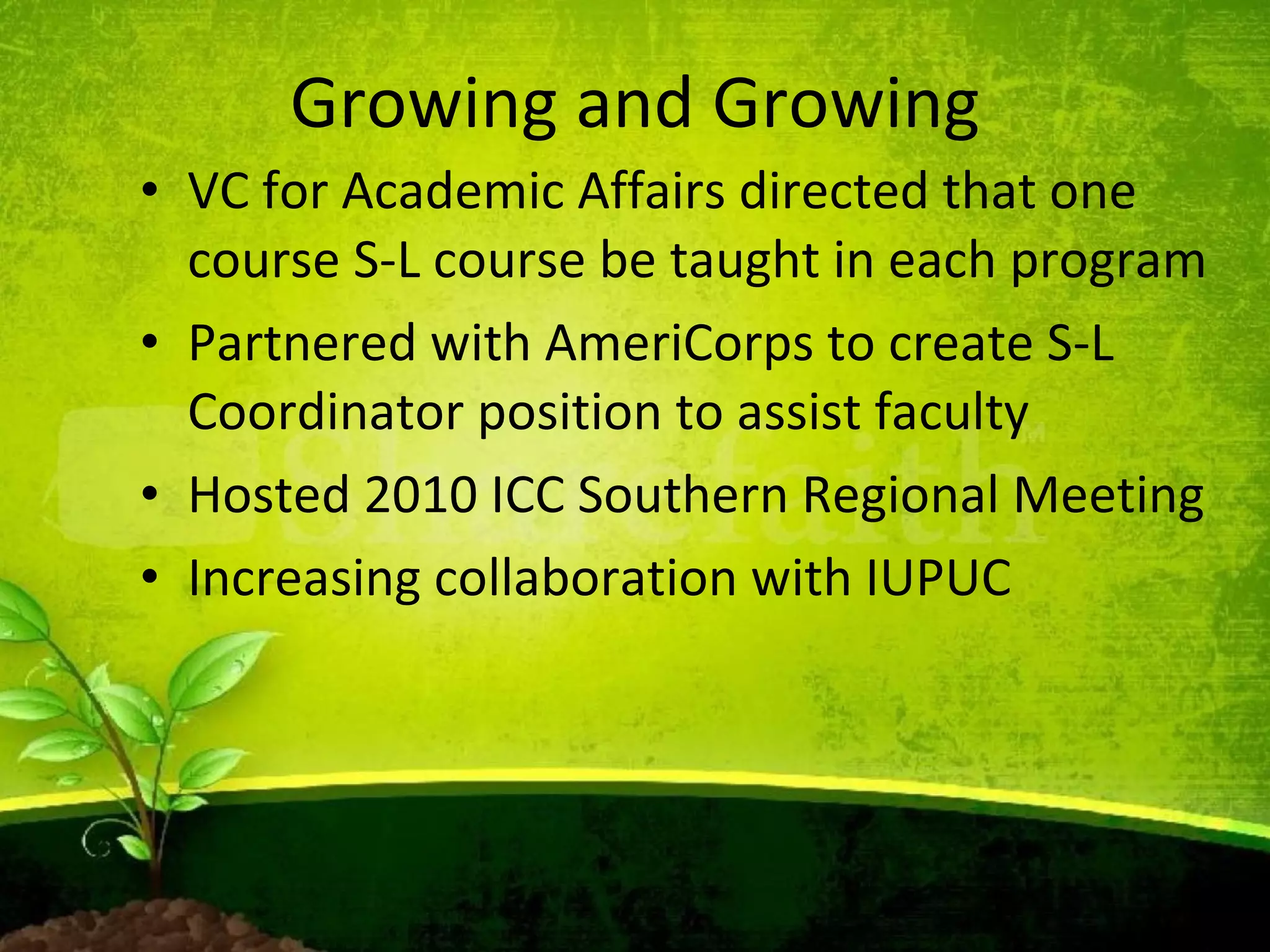
Growing and Growing VC for Academic Affairs directed that one course S-L course be taught in each program Partnered with AmeriCorps to create S-L Coordinator position to assist faculty Hosted 2010 ICC Southern Regional Meeting Increasing collaboration with IUPUC
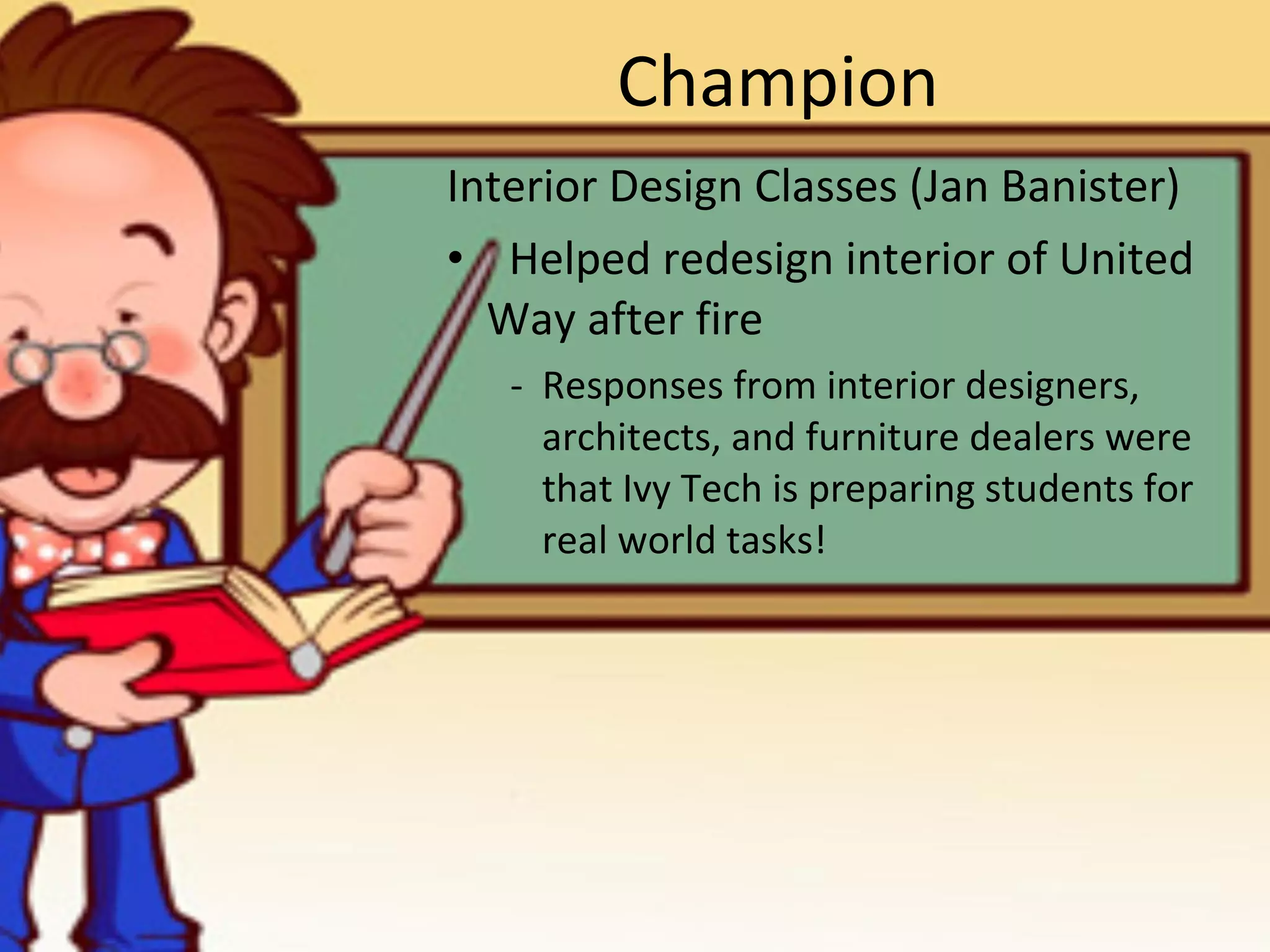
Champion Interior Design Classes (Jan Banister) Helped redesign interior of United Way after fire -  Responses from interior designers, architects, and furniture dealers were that Ivy Tech is preparing students for real world tasks!
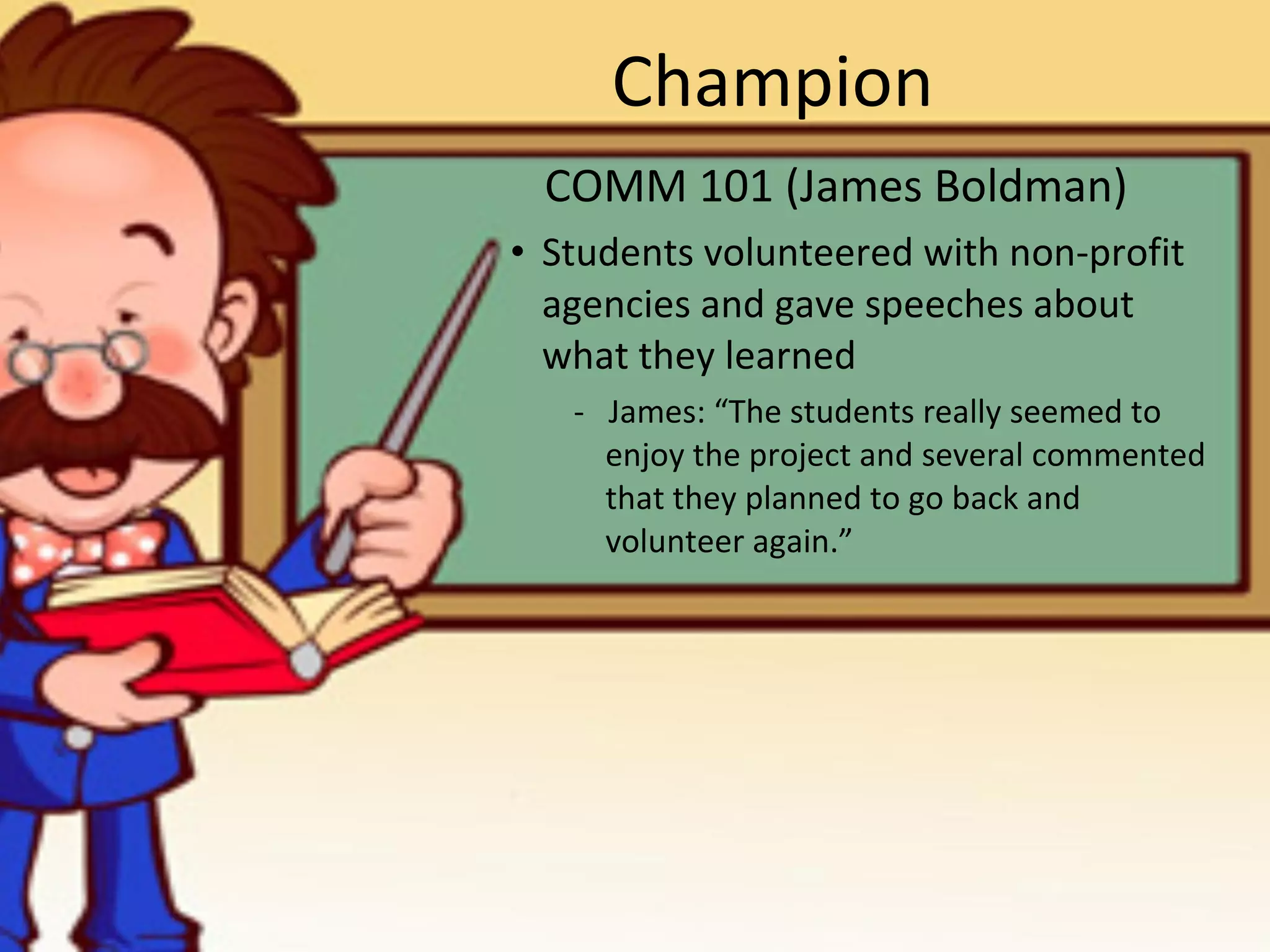
Champion COMM 101 (James Boldman) Students volunteered with non-profit agencies and gave speeches about what they learned -  James: “The students really seemed to enjoy the project and several commented that they planned to go back and volunteer again.”
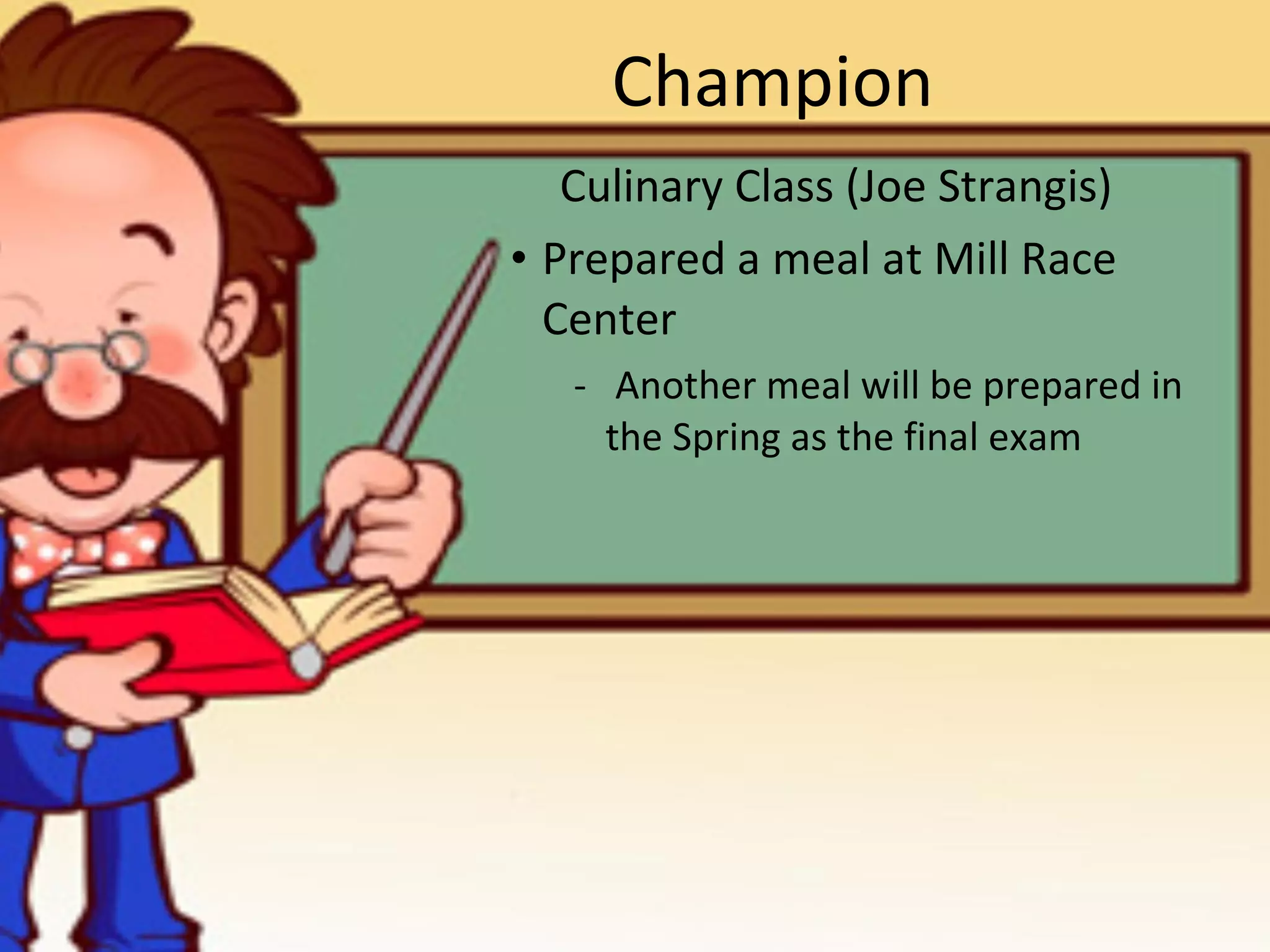
Champion Culinary Class (Joe Strangis) Prepared a meal at Mill Race Center -  Another meal will be prepared in the Spring as the final exam
Tipping Point – S-L 101 Sought collaboration grant from ICC $3,000 Held an in-depth faculty training series (5 Fridays – 3 weeks apart – expert assistance) Provided resources (and lunch!) for faculty Creating a Climate for Service Learning Success A Practical Guide for Integrating Civic Responsibility into the Curriculum Quick Hits for Service-Learning: Successful Strategies by Award-Winning Teachers
S-L 101 Program History of S-L – Angie Cooksey - IUEast Plan – Gail Robinson – AACC Act – Karla Gottlieb – United Way Reflect – Karla Gottlieb Summary – application in their classrooms Survey – “plus/delta” exercise
The History of Service-Learning 1862 Morrill Act signed by Lincoln 1899 John Dewey emphasizes experiential learning through his laboratory school in Chicago 1961 JFK establishes the Peace Corps 1967 The term ‘service-learning’ is coined by educators Robert Sigmon and William Ramsey 1985 National Campus Compact formed
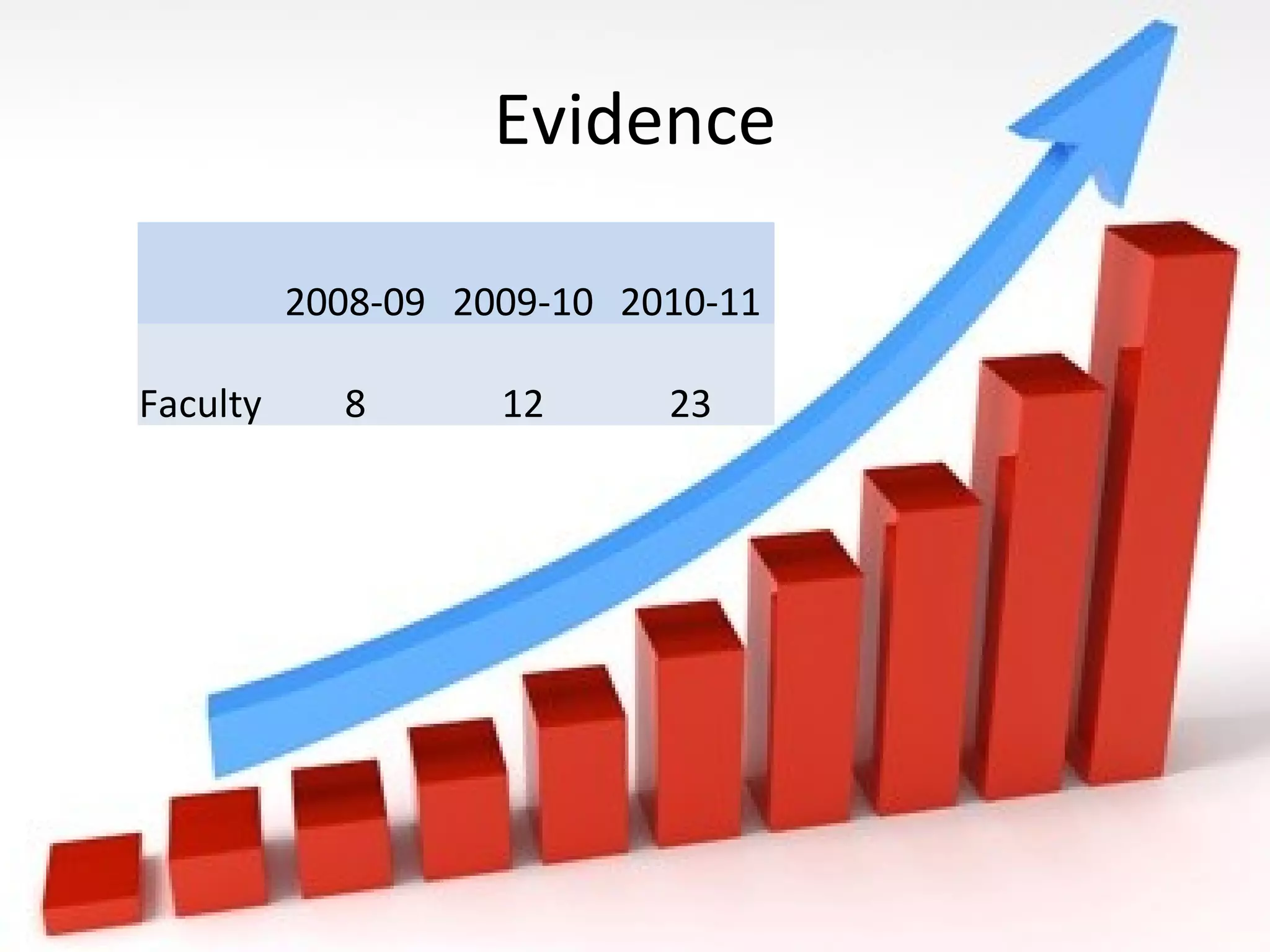
Evidence 2008-09 2009-10 2010-11 Faculty 8 12 23
Evidence Roger and Erika,       Check out what Ron Dougherty and Bonnie Nolting put together for their business department.  Isn't it awesome?!   Elaine Kvernum AmeriCorps Volunteer Resource Manager Service-Learning Coordinator for Ivy Tech Community College 812-374-5339 [email_address]   From:  Bonnie Jo Nolting Sent:  Wednesday, June 08, 2011 10:22 AM To:  Elaine C. Kvernum Subject:  Service learning ppt
Service Learning Project A way to give back to the community while establishing new network relationships
Process To complete this project, you  will finish three parts: Proposal  – Who you want to help and what you plan to accomplish Activity Journal  – A log of activities you accomplished during your time with the agency Reflection   Paper  – A look back at what you accomplished and how you plan to use this activity in the future.
Resources Available to You S-L User Guide (on Public Drive) History and Overview Course Planning (including online courses) Reflection activities Information for funding your projects Optional Forms Listing of S-L library content Past Service-Learning Gazettes S-L Library (books and resources available for check-out in Coordinator’s area) The new United Way Volunteer Guide recently restructured for Ivy Tech’s programs of study!
Next Steps Goals for next year: Brown bag lunches for the fall S-L  in Online Learning Courses Faculty Mentoring Groups Interdisciplinary Additional 101 New 201
Let’s Talk

Gcsv2011 big trees grow from little seeds-roger bignham

  • 1.
    Service-Learning Big TreesCome From Little Seeds
  • 2.
    The Laws ofPlanting/Reaping = The Laws of Service Learning You have to sow in order to reap You reap what you sow You reap more than you sow
  • 3.
    Begin With theEnd in Mind Why do we plant? Why do we want a service learning program?
  • 4.
    First Steps JoinedIndiana Campus Compact in 2006 Conducted a “really mini” S-L conference Before 2006, Ivy Tech Columbus had zero classes participating in service-learning The first year as members of ICC, we had ___ classes perform S-L Most awareness and champions resulted from personal contact
  • 5.
    What is Service-Learning?Common Language – get on this right away! 3 Parts (PAR) Plan Act Reflect 2 Types Direct Indirect
  • 6.
    Expert Assistance Whatis an expert? George Kuh Director Indiana University Center for Postsecondary Research 1999-2010 Director National Institute for Learning Outcomes Assessment (NILOA) 2008-present Director Strategic National Arts Alumni Project (SNAAP) 2008-present Director Law School Survey of Student Engagement (LSSSE) 2003-2010 Director National Survey of Student Engagement (NSSE) 1999-2007 Director NSSE Institute for Effective Education Practice 2002-2007
  • 7.
    George D. KuhIvy Tech Community College 2 nd Annual Learning College Conference February 14, 2008 Ivy Tech pictures are “Courtesy of Ivy Tech Community College High Impact Activities : What They Are, Why They Work, and Who Benefits
  • 8.
    Student Success inCollege Academic achievement, engagement in educationally purposeful activities , satisfaction , acquisition of desired knowledge, skills and competencies , persistence , attainment of educational objectives , and post-college performance Source: George Kuh
  • 9.
    Most Important Skills Employers Look For In New Hires Teamwork skills Critical thinking/ reasoning Oral/written communication Ability to assemble/ organize information Innovative/thinking creatively Able to work with numbers/statistics Foreign language proficiency * Skills/abilities recent graduates think are the two most important to employers Source: George Kuh
  • 10.
    “ Deep”/Integrative LearningAttend to the underlying meaning of information as well as content Integrate and synthesize different ideas, sources of information Discern patterns in evidence or phenomena Apply knowledge in different situations View issues from multiple perspectives Source: George Kuh
  • 11.
    Effective Educational PracticesLevel of Academic Challenge Active & Collaborative Learning Enriching Educational Experiences Supportive Campus Environment Student- Faculty Interaction Source: George Kuh
  • 12.
    High Impact ActivitiesFirst-Year Seminars and Experiences  Common Intellectual Experiences Learning Communities Writing-Intensive Courses Collaborative Assignments and Projects “ Science as Science Is Done”; Undergraduate Research Diversity/Global Learning Service Learning, Community-Based Learning Internships Capstone Courses and Projects Source: George Kuh
  • 13.
    Effects of Participatingin High-Impact Activities on Deep/Integrative Learning and Gains Source: George Kuh
  • 14.
    Effects of Participatingin High-Impact Activities on Student Engagement Source: George Kuh
  • 15.
    Growing and GrowingVC for Academic Affairs directed that one course S-L course be taught in each program Partnered with AmeriCorps to create S-L Coordinator position to assist faculty Hosted 2010 ICC Southern Regional Meeting Increasing collaboration with IUPUC
  • 16.
    Champion Interior DesignClasses (Jan Banister) Helped redesign interior of United Way after fire - Responses from interior designers, architects, and furniture dealers were that Ivy Tech is preparing students for real world tasks!
  • 17.
    Champion COMM 101(James Boldman) Students volunteered with non-profit agencies and gave speeches about what they learned - James: “The students really seemed to enjoy the project and several commented that they planned to go back and volunteer again.”
  • 18.
    Champion Culinary Class(Joe Strangis) Prepared a meal at Mill Race Center - Another meal will be prepared in the Spring as the final exam
  • 19.
    Tipping Point –S-L 101 Sought collaboration grant from ICC $3,000 Held an in-depth faculty training series (5 Fridays – 3 weeks apart – expert assistance) Provided resources (and lunch!) for faculty Creating a Climate for Service Learning Success A Practical Guide for Integrating Civic Responsibility into the Curriculum Quick Hits for Service-Learning: Successful Strategies by Award-Winning Teachers
  • 20.
    S-L 101 ProgramHistory of S-L – Angie Cooksey - IUEast Plan – Gail Robinson – AACC Act – Karla Gottlieb – United Way Reflect – Karla Gottlieb Summary – application in their classrooms Survey – “plus/delta” exercise
  • 21.
    The History ofService-Learning 1862 Morrill Act signed by Lincoln 1899 John Dewey emphasizes experiential learning through his laboratory school in Chicago 1961 JFK establishes the Peace Corps 1967 The term ‘service-learning’ is coined by educators Robert Sigmon and William Ramsey 1985 National Campus Compact formed
  • 22.
    Evidence 2008-09 2009-102010-11 Faculty 8 12 23
  • 23.
    Evidence Roger andErika,      Check out what Ron Dougherty and Bonnie Nolting put together for their business department.  Isn't it awesome?!   Elaine Kvernum AmeriCorps Volunteer Resource Manager Service-Learning Coordinator for Ivy Tech Community College 812-374-5339 [email_address]   From: Bonnie Jo Nolting Sent: Wednesday, June 08, 2011 10:22 AM To: Elaine C. Kvernum Subject: Service learning ppt
  • 24.
    Service Learning ProjectA way to give back to the community while establishing new network relationships
  • 25.
    Process To completethis project, you will finish three parts: Proposal – Who you want to help and what you plan to accomplish Activity Journal – A log of activities you accomplished during your time with the agency Reflection Paper – A look back at what you accomplished and how you plan to use this activity in the future.
  • 26.
    Resources Available toYou S-L User Guide (on Public Drive) History and Overview Course Planning (including online courses) Reflection activities Information for funding your projects Optional Forms Listing of S-L library content Past Service-Learning Gazettes S-L Library (books and resources available for check-out in Coordinator’s area) The new United Way Volunteer Guide recently restructured for Ivy Tech’s programs of study!
  • 27.
    Next Steps Goalsfor next year: Brown bag lunches for the fall S-L in Online Learning Courses Faculty Mentoring Groups Interdisciplinary Additional 101 New 201
  • 28.

Editor's Notes

  • #6 Time on video 1:13 – 4:15
  • #17 After the United Way was destroyed by fire, the students created an inventory of all donated furniture from six locations, using a multi-page spreadsheet. They then cre-ated floor plans for multiple large and small agencies in the United Way, using computer aided drafting software, so that the agencies would have the information they needed to select replacement furniture from the donated inventory.
  • #19 The chefs preparing the meal were six students in the Ivy Tech Community College-Columbus/Franklin culinary program and their instructor, Chef Joe Strangis, chair of the hospitality program. Jonathan Wilson, dean of the School of Fine Arts & Design, showed his support by donning a chef’s hat and becoming a server. What was even more wonderful were the benefits of that evening and the continued partnership between Ivy Tech and Mill Race Center. The culinary students were able to use what they had learned in class to prepare a complete meal for a large number of guests and, afterward, to reflect on what went well, what went wrong, and what they would change in future, similar situations. Members of Mill Race Center and their friends were able to assist the students in their studies, to enjoy a wonderful dinner, and to enjoy each other.
  • #20 Now had constant access to 15-20 faculty
  • #22 Morrill Act establishes land grant institutions and states to promote the liberal and practical education of the industrial classes in the several pursuits and professions in life. Term “service-learning”: They wanted a term that described the ‘conscious educational growth with the accomplishment of certain tasks that met genuine human needs.’
  • #28 Marketing plan, graphic design, office space redesign, fundraising, building projects