Mentoring New Faculty:Ensuring  Success from Day OneFacilitated by Joanne Chesley, Ed. D.Center for Excellence in Teaching and Learning, WSSU
The RoleThe role of mentor is critical in the life of a new faculty memberThe goal is to provide guidance toward success in scholarship of teaching and research The mentor helps the junior faculty to navigate the complexities of this new professional lifeThe mentor advises the new faculty about service commitments, student advising, getting grantsThe mentor helps to prepare the new faculty for the tenure process
The mentor also provides professional socialization
The mentor becomes a sounding board and supporter in the way the chair cannot
The mentor teaches the “tricks of the trade” and survival strategies to the mentee. Mentoring should be layeredCampus Level mentoring addresses Tenure process, issues related to underrepresented faculty, other broad based areas such as governanceCollege/School Level Mentoringaddresses grantsmanship, how to mentor students, how to run a lab, research integrity, teaching tips; provides “teaching mentors” who are expert teachers who have agreed to work one-on-one with new teaching facultyUnit Level Mentoringprovides developmental and evaluative mentoring and support.
Unit Level Mentoring Could include a Junior Faculty Support Committee to:discuss progress in scholarship and suggest ways to    enhance scholarship productivity and publicationsdiscuss teaching experience and suggest venues for improvementreview teaching and service workloads to make sure they are appropriatework with the Chair to develop a strategic plan for the junior faculty member and provide feedback on progress.create climate and opportunities to ensure that the junior faculty member is valued as an important member of the department.
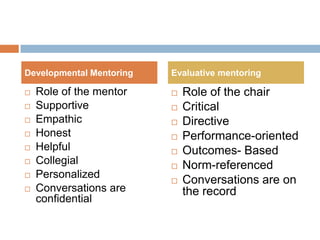
Role of the mentorSupportiveEmpathicHonestHelpfulCollegialPersonalizedConversations are confidential Role of the chairCriticalDirectivePerformance-orientedOutcomes- BasedNorm-referencedConversations are on the recordDevelopmental MentoringEvaluative mentoring
MentorsShould be senior faculty who are caring and have developed interpersonal skillsShould seek out the mentee and provide support until tenure is granted (at least)Should understand, practice, and respect confidentiality
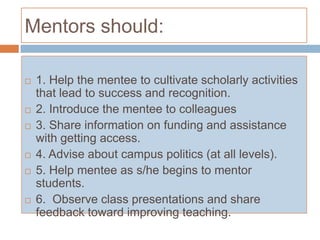
Mentors should: 1. Help the mentee to cultivate scholarly activities that lead to success and recognition.2. Introduce the mentee to colleagues3. Share information on funding and assistance with getting access.4. Advise about campus politics (at all levels). 5. Help mentee as s/he begins to mentor students. 6.  Observe class presentations and share feedback toward improving teaching.
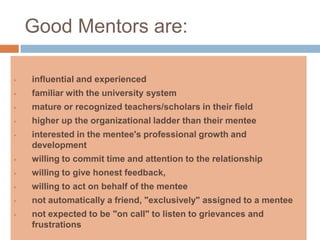
Good Mentors are: influential and experienced
familiar with the university system

Mentoring new faculty

  • 1.
    Mentoring New Faculty:Ensuring Success from Day OneFacilitated by Joanne Chesley, Ed. D.Center for Excellence in Teaching and Learning, WSSU
  • 2.
    The RoleThe roleof mentor is critical in the life of a new faculty memberThe goal is to provide guidance toward success in scholarship of teaching and research The mentor helps the junior faculty to navigate the complexities of this new professional lifeThe mentor advises the new faculty about service commitments, student advising, getting grantsThe mentor helps to prepare the new faculty for the tenure process
  • 3.
    The mentor alsoprovides professional socialization
  • 4.
    The mentor becomesa sounding board and supporter in the way the chair cannot
  • 5.
    The mentor teachesthe “tricks of the trade” and survival strategies to the mentee. Mentoring should be layeredCampus Level mentoring addresses Tenure process, issues related to underrepresented faculty, other broad based areas such as governanceCollege/School Level Mentoringaddresses grantsmanship, how to mentor students, how to run a lab, research integrity, teaching tips; provides “teaching mentors” who are expert teachers who have agreed to work one-on-one with new teaching facultyUnit Level Mentoringprovides developmental and evaluative mentoring and support.
  • 6.
    Unit Level MentoringCould include a Junior Faculty Support Committee to:discuss progress in scholarship and suggest ways to enhance scholarship productivity and publicationsdiscuss teaching experience and suggest venues for improvementreview teaching and service workloads to make sure they are appropriatework with the Chair to develop a strategic plan for the junior faculty member and provide feedback on progress.create climate and opportunities to ensure that the junior faculty member is valued as an important member of the department.
  • 7.
    Role of thementorSupportiveEmpathicHonestHelpfulCollegialPersonalizedConversations are confidential Role of the chairCriticalDirectivePerformance-orientedOutcomes- BasedNorm-referencedConversations are on the recordDevelopmental MentoringEvaluative mentoring
  • 8.
    MentorsShould be seniorfaculty who are caring and have developed interpersonal skillsShould seek out the mentee and provide support until tenure is granted (at least)Should understand, practice, and respect confidentiality
  • 9.
    Mentors should: 1.Help the mentee to cultivate scholarly activities that lead to success and recognition.2. Introduce the mentee to colleagues3. Share information on funding and assistance with getting access.4. Advise about campus politics (at all levels). 5. Help mentee as s/he begins to mentor students. 6. Observe class presentations and share feedback toward improving teaching.
  • 10.
    Good Mentors are:influential and experienced
  • 11.
    familiar with theuniversity system