The Sensory
Experience
CREATIVE WRITING
Creative writing goes beyond the rules of technical
literature, it is highly imaginative and free writing such as in
fiction, novels myths, poems and even non-fiction. It is
more focused on the writer’s need to express emotions and
ideas rather than following the rules of strict technical
literature.
The Sensory Experience in
creative writing include
sight, sound, touch, smell
and taste. Writers employ
the five sense to engage a
reader`s interest. If you
want your writing to jump
off the page, then bring your
reader into the world you
are creating. When
describing a past event, try
and remember that you saw,
heard, touched, smelled,
and tasted, the incorporate
that into your writing.
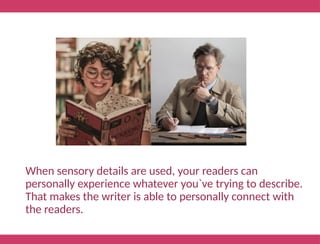
When sensory details are used, your readers can
personally experience whatever you`ve trying to describe.
That makes the writer is able to personally connect with
the readers.
What makes a creative writing, creative?
“Literary Devices”
A language used by poets,
novelists and other writers to
create image in the of the
reader. Imagery includes
figurative and metaphorical
language to improve the
reader`s experience through
their 5 senses.
1. Auditory
2. Tactile
3. Gustatory
4. Visual
5. Olfactory
5 types of Imagery
Is used to explain things, ideas and actions
using sounds and silence that appeal to our
sense of hearing.
1. Auditory
Ex: Once upon a midnight dreary, while I
pondered, weak and weary,
Over many a quaint and curious volume
of forgotten lore—
While I nodded, nearly napping, suddenly
there came a tapping,
As of someone gently rapping, rapping at
my chamber door.
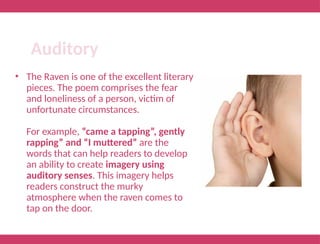
• The Raven is one of the excellent literary
pieces. The poem comprises the fear
and loneliness of a person, victim of
unfortunate circumstances.
For example, “came a tapping”, gently
rapping” and “I muttered” are the
words that can help readers to develop
an ability to create imagery using
auditory senses. This imagery helps
readers construct the murky
atmosphere when the raven comes to
tap on the door.
Auditory
Appeals to the sense of touch. It is the most vibrant
and spirited form of imagery . The writer discusses
the feel of texture, temperature, and other
sensations. This helps to create a mental image that
stimulates the reader’s sense of touch. It helps the
reader to visualize or perceive the things that he can
feel with his skin.
2. Tactile
Ex: When glided in Porphyria; straight
She shut the cold out and the storm,
And kneeled and made the cheerless
grate
Blaze up, and all the cottage.
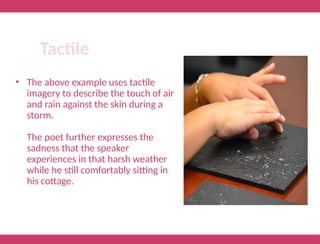
• The above example uses tactile
imagery to describe the touch of air
and rain against the skin during a
storm.
The poet further expresses the
sadness that the speaker
experiences in that harsh weather
while he still comfortably sitting in
his cottage.
Tactile
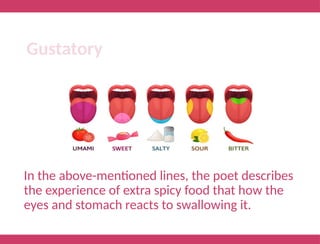
Allows the readers to imagine the sense of taste
while reading a poem or text. It is more functional
and effectual when an author describes a taste that
the reader has already experienced.
3. Gustatory
Ex: One sniff gives a clue of the heat
within.
First bite feels like swallowing a lighted
blow torch,
And tears stream from his eyes like a flash
flood
In the above-mentioned lines, the poet describes
the experience of extra spicy food that how the
eyes and stomach reacts to swallowing it.
Gustatory
Helps to form a mental image and evoke
imagination. The writer uses visual qualities i.e.,
color, shape, light, pattern, even shadows, etc., to
allow the reader to better perceive the glimpse of his
suggested vision.
4. Visual
Ex: On broken blinds and chimney-pots,
And at the corner of the street
A lonely cab-horse steams and stamps.
And then the lighting of the lamps
In ‘Prelude’ Elliot brings
forth clear images of the
wintry evening in the
reader’s mind with minute
details. It also includes the
scene on the street with
lights, smoke, and terrible
conditions seen by the
speaker.
Visual
Olfactory imagery is all about the smell. Also, very
few writers use olfactory imagery in their work
because it is not an easy one to master. It may
include perfumes, fragrances, or different types of
odors.
5. Olfactory
Ex: “There were strange, rare odors
abroad—a tangle of the sea smell and of
weeds and damp, new-plowed earth,
mingled with the heavy perfume of a field
of white blossoms somewhere near.”
Olfactory imagery is all about the smell. Also, very
few writers use olfactory imagery in their work
because it is not an easy one to master. It may
include perfumes, fragrances, or different types of
odors.
5. Olfactory
Ex: “There were strange, rare odors
abroad—a tangle of the sea smell and of
weeds and damp, new-plowed earth,
mingled with the heavy perfume of a field
of white blossoms somewhere near.”
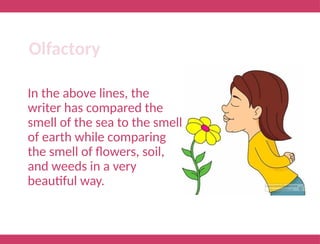
In the above lines, the
writer has compared the
smell of the sea to the smell
of earth while comparing
the smell of flowers, soil,
and weeds in a very
beautiful way.
Olfactory
“Function of Imagery”
• Imagery in literature is to generate a vibrant
and graphic presentation of a scene that
appeals to as many of the reader’s senses as
possible.
• Using figures of speech like metaphor, simile,
personification, and onomatopoeia, serve the
function of beautifying a piece of literature
10 min Quiz:
Guess What
type of
Imagery is
shown.
The Importance
of Using
Imagery
Importance of Using Imagery
• We experience life through our senses, a
strong composition should appeal to them
through the use of imagery.
• It allows readers to directly sympathize with
characters and narrators as they imagine
having the same sense experiences.
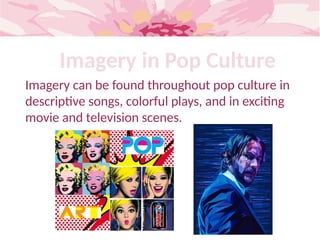
Imagery in Pop Culture
Imagery can be found throughout pop culture in
descriptive songs, colorful plays, and in exciting
movie and television scenes.
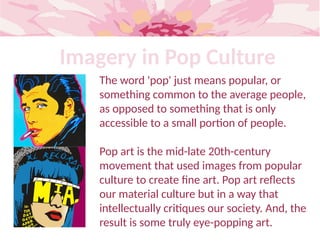
Imagery in Pop Culture
The word 'pop' just means popular, or
something common to the average people,
as opposed to something that is only
accessible to a small portion of people.
Pop art is the mid-late 20th-century
movement that used images from popular
culture to create fine art. Pop art reflects
our material culture but in a way that
intellectually critiques our society. And, the
result is some truly eye-popping art.
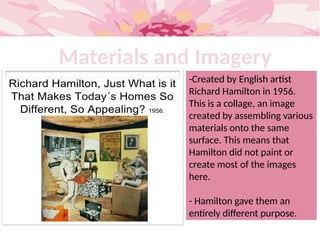
Materials and Imagery
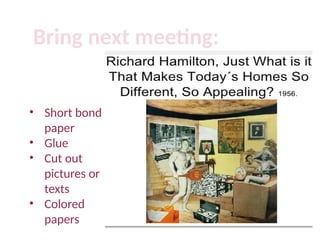
-Created by English artist
Richard Hamilton in 1956.
This is a collage, an image
created by assembling various
materials onto the same
surface. This means that
Hamilton did not paint or
create most of the images
here.
- Hamilton gave them an
entirely different purpose.
Bring next meeting:
• Short bond
paper
• Glue
• Cut out
pictures or
texts
• Colored
papers
Creative Writing Module 2: The sensory Experience. pptx

Creative Writing Module 2: The sensory Experience. pptx

  • 1.
  • 2.
    Creative writing goesbeyond the rules of technical literature, it is highly imaginative and free writing such as in fiction, novels myths, poems and even non-fiction. It is more focused on the writer’s need to express emotions and ideas rather than following the rules of strict technical literature.
  • 3.
    The Sensory Experiencein creative writing include sight, sound, touch, smell and taste. Writers employ the five sense to engage a reader`s interest. If you want your writing to jump off the page, then bring your reader into the world you are creating. When describing a past event, try and remember that you saw, heard, touched, smelled, and tasted, the incorporate that into your writing.
  • 4.
    When sensory detailsare used, your readers can personally experience whatever you`ve trying to describe. That makes the writer is able to personally connect with the readers.
  • 5.
    What makes acreative writing, creative? “Literary Devices”
  • 6.
    A language usedby poets, novelists and other writers to create image in the of the reader. Imagery includes figurative and metaphorical language to improve the reader`s experience through their 5 senses.
  • 7.
    1. Auditory 2. Tactile 3.Gustatory 4. Visual 5. Olfactory 5 types of Imagery
  • 8.
    Is used toexplain things, ideas and actions using sounds and silence that appeal to our sense of hearing. 1. Auditory Ex: Once upon a midnight dreary, while I pondered, weak and weary, Over many a quaint and curious volume of forgotten lore— While I nodded, nearly napping, suddenly there came a tapping, As of someone gently rapping, rapping at my chamber door.
  • 9.
    • The Ravenis one of the excellent literary pieces. The poem comprises the fear and loneliness of a person, victim of unfortunate circumstances. For example, “came a tapping”, gently rapping” and “I muttered” are the words that can help readers to develop an ability to create imagery using auditory senses. This imagery helps readers construct the murky atmosphere when the raven comes to tap on the door. Auditory
  • 10.
    Appeals to thesense of touch. It is the most vibrant and spirited form of imagery . The writer discusses the feel of texture, temperature, and other sensations. This helps to create a mental image that stimulates the reader’s sense of touch. It helps the reader to visualize or perceive the things that he can feel with his skin. 2. Tactile Ex: When glided in Porphyria; straight She shut the cold out and the storm, And kneeled and made the cheerless grate Blaze up, and all the cottage.
  • 11.
    • The aboveexample uses tactile imagery to describe the touch of air and rain against the skin during a storm. The poet further expresses the sadness that the speaker experiences in that harsh weather while he still comfortably sitting in his cottage. Tactile
  • 12.
    Allows the readersto imagine the sense of taste while reading a poem or text. It is more functional and effectual when an author describes a taste that the reader has already experienced. 3. Gustatory Ex: One sniff gives a clue of the heat within. First bite feels like swallowing a lighted blow torch, And tears stream from his eyes like a flash flood
  • 13.
    In the above-mentionedlines, the poet describes the experience of extra spicy food that how the eyes and stomach reacts to swallowing it. Gustatory
  • 14.
    Helps to forma mental image and evoke imagination. The writer uses visual qualities i.e., color, shape, light, pattern, even shadows, etc., to allow the reader to better perceive the glimpse of his suggested vision. 4. Visual Ex: On broken blinds and chimney-pots, And at the corner of the street A lonely cab-horse steams and stamps. And then the lighting of the lamps
  • 15.
    In ‘Prelude’ Elliotbrings forth clear images of the wintry evening in the reader’s mind with minute details. It also includes the scene on the street with lights, smoke, and terrible conditions seen by the speaker. Visual
  • 16.
    Olfactory imagery isall about the smell. Also, very few writers use olfactory imagery in their work because it is not an easy one to master. It may include perfumes, fragrances, or different types of odors. 5. Olfactory Ex: “There were strange, rare odors abroad—a tangle of the sea smell and of weeds and damp, new-plowed earth, mingled with the heavy perfume of a field of white blossoms somewhere near.”
  • 17.
    Olfactory imagery isall about the smell. Also, very few writers use olfactory imagery in their work because it is not an easy one to master. It may include perfumes, fragrances, or different types of odors. 5. Olfactory Ex: “There were strange, rare odors abroad—a tangle of the sea smell and of weeds and damp, new-plowed earth, mingled with the heavy perfume of a field of white blossoms somewhere near.”
  • 18.
    In the abovelines, the writer has compared the smell of the sea to the smell of earth while comparing the smell of flowers, soil, and weeds in a very beautiful way. Olfactory
  • 19.
  • 20.
    “Function of Imagery” •Imagery in literature is to generate a vibrant and graphic presentation of a scene that appeals to as many of the reader’s senses as possible. • Using figures of speech like metaphor, simile, personification, and onomatopoeia, serve the function of beautifying a piece of literature
  • 21.
    10 min Quiz: GuessWhat type of Imagery is shown.
  • 24.
  • 25.
    Importance of UsingImagery • We experience life through our senses, a strong composition should appeal to them through the use of imagery. • It allows readers to directly sympathize with characters and narrators as they imagine having the same sense experiences.
  • 26.
    Imagery in PopCulture Imagery can be found throughout pop culture in descriptive songs, colorful plays, and in exciting movie and television scenes.
  • 27.
    Imagery in PopCulture The word 'pop' just means popular, or something common to the average people, as opposed to something that is only accessible to a small portion of people. Pop art is the mid-late 20th-century movement that used images from popular culture to create fine art. Pop art reflects our material culture but in a way that intellectually critiques our society. And, the result is some truly eye-popping art.
  • 28.
    Materials and Imagery -Createdby English artist Richard Hamilton in 1956. This is a collage, an image created by assembling various materials onto the same surface. This means that Hamilton did not paint or create most of the images here. - Hamilton gave them an entirely different purpose.
  • 29.
    Bring next meeting: •Short bond paper • Glue • Cut out pictures or texts • Colored papers