Creative
Writing
ELOISA A.IRASGA
Teacher in CWS
OBJECTIVES
Use imagery, diction, figures of speech, and
specific experiences to evoke meaningful responses
from readers (HUMSS_CW/MP11/12-Ia-b-4)
Analyze the imagery, diction, figures of speech,
and specific experiences of the specific literary
pieces.
Write short paragraphs or vignettes using
imagery, diction, figures of speech, and specific
experiences.
Activity 1: Word Association
Creative
Writing
What is Creative Writing?
Creative writing is any composing that goes
beyond ordinary expert, editorial, scholarly, or
specialized types of writing, normally distinguished by
an accentuation on account make, character
advancement, and the utilization of abstract tropes or
with different customs of verse and poetics. It is
workable for composing, for example, include stories to
be viewed as exploratory writing, despite the fact that
they fall under news coverage, in light of the fact that
the substance of highlights is explicitly centered around
account and character improvement.
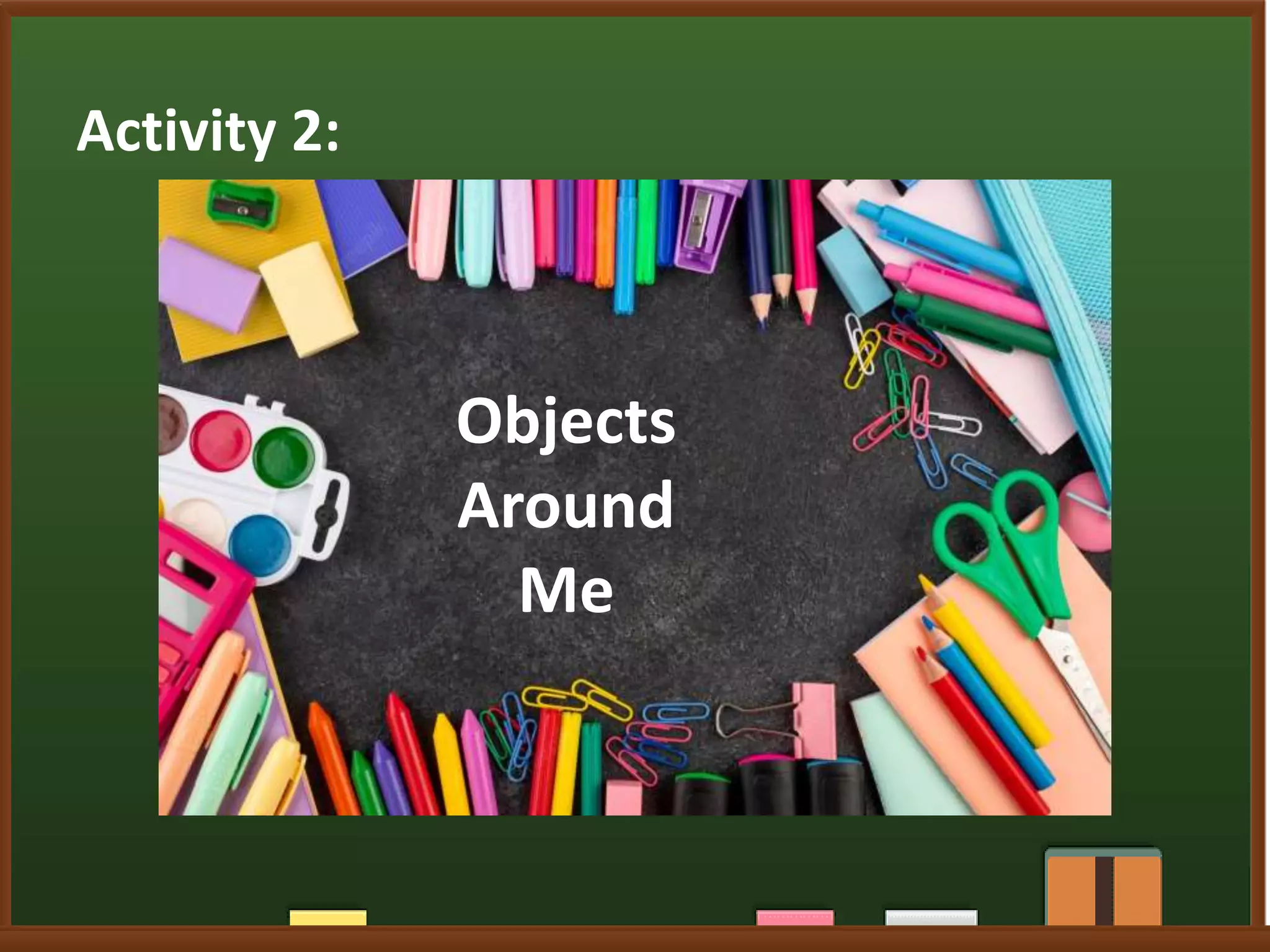
Activity 2:
Objects
Around
Me
What Is Sensory Imagery?
Sensory Imagery includes the
utilization of elucidating language to
make mental pictures. In abstract
terms, it is a sort of symbolism; the
thing that matters is that tangible
symbolism works by drawing in a
reader's five senses. It is an artistic
gadget author utilize to draw in a
reader's brain on numerous levels.
This investigates the five human
detects: sight, sound, taste, contact,
and smell.
VISUAL IMAGERY engages the sense of
sight. Descriptions can be associated to
Visual Imagery. Physical attributes
including color, size, shape, lightness
and darkness, shadows, and shade
are all part of visual imagery. The text
in italics are some examples of lines using
visual imagery.
VISUAL IMAGERY
VISUAL IMAGERY
Examples:
Her phone signaled, immediately setting her teeth on
edge. She looked at the broken screen, saw his name,
and slapped the phone back down on her desk.
Armani stretched across her couch, legs twitching
excitedly, and he knew he must be dreaming of the
kittens he tries to capture every morning when he is at
the dirty kitchen.
GUSTATORY IMAGERY engages the
sense of taste. Flavors are the
considerations in gustatory imagery
which includes the five basic taste such
as sweet, salty, bitter, sour, and
umami—as well as the textures and
sensations tied to the act of eating.
GUSTATORY IMAGERY
GUSTATORY IMAGERY
The bitter taste of the hot coffee touches
my lips yet its aroma brings delightful in
my mind.
Summer has always tasted like hot
chocolate to me.
His kisses tasted like strawberries under
the sun.
AUDITORY IMAGERY engages the
sense of hearing. Sound devices such
as onomatopoeia and alliteration can
help create sounds in writing.
AUDITORY IMAGERY
Erick sat alone at the bench nearest the main
door so he wouldn't miss Via.
The room was noisy.
The clang of heavy dishes glided from the
kitchen.
Ice tinkled as it settled in his water glass.
His watch read 9:30. She wasn't coming.
AUDITORY IMAGERY
OLFACTORY IMAGERY engages the sense of
smell. Simile is common in using olfactory
imagery, because it lets writers to compare
a particular scent to common smells like
dirt, grass, manure, or roses. The use of
scents and stinks are common ways to use
olfactory imagery.
OLFACTORY IMAGERY
The scent of “latik” when my mother
cooks rice cake is really nostalgic to
me.
The street going to their house stinks
of manure and the courtyard of urine,
the stairwells stank of moldering
wood and rat droppings.
OLFACTORY IMAGERY
TACTILE IMAGERY engages the sense
of touch. The feel, textures and many
sensations a human being experiences
when touching something are
associated in tactile imagery.
Differences in temperature is also a
part of tactile imagery.
TACTILE IMAGERY
TACTILE IMAGERY
When we quickly plunge into the
cool water, it took our breath
away and raised goose bumps to
our arms. We had had been
swimming in this pond since we
were kids.
In other references, there is a sixth sense which
called Kinesthetic imagery engages the feeling
of movement. This can be similar to tactile
imagery but deals more with full-body
sensations, such as those experienced during
exercise. Rushing water, flapping wings, and
pounding hearts are all examples of kinesthetic
imagery
Questions to Ponder:
Among the sensory
imagery, which was is easy
to use in writing?
Which one is hard for
you to use?
What could be the
barrier in using sensory
imageries well in writing?
Questions to Ponder:
Among the sensory
imagery, which was is easy
to use in writing?
Which one is hard for
you to use?
What could be the
barrier in using sensory
imageries well in writing?
CWS022_lesson-1-Imagery.pptx

CWS022_lesson-1-Imagery.pptx

  • 1.
  • 2.
    OBJECTIVES Use imagery, diction,figures of speech, and specific experiences to evoke meaningful responses from readers (HUMSS_CW/MP11/12-Ia-b-4) Analyze the imagery, diction, figures of speech, and specific experiences of the specific literary pieces. Write short paragraphs or vignettes using imagery, diction, figures of speech, and specific experiences.
  • 3.
    Activity 1: WordAssociation Creative Writing
  • 4.
    What is CreativeWriting? Creative writing is any composing that goes beyond ordinary expert, editorial, scholarly, or specialized types of writing, normally distinguished by an accentuation on account make, character advancement, and the utilization of abstract tropes or with different customs of verse and poetics. It is workable for composing, for example, include stories to be viewed as exploratory writing, despite the fact that they fall under news coverage, in light of the fact that the substance of highlights is explicitly centered around account and character improvement.
  • 5.
  • 6.
    What Is SensoryImagery? Sensory Imagery includes the utilization of elucidating language to make mental pictures. In abstract terms, it is a sort of symbolism; the thing that matters is that tangible symbolism works by drawing in a reader's five senses. It is an artistic gadget author utilize to draw in a reader's brain on numerous levels. This investigates the five human detects: sight, sound, taste, contact, and smell.
  • 7.
    VISUAL IMAGERY engagesthe sense of sight. Descriptions can be associated to Visual Imagery. Physical attributes including color, size, shape, lightness and darkness, shadows, and shade are all part of visual imagery. The text in italics are some examples of lines using visual imagery. VISUAL IMAGERY
  • 8.
    VISUAL IMAGERY Examples: Her phonesignaled, immediately setting her teeth on edge. She looked at the broken screen, saw his name, and slapped the phone back down on her desk. Armani stretched across her couch, legs twitching excitedly, and he knew he must be dreaming of the kittens he tries to capture every morning when he is at the dirty kitchen.
  • 9.
    GUSTATORY IMAGERY engagesthe sense of taste. Flavors are the considerations in gustatory imagery which includes the five basic taste such as sweet, salty, bitter, sour, and umami—as well as the textures and sensations tied to the act of eating. GUSTATORY IMAGERY
  • 10.
    GUSTATORY IMAGERY The bittertaste of the hot coffee touches my lips yet its aroma brings delightful in my mind. Summer has always tasted like hot chocolate to me. His kisses tasted like strawberries under the sun.
  • 11.
    AUDITORY IMAGERY engagesthe sense of hearing. Sound devices such as onomatopoeia and alliteration can help create sounds in writing. AUDITORY IMAGERY
  • 12.
    Erick sat aloneat the bench nearest the main door so he wouldn't miss Via. The room was noisy. The clang of heavy dishes glided from the kitchen. Ice tinkled as it settled in his water glass. His watch read 9:30. She wasn't coming. AUDITORY IMAGERY
  • 13.
    OLFACTORY IMAGERY engagesthe sense of smell. Simile is common in using olfactory imagery, because it lets writers to compare a particular scent to common smells like dirt, grass, manure, or roses. The use of scents and stinks are common ways to use olfactory imagery. OLFACTORY IMAGERY
  • 14.
    The scent of“latik” when my mother cooks rice cake is really nostalgic to me. The street going to their house stinks of manure and the courtyard of urine, the stairwells stank of moldering wood and rat droppings. OLFACTORY IMAGERY
  • 15.
    TACTILE IMAGERY engagesthe sense of touch. The feel, textures and many sensations a human being experiences when touching something are associated in tactile imagery. Differences in temperature is also a part of tactile imagery. TACTILE IMAGERY
  • 16.
    TACTILE IMAGERY When wequickly plunge into the cool water, it took our breath away and raised goose bumps to our arms. We had had been swimming in this pond since we were kids.
  • 17.
    In other references,there is a sixth sense which called Kinesthetic imagery engages the feeling of movement. This can be similar to tactile imagery but deals more with full-body sensations, such as those experienced during exercise. Rushing water, flapping wings, and pounding hearts are all examples of kinesthetic imagery
  • 18.
    Questions to Ponder: Amongthe sensory imagery, which was is easy to use in writing? Which one is hard for you to use? What could be the barrier in using sensory imageries well in writing?
  • 19.
    Questions to Ponder: Amongthe sensory imagery, which was is easy to use in writing? Which one is hard for you to use? What could be the barrier in using sensory imageries well in writing?