LIMITERS
Teams hold themselvesback when they do things such
as :
ENABLERS
Teams can move forward when they
have things such as:
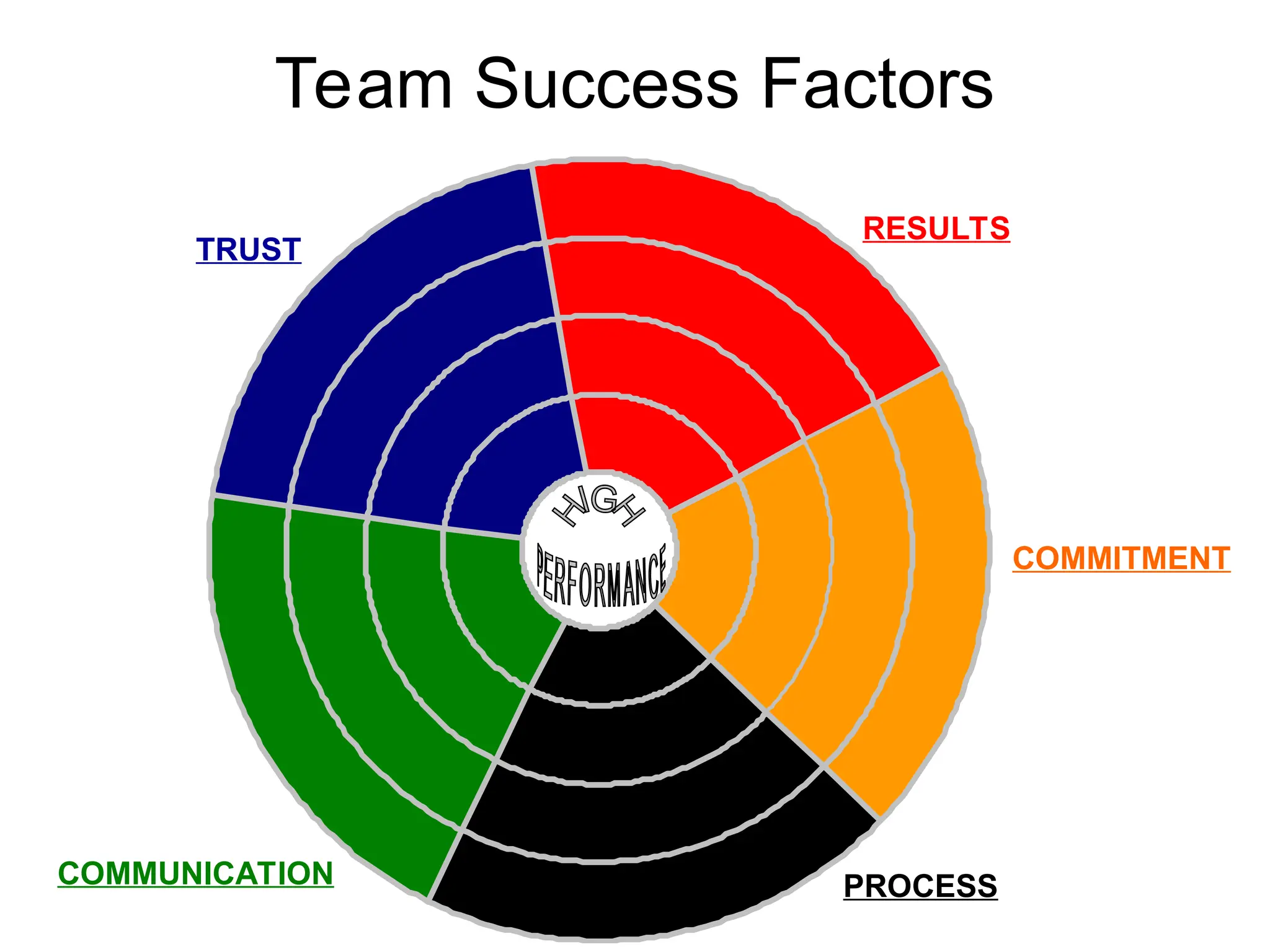
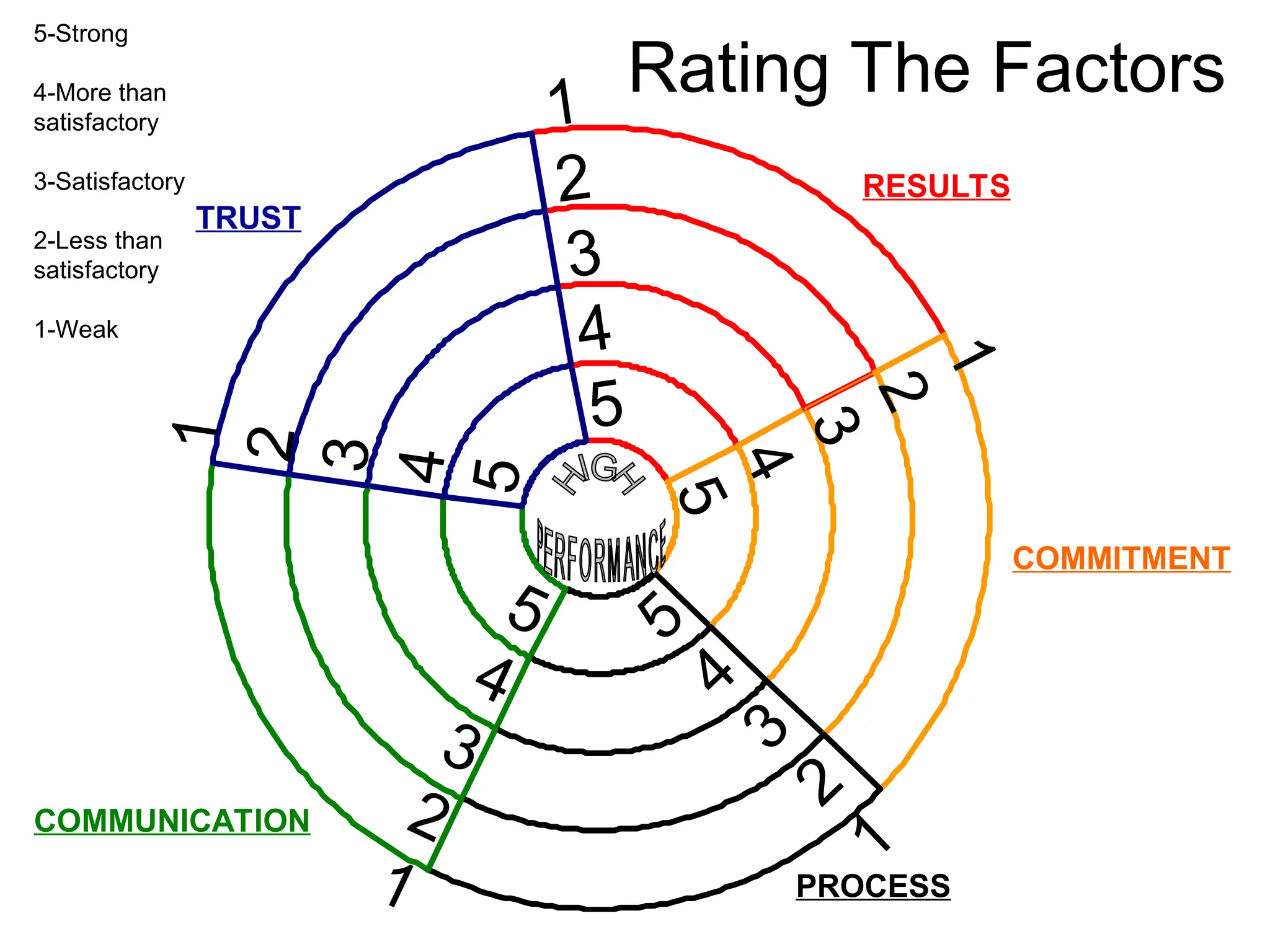
RESULTS
•Disagree on how to use resources
•Carry out individual responsibilities
and put off team responsibilities
•Disagree on priorities
•Compete for recognition, resources,
or personal gain
•A clear, important, and accepted
purpose statement
•Understood and accepted short
– and long-term team goals
•Regular reviews of and
discussions about team results
•Team wide understanding of
how team results support the
organization
•Team celebrations of successes
Team Success Factors
5.
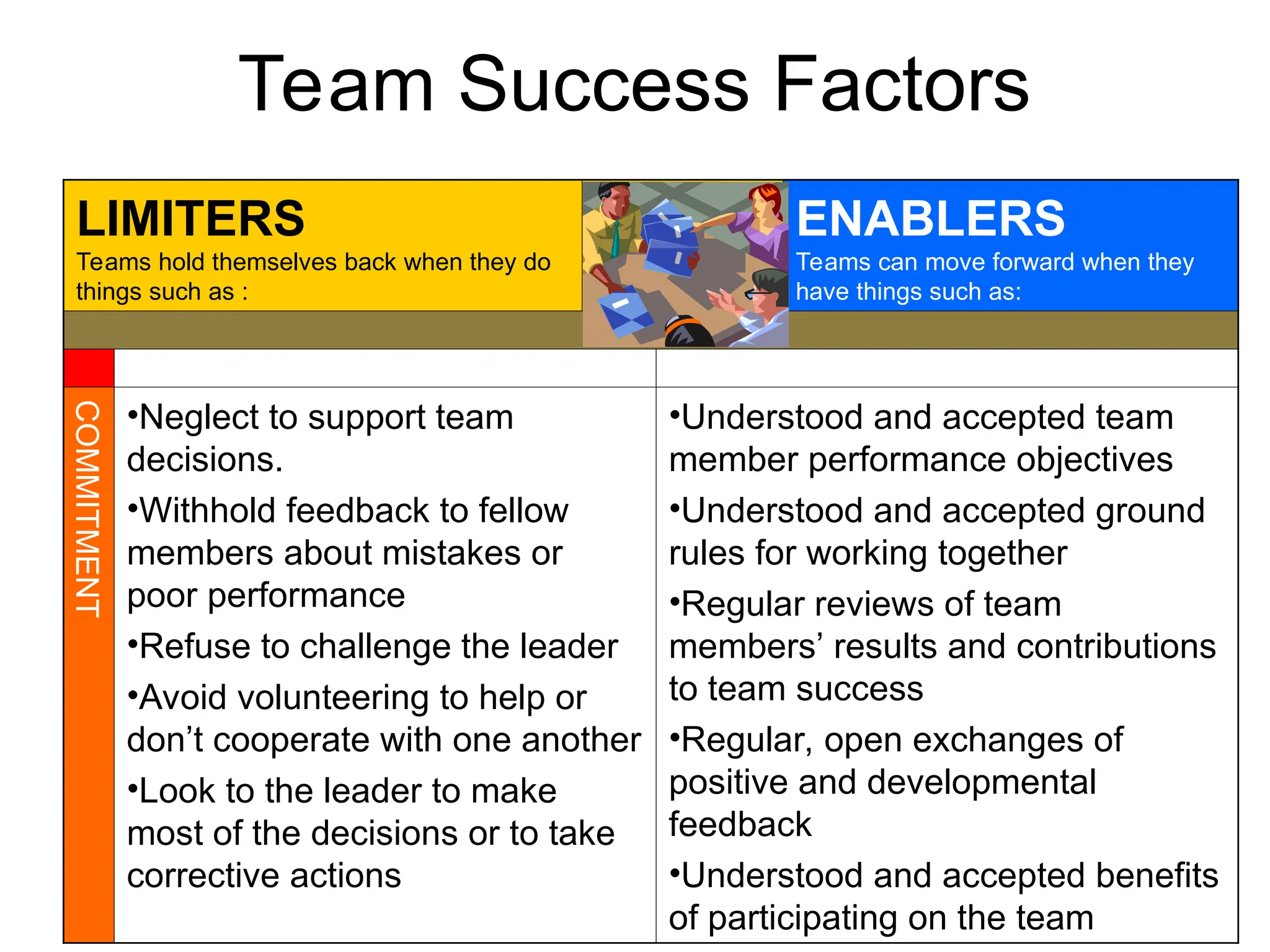
LIMITERS
Teams hold themselvesback when they do
things such as :
ENABLERS
Teams can move forward when they
have things such as:
COMMITMENT
•Neglect to support team
decisions.
•Withhold feedback to fellow
members about mistakes or
poor performance
•Refuse to challenge the leader
•Avoid volunteering to help or
don’t cooperate with one another
•Look to the leader to make
most of the decisions or to take
corrective actions
•Understood and accepted team
member performance objectives
•Understood and accepted ground
rules for working together
•Regular reviews of team
members’ results and contributions
to team success
•Regular, open exchanges of
positive and developmental
feedback
•Understood and accepted benefits
of participating on the team
Team Success Factors
6.
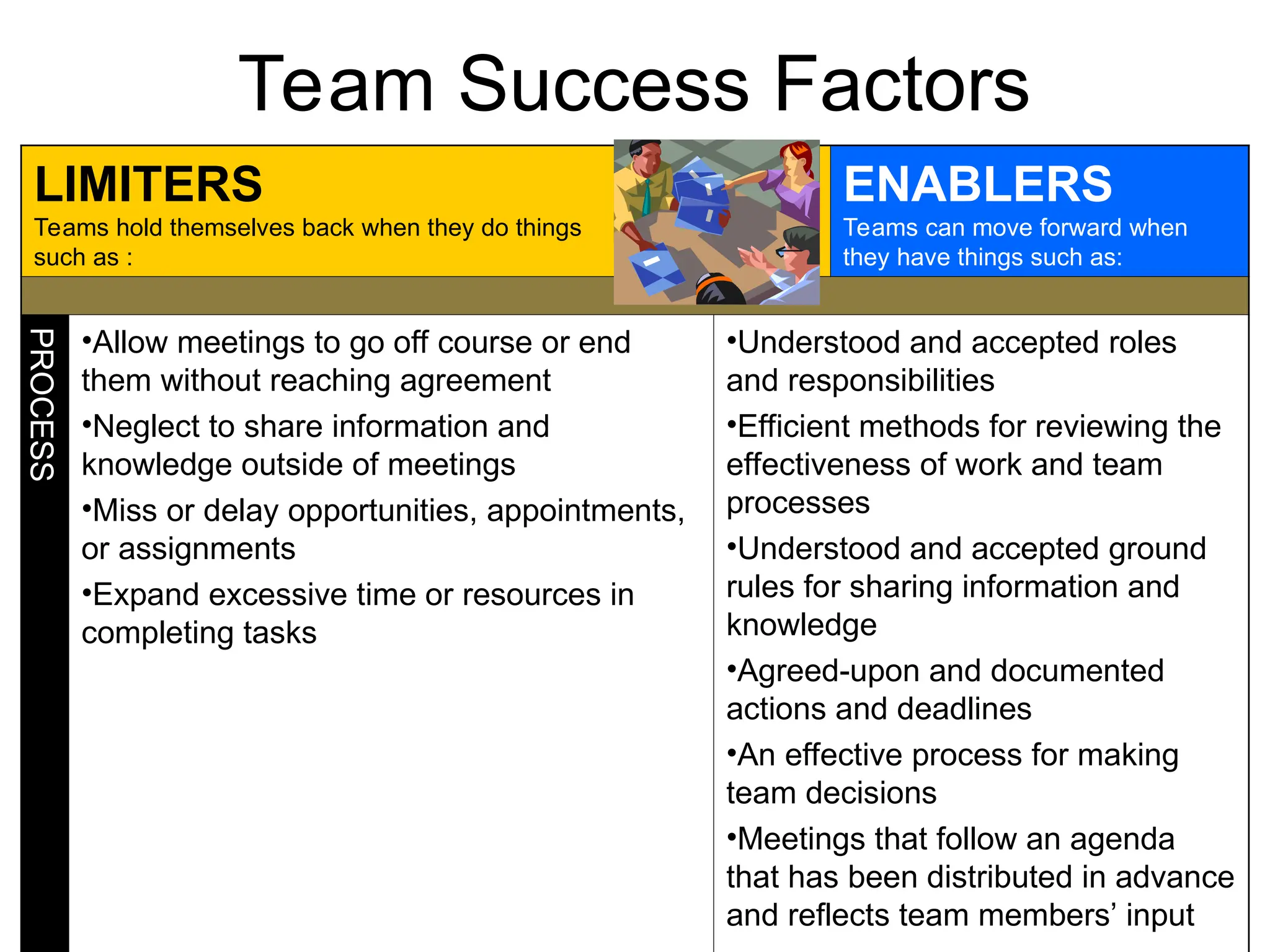
LIMITERS
Teams hold themselvesback when they do things
such as :
ENABLERS
Teams can move forward when
they have things such as:
PROCESS
•Allow meetings to go off course or end
them without reaching agreement
•Neglect to share information and
knowledge outside of meetings
•Miss or delay opportunities, appointments,
or assignments
•Expand excessive time or resources in
completing tasks
•Understood and accepted roles
and responsibilities
•Efficient methods for reviewing the
effectiveness of work and team
processes
•Understood and accepted ground
rules for sharing information and
knowledge
•Agreed-upon and documented
actions and deadlines
•An effective process for making
team decisions
•Meetings that follow an agenda
that has been distributed in advance
and reflects team members’ input
Team Success Factors
7.
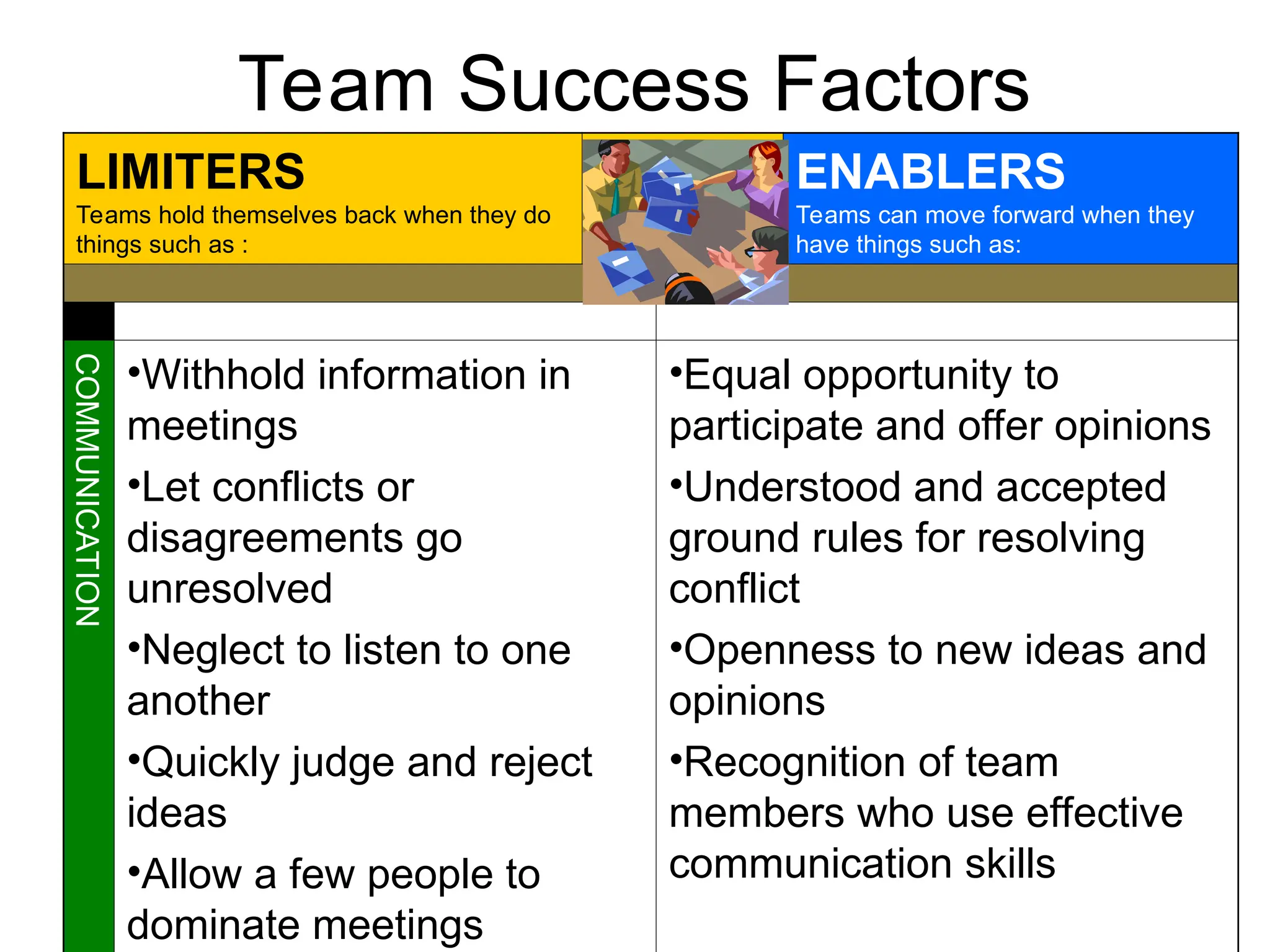
LIMITERS
Teams hold themselvesback when they do
things such as :
ENABLERS
Teams can move forward when they
have things such as:
COMMUNICATION
•Withhold information in
meetings
•Let conflicts or
disagreements go
unresolved
•Neglect to listen to one
another
•Quickly judge and reject
ideas
•Allow a few people to
dominate meetings
•Equal opportunity to
participate and offer opinions
•Understood and accepted
ground rules for resolving
conflict
•Openness to new ideas and
opinions
•Recognition of team
members who use effective
communication skills
Team Success Factors
8.
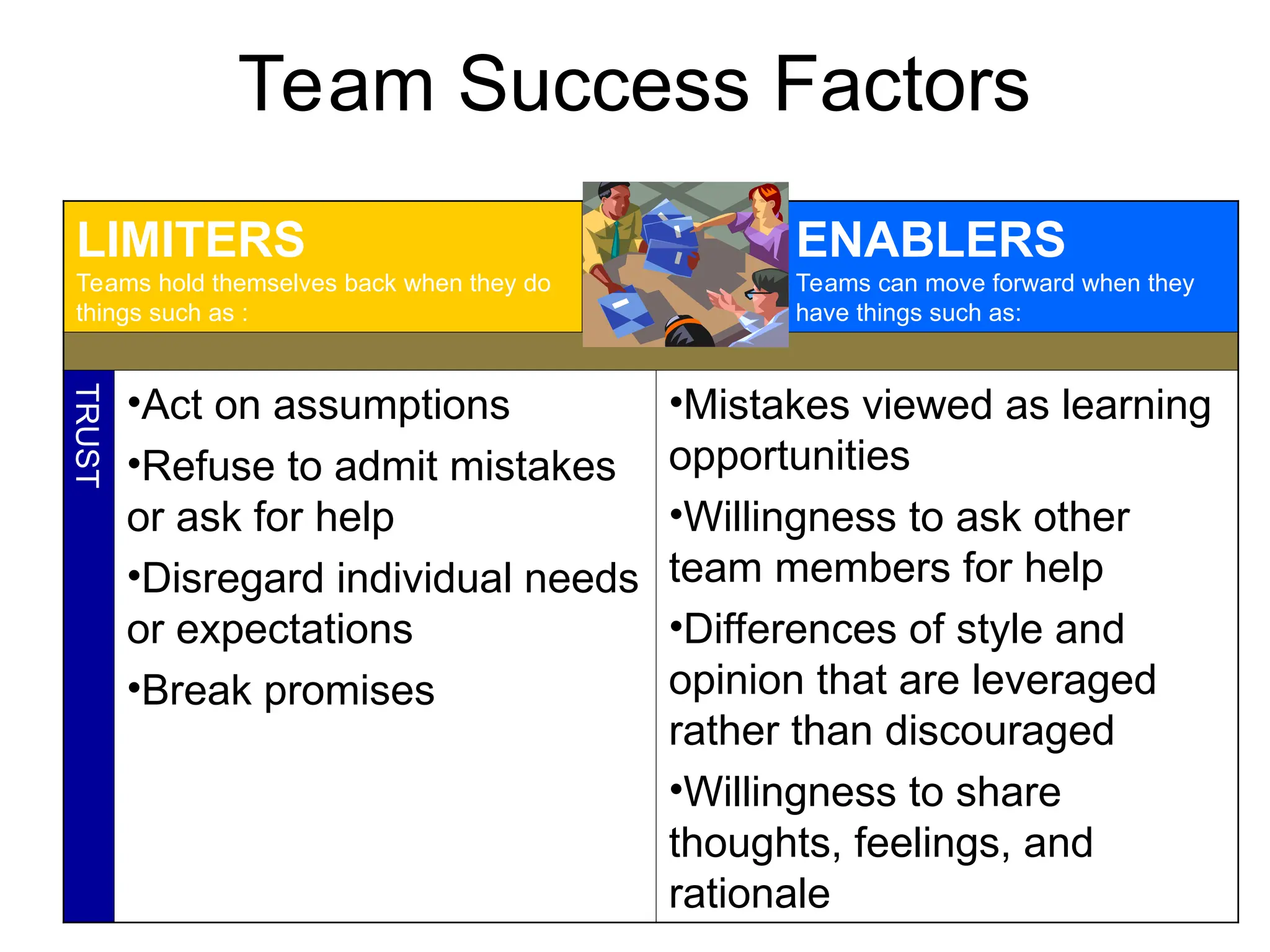
LIMITERS
Teams hold themselvesback when they do
things such as :
ENABLERS
Teams can move forward when they
have things such as:
TRUST
•Act on assumptions
•Refuse to admit mistakes
or ask for help
•Disregard individual needs
or expectations
•Break promises
•Mistakes viewed as learning
opportunities
•Willingness to ask other
team members for help
•Differences of style and
opinion that are leveraged
rather than discouraged
•Willingness to share
thoughts, feelings, and
rationale
Team Success Factors
9.
WHAT MAKES SOMETEAMS
HIGH-PERFORMING?
Effective Work Practices
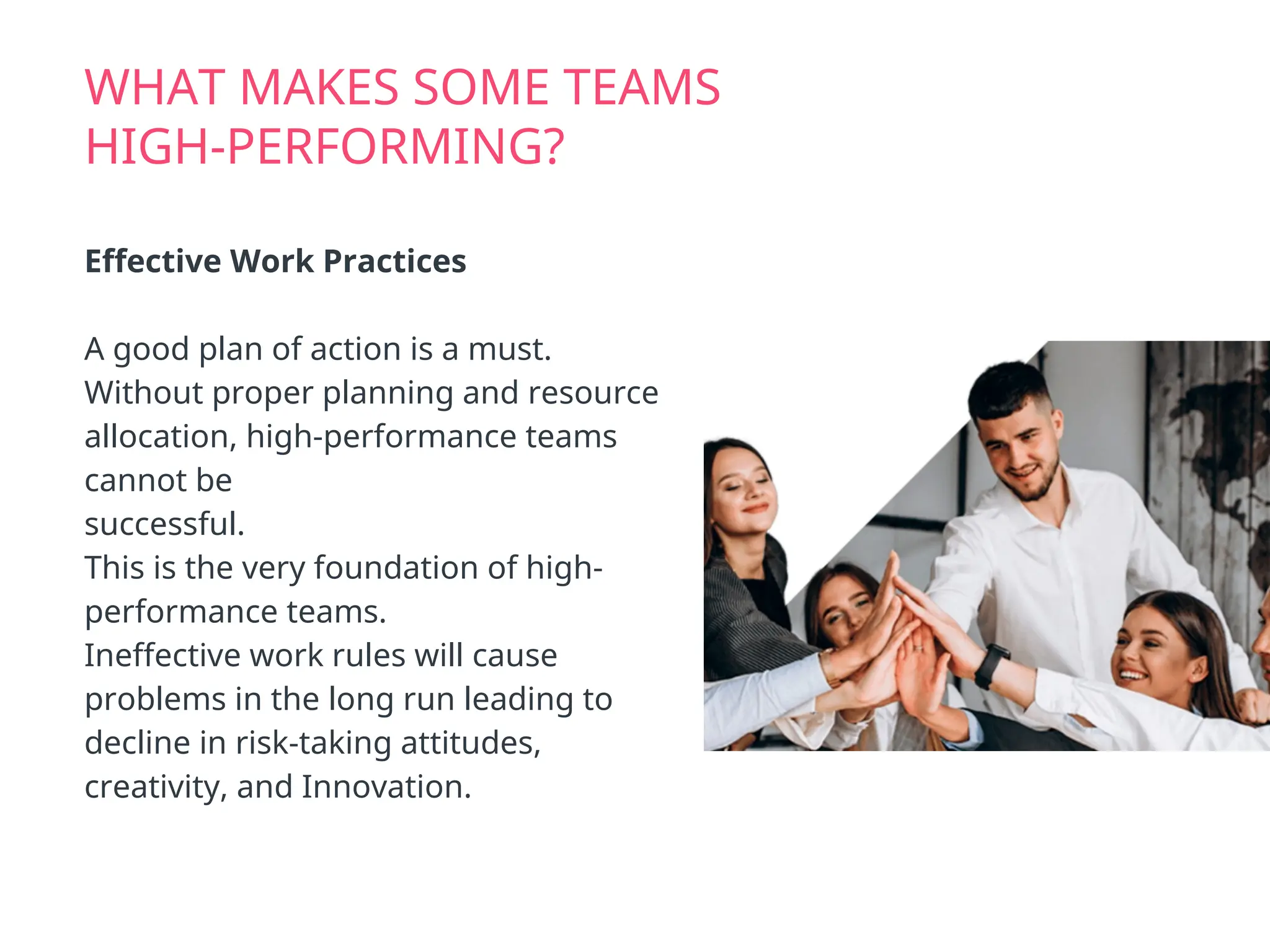
A good plan of action is a must.
Without proper planning and resource
allocation, high-performance teams
cannot be
successful.
This is the very foundation of high-
performance teams.
Ineffective work rules will cause
problems in the long run leading to
decline in risk-taking attitudes,
creativity, and Innovation.
10.
Mutual Respect Among
Leadersand Team Members
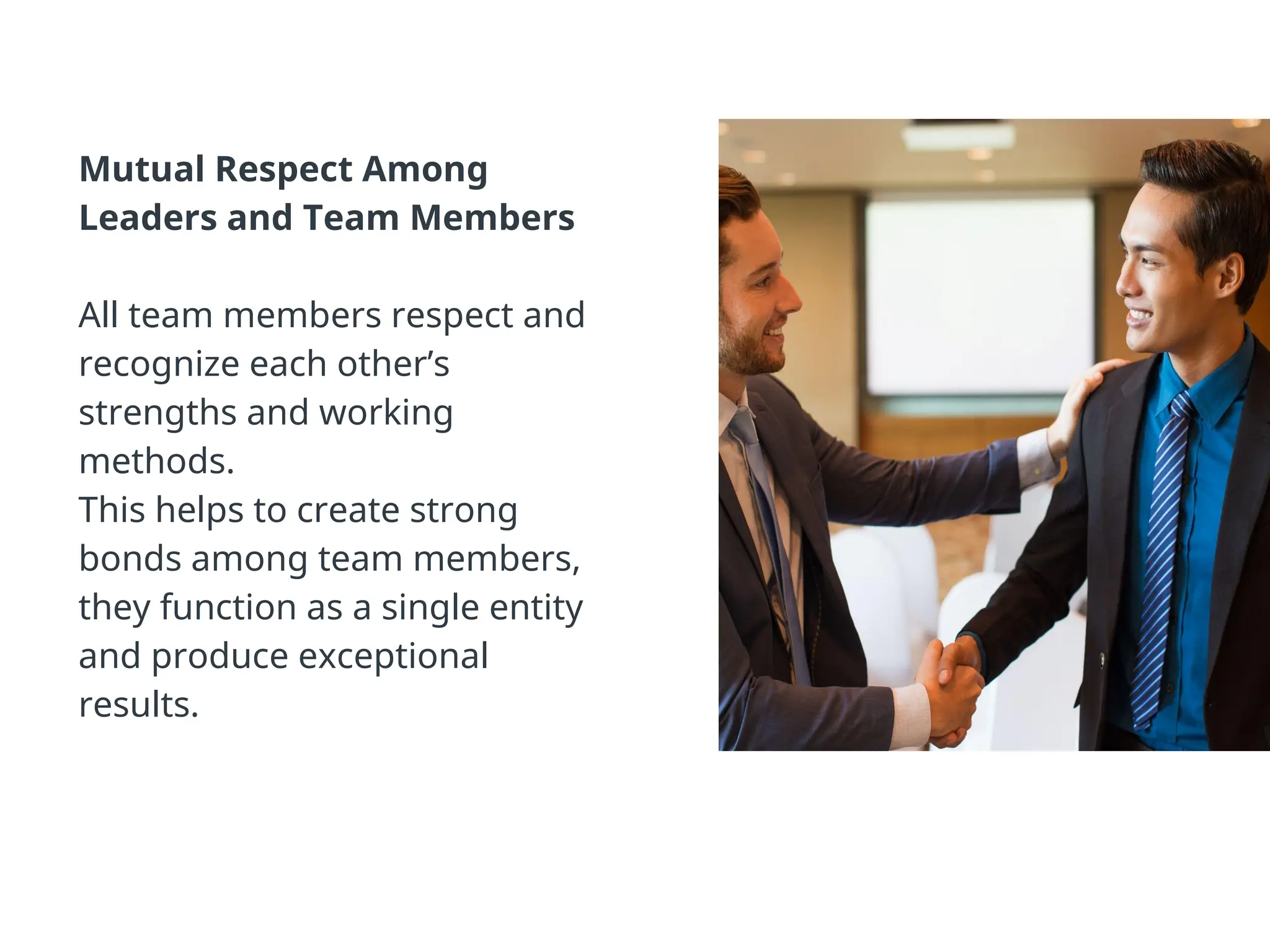
All team members respect and
recognize each other’s
strengths and working
methods.
This helps to create strong
bonds among team members,
they function as a single entity
and produce exceptional
results.
11.
•
Committed to their
team,mission and the
organization
•
With shared values and
vision, high performing
team members work
together towards a
common objective without
losing sight of results.
12.
Open Communicators
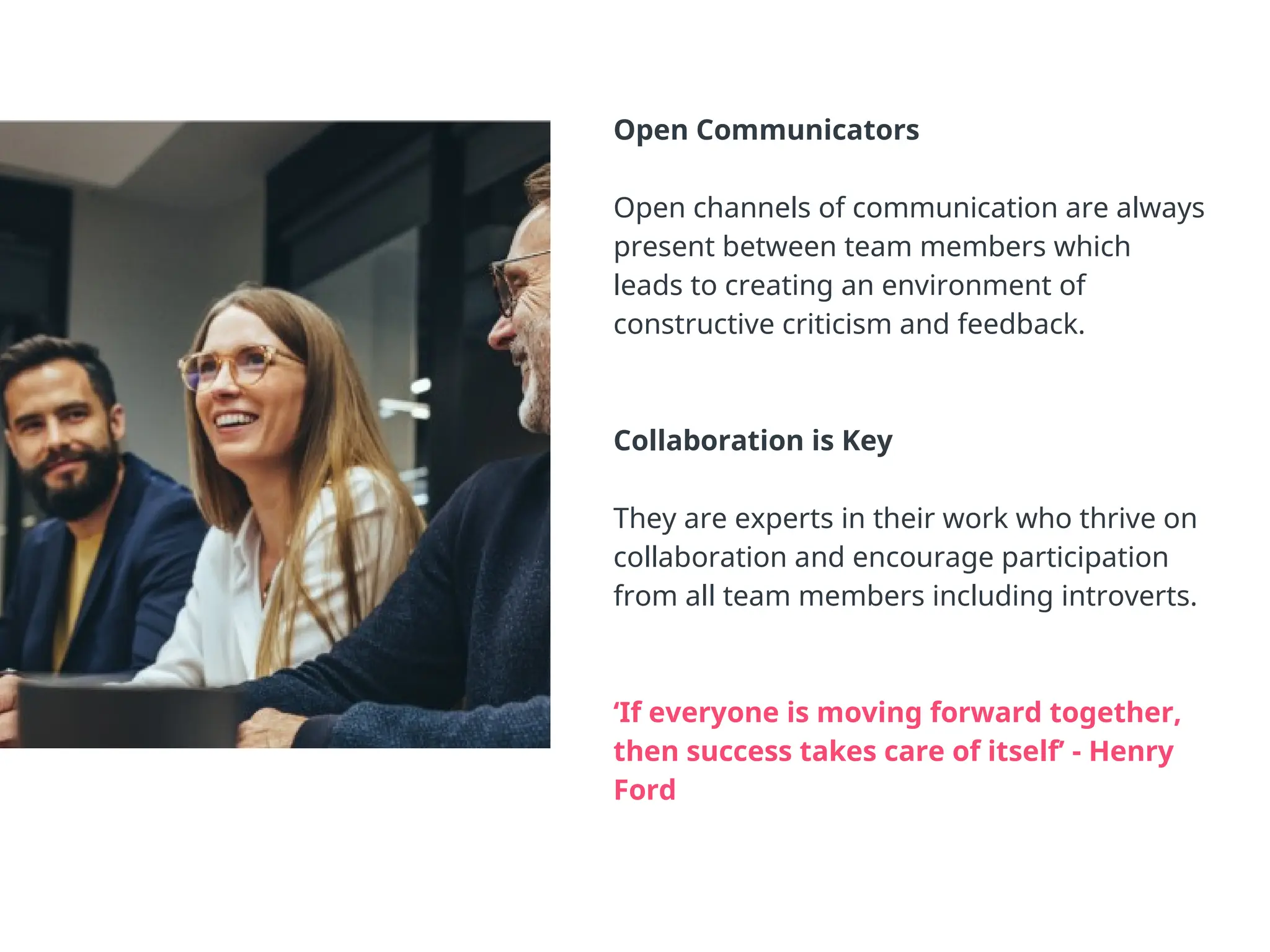
Open channelsof communication are always
present between team members which
leads to creating an environment of
constructive criticism and feedback.
Collaboration is Key
They are experts in their work who thrive on
collaboration and encourage participation
from all team members including introverts.
‘If everyone is moving forward together,
then success takes care of itself’ - Henry
Ford
13.
BUILD BETTER TEAMS
Butthere are certain rules to
building them. Amid the myriad
sources that hint upon how to build
a top team, below are some ideas
which have long proved their
worth.
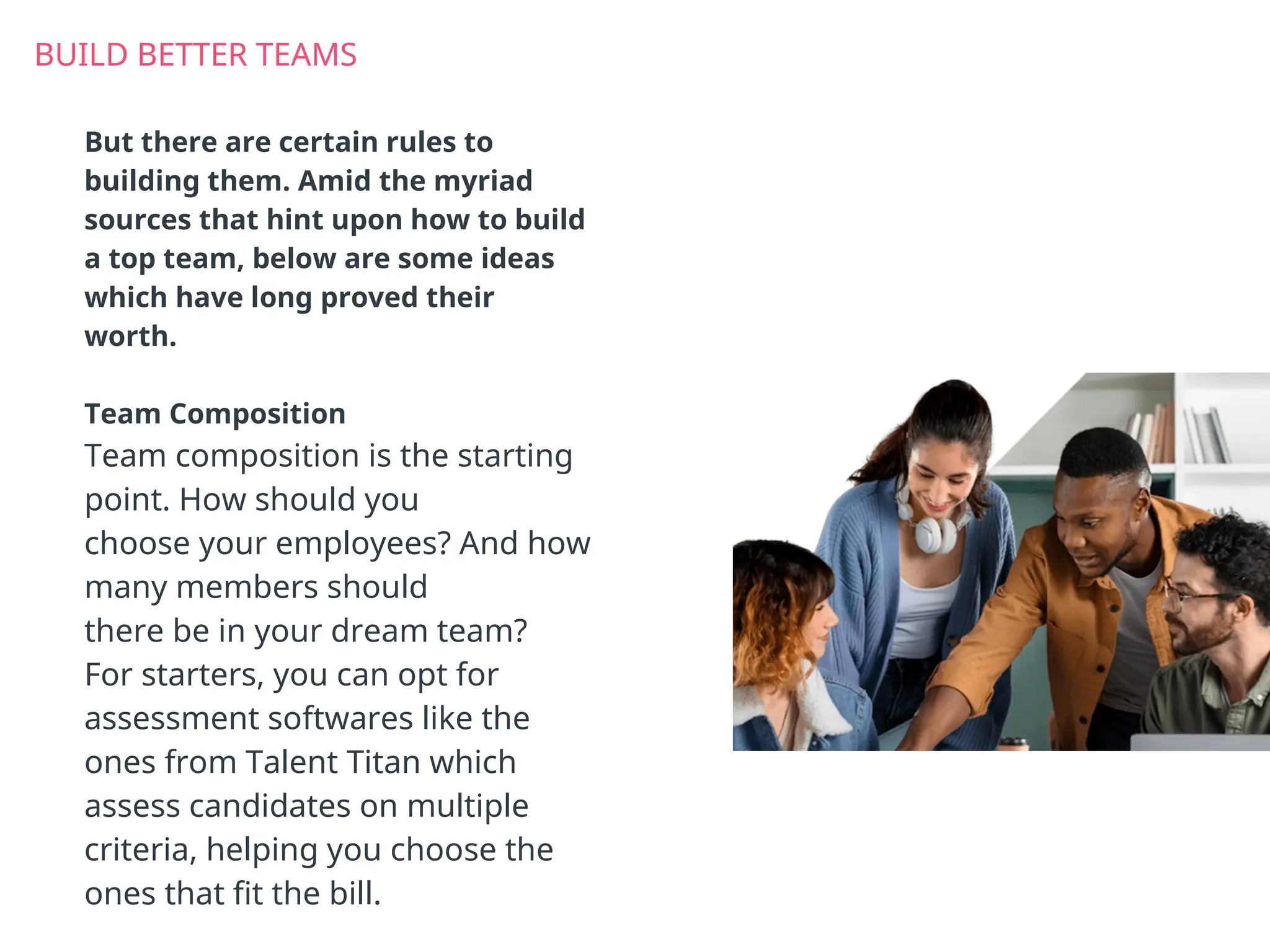
Team Composition
Team composition is the starting
point. How should you
choose your employees? And how
many members should
there be in your dream team?
For starters, you can opt for
assessment softwares like the
ones from Talent Titan which
assess candidates on multiple
criteria, helping you choose the
ones that fit the bill.
14.
As far asthe team size is concerned, here’s
what the e-commerce pioneer, Jeff Bezos of
Amazon states -
‘No matter how large your organization is, if
you can’t feed your team with two pizzas,
it’s too large. The reason is simple. There is
no strength in numbers.’
More People = More Chaos
Researchers state that the team’s effectiveness
begins to drop if there are more than 10
people on it. People form sub-teams. Although
a congenial, ‘here for the team’ face is forever
present in the meetings, however things
change drastically outside the meeting room.
15.
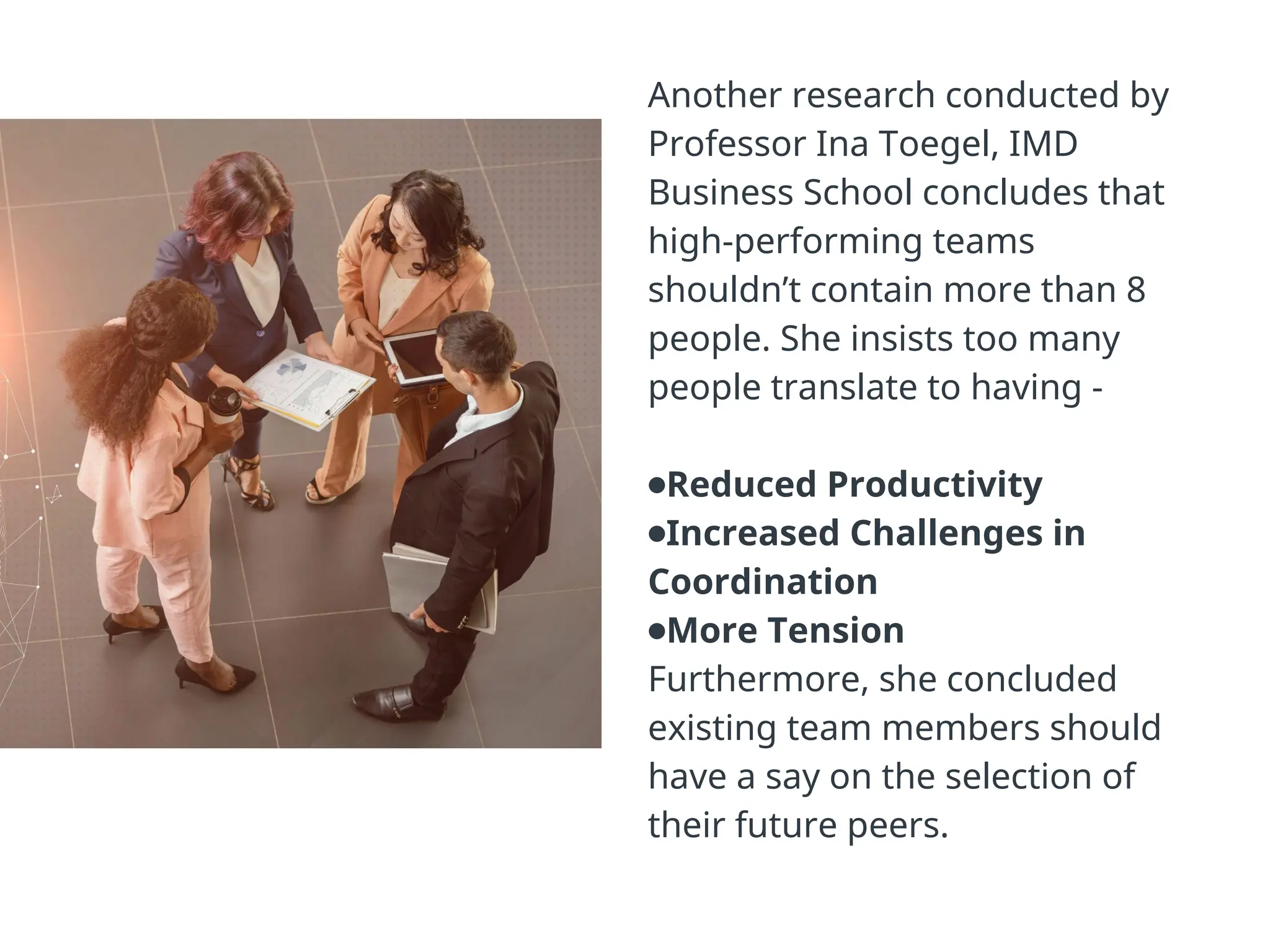
Another research conductedby
Professor Ina Toegel, IMD
Business School concludes that
high-performing teams
shouldn’t contain more than 8
people. She insists too many
people translate to having -
●Reduced Productivity
●Increased Challenges in
Coordination
●More Tension
Furthermore, she concluded
existing team members should
have a say on the selection of
their future peers.
16.
Real-Time Recognition
Another importantfactor to build and
scale a high performing team is to
celebrate their wins, regularly. By
highlighting their achievements, you
foster a culture of recognition and
appreciation. It not only boosts
employee morale but motivates them
to pursue excellence, at all times.
Always remember a golden rule
while giving feedback, ‘be generous
with praise and sparing with
criticism.’
17.
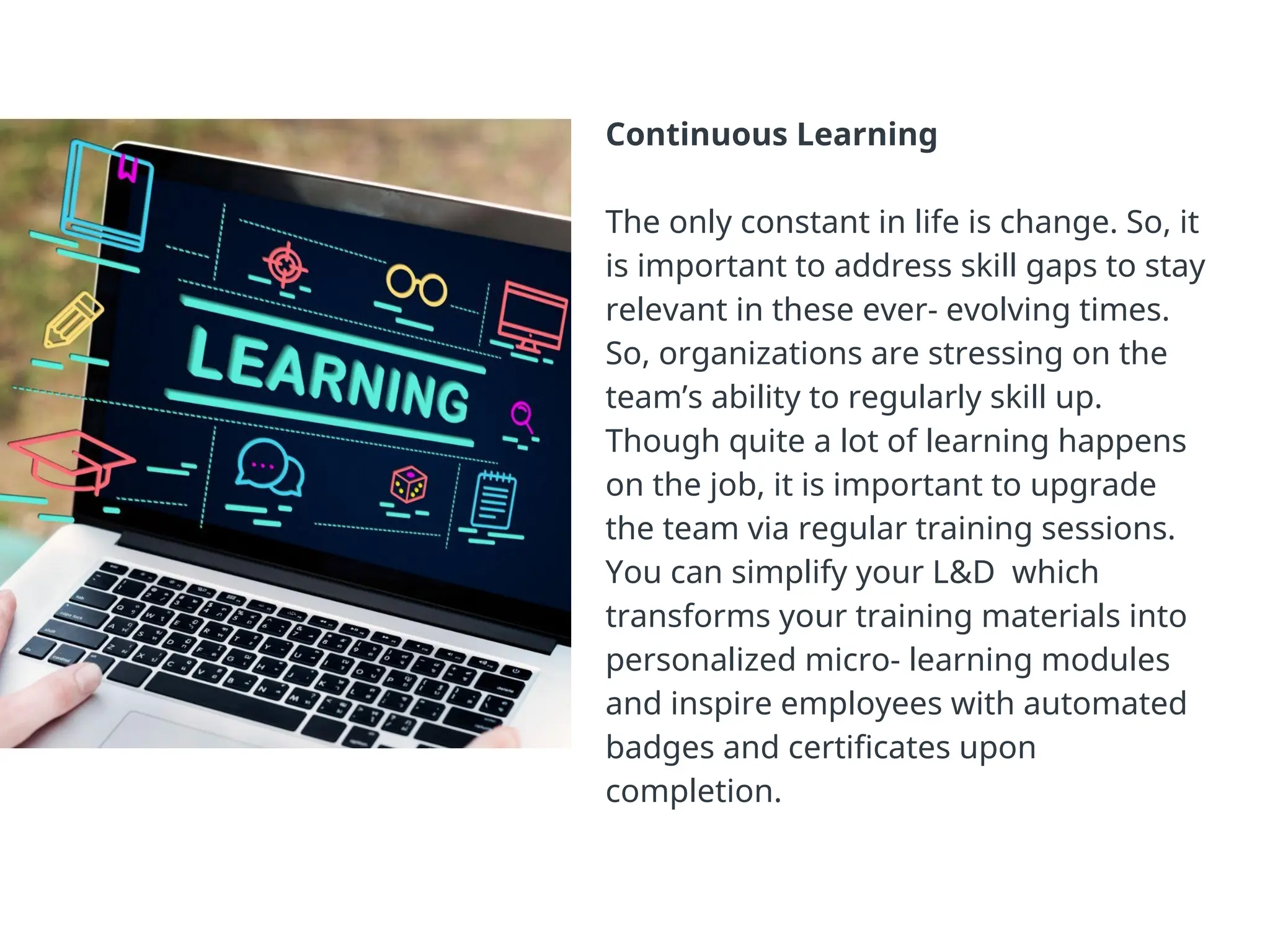
Continuous Learning
The onlyconstant in life is change. So, it
is important to address skill gaps to stay
relevant in these ever- evolving times.
So, organizations are stressing on the
team’s ability to regularly skill up.
Though quite a lot of learning happens
on the job, it is important to upgrade
the team via regular training sessions.
You can simplify your L&D which
transforms your training materials into
personalized micro- learning modules
and inspire employees with automated
badges and certificates upon
completion.
14
18.
Embrace Feedback
It isimportant to create a culture of
continuous feedback for the growth and
development of your team. A feedback-driven
approach helps the team to continuously
learn, adapt, and excel but can backfire if not
done correctly. Feedback giving is indeed an
art.
Succession Planning
Sustaining a high performing team is as critical
as developing it. Top performers need reasons
to stay and that can happen only if you
facilitate their growth and development. Build
a leadership pipeline by identifying the skills
and competencies of your top talent who
eventually would assume key positions.
19.
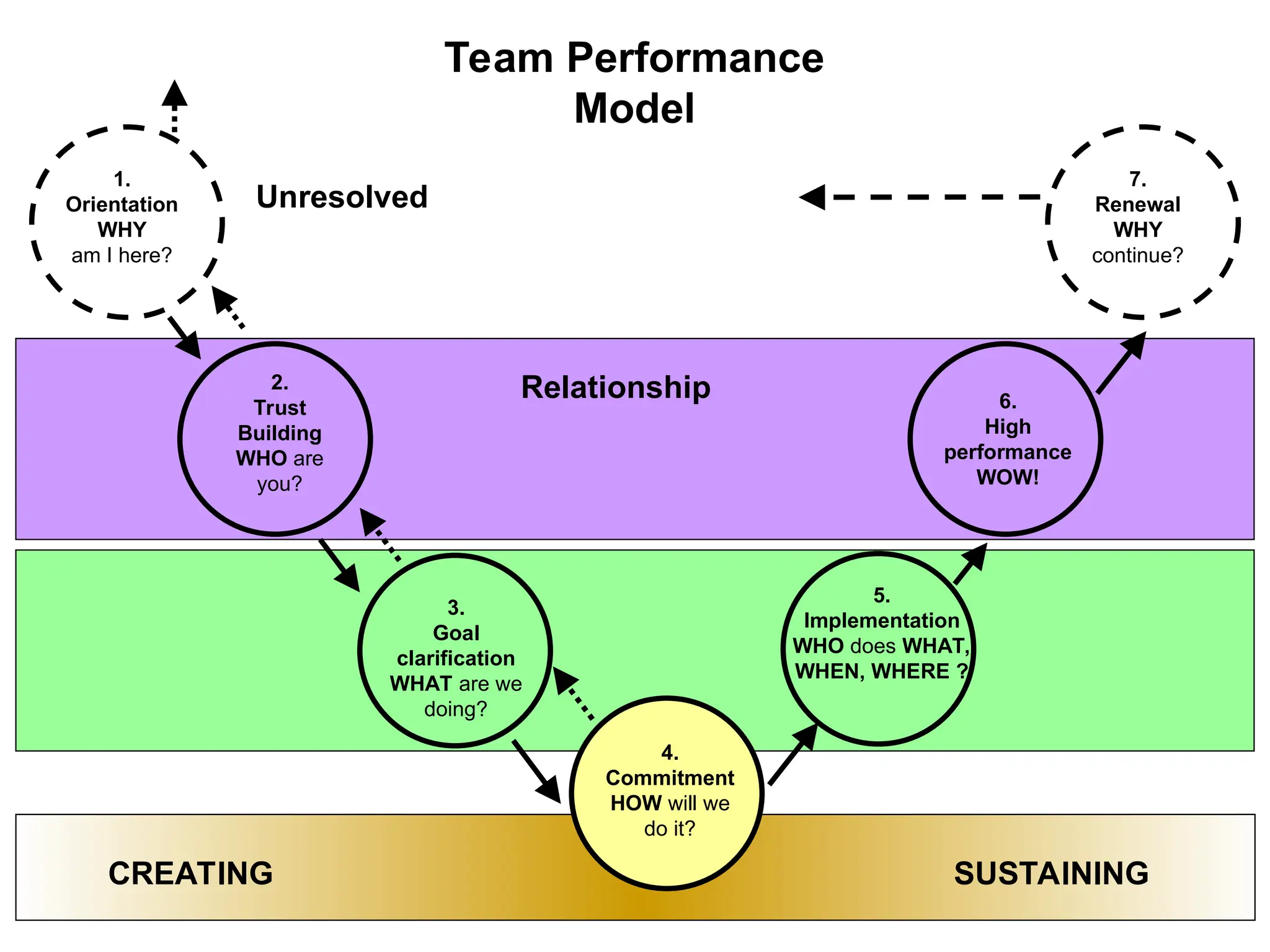
Team Performance
Model
1.
Orientation
WHY
am Ihere?
2.
Trust
Building
WHO are
you?
3.
Goal
clarification
WHAT are we
doing?
5.
Implementation
WHO does WHAT,
WHEN, WHERE ?
6.
High
performance
WOW!
7.
Renewal
WHY
continue?
4.
Commitment
HOW will we
do it?
CREATING SUSTAINING
Relationship
Unresolved