
The Top Five Drivers of High
Performing Teams
Evidence from the Total Leader and
Coach Solutions High Performing Elite
Teams (HPET) Research and Work
Creating Sustainable Behavioural Change in Teams
Total Leader and Coach Solutions Australia
www.tlcsolutions.com.au | enquiries@tlcsolutions.com.au
Total Leader and Coach Solutions Australia High Performing Elite Teams
Copyright © Total Leader and Coach Solutions Australia 2013
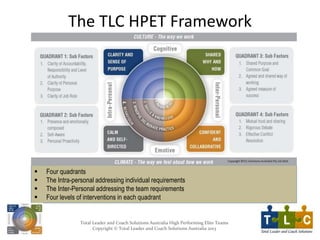
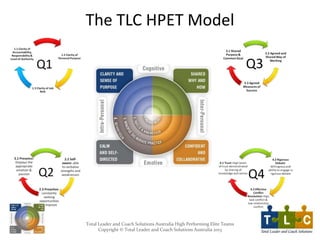
The TLC HPET Framework
 Four quadrants
 The Intra-personal addressing individual requirements
 The Inter-Personal addressing the team requirements
 Four levels of interventions in each quadrant
Total Leader and Coach Solutions Australia High Performing Elite Teams
Copyright © Total Leader and Coach Solutions Australia 2013
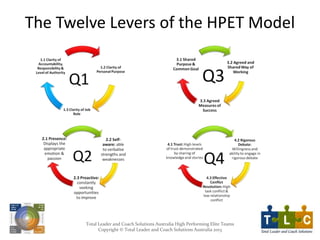
The Twelve Levers of the HPET Model
TOP FIVE DRIVERS
The key levers to develop a high performing state in a team: Based on
the validation study of the HPET and the TLC HPET Database as a
result of working with leadership teams across Australia
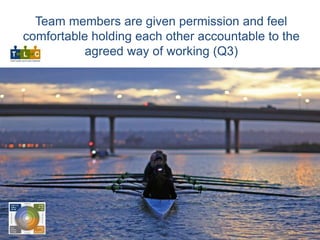
Team members are given permission and feel
comfortable holding each other accountable to the
agreed way of working (Q3)
The team appreciate and tap into each other's
different approaches, skills and experiences (Q4)
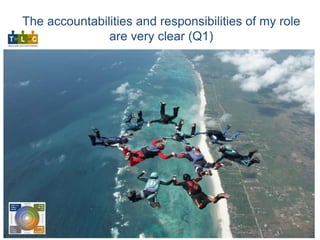
The accountabilities and responsibilities of my role
are very clear (Q1)
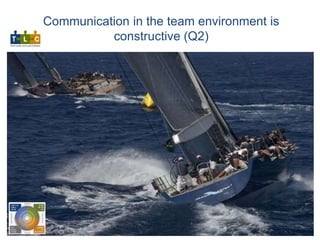
Communication in the team environment is
constructive (Q2)
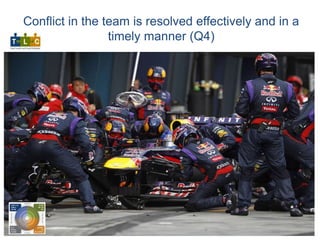
Conflict in the team is resolved effectively and in a
timely manner (Q4)
STRATEGIES
The key strategies to develop a high performing state in a team
Total Leader and Coach Solutions Australia High Performing Elite Teams
Copyright © Total Leader and Coach Solutions Australia 2013
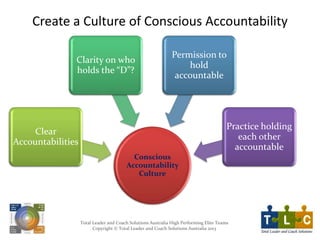
Create a Culture of Conscious Accountability
Conscious
Accountability
Culture
Clear
Accountabilities
Clarity on who
holds the “D”?
Permission to
hold
accountable
Practice holding
each other
accountable
Total Leader and Coach Solutions Australia High Performing Elite Teams
Copyright © Total Leader and Coach Solutions Australia 2013
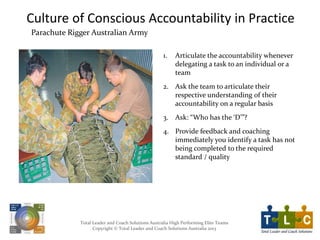
Culture of Conscious Accountability in Practice
Parachute Rigger Australian Army
1. Articulate the accountability whenever
delegating a task to an individual or a
team
2. Ask the team to articulate their
respective understanding of their
accountability on a regular basis
3. Ask: “Who has the ‘D’”?
4. Provide feedback and coaching
immediately you identify a task has not
being completed to the required
standard / quality
Total Leader and Coach Solutions Australia High Performing Elite Teams
Copyright © Total Leader and Coach Solutions Australia 2013
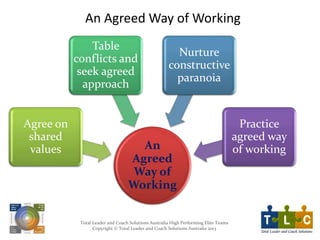
An Agreed Way of Working
An
Agreed
Way of
Working
Agree on
shared
values
Table
conflicts and
seek agreed
approach
Nurture
constructive
paranoia
Practice
agreed way
of working
Total Leader and Coach Solutions Australia High Performing Elite Teams
Copyright © Total Leader and Coach Solutions Australia 2013
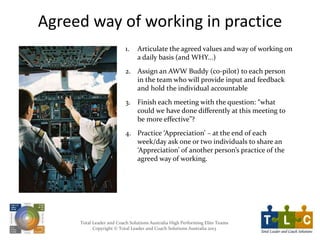
Agreed way of working in practice
1. Articulate the agreed values and way of working on
a daily basis (and WHY...)
2. Assign an AWW Buddy (co-pilot) to each person
in the team who will provide input and feedback
and hold the individual accountable
3. Finish each meeting with the question: “what
could we have done differently at this meeting to
be more effective”?
4. Practice ‘Appreciation’ – at the end of each
week/day ask one or two individuals to share an
‘Appreciation’ of another person’s practice of the
agreed way of working.
Total Leader and Coach Solutions Australia High Performing Elite Teams
Copyright © Total Leader and Coach Solutions Australia 2013
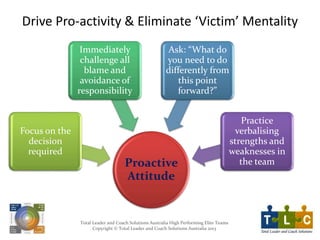
Drive Pro-activity & Eliminate ‘Victim’ Mentality
Proactive
Attitude
Focus on the
decision
required
Immediately
challenge all
blame and
avoidance of
responsibility
Ask: “What do
you need to do
differently from
this point
forward?”
Practice
verbalising
strengths and
weaknesses in
the team
Total Leader and Coach Solutions Australia High Performing Elite Teams
Copyright © Total Leader and Coach Solutions Australia 2013
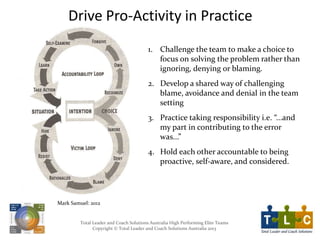
Mark Samuel: 2012
1. Challenge the team to make a choice to
focus on solving the problem rather than
ignoring, denying or blaming.
2. Develop a shared way of challenging
blame, avoidance and denial in the team
setting
3. Practice taking responsibility i.e. “...and
my part in contributing to the error
was...”
4. Hold each other accountable to being
proactive, self-aware, and considered.
Drive Pro-Activity in Practice
Total Leader and Coach Solutions Australia High Performing Elite Teams
Copyright © Total Leader and Coach Solutions Australia 2013
The TLC HPET Model
Total Leader and Coach Solutions Australia High Performing Elite Teams
Copyright © Total Leader and Coach Solutions Australia 2013
What Next?
If your team would like to gauge its High
Performing State, then contact us and
we will arrange a time to discuss your
team’s needs and the next steps.
Greg Bayne – greg@tlcsolutions.com.au
Alistair Box – alistair@tlcsolutions.com.au
Heather McGregor-Bayne – heather@tlcsolutions.com.au
www.tlcsolutions.com.au

Generate Better Team Performance

  • 1.
    The Top FiveDrivers of High Performing Teams Evidence from the Total Leader and Coach Solutions High Performing Elite Teams (HPET) Research and Work Creating Sustainable Behavioural Change in Teams Total Leader and Coach Solutions Australia www.tlcsolutions.com.au | enquiries@tlcsolutions.com.au
  • 2.
    Total Leader andCoach Solutions Australia High Performing Elite Teams Copyright © Total Leader and Coach Solutions Australia 2013 The TLC HPET Framework  Four quadrants  The Intra-personal addressing individual requirements  The Inter-Personal addressing the team requirements  Four levels of interventions in each quadrant
  • 3.
    Total Leader andCoach Solutions Australia High Performing Elite Teams Copyright © Total Leader and Coach Solutions Australia 2013 The Twelve Levers of the HPET Model
  • 4.
    TOP FIVE DRIVERS Thekey levers to develop a high performing state in a team: Based on the validation study of the HPET and the TLC HPET Database as a result of working with leadership teams across Australia
  • 5.
    Team members aregiven permission and feel comfortable holding each other accountable to the agreed way of working (Q3)
  • 6.
    The team appreciateand tap into each other's different approaches, skills and experiences (Q4)
  • 7.
    The accountabilities andresponsibilities of my role are very clear (Q1)
  • 8.
    Communication in theteam environment is constructive (Q2)
  • 9.
    Conflict in theteam is resolved effectively and in a timely manner (Q4)
  • 10.
    STRATEGIES The key strategiesto develop a high performing state in a team
  • 11.
    Total Leader andCoach Solutions Australia High Performing Elite Teams Copyright © Total Leader and Coach Solutions Australia 2013 Create a Culture of Conscious Accountability Conscious Accountability Culture Clear Accountabilities Clarity on who holds the “D”? Permission to hold accountable Practice holding each other accountable
  • 12.
    Total Leader andCoach Solutions Australia High Performing Elite Teams Copyright © Total Leader and Coach Solutions Australia 2013 Culture of Conscious Accountability in Practice Parachute Rigger Australian Army 1. Articulate the accountability whenever delegating a task to an individual or a team 2. Ask the team to articulate their respective understanding of their accountability on a regular basis 3. Ask: “Who has the ‘D’”? 4. Provide feedback and coaching immediately you identify a task has not being completed to the required standard / quality
  • 13.
    Total Leader andCoach Solutions Australia High Performing Elite Teams Copyright © Total Leader and Coach Solutions Australia 2013 An Agreed Way of Working An Agreed Way of Working Agree on shared values Table conflicts and seek agreed approach Nurture constructive paranoia Practice agreed way of working
  • 14.
    Total Leader andCoach Solutions Australia High Performing Elite Teams Copyright © Total Leader and Coach Solutions Australia 2013 Agreed way of working in practice 1. Articulate the agreed values and way of working on a daily basis (and WHY...) 2. Assign an AWW Buddy (co-pilot) to each person in the team who will provide input and feedback and hold the individual accountable 3. Finish each meeting with the question: “what could we have done differently at this meeting to be more effective”? 4. Practice ‘Appreciation’ – at the end of each week/day ask one or two individuals to share an ‘Appreciation’ of another person’s practice of the agreed way of working.
  • 15.
    Total Leader andCoach Solutions Australia High Performing Elite Teams Copyright © Total Leader and Coach Solutions Australia 2013 Drive Pro-activity & Eliminate ‘Victim’ Mentality Proactive Attitude Focus on the decision required Immediately challenge all blame and avoidance of responsibility Ask: “What do you need to do differently from this point forward?” Practice verbalising strengths and weaknesses in the team
  • 16.
    Total Leader andCoach Solutions Australia High Performing Elite Teams Copyright © Total Leader and Coach Solutions Australia 2013 Mark Samuel: 2012 1. Challenge the team to make a choice to focus on solving the problem rather than ignoring, denying or blaming. 2. Develop a shared way of challenging blame, avoidance and denial in the team setting 3. Practice taking responsibility i.e. “...and my part in contributing to the error was...” 4. Hold each other accountable to being proactive, self-aware, and considered. Drive Pro-Activity in Practice
  • 17.
    Total Leader andCoach Solutions Australia High Performing Elite Teams Copyright © Total Leader and Coach Solutions Australia 2013 The TLC HPET Model
  • 18.
    Total Leader andCoach Solutions Australia High Performing Elite Teams Copyright © Total Leader and Coach Solutions Australia 2013 What Next? If your team would like to gauge its High Performing State, then contact us and we will arrange a time to discuss your team’s needs and the next steps. Greg Bayne – greg@tlcsolutions.com.au Alistair Box – alistair@tlcsolutions.com.au Heather McGregor-Bayne – heather@tlcsolutions.com.au www.tlcsolutions.com.au