


Creating a Culture of Innovation: M.J. D’Elia 
Creating a 
Culture of 
Innovation 
M.J. D’Elia 
University of Guelph 
ARL Membership Meeting Fall 2014
Learning Commons & College of Business and 
Economics
5 years ago > Restructuring 
5 years ago > restructuring
Innovation = Core value 
innovation = core value
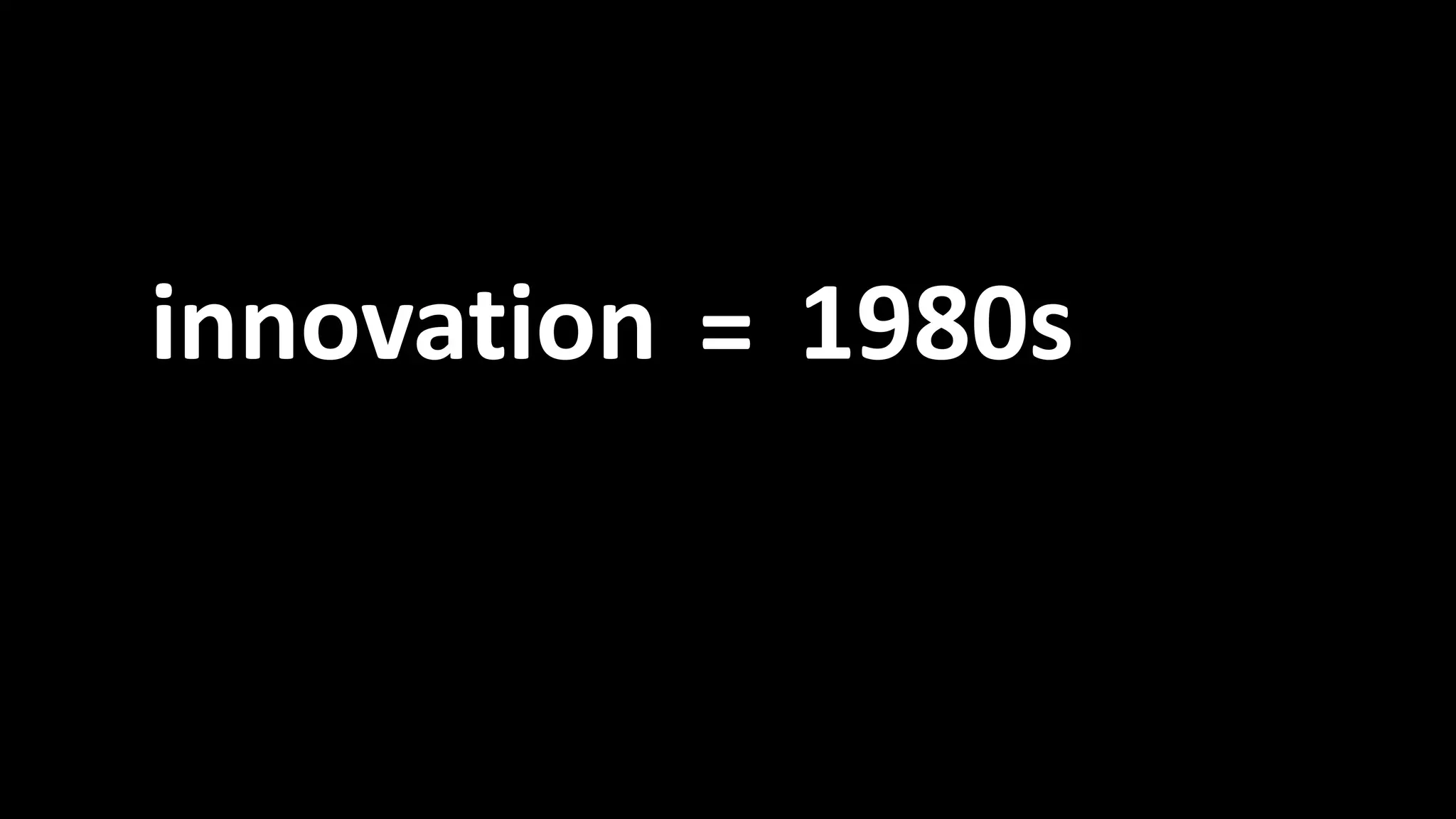
Innovation = 1980s 
innovation = 1980s
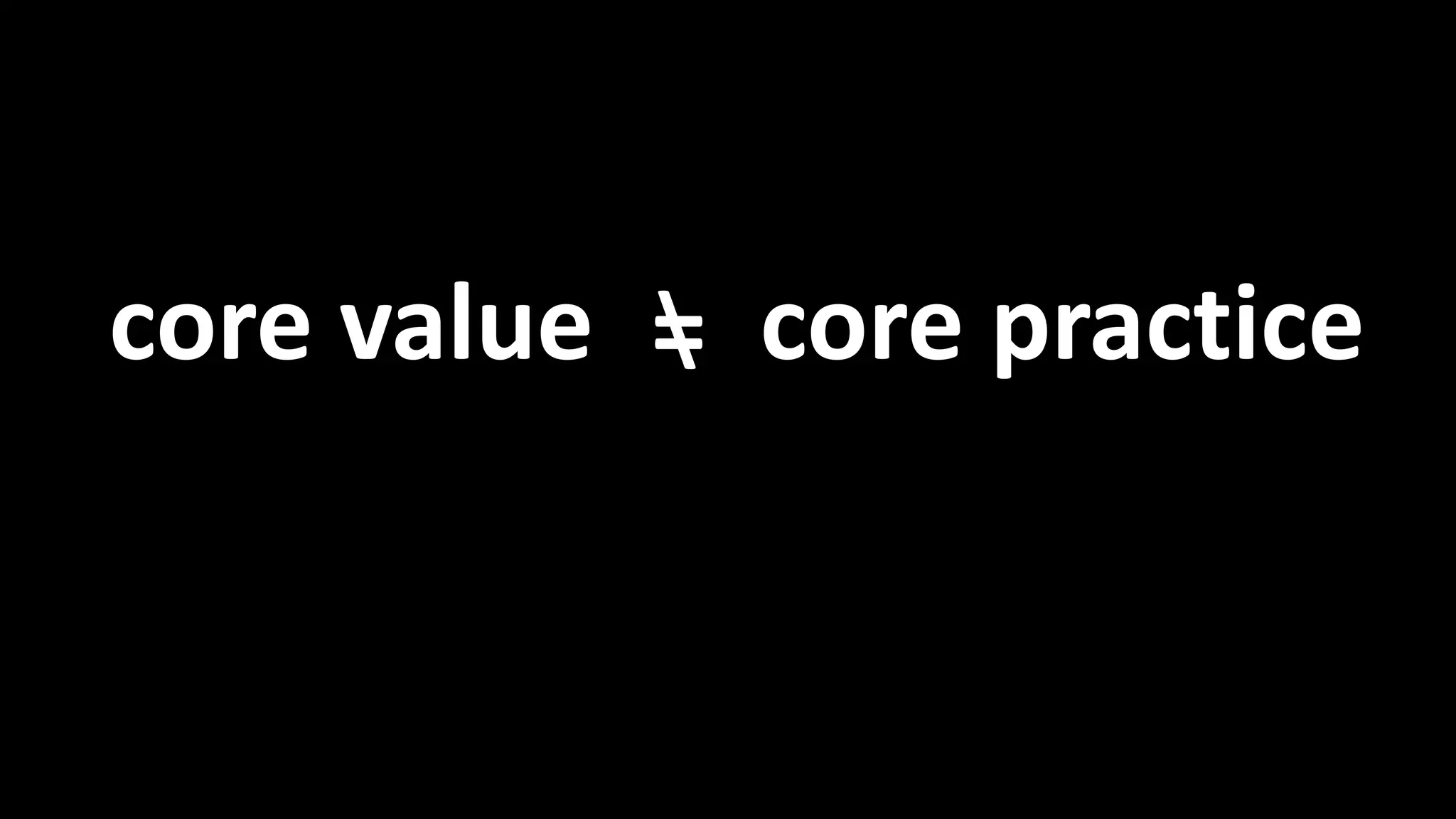
Core value vs. Core practice 
core value = core practice
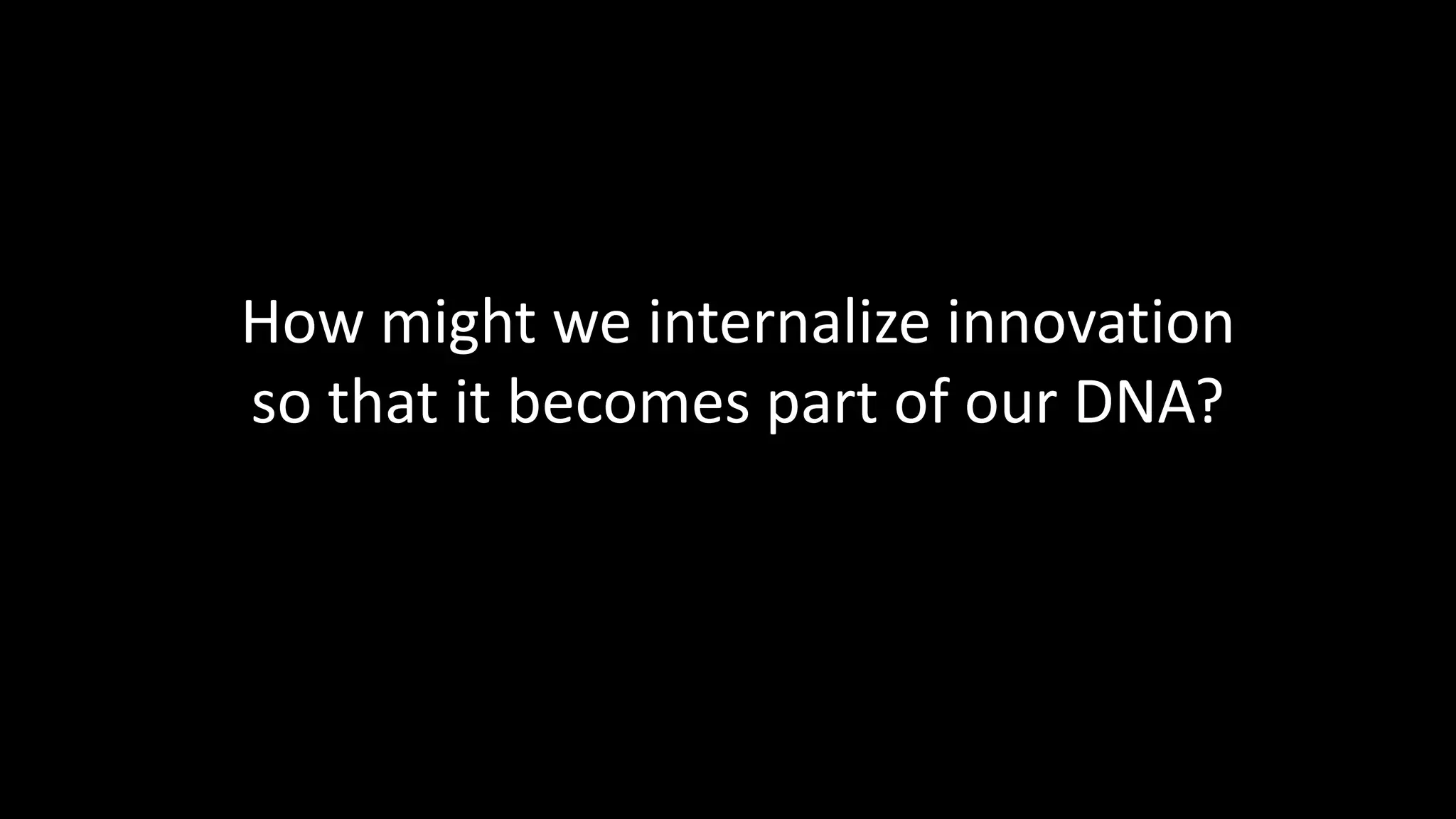
Internalizing innovation 
How might we internalize innovation 
so that it becomes part of our DNA?
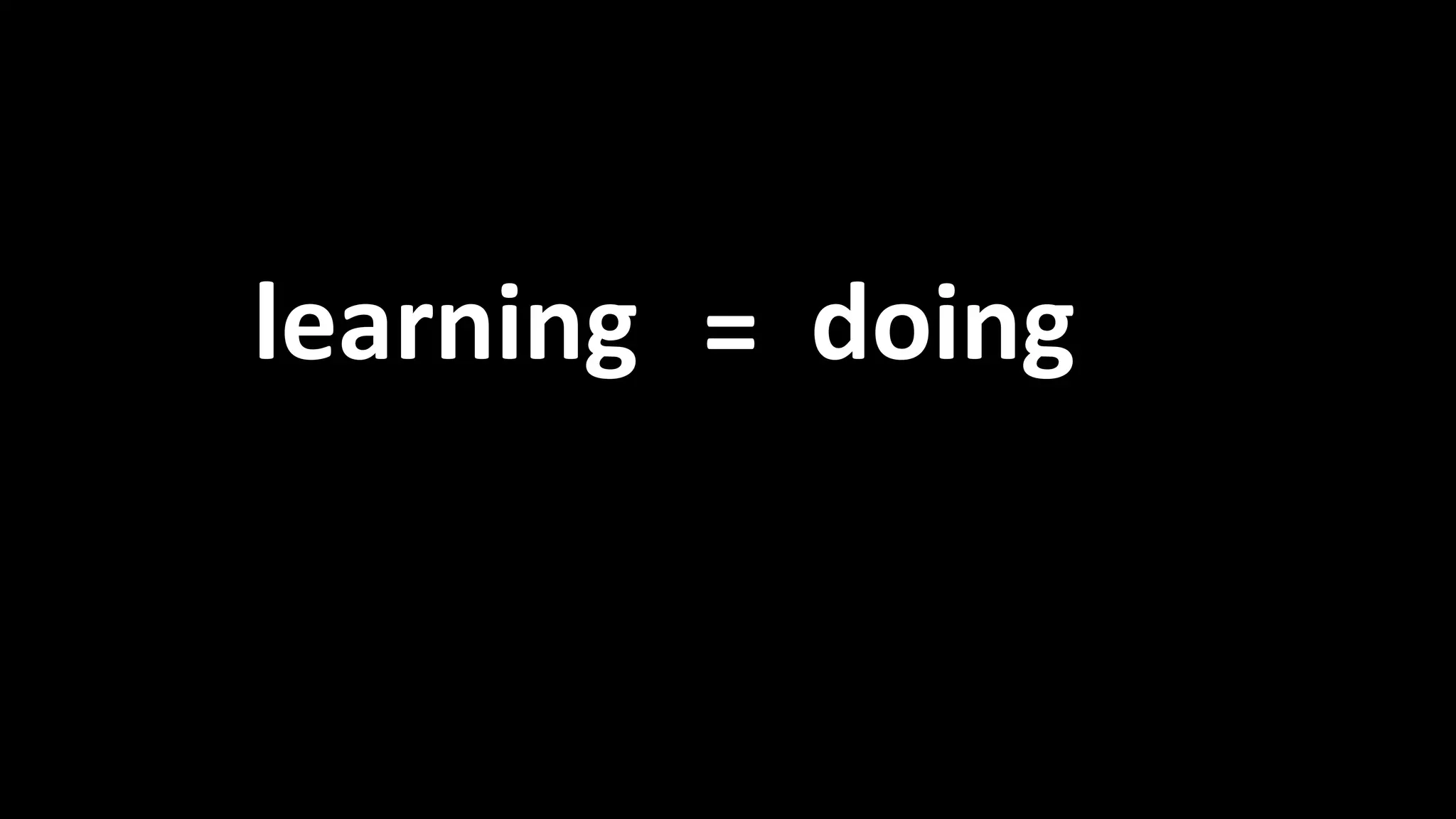
Learning = doing 
learning = doing
innovation boot camp 
experiments entrepreneurship 
startup thinking 
startup weekend: libraries 
Experiments
In the water... 
in the water
Creating a 
Culture of 
Innovation 
Practice 
People 
Platform 
Platform, People, Practice
Alternative Presentation Title 
Creating a 
Culture of 
Innovation 
from a middle 
manager at some 
Canada 
Thoughts on 
university up in
Platform 
Platform: Sub-section
Platform 
Platform: Examples 
budget allocation 
project approval/oversight 
innovation incentives 
celebration + recognition
Plans vs. Models 
plans v. models
built on assumptions 
plans assumptions become facts 
plan becomes static 
library-centric 
Poor planning Process
plans productivity measured 
against the plan 
Plans: Productivity
“No plan survives first contact 
with its customers.” 
-Steve Blank 
First contact: Steve Blank
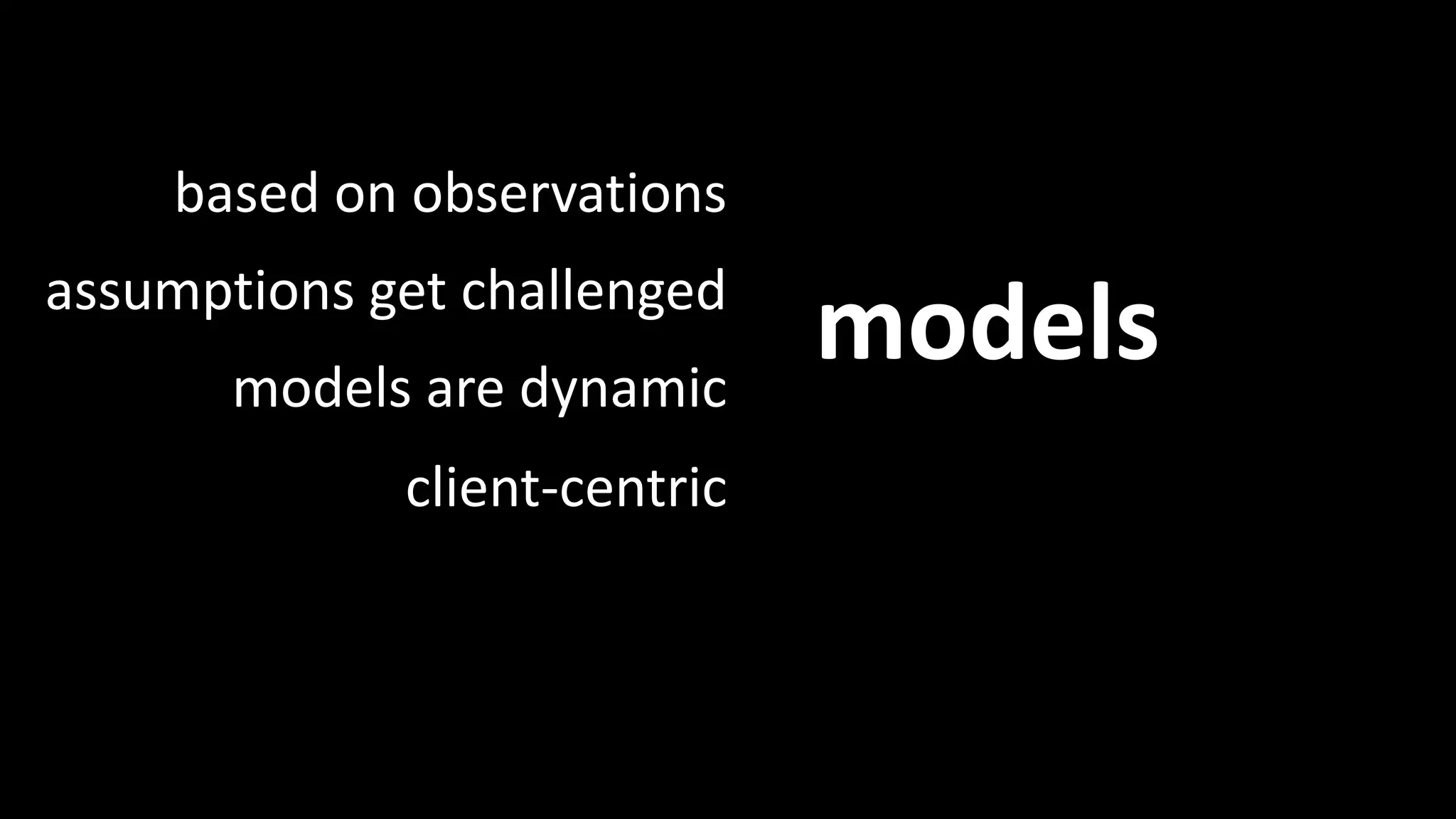
based on observations 
models assumptions get challenged 
models are dynamic 
client-centric 
Models
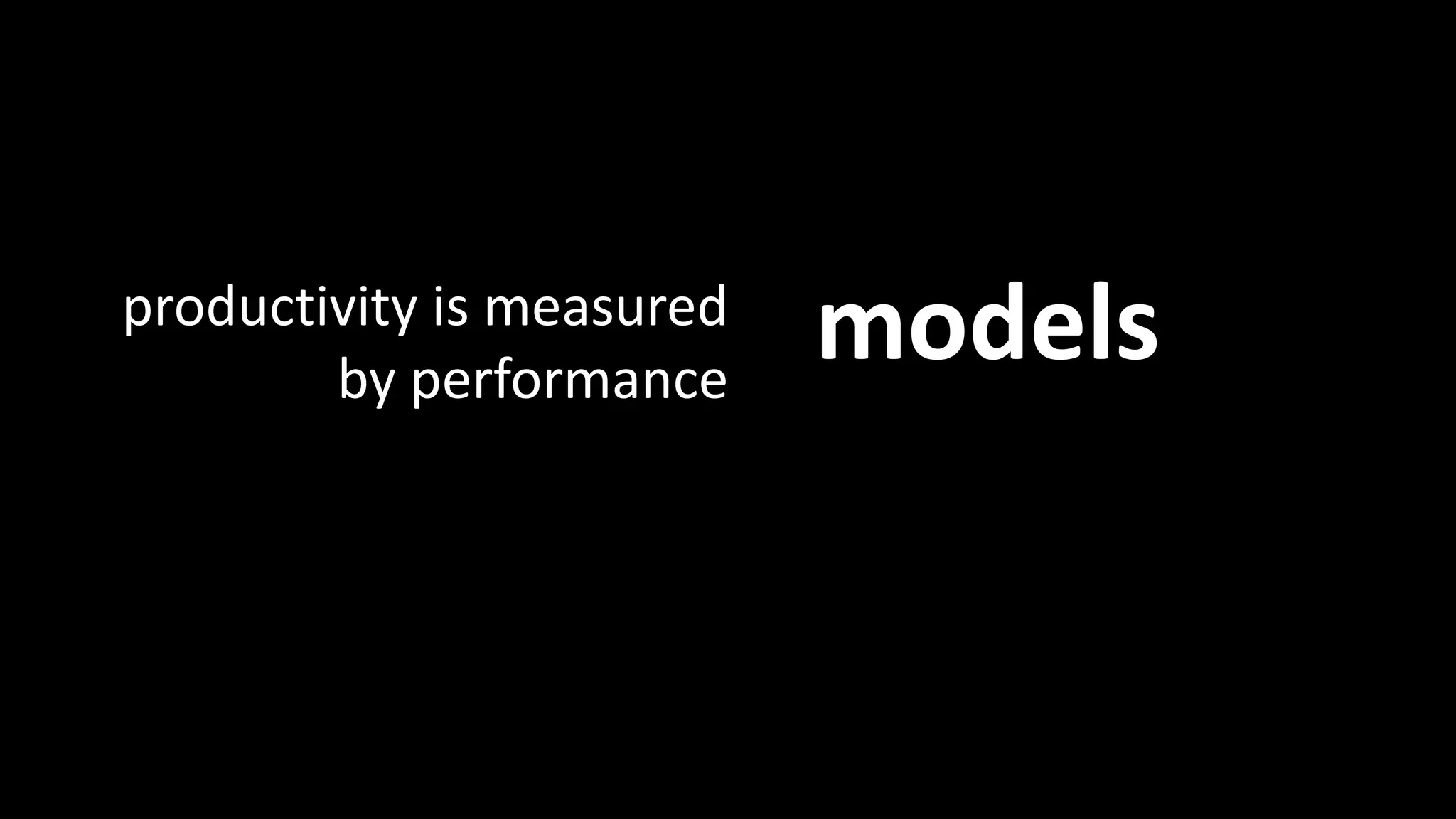
Models: Productivity 
productivity is measured models 
by performance
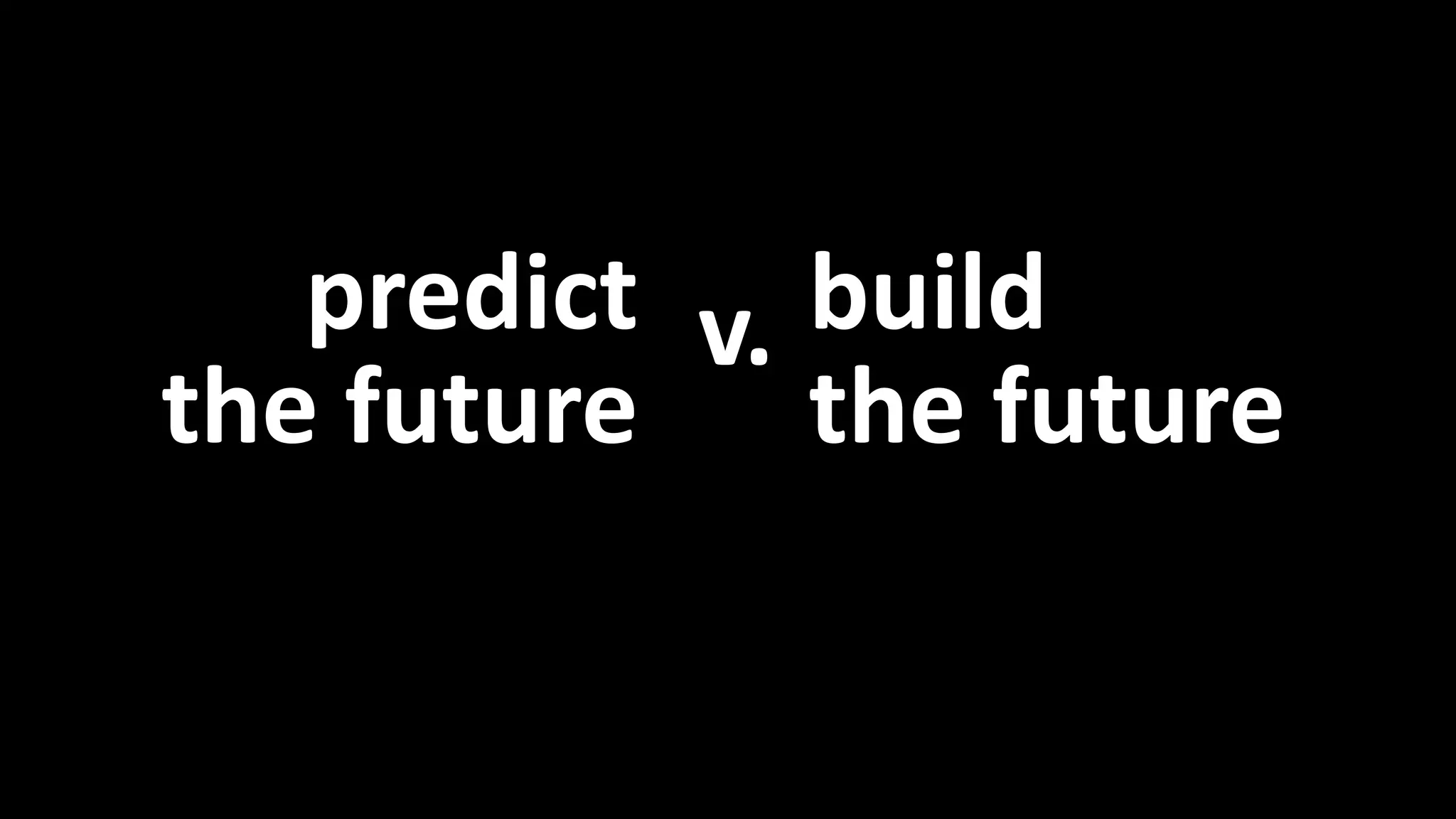
predict 
the future 
build 
the future 
v. 
Predict vs. Build
Example: Innovation Fund 
Innovation Fund
Remove barriers 
How might you remove organizational 
barriers to innovation?
People 
People: Sub-section
People: Examples 
attracting/retaining talent 
People vision + motivation 
user experience 
collaboration + co-creation
test the 
product 
test the 
problem 
v. 
Product vs. Problem
Problem-solution fit 
problem-solution fit
“There are no facts inside 
the building, so get outside.” 
-Steve Blank 
Get outside
Example: The Listening Project 
The Listening Project
Creative Confidence 
How might you enhance creative 
confidence in your organization?
Practice 
Practice: Sub-Section
Practice 
Practice: Examples 
foster experimentation 
share insights 
borrow methods 
fail faster
Pilot projects vs. iterative design 
pilot 
projects 
iterative 
design 
v.
Build-Measure-Learn 
build-measure-learn
“The only way to win is to learn faster 
than everyone else.” 
-Eric Ries 
Learn faster
Example: Research Help Desk 
Research Help Desk
Celebrate experiments 
How might you celebrate the 
experiments that are currently 
happening in your organization?
Practice 
People 
Platform 
Platform, People, Practice
Persistence 
Persistence
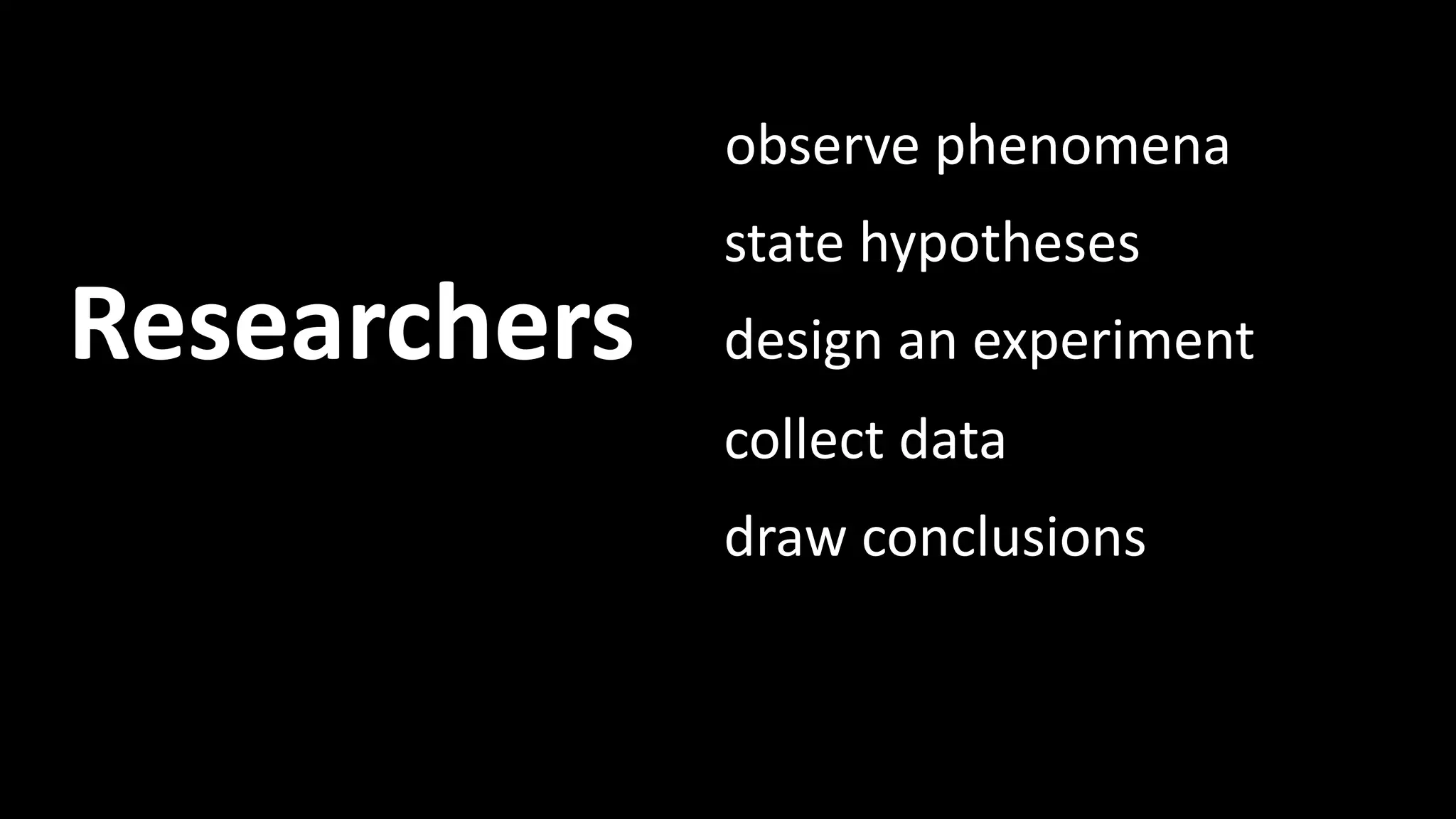
Researchers 
Researchers
Researchers 
observe phenomena 
state hypotheses 
design an experiment 
collect data 
draw conclusions 
Scientific method
Researchers Repeat 
Researchers Repeat
Library as Lab 
What would happen if you viewed your 
library more like a lab? 
What would you learn?
Thank You M.J. D’Elia 
mdelia@uoguelph.ca 
@mjdelia 
Thank you

Creating a Culture of Innovation (in Libraries)

Editor's Notes

  • #2 Title Slide Creating a Culture of Innovation M.J. D’Elia, University of Guelph ARL Membership Meeting, Fall 2014
  • #3 Library and College of Business and Economics I oversee most of the academic support we provide to students through the Learning Commons at the University of Guelph (research, writing, studying, etc.) The University of Guelph is one of the smaller institutions within ARL - but we’re scrappy! I also happen to teach the Introductory Entrepreneurship course for our College of Business and Economics I’m delighted to have this opportunity to present to you today
  • #4 5 Years Ago To set a bit of context for the talk I want to go back in time about five years Our Library was doing a major organizational restructuring We were moving from a liaison service model to functional team model This an opportunity to look at the entire organization including our mission, vision, and core values
  • #5 Innovation = Core Value Innovation was listed as one of our core values (no doubt it is mentioned in many of your organizations too) Unfortunately, I didn’t see much around me that would pass for innovation in my book
  • #6 Innovation = 1980s When I asked around people pointed to stories of innovation from the 1980s When I was in grade school We have been innovative in the past It seemed to me that we were essentially living on innovation fumes and reputation
  • #7 Core value not Core Practice It would seem that our cherished core value was not a core practice Listing something in your core values or your vision statement doesn’t make it happen in real life (sad, but true)
  • #8 Nagging questions I just couldn’t get the issue out of my mind How might we internalize a core value so it becomes a core practice? Where is the tipping point? Can you accelerate this journey for an organization? Are our organizations too big or too traditional to embrace this concept? Is it better if it’s grassroots, or top-down? Do you need both to meet in the middle?
  • #9 Learning = doing I read a lot about this stuff, my pleasure reading is business books on creativity I talk a lot about this stuff in casual conversations and more formal settings (like this one) But I learn most about this stuff by doing At the end of the day the only way to know is to try Starting is half the battle – just start experimenting
  • #10 Designed staff development workshops on creative thinking (Innovation Boot Camp) Ran some workshops for Startup Library Helped organize a Startup Weekend event in Toronto specifically for Libraries Played with metaphors, developed scenarios, simulations, changed room configurations, did role playing, added improv and even ran a juggling workshop
  • #11 Still chasing I’m still chasing the moment when innovation so normal for our organization that it seems like it is simply “in the water” Where working at Guelph means that you take risks, fail occasionally, and enjoy the ride I’m not an expert, I’m still learning, but I’m happy to share a few reflections
  • #12 Platform, people & practice To make things a little easier I’m going to put my observations in three simple buckets: platform, people, & practice  The three P’s if you will...
  • #13 Alternative title That seemed a little better than my original title: “Thoughts on creating a culture of innovation from a middle manager at some university up in Canada” Let’s get started
  • #14 Platform: Sub-section One of the first things you need is to provide the platform You need to cultivate the right environment The right culture where ideas can germinate, take root and thrive To be completely honest, these are the things that you probably have the most influence over
  • #15 Platform: Examples The organizational systems and procedures that contribute to healthy platforms are everywhere They might be in formal systems and procedures (e.g. budget and resource allocation, strategic planning, project approvals or oversight, performance reviews, compensation, training opportunities, etc.) They might be in informal approaches that help shift culture (e.g. fail camps, communities of practice, speaker series, basic recognition, stories, etc.)
  • #16 Plans v. Models I use a distinction between business plans and business models to help my students understand how entrepreneurial thinking is different than what they’re accustomed to In broad strokes it works here too
  • #17 Poor Planning When plans are done poorly they’re built on assumptions Someone has gone out to collect all of the secondary data and made it sound relevant to the problem The problem is once the plan is written the assumptions are treated as facts Facts aren’t challenged or altered – they’re in the plan after all The plan ends up being static – no one tries to rewrite it – can’t waver from the playbook Here’s the real problem: the plan serves the company’s needs It’s company centric (it’s the company telling the world what will work)
  • #18 Plans and Productivity Productivity is measured against the plan Did you get the tasks done? Did you finish on time? Did you finish on budget?
  • #19 First Contact Steve Blank a well-known voice in entrepreneurship circles has a famous quote to explain why planning in isolation never works No plan survives first contact with its customers
  • #20 Models Instead, Steve proposes that we use models instead of plans Instead of making assumptions we build on primary data The assumptions that are put forward are acknowledged Nothing is fixed in stone – if new information is discovered, we change our assumptions The model continues to be rewritten – it’s dynamic and responsive (not static) The key is we’re adjusting the model based on the customer We’re responsive to the customer feedback
  • #21 Models and Productivity In this case productivity is actually measured by the organization’s ongoing performance Do people use the product/service? Are they coming back for more? Do we see measurable results?
  • #22 Predict v. Build Plans are about trying to predict the future Models are about trying to build the future
  • #23 Mini-Example: Innovation Fund One of the things we’ve done at Guelph is start an Innovation Fund The results have been mixed Staff were excited because we were opening up the budget for new ideas – BUT we didn’t fully flesh out the rest of the platform We didn’t recognize the time requirements needed for new innovation We set too many hoops to jump through The result was a lot of requests for new technology because technology is innovative right? At best we achieved incremental improvements and bought some technology that probably should have just purchased anyway Good news is we’re revisiting it – we’re thinking of running an X-prize style competition where the senior team sets a lofty future-focused objective and people pitch ideas that will help us get there
  • #24 Provoking Questions How might you remove some of the barriers to innovation? Where is the unnecessary friction? How do good ideas rise to the surface in your organization? If you asked your frontline employees would they say the same thing? How might you bring innovative activities into the library that are already happening on campus? Grow your platform for innovation by partnering with others For example, we hosted a Startup Weekend event in the summer where people coded and designed new apps – none of the ideas were library-related but we have a great space for a business hackathon
  • #25 People: Sub-section It probably seems obvious here but after you’ve built a platform you need to put people on top of that platform who have a natural inclination for innovation It doesn’t matter Innovation, startup thinking, design thinking - whatever the buzzword, they all have one thing in common - they’re about people - you’re trying to make the world better
  • #26 People: Examples For me the people component is two fold First, do you have the innovative staff with the skills that you need? Can you attract and keep talent? Are they motivated to help achieve the vision? Second, do you truly understand the people you’re trying to reach Are their voices heard at every turn? Do you do UX studies and ethnographic research? Is it infused throughout your organization?
  • #27 Product v. Problem Perhaps it’s helpful to make a distinction here: testing the product vs. testing the problem Too often we get caught in “test the product mode” We implement a new catalog, or change our website and we ask people if they like it We buy and off-the-shelf product and test to see whether it works with our systems The focus is on us and whether the product works for us But we forget to get to the root problem that our users face Truly innovative approaches look at what the user is trying to do first They dive deep into the problem with empathy and then design a solution that suits
  • #28 Problem-Solution Fit For new startup companies this initial investigation is called looking for a problem-solution fit You don’t want to create a solution for something that isn’t a problem You don’t want a solution that doesn’t match the original problem
  • #29 Get Outside Another famous quote from Steve Blank is to get outside the building Don’t wait for people to come to you with their problems, go understand their problems in the real world
  • #30 Mini-Example: The Listening Project One of the projects we’re just starting is a faculty outreach initiative called The Listening Project We want to talk to faculty – not to market our services, but to understand their unique challenges We’re looking for pain points and if we see some themes we might be able to design something new and different that suits At this point it is all exploratory – we don’t know what we’ll learn
  • #31 Provoking Questions How might you enhance creative confidence in your organization? How intentionally have you tried to develop this competency in your staff? How might you better capture what your people already know? How closely do you know your core users? Do your staff members think it is part of their job to know?
  • #32 ctice: Sub-section The focus of practice is about encouraging the right processes and creative habits This is time when you pull it out of the core values and actually do things differently The small tangible elements of an innovative organization
  • #33 Practice: Examples In this case it doesn’t actually have to be that radical It might mean experimenting with your meetings or rooms Something as simple as covering your meeting room table with butcher paper and brainstorming by writing on the table It might mean setting up a regular speaker series or lunch and learn It might mean moving to action a little more quickly than expected so that you can fail faster
  • #34 Pilot Projects vs. Iterative Design If your library is like my library than you love the pilot project But the problem with the pilot project is that it’s really a fully developed idea that we’ll fund for a short amount of time – and measuring success in that short time is difficult Contrast that with the iterative design process, where instead of launching a fully featured pilot, you launch a barebones service to see if there is any interest Then you take what you learn and improve it as you go, iterating to a better finished product
  • #35 Build-Measure-Learn In lean thinking circles this is known as Build-Measure-Learn You build something, measure it, learn something and then start over
  • #36 Learn Faster The quicker you can cycle through the Build-Measure-Learn loop, the faster you learn The faster you learn, the better your chance at winning
  • #37 Mini-Example: Research Help Desk The research help desk at our place has changed significantly for each of the past three years We’re iterating that service as we go – we’ve had a lemonade stand, a penalty box, hotel wickets This might seem strange, but there is a method to the madness – we’re learning with each iteration
  • #38 Provoking Questions I know as I’m talking that you can think of experiments that are happening at your place too How might you celebrate the experiments happening across your organization? How might you encourage your people to experiment with new processes and methodologies? How might you build a community of practice that rails against the status quo?
  • #39 Platform, People, & Practice There you have it the three areas that can help foster a culture of innovation
  • #40 Persistence By way of conclusion I think I’ll throw in one other one: persistence I feel it’s my duty to manage expectations - cultivating a culture of innovation takes time Importance of failure to growth and discovery
  • #41 Researchers As I wrap up here I want you to think of the researchers that your library serves Think about how they approach their research
  • #42 Researchers: Scientific Method I’m not a scientist but I remember the basic elements of the scientific method Observing phenomena, trying to guess why it happens Designing an experiment, controlling for variables Measuring what you’ve learned, drawing conclusions
  • #43 Researchers: Repeat And then those darn researchers do it all over again based on new observations Really, this is not that different than the kind of innovative culture I’ve just described to you
  • #44 Library as Lab What would happen if you viewed your library more like a lab? What if it became your responsibility to understand how your library worked? What if people were given permission to explore their curiousities? What would you learn?
  • #45 Thank You M.J. D’Elia