Downloaded 26 times
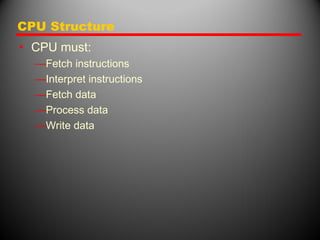
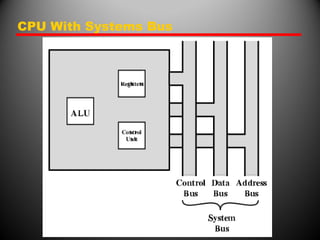
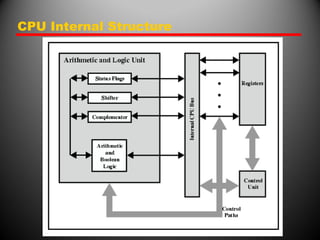
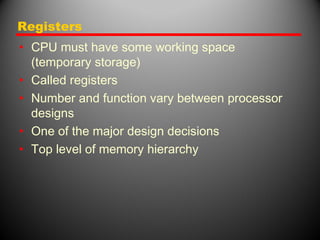
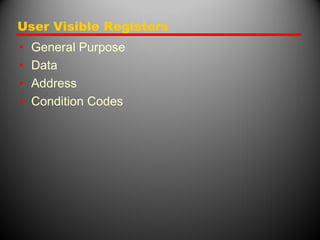
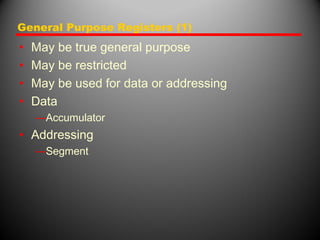
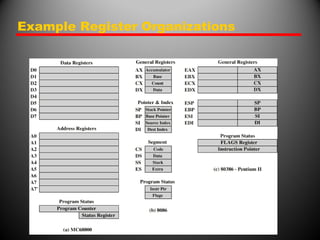
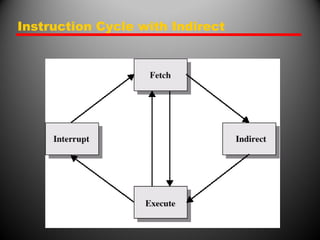
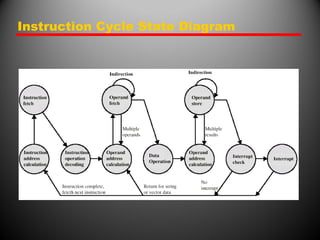
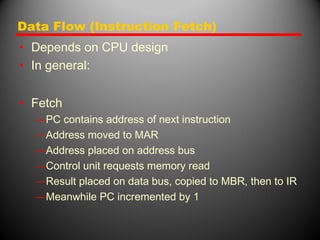
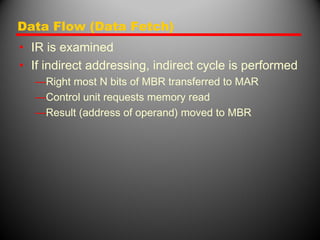
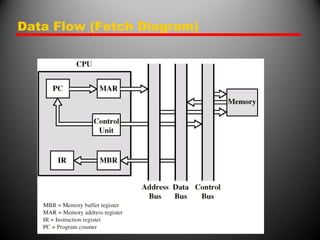
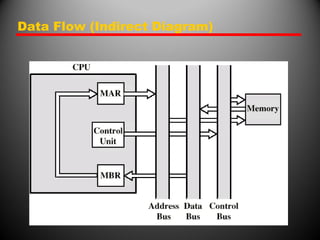
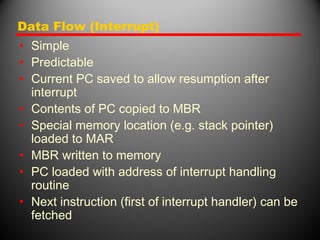
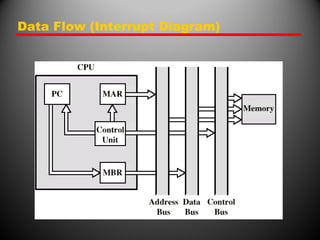
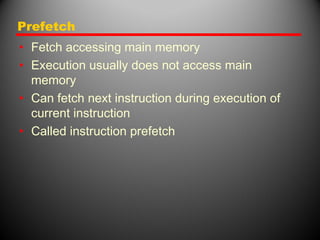
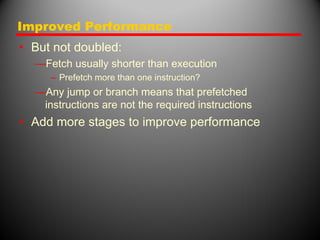
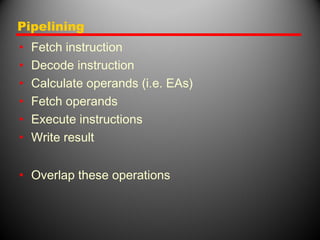
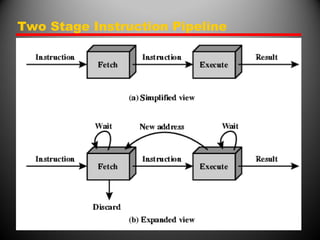
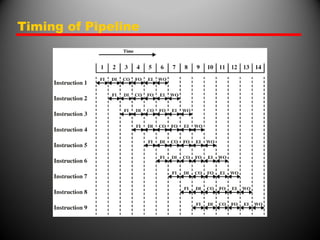
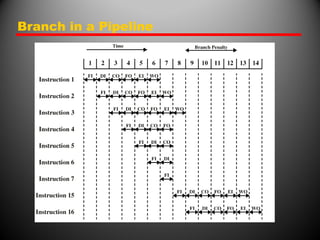
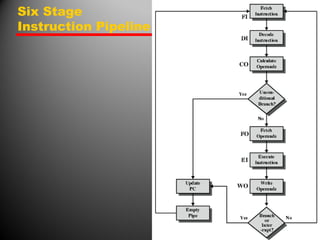
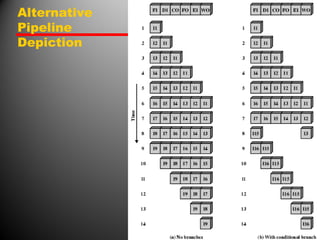
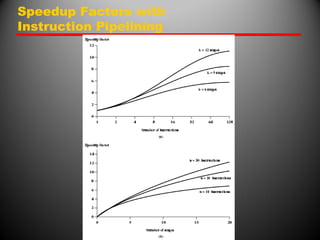
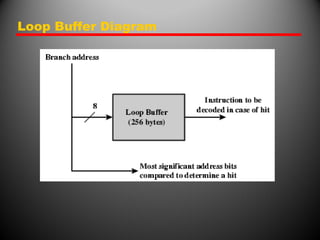
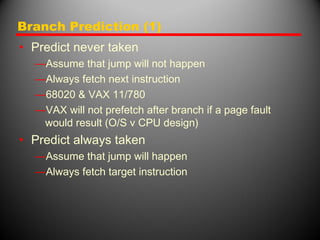
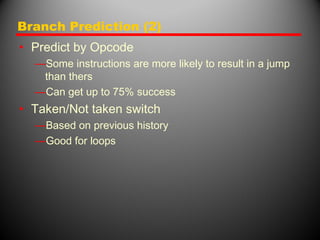
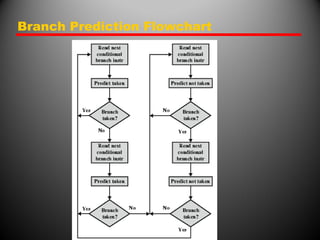
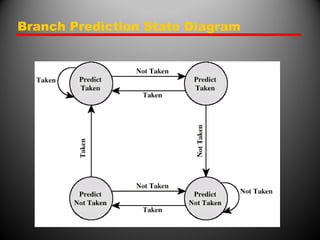
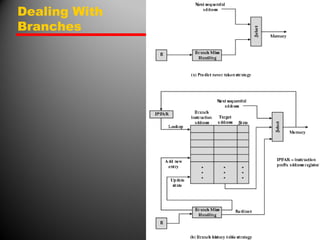
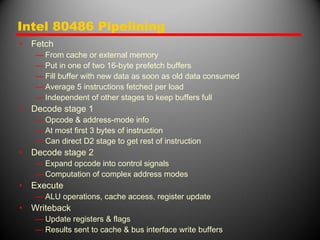
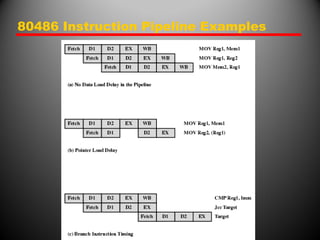
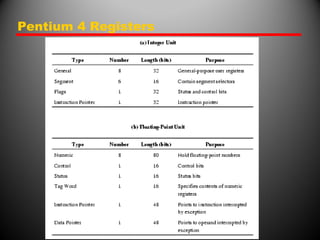
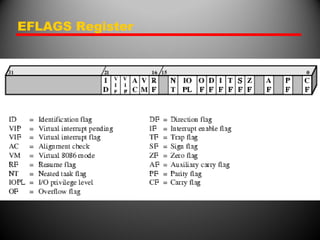
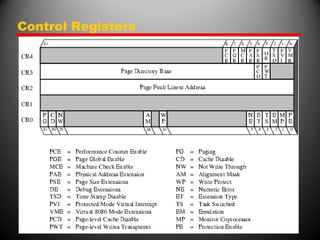
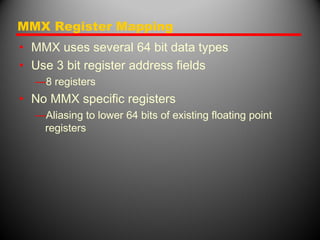
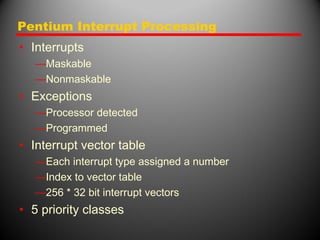
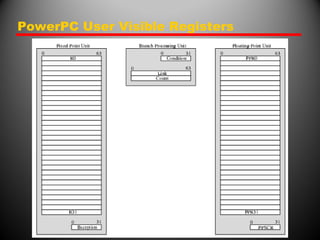
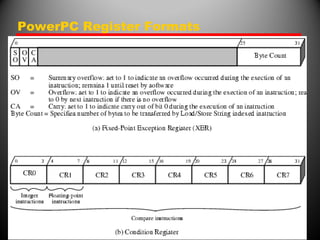

The CPU must fetch, interpret, and process instructions and data. It uses registers for temporary storage and as the top level of memory hierarchy. Registers include general purpose registers for data and addressing, condition code registers for tracking results, and control/status registers for functions like instruction decoding. Modern CPUs use pipelining to overlap the fetch, decode, execute, and writeback stages of instruction processing. They employ techniques like branch prediction and instruction prefetching to optimize pipeline performance in the presence of branches.


