COMMUNITY FORUM
Dunlap
Community
School District
#323
October 22, 2012
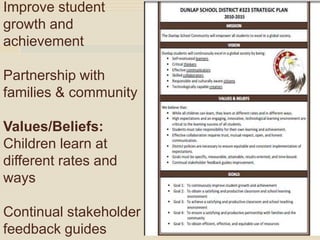
Improve student
growth and
achievement

Partnership with
families & community

Values/Beliefs:
Children learn at
different rates and
ways

Continual stakeholder
feedback guides
Purpose of the
     Forum
 (Goal 4) Partner with families
 (Goal1) Provide information on student
  achievement and how data is used to support
  student learning
 (Values/Beliefs) Seek input, feedback, and
  ideas
 Transparency

     Accurate/Informational

   Confidentiality
     Some   questions may be better answered by your child’s
Collect Questions
What information are you
 seeking?
What questions do you hope
 to have answered?
Using the sticky notes at your place, respond to the questions
above. You’ll be sharing these in groups of 2 or 3 in a moment!
Warm Up/Introductions!
 Find someone from another table
  you haven’t met
 Introduce yourself

 Share your response…
    What information are you
     seeking?
    What questions do you hope to
     have answered?
No Child Left Behind
Adequate Yearly Progress
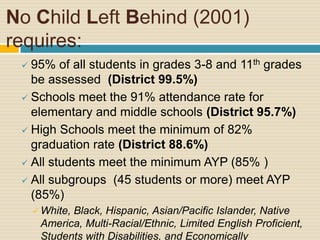
No Child Left Behind (2001)
requires:
  95% of all students in grades 3-8 and 11th grades
   be assessed (District 99.5%)
  Schools meet the 91% attendance rate for
   elementary and middle schools (District 95.7%)
  High Schools meet the minimum of 82%
   graduation rate (District 88.6%)
  All students meet the minimum AYP (85% )

  All subgroups (45 students or more) meet AYP
   (85%)
      White,
            Black, Hispanic, Asian/Pacific Islander, Native
      America, Multi-Racial/Ethnic, Limited English Proficient,
      Students with Disabilities, and Economically
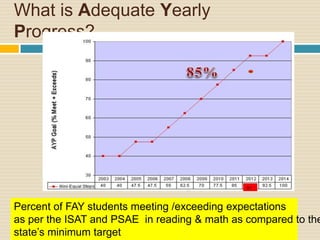
What is Adequate Yearly
Progress?


Percent of FAY students meeting /exceeding expectations
as per the ISAT and PSAE in reading & math as compared to the
state’s minimum target
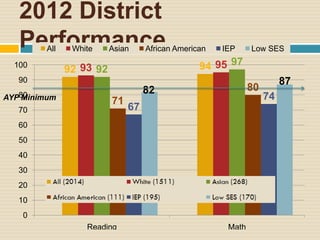
2012 District
   Performance
         All    White     Asian     African American   IEP     Low SES

  100
               92 93 92                           94 95 97
   90                                                                    87
                                    82                         80
AYP80
    Minimum                                                         74
                          71
   70                          67
   60
   50
   40
   30
   20
   10
    0
                   Reading                              Math
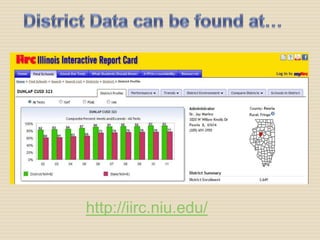
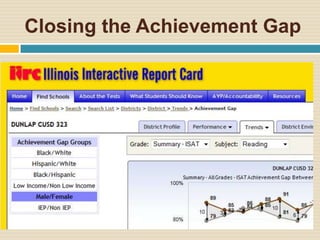
http://iirc.niu.edu/
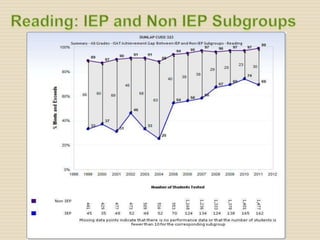
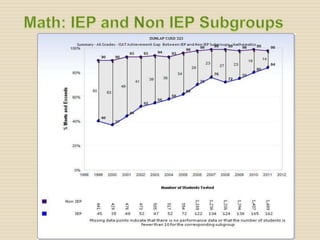
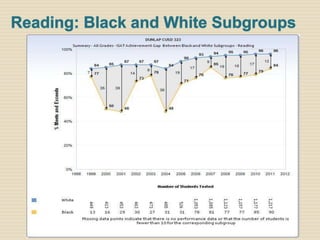
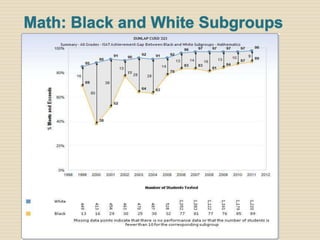
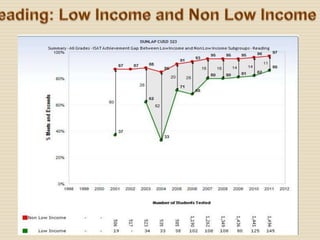
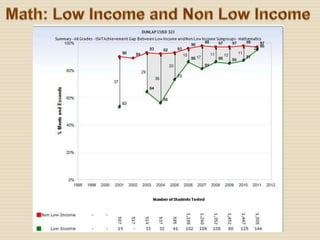
Closing the Achievement Gap
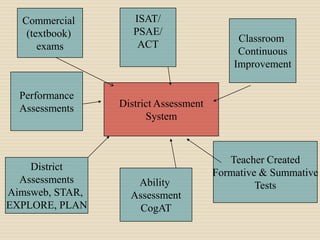
Dunlap’s Measures for Student
Growth and Achievement
Commercial        ISAT/
   (textbook)       PSAE/
                                            Classroom
      exams          ACT
                                            Continuous
                                           Improvement

  Performance
  Assessments    District Assessment
                       System


                                          Teacher Created
    District
                                       Formative & Summative
  Assessments       Ability                     Tests
Aimsweb, STAR,     Assessment
EXPLORE, PLAN        CogAT
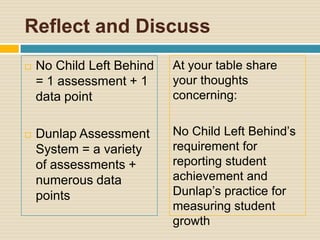
Reflect and Discuss
   No Child Left Behind   At your table share
    = 1 assessment + 1     your thoughts
    data point             concerning:


   Dunlap Assessment      No Child Left Behind’s
    System = a variety     requirement for
    of assessments +       reporting student
    numerous data          achievement and
    points                 Dunlap’s practice for
                           measuring student
                           growth
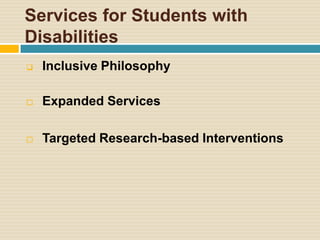
Services for Students with
Disabilities
   Inclusive Philosophy

   Expanded Services

   Targeted Research-based Interventions
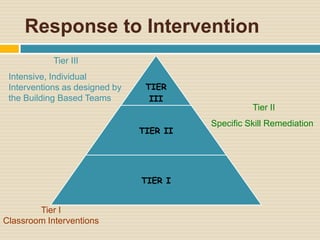
Response to Intervention
            Tier III
 Intensive, Individual
 Interventions as designed by    TIER
 the Building Based Teams         III
                                                    Tier II
                                          Specific Skill Remediation
                                TIER II


                                TIER I


        Tier I
Classroom Interventions
Elementary Process
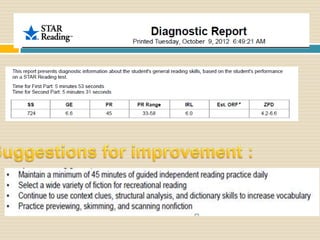
 ISAT data is reviewed
 Aimsweb assessments are given in the
  Fall, Winter, & Spring
 Students needing additional support are
  identified (using Decision Matrix of District
  RTI Plan)
 Interventions are chosen for individual

  students
 Student progress is monitored
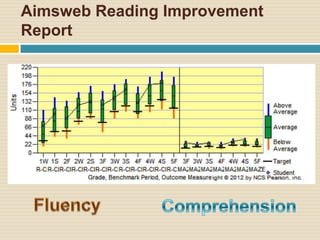
Aimsweb Reading Improvement
Report
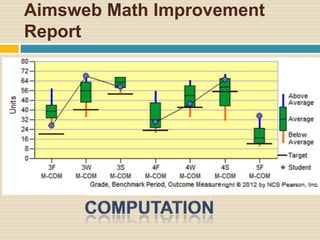
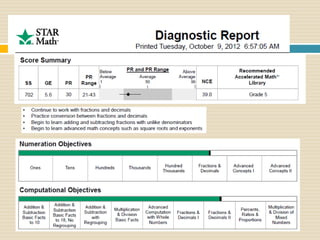
Aimsweb Math Improvement
Report
Middle School
   Grade level teams review & triangulate the
    assessment data
     ISAT
     STAR Reading & Math

     Textbook Inventory (Language Arts)

   Grade level teams provide interventions
     Spartan Learning Community & Panther Pride (all students)
     Specific RTI interventions identified as appropriate

   All students create individual SMART Goals &
    progress is monitored.
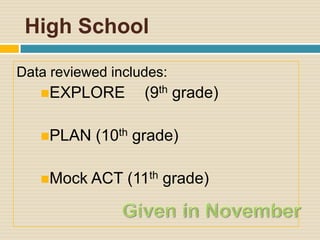
High School

Data reviewed includes:
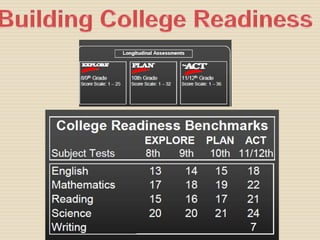
   EXPLORE        (9th grade)

   PLAN    (10th grade)

   Mock ACT    (11th grade)
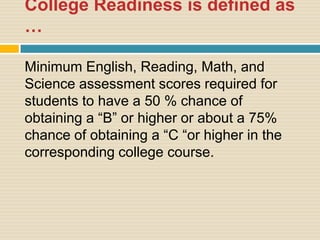
College Readiness is defined as
…

Minimum English, Reading, Math, and
Science assessment scores required for
students to have a 50 % chance of
obtaining a “B” or higher or about a 75%
chance of obtaining a “C “or higher in the
corresponding college course.
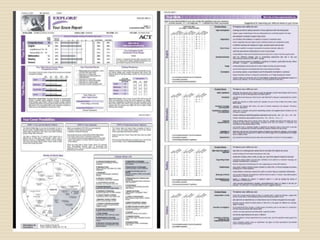
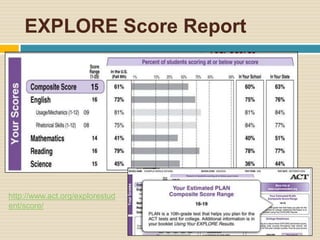
EXPLORE Score Report


http://www.act.org/explorestud
ent/score/
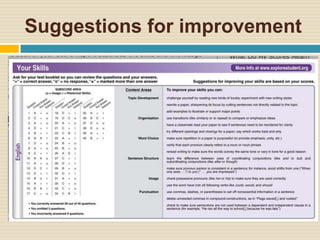
Suggestions for improvement
Dunlap High School

Support includes:
 Math   RTI Study Halls

 Language     Arts RTI Study Halls

 Peer  Tutoring (National Honor
   Society)
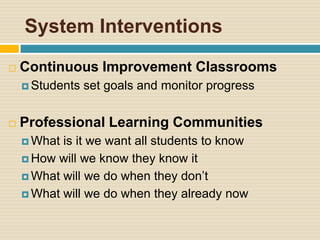
System Interventions
   Continuous Improvement Classrooms
     Students   set goals and monitor progress


   Professional Learning Communities
     What is it we want all students to know
     How will we know they know it

     What will we do when they don’t

     What will we do when they already now
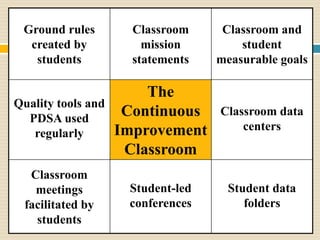
Ground rules         Classroom     Classroom and
  created by            mission        student
   students           statements   measurable goals

                        The
Quality tools and
  PDSA used
                     Continuous    Classroom data
                    Improvement        centers
   regularly
                     Classroom
   Classroom
    meetings         Student-led     Student data
  facilitated by     conferences        folders
    students
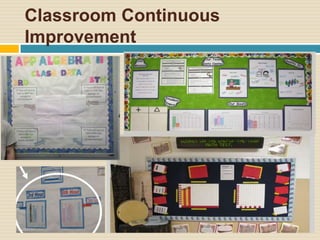
Classroom Continuous
Improvement
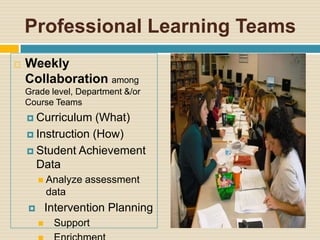
Professional Learning Teams
   Weekly
    Collaboration among
    Grade level, Department &/or
    Course Teams
     Curriculum   (What)
     Instruction (How)

     Student Achievement
      Data
         Analyze   assessment
            data
           Intervention Planning
            Support
Stakeholder Feedback
What is working well?   What areas need to be Possible Solutions
                        improved?
What’s next?
   Information & Feedback will be
    shared with the:
    DistrictLeadership Team
    Building Leadership Teams
    All stakeholders through our District
     Blog
    Feedback will be used for
     Continuous Improvement
Meeting Feedback

Community Forum October 2012

  • 1.
  • 2.
    Improve student growth and achievement Partnershipwith families & community Values/Beliefs: Children learn at different rates and ways Continual stakeholder feedback guides
  • 3.
    Purpose of the Forum  (Goal 4) Partner with families  (Goal1) Provide information on student achievement and how data is used to support student learning  (Values/Beliefs) Seek input, feedback, and ideas  Transparency  Accurate/Informational  Confidentiality  Some questions may be better answered by your child’s
  • 4.
    Collect Questions What informationare you seeking? What questions do you hope to have answered? Using the sticky notes at your place, respond to the questions above. You’ll be sharing these in groups of 2 or 3 in a moment!
  • 5.
    Warm Up/Introductions!  Findsomeone from another table you haven’t met  Introduce yourself  Share your response… What information are you seeking? What questions do you hope to have answered?
  • 6.
    No Child LeftBehind Adequate Yearly Progress
  • 7.
    No Child LeftBehind (2001) requires:  95% of all students in grades 3-8 and 11th grades be assessed (District 99.5%)  Schools meet the 91% attendance rate for elementary and middle schools (District 95.7%)  High Schools meet the minimum of 82% graduation rate (District 88.6%)  All students meet the minimum AYP (85% )  All subgroups (45 students or more) meet AYP (85%)  White, Black, Hispanic, Asian/Pacific Islander, Native America, Multi-Racial/Ethnic, Limited English Proficient, Students with Disabilities, and Economically
  • 8.
    What is AdequateYearly Progress? Percent of FAY students meeting /exceeding expectations as per the ISAT and PSAE in reading & math as compared to the state’s minimum target
  • 9.
    2012 District Performance All White Asian African American IEP Low SES 100 92 93 92 94 95 97 90 87 82 80 AYP80 Minimum 74 71 70 67 60 50 40 30 20 10 0 Reading Math
  • 10.
  • 11.
  • 18.
    Dunlap’s Measures forStudent Growth and Achievement
  • 19.
    Commercial ISAT/ (textbook) PSAE/ Classroom exams ACT Continuous Improvement Performance Assessments District Assessment System Teacher Created District Formative & Summative Assessments Ability Tests Aimsweb, STAR, Assessment EXPLORE, PLAN CogAT
  • 20.
    Reflect and Discuss  No Child Left Behind At your table share = 1 assessment + 1 your thoughts data point concerning:  Dunlap Assessment No Child Left Behind’s System = a variety requirement for of assessments + reporting student numerous data achievement and points Dunlap’s practice for measuring student growth
  • 21.
    Services for Studentswith Disabilities  Inclusive Philosophy  Expanded Services  Targeted Research-based Interventions
  • 22.
    Response to Intervention Tier III Intensive, Individual Interventions as designed by TIER the Building Based Teams III Tier II Specific Skill Remediation TIER II TIER I Tier I Classroom Interventions
  • 23.
    Elementary Process  ISATdata is reviewed  Aimsweb assessments are given in the Fall, Winter, & Spring  Students needing additional support are identified (using Decision Matrix of District RTI Plan)  Interventions are chosen for individual students  Student progress is monitored
  • 24.
  • 25.
  • 26.
    Middle School  Grade level teams review & triangulate the assessment data  ISAT  STAR Reading & Math  Textbook Inventory (Language Arts)  Grade level teams provide interventions  Spartan Learning Community & Panther Pride (all students)  Specific RTI interventions identified as appropriate  All students create individual SMART Goals & progress is monitored.
  • 29.
    High School Data reviewedincludes: EXPLORE (9th grade) PLAN (10th grade) Mock ACT (11th grade)
  • 30.
    College Readiness isdefined as … Minimum English, Reading, Math, and Science assessment scores required for students to have a 50 % chance of obtaining a “B” or higher or about a 75% chance of obtaining a “C “or higher in the corresponding college course.
  • 33.
  • 34.
  • 36.
    Dunlap High School Supportincludes: Math RTI Study Halls Language Arts RTI Study Halls Peer Tutoring (National Honor Society)
  • 37.
    System Interventions  Continuous Improvement Classrooms  Students set goals and monitor progress  Professional Learning Communities  What is it we want all students to know  How will we know they know it  What will we do when they don’t  What will we do when they already now
  • 38.
    Ground rules Classroom Classroom and created by mission student students statements measurable goals The Quality tools and PDSA used Continuous Classroom data Improvement centers regularly Classroom Classroom meetings Student-led Student data facilitated by conferences folders students
  • 39.
  • 40.
    Professional Learning Teams  Weekly Collaboration among Grade level, Department &/or Course Teams  Curriculum (What)  Instruction (How)  Student Achievement Data  Analyze assessment data  Intervention Planning  Support
  • 41.
    Stakeholder Feedback What isworking well? What areas need to be Possible Solutions improved?
  • 42.
    What’s next?  Information & Feedback will be shared with the: DistrictLeadership Team Building Leadership Teams All stakeholders through our District Blog  Feedback will be used for Continuous Improvement
  • 43.

Editor's Notes

  • #10 State percentages needed