On the yellow card write
examples of AfL(formative)
and on the white write
examples of summative
assessment.
Which of these is something that takes
place regularly in lessons?
Idea 1 – Boarding pass and Departure card. Allows to recap learning, link
today’s learning to past and future learning. Quickly focus on learning
objectives. Allows for a clear continuation through the lesson.
Assessment for Learning –
showing progress
1. Progress during lessons
2. Progress over time
Success Criteria
• To know the importance of both
• To leave with a few ideas of how to show/see progress
during lessons and over time.
What is AfL?
• Need to assess progress (beg, mid and end of lesson is the
usual structure).
• Must ACT on the progress, so if some falling behind or not
progressing as should, need to do something about it
(differentiation/access). Also someone meeting all
criteria, need to stretch them.
Clear L.O and success
criteria, that thread
through the lesson, are
crucial.
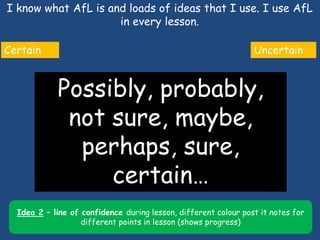
I know what AfL is and loads of ideas that I use. I use AfL
in every lesson.
3
Certain Uncertain
Possibly, probably,
not sure, maybe,
perhaps, sure,
certain…
Idea 2 – line of confidence during lesson, different colour post it notes for
different points in lesson (shows progress)
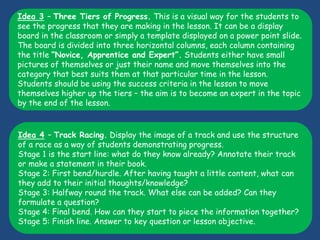
Idea 3 – Three Tiers of Progress. This is a visual way for the students to
see the progress that they are making in the lesson. It can be a display
board in the classroom or simply a template displayed on a power point slide.
The board is divided into three horizontal columns, each column containing
the title “Novice, Apprentice and Expert”. Students either have small
pictures of themselves or just their name and move themselves into the
category that best suits them at that particular time in the lesson.
Students should be using the success criteria in the lesson to move
themselves higher up the tiers – the aim is to become an expert in the topic
by the end of the lesson.
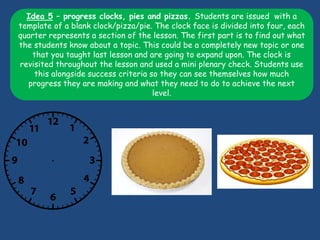
Idea 4 – Track Racing. Display the image of a track and use the structure
of a race as a way of students demonstrating progress.
Stage 1 is the start line: what do they know already? Annotate their track
or make a statement in their book.
Stage 2: First bend/hurdle. After having taught a little content, what can
they add to their initial thoughts/knowledge?
Stage 3: Halfway round the track. What else can be added? Can they
formulate a question?
Stage 4: Final bend. How can they start to piece the information together?
Stage 5: Finish line. Answer to key question or lesson objective.
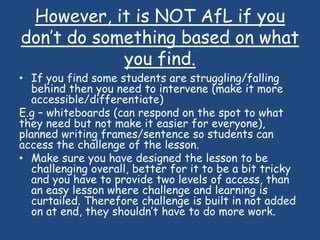
Idea 5 – progress clocks, pies and pizzas. Students are issued with a
template of a blank clock/pizza/pie. The clock face is divided into four, each
quarter represents a section of the lesson. The first part is to find out what
the students know about a topic. This could be a completely new topic or one
that you taught last lesson and are going to expand upon. The clock is
revisited throughout the lesson and used a mini plenary check. Students use
this alongside success criteria so they can see themselves how much
progress they are making and what they need to do to achieve the next
level.
However, it is NOT AfL if you
don’t do something based on what
you find.
• If you find some students are struggling/falling
behind then you need to intervene (make it more
accessible/differentiate)
E.g – whiteboards (can respond on the spot to what
they need but not make it easier for everyone),
planned writing frames/sentence so students can
access the challenge of the lesson.
• Make sure you have designed the lesson to be
challenging overall, better for it to be a bit tricky
and you have to provide two levels of access, than
an easy lesson where challenge and learning is
curtailed. Therefore challenge is built in not added
on at end, they shouldn’t have to do more work.
I know what AfL is and loads of ideas that I use. I use AfL
in every lesson.
7
Certain Uncertain
Possibly, probably,
not sure, maybe,
perhaps, sure,
certain…
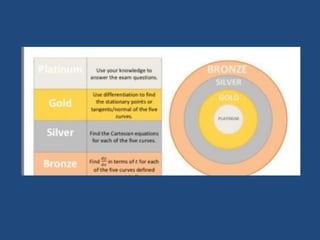
Idea 6 – Medal Circles. See next slide.
Has anyone got any ideas that
they would like to share?
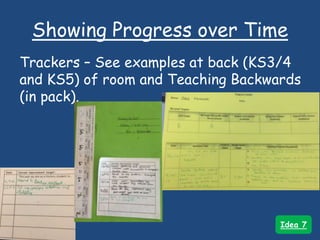
Showing Progress over Time
Trackers – See examples at back (KS3/4
and KS5) of room and Teaching Backwards
(in pack).
Idea 7
Showing Progress over Time
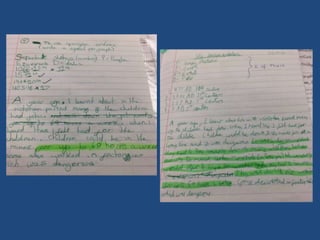
Marking – Using targets from marking to
ensure focussed improvement (easier to
see/show progress). In responses –
students highlighting where they have
done the improvement comment, also easy
to quickly check if you want to.
Idea 8
Showing Progress over Time
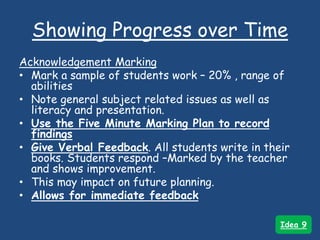
Acknowledgement Marking
• Mark a sample of students work – 20% , range of
abilities
• Note general subject related issues as well as
literacy and presentation.
• Use the Five Minute Marking Plan to record
findings
• Give Verbal Feedback. All students write in their
books. Students respond –Marked by the teacher
and shows improvement.
• This may impact on future planning.
• Allows for immediate feedback
Idea 9
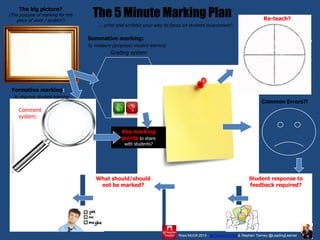
The 5 Minute Marking PlanThe big picture?
(The purpose of marking for this
piece of work / project?)
Key marking
points to share
with students?
Common Errors?!
Formative marking:
Re-teach?
Ross McGill 2013 - @TeacherToolkit & Stephen Tierney @LeadingLearner
Summative marking:
….print and scribble your way to focus on student assessment!
Comment
system:
Grading system:
What should/should
not be marked?
Student response to
feedback required?
Peer/Self assessment
opportunities?
to improve student learning
to measure (progress) student learning
What should be changed
in activity / SoW?
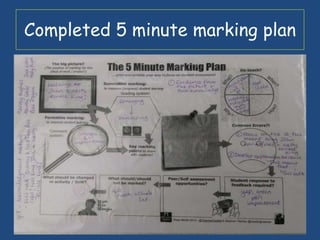
Completed 5 minute marking plan
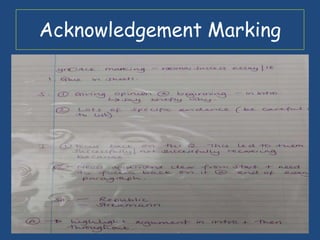
Acknowledgement Marking
Showing Progress over Time
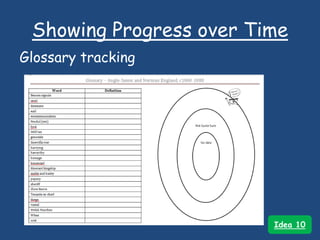
Glossary tracking
Idea 10
Showing Progress over Time
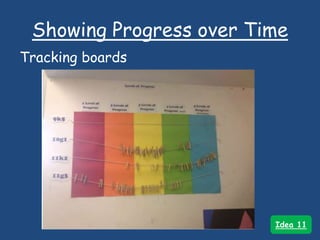
Tracking boards
Idea 11
trl
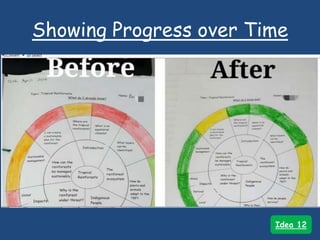
Showing Progress over Time
Idea 12
Has anyone got any ideas that
they would like to share?
Thank you 
Please complete the evaluation form
Thank you to…
• http://www.pedagoo.org/ten-easy-ways-to-
demonstrate-progress-in-a-lesson/
• https://www.linkedin.com/pulse/top-5-
tips-show-progress-lessons-amy-sargent
• http://www.teachertoolkit.me/2013/04/3
0/rapidprogress-in-my-classroom-how-it-
is-made-and-how-do-i-know-it-blogsync/
• http://www.teachertoolkit.me/2013/12/10
/progress-over-time-potteaching-by-
teachertoolkit/

CPD on showing progress in lessons and over time

  • 1.
    On the yellowcard write examples of AfL(formative) and on the white write examples of summative assessment. Which of these is something that takes place regularly in lessons? Idea 1 – Boarding pass and Departure card. Allows to recap learning, link today’s learning to past and future learning. Quickly focus on learning objectives. Allows for a clear continuation through the lesson.
  • 2.
    Assessment for Learning– showing progress 1. Progress during lessons 2. Progress over time Success Criteria • To know the importance of both • To leave with a few ideas of how to show/see progress during lessons and over time. What is AfL? • Need to assess progress (beg, mid and end of lesson is the usual structure). • Must ACT on the progress, so if some falling behind or not progressing as should, need to do something about it (differentiation/access). Also someone meeting all criteria, need to stretch them. Clear L.O and success criteria, that thread through the lesson, are crucial.
  • 3.
    I know whatAfL is and loads of ideas that I use. I use AfL in every lesson. 3 Certain Uncertain Possibly, probably, not sure, maybe, perhaps, sure, certain… Idea 2 – line of confidence during lesson, different colour post it notes for different points in lesson (shows progress)
  • 4.
    Idea 3 –Three Tiers of Progress. This is a visual way for the students to see the progress that they are making in the lesson. It can be a display board in the classroom or simply a template displayed on a power point slide. The board is divided into three horizontal columns, each column containing the title “Novice, Apprentice and Expert”. Students either have small pictures of themselves or just their name and move themselves into the category that best suits them at that particular time in the lesson. Students should be using the success criteria in the lesson to move themselves higher up the tiers – the aim is to become an expert in the topic by the end of the lesson. Idea 4 – Track Racing. Display the image of a track and use the structure of a race as a way of students demonstrating progress. Stage 1 is the start line: what do they know already? Annotate their track or make a statement in their book. Stage 2: First bend/hurdle. After having taught a little content, what can they add to their initial thoughts/knowledge? Stage 3: Halfway round the track. What else can be added? Can they formulate a question? Stage 4: Final bend. How can they start to piece the information together? Stage 5: Finish line. Answer to key question or lesson objective.
  • 5.
    Idea 5 –progress clocks, pies and pizzas. Students are issued with a template of a blank clock/pizza/pie. The clock face is divided into four, each quarter represents a section of the lesson. The first part is to find out what the students know about a topic. This could be a completely new topic or one that you taught last lesson and are going to expand upon. The clock is revisited throughout the lesson and used a mini plenary check. Students use this alongside success criteria so they can see themselves how much progress they are making and what they need to do to achieve the next level.
  • 6.
    However, it isNOT AfL if you don’t do something based on what you find. • If you find some students are struggling/falling behind then you need to intervene (make it more accessible/differentiate) E.g – whiteboards (can respond on the spot to what they need but not make it easier for everyone), planned writing frames/sentence so students can access the challenge of the lesson. • Make sure you have designed the lesson to be challenging overall, better for it to be a bit tricky and you have to provide two levels of access, than an easy lesson where challenge and learning is curtailed. Therefore challenge is built in not added on at end, they shouldn’t have to do more work.
  • 7.
    I know whatAfL is and loads of ideas that I use. I use AfL in every lesson. 7 Certain Uncertain Possibly, probably, not sure, maybe, perhaps, sure, certain… Idea 6 – Medal Circles. See next slide.
  • 9.
    Has anyone gotany ideas that they would like to share?
  • 10.
    Showing Progress overTime Trackers – See examples at back (KS3/4 and KS5) of room and Teaching Backwards (in pack). Idea 7
  • 11.
    Showing Progress overTime Marking – Using targets from marking to ensure focussed improvement (easier to see/show progress). In responses – students highlighting where they have done the improvement comment, also easy to quickly check if you want to. Idea 8
  • 13.
    Showing Progress overTime Acknowledgement Marking • Mark a sample of students work – 20% , range of abilities • Note general subject related issues as well as literacy and presentation. • Use the Five Minute Marking Plan to record findings • Give Verbal Feedback. All students write in their books. Students respond –Marked by the teacher and shows improvement. • This may impact on future planning. • Allows for immediate feedback Idea 9
  • 14.
    The 5 MinuteMarking PlanThe big picture? (The purpose of marking for this piece of work / project?) Key marking points to share with students? Common Errors?! Formative marking: Re-teach? Ross McGill 2013 - @TeacherToolkit & Stephen Tierney @LeadingLearner Summative marking: ….print and scribble your way to focus on student assessment! Comment system: Grading system: What should/should not be marked? Student response to feedback required? Peer/Self assessment opportunities? to improve student learning to measure (progress) student learning What should be changed in activity / SoW?
  • 15.
    Completed 5 minutemarking plan
  • 16.
  • 17.
    Showing Progress overTime Glossary tracking Idea 10
  • 18.
    Showing Progress overTime Tracking boards Idea 11
  • 19.
  • 20.
    Has anyone gotany ideas that they would like to share?
  • 21.
    Thank you  Pleasecomplete the evaluation form
  • 22.
    Thank you to… •http://www.pedagoo.org/ten-easy-ways-to- demonstrate-progress-in-a-lesson/ • https://www.linkedin.com/pulse/top-5- tips-show-progress-lessons-amy-sargent • http://www.teachertoolkit.me/2013/04/3 0/rapidprogress-in-my-classroom-how-it- is-made-and-how-do-i-know-it-blogsync/ • http://www.teachertoolkit.me/2013/12/10 /progress-over-time-potteaching-by- teachertoolkit/

Editor's Notes

  • #5 Track racing can also be used for lessons over time.
  • #6 Clock, pie, pizza
  • #7 v.Important to intervene – otherwise NOT assessment for learning
  • #15 THIS TEMPLATE CAN BE EDITED Not sure how to go about marking and assessing student work? That large pile of exam papers/exercise books putting you off marking? Why not use The 5 Minute Marking Plan to help you focus on what ‘you should and should not’ be marking? The #5MinPlan (Marking Guide) is written and designed by @TeacherToolkit and @LeadingLearner. Licensed under a Creative Commons Attribution-NonCommercial-NoDerivs 3.0 Unported