TRENDS & ISSUES
IN SPECIAL
EDUCATION
Cc= 672
Trends
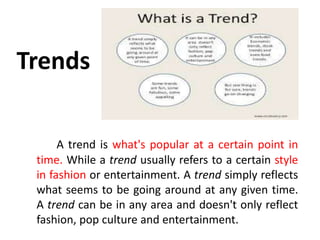
A trend is what's popular at a certain point in
time. While a trend usually refers to a certain style
in fashion or entertainment. A trend simply reflects
what seems to be going around at any given time.
A trend can be in any area and doesn't only reflect
fashion, pop culture and entertainment.
ISSUES
An important topic or problem for
debate or discussion.
Something that people are talking
about or thinking about etc.
Trends & Issues
Following are the main trends & issues in
this era:
1. Lest Restrictive Environment (LRE)
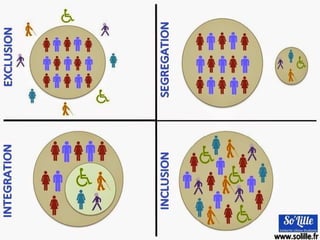
2. Segregation
3. Integration
4. Mainstreaming
5. Inclusive Education
Least Restrictive Environment (LRE)
Educational setting which maximize the students
opportunity to respond and achieve, permits the
regular education teacher to interacts opportunity
with all the students in the class room and foster
acceptable social relations between non-
handicapped and handicapped students.
The least restrictive environment was seen as the
environment which least restricts the interaction of
students with their non-disabled peers.
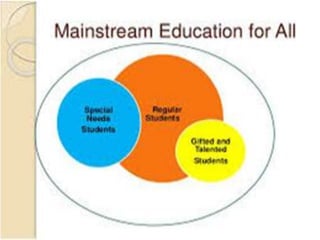
Mainstreaming
It is the education of handicap students in
regular classroom with assistance from special
education resource teacher.
The sequential instructional and social
integration of eligible exceptional children with
normal peers based on an ongoing individually
determined educational planning programming
process & requires classification of responsibility
among regular and special education administrative,
instructional and supportive personnel.
Conti . . . .
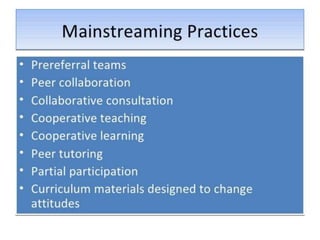
Mainstreaming has been used to refer to
the selective placement of special education
students in or more “regular” education
classes. Advocates of mainstreaming generally
assume that a student must “earn” his or her
opportunity to be placed in regular classes by
demonstrating an ability to “Keep up” with the
work assigned by the regular classroom
teacher.
Segregation
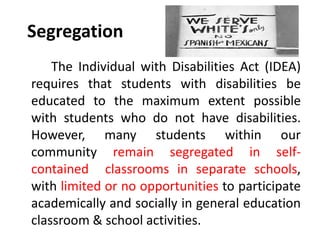
The Individual with Disabilities Act (IDEA)
requires that students with disabilities be
educated to the maximum extent possible
with students who do not have disabilities.
However, many students within our
community remain segregated in self-
contained classrooms in separate schools,
with limited or no opportunities to participate
academically and socially in general education
classroom & school activities.
Integration
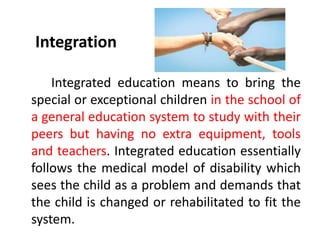
Integrated education means to bring the
special or exceptional children in the school of
a general education system to study with their
peers but having no extra equipment, tools
and teachers. Integrated education essentially
follows the medical model of disability which
sees the child as a problem and demands that
the child is changed or rehabilitated to fit the
system.
Process
The child with disabilities is integrated into the
classroom such that they work with the same
content and materials (though not necessarily
expected to learn the same level of skills).
Types of integration are as under:
• Physical Integration
• Social Integration
• Pedagogical Integration
Inclusive Education
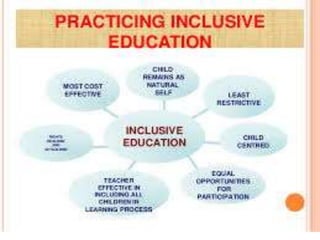
An inclusive education is a place
where every one belongs, expected,
supports and is supported by his or
her peers and other members of the
school community in the course of
having his or her educational needs
met.
Inclusive Education means a
learning environment that promotes
the full personal, academic and
professional development of all
learners irrespective of race, class,
gender, disability, religion, culture,
learning, style and language.
Inclusive Education allows every individual
to feel respect, confidence and safe to develop
his/her potentials by availing equal
opportunities & rights of education regardless
his/her disability, race, color, religion, social,
cultural, ethnic or economic differences. The
purpose is to provide the full potential and
abilities to the maximum.
Essentials of I.E
(a) Adaptation:
In Curriculum, physical and social
environment of the school.
(b) Consultation:
With the administrative and the teaching
staff of the school, the parents, General
Education Teacher, Special Education Teacher
and the Resource Teacher.
(c) Collaboration: School Administration and
Management, parents and the Professionals.
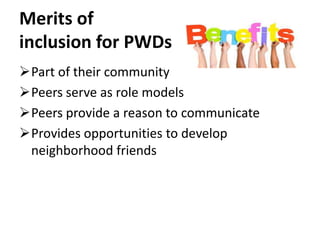
Merits of
inclusion for PWDs
Part of their community
Peers serve as role models
Peers provide a reason to communicate
Provides opportunities to develop
neighborhood friends
Benefits For family
• Changes in behavior
• Acceptance
• Discovery of other parents
• Feel a association with other families
• Share common experiences
Benefits for
society
• Promotes the civil rights of all individuals
• Support the social value of equality
• Teaches socialization
• Prevents from negative social behavior
Demerits
• It is very challenging for a teacher to manage
all type of disabilities in a single classroom and
difficult to provide relevant intervention to
special need children in a regular setting.
• Special children need individualized education
plan and program and in a regular classroom
which is very difficult to manage in a regular
class.
Conti . . . .
• Special children need multi-professionals services for
different therapies and in a normal classroom. it is
really a challenge to manage all this.
• Inclusive education requires lots of resources and
infra-structure. It needs proper physical structure
and least restricted environment for all the students.
But most of our school buildings are not designed
such so that all the students with disabilities such as
mobility and orientation can reach or move into
these buildings.
Questions ?

Unit-9, Trends & Issues.ppt

  • 2.
    TRENDS & ISSUES INSPECIAL EDUCATION Cc= 672
  • 3.
    Trends A trend iswhat's popular at a certain point in time. While a trend usually refers to a certain style in fashion or entertainment. A trend simply reflects what seems to be going around at any given time. A trend can be in any area and doesn't only reflect fashion, pop culture and entertainment.
  • 4.
    ISSUES An important topicor problem for debate or discussion. Something that people are talking about or thinking about etc.
  • 5.
    Trends & Issues Followingare the main trends & issues in this era: 1. Lest Restrictive Environment (LRE) 2. Segregation 3. Integration 4. Mainstreaming 5. Inclusive Education
  • 6.
    Least Restrictive Environment(LRE) Educational setting which maximize the students opportunity to respond and achieve, permits the regular education teacher to interacts opportunity with all the students in the class room and foster acceptable social relations between non- handicapped and handicapped students. The least restrictive environment was seen as the environment which least restricts the interaction of students with their non-disabled peers.
  • 7.
    Mainstreaming It is theeducation of handicap students in regular classroom with assistance from special education resource teacher. The sequential instructional and social integration of eligible exceptional children with normal peers based on an ongoing individually determined educational planning programming process & requires classification of responsibility among regular and special education administrative, instructional and supportive personnel.
  • 9.
    Conti . .. . Mainstreaming has been used to refer to the selective placement of special education students in or more “regular” education classes. Advocates of mainstreaming generally assume that a student must “earn” his or her opportunity to be placed in regular classes by demonstrating an ability to “Keep up” with the work assigned by the regular classroom teacher.
  • 11.
    Segregation The Individual withDisabilities Act (IDEA) requires that students with disabilities be educated to the maximum extent possible with students who do not have disabilities. However, many students within our community remain segregated in self- contained classrooms in separate schools, with limited or no opportunities to participate academically and socially in general education classroom & school activities.
  • 12.
    Integration Integrated education meansto bring the special or exceptional children in the school of a general education system to study with their peers but having no extra equipment, tools and teachers. Integrated education essentially follows the medical model of disability which sees the child as a problem and demands that the child is changed or rehabilitated to fit the system.
  • 13.
    Process The child withdisabilities is integrated into the classroom such that they work with the same content and materials (though not necessarily expected to learn the same level of skills). Types of integration are as under: • Physical Integration • Social Integration • Pedagogical Integration
  • 14.
    Inclusive Education An inclusiveeducation is a place where every one belongs, expected, supports and is supported by his or her peers and other members of the school community in the course of having his or her educational needs met.
  • 15.
    Inclusive Education meansa learning environment that promotes the full personal, academic and professional development of all learners irrespective of race, class, gender, disability, religion, culture, learning, style and language.
  • 16.
    Inclusive Education allowsevery individual to feel respect, confidence and safe to develop his/her potentials by availing equal opportunities & rights of education regardless his/her disability, race, color, religion, social, cultural, ethnic or economic differences. The purpose is to provide the full potential and abilities to the maximum.
  • 17.
    Essentials of I.E (a)Adaptation: In Curriculum, physical and social environment of the school. (b) Consultation: With the administrative and the teaching staff of the school, the parents, General Education Teacher, Special Education Teacher and the Resource Teacher. (c) Collaboration: School Administration and Management, parents and the Professionals.
  • 21.
    Merits of inclusion forPWDs Part of their community Peers serve as role models Peers provide a reason to communicate Provides opportunities to develop neighborhood friends
  • 22.
    Benefits For family •Changes in behavior • Acceptance • Discovery of other parents • Feel a association with other families • Share common experiences
  • 23.
    Benefits for society • Promotesthe civil rights of all individuals • Support the social value of equality • Teaches socialization • Prevents from negative social behavior
  • 24.
    Demerits • It isvery challenging for a teacher to manage all type of disabilities in a single classroom and difficult to provide relevant intervention to special need children in a regular setting. • Special children need individualized education plan and program and in a regular classroom which is very difficult to manage in a regular class.
  • 25.
    Conti . .. . • Special children need multi-professionals services for different therapies and in a normal classroom. it is really a challenge to manage all this. • Inclusive education requires lots of resources and infra-structure. It needs proper physical structure and least restricted environment for all the students. But most of our school buildings are not designed such so that all the students with disabilities such as mobility and orientation can reach or move into these buildings.
  • 26.