Community Advisory Committee  Long Term Control Plan Update October 25, 2004
Program Update EPA Contractor Pre-Bid Meeting September Community Visioning Meeting
Ottawa River Alternatives Ottawa River CSO control alternatives are under development  Alternative concepts will be presented to the public for initial input on November 18, 2004 at a meeting to be held at Friendship Park Today’s presentation is a partial preview of the information to be presented to the public
Assistance needed The project team is evaluating alternatives from a regulatory, technical and cost perspective. We need input on  What issues are of concern to the public as we evaluate the options How to present to the public in a meaningful way
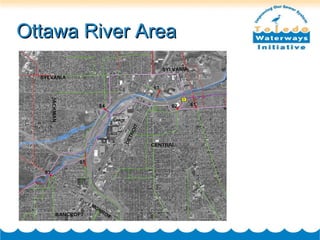
Ottawa River Area
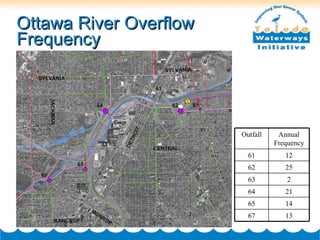
Ottawa River Overflow Frequency 13 67 14 65 21 64 2 63 25 62 12 61 Annual Frequency Outfall
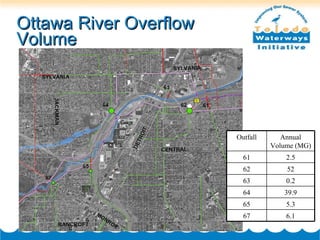
Ottawa River Overflow Volume 6.1 67 5.3 65 39.9 64 0.2 63 52 62 2.5 61 Annual Volume (MG) Outfall
Type of Alternatives Alternative selection is a combination of performance and suitability considerations.  There are a number of types of alternatives.
CSO Control Options There are three basic control options Storage (holds excess flow until capacity is available) Treatment (cleans flow before it is discharged – disinfects and removes pollutants) Separation (provides new sanitary or storm sewers so that combined sewers are eliminated) Flow reduction/ rerouting can enhance the above options
Storage / Treatment Basic Information Type of facilities: either concrete tanks or tunnels Type of treatment: screening (minimum), potentially disinfection  Land area required: 3 – 10 acres Typical siting locations: waterfront property, parks, other vacant parcels near rivers Other requirements: some sewer work to bring flow to the site
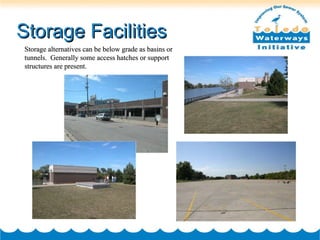
Storage Facilities Storage alternatives can be below grade as basins or tunnels.  Generally some access hatches or support structures are present.
Storage/ Treatment Facilities Pros and Cons Pros Most work is limited to one location and the adjacent areas are not disturbed Water is either stored (small storms) or partially treated (large storms) Cons Treatment generally requires construction of a relatively large building. Construction activities are generally 2 – 3 years in duration limiting the use of sites during that period.
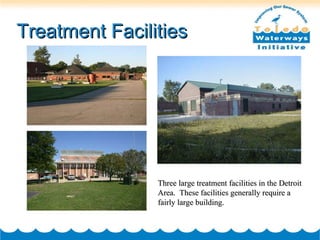
Treatment Facilities Three large treatment facilities in the Detroit Area.  These facilities generally require a fairly large building.
Sewer Separation Basics Constructs a new sewer to separate flow Generally requires 3 – 6 months to complete work on a street; 1 – 2 years to complete work in an areas Generally doesn’t involve land acquisition
Sewer Separation Pros and Cons Pros Upgrades the sewer system Eliminates CSO discharges Doesn’t require property Cons May increase total load of pollutants to the waterways Disruptive to individual property owner
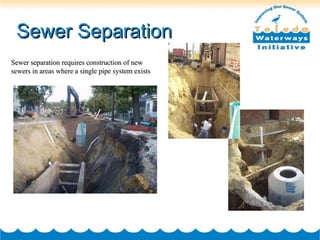
Sewer Separation Sewer separation requires construction of new sewers in areas where a single pipe system exists
Flow Reduction / Rerouting Pros and Cons Pros Addresses problem at the source Could be considered best environmentally Could reduce basement or surface flooding Cons Generally not adequate to solve the entire problem Most disruptive to individual property owner Administratively intensive program
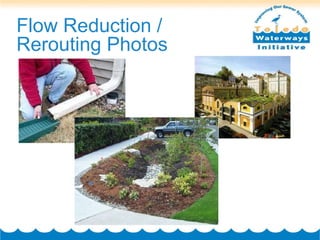
Flow Reduction / Rerouting Photos
EPA Criteria The EPA’s primary concern in other CSO Plans around the country is the frequency at which CSO’s discharge EPA generally wants to see control of bacteria Other items of concern to EPA Volume of discharge Pollutants in discharge Measureable impacts on waterways
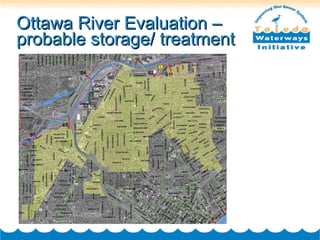
Ottawa River Evaluation – probable storage/ treatment
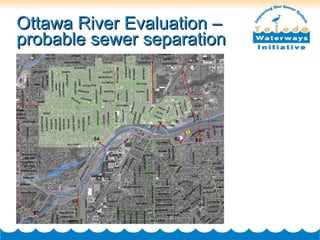
Ottawa River Evaluation – probable sewer separation
Siting Issues/ Concerns Consider Areas of open space (sites), reasonably close to outfalls Current use of existing sites & associated impacts due to construction or long term use Ownership of sites “ Fatal flaws” such as environmental or geotechnical issues. Opportunities for secondary benefit – e.g. brownfield reuse, coordination with other projects.
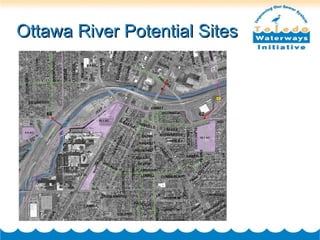
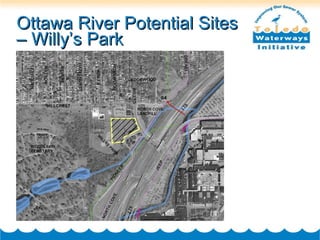
Ottawa River Potential Sites Potential sites Potential sites have been identified based on location of open space Currently evaluating the feasibility of these sites No decisions have been made about the use or non use of any site
Ottawa River Potential Sites
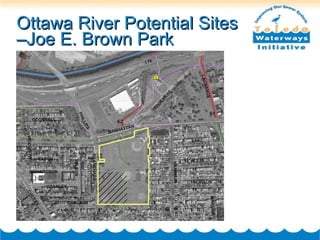
Ottawa River Potential Sites –Joe E. Brown Park
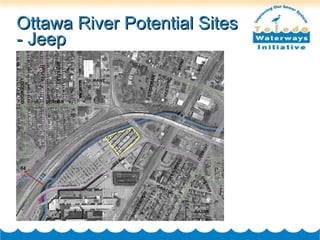
Ottawa River Potential Sites - Jeep
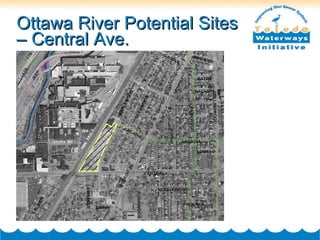
Ottawa River Potential Sites – Central Ave.
Ottawa River Potential Sites – Willy’s Park
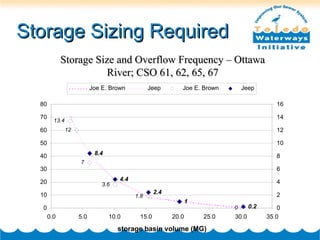
Storage Sizing Required Storage Size and Overflow Frequency – Ottawa River; CSO 61, 62, 65, 67
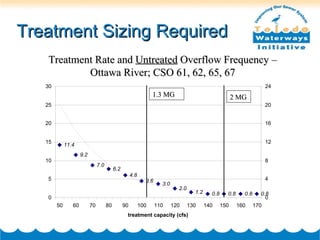
Treatment Sizing Required Treatment Rate and  Untreated  Overflow Frequency – Ottawa River; CSO 61, 62, 65, 67 1.3 MG 2 MG
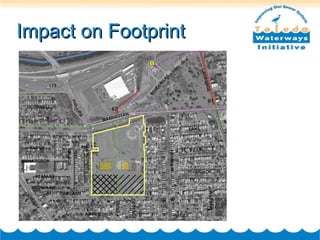
Impact on Footprint
Cost projections Cost projections are under development
Evaluations Are Continuing Additional cost development and comparison to benefits Better definition of potential sites and discussions with property owners/ operators Development of tunnel storage option More technical evaluations (will support cost assessment)
Public Meeting Objective for Public Meeting Provide information to the public on the potential impacts to them during construction/ post construction Describe the benefits to the river from various alternatives Discuss the public preference for various alternative types (storage/ treatment/ separation) Present information on the variation in project cost versus project benefit

CPAC Meeting 10-25-04

  • 1.
    Community Advisory Committee Long Term Control Plan Update October 25, 2004
  • 2.
    Program Update EPAContractor Pre-Bid Meeting September Community Visioning Meeting
  • 3.
    Ottawa River AlternativesOttawa River CSO control alternatives are under development Alternative concepts will be presented to the public for initial input on November 18, 2004 at a meeting to be held at Friendship Park Today’s presentation is a partial preview of the information to be presented to the public
  • 4.
    Assistance needed Theproject team is evaluating alternatives from a regulatory, technical and cost perspective. We need input on What issues are of concern to the public as we evaluate the options How to present to the public in a meaningful way
  • 5.
  • 6.
    Ottawa River OverflowFrequency 13 67 14 65 21 64 2 63 25 62 12 61 Annual Frequency Outfall
  • 7.
    Ottawa River OverflowVolume 6.1 67 5.3 65 39.9 64 0.2 63 52 62 2.5 61 Annual Volume (MG) Outfall
  • 8.
    Type of AlternativesAlternative selection is a combination of performance and suitability considerations. There are a number of types of alternatives.
  • 9.
    CSO Control OptionsThere are three basic control options Storage (holds excess flow until capacity is available) Treatment (cleans flow before it is discharged – disinfects and removes pollutants) Separation (provides new sanitary or storm sewers so that combined sewers are eliminated) Flow reduction/ rerouting can enhance the above options
  • 10.
    Storage / TreatmentBasic Information Type of facilities: either concrete tanks or tunnels Type of treatment: screening (minimum), potentially disinfection Land area required: 3 – 10 acres Typical siting locations: waterfront property, parks, other vacant parcels near rivers Other requirements: some sewer work to bring flow to the site
  • 11.
    Storage Facilities Storagealternatives can be below grade as basins or tunnels. Generally some access hatches or support structures are present.
  • 12.
    Storage/ Treatment FacilitiesPros and Cons Pros Most work is limited to one location and the adjacent areas are not disturbed Water is either stored (small storms) or partially treated (large storms) Cons Treatment generally requires construction of a relatively large building. Construction activities are generally 2 – 3 years in duration limiting the use of sites during that period.
  • 13.
    Treatment Facilities Threelarge treatment facilities in the Detroit Area. These facilities generally require a fairly large building.
  • 14.
    Sewer Separation BasicsConstructs a new sewer to separate flow Generally requires 3 – 6 months to complete work on a street; 1 – 2 years to complete work in an areas Generally doesn’t involve land acquisition
  • 15.
    Sewer Separation Prosand Cons Pros Upgrades the sewer system Eliminates CSO discharges Doesn’t require property Cons May increase total load of pollutants to the waterways Disruptive to individual property owner
  • 16.
    Sewer Separation Sewerseparation requires construction of new sewers in areas where a single pipe system exists
  • 17.
    Flow Reduction /Rerouting Pros and Cons Pros Addresses problem at the source Could be considered best environmentally Could reduce basement or surface flooding Cons Generally not adequate to solve the entire problem Most disruptive to individual property owner Administratively intensive program
  • 18.
    Flow Reduction /Rerouting Photos
  • 19.
    EPA Criteria TheEPA’s primary concern in other CSO Plans around the country is the frequency at which CSO’s discharge EPA generally wants to see control of bacteria Other items of concern to EPA Volume of discharge Pollutants in discharge Measureable impacts on waterways
  • 20.
    Ottawa River Evaluation– probable storage/ treatment
  • 21.
    Ottawa River Evaluation– probable sewer separation
  • 22.
    Siting Issues/ ConcernsConsider Areas of open space (sites), reasonably close to outfalls Current use of existing sites & associated impacts due to construction or long term use Ownership of sites “ Fatal flaws” such as environmental or geotechnical issues. Opportunities for secondary benefit – e.g. brownfield reuse, coordination with other projects.
  • 23.
    Ottawa River PotentialSites Potential sites Potential sites have been identified based on location of open space Currently evaluating the feasibility of these sites No decisions have been made about the use or non use of any site
  • 24.
  • 25.
    Ottawa River PotentialSites –Joe E. Brown Park
  • 26.
  • 27.
    Ottawa River PotentialSites – Central Ave.
  • 28.
    Ottawa River PotentialSites – Willy’s Park
  • 29.
    Storage Sizing RequiredStorage Size and Overflow Frequency – Ottawa River; CSO 61, 62, 65, 67
  • 30.
    Treatment Sizing RequiredTreatment Rate and Untreated Overflow Frequency – Ottawa River; CSO 61, 62, 65, 67 1.3 MG 2 MG
  • 31.
  • 32.
    Cost projections Costprojections are under development
  • 33.
    Evaluations Are ContinuingAdditional cost development and comparison to benefits Better definition of potential sites and discussions with property owners/ operators Development of tunnel storage option More technical evaluations (will support cost assessment)
  • 34.
    Public Meeting Objectivefor Public Meeting Provide information to the public on the potential impacts to them during construction/ post construction Describe the benefits to the river from various alternatives Discuss the public preference for various alternative types (storage/ treatment/ separation) Present information on the variation in project cost versus project benefit