Clemson Parking 
Stormwater 
Management 
Carolyn Coffey 
Brendan Luther 
Karris Roland 
Chelsea Walker
Overview 
● Introduction to Clemson stormwater 
● Goal of the project 
● Potential management solutions 
● Governing equations and design 
● Sustainability and Life Cycle 
● Questions & Comments
Background and History of Stormwater 
Regulations 
- In 1972 the Clean Water Act prohibited any pollutant accessible to waters from a point source. 
- Runoff carries sediment, pollutants, grease, or oil into storm drains and surface waters 
- Water Quality Act of 1987 created a structure for different methodologies, including discharge 
permits for various classifications. 
On October 31, 1990 the US EPA issued the stormwater rule for the classifications of stormwater 
systems subject to regulation: 
● Combined sewer overflows (both sanitary sewage and industrial processes) 
● Wastewater are mixed with rainwater and land runoff 
● Municipal separate stormwater systems 
● Separate stormwater systems 
● Non-point source runoff (all runoff that is not discharged to surface waters via a discrete pipe or 
conduit)
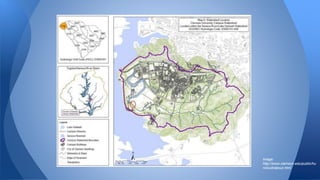
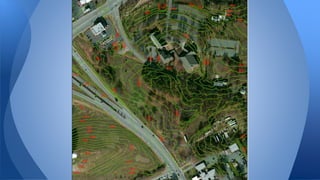
Clemson Watershed 
● Runoff primarily flows to Hunnicutt Creek 
o Pollutants from parking lots 
o Soil displacement and erosion 
o High peak flow rates 
● Nearly 22% of campus is impervious
Image: 
http://www.clemson.edu/public/hu 
nnicutt/about.html
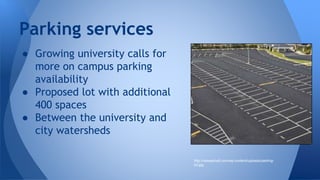
Parking services 
● Growing university calls for 
more on campus parking 
availability 
● Proposed lot with additional 
400 spaces 
● Between the university and 
city watersheds 
http://reisasphalt.com/wp-content/uploads/parking-lot. 
jpg
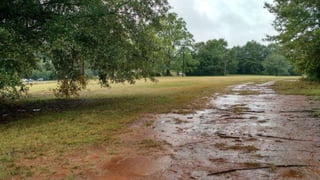
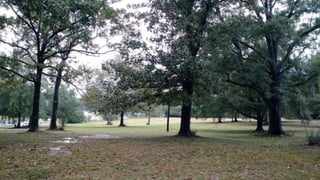
Problem 
● Runoff from parking lot could add to 
Clemson’s flooding problems 
● Need for better management practices
Goal 
● Prevent parking lot runoff from entering 
the Clemson watershed 
● Filter stormwater pollutants 
● Maintain pre-development hydrology 
● Ensure infiltration using a bioretention 
cell
Constraints 
● Budget: $1200 
● Heavy machinery might be necessary 
● Permitting constraints 
● Potential for large storm events 
● Experience of design team
Considerations for Design 
Soil Type 
- Soil Conservation Service classifies more than 4000 different types of soils into four groups 
http://www.wetlandstudies.com/newsletters/2012/september/docs/hydro_soil_groups.pdf 
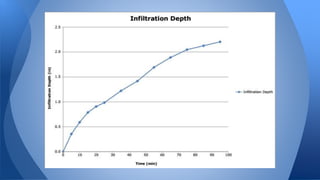
- The physical properties include infiltration rates and relative runoff potential 
- Web Soil Survey showed the area classified as Group B. 
- Group B has infiltration rates from 0.15 to 0.30 inches per hour and moderate runoff potential 
- A curve number is calculated for pre and post development to indicate the runoff potential for 
the area
Calculations 
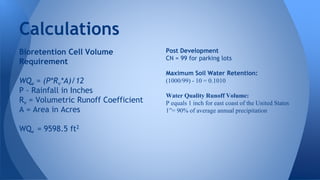
Bioretention Cell Volume 
Requirement 
WQv = (P*Rv*A)/12 
P - Rainfall in Inches 
Rv = Volumetric Runoff Coefficient 
A = Area in Acres 
WQv = 9598.5 ft2 
Post Development 
CN = 99 for parking lots 
Maximum Soil Water Retention: 
(1000/99) - 10 = 0.1010 
Water Quality Runoff Volume: 
P equals 1 inch for east coast of the United States 
1”= 90% of average annual precipitation
Surface Area of Bioretention Cell 
- Must hold 75% of Water Quality Volume 
- Af = (WV*df)/[K*(hf+df)(tf)] 
- WV = WQv 
- df = filter bed depth 
- K = coefficient of permeability 
- hf = average height of water above filter bed 
- tf = filter bed drain time (days) 
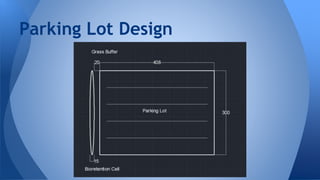
Af = 4500 ft2 
Dimensions of Cell: 15’ by 300’
Parking Lot Design
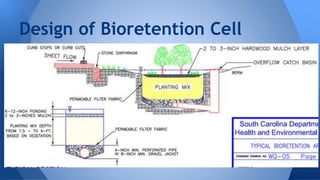
Components of Bioretention Cell 
● Filter Fabric 
● Gravel 
● Mulch 
● Plants 
● Sand 
● Soil Mix
Design of Bioretention Cell
Budget
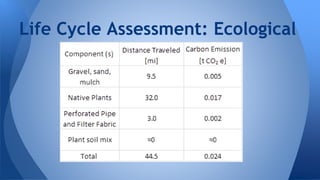
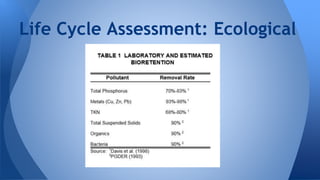
Life Cycle Assessment: Ecological
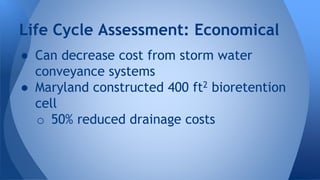
Life Cycle Assessment: Economical 
● Can decrease cost from storm water 
conveyance systems 
● Maryland constructed 400 ft2 bioretention 
cell 
o 50% reduced drainage costs
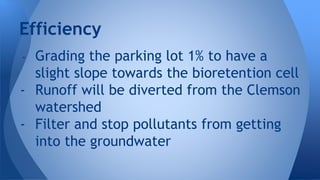
Efficiency 
- Grading the parking lot 1% to have a 
slight slope towards the bioretention cell 
- Runoff will be diverted from the Clemson 
watershed 
- Filter and stop pollutants from getting 
into the groundwater
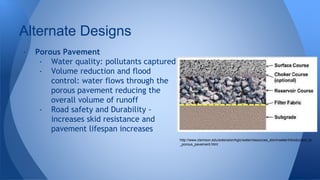
Alternate Designs 
- Porous Pavement 
- Water quality: pollutants captured 
- Volume reduction and flood 
control: water flows through the 
porous pavement reducing the 
overall volume of runoff 
- Road safety and Durability - 
increases skid resistance and 
pavement lifespan increases 
http://www.clemson.edu/extension/hgic/water/resources_stormwater/introduction_to 
_porous_pavement.html
Time-line
Looking Forward 
● Cost estimates of native plants 
● Run dimensions against 10 and 25 year 
storms 
● City of Clemson stormwater management 
● Design primary overflow
Questions?

Midterm presentation

  • 1.
    Clemson Parking Stormwater Management Carolyn Coffey Brendan Luther Karris Roland Chelsea Walker
  • 2.
    Overview ● Introductionto Clemson stormwater ● Goal of the project ● Potential management solutions ● Governing equations and design ● Sustainability and Life Cycle ● Questions & Comments
  • 3.
    Background and Historyof Stormwater Regulations - In 1972 the Clean Water Act prohibited any pollutant accessible to waters from a point source. - Runoff carries sediment, pollutants, grease, or oil into storm drains and surface waters - Water Quality Act of 1987 created a structure for different methodologies, including discharge permits for various classifications. On October 31, 1990 the US EPA issued the stormwater rule for the classifications of stormwater systems subject to regulation: ● Combined sewer overflows (both sanitary sewage and industrial processes) ● Wastewater are mixed with rainwater and land runoff ● Municipal separate stormwater systems ● Separate stormwater systems ● Non-point source runoff (all runoff that is not discharged to surface waters via a discrete pipe or conduit)
  • 4.
    Clemson Watershed ●Runoff primarily flows to Hunnicutt Creek o Pollutants from parking lots o Soil displacement and erosion o High peak flow rates ● Nearly 22% of campus is impervious
  • 5.
  • 6.
    Parking services ●Growing university calls for more on campus parking availability ● Proposed lot with additional 400 spaces ● Between the university and city watersheds http://reisasphalt.com/wp-content/uploads/parking-lot. jpg
  • 10.
    Problem ● Runofffrom parking lot could add to Clemson’s flooding problems ● Need for better management practices
  • 11.
    Goal ● Preventparking lot runoff from entering the Clemson watershed ● Filter stormwater pollutants ● Maintain pre-development hydrology ● Ensure infiltration using a bioretention cell
  • 12.
    Constraints ● Budget:$1200 ● Heavy machinery might be necessary ● Permitting constraints ● Potential for large storm events ● Experience of design team
  • 13.
    Considerations for Design Soil Type - Soil Conservation Service classifies more than 4000 different types of soils into four groups http://www.wetlandstudies.com/newsletters/2012/september/docs/hydro_soil_groups.pdf - The physical properties include infiltration rates and relative runoff potential - Web Soil Survey showed the area classified as Group B. - Group B has infiltration rates from 0.15 to 0.30 inches per hour and moderate runoff potential - A curve number is calculated for pre and post development to indicate the runoff potential for the area
  • 16.
    Calculations Bioretention CellVolume Requirement WQv = (P*Rv*A)/12 P - Rainfall in Inches Rv = Volumetric Runoff Coefficient A = Area in Acres WQv = 9598.5 ft2 Post Development CN = 99 for parking lots Maximum Soil Water Retention: (1000/99) - 10 = 0.1010 Water Quality Runoff Volume: P equals 1 inch for east coast of the United States 1”= 90% of average annual precipitation
  • 17.
    Surface Area ofBioretention Cell - Must hold 75% of Water Quality Volume - Af = (WV*df)/[K*(hf+df)(tf)] - WV = WQv - df = filter bed depth - K = coefficient of permeability - hf = average height of water above filter bed - tf = filter bed drain time (days) Af = 4500 ft2 Dimensions of Cell: 15’ by 300’
  • 18.
  • 19.
    Components of BioretentionCell ● Filter Fabric ● Gravel ● Mulch ● Plants ● Sand ● Soil Mix
  • 20.
  • 21.
  • 22.
  • 23.
  • 24.
    Life Cycle Assessment:Economical ● Can decrease cost from storm water conveyance systems ● Maryland constructed 400 ft2 bioretention cell o 50% reduced drainage costs
  • 25.
    Efficiency - Gradingthe parking lot 1% to have a slight slope towards the bioretention cell - Runoff will be diverted from the Clemson watershed - Filter and stop pollutants from getting into the groundwater
  • 26.
    Alternate Designs -Porous Pavement - Water quality: pollutants captured - Volume reduction and flood control: water flows through the porous pavement reducing the overall volume of runoff - Road safety and Durability - increases skid resistance and pavement lifespan increases http://www.clemson.edu/extension/hgic/water/resources_stormwater/introduction_to _porous_pavement.html
  • 27.
  • 28.
    Looking Forward ●Cost estimates of native plants ● Run dimensions against 10 and 25 year storms ● City of Clemson stormwater management ● Design primary overflow
  • 29.