COUNSELLING SKILLS
PREPARED BY
NEENU BABU
ROLLNO:28
1ST SEM MBA
CONTENTS
• Introduction
• Definition
• Objectives
• Features
• Types of counselling
• Counselling process
• Guidance and counselling
• do’ s and dont’s of counselling
• Effective counselling
• conclusion
INTRODUCTION
• Counselling is an important mechanism for
performance improvement of an individual in
different walks of life in an organizations as
well
• it helps people to see things from a different
view point and encourage them to draft their
action plan
DEFINITION
• It is a process of advising an employee or
probably in most of the cases, listening to the
statement of his problem and enabling him to
find a solution for it which is satisfactory to
himself
OBJECTIVES
• Understand and/or decrease an employee’s
emotional disorder
• Give employees support in dealing with their
emotional problems
• To realise what he is able to do and what he
should do that means to accept abilities and
weaknesses.
FEATURES
• Exchange of ideas and feelings between two
person
• Improve organizational performance by helping
the employees to cop up with their problems
• Concerned with both personal and work related
problems
• Performed by both professionals non professional
may also offer counseling
• Confidential so that free talk and discussion is
made
TYPES OF COUNSELLING
• Directive counselling->counsellor oriented
• Non-directive counselling->client oriented
• Co-operative counselling-> counsellor -client
oriented
COUNSELLING PROCESS
THREE-STAGE model of counselling process.
it is a systematic way of learning to work with
another person to help them cop more
effectively with their life
1. Exploration
2. Finding new perspective
3. Action
EXPLORATION
• Counsellors help client to explore their issues
Through listening and giving full attention
• The counselors’ genuineness, acceptance and
empathy are communicated through active
listening
• Help to enable the client to move on by
themselves
FINDING NEW PERSPECTIVE
• Counselor tries to help client to understand
themselves
• Counselor use the words like “perhaps you
feel", "it may be that”
• main skills used is an extension of reflection
,paraphrasing and summarizing in stage one
ACTION
• Clients are helped to take effective action to
achieve constructive stage skills
Skills includes
ď‚§ Goal and strategy setting
ď‚§ Providing support and resources
ď‚§ Coaching and training
ď‚§ Using learning theory to pursue action plan
ď‚§ Problem-solving
ď‚§ Decision-making
ď‚§ evaluating
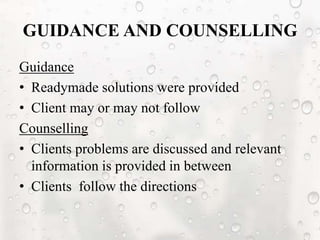
GUIDANCE AND COUNSELLING
Guidance
• Readymade solutions were provided
• Client may or may not follow
Counselling
• Clients problems are discussed and relevant
information is provided in between
• Clients follow the directions
DO’S OF COUNSELLING
THE COUNSELLOR MUST SO CLIENT CAN
LISTEN DEVELOP HIS/HER THINKING
NOT JUDGE FEEL SAFE AND RESPECTED
ACCEPT THE CLIENTS CHANGE KNOW HE/SHE IS NOT BEING JUDGED
THINK ABOUT THE CLIENT GET BEST HELP POSSIBLE
COUNSELLOR MAY SO THE CLIENT CAN
ASK QUESTIONS DEVELOP HIS/HER OWN THINKING
SUMMARIZE HEAR HIS/HER THOUGHTS AND KNOW
HE OR SHE IS UNDERSTOOD
ASK THE CLIENT TO TRY NEW
BEHAVIOUR IN COUNSELLING SESSION
REALEASE BLOCKING EMOTIONS SUCH
AS UNEXPRESSED ANGER OR SADNESS
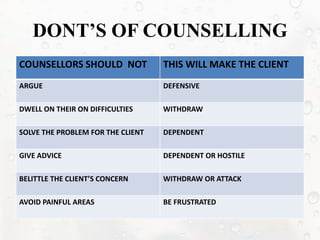
DONT’S OF COUNSELLING
COUNSELLORS SHOULD NOT THIS WILL MAKE THE CLIENT
ARGUE DEFENSIVE
DWELL ON THEIR ON DIFFICULTIES WITHDRAW
SOLVE THE PROBLEM FOR THE CLIENT DEPENDENT
GIVE ADVICE DEPENDENT OR HOSTILE
BELITTLE THE CLIENT’S CONCERN WITHDRAW OR ATTACK
AVOID PAINFUL AREAS BE FRUSTRATED
EFFECTIVE COUNSELLING
• Problem oriented not person oriented
• Should not be superiority-oriented
• Specific
• Flexible not done with closed mind
• Receiving feedback and giving feedback are kept in
mind
• Supportive listening and emphatic listening be
encouraged
• Avoid critical parental role
• Avoid provoking questions
• Built friendly environment
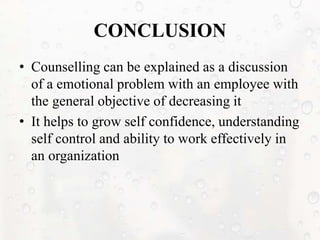
CONCLUSION
• Counselling can be explained as a discussion
of a emotional problem with an employee with
the general objective of decreasing it
• It helps to grow self confidence, understanding
self control and ability to work effectively in
an organization
REFERENCE
• Basic business communication by Raj
Kumar excel books,first edition New
Delhi 2010
• Business communication by R C
Bhatia Ane books pvt.ltd,second
edition NewDelhi 2008
• www.hrwale.com/conselling-skills
• www.scribd.com
THANK YOU

counselling

  • 1.
    COUNSELLING SKILLS PREPARED BY NEENUBABU ROLLNO:28 1ST SEM MBA
  • 2.
    CONTENTS • Introduction • Definition •Objectives • Features • Types of counselling • Counselling process • Guidance and counselling • do’ s and dont’s of counselling • Effective counselling • conclusion
  • 3.
    INTRODUCTION • Counselling isan important mechanism for performance improvement of an individual in different walks of life in an organizations as well • it helps people to see things from a different view point and encourage them to draft their action plan
  • 4.
    DEFINITION • It isa process of advising an employee or probably in most of the cases, listening to the statement of his problem and enabling him to find a solution for it which is satisfactory to himself
  • 5.
    OBJECTIVES • Understand and/ordecrease an employee’s emotional disorder • Give employees support in dealing with their emotional problems • To realise what he is able to do and what he should do that means to accept abilities and weaknesses.
  • 6.
    FEATURES • Exchange ofideas and feelings between two person • Improve organizational performance by helping the employees to cop up with their problems • Concerned with both personal and work related problems • Performed by both professionals non professional may also offer counseling • Confidential so that free talk and discussion is made
  • 7.
    TYPES OF COUNSELLING •Directive counselling->counsellor oriented • Non-directive counselling->client oriented • Co-operative counselling-> counsellor -client oriented
  • 8.
    COUNSELLING PROCESS THREE-STAGE modelof counselling process. it is a systematic way of learning to work with another person to help them cop more effectively with their life 1. Exploration 2. Finding new perspective 3. Action
  • 9.
    EXPLORATION • Counsellors helpclient to explore their issues Through listening and giving full attention • The counselors’ genuineness, acceptance and empathy are communicated through active listening • Help to enable the client to move on by themselves
  • 10.
    FINDING NEW PERSPECTIVE •Counselor tries to help client to understand themselves • Counselor use the words like “perhaps you feel", "it may be that” • main skills used is an extension of reflection ,paraphrasing and summarizing in stage one
  • 11.
    ACTION • Clients arehelped to take effective action to achieve constructive stage skills Skills includes  Goal and strategy setting  Providing support and resources  Coaching and training  Using learning theory to pursue action plan  Problem-solving  Decision-making  evaluating
  • 12.
    GUIDANCE AND COUNSELLING Guidance •Readymade solutions were provided • Client may or may not follow Counselling • Clients problems are discussed and relevant information is provided in between • Clients follow the directions
  • 13.
    DO’S OF COUNSELLING THECOUNSELLOR MUST SO CLIENT CAN LISTEN DEVELOP HIS/HER THINKING NOT JUDGE FEEL SAFE AND RESPECTED ACCEPT THE CLIENTS CHANGE KNOW HE/SHE IS NOT BEING JUDGED THINK ABOUT THE CLIENT GET BEST HELP POSSIBLE
  • 14.
    COUNSELLOR MAY SOTHE CLIENT CAN ASK QUESTIONS DEVELOP HIS/HER OWN THINKING SUMMARIZE HEAR HIS/HER THOUGHTS AND KNOW HE OR SHE IS UNDERSTOOD ASK THE CLIENT TO TRY NEW BEHAVIOUR IN COUNSELLING SESSION REALEASE BLOCKING EMOTIONS SUCH AS UNEXPRESSED ANGER OR SADNESS
  • 15.
    DONT’S OF COUNSELLING COUNSELLORSSHOULD NOT THIS WILL MAKE THE CLIENT ARGUE DEFENSIVE DWELL ON THEIR ON DIFFICULTIES WITHDRAW SOLVE THE PROBLEM FOR THE CLIENT DEPENDENT GIVE ADVICE DEPENDENT OR HOSTILE BELITTLE THE CLIENT’S CONCERN WITHDRAW OR ATTACK AVOID PAINFUL AREAS BE FRUSTRATED
  • 16.
    EFFECTIVE COUNSELLING • Problemoriented not person oriented • Should not be superiority-oriented • Specific • Flexible not done with closed mind • Receiving feedback and giving feedback are kept in mind • Supportive listening and emphatic listening be encouraged • Avoid critical parental role • Avoid provoking questions • Built friendly environment
  • 17.
    CONCLUSION • Counselling canbe explained as a discussion of a emotional problem with an employee with the general objective of decreasing it • It helps to grow self confidence, understanding self control and ability to work effectively in an organization
  • 18.
    REFERENCE • Basic businesscommunication by Raj Kumar excel books,first edition New Delhi 2010 • Business communication by R C Bhatia Ane books pvt.ltd,second edition NewDelhi 2008 • www.hrwale.com/conselling-skills • www.scribd.com
  • 19.