Sharq Elneil College
School of Medical Laboratory Sciences
Department of Microbiology
Medical Bacteriology course
U.Mahadi Hassan Mahmoud
Bsc, Msc, MIBMS Microbiology
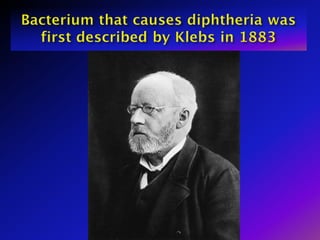
 The bacterium that causes diphtheria
was first described by Klebs in 1883,
and was cultivated by Loeffler in
1884, who applied Koch's postulates
and properly identified Coryneb-
bacterium diphtheriae as the agent of
the disease.
 In 1884, Loeffler concluded that C.
diphtheriae produced a soluble
toxin, and thereby provided the first
description of a bacterial exotoxin
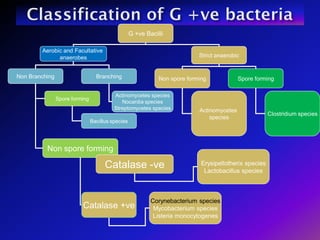
G +ve Bacilli
Aerobic and Facultative
anaerobes Strict anaerobic
Non spore forming Spore forming
Clostridium species
Actinomycetes
species
Non Branching Branching
Actinomycetes species
Nocardia species
Streptomycetes species
Spore forming
Non spore forming
Bacillus species
Catalase -ve
Catalase +ve
Erysipellotherix species
Lactobacillus species
Corynebacterium species
Mycobacterium species
Listeria monocytogenes
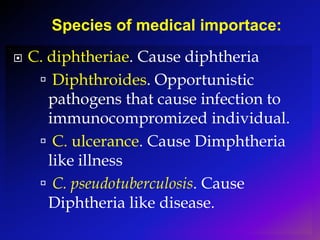
 C. diphtheriae. Cause diphtheria
 Diphthroides. Opportunistic
pathogens that cause infection to
immunocompromized individual.
 C. ulcerance. Cause Dimphtheria
like illness
 C. pseudotuberculosis. Cause
Diphtheria like disease.
Species of medical importace:
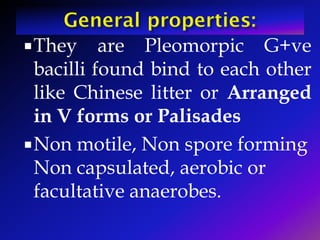
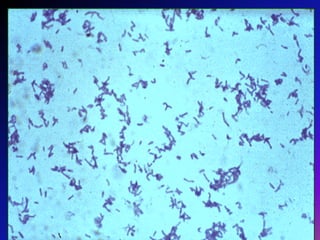
They are Pleomorpic G+ve
bacilli found bind to each other
like Chinese litter or Arranged
in V forms or Palisades
Non motile, Non spore forming
Non capsulated, aerobic or
facultative anaerobes.
 i. Loeffler's Serum Slope.
 ii. Tellurite BA.
- Temp. 37oC,
- Aerobic and Facultative AnO2.
They form Polyphosphate
(volutin or metachromatic)
granules when cultured on
highly enriched media.
They are highly resistant to
drying.
They are fastidious organism
that need Blood, serum or egg
for growth.
 solely among
humans
 spread by droplets
 secretions
 direct contact
 Poor nutrition
 Crowded or
unsanitary living
conditions
 Low vaccine coverage
among infants and
children
 Immunity gaps in
adults
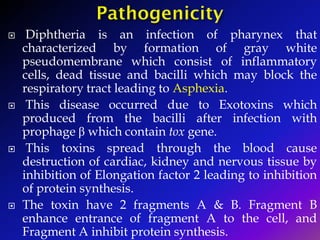
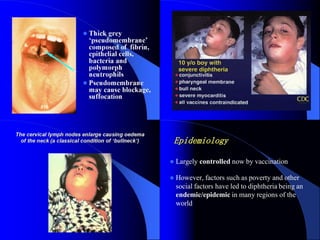
 Diphtheria is an infection of pharynex that
characterized by formation of gray white
pseudomembrane which consist of inflammatory
cells, dead tissue and bacilli which may block the
respiratory tract leading to Asphexia.
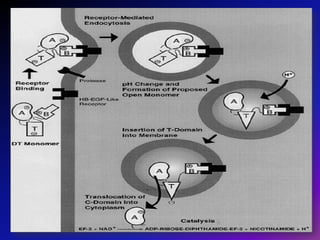
 This disease occurred due to Exotoxins which
produced from the bacilli after infection with
prophage β which contain tox gene.
 This toxins spread through the blood cause
destruction of cardiac, kidney and nervous tissue by
inhibition of Elongation factor 2 leading to inhibition
of protein synthesis.
 The toxin have 2 fragments A & B. Fragment B
enhance entrance of fragment A to the cell, and
Fragment A inhibit protein synthesis.
 Largely controlled now by vaccination
 However, factors such as poverty and other
social factors have led to diphtheria being an
endemic/epidemic in many regions of the
world
Epidemiology
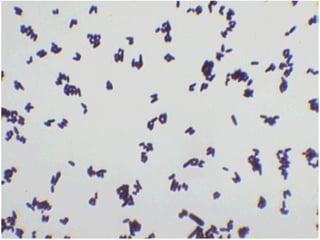
 Specimens: Throat swab.
 Direct examination:
 Gram stain showing G+ve bacilli
arrange in Chinese letter.
 Inoculation of the specimens on
Lofflere’s serum media or Dorset egg
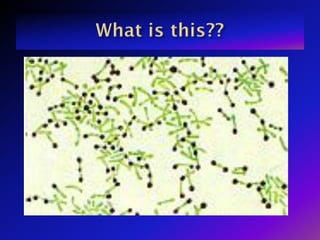
media for 6 hours and stain fixed smear
by Albert stain or Neisser stain. The
volutin granules staind dark green to
black in Albert and dark blue to black
in Neisser stain.
 Culture:
 Blood agar.
 Selective media is Tellurite Blood agar (contain 0.03%-
0.04% K. tellurite) and Modified Tinsdale’s medium
(contain cystein).
 Incubation:
 At 37 C in aerobic condition.
 Colonial morphology:
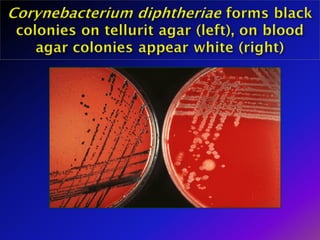
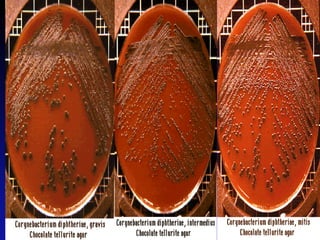
 B.A Produce small gray or gray white convex colonies.
 Tellurite blood agar produce black colonies due to
formation of K. tellurate, C. garvis, mitis and ulcerance
produe β haemolysis.
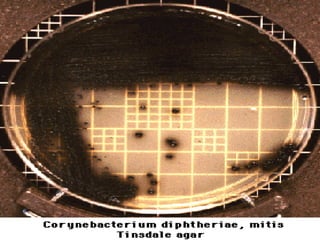
 Modified tinsdale’s media produce brown hallow due
to H2S production.
Biochemical characters:
 Catalase +ve.
 Oxidase and Urease –ve.
 Ferment glucose and maltose with
acid production.
 C. gravis ferment starch and
Terialose.
 C. ulcerance are urease +ve and
liquefy gelatin.
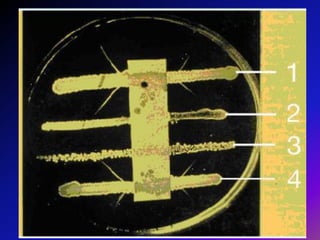
 Invitrotoxigenicity test (ELEK’S gel
precipitation reaction):
 Toxigenic strain will secrete toxins that react
with antitoxin in the filter paper producing
precipitin line.
 We need:
 Elek’s plate media with low iron concentration.
 Tested organism
 Control strain (Known toxoginic strain).
 Sterile filter paper impregnated in antitoxin.
 Procedure.
 Results (interpretation of results).
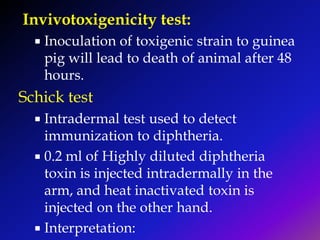
Invivotoxigenicity test:
 Inoculation of toxigenic strain to guinea
pig will lead to death of animal after 48
hours.
Schick test
 Intradermal test used to detect
immunization to diphtheria.
 0.2 ml of Highly diluted diphtheria
toxin is injected intradermally in the
arm, and heat inactivated toxin is
injected on the other hand.
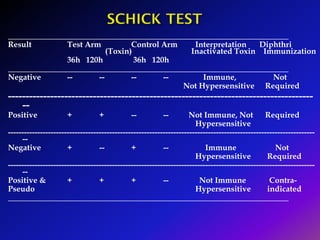
 Interpretation:

______________________________________________________________________
Result Test Arm Control Arm Interpretation Diphthri
(Toxin) Inactivated Toxin Immunization
36h 120h 36h 120h
______________________________________________________________________
Negative -- -- -- -- Immune, Not
Not Hypersensitive Required
--------------------------------------------------------------------------------------
--
Positive + + -- -- Not Immune, Not Required
Hypersensitive
-------------------------------------------------------------------------------------------------------------------
--
Negative + -- + -- Immune Not
Hypersensitive Required
-------------------------------------------------------------------------------------------------------------------
--
Positive & + + + -- Not Immune Contra-
Pseudo Hypersensitive indicated
______________________________________________________________________
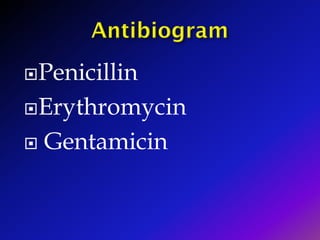
Penicillin
Erythromycin
 Gentamicin
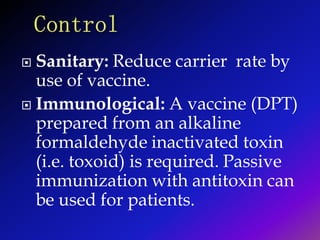
 Sanitary: Reduce carrier rate by
use of vaccine.
 Immunological: A vaccine (DPT)
prepared from an alkaline
formaldehyde inactivated toxin
(i.e. toxoid) is required. Passive
immunization with antitoxin can
be used for patients.
For therapy of
DT
tumor
tumors
!!

Corynebacterium mahadi ppt

  • 1.
    Sharq Elneil College Schoolof Medical Laboratory Sciences Department of Microbiology Medical Bacteriology course U.Mahadi Hassan Mahmoud Bsc, Msc, MIBMS Microbiology
  • 3.
     The bacteriumthat causes diphtheria was first described by Klebs in 1883, and was cultivated by Loeffler in 1884, who applied Koch's postulates and properly identified Coryneb- bacterium diphtheriae as the agent of the disease.  In 1884, Loeffler concluded that C. diphtheriae produced a soluble toxin, and thereby provided the first description of a bacterial exotoxin
  • 4.
    G +ve Bacilli Aerobicand Facultative anaerobes Strict anaerobic Non spore forming Spore forming Clostridium species Actinomycetes species Non Branching Branching Actinomycetes species Nocardia species Streptomycetes species Spore forming Non spore forming Bacillus species Catalase -ve Catalase +ve Erysipellotherix species Lactobacillus species Corynebacterium species Mycobacterium species Listeria monocytogenes
  • 5.
     C. diphtheriae.Cause diphtheria  Diphthroides. Opportunistic pathogens that cause infection to immunocompromized individual.  C. ulcerance. Cause Dimphtheria like illness  C. pseudotuberculosis. Cause Diphtheria like disease. Species of medical importace:
  • 6.
    They are PleomorpicG+ve bacilli found bind to each other like Chinese litter or Arranged in V forms or Palisades Non motile, Non spore forming Non capsulated, aerobic or facultative anaerobes.
  • 8.
     i. Loeffler'sSerum Slope.  ii. Tellurite BA. - Temp. 37oC, - Aerobic and Facultative AnO2.
  • 11.
    They form Polyphosphate (volutinor metachromatic) granules when cultured on highly enriched media. They are highly resistant to drying. They are fastidious organism that need Blood, serum or egg for growth.
  • 13.
     solely among humans spread by droplets  secretions  direct contact  Poor nutrition  Crowded or unsanitary living conditions  Low vaccine coverage among infants and children  Immunity gaps in adults
  • 14.
     Diphtheria isan infection of pharynex that characterized by formation of gray white pseudomembrane which consist of inflammatory cells, dead tissue and bacilli which may block the respiratory tract leading to Asphexia.  This disease occurred due to Exotoxins which produced from the bacilli after infection with prophage β which contain tox gene.  This toxins spread through the blood cause destruction of cardiac, kidney and nervous tissue by inhibition of Elongation factor 2 leading to inhibition of protein synthesis.  The toxin have 2 fragments A & B. Fragment B enhance entrance of fragment A to the cell, and Fragment A inhibit protein synthesis.
  • 17.
     Largely controllednow by vaccination  However, factors such as poverty and other social factors have led to diphtheria being an endemic/epidemic in many regions of the world Epidemiology
  • 18.
     Specimens: Throatswab.  Direct examination:  Gram stain showing G+ve bacilli arrange in Chinese letter.  Inoculation of the specimens on Lofflere’s serum media or Dorset egg media for 6 hours and stain fixed smear by Albert stain or Neisser stain. The volutin granules staind dark green to black in Albert and dark blue to black in Neisser stain.
  • 20.
     Culture:  Bloodagar.  Selective media is Tellurite Blood agar (contain 0.03%- 0.04% K. tellurite) and Modified Tinsdale’s medium (contain cystein).  Incubation:  At 37 C in aerobic condition.  Colonial morphology:  B.A Produce small gray or gray white convex colonies.  Tellurite blood agar produce black colonies due to formation of K. tellurate, C. garvis, mitis and ulcerance produe β haemolysis.  Modified tinsdale’s media produce brown hallow due to H2S production.
  • 23.
    Biochemical characters:  Catalase+ve.  Oxidase and Urease –ve.  Ferment glucose and maltose with acid production.  C. gravis ferment starch and Terialose.  C. ulcerance are urease +ve and liquefy gelatin.
  • 24.
     Invitrotoxigenicity test(ELEK’S gel precipitation reaction):  Toxigenic strain will secrete toxins that react with antitoxin in the filter paper producing precipitin line.  We need:  Elek’s plate media with low iron concentration.  Tested organism  Control strain (Known toxoginic strain).  Sterile filter paper impregnated in antitoxin.  Procedure.  Results (interpretation of results).
  • 26.
    Invivotoxigenicity test:  Inoculationof toxigenic strain to guinea pig will lead to death of animal after 48 hours. Schick test  Intradermal test used to detect immunization to diphtheria.  0.2 ml of Highly diluted diphtheria toxin is injected intradermally in the arm, and heat inactivated toxin is injected on the other hand.  Interpretation:
  • 27.
  • 28.
    ______________________________________________________________________ Result Test ArmControl Arm Interpretation Diphthri (Toxin) Inactivated Toxin Immunization 36h 120h 36h 120h ______________________________________________________________________ Negative -- -- -- -- Immune, Not Not Hypersensitive Required -------------------------------------------------------------------------------------- -- Positive + + -- -- Not Immune, Not Required Hypersensitive ------------------------------------------------------------------------------------------------------------------- -- Negative + -- + -- Immune Not Hypersensitive Required ------------------------------------------------------------------------------------------------------------------- -- Positive & + + + -- Not Immune Contra- Pseudo Hypersensitive indicated ______________________________________________________________________
  • 29.
  • 30.
     Sanitary: Reducecarrier rate by use of vaccine.  Immunological: A vaccine (DPT) prepared from an alkaline formaldehyde inactivated toxin (i.e. toxoid) is required. Passive immunization with antitoxin can be used for patients.
  • 31.