BY:
Dr. SARITA SHARMA
ASSOCIATE PROFESSOR
MMCP, MMDU
Introduction:
 this class have analgesic, antipyretic and anti inflammatory
actions.
 In contrast to morphine they do not depress CNS, do not
produce physical dependence, have no abuse liability and
are weaker analgesics.
 also called nonnarcotic, non-opioid or aspirin-like analgesics
Classification
3
A. Nonselective COX inhibitors (traditional NSAIDs)
1. Salicylates: Aspirin
2. Propionic acid derivatives: Ibuprofen, Naproxen,
Ketoprofen, Flurbiprofen.
3. Anthranilic acid derivative: Mephenamic acid
4. Aryl-acetic acid derivatives: Diclofenac,Aceclofenac.
5. Oxicam derivatives: Piroxicam, Tenoxicam.
6. pyrrole derivative: Ketorolac
7. Indole derivative: Indomethacin.
8. Pyrazolone derivative: phenylbutazone,
Oxyphenbutazone
B.Preferential COX-2 inhibitors
Nimesulide, Meloxicam, Nabumeton.
C.Selective COX-2 inhibitors
Celecoxib, Etoricoxib, Parecoxib.
D. Analgesic-antipyratics with poor antiinflammatory action
1. para aminophenol derivatives: Paracetamol
2. Pyrazolone derivative: Metamizol, Propiphenazone.
3. Benzoxazocine derivative: Nefopam
4
Mechanism of action of NSAIDs
5
1. Anti-inflammatory effect
due to the inhibition of the enzymes that produce
prostaglandin synthase (cyclooxygenase, or COX),
which converts arachidonic acid to prostaglandins, and
to TXA2 and prostacyclin.
Aspirin irreversibly inactivates COX-1 and COX-2 by
acetylation of a specific serine residue.
This distinguishes it from other NSAIDs, which reversibly
inhibit COX-1 and COX-2.
2. Analgesic effect
A. The analgesic effect of NSAIDs is thought to be
related to:
the peripheral inhibition of prostaglandin production
may also be due to the inhibition of pain stimuli at
a subcortical site(below cortex)
3. Antipyretic effect
The antipyretic effect of NSAIDs is believed to be related to:
inhibition of production of prostaglandins inducedby interleukin-1
(IL-1) and interleukin-6 (IL-6) in the hypothalamus
the “resetting” of the thermoregulatory system,
leading to vasodilatation and increased heat loss.
6
NSAIDs and Prostaglandin (PG)
synthesis inhibition
7
NSAIDs blocked PG generation.
Prostaglandins, prostacyclin (PGI2), and thromboxane
A2(TXA2) are produced from arachidonic acid by the enzyme
cyclooxygenase.
Cyclooxygenase (COX) exists in COX-1 and COX-2 isoforms.
COX -3 has recently been identified
Cyclooxygenase (COX) is found bound to the endoplasmatic
reticulum. It exists in 3 isoforms:
8
• COX-1
(constitutive)
acts in
physiological
conditions.
• COX-2
(inducible) is
induced in
inflammatory
cells by
pathological
stimulus.
• COX-3
(in
brain).
a) Nonselective COX inhibitor
Salicylates
Aspirin:oldest
drug
Aspirin is Acetyl salicylicacid which convertsto salicylicacid
in body, responsible foraction.
MOA: acetylation of certain macromolecules
including COX
9
PHARMACOLOGICALACTIONS
10
 1. Analgesic, antipyretic, antiinflammatory actions:
Aspirin is a weaker analgesic than morphine typedrugs.
Aspirin 600 mg ~ Codeine 60 mg ~ 6 mg Morphine
it effectively relieves inflammation, tissue injury, connective
tissueand integumental pain, but is relatively ineffective in
severe visceral and ischaemic pain.
Antiinflammatory action is exerted at high doses (3-6 g/ day or
100 mg/kg/ day)
2. Metabolic effects:
significant only at anti inflammatory doses
11
Cellular
metabolis
m is
increased,
especially
in skeletal
muscles,
There is
increased
utilization of
glucose so
blood sugar
may decrease
(especially in
diabetics) and
liver glycogen
is depleted.
Chronic use of
large doses
cause
increased
metabolism of
protein to
carbohydrate.
3. Respiration:
Effects are dose dependent.
At antiinflammatory doses, respiration is stimulated.
4. CVS:
no direct effect in therapeutic doses.
Larger doses increase cardiac output.
Toxic doses depress the vasomotor centre: BP may fall.
GIT:
Aspirin and released salicylic acid irritate gastric mucosa,
cause epigastric distress, nausea and vomiting.
It also stimulates CTZ.
8. Blood:
Aspirin, even in small doses, irreversibly inhibits TXA2 synthesis by platelets. Thus, it
interferes with platelet aggregation and bleeding time is prolonged to nearly twice the normal
value.
long-term intake of large dose decreases synthesis of clotting factors in liver and predisposes
to bleeding; can be prevented by prophylactic vit K therapy.
12
Pharmacokinetics
13
absorbed from the stomach and small intestines.
poor water solubility is the limiting factor in absorption:
microfining the drug particles and inclusion of an alkali (solubility
is more at higher pH) enhances absorption.
Plasma t1/2 is 3-5 hours.
Aspirin is rapidly deacetylated in the gut wall, liver, plasma and
other tissues to release salicylic acid which is the major circulating
and active form.
It slowly enters brain but freely crosses placenta.
The metabolites are excreted by glomerular filtration as well astubular
secretion.
Uses ofAspirin
14
 As analgesic
 As antipyretic
 Acute rheumatic fever.
 Rheumatoid arthritis.
 Osteoarthritis
Postmyocardial infarction and post stroke patients-inhibiting
platelet aggregation aspirin lowers the incidence of reinfarction.
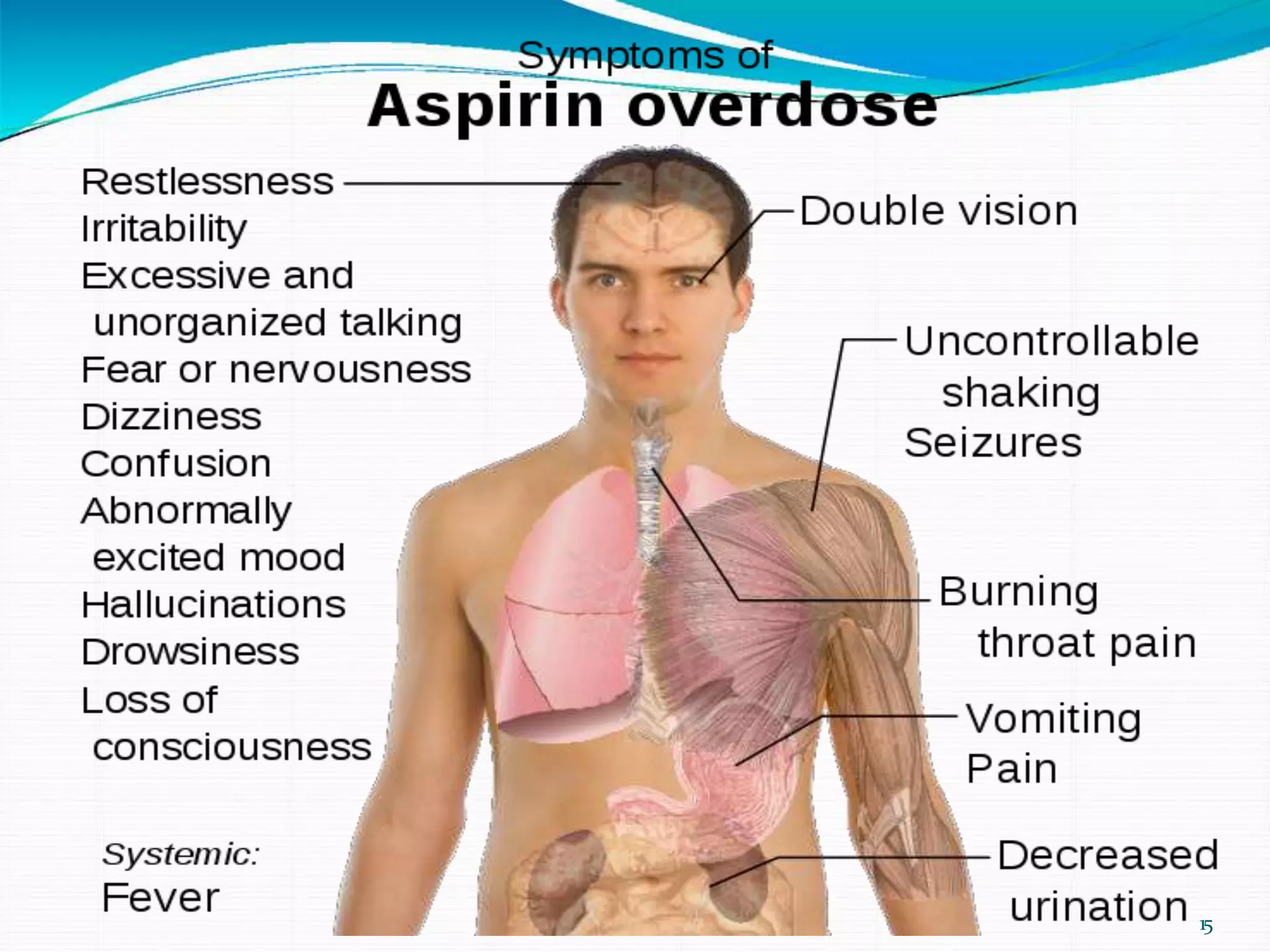
15
16
1. Gastrointestinal effects
most common adverse effects of high-dose aspirin use (70% of
patients):
nausea
vomiting
diarrhea or constipation
dyspepsia (impaired digestion)
epigastric pain
bleeding, and ulceration (primarily gastric).
2. Hypersensitivity (intolerance)
Hypersensitivity is relatively uncommon with the use of aspirin (0.3% of
patients); hypersensitivity results in:
rash
bronchospasm
rhinitis
Edema, or
an anaphylactic reaction with shock, which may be life
threatening.
Adverse effects
3. Miscellaneous adverse effects and
contraindications
17
May decrease the glomerular filtration rate, particularly in
patients with renal insufficiency.
Occasionally produce mild hepatitis
Prolong bleeding time.
Aspirin irreversibly inhibits platelet COX-1 and COX-2 and,
thereby, TXA2 production, suppressing platelet adhesion and
aggregation.
The use of salicylates is contraindicated in patients with
bleeding disorders
Salicylates are not recommended during pregnancy; they may
induce:
postpartum hemorrhage
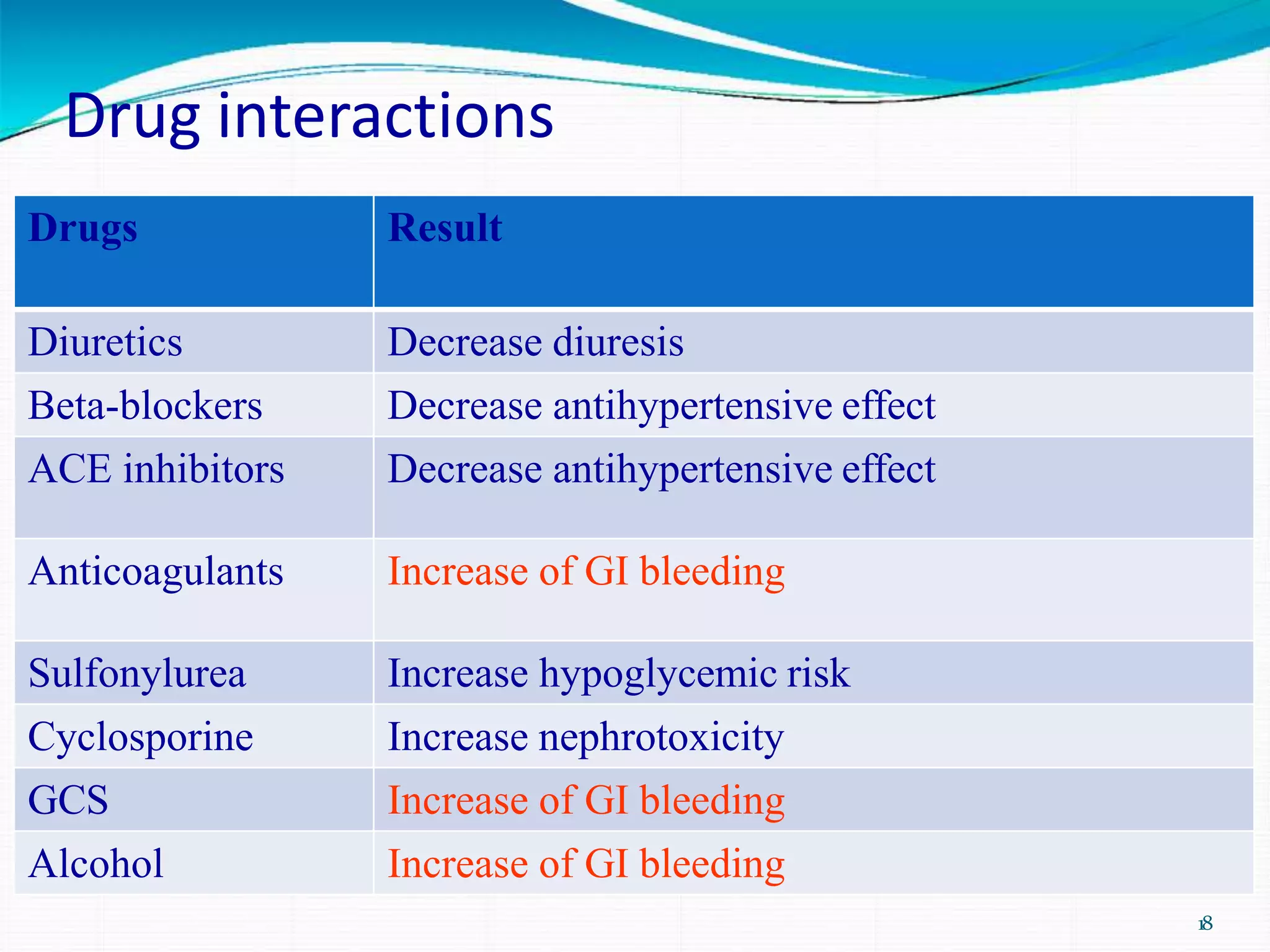
Drug interactions
18
Drugs Result
Diuretics Decrease diuresis
Beta-blockers Decrease antihypertensive effect
ACE inhibitors Decrease antihypertensive effect
Anticoagulants Increase of GI bleeding
Sulfonylurea Increase hypoglycemic risk
Cyclosporine Increase nephrotoxicity
GCS Increase of GI bleeding
Alcohol Increase of GI bleeding
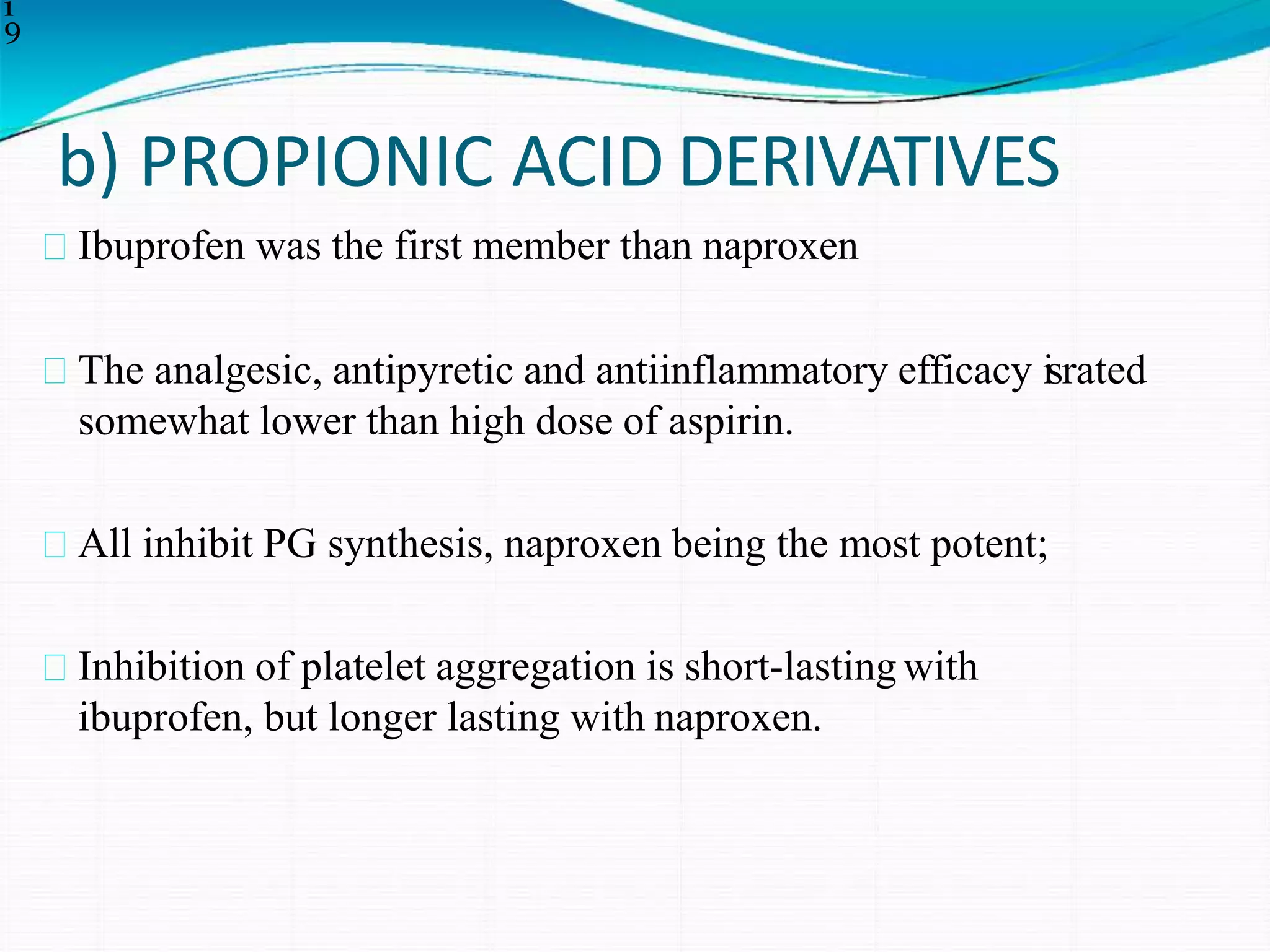
b) PROPIONIC ACID DERIVATIVES
1
9
Ibuprofen was the first member than naproxen
The analgesic, antipyretic and antiinflammatory efficacy israted
somewhat lower than high dose of aspirin.
All inhibit PG synthesis, naproxen being the most potent;
Inhibition of platelet aggregation is short-lasting with
ibuprofen, but longer lasting with naproxen.
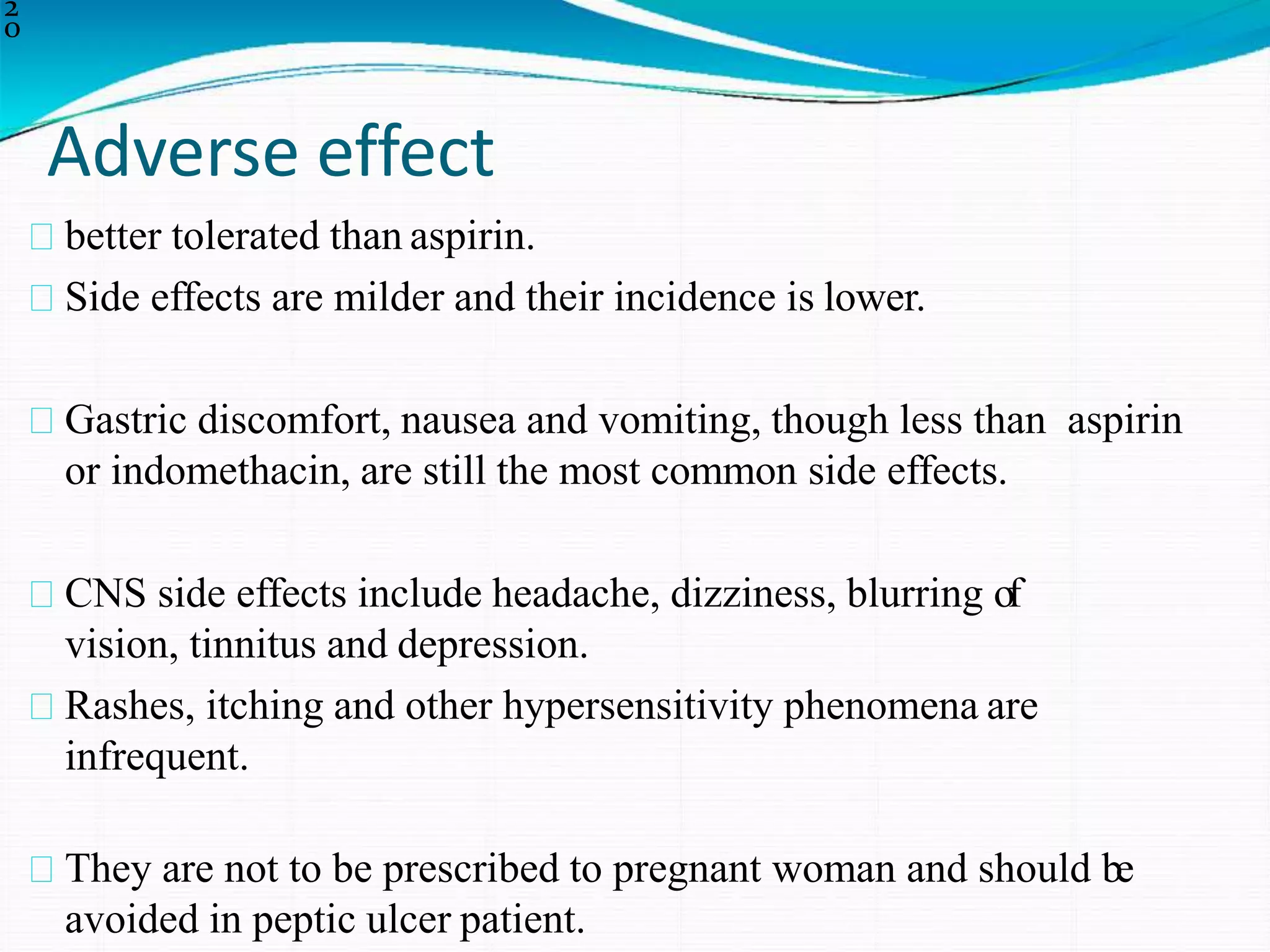
Adverse effect
2
0
better tolerated than aspirin.
Side effects are milder and their incidence is lower.
Gastric discomfort, nausea and vomiting, though less than aspirin
or indomethacin, are still the most common side effects.
CNS side effects include headache, dizziness, blurring of
vision, tinnitus and depression.
Rashes, itching and other hypersensitivity phenomena are
infrequent.
They are not to be prescribed to pregnant woman and should be
avoided in peptic ulcer patient.
Pharmacokinetic and interactions
2
1
Well absorbed orally.
Highly bounded to the plasma protein (90-99%).
Because they inhibit platelet function, use with anticoagulants
should, nevertheless, be avoided.
All propionic acid derivatives enter brain, synovial fluid and
cross placenta.
They are largely metabolized in liver by hydroxylation and
glucuronide conjugation and excreted in urine as well as bile.
Uses
2
2
Ibuprofen is used as a simple analgesic, and antipyretic in the
same way as low dose of aspirin. It is particularly effective in
dysmenorrhoea.
used in rheumatoid arthritis, osteoarthritis and other
musculoskeletal disorders.
They are indicated in soft tissue injuries, vasectomy, tooth
extraction, postpartum and postoperatively: suppress swelling
and inflammation.
c) Anthranilic acid derivative
2
3
Mephenamic acid:
An analgesic, antipyretic and weaker antiinflammatory drug, which
inhibits COX as well as antagonises certain actions of PGs.
Mephenamic acid exerts peripheral as well central analgesic action.
Pharmacokinetics:
Oral absorption is slow but almost complete.
It is highly bound to plasma proteins-displacement interactions can
occur;
partly metabolized and excreted in urine as well as bile.
Plasma t1/2 is 2-4 hours.
Adverse effects:
Diarrhoea, Epigastric distress, but gut bleeding is not significant.
Skin rashes, dizziness and other CNS manifestations have occurred.
Haemolytic anaemia is a rare
Uses:
as analgesic in muscle, joint and soft tissue pain where strong
antiinflammatory action is not needed.
dysmenorrhoea.
rheumatoid and osteoarthritis
2
4
d) Aryl-acetic acid derivatives
2
5
Diclofenac: (most extensively used NSAID)
An analgesic-antipyretic antiinflammatory drug, similar in efficacy to
naproxen.
MOA: It inhibits PG synthesis and is somewhat COX-2 selective.The
antiplatelet action is short lasting.
Aceclofenac:
COX-2 selective congener of diclofenachaving similar properties.
Uses:
in rheumatoid and osteoarthritis, bursitis, ankylosing spondylitis,
toothache, dysmenorrhoea, post-traumatic and postoperative
inflammatory conditions- affords quick relief of pain and wound
edema.
e) Oxicam derivatives
2
6
Piroxicam:
It is a long-acting potent NSAID with antiinflammatory potency
similar to indomethacin and good analgesic- antipyretic action.
MOA: It is a reversible inhibitor of COX; lowers PG concentration in
synovial fluid and inhibits platelet aggregation-prolonging bleeding
time.
Pharmacokinetics:
It is rapidly and completely absorbed; 99% plasma protein bound;
Largely metabolized in liver by hydroxylation and glucuronide
conjugation;
Excreted in urine and bile; Plasma t1/2 is long nearly 2 days.
Adverse effects:
The g.i. side effects are more than ibuprofen, but it is better
tolerated and less ulcerogenic than indomethacin or
phenylbutazone; causes less faecal blood loss than aspirin.
Rashes and pruritus are seen in < 1% patients. Edema and
reversible azotaemia have been observed.
Tenoxicam:
A congener of piroxicam with similar properties and uses.
2
7
f) Pyrrolo-pyrrole derivative
2
8
Ketorolac:
A novel NSAID with potent analgesic and modest antiinflammatory
activity.
In postoperative pain it has equalled the efficacy of morphine, but
does not interact with opioid receptors and is free of opioid side effects.
it inhibits PG synthesis and relieves pain by a peripheral mechanism.
PK: rapidly absorbed after oral and i.m. administration.
It is highly plasma protein bound and 60% excreted unchanged in
urine.
Major metabolic pathway is glucuronidation.
plasma t1/2 is 5-7 hours.
Adverse effects:
Nausea, abdominal pain, dyspepsia, ulceration, loose stools,
drowsiness, headache, dizziness, nervousness, pruritus, pain at
injection site, rise in serum transaminase and fluid retention
have been noted.
Use:
Ketorolac is frequently used in postoperative, dental and acute
musculoskeletal pain: 15-30 mg i.m. or i.v. every 4-6 hours
(max. 90 mg/day).
It may also be used for renal colic, migraine and pain due to
bony metastasis.
Continuous use for more then 5 days is not recommended.
2
9
g) Indole derivative
3
0
Indomethacin:
It is a potent antiinflammatory drug with prompt antipyretic action.
Indomethacin relieves only inflammatory or tissue injury related
pain.
It is a highly potent inhibitor of PG synthesis and suppresses
neutrophil motility.
Pharmacokinetics:
Indomethacin is well absorbed orally
It is 90% bound to plasma proteins, partly metabolized in liver to inactive
products and excreted by kidney.
Plasma t1/2 is 2-5 hours.
Adverse effect:
A high incidence (up to 50%) of GI and CNS side effects is
produced: GI bleeding, diarrhoea, frontal headache, mental
confusion, etc.
It is contraindicated in machinery operators,
drivers, psychiatric patients, epileptics, kidney
disease, pregnant women and in children.
3
1
H) Preferential Cox-2 Inhibitors
Nimesulide:
weak inhibitor of PG synthesis and COX-2 selectivity.
Antiinflammatory action may be exerted by other mechanisms
as well, e.g. reduced generation of superoxide by neutrophils,
inhibition of PAF synthesis and TNFa release, free radical
scavanging, inhibition of metalloproteinase activity in
cartilage.
The analgesic, antipyretic and antiinflammatory activity of
nimesulide has been rated comparable to other NSAIDs.
It has been used primarily for short-lasting painful
inflammatory conditions like sports injuries, sinusitis and other
ear-nose-throat disorders, dental surgery, bursitis, low
backache, dysmenorrhoea, postoperative pain, osteoarthritis
and for fever. 47
Nimesulide is almost completely absorbed orally, 99% plasma
protein bound, extensively metabolized and excreted mainly in
urine with a t1/2 of 2-5 hours.
Adverse effects of nimesulide are gastrointestinal
(epigastralgia, heart burn, nausea, loose motions),
dermatological (rash, pruritus) and central (somnolence,
dizziness).
33
i) SELECTIVE COX-2 INHIBITORS
34
They cause little gastric mucosal damage; occurrence of peptic
ulcer and ulcer bleeds is clearly lower than with traditional
NSAIDs. They do not depress TXA2 Production by platelets
(COX-I dependent); do not inhibit platelet aggregation or
prolong bleeding time but reduce PGI2 production by vascular
endothelium.
It has been concluded that selective COX-2 inhibitors should
be used only in patients at high risk of peptic ulcer, perforation
or bleeds. If selected, they should be administered in the lowest
dose for the shortest period of time. Moreover, they should be
avoided in patients with history of ischaemic heart disease/
hypertension/ cardiac failure/ cerebrovascular disease, who are
predisposed to CV events.
Celecoxib:
It exerts antiinflammatory, analgesic and antipyretic actions
with low ulcerogenic potential. Comparative trials in
rheumatoid arthritis have found it to be as effective as
naproxen or diclofenac, without affecting COX- 1 activity in
gastroduodenal mucosa . Platelet aggregation in response to
collagen exposure remained intact in celecoxib recipientsand
serum TXB2 levels were not reduced. Though tolerability of
celecoxib is better than traditional NSAIDs, still abdominal
pain, dyspepsia and mild diarrhoea are the common side
effects. Rashes, edema and a small rise in BP have also been
noted.
Celecoxib is slowly absorbed, 97% plasma protein bound and
metabolized primarily by CYP2C9 with a t1/2 of 10 hours. It is
approved for use in osteo- and rheumatoid arthritis in a dose of
100-200 mg BD.
3
5

NSAIDs.pptx

  • 1.
    BY: Dr. SARITA SHARMA ASSOCIATEPROFESSOR MMCP, MMDU
  • 2.
    Introduction:  this classhave analgesic, antipyretic and anti inflammatory actions.  In contrast to morphine they do not depress CNS, do not produce physical dependence, have no abuse liability and are weaker analgesics.  also called nonnarcotic, non-opioid or aspirin-like analgesics
  • 3.
    Classification 3 A. Nonselective COXinhibitors (traditional NSAIDs) 1. Salicylates: Aspirin 2. Propionic acid derivatives: Ibuprofen, Naproxen, Ketoprofen, Flurbiprofen. 3. Anthranilic acid derivative: Mephenamic acid 4. Aryl-acetic acid derivatives: Diclofenac,Aceclofenac. 5. Oxicam derivatives: Piroxicam, Tenoxicam. 6. pyrrole derivative: Ketorolac 7. Indole derivative: Indomethacin. 8. Pyrazolone derivative: phenylbutazone, Oxyphenbutazone
  • 4.
    B.Preferential COX-2 inhibitors Nimesulide,Meloxicam, Nabumeton. C.Selective COX-2 inhibitors Celecoxib, Etoricoxib, Parecoxib. D. Analgesic-antipyratics with poor antiinflammatory action 1. para aminophenol derivatives: Paracetamol 2. Pyrazolone derivative: Metamizol, Propiphenazone. 3. Benzoxazocine derivative: Nefopam 4
  • 5.
    Mechanism of actionof NSAIDs 5 1. Anti-inflammatory effect due to the inhibition of the enzymes that produce prostaglandin synthase (cyclooxygenase, or COX), which converts arachidonic acid to prostaglandins, and to TXA2 and prostacyclin. Aspirin irreversibly inactivates COX-1 and COX-2 by acetylation of a specific serine residue. This distinguishes it from other NSAIDs, which reversibly inhibit COX-1 and COX-2.
  • 6.
    2. Analgesic effect A.The analgesic effect of NSAIDs is thought to be related to: the peripheral inhibition of prostaglandin production may also be due to the inhibition of pain stimuli at a subcortical site(below cortex) 3. Antipyretic effect The antipyretic effect of NSAIDs is believed to be related to: inhibition of production of prostaglandins inducedby interleukin-1 (IL-1) and interleukin-6 (IL-6) in the hypothalamus the “resetting” of the thermoregulatory system, leading to vasodilatation and increased heat loss. 6
  • 7.
    NSAIDs and Prostaglandin(PG) synthesis inhibition 7 NSAIDs blocked PG generation. Prostaglandins, prostacyclin (PGI2), and thromboxane A2(TXA2) are produced from arachidonic acid by the enzyme cyclooxygenase. Cyclooxygenase (COX) exists in COX-1 and COX-2 isoforms. COX -3 has recently been identified
  • 8.
    Cyclooxygenase (COX) isfound bound to the endoplasmatic reticulum. It exists in 3 isoforms: 8 • COX-1 (constitutive) acts in physiological conditions. • COX-2 (inducible) is induced in inflammatory cells by pathological stimulus. • COX-3 (in brain).
  • 9.
    a) Nonselective COXinhibitor Salicylates Aspirin:oldest drug Aspirin is Acetyl salicylicacid which convertsto salicylicacid in body, responsible foraction. MOA: acetylation of certain macromolecules including COX 9
  • 10.
    PHARMACOLOGICALACTIONS 10  1. Analgesic,antipyretic, antiinflammatory actions: Aspirin is a weaker analgesic than morphine typedrugs. Aspirin 600 mg ~ Codeine 60 mg ~ 6 mg Morphine it effectively relieves inflammation, tissue injury, connective tissueand integumental pain, but is relatively ineffective in severe visceral and ischaemic pain. Antiinflammatory action is exerted at high doses (3-6 g/ day or 100 mg/kg/ day)
  • 11.
    2. Metabolic effects: significantonly at anti inflammatory doses 11 Cellular metabolis m is increased, especially in skeletal muscles, There is increased utilization of glucose so blood sugar may decrease (especially in diabetics) and liver glycogen is depleted. Chronic use of large doses cause increased metabolism of protein to carbohydrate.
  • 12.
    3. Respiration: Effects aredose dependent. At antiinflammatory doses, respiration is stimulated. 4. CVS: no direct effect in therapeutic doses. Larger doses increase cardiac output. Toxic doses depress the vasomotor centre: BP may fall. GIT: Aspirin and released salicylic acid irritate gastric mucosa, cause epigastric distress, nausea and vomiting. It also stimulates CTZ. 8. Blood: Aspirin, even in small doses, irreversibly inhibits TXA2 synthesis by platelets. Thus, it interferes with platelet aggregation and bleeding time is prolonged to nearly twice the normal value. long-term intake of large dose decreases synthesis of clotting factors in liver and predisposes to bleeding; can be prevented by prophylactic vit K therapy. 12
  • 13.
    Pharmacokinetics 13 absorbed from thestomach and small intestines. poor water solubility is the limiting factor in absorption: microfining the drug particles and inclusion of an alkali (solubility is more at higher pH) enhances absorption. Plasma t1/2 is 3-5 hours. Aspirin is rapidly deacetylated in the gut wall, liver, plasma and other tissues to release salicylic acid which is the major circulating and active form. It slowly enters brain but freely crosses placenta. The metabolites are excreted by glomerular filtration as well astubular secretion.
  • 14.
    Uses ofAspirin 14  Asanalgesic  As antipyretic  Acute rheumatic fever.  Rheumatoid arthritis.  Osteoarthritis Postmyocardial infarction and post stroke patients-inhibiting platelet aggregation aspirin lowers the incidence of reinfarction.
  • 15.
  • 16.
    16 1. Gastrointestinal effects mostcommon adverse effects of high-dose aspirin use (70% of patients): nausea vomiting diarrhea or constipation dyspepsia (impaired digestion) epigastric pain bleeding, and ulceration (primarily gastric). 2. Hypersensitivity (intolerance) Hypersensitivity is relatively uncommon with the use of aspirin (0.3% of patients); hypersensitivity results in: rash bronchospasm rhinitis Edema, or an anaphylactic reaction with shock, which may be life threatening. Adverse effects
  • 17.
    3. Miscellaneous adverseeffects and contraindications 17 May decrease the glomerular filtration rate, particularly in patients with renal insufficiency. Occasionally produce mild hepatitis Prolong bleeding time. Aspirin irreversibly inhibits platelet COX-1 and COX-2 and, thereby, TXA2 production, suppressing platelet adhesion and aggregation. The use of salicylates is contraindicated in patients with bleeding disorders Salicylates are not recommended during pregnancy; they may induce: postpartum hemorrhage
  • 18.
    Drug interactions 18 Drugs Result DiureticsDecrease diuresis Beta-blockers Decrease antihypertensive effect ACE inhibitors Decrease antihypertensive effect Anticoagulants Increase of GI bleeding Sulfonylurea Increase hypoglycemic risk Cyclosporine Increase nephrotoxicity GCS Increase of GI bleeding Alcohol Increase of GI bleeding
  • 19.
    b) PROPIONIC ACIDDERIVATIVES 1 9 Ibuprofen was the first member than naproxen The analgesic, antipyretic and antiinflammatory efficacy israted somewhat lower than high dose of aspirin. All inhibit PG synthesis, naproxen being the most potent; Inhibition of platelet aggregation is short-lasting with ibuprofen, but longer lasting with naproxen.
  • 20.
    Adverse effect 2 0 better toleratedthan aspirin. Side effects are milder and their incidence is lower. Gastric discomfort, nausea and vomiting, though less than aspirin or indomethacin, are still the most common side effects. CNS side effects include headache, dizziness, blurring of vision, tinnitus and depression. Rashes, itching and other hypersensitivity phenomena are infrequent. They are not to be prescribed to pregnant woman and should be avoided in peptic ulcer patient.
  • 21.
    Pharmacokinetic and interactions 2 1 Wellabsorbed orally. Highly bounded to the plasma protein (90-99%). Because they inhibit platelet function, use with anticoagulants should, nevertheless, be avoided. All propionic acid derivatives enter brain, synovial fluid and cross placenta. They are largely metabolized in liver by hydroxylation and glucuronide conjugation and excreted in urine as well as bile.
  • 22.
    Uses 2 2 Ibuprofen is usedas a simple analgesic, and antipyretic in the same way as low dose of aspirin. It is particularly effective in dysmenorrhoea. used in rheumatoid arthritis, osteoarthritis and other musculoskeletal disorders. They are indicated in soft tissue injuries, vasectomy, tooth extraction, postpartum and postoperatively: suppress swelling and inflammation.
  • 23.
    c) Anthranilic acidderivative 2 3 Mephenamic acid: An analgesic, antipyretic and weaker antiinflammatory drug, which inhibits COX as well as antagonises certain actions of PGs. Mephenamic acid exerts peripheral as well central analgesic action. Pharmacokinetics: Oral absorption is slow but almost complete. It is highly bound to plasma proteins-displacement interactions can occur; partly metabolized and excreted in urine as well as bile. Plasma t1/2 is 2-4 hours.
  • 24.
    Adverse effects: Diarrhoea, Epigastricdistress, but gut bleeding is not significant. Skin rashes, dizziness and other CNS manifestations have occurred. Haemolytic anaemia is a rare Uses: as analgesic in muscle, joint and soft tissue pain where strong antiinflammatory action is not needed. dysmenorrhoea. rheumatoid and osteoarthritis 2 4
  • 25.
    d) Aryl-acetic acidderivatives 2 5 Diclofenac: (most extensively used NSAID) An analgesic-antipyretic antiinflammatory drug, similar in efficacy to naproxen. MOA: It inhibits PG synthesis and is somewhat COX-2 selective.The antiplatelet action is short lasting. Aceclofenac: COX-2 selective congener of diclofenachaving similar properties. Uses: in rheumatoid and osteoarthritis, bursitis, ankylosing spondylitis, toothache, dysmenorrhoea, post-traumatic and postoperative inflammatory conditions- affords quick relief of pain and wound edema.
  • 26.
    e) Oxicam derivatives 2 6 Piroxicam: Itis a long-acting potent NSAID with antiinflammatory potency similar to indomethacin and good analgesic- antipyretic action. MOA: It is a reversible inhibitor of COX; lowers PG concentration in synovial fluid and inhibits platelet aggregation-prolonging bleeding time. Pharmacokinetics: It is rapidly and completely absorbed; 99% plasma protein bound; Largely metabolized in liver by hydroxylation and glucuronide conjugation; Excreted in urine and bile; Plasma t1/2 is long nearly 2 days.
  • 27.
    Adverse effects: The g.i.side effects are more than ibuprofen, but it is better tolerated and less ulcerogenic than indomethacin or phenylbutazone; causes less faecal blood loss than aspirin. Rashes and pruritus are seen in < 1% patients. Edema and reversible azotaemia have been observed. Tenoxicam: A congener of piroxicam with similar properties and uses. 2 7
  • 28.
    f) Pyrrolo-pyrrole derivative 2 8 Ketorolac: Anovel NSAID with potent analgesic and modest antiinflammatory activity. In postoperative pain it has equalled the efficacy of morphine, but does not interact with opioid receptors and is free of opioid side effects. it inhibits PG synthesis and relieves pain by a peripheral mechanism. PK: rapidly absorbed after oral and i.m. administration. It is highly plasma protein bound and 60% excreted unchanged in urine. Major metabolic pathway is glucuronidation. plasma t1/2 is 5-7 hours.
  • 29.
    Adverse effects: Nausea, abdominalpain, dyspepsia, ulceration, loose stools, drowsiness, headache, dizziness, nervousness, pruritus, pain at injection site, rise in serum transaminase and fluid retention have been noted. Use: Ketorolac is frequently used in postoperative, dental and acute musculoskeletal pain: 15-30 mg i.m. or i.v. every 4-6 hours (max. 90 mg/day). It may also be used for renal colic, migraine and pain due to bony metastasis. Continuous use for more then 5 days is not recommended. 2 9
  • 30.
    g) Indole derivative 3 0 Indomethacin: Itis a potent antiinflammatory drug with prompt antipyretic action. Indomethacin relieves only inflammatory or tissue injury related pain. It is a highly potent inhibitor of PG synthesis and suppresses neutrophil motility. Pharmacokinetics: Indomethacin is well absorbed orally It is 90% bound to plasma proteins, partly metabolized in liver to inactive products and excreted by kidney. Plasma t1/2 is 2-5 hours.
  • 31.
    Adverse effect: A highincidence (up to 50%) of GI and CNS side effects is produced: GI bleeding, diarrhoea, frontal headache, mental confusion, etc. It is contraindicated in machinery operators, drivers, psychiatric patients, epileptics, kidney disease, pregnant women and in children. 3 1
  • 32.
    H) Preferential Cox-2Inhibitors Nimesulide: weak inhibitor of PG synthesis and COX-2 selectivity. Antiinflammatory action may be exerted by other mechanisms as well, e.g. reduced generation of superoxide by neutrophils, inhibition of PAF synthesis and TNFa release, free radical scavanging, inhibition of metalloproteinase activity in cartilage. The analgesic, antipyretic and antiinflammatory activity of nimesulide has been rated comparable to other NSAIDs. It has been used primarily for short-lasting painful inflammatory conditions like sports injuries, sinusitis and other ear-nose-throat disorders, dental surgery, bursitis, low backache, dysmenorrhoea, postoperative pain, osteoarthritis and for fever. 47
  • 33.
    Nimesulide is almostcompletely absorbed orally, 99% plasma protein bound, extensively metabolized and excreted mainly in urine with a t1/2 of 2-5 hours. Adverse effects of nimesulide are gastrointestinal (epigastralgia, heart burn, nausea, loose motions), dermatological (rash, pruritus) and central (somnolence, dizziness). 33
  • 34.
    i) SELECTIVE COX-2INHIBITORS 34 They cause little gastric mucosal damage; occurrence of peptic ulcer and ulcer bleeds is clearly lower than with traditional NSAIDs. They do not depress TXA2 Production by platelets (COX-I dependent); do not inhibit platelet aggregation or prolong bleeding time but reduce PGI2 production by vascular endothelium. It has been concluded that selective COX-2 inhibitors should be used only in patients at high risk of peptic ulcer, perforation or bleeds. If selected, they should be administered in the lowest dose for the shortest period of time. Moreover, they should be avoided in patients with history of ischaemic heart disease/ hypertension/ cardiac failure/ cerebrovascular disease, who are predisposed to CV events.
  • 35.
    Celecoxib: It exerts antiinflammatory,analgesic and antipyretic actions with low ulcerogenic potential. Comparative trials in rheumatoid arthritis have found it to be as effective as naproxen or diclofenac, without affecting COX- 1 activity in gastroduodenal mucosa . Platelet aggregation in response to collagen exposure remained intact in celecoxib recipientsand serum TXB2 levels were not reduced. Though tolerability of celecoxib is better than traditional NSAIDs, still abdominal pain, dyspepsia and mild diarrhoea are the common side effects. Rashes, edema and a small rise in BP have also been noted. Celecoxib is slowly absorbed, 97% plasma protein bound and metabolized primarily by CYP2C9 with a t1/2 of 10 hours. It is approved for use in osteo- and rheumatoid arthritis in a dose of 100-200 mg BD. 3 5