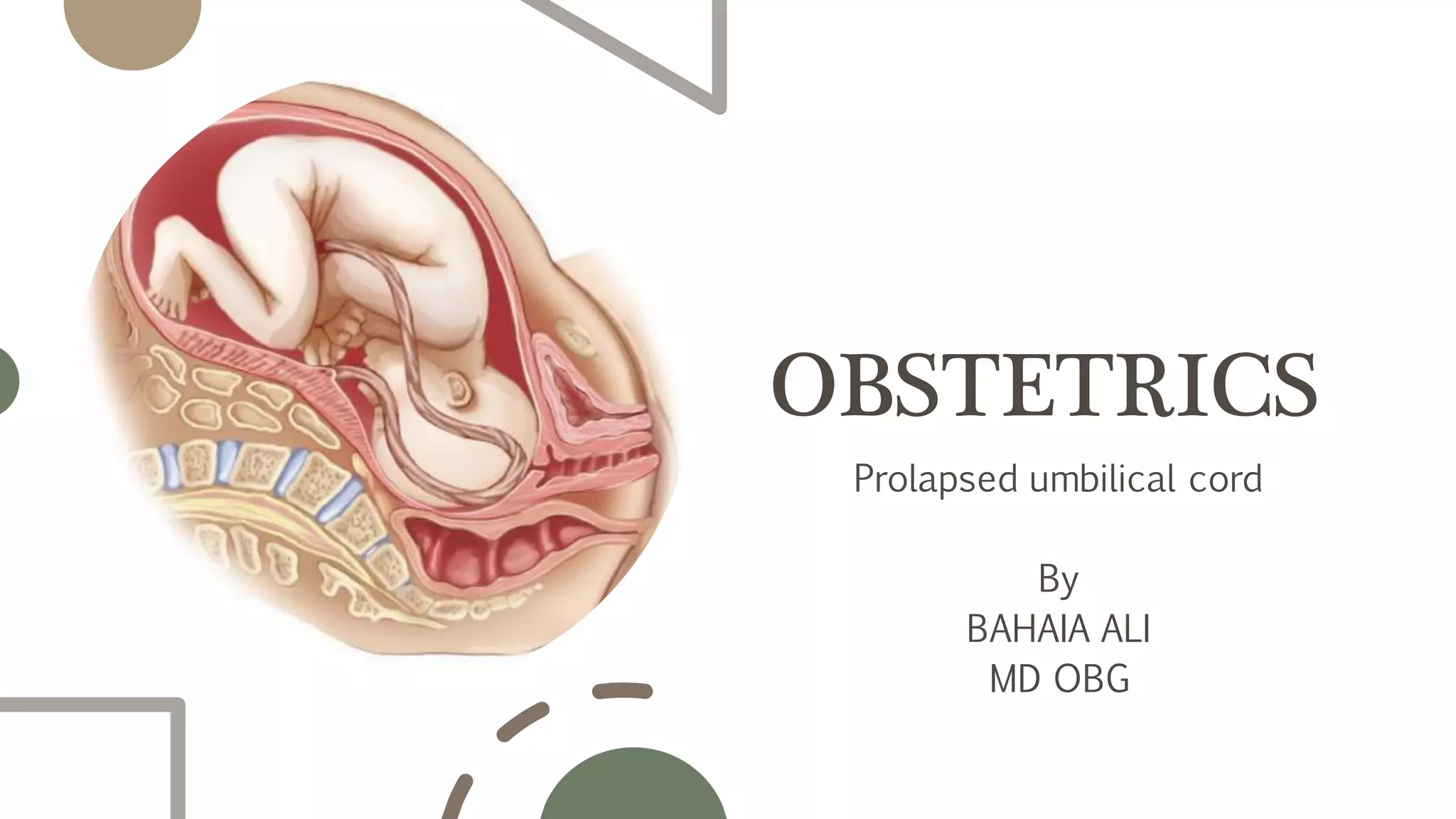
OBSTETRICS
Prolapsed umbilical cord
By
BAHAIA ALI
MD OBG
Prolapsed umbilical cord
▪ Prolapsed umbilical cord is a portion of the
umbilical cord that falls in front of, lies beside, or hangs
below the fetal presenting part. Umbilical cord prolapse is
an obstetric emergency that requires immediate
intervention to prevent fetal hypoxia. Delayed
management is associated with significantly increased
morbidity and mortality
TYPES
OF PROLAPSED UMBILICAL CORDS
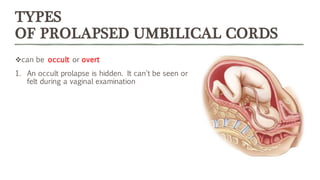
❖can be occult or overt
1. An occult prolapse is hidden. It can't be seen or
felt during a vaginal examination
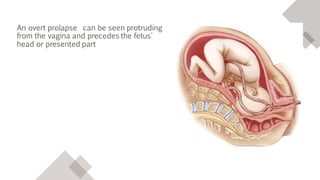
An overt prolapse can be seen protruding
from the vagina and precedes the fetus'
head or presented part
Assessment findings
sudden appearance of a loop of umbilical cord at the
introitus after rupture of the amniotic membranes
fetal heart rate decelerations after rupture of the amniotic
membranes that don't resolve with position changes
fetal bradycardia with rupture of the amniotic membranes
a visible or palpable umbilical cord on vaginal examination
Risk
factors
Prematurity
Multiple
pregnancy Polyhydramnios Malpresentations
Obstetric manipulation
WHEN YOU
SUSPECTED CORD
PROLAPSE AS HEALTH
CARE PROVIDER?
when you note an abnormal fetal heart rate (FHR)
pattern, particularly if it occurs soon after
membrane rupture, spontaneously, or with
amniotomy
Management
•Cord prolapse is an obstetric emergency
➢ prepare for immediate delivery
➢ Explain emergency measures and their rationales to the patient and support person to increase
their understanding and enhance cooperation
➢ Obtain consent for delivery, as indicated
➢ Help the patient into a knee-chest, Trendelenburg, or left-lateral Sims position and then elevate
the buttocks using pillows to reduce pressure from the presenting part on the cord prolapse
➢ Administer oxygen to the patient via a mask, to improve fetal oxygenation
➢ perform hand hygiene and put on sterile gloves and place a gloved hand in the patient's vagina
to elevate the presenting part and to separate the cord from the presenting part and bony
pelvis
➢ Don't remove your hand until the neonate can be delivered by emergency cesarean birth if
cervical dilation is incomplete.
➢ If the cervix is fully dilated, may deliver the neonate quickly using forceps.

Cord Prolapse.pdf

  • 1.
  • 2.
    Prolapsed umbilical cord ▪Prolapsed umbilical cord is a portion of the umbilical cord that falls in front of, lies beside, or hangs below the fetal presenting part. Umbilical cord prolapse is an obstetric emergency that requires immediate intervention to prevent fetal hypoxia. Delayed management is associated with significantly increased morbidity and mortality
  • 3.
    TYPES OF PROLAPSED UMBILICALCORDS ❖can be occult or overt 1. An occult prolapse is hidden. It can't be seen or felt during a vaginal examination
  • 4.
    An overt prolapsecan be seen protruding from the vagina and precedes the fetus' head or presented part
  • 5.
    Assessment findings sudden appearanceof a loop of umbilical cord at the introitus after rupture of the amniotic membranes fetal heart rate decelerations after rupture of the amniotic membranes that don't resolve with position changes fetal bradycardia with rupture of the amniotic membranes a visible or palpable umbilical cord on vaginal examination
  • 6.
  • 7.
    WHEN YOU SUSPECTED CORD PROLAPSEAS HEALTH CARE PROVIDER? when you note an abnormal fetal heart rate (FHR) pattern, particularly if it occurs soon after membrane rupture, spontaneously, or with amniotomy
  • 8.
    Management •Cord prolapse isan obstetric emergency ➢ prepare for immediate delivery ➢ Explain emergency measures and their rationales to the patient and support person to increase their understanding and enhance cooperation ➢ Obtain consent for delivery, as indicated ➢ Help the patient into a knee-chest, Trendelenburg, or left-lateral Sims position and then elevate the buttocks using pillows to reduce pressure from the presenting part on the cord prolapse ➢ Administer oxygen to the patient via a mask, to improve fetal oxygenation ➢ perform hand hygiene and put on sterile gloves and place a gloved hand in the patient's vagina to elevate the presenting part and to separate the cord from the presenting part and bony pelvis ➢ Don't remove your hand until the neonate can be delivered by emergency cesarean birth if cervical dilation is incomplete. ➢ If the cervix is fully dilated, may deliver the neonate quickly using forceps.