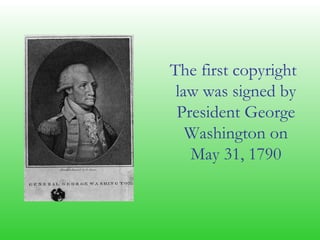
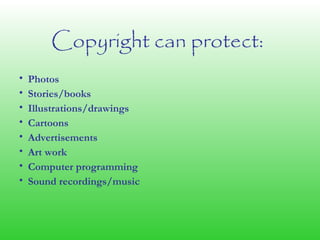
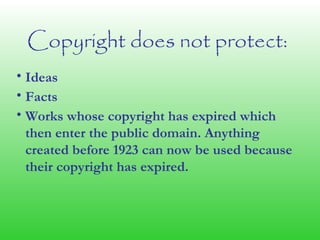
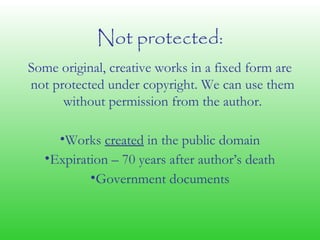
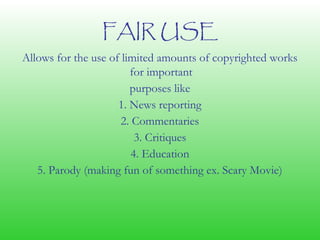
The document summarizes U.S. copyright laws. It discusses that copyright was established by the first U.S. copyright law signed in 1790, and protects original creative works. Copyright gives the creator exclusive rights over the work and prevents others from using it without permission. Works can be copyrighted if they are original, creative, and fixed in a tangible form. Copyright protects works such as writing, art, photos, and software. It does not protect ideas, facts, or works in the public domain. The document also outlines exceptions for fair use, limitations for educational use, and restrictions on using portions of copyrighted works.





![Copyright for educators and students [autosaved]](https://cdn.slidesharecdn.com/ss_thumbnails/copyrightforeducatorsandstudentsautosaved-150112153242-conversion-gate02-thumbnail.jpg?width=640&height=640&fit=bounds)


