Done by 
SHOBANA.N.S 
QUEEN MARY’S COLLEGE
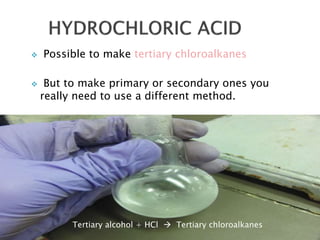
 Possible to make tertiary chloroalkanes 
 But to make primary or secondary ones you 
really need to use a different method. 
Tertiary alcohol + HCl  Tertiary chloroalkanes
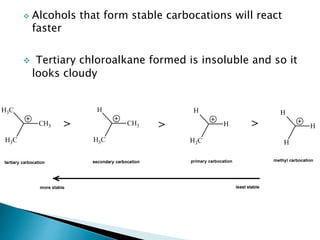
 Alcohols that form stable carbocations will react 
faster 
 Tertiary chloroalkane formed is insoluble and so it 
looks cloudy
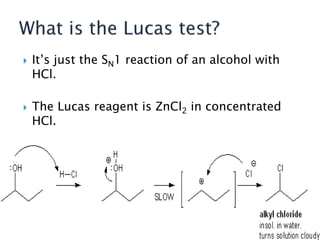
 It’s just the SN1 reaction of an alcohol with 
HCl. 
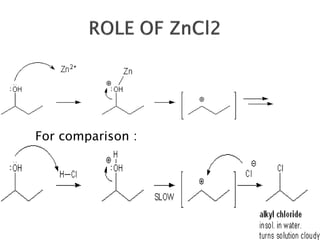
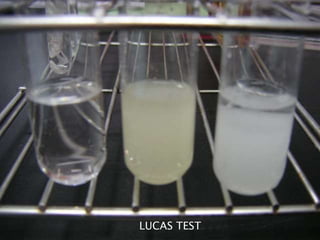
 The Lucas reagent is ZnCl2 in concentrated 
HCl.
For comparison :
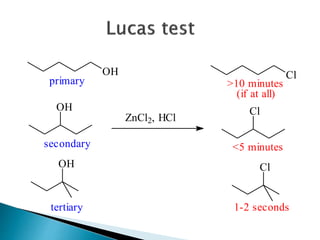
OH 
primary 
OH 
secondary 
OH 
tertiary 
ZnCl2, HCl 
Cl 
>10 minutes 
(if at all) 
Cl 
<5 minutes 
Cl 
1-2 seconds
LUCAS TEST
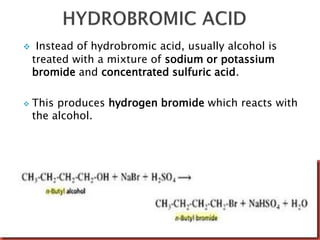
 Instead of hydrobromic acid, usually alcohol is 
treated with a mixture of sodium or potassium 
bromide and concentrated sulfuric acid. 
 This produces hydrogen bromide which reacts with 
the alcohol.
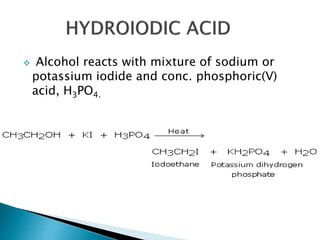
 Alcohol reacts with mixture of sodium or 
potassium iodide and conc. phosphoric(V) 
acid, H3PO4.
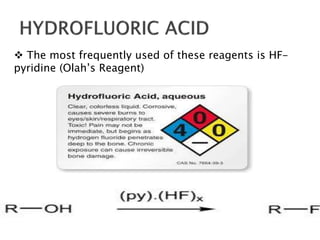
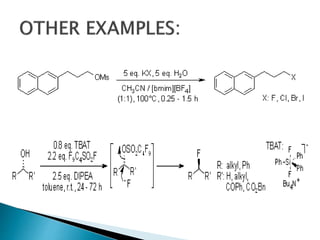
 The most frequently used of these reagents is HF-pyridine 
(Olah’s Reagent)
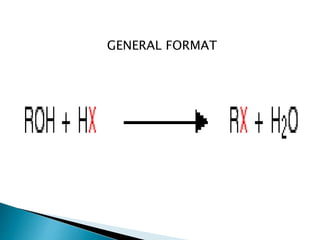
GENERAL FORMAT
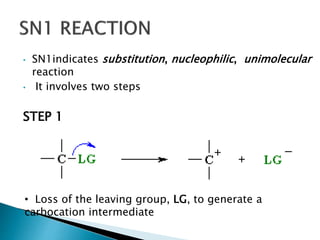
• SN1indicates substitution, nucleophilic, unimolecular 
reaction 
• It involves two steps 
STEP 1 
• Loss of the leaving group, LG, to generate a 
carbocation intermediate
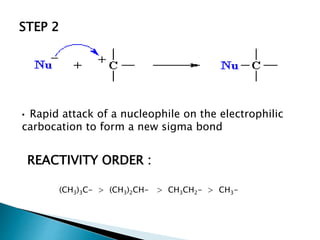
STEP 2 
• Rapid attack of a nucleophile on the electrophilic 
carbocation to form a new sigma bond 
REACTIVITY ORDER : 
(CH3)3C- > (CH3)2CH- > CH3CH2- > CH3-
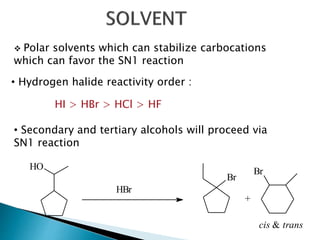
 Polar solvents which can stabilize carbocations 
which can favor the SN1 reaction 
• Hydrogen halide reactivity order : 
HI > HBr > HCl > HF 
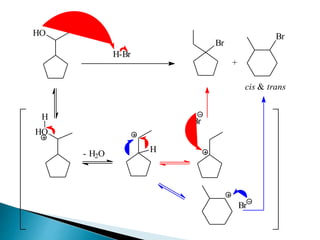
• Secondary and tertiary alcohols will proceed via 
SN1 reaction 
HO 
HBr 
Br 
+ 
Br 
cis & trans
HO 
H-Br 
Br 
+ 
Br 
cis & trans 
H 
HO 
H 
- H2O 
Br 
Br
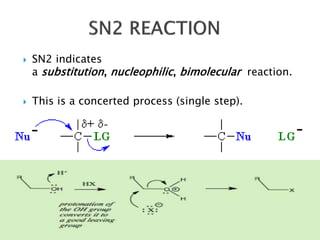
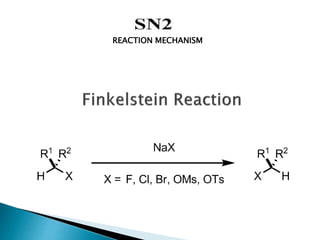
 SN2 indicates 
a substitution, nucleophilic, bimolecular reaction. 
 This is a concerted process (single step).
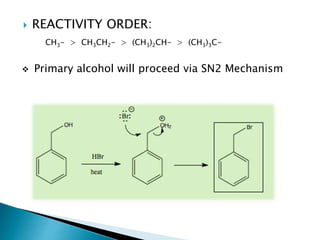
 REACTIVITY ORDER: 
CH3- > CH3CH2- > (CH3)2CH- > (CH3)3C- 
 Primary alcohol will proceed via SN2 Mechanism
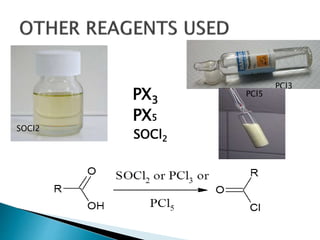
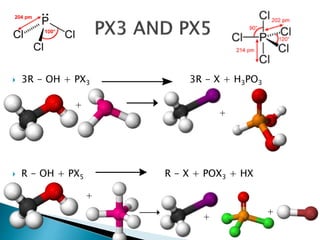
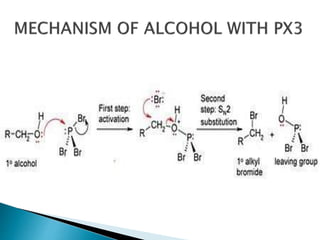
PX3 
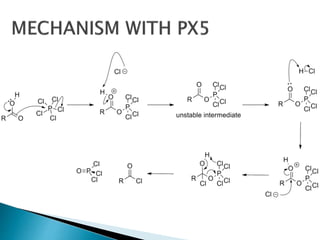
PX5 
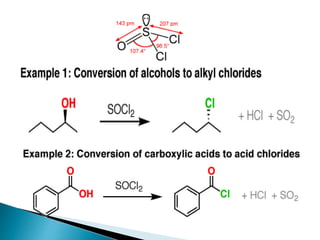
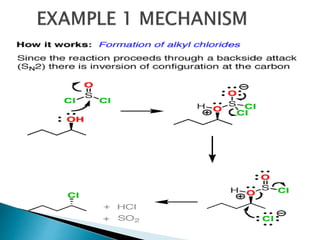
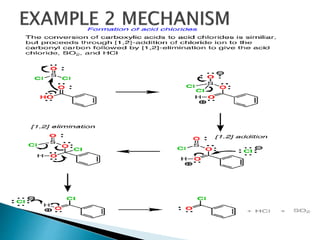
SOCl2 
SOCl2 
PCl3 
PCl5
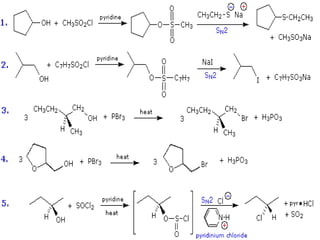
 3R - OH + PX3 3R - X + H3PO3 
 R - OH + PX5 R - X + POX3 + HX
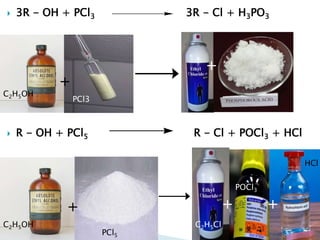
 3R - OH + PCl3 3R - Cl + H3PO3 
 R - OH + PCl5 R - Cl + POCl3 + HCl 
C2H5OH 
PCl5 
C2H5Cl 
POCl3 
HCl 
+ + + 
C2H5OH 
+ 
+ 
PCl3
REACTION MECHANISM
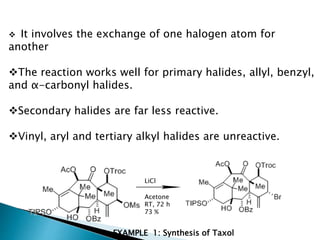
 It involves the exchange of one halogen atom for 
another 
The reaction works well for primary halides, allyl, benzyl, 
and α-carbonyl halides. 
Secondary halides are far less reactive. 
Vinyl, aryl and tertiary alkyl halides are unreactive. 
LiCl 
Acetone 
RT, 72 h 
73 % 
EXAMPLE 1: Synthesis of Taxol
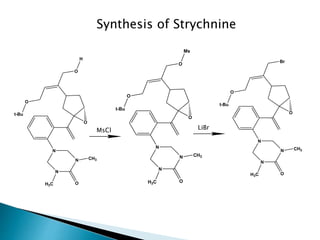
Synthesis of Strychnine 
O 
O 
N 
O 
N 
N 
H3C 
CH3 
O 
Ms 
t-Bu 
O 
O 
N 
O 
N 
N 
H3C 
CH3 
O 
H 
t-Bu 
O 
O 
N 
Br 
N 
N 
H3C 
CH3 
O 
t-Bu 
MsCl LiBr
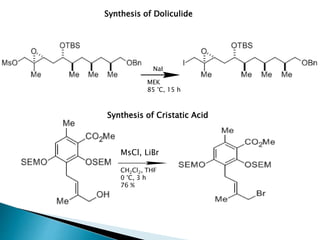
Synthesis of Doliculide 
NaI 
MEK 
85 °C, 15 h 
Synthesis of Cristatic Acid 
MsCl, LiBr 
CH2Cl2, THF 
0 °C, 3 h 
76 %
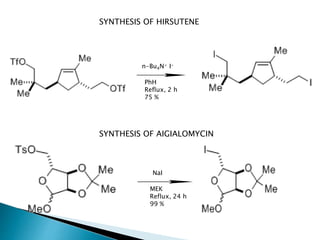
SYNTHESIS OF HIRSUTENE 
n-Bu4N+ I-PhH 
Reflux, 2 h 
75 % 
SYNTHESIS OF AIGIALOMYCIN 
NaI 
MEK 
Reflux, 24 h 
99 %
• This is a useful reaction, because the resulting alkyl 
halides are versatile compounds that can be converted 
into many compounds that are not directly accessible 
from the alcohol itself.
Conversion of Alcohols to Halide

Conversion of Alcohols to Halide

  • 1.
    Done by SHOBANA.N.S QUEEN MARY’S COLLEGE
  • 3.
     Possible tomake tertiary chloroalkanes  But to make primary or secondary ones you really need to use a different method. Tertiary alcohol + HCl  Tertiary chloroalkanes
  • 4.
     Alcohols thatform stable carbocations will react faster  Tertiary chloroalkane formed is insoluble and so it looks cloudy
  • 5.
     It’s justthe SN1 reaction of an alcohol with HCl.  The Lucas reagent is ZnCl2 in concentrated HCl.
  • 6.
  • 7.
    OH primary OH secondary OH tertiary ZnCl2, HCl Cl >10 minutes (if at all) Cl <5 minutes Cl 1-2 seconds
  • 8.
  • 9.
     Instead ofhydrobromic acid, usually alcohol is treated with a mixture of sodium or potassium bromide and concentrated sulfuric acid.  This produces hydrogen bromide which reacts with the alcohol.
  • 10.
     Alcohol reactswith mixture of sodium or potassium iodide and conc. phosphoric(V) acid, H3PO4.
  • 11.
     The mostfrequently used of these reagents is HF-pyridine (Olah’s Reagent)
  • 12.
  • 13.
    • SN1indicates substitution,nucleophilic, unimolecular reaction • It involves two steps STEP 1 • Loss of the leaving group, LG, to generate a carbocation intermediate
  • 14.
    STEP 2 •Rapid attack of a nucleophile on the electrophilic carbocation to form a new sigma bond REACTIVITY ORDER : (CH3)3C- > (CH3)2CH- > CH3CH2- > CH3-
  • 15.
     Polar solventswhich can stabilize carbocations which can favor the SN1 reaction • Hydrogen halide reactivity order : HI > HBr > HCl > HF • Secondary and tertiary alcohols will proceed via SN1 reaction HO HBr Br + Br cis & trans
  • 16.
    HO H-Br Br + Br cis & trans H HO H - H2O Br Br
  • 17.
     SN2 indicates a substitution, nucleophilic, bimolecular reaction.  This is a concerted process (single step).
  • 18.
     REACTIVITY ORDER: CH3- > CH3CH2- > (CH3)2CH- > (CH3)3C-  Primary alcohol will proceed via SN2 Mechanism
  • 19.
    PX3 PX5 SOCl2 SOCl2 PCl3 PCl5
  • 20.
     3R -OH + PX3 3R - X + H3PO3  R - OH + PX5 R - X + POX3 + HX
  • 21.
     3R -OH + PCl3 3R - Cl + H3PO3  R - OH + PCl5 R - Cl + POCl3 + HCl C2H5OH PCl5 C2H5Cl POCl3 HCl + + + C2H5OH + + PCl3
  • 27.
  • 28.
     It involvesthe exchange of one halogen atom for another The reaction works well for primary halides, allyl, benzyl, and α-carbonyl halides. Secondary halides are far less reactive. Vinyl, aryl and tertiary alkyl halides are unreactive. LiCl Acetone RT, 72 h 73 % EXAMPLE 1: Synthesis of Taxol
  • 29.
    Synthesis of Strychnine O O N O N N H3C CH3 O Ms t-Bu O O N O N N H3C CH3 O H t-Bu O O N Br N N H3C CH3 O t-Bu MsCl LiBr
  • 30.
    Synthesis of Doliculide NaI MEK 85 °C, 15 h Synthesis of Cristatic Acid MsCl, LiBr CH2Cl2, THF 0 °C, 3 h 76 %
  • 31.
    SYNTHESIS OF HIRSUTENE n-Bu4N+ I-PhH Reflux, 2 h 75 % SYNTHESIS OF AIGIALOMYCIN NaI MEK Reflux, 24 h 99 %
  • 35.
    • This isa useful reaction, because the resulting alkyl halides are versatile compounds that can be converted into many compounds that are not directly accessible from the alcohol itself.