CONTROL ATMOSPHERIC
&
MODIFIED ATMOSPHERIC
PACKAGING
BY-
SIDHARTH.K.A
Controlled and Modified atmospheric packaging can be used
to the maintanence of optimum temperature and relative
humidity for preserving quality and reducing postharvest
losses of tropical fruits and vegetables during transport
storage.
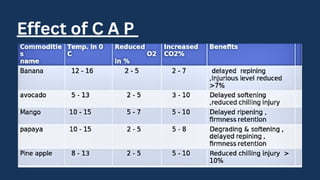
CAP/MAP reduce respiration rate , ethylene production , to
delay fruit ripening, composition changers associated with
ripening.
INTRODUCTION
CAP
• A controlled atmosphere is an agricultural storage method.
An atmosphere in which oxygen, carbon dioxide and nitrogen
concentrations as well as temperature and humidity are
regulated.
• Controlled atmosphere (CA) storage involves maintaining
atmospheric compositions that is different from air
composition generally, O: below 8% and CO2 above 1% are
used
• Increasing the shelf life of food products .
•Maintaining the quality and freshness of food products.
• Inhibition of pathogens growth in food products & Control of the
spoilage of food.
• Long time storage of food without using of harmful chemicals.
• For Controlling biochemical and enzymatic changes in food
products.
Purpose of Controlled Atmospheric Packaging
Extended shelf life.
Maintain product quality.
Enhanced food safety.
Minimize the need of preservites.
Reduce packaging waste.
Allows globel distribution.
Year-round availability.
Customization.
Enhance export opportunities.
Improves consumer convience
Benifits of Controlled Atmospheric Packaging
CO-scrubbers.
O2-scrubbers.
Ethylene convertes.
Gas analyzer.
Humidifier.
Over and under pressure valve.
Gas tight doors
Equipment used for CAP
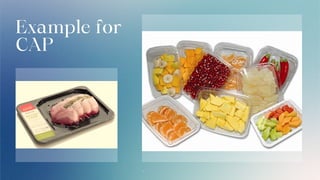
Example for
CAP
Effect of C A P
M A P
Modified Atmosphere Packaging (MAP) is a long established and continuously increasing
technique for extending the shelf-life of fresh food products.
→ MAP requires specialized machinery to flush out air from the packaging and replace it with
a different gas or gas mixture.
The MAP packaging aims to provide longer shelf-life, maintain sensory attributes like color or
appearance and achieve the food safety of the product.
The normal composition of air is 21% oxygen, 78% nitrogen and less than 0.1% carbon
dioxide. Modification of the atmosphere within the package by reducing the oxygen content
while increasing the levels of carbon dioxide and/or nitrogen has been shown to significantly
extend the shelf-life of perishable foods at chill temperatures.
Gases used in M A P
→ Carbon dioxide (CO2) inhibits the increase of most aerobic bacteria.
It is the most important gas in the packaging of food under modified
atmospheres. In general one can say the higher the CO2 concentration
the longer the durability of the perishable food.
Nitrogen (N2) is an inert gas that is used to expel air especially Oxygen
out of the packaging. It is also used as a filling gas that equalizes the
effect of CO2 absorption by the perishable food.
Carbon dioxide
Nitrogen
* Oxygen (O2) is generally useful for the growth
of microorganisms and it should be excluded
from MAP gases but in some cases a level of it
can bring positive results in food preservation.
It keeps the natural color of the perishable food
(effect of freshness). It makes possible
respiration, especially for fruits or vegetables.
Oxygen
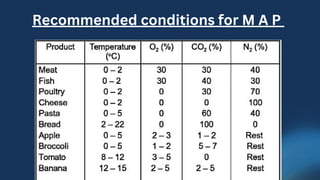
Recommended conditions for M A P
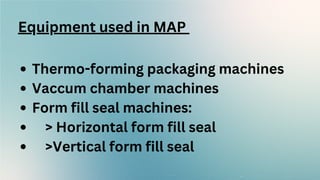
Equipment used in MAP
Thermo-forming packaging machines
Vaccum chamber machines
Form fill seal machines:
> Horizontal form fill seal
>Vertical form fill seal
capital cost of gas packaging machinery
Cost of gases and packaging materials
cost of analytical equipment to ensure that correct gas mixtures are used
acost of quality assurance systems to prevent distribution of leakers
Increase of pack volume which will adversely affect transport
costs and retail display space
benefits of MAP are lost once the pack is opened or leaks
Disadvantages
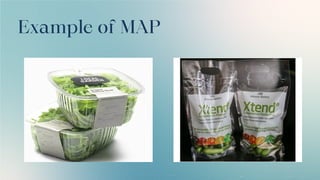
Example of MAP
Advantages
increased shelf life
reduction in retail waste
improved presentation-clear view of product and all round visibility
Hygenic stackable pack, sealed and free from product drip and odor
Little or no need of chemical preservatives
increased distribution area and reduced transport costs due to less frequent
deliveries
reduction in production and storage costs due to better utilization of labor, space and
equipment
Resource
Google
> Refferal link:
>https://www.slideshare.net/harishsurapuredd
y/map-60507947
>https://customcratingandlogistics.com/modif
ied-controlled-packaging-difference/
>https://www.researchgate.net/publication/27
2158415_Packaging_Controlled_Atmosphere
Thank you!

CAP& MAP

  • 1.
  • 2.
    Controlled and Modifiedatmospheric packaging can be used to the maintanence of optimum temperature and relative humidity for preserving quality and reducing postharvest losses of tropical fruits and vegetables during transport storage. CAP/MAP reduce respiration rate , ethylene production , to delay fruit ripening, composition changers associated with ripening. INTRODUCTION
  • 3.
    CAP • A controlledatmosphere is an agricultural storage method. An atmosphere in which oxygen, carbon dioxide and nitrogen concentrations as well as temperature and humidity are regulated. • Controlled atmosphere (CA) storage involves maintaining atmospheric compositions that is different from air composition generally, O: below 8% and CO2 above 1% are used
  • 4.
    • Increasing theshelf life of food products . •Maintaining the quality and freshness of food products. • Inhibition of pathogens growth in food products & Control of the spoilage of food. • Long time storage of food without using of harmful chemicals. • For Controlling biochemical and enzymatic changes in food products. Purpose of Controlled Atmospheric Packaging
  • 5.
    Extended shelf life. Maintainproduct quality. Enhanced food safety. Minimize the need of preservites. Reduce packaging waste. Allows globel distribution. Year-round availability. Customization. Enhance export opportunities. Improves consumer convience Benifits of Controlled Atmospheric Packaging
  • 6.
    CO-scrubbers. O2-scrubbers. Ethylene convertes. Gas analyzer. Humidifier. Overand under pressure valve. Gas tight doors Equipment used for CAP
  • 7.
  • 8.
  • 9.
    M A P ModifiedAtmosphere Packaging (MAP) is a long established and continuously increasing technique for extending the shelf-life of fresh food products. → MAP requires specialized machinery to flush out air from the packaging and replace it with a different gas or gas mixture. The MAP packaging aims to provide longer shelf-life, maintain sensory attributes like color or appearance and achieve the food safety of the product. The normal composition of air is 21% oxygen, 78% nitrogen and less than 0.1% carbon dioxide. Modification of the atmosphere within the package by reducing the oxygen content while increasing the levels of carbon dioxide and/or nitrogen has been shown to significantly extend the shelf-life of perishable foods at chill temperatures.
  • 10.
    Gases used inM A P → Carbon dioxide (CO2) inhibits the increase of most aerobic bacteria. It is the most important gas in the packaging of food under modified atmospheres. In general one can say the higher the CO2 concentration the longer the durability of the perishable food. Nitrogen (N2) is an inert gas that is used to expel air especially Oxygen out of the packaging. It is also used as a filling gas that equalizes the effect of CO2 absorption by the perishable food. Carbon dioxide Nitrogen
  • 11.
    * Oxygen (O2)is generally useful for the growth of microorganisms and it should be excluded from MAP gases but in some cases a level of it can bring positive results in food preservation. It keeps the natural color of the perishable food (effect of freshness). It makes possible respiration, especially for fruits or vegetables. Oxygen
  • 12.
  • 13.
    Equipment used inMAP Thermo-forming packaging machines Vaccum chamber machines Form fill seal machines: > Horizontal form fill seal >Vertical form fill seal
  • 14.
    capital cost ofgas packaging machinery Cost of gases and packaging materials cost of analytical equipment to ensure that correct gas mixtures are used acost of quality assurance systems to prevent distribution of leakers Increase of pack volume which will adversely affect transport costs and retail display space benefits of MAP are lost once the pack is opened or leaks Disadvantages
  • 15.
  • 16.
    Advantages increased shelf life reductionin retail waste improved presentation-clear view of product and all round visibility Hygenic stackable pack, sealed and free from product drip and odor Little or no need of chemical preservatives increased distribution area and reduced transport costs due to less frequent deliveries reduction in production and storage costs due to better utilization of labor, space and equipment
  • 17.
  • 18.