Contrast/Conc 
ession clauses 
Adverb clauses 
Level: Intermediate 
By: Santiago Betancur
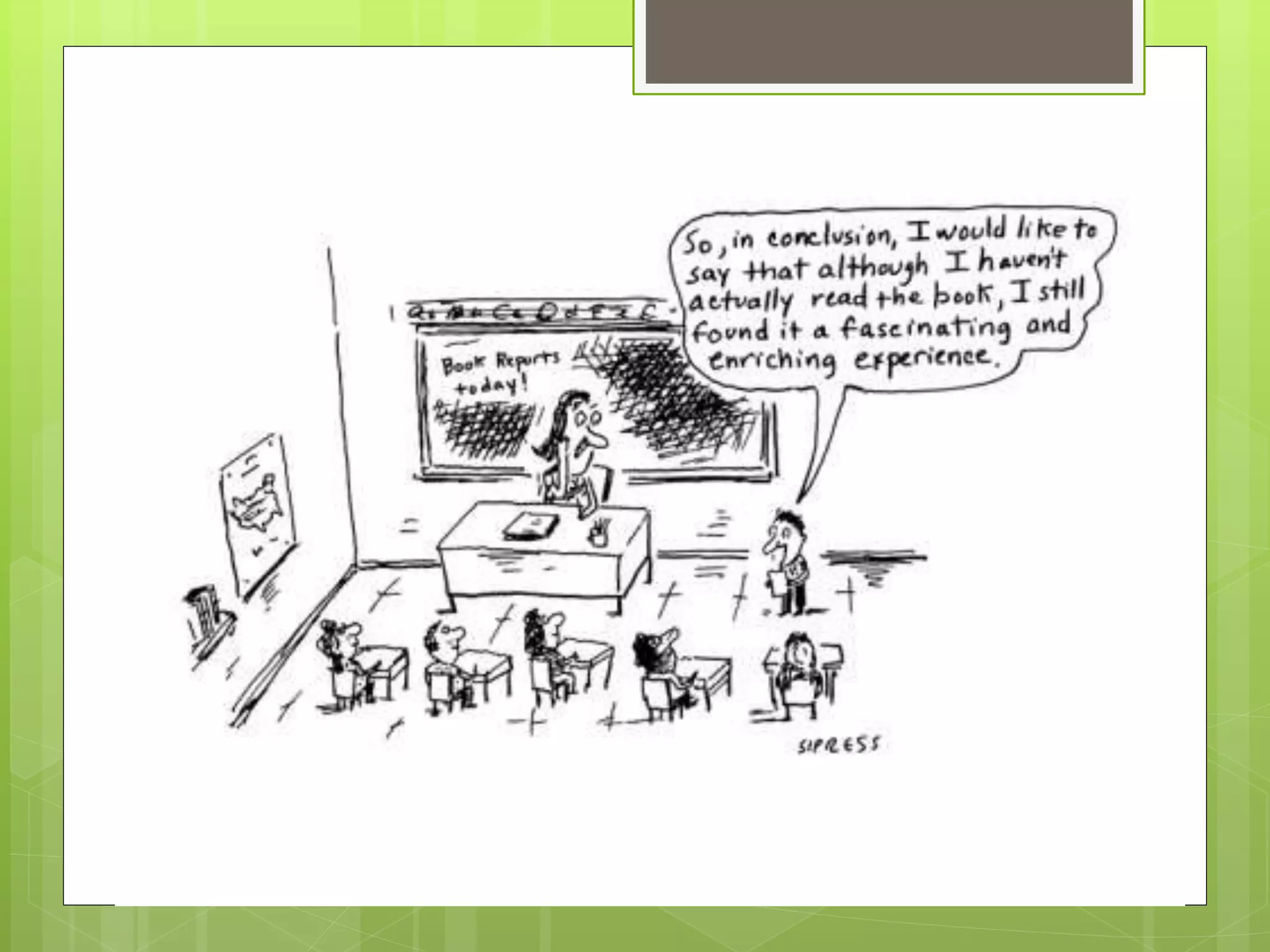
 They are introduced by subordinating 
conjunctions like “although, though, even 
though, whereas, while, even if”.
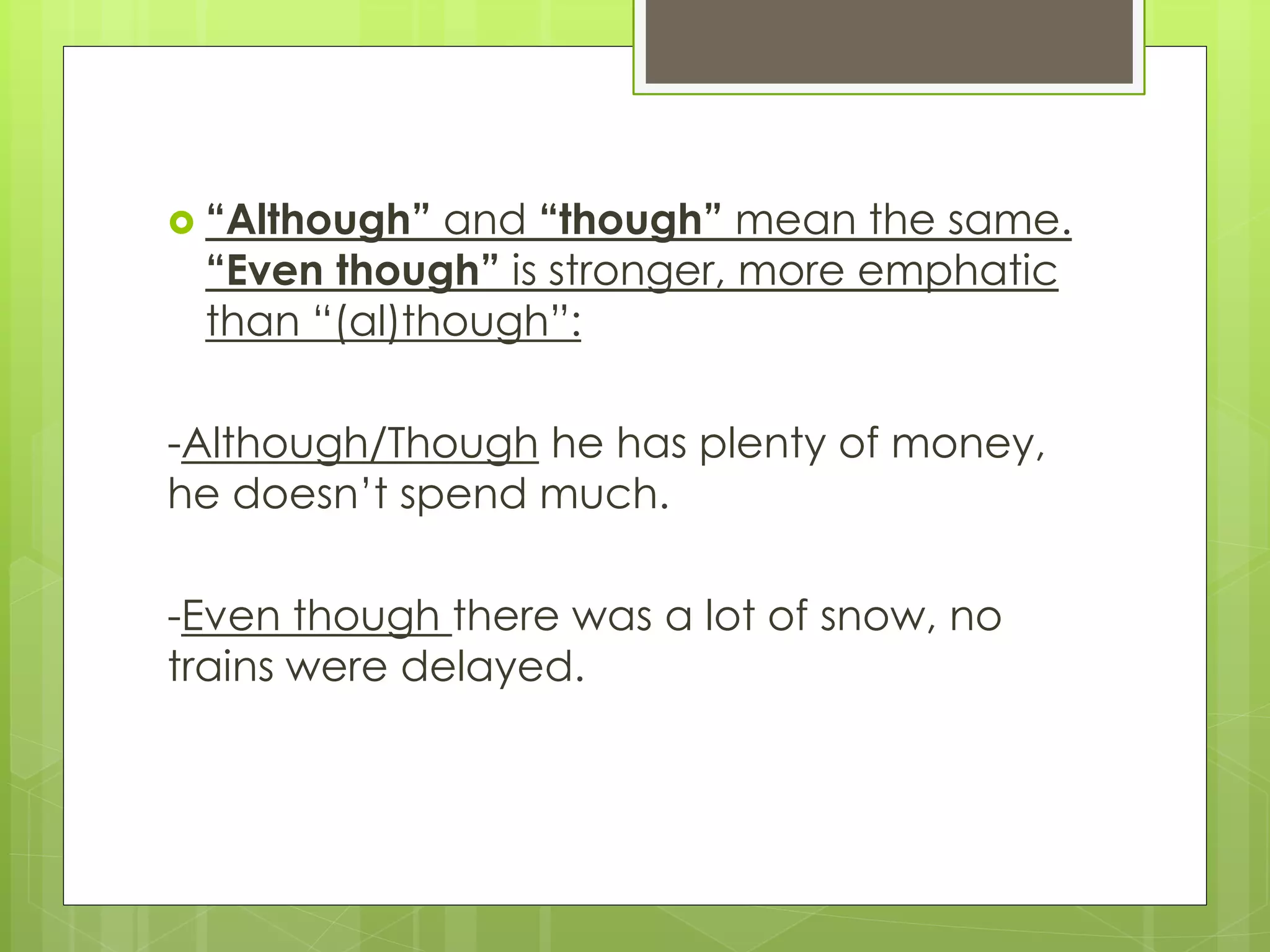
 “Although” and “though” mean the same. 
“Even though” is stronger, more emphatic 
than “(al)though”: 
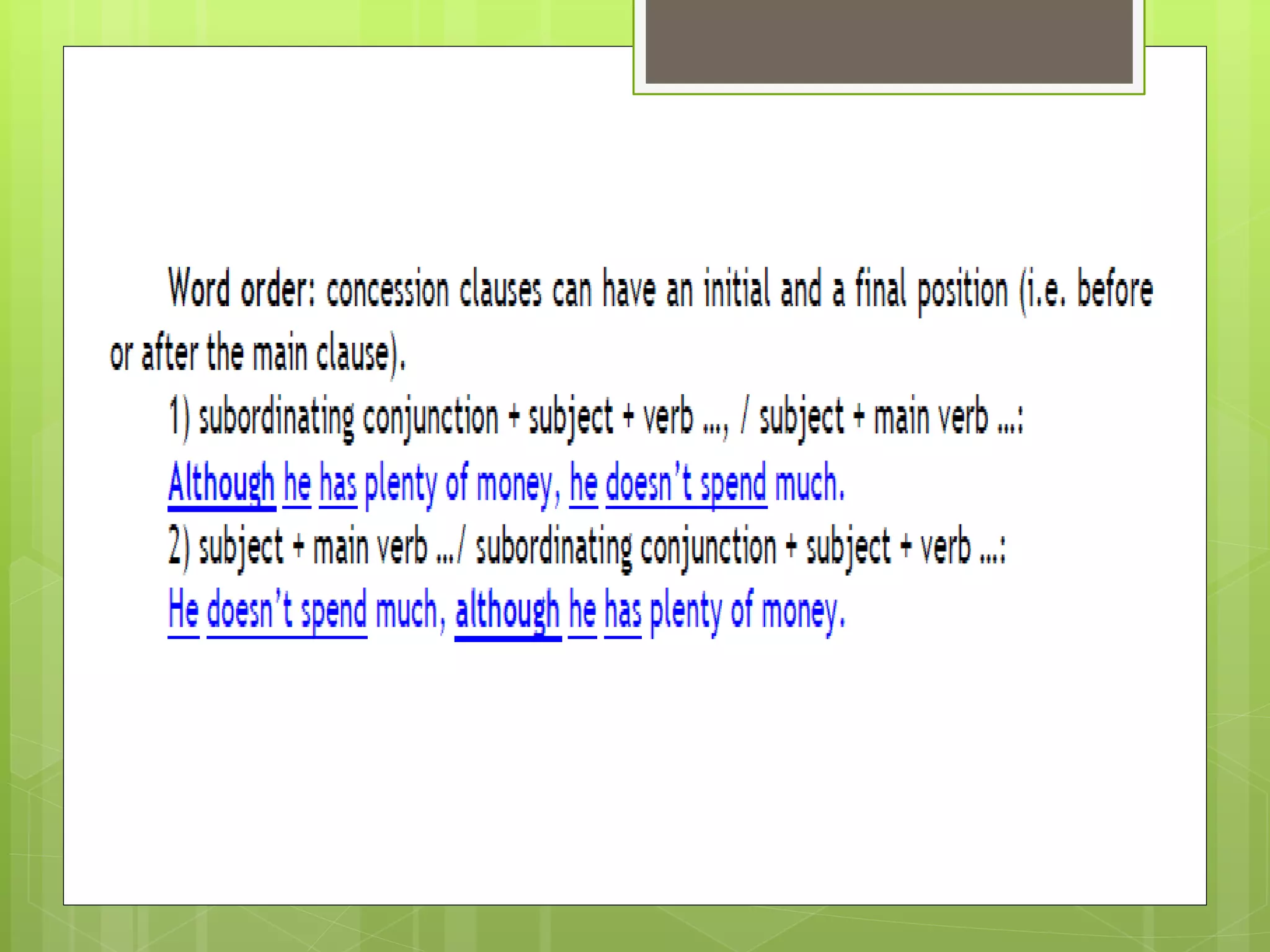
-Although/Though he has plenty of money, 
he doesn’t spend much. 
-Even though there was a lot of snow, no 
trains were delayed.
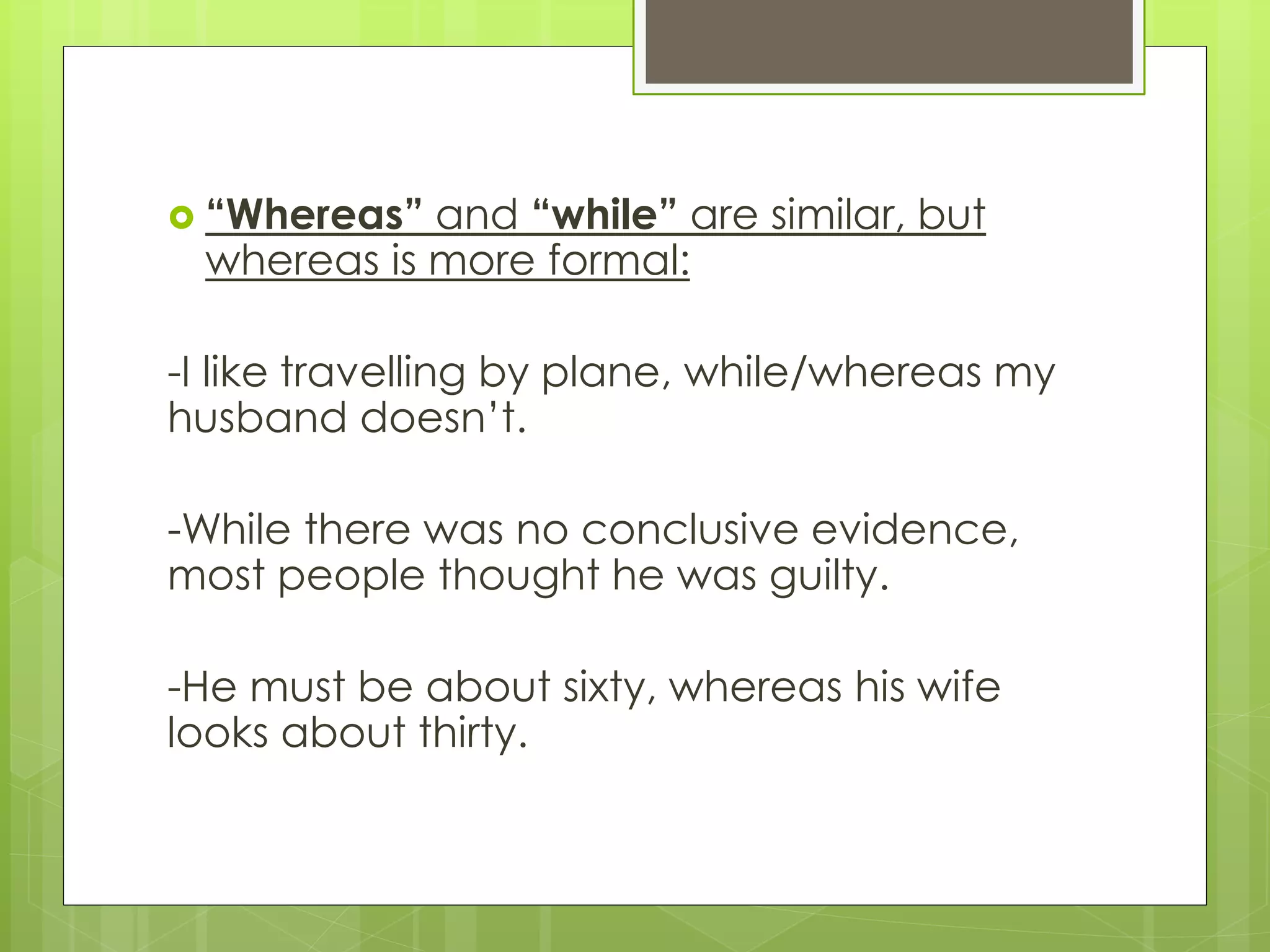
 “Whereas” and “while” are similar, but 
whereas is more formal: 
-I like travelling by plane, while/whereas my 
husband doesn’t. 
-While there was no conclusive evidence, 
most people thought he was guilty. 
-He must be about sixty, whereas his wife 
looks about thirty.
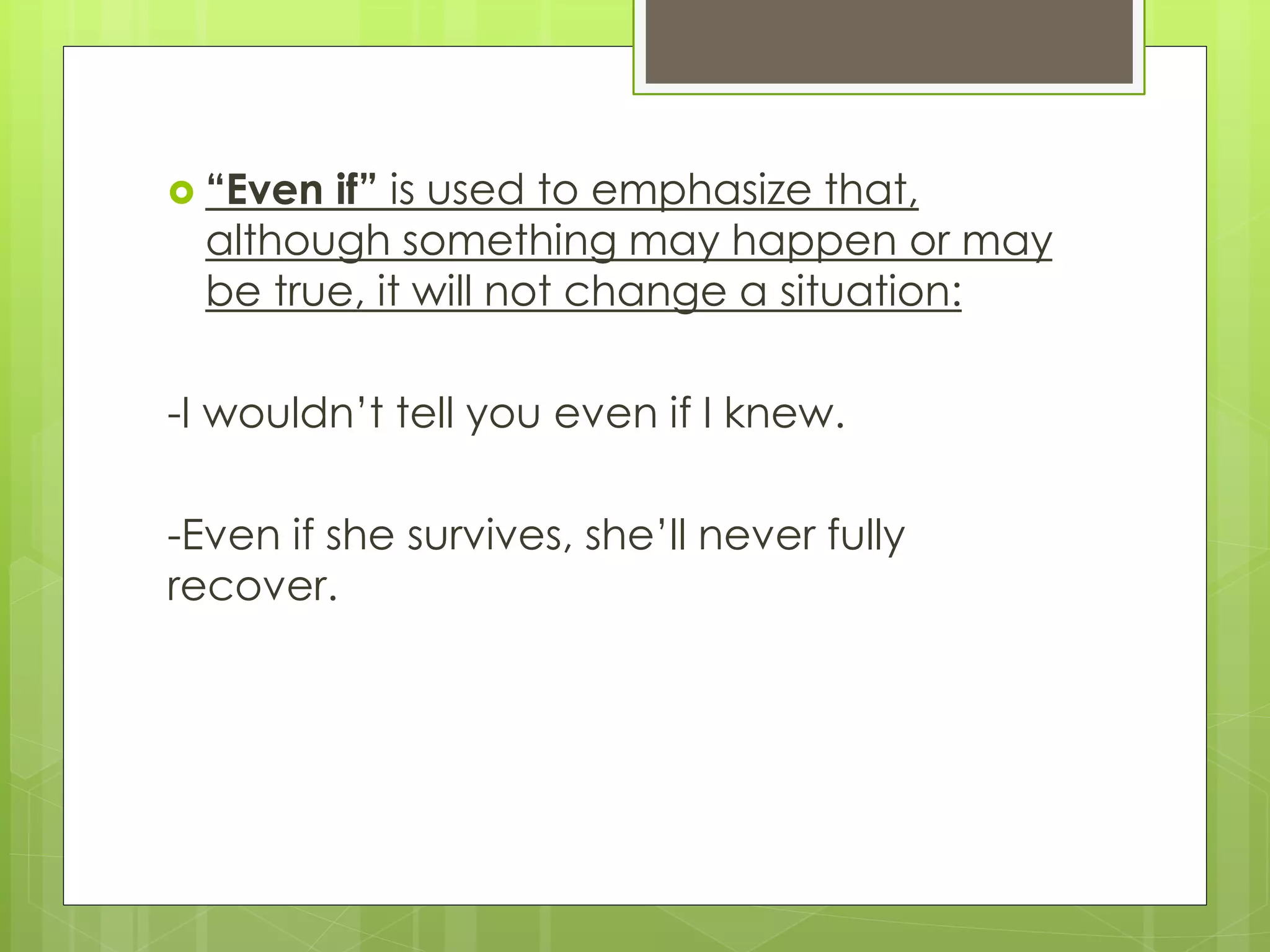
 “Even if” is used to emphasize that, 
although something may happen or may 
be true, it will not change a situation: 
-I wouldn’t tell you even if I knew. 
-Even if she survives, she’ll never fully 
recover.
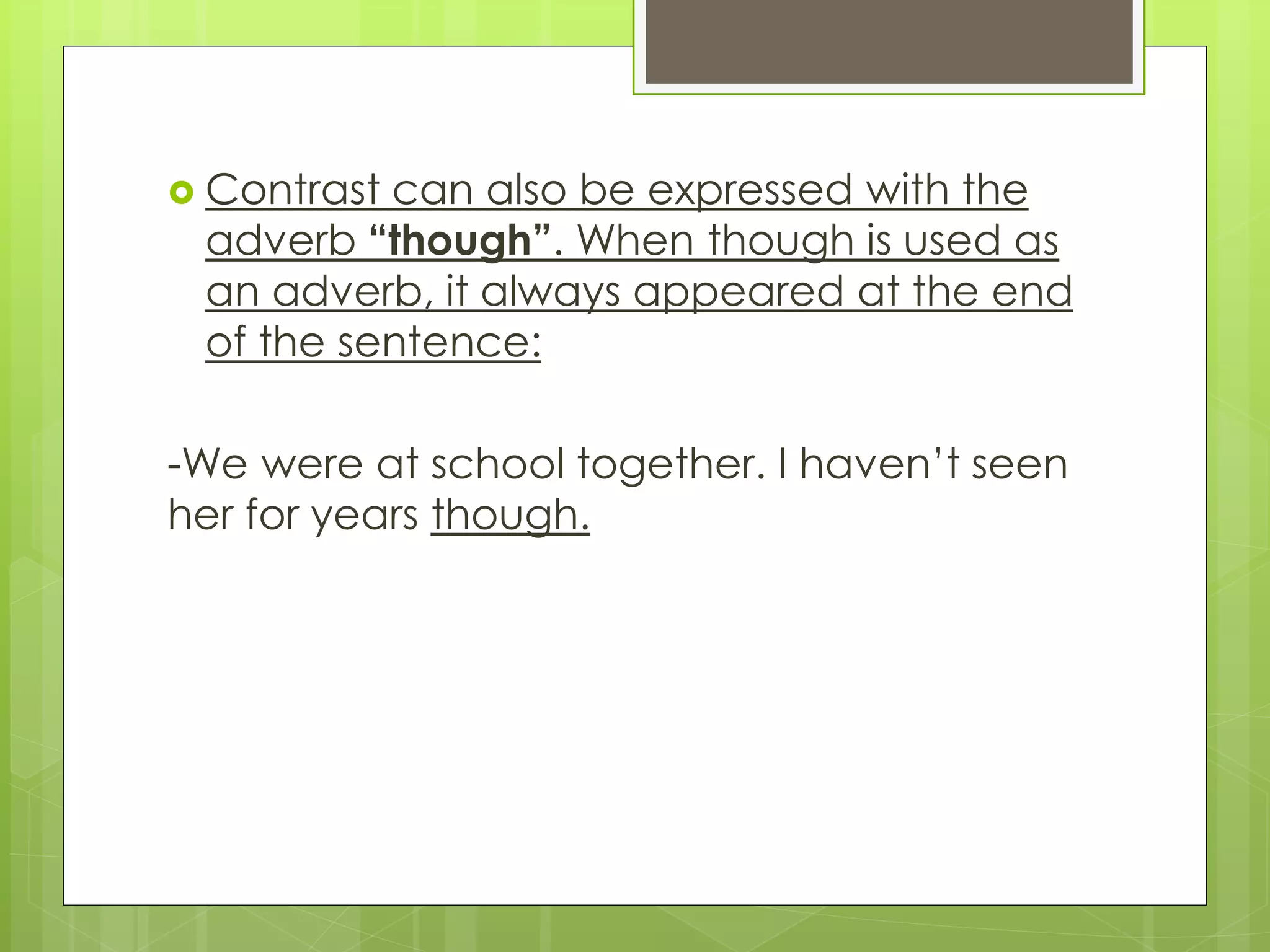
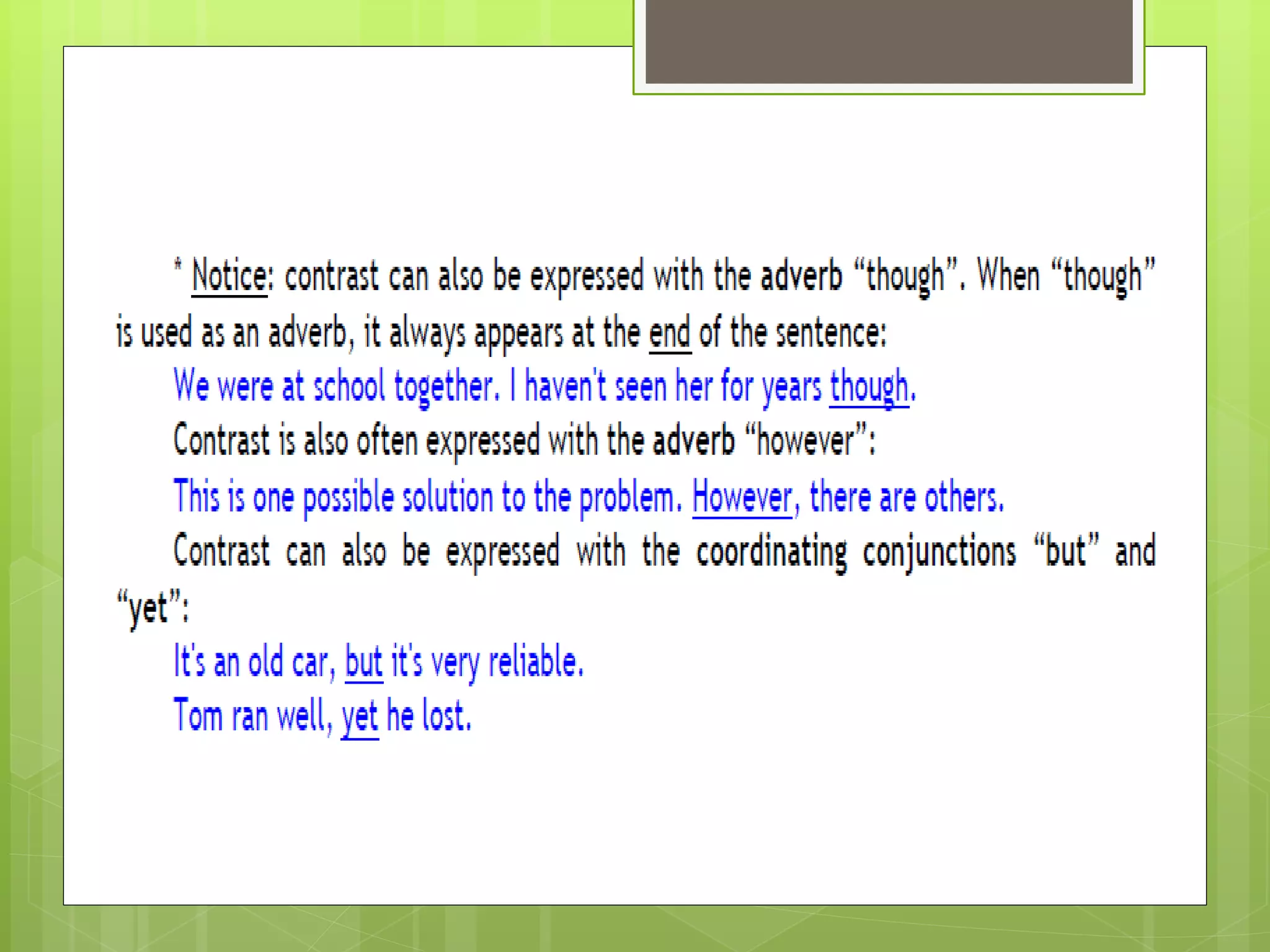
 Contrast can also be expressed with the 
adverb “though”. When though is used as 
an adverb, it always appeared at the end 
of the sentence: 
-We were at school together. I haven’t seen 
her for years though.
Contrast and concession clauses

Contrast and concession clauses

  • 1.
    Contrast/Conc ession clauses Adverb clauses Level: Intermediate By: Santiago Betancur
  • 3.
     They areintroduced by subordinating conjunctions like “although, though, even though, whereas, while, even if”.
  • 6.
     “Although” and“though” mean the same. “Even though” is stronger, more emphatic than “(al)though”: -Although/Though he has plenty of money, he doesn’t spend much. -Even though there was a lot of snow, no trains were delayed.
  • 7.
     “Whereas” and“while” are similar, but whereas is more formal: -I like travelling by plane, while/whereas my husband doesn’t. -While there was no conclusive evidence, most people thought he was guilty. -He must be about sixty, whereas his wife looks about thirty.
  • 8.
     “Even if”is used to emphasize that, although something may happen or may be true, it will not change a situation: -I wouldn’t tell you even if I knew. -Even if she survives, she’ll never fully recover.
  • 9.
     Contrast canalso be expressed with the adverb “though”. When though is used as an adverb, it always appeared at the end of the sentence: -We were at school together. I haven’t seen her for years though.