CONTRACTED EYE SOCKET
RECONSTRUCTION
Questions to be answered
• What is the eye socket?
• What is the common causes for enucleation?
• What is the contracture of socket?
• What cause that?
• how to prevent it?
• Aims of surgery?
• Types of surgery?
• Types of implant?
• Enucleation is the removal of the eye that
leaves the eye muscles and remaining orbital
contents intact.
• Exenteration – removal of the contents of the
eye socket, including the eyeball, fat, muscles,
and other adjacent structures of the eye.
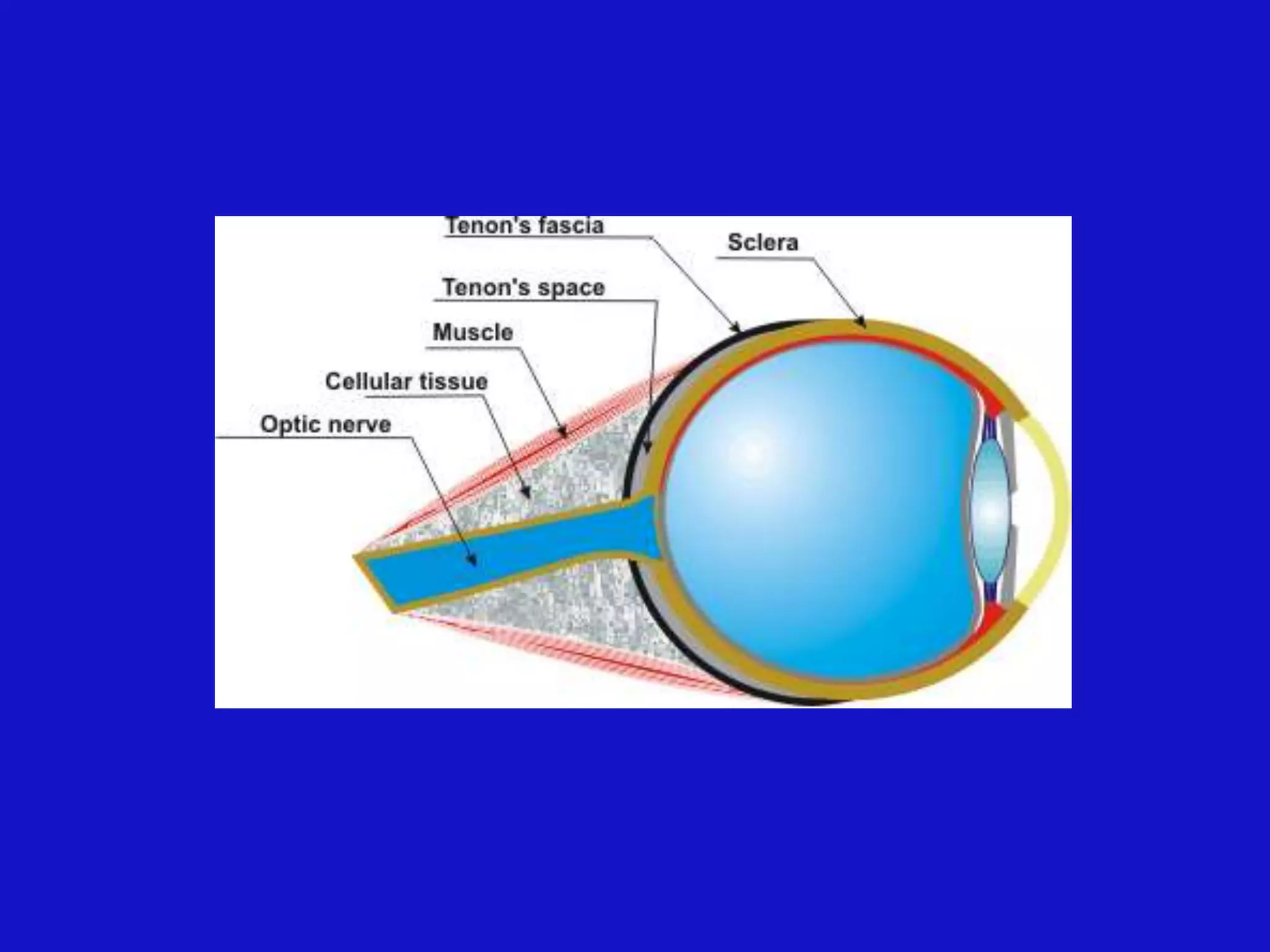
• Tenon's capsule thin membrane which
envelops the eyeball from the optic nerve to
the limbus, separating it from the orbital fat
and forming a socket in which it moves, In
front it adheres to the conjunctiva.
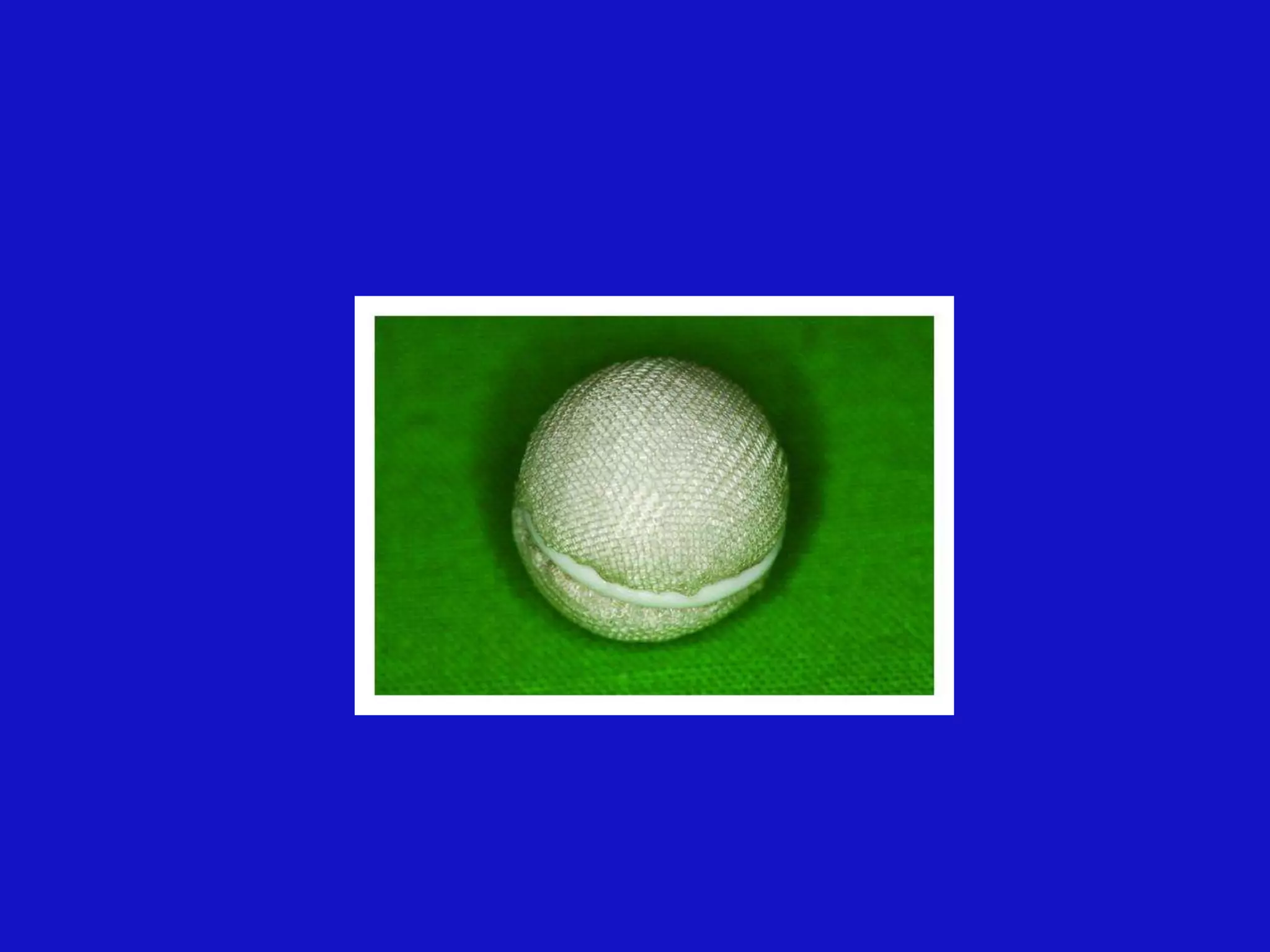
• After enucleation orbital implant iserted to
the Tenon's capsule in order to keep the
orbital size and to keep eye animation .
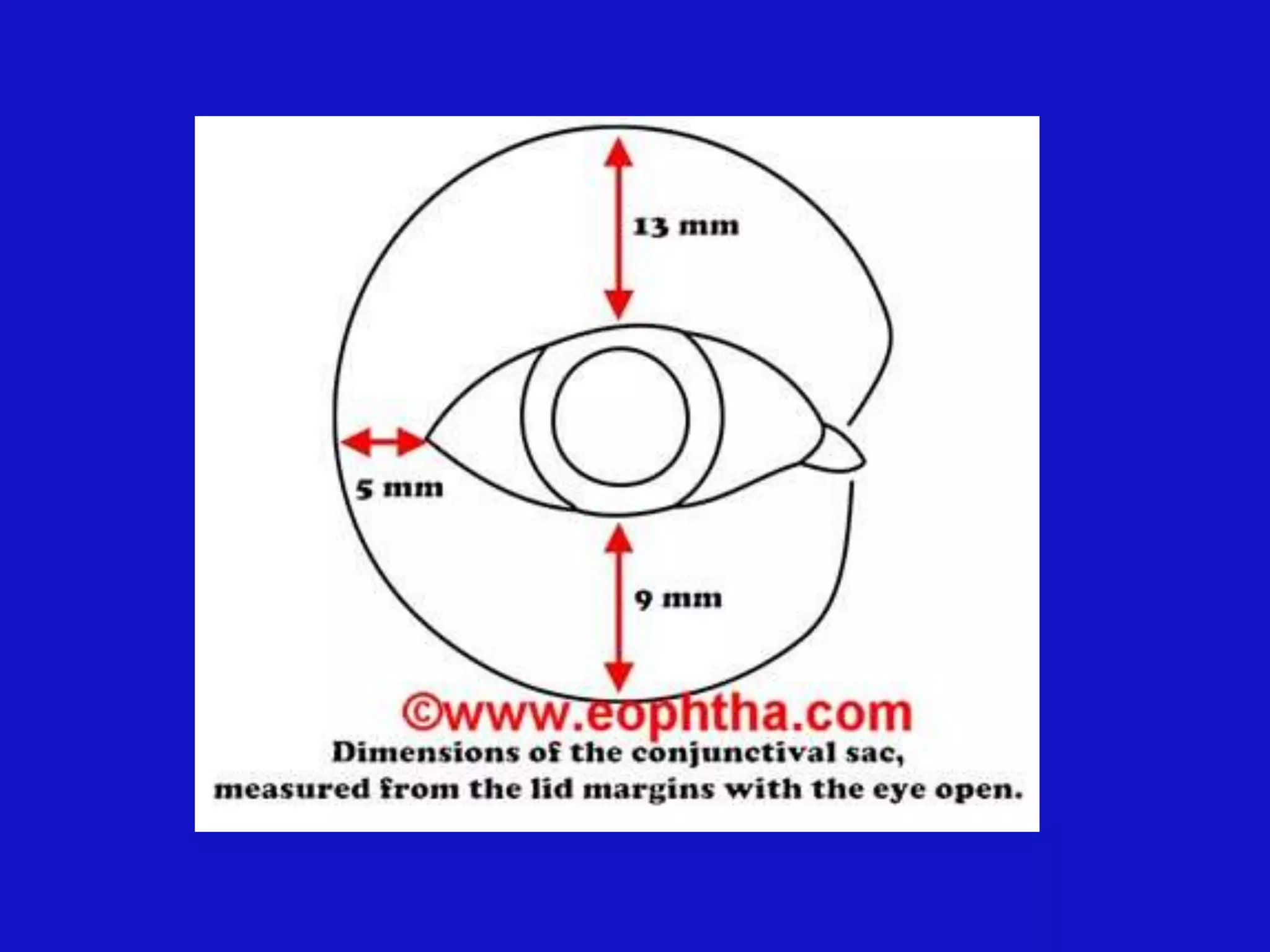
The term Eye socket is refer to:
• Eyelids
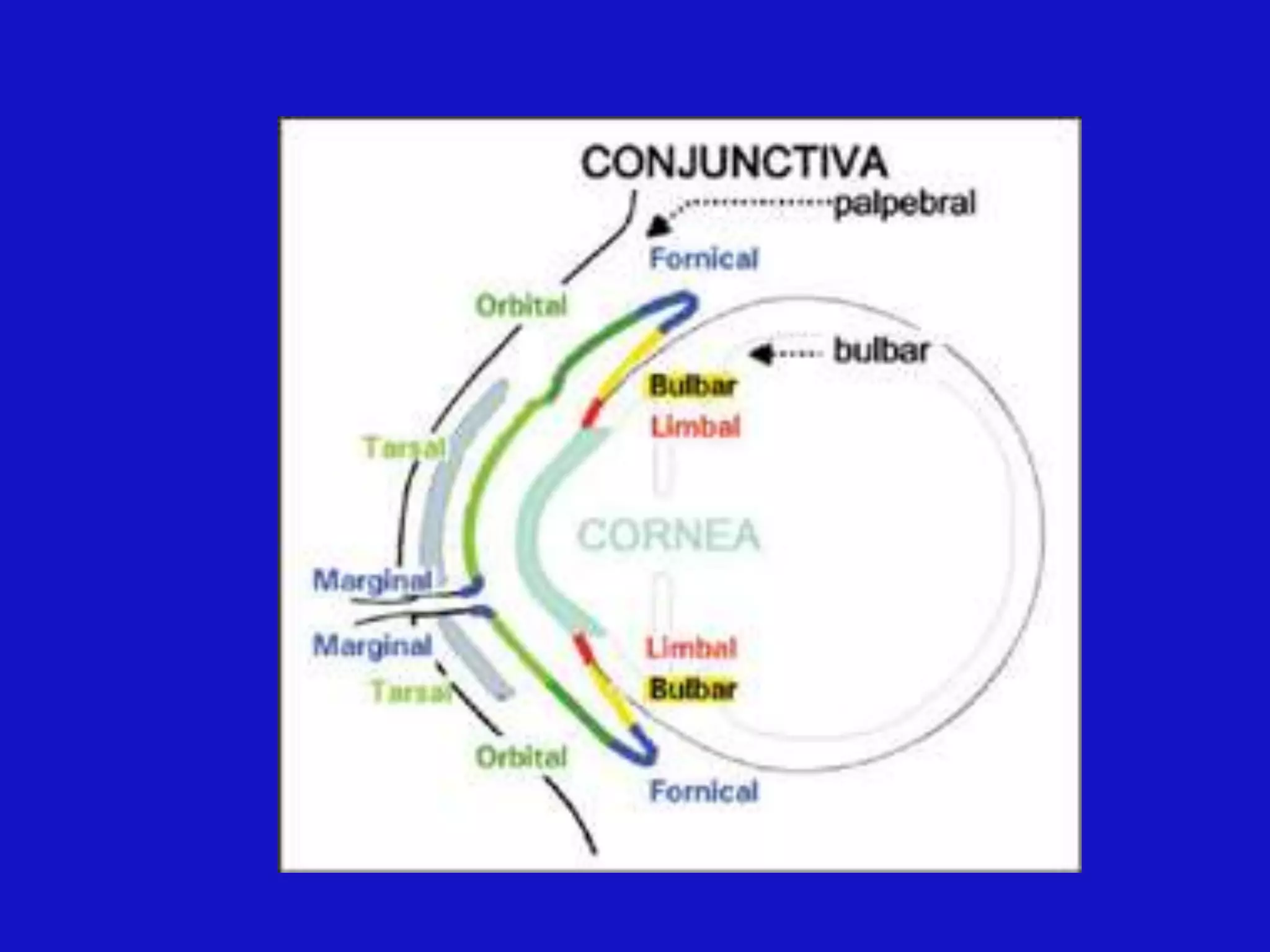
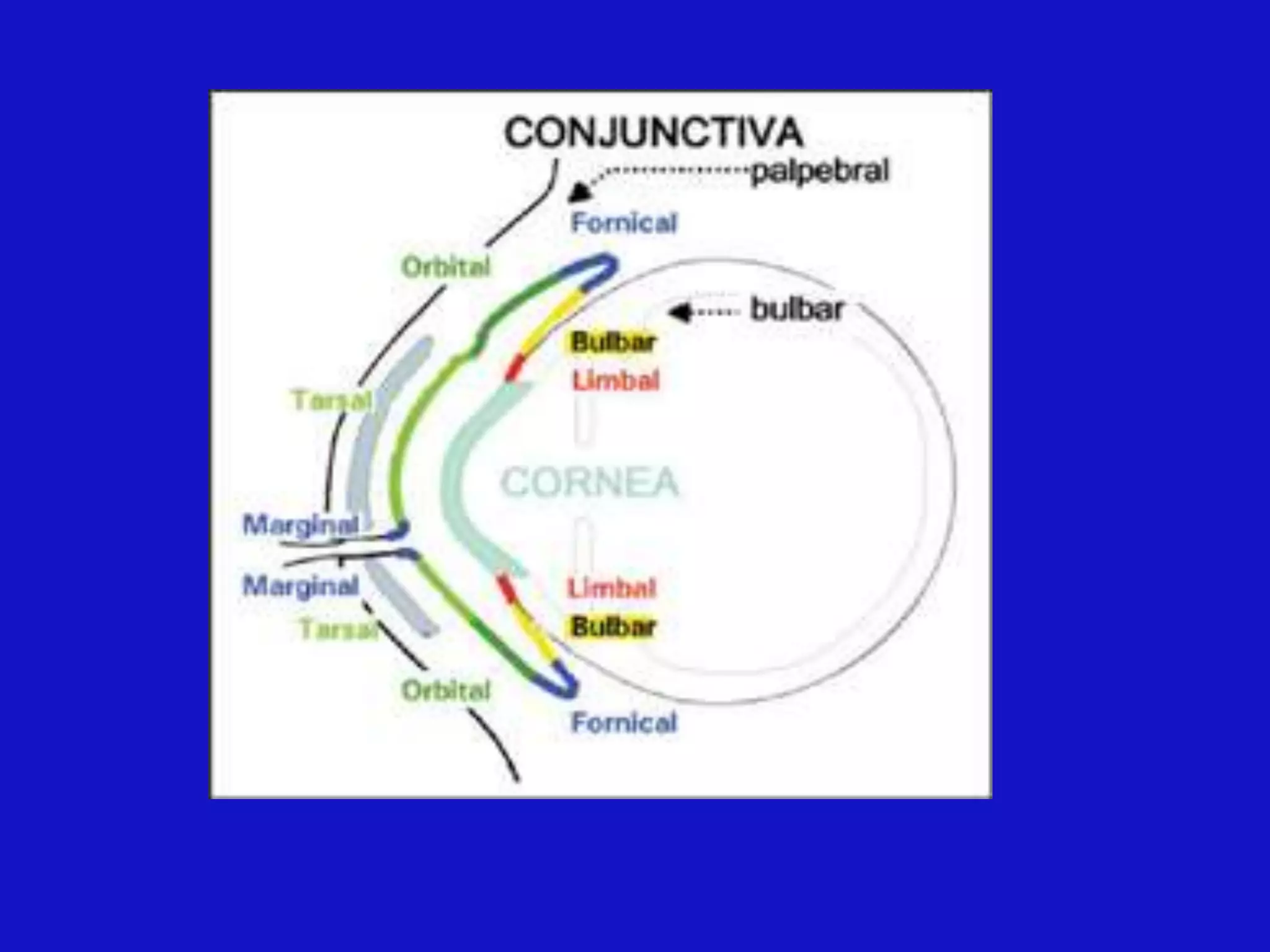
• Conjunctival fornices
• Orbital structures(bony cavity and soft tissues)
Common causes requiring socket
reconstruction
• Congenital (anophthalmia ,microphthalmia)
• Trauma
• Tumour
• scarring
contracture of socket
It refer to :
• extensive loss of conjunctiva surface area
• deep scar formation
• shrinkage of orbital fat
• conjunctiva fornices contracture.
Causes of contracture of socket
• irradiation of the socket as after enucleation
in some cases of retinoblastoma.
• severe socket infections.
• faulty or non wearing of the artificial eye.
• keloid like mass formation in the socket.
• tissue loss due to injury.
• scarring of the conjunctiva due to various
factors(allergy for ex.)
Main compliants
The main presenting complaint :
• story of a gradually increasing difficulty in
retaining the prostheses.
• the patients are not satisfied with the
cosmetic appearance.
Preoperative assessment
the contracted sockets should be examined
clinically and microbiologically.
History :In every case, mode, circumstances and
duration of the eye loss, and subsequent
problems with the prostheses .
The socket should be examined for fibrous bands,
condition of the various fornices and the state of
the conjunctiva.
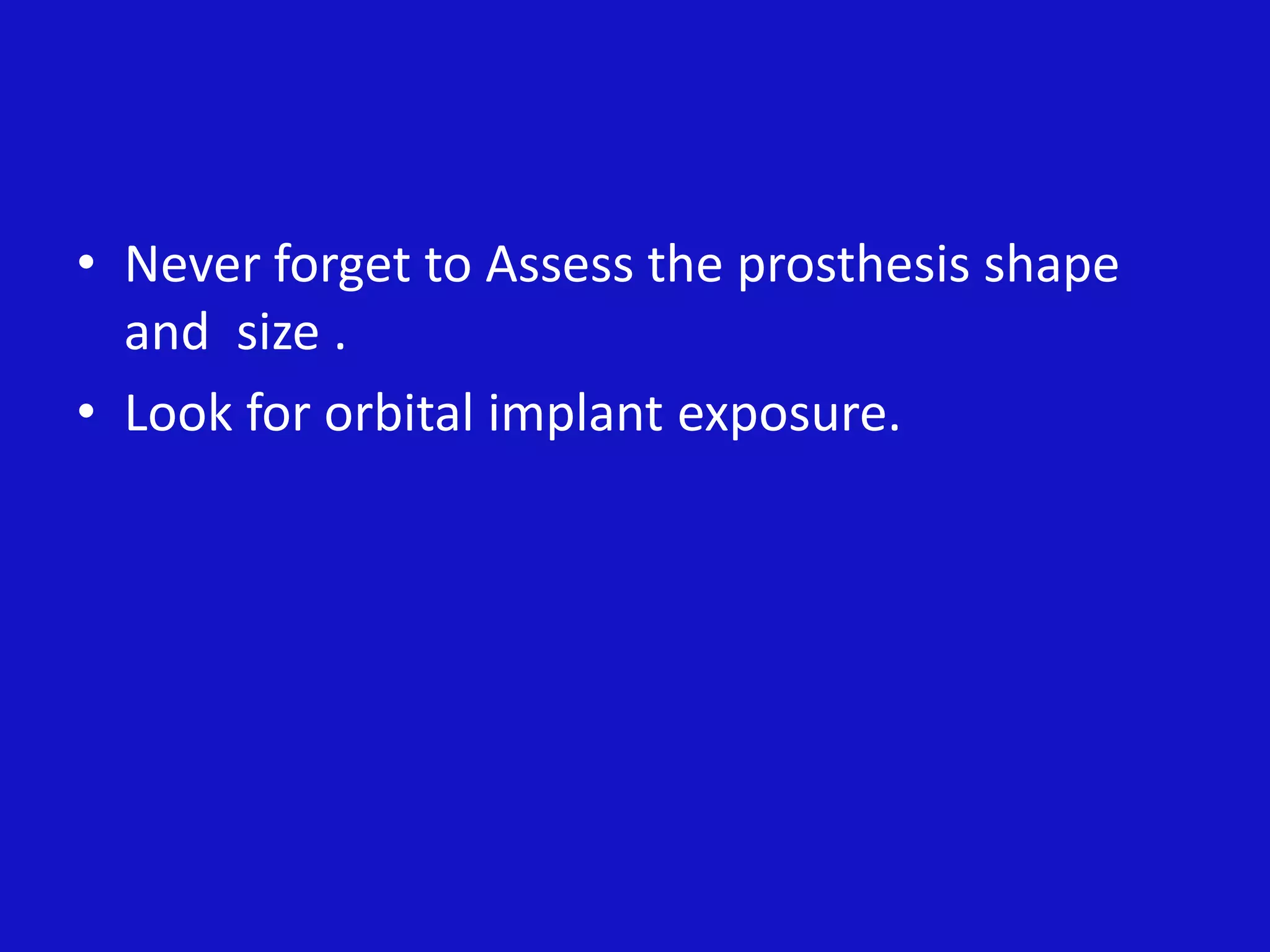
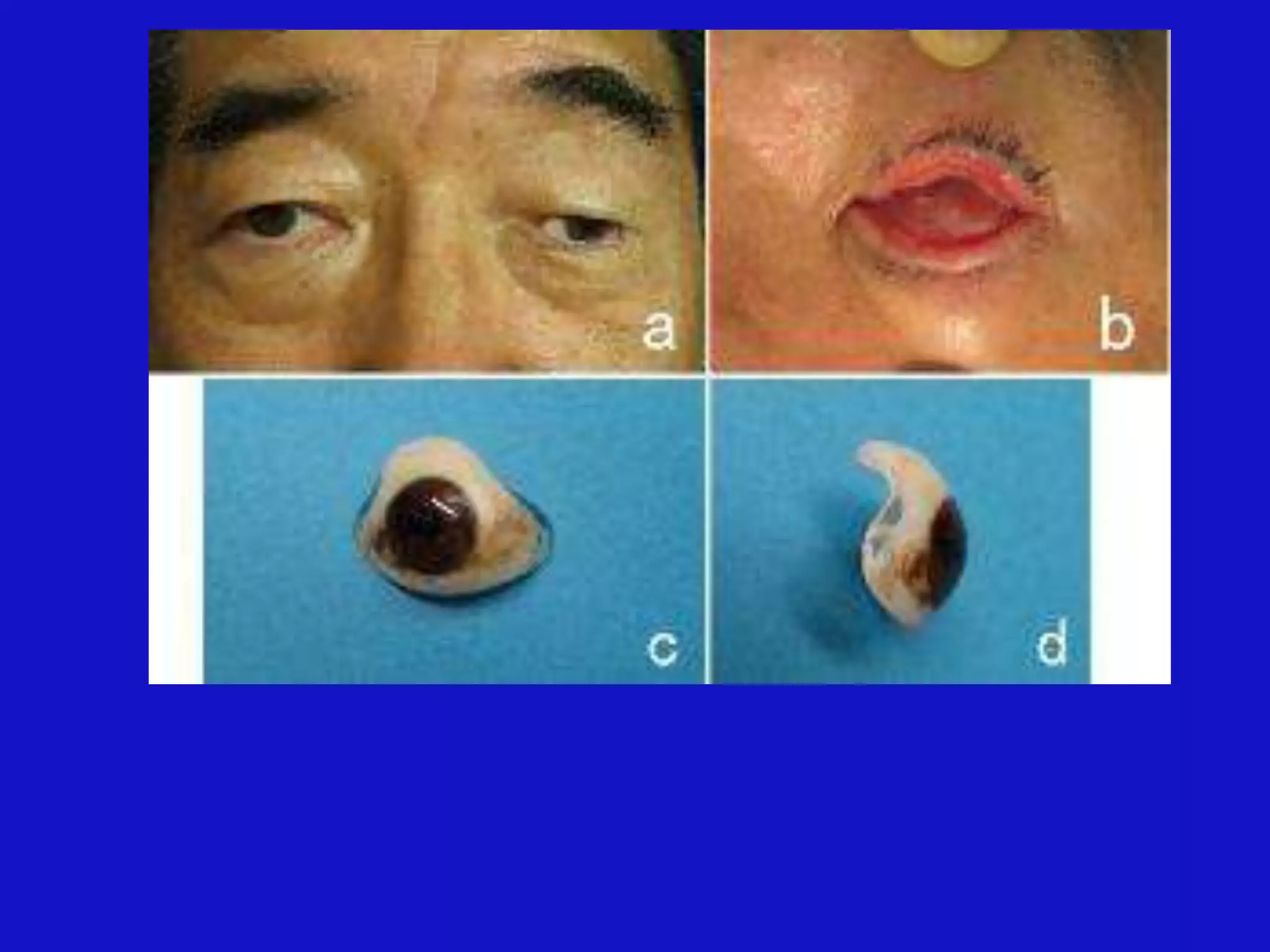
• Never forget to Assess the prosthesis shape
and size .
• Look for orbital implant exposure.
Grades of contracted sockets.
• The soft tissue sockets were divided into five grades for the
sake of convenience in management of contracted sockets.
Grade-0: Socket is lined with the healthy conjunctiva and has
deep and well formed fornices.
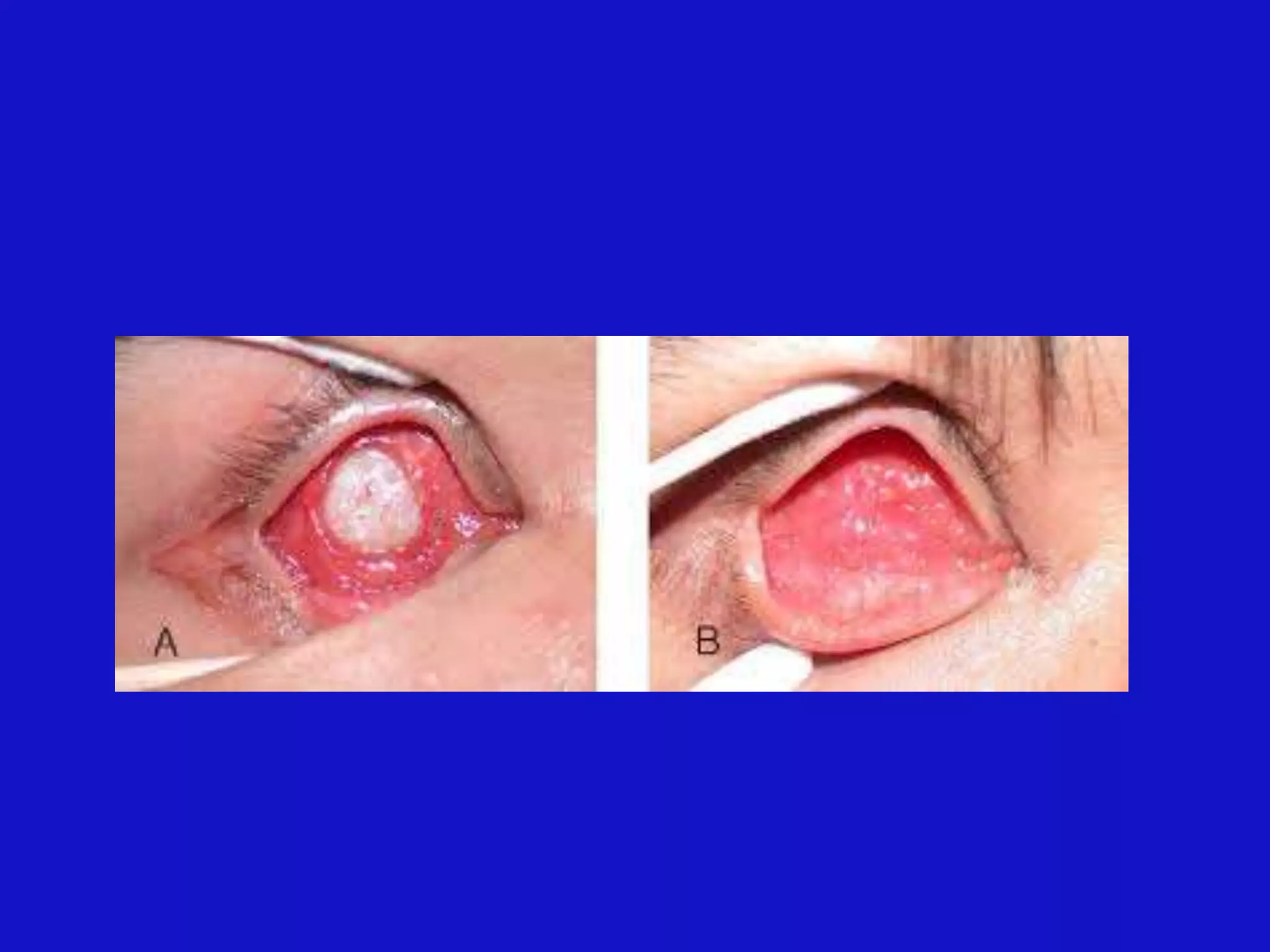
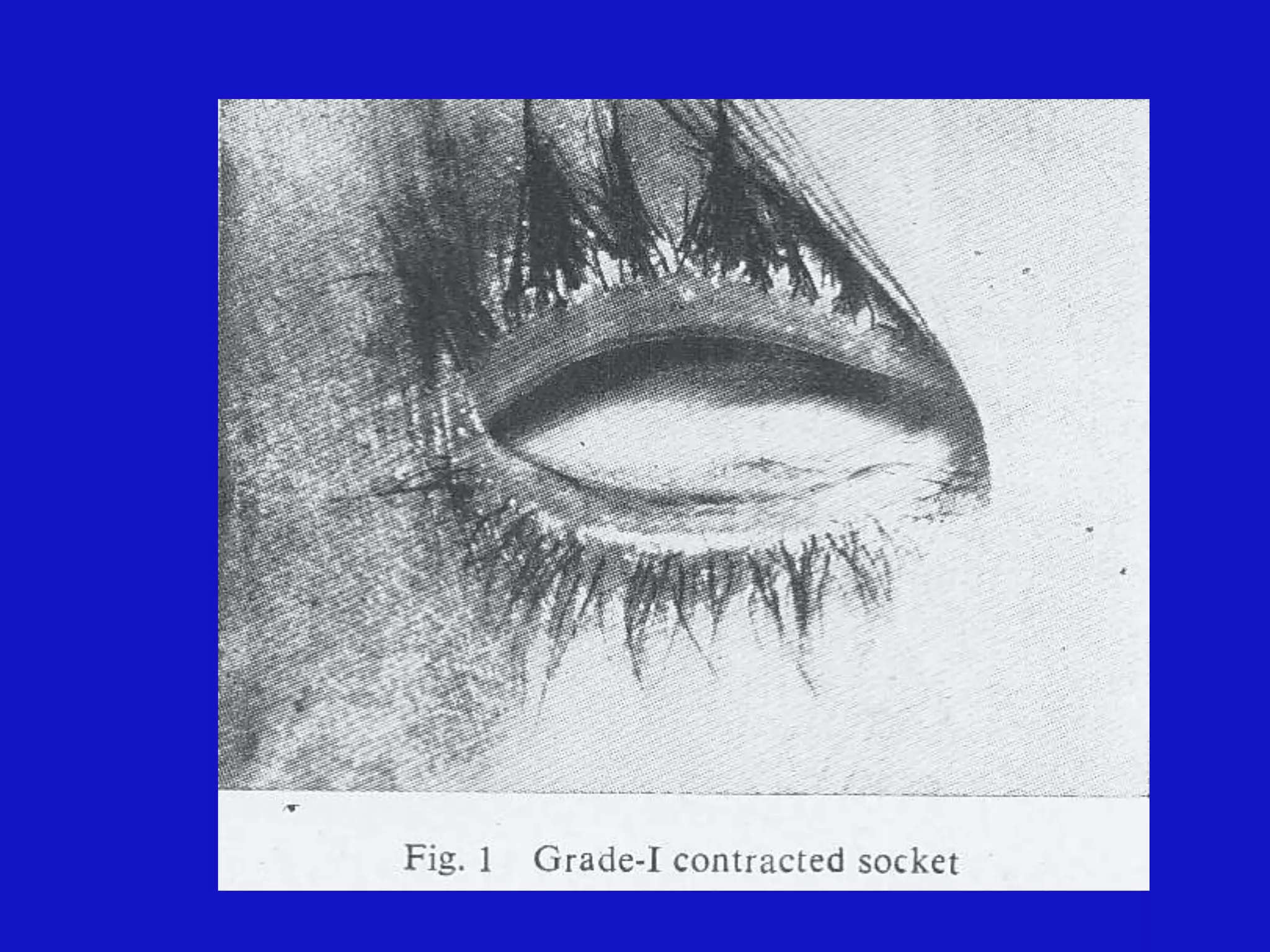
Grade-I: Socket is characterized by the shallow lower fornix or
shelving of the lower fornix. Here the lower fornix is
converted into a downwards sloping shelf which pushes the
lower lid down and out, preventing retention of a artificial eye
• Frequently there is shallow lower fornix and
deep upper fornix resulting in upward
migration of the prosthesis.
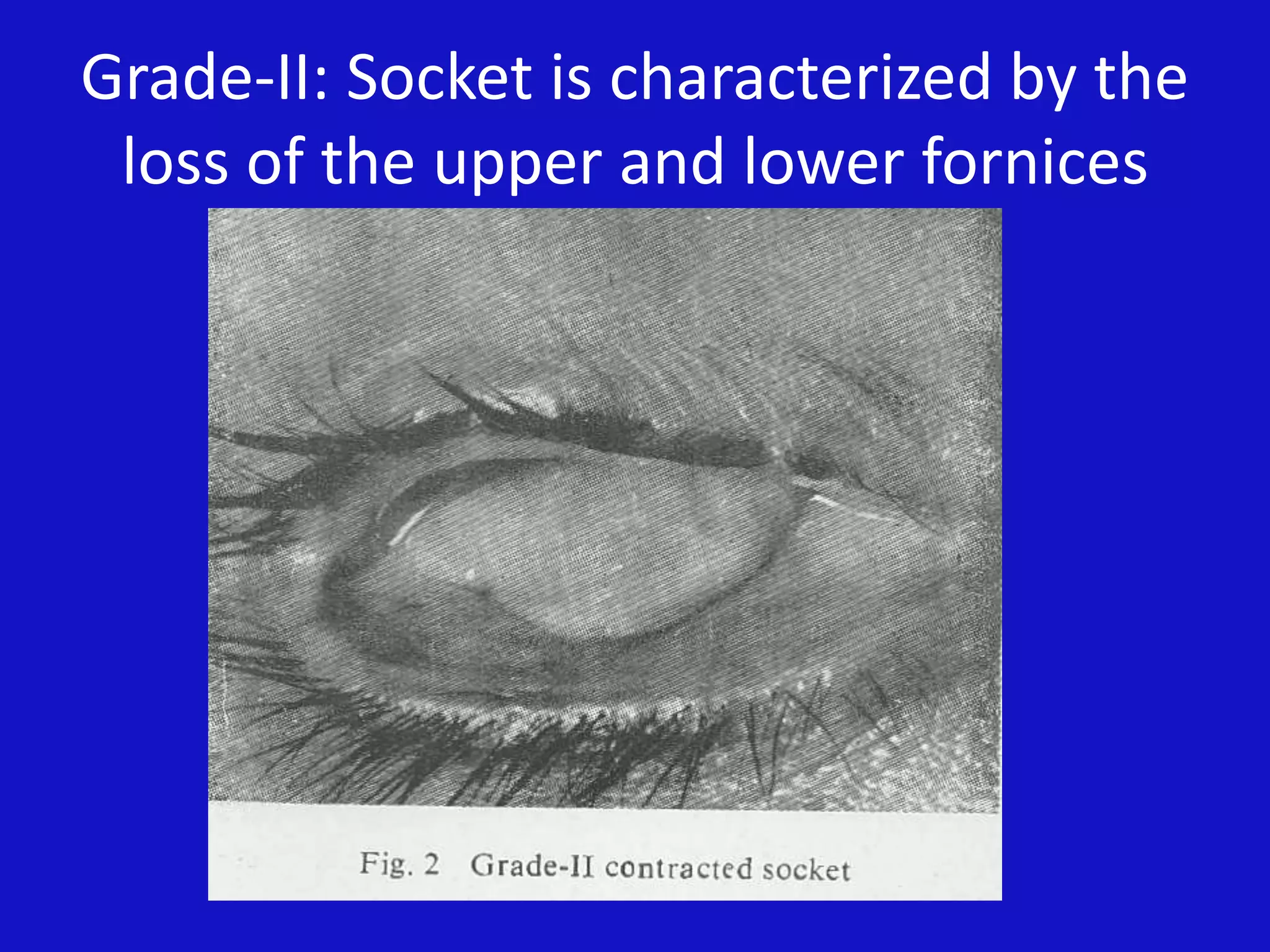
Grade-II: Socket is characterized by the
loss of the upper and lower fornices
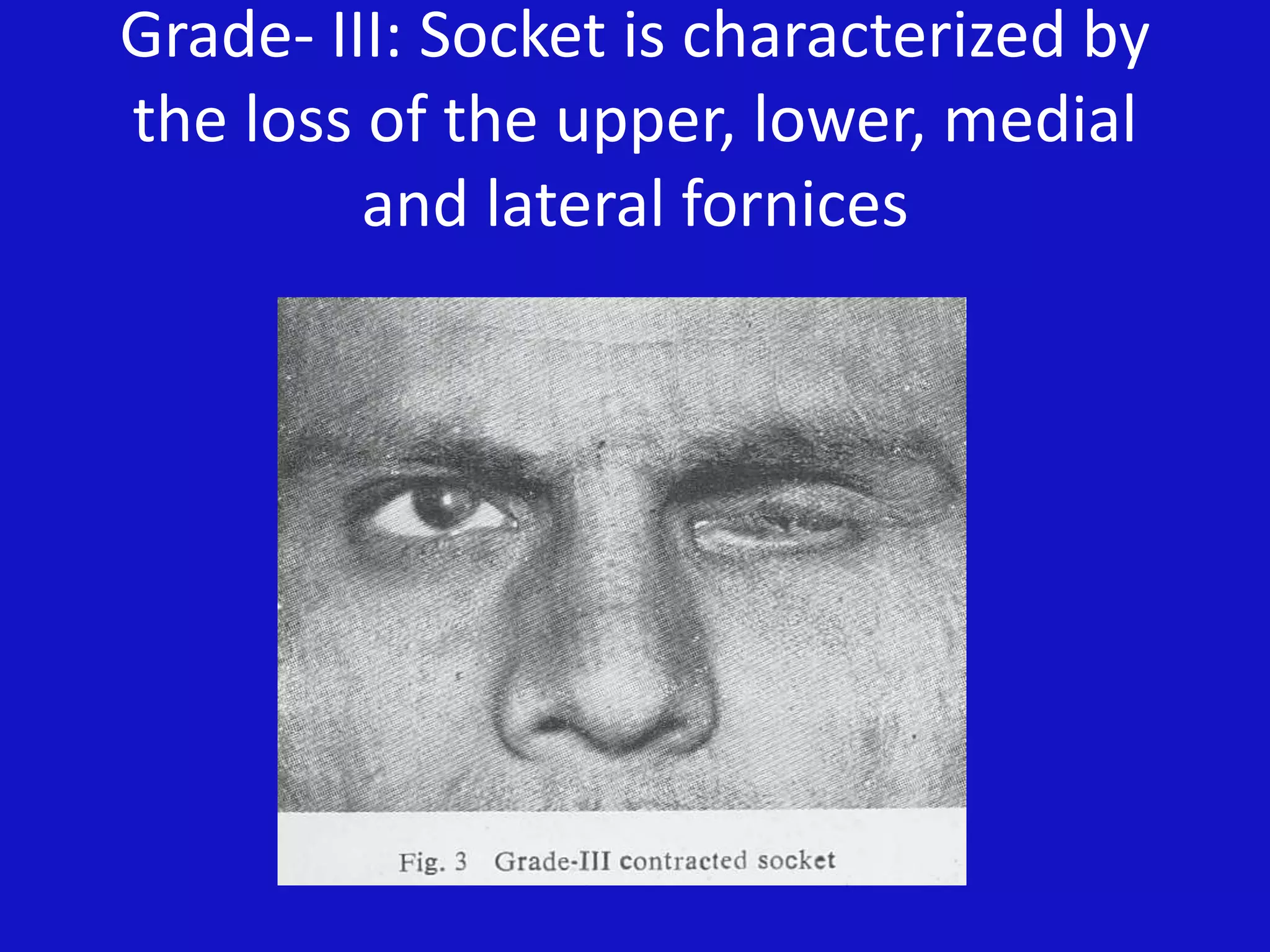
Grade- III: Socket is characterized by
the loss of the upper, lower, medial
and lateral fornices
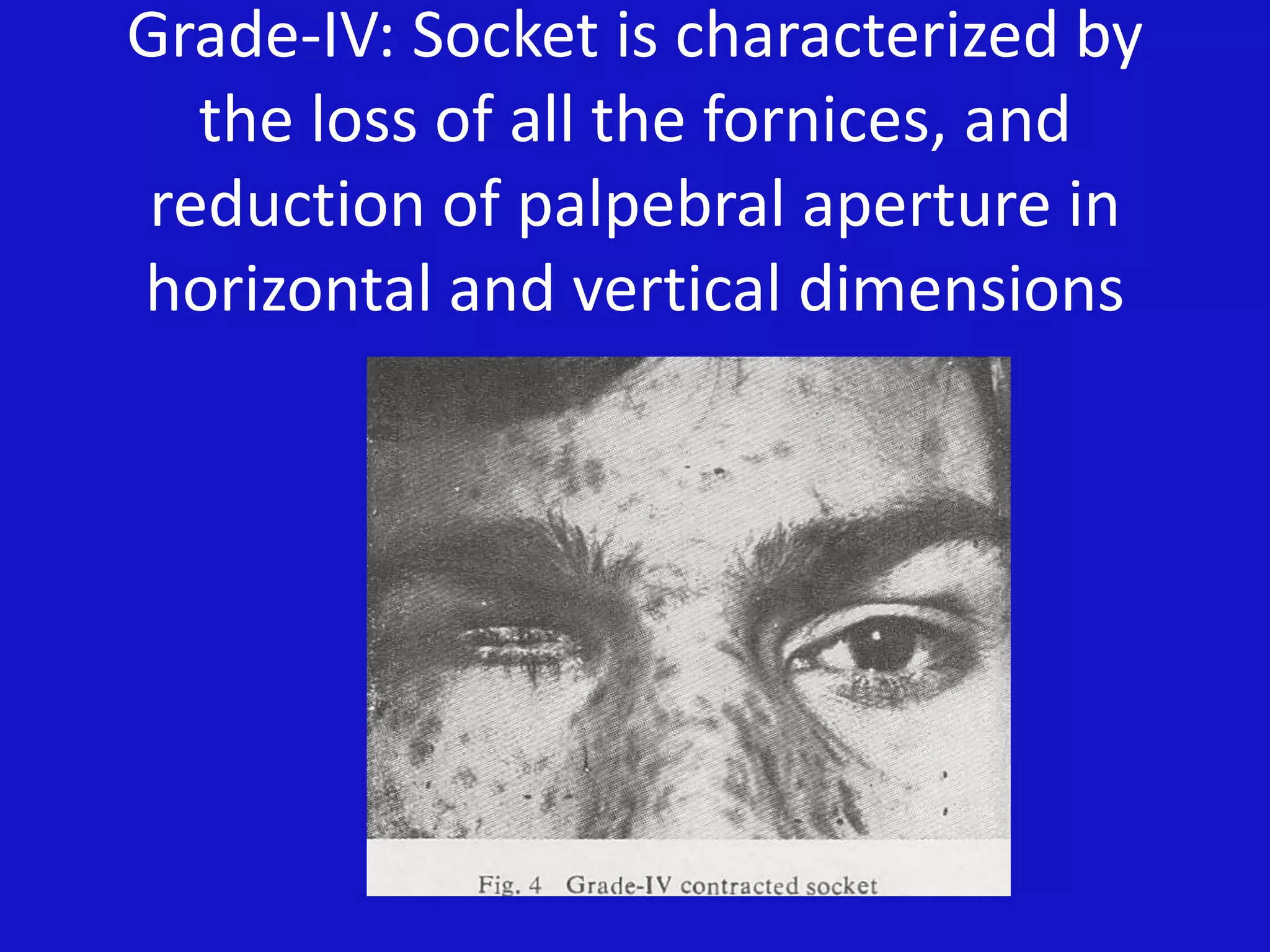
Grade-IV: Socket is characterized by
the loss of all the fornices, and
reduction of palpebral aperture in
horizontal and vertical dimensions
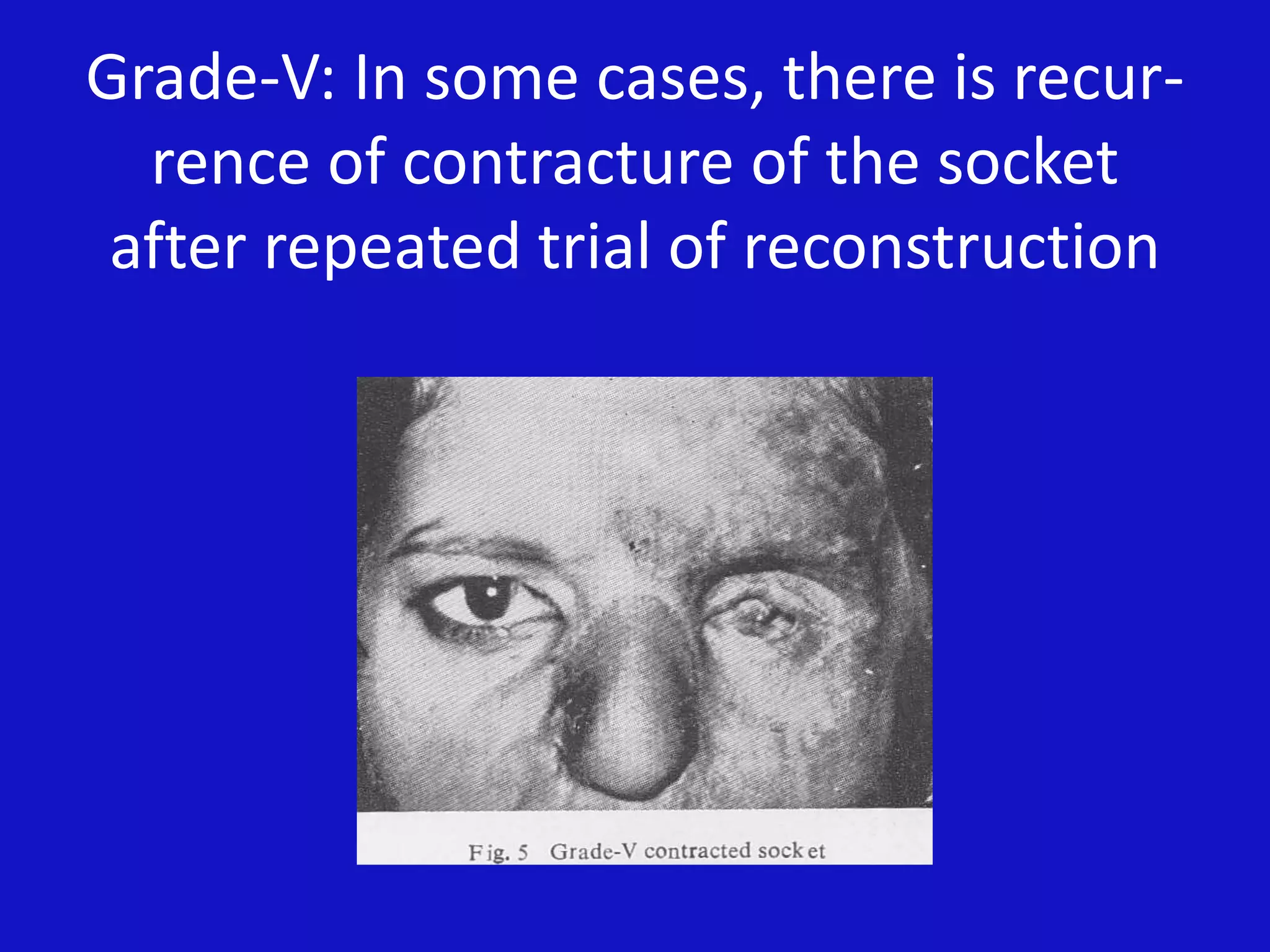
Grade-V: In some cases, there is recur-
rence of contracture of the socket
after repeated trial of reconstruction
Aims of reconstruction
• To establish stable fornices by increasing the
surface area by (hard palate ,oral mucosal,skin
graft) and if necessary by increasing size by
orbital implant.
• The ocular prostheses should be light and take
its support from infraorbital rim not from the
lids.
Prevention
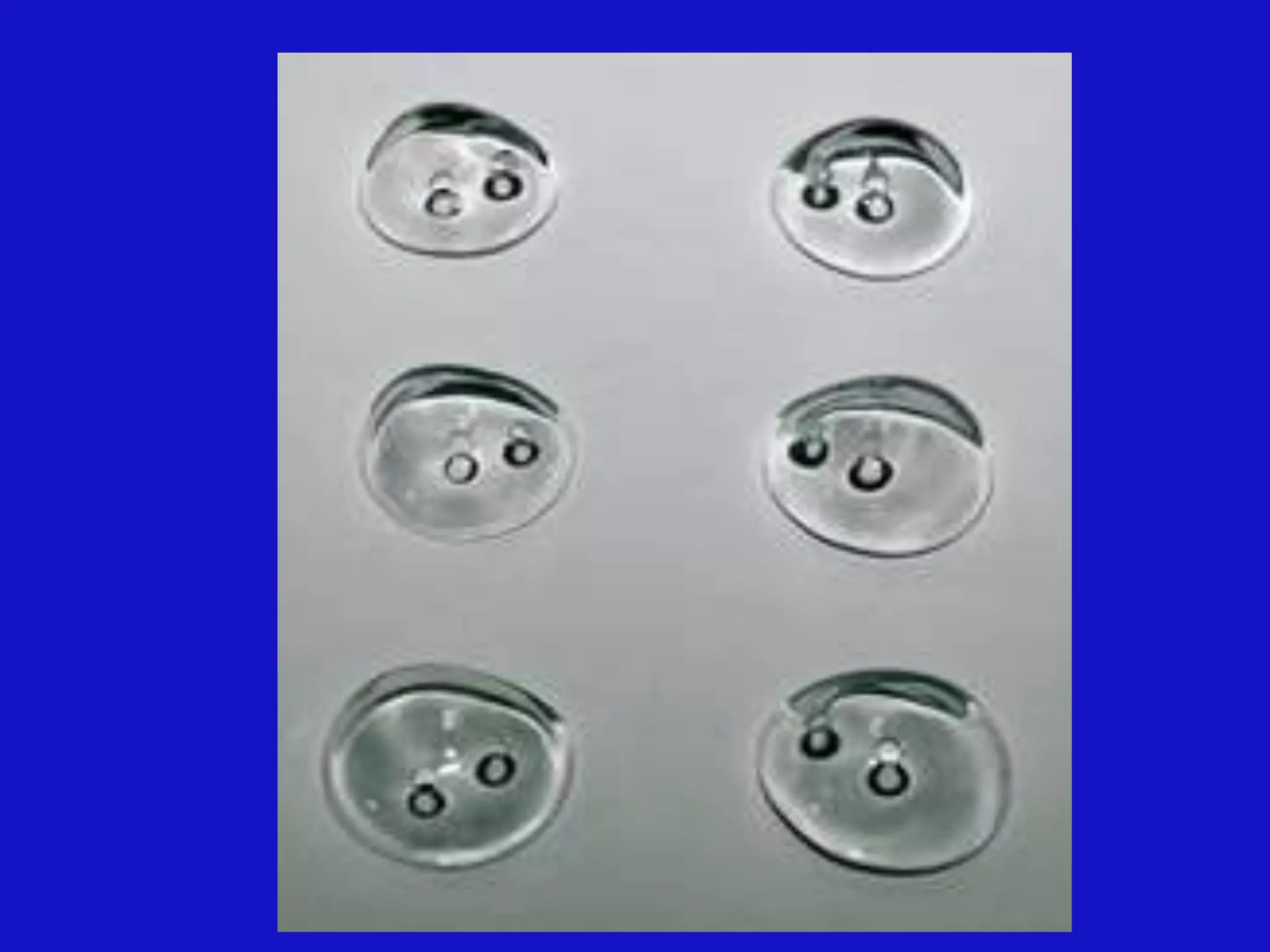
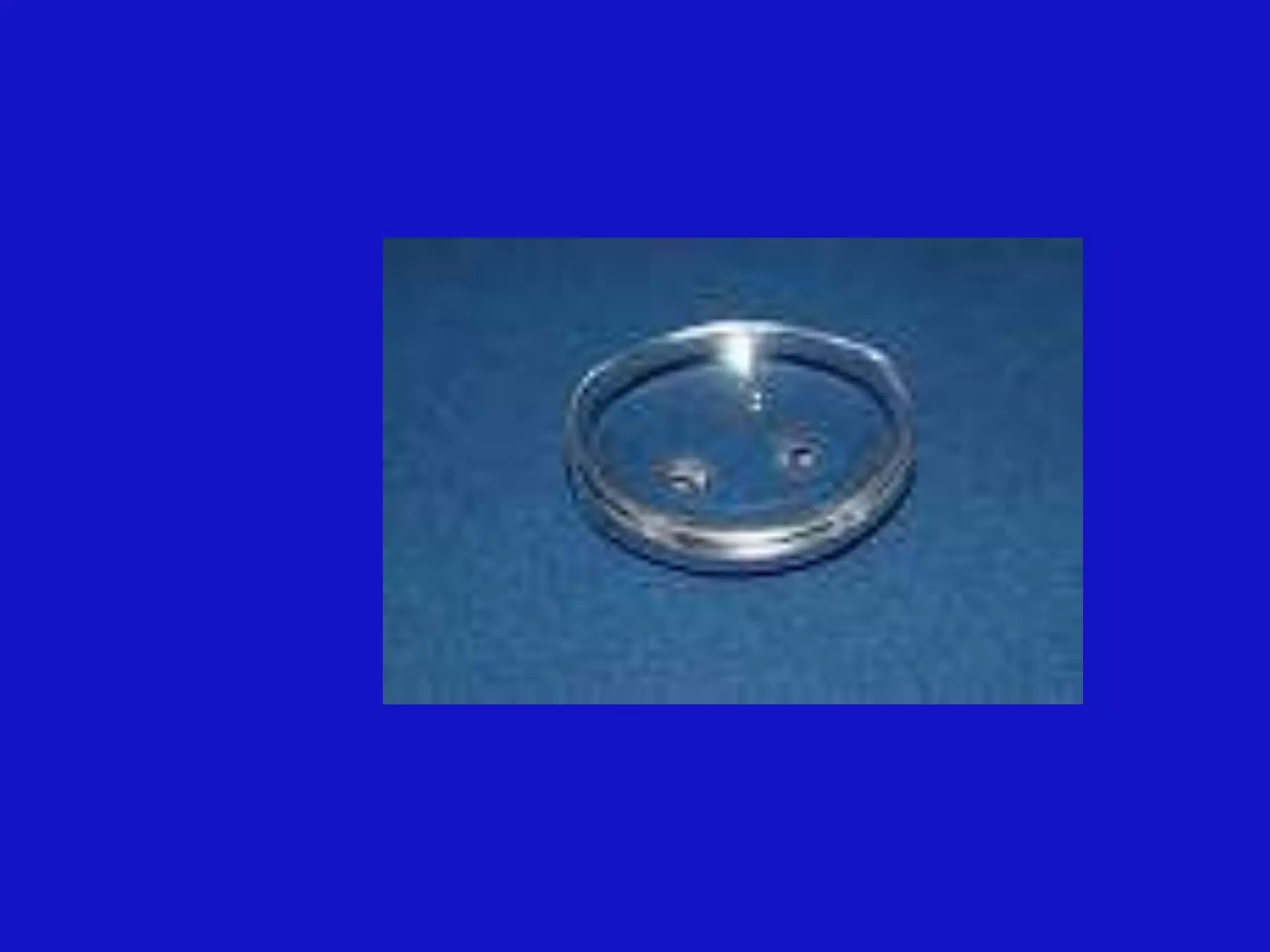
• By use of conformer made by ocularist placed
inside orbit to help support the growth of eye
socket and bones in the face.
• the conformer used during healing for about 6
weeks then ocular shell prosthesis used there
after.
Types of ocular prosthesis
• Spherical or oval
• Stock or custom made
• Porous or non porous
• Chemical make up
• Presence or absence of motility post.
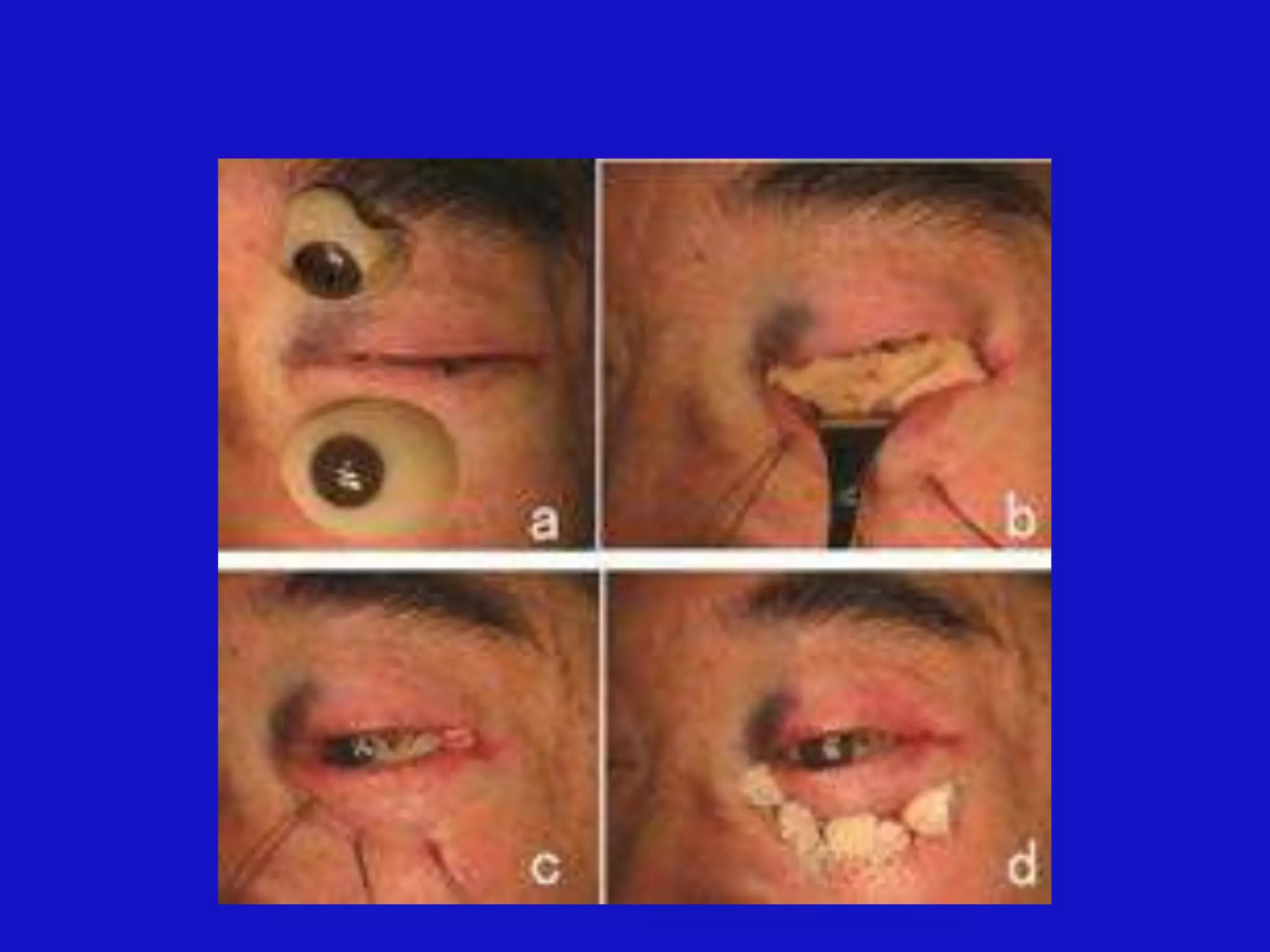
Surgical principle
• First : obtain adequate palpepral aperture size
(canthoplasty may be needed in grade3,4,5)
• Second : create adequate fornixes (lower,upper,lateral)
insicion central in grade 2 while it can be at inferior
position in grade 1.
• Third : perfect lining of the created fornix (hard palate
,oral mucosal,skin graft ,amniotic membrane)
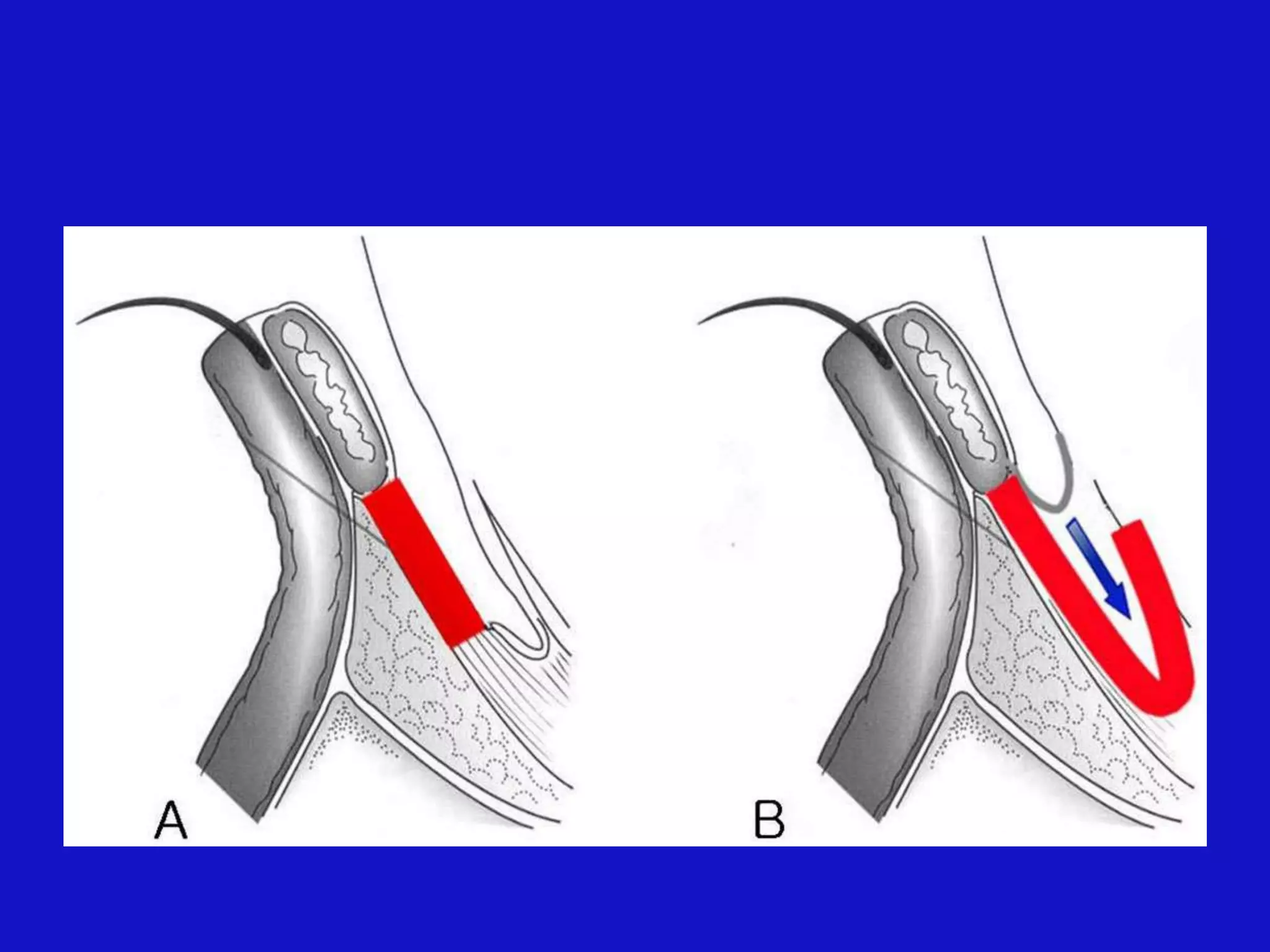
• Fourth be sure that the fornix created supported by
orbital bony rim to create a stable and deep lower
fornix, the lower edge of the graft should be sutured to
the inferior orbital bone rim using anchor sutures .
• Fifth: the conformer used during healing for
about 6 weeks then ocular shell prosthesis
used there after.
• Sixth : central temporary tarsorrhaphy may be
used.
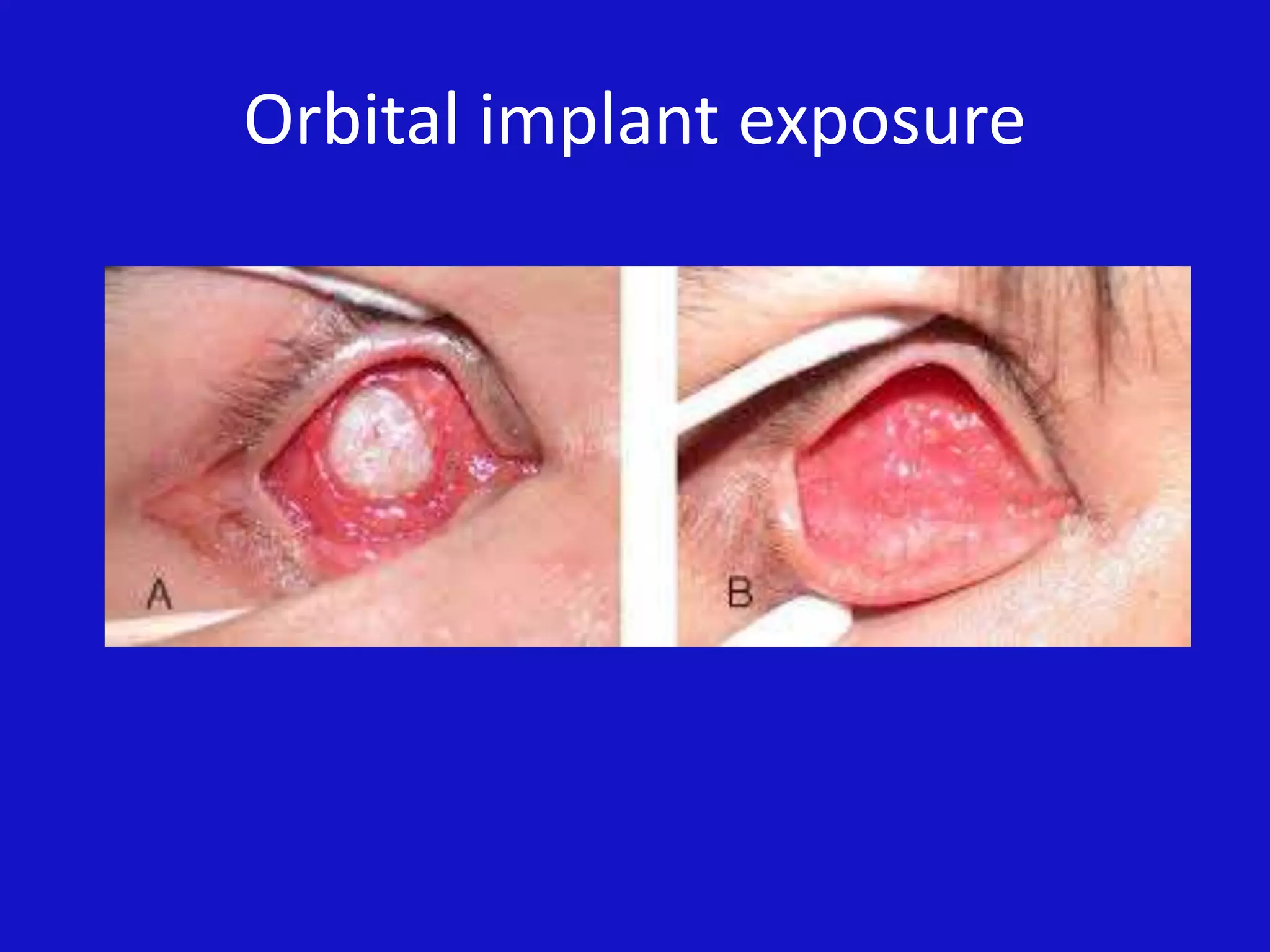
Orbital implant exposure
• One of the most important aspect of eye
socket reconstruction can present with or
without socket contracture.
Orbital implant exposure
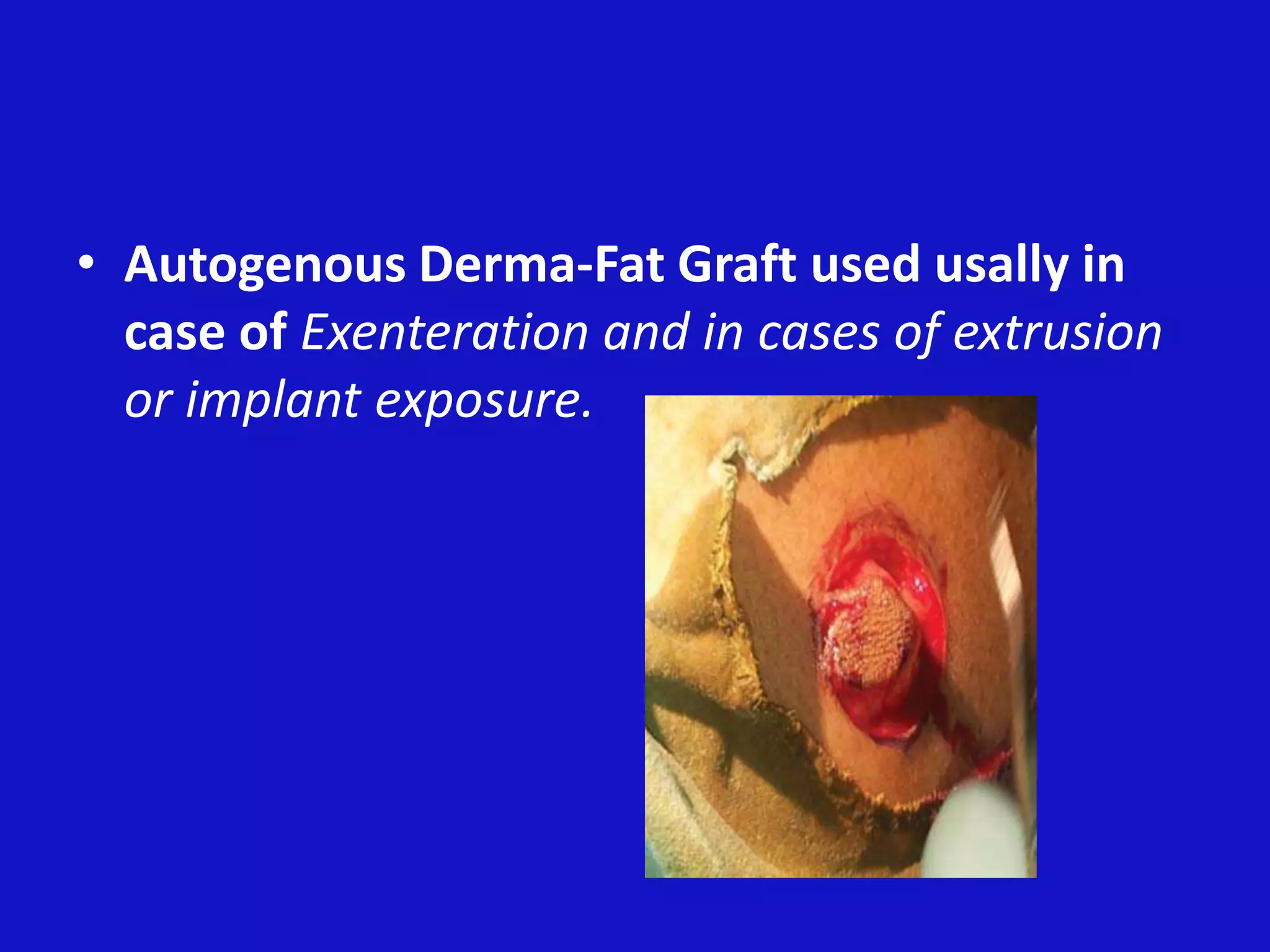
• Autogenous Derma-Fat Graft used usally in
case of Exenteration and in cases of extrusion
or implant exposure.
The extraocular muscles and conjunctiva is
sutured into the border of the DFG
Contracted eye socket reconstruction

Contracted eye socket reconstruction

  • 1.
  • 2.
    Questions to beanswered • What is the eye socket? • What is the common causes for enucleation? • What is the contracture of socket? • What cause that? • how to prevent it? • Aims of surgery? • Types of surgery? • Types of implant?
  • 3.
    • Enucleation isthe removal of the eye that leaves the eye muscles and remaining orbital contents intact. • Exenteration – removal of the contents of the eye socket, including the eyeball, fat, muscles, and other adjacent structures of the eye.
  • 4.
    • Tenon's capsulethin membrane which envelops the eyeball from the optic nerve to the limbus, separating it from the orbital fat and forming a socket in which it moves, In front it adheres to the conjunctiva. • After enucleation orbital implant iserted to the Tenon's capsule in order to keep the orbital size and to keep eye animation .
  • 7.
    The term Eyesocket is refer to: • Eyelids • Conjunctival fornices • Orbital structures(bony cavity and soft tissues)
  • 8.
    Common causes requiringsocket reconstruction • Congenital (anophthalmia ,microphthalmia) • Trauma • Tumour • scarring
  • 9.
    contracture of socket Itrefer to : • extensive loss of conjunctiva surface area • deep scar formation • shrinkage of orbital fat • conjunctiva fornices contracture.
  • 10.
    Causes of contractureof socket • irradiation of the socket as after enucleation in some cases of retinoblastoma. • severe socket infections. • faulty or non wearing of the artificial eye. • keloid like mass formation in the socket. • tissue loss due to injury. • scarring of the conjunctiva due to various factors(allergy for ex.)
  • 11.
    Main compliants The mainpresenting complaint : • story of a gradually increasing difficulty in retaining the prostheses. • the patients are not satisfied with the cosmetic appearance.
  • 12.
    Preoperative assessment the contractedsockets should be examined clinically and microbiologically. History :In every case, mode, circumstances and duration of the eye loss, and subsequent problems with the prostheses . The socket should be examined for fibrous bands, condition of the various fornices and the state of the conjunctiva.
  • 13.
    • Never forgetto Assess the prosthesis shape and size . • Look for orbital implant exposure.
  • 18.
    Grades of contractedsockets. • The soft tissue sockets were divided into five grades for the sake of convenience in management of contracted sockets. Grade-0: Socket is lined with the healthy conjunctiva and has deep and well formed fornices. Grade-I: Socket is characterized by the shallow lower fornix or shelving of the lower fornix. Here the lower fornix is converted into a downwards sloping shelf which pushes the lower lid down and out, preventing retention of a artificial eye
  • 20.
    • Frequently thereis shallow lower fornix and deep upper fornix resulting in upward migration of the prosthesis.
  • 21.
    Grade-II: Socket ischaracterized by the loss of the upper and lower fornices
  • 22.
    Grade- III: Socketis characterized by the loss of the upper, lower, medial and lateral fornices
  • 23.
    Grade-IV: Socket ischaracterized by the loss of all the fornices, and reduction of palpebral aperture in horizontal and vertical dimensions
  • 24.
    Grade-V: In somecases, there is recur- rence of contracture of the socket after repeated trial of reconstruction
  • 25.
    Aims of reconstruction •To establish stable fornices by increasing the surface area by (hard palate ,oral mucosal,skin graft) and if necessary by increasing size by orbital implant. • The ocular prostheses should be light and take its support from infraorbital rim not from the lids.
  • 27.
    Prevention • By useof conformer made by ocularist placed inside orbit to help support the growth of eye socket and bones in the face. • the conformer used during healing for about 6 weeks then ocular shell prosthesis used there after.
  • 30.
    Types of ocularprosthesis • Spherical or oval • Stock or custom made • Porous or non porous • Chemical make up • Presence or absence of motility post.
  • 31.
    Surgical principle • First: obtain adequate palpepral aperture size (canthoplasty may be needed in grade3,4,5) • Second : create adequate fornixes (lower,upper,lateral) insicion central in grade 2 while it can be at inferior position in grade 1. • Third : perfect lining of the created fornix (hard palate ,oral mucosal,skin graft ,amniotic membrane) • Fourth be sure that the fornix created supported by orbital bony rim to create a stable and deep lower fornix, the lower edge of the graft should be sutured to the inferior orbital bone rim using anchor sutures .
  • 33.
    • Fifth: theconformer used during healing for about 6 weeks then ocular shell prosthesis used there after. • Sixth : central temporary tarsorrhaphy may be used.
  • 36.
    Orbital implant exposure •One of the most important aspect of eye socket reconstruction can present with or without socket contracture.
  • 37.
  • 38.
    • Autogenous Derma-FatGraft used usally in case of Exenteration and in cases of extrusion or implant exposure.
  • 39.
    The extraocular musclesand conjunctiva is sutured into the border of the DFG