The Anophthalmic Socket
Dr. Niwar Ameen
Duhok Eye Hospital
2018
Definition
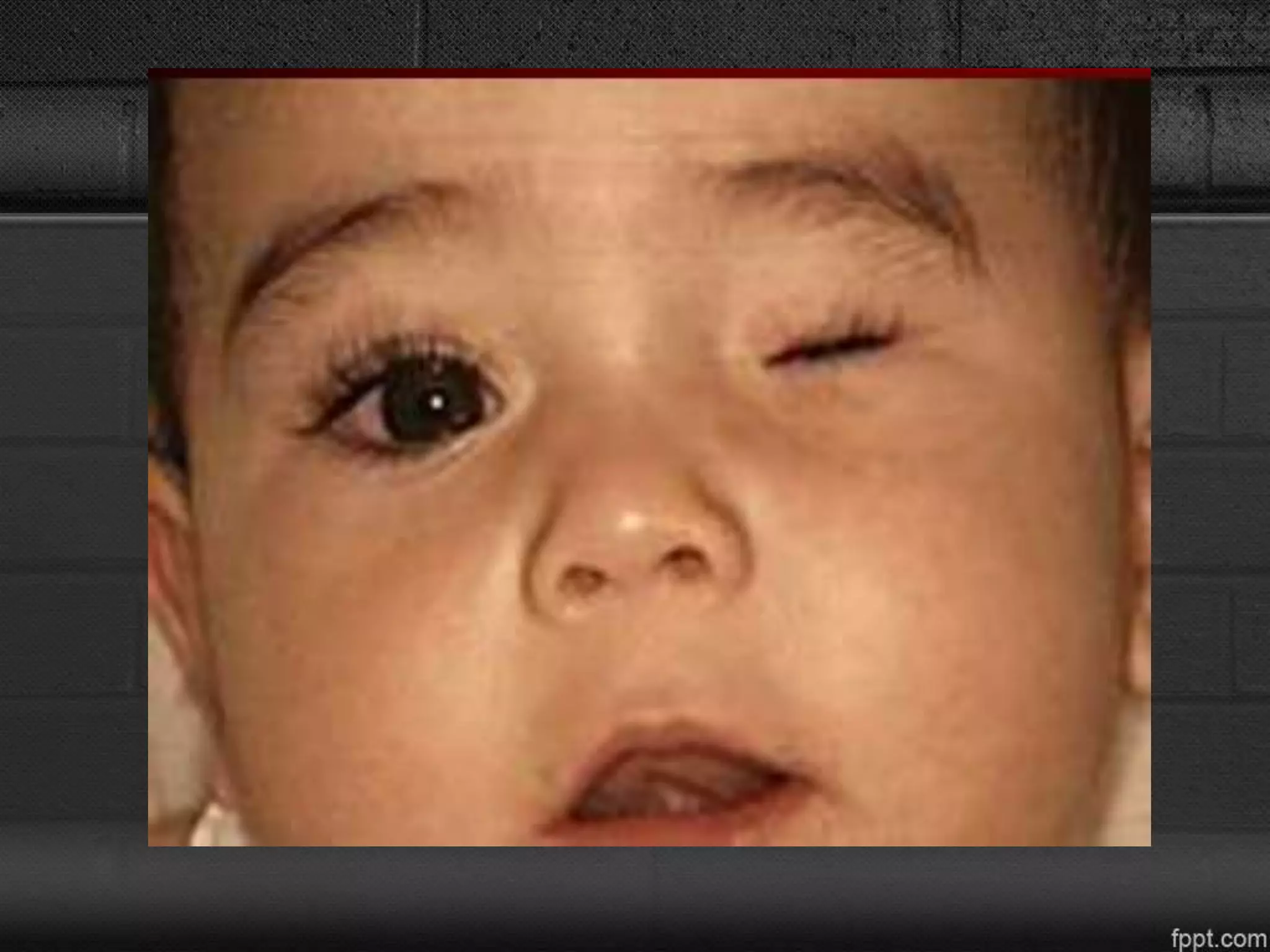
It is an orbit that is completely lack the eye
globe or contains remnants of it with other
orbital soft tissues, rarely congenital but
usually is acquired. The most common
cause is an enucleation of the globe.
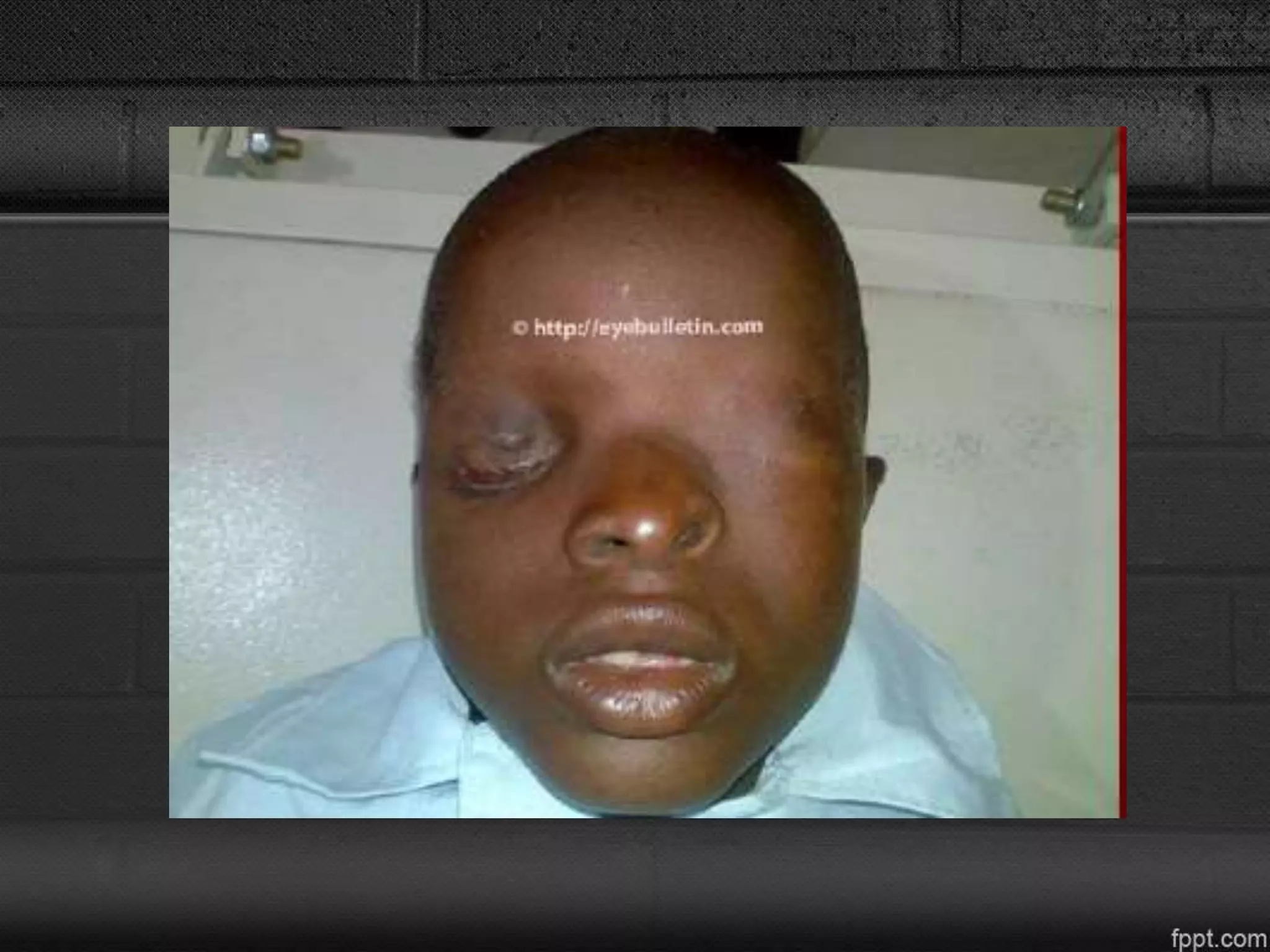
ANOPHTHALMIA
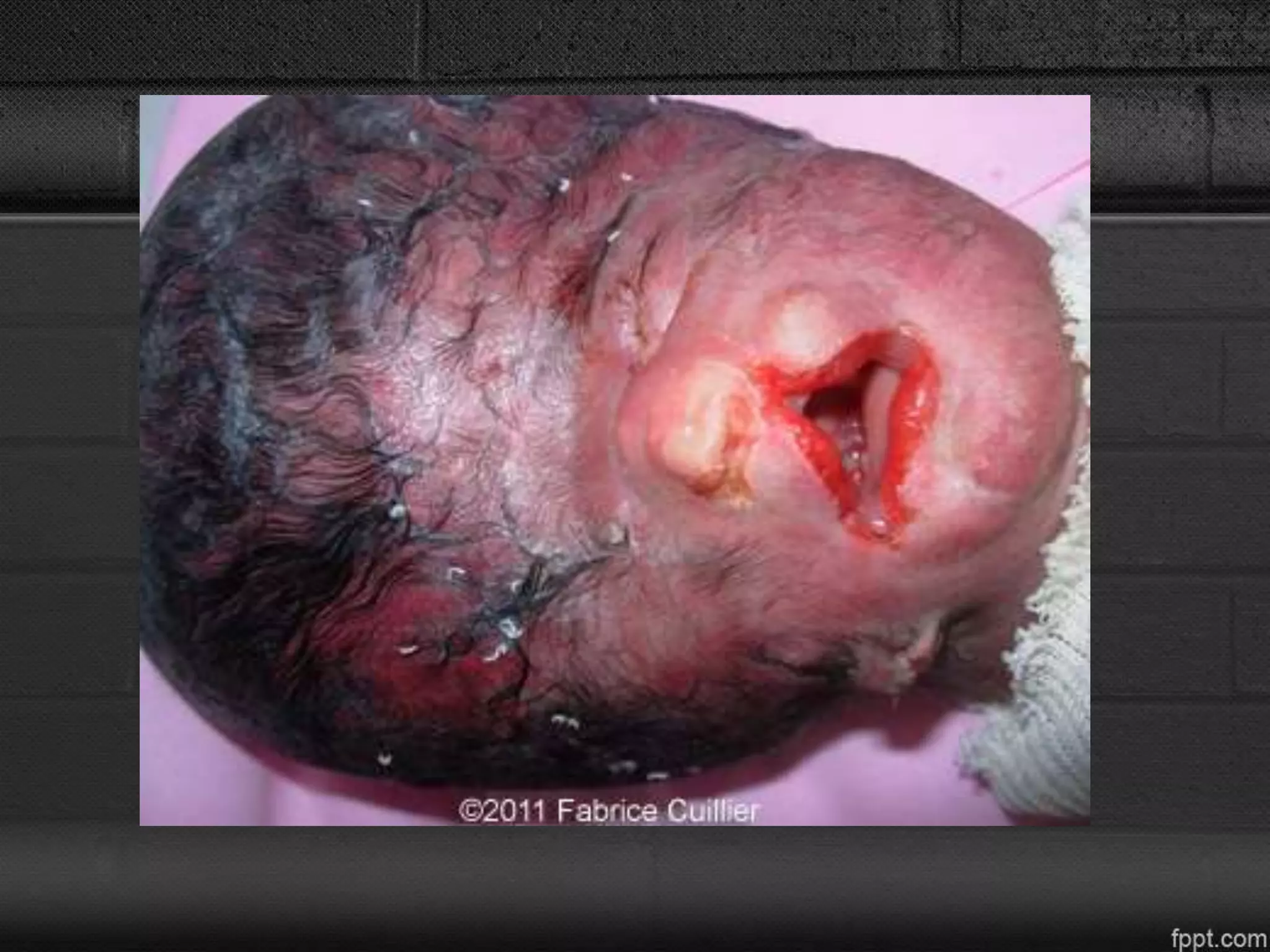
• True anophthalmia is defined by Duke-Elder as
a total absence of tissues of the eye. It could be:
• Congenital
• Acquired
Congenital
• Primary anophthalmia is rare and usually bilateral
• Secondary anophthalmia is rare and lethal
• Consecutive anophthalmia presumably results from a
secondary degeneration of the optic vesicle.
• Features
1- orbits are small
2- hypoplastic eyelids and orbital adnexal structures
• Because orbital development is dependent on the size
and growth of the globe
Acquired
Due to
 Enucleation
 Exenteration
 Evisceration
What is the purpose of
removing an eye?
• Pain free
• Saving the fellow eye
• Saving the life
• Cosmetic issues and comfort
What to do prior to remove the
eye?
Discuss the following
• The procedure with patient and relatives
(advantages & disadvantages)
• Rehabilitation process
• Expected consequences such as loss of some
depth perception and VFs which lead to
occupational limitation.
• Reassurance and psychological support.
• Leave the last decision for the
patient
• Do not forget consent sign
How to chose the appropriate
procedure?
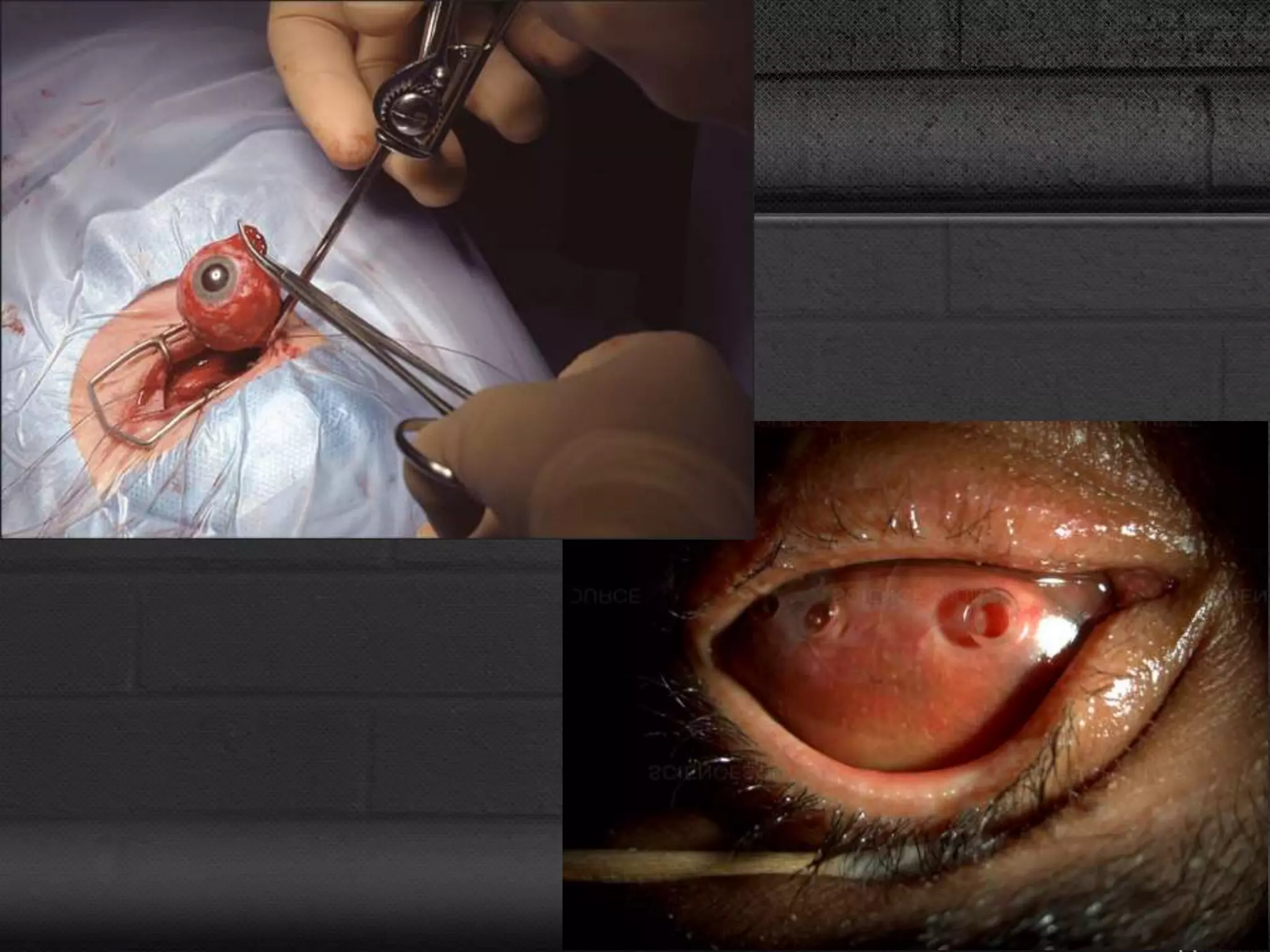
Enucleation
Involves removal of the entire globe
while preserving other orbital
tissues.
Indications
1. Primary IO tumor most common
Retinoblastoma & choroidal melanoma
2. Severely traumatized eyes to ↓ risk of SO
3. Blind painful eye e.g, end stage NV
glaucoma, chronic uveitis, previous
traumatized eye
Advantages?
• Provide complete histologic examination of
globe and optic nerve
• Reduces the risk of SO of the fellow eye
Disadvantages?
• Excessive disruption of orbital anatomy
• Less mobility of ocular prosthesis
• Technically difficult procedure
• High rate of migration and extrusion
• Reoperation may be required
Guidelines for Enucleation
• an orbital implant of sufficient volume centered within the
orbit
• a socket lined with conjunctiva or mucous membrane
with fornices deep enough to hold a prosthesis
• eyelids with normal appearance and adequate tone to
support a prosthesis
• good transmission of motility from the implant to the
overlying prosthesis
• a comfortable ocular prosthesis that looks similar to the
normal eye
Evisceration
Evisceration is the removal of the intraocular
contents (lens, uvea, retina, vitreous, and
sometimes cornea), leaving the sclera and
extraocular muscles intact.
Indications
• Evisceration should be considered only if
the presence of an intraocular malignancy
has been ruled out, as for painful blind
eye, endophalmitis and traumatized eye.
Advantages
• Less disruption of orbital anatomy.
• Good motility of the prosthesis.
• A technically simpler procedure.
• Lower rate of migration, extrusion, and
reoperation.
Disadvantages?
• Not every patient is a candidate. Evisceration
should never be performed if an ocular tumor is
suspected.
• Severe phthisis bulbi is a contraindication to
evisceration.
• Theoretical increased risk of sympathetic
ophthalmia.
• Evisceration affords a less complete specimen
for pathologic examinations.
Orbital Implants
1. To replace the lost volume
2. Maintain the structure of the orbit
3. Imparts motility to overlying ocular
prosthesis
Types of implants?
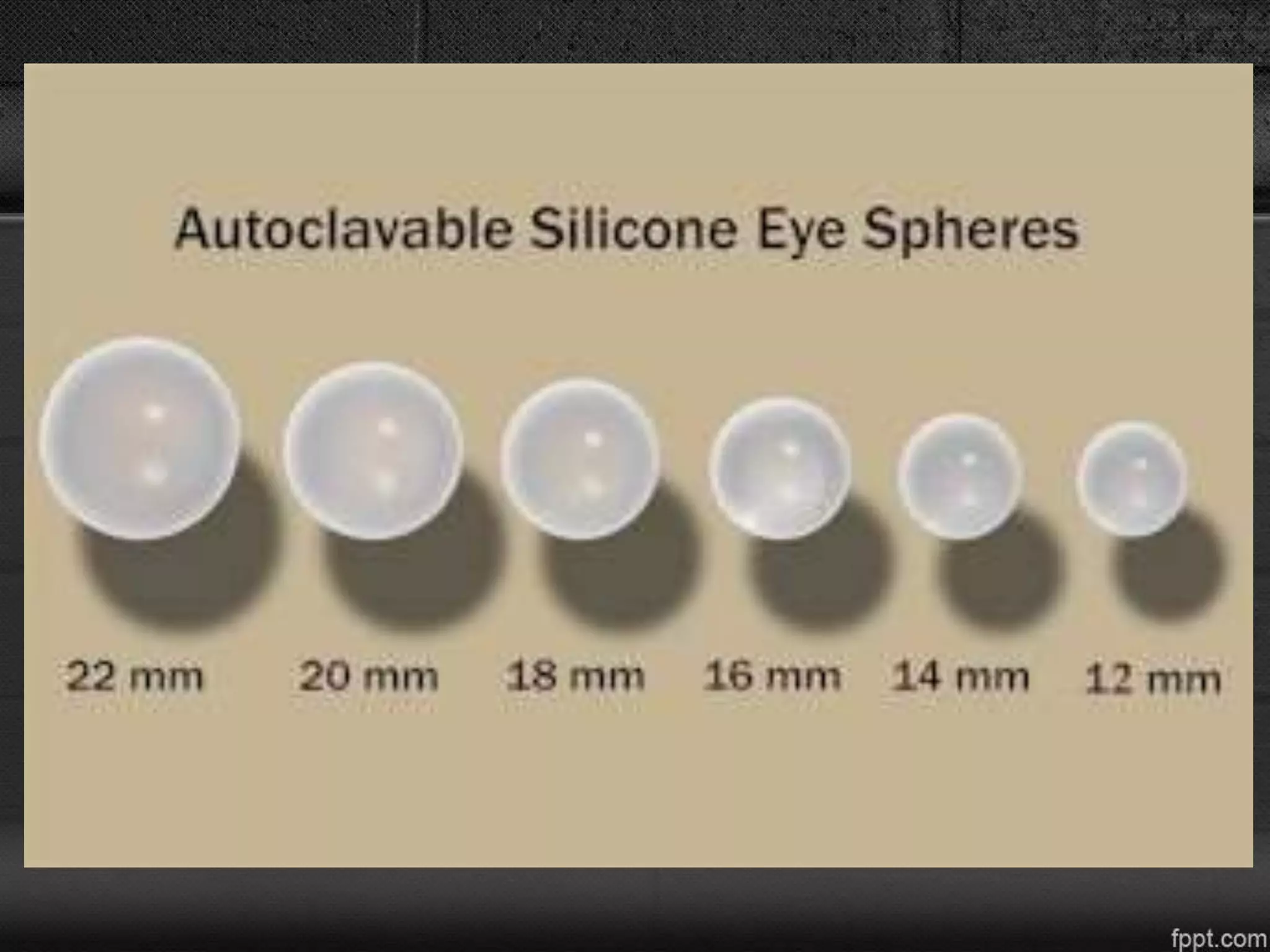
1. Spherical implants
 Inert materials like, silicone, glass, methylmethacrylate.
 Advantages:
• Provide comfort
• Low rates of extrusion.
• Cost-effective
 Disadvantages:
• Poor motility
• Implant migration
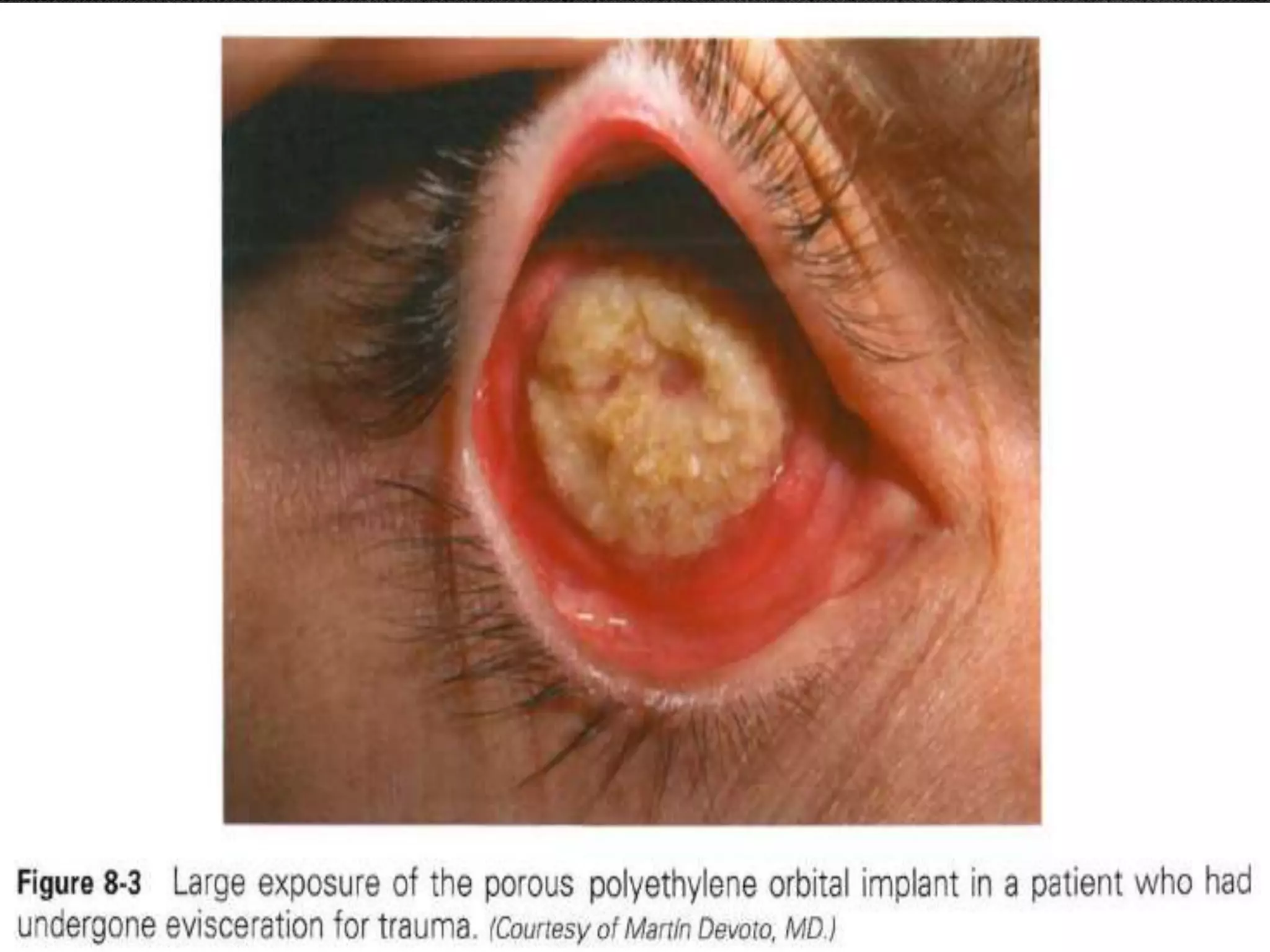
 Biointergrated like, hydroxyapatite or porous
polyethylene
 Advantages:
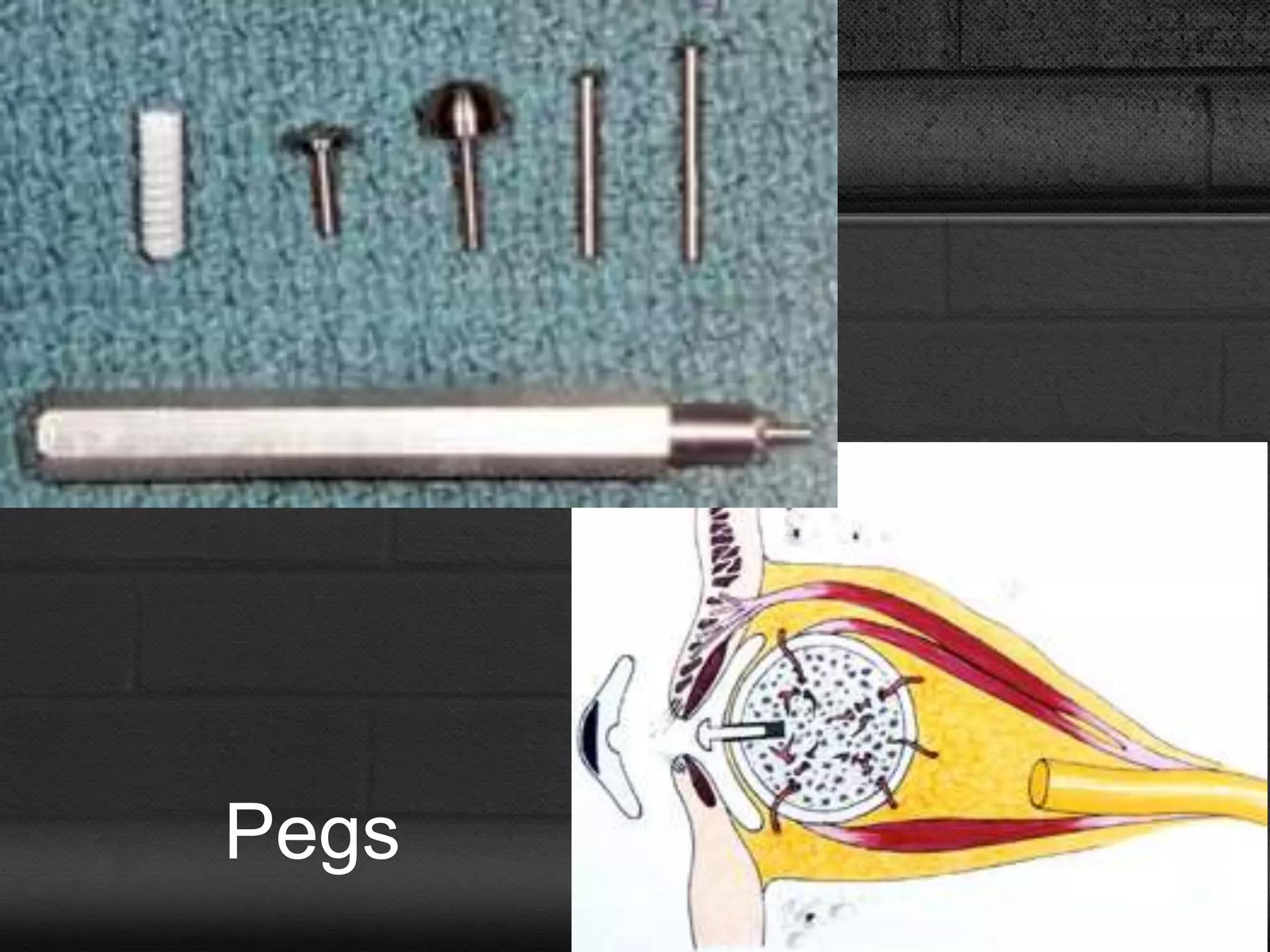
• Provide better ocular motility by peg implantation
6-12 months later of enucleation
 Disadvantages:
• Inflammation
• Exposure
Porous polyethylene orbital implant
Pegs
Guidelines for implantation?
• Implanted at the time of surgery (Evisceration, Enucleation)
• Within Tenon capsule or in muscle cone behind post Tenon
caps.
• Spheres may be Covered by sclera (homologous or cadaveric)
or autogenous fascia as a barrier to migration and extrusion.
• EOMs sutured to their normal anatomical location either
directly to the implant or to the sclera or fascia.
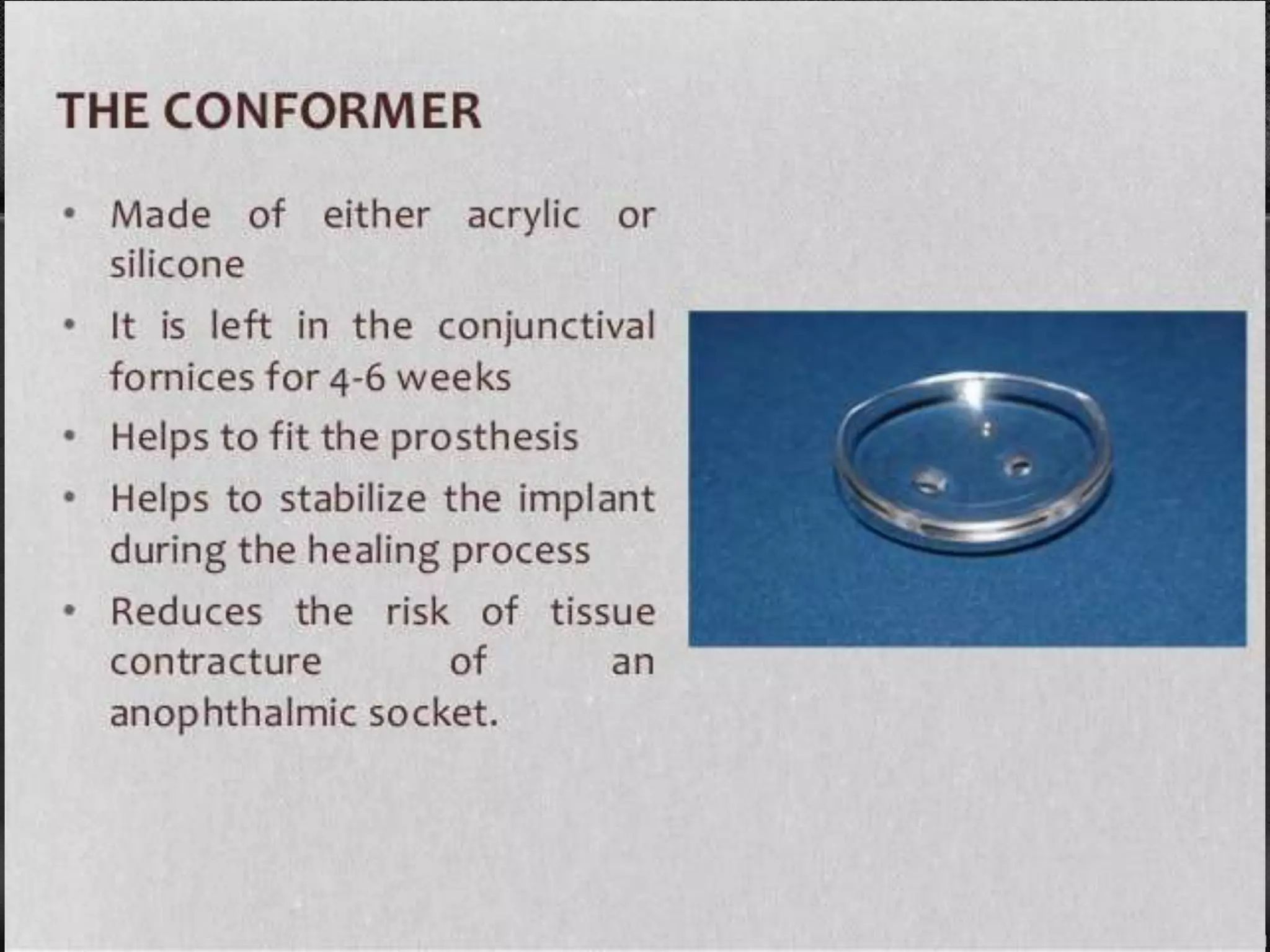
• Following enucleation surgery, an acrylic or silicone conformer
is placed in the conjunctival fornices to maintain the
conjunctival space that will eventually accommodate the
prosthesis.
Ocular Prosthesis
• An ocular prosthesis is fitted within 4-8
weeks after enucleation or evisceration.
• The ideal prosthesis is custom fitted to the
exact dimensions of the orbit after
postoperative edema has subsided.
Left ocular prosthesis
Exenteration
• Exenteration involves the removal of the
soft tissues of the orbit, including the
globe.
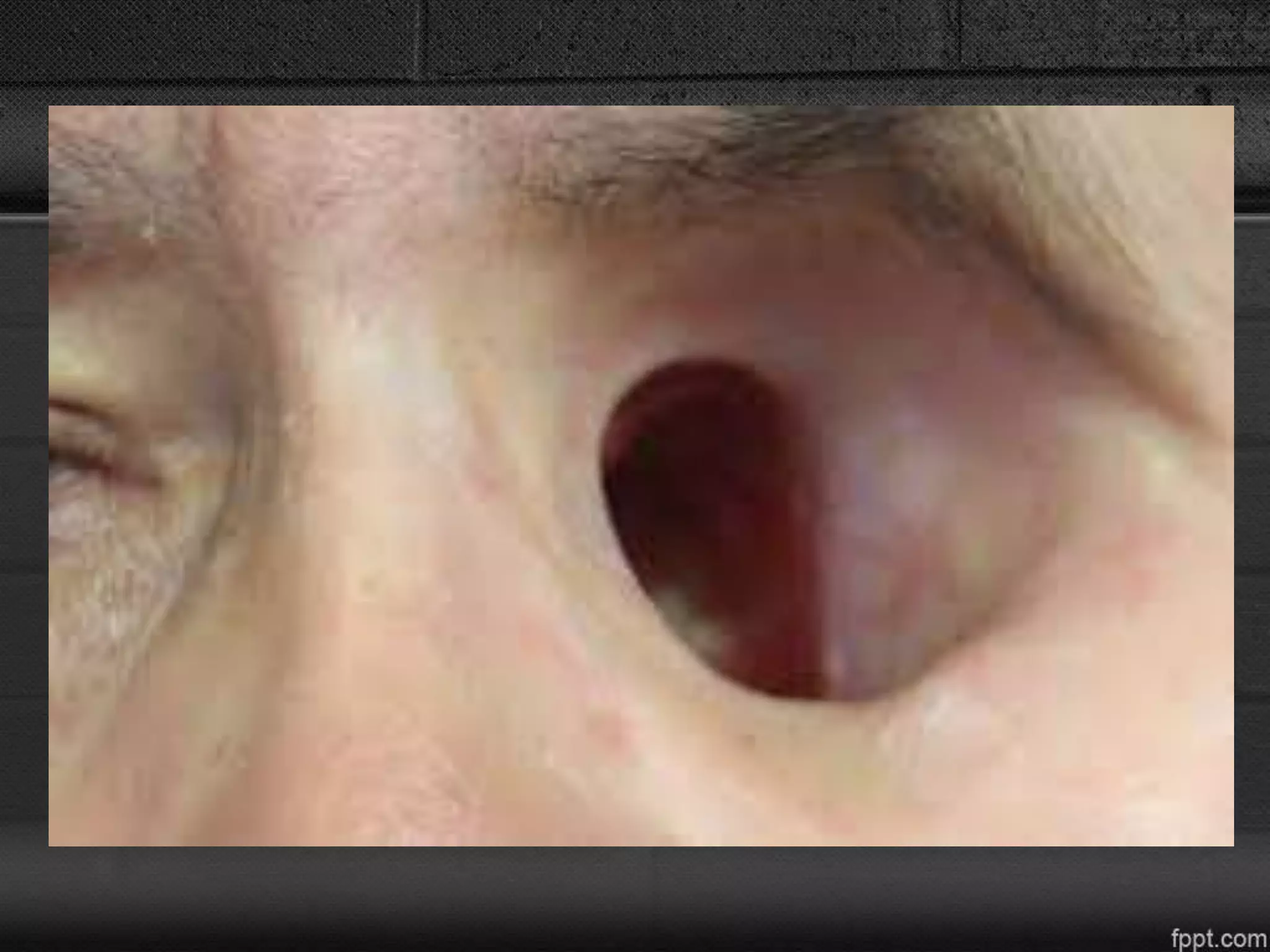
When exenteration should be
considered ?
In the following situations
• Destructive tumors extending into the orbit from the
sinuses, face, eyelids, conjunctiva, or intracranial space.
• Intraocular melanomas or retinoblastomas that have
extended outside the globe.
• Malignant epithelial tumors of the lacrimal gland.
• Sarcomas and other primary orbital malignancies that do
not respond to nonsurgical therapy.
• Fungal infection. Subtotal or total exenteration may be
necessary for the management of orbital zygomycosis.
Types of Exenteration ?
• Subtotal
The eye and adjacent intraorbital tissues are removed such that
the lesion is locally excised (leaving the periorbita and part or all
of the eyelids). This technique is used for some locally invasive
tumors, for debulking of disseminated tumors, or for partial
treatment in selected patients.
• Total
All intraorbital soft tissues, including periorbita, are removed, with
or without the skin of the eyelids.
• Extended
All intraorbital soft tissues are removed, together with adjacent
structures (usually bony walls and sinuses).
Anophthalmic Socket
Complications and
Management
1- Deep Superior Sulcus (PESS)
• Deep superior sulcus deformity is caused by decreased
orbital volume.
Rx:
1. Placement of a subperiosteal secondary implant on the
orbital floor.
2. Dermis-fat grafts may be implanted in the upper eyelid
to fill out the sulcus.
3. Replacement of the original implant with a larger
secondary implant.
2- Contracture of Fornices
• Preventing contracted fornices includes:
1. Preserving as much conjunctiva as possible and limiting dissection
in the fornices.
2. Placing extraocular muscles in their normal anatomical positions
also minimizes shortening of the fornices.
3. It is recommended that the patient wear a conformer as much as
possible postoperatively to minimize conjunctival shortening.
4. Conformers and prostheses should not be removed for periods
greater than 24 hours.
5. The prosthesis can be removed frequently and cleaned in the
presence of infection but should be replaced promptly after
irrigation of the socket.
3- Exposure and Extrusion of Implant
• Implants may extrude if placed too far forward or
if closure of anterior Tenon fascia is not
meticulous.
• Postoperative infection, poor wound healing,
poorly fitting prostheses or conformers.
• Pressure points between the implant and
prosthesis may also contribute to extrusion of
the implant.
4- Contracted Sockets
Causes of contracted sockets include
• radiation treatment
• extrusion of an enucleation implant
• severe initial injury (alkali burns or extensive lacerations)
• poor surgical techniques (excessive sacrifice or destruction of
conjunctiva and Tenon capsule; traumatic dissection within the
socket causing excessive scar tissue formation)
• multiple socket operations
• removal of the conformer or prosthesis for prolonged periods.
Rx:
• Involve incision or excision of the scarred tissues and
placement of a graft to enlarge the fornices.
• Full-thickness mucous membrane grafting is preferred
because it allows the grafted tissue to match conjunctiva
histologically. Buccal mucosal grafts may be taken from
the cheeks or from the upper lip, lower lip, or hard
palate.
5- Anophthalmic Ectropion
• Lower eyelid ectropion may result from the loosening of
lower eyelid support under the weight of a prosthesis.
• Frequent removal of the prosthesis or use of a larger
prosthesis accelerates the development of lid laxity.
• Rx: Tightening the lateral or medial canthal tendon may
remedy the situation.is
6- Anophthalmic Ptosis
Causes:
• Superotemporal migration of sphere implants,
cicatricial tissue in the upper fornix, or damage
to the levator muscle or nerve.
Rx:
• Small amounts of ptosis may be managed by
modification of the prosthesis.
• Greater amounts of ptosis require tightening of
the levator aponeurosis.
7- Lash Margin Entropion
• Lash margin entropion, trichiasis, and ptosis of
the eyelashes are common in the anophthalmic
socket.
• Contracture of fornices or cicatricial tissue near
the lash margin contributes to these
abnormalities.
• Rx: Horizontal tarsal incisions and rotation of the
lash margin may correct the problem.
8- Cosmetic Optics
• The style of frames and tinted lenses chosen for
spectacles can help camouflage residual defects
in reconstructed sockets.
• Plus (convex) lenses or minus (concave) lenses
may be placed in the glasses in front of the
prosthesis to alter the apparent size of the
prosthesis.
• Prisms in the glasses may be used to change
the apparent vertical position of the prosthesis.
References
• BCSC, Orbit, Eyelid, Lacrimal System, American
Academy of Ophthalmology, 2014 – 2015.
• Brad Bowling, Kanski’s Clinical Ophthalmology,
8th edition, 2016
• //www.ncbi.nlm.nih.gov/pmc/articles/PMC49627
61/
The End
Thanks

The anophthalmic socket

  • 1.
    The Anophthalmic Socket Dr.Niwar Ameen Duhok Eye Hospital 2018
  • 2.
    Definition It is anorbit that is completely lack the eye globe or contains remnants of it with other orbital soft tissues, rarely congenital but usually is acquired. The most common cause is an enucleation of the globe.
  • 3.
    ANOPHTHALMIA • True anophthalmiais defined by Duke-Elder as a total absence of tissues of the eye. It could be: • Congenital • Acquired
  • 4.
    Congenital • Primary anophthalmiais rare and usually bilateral • Secondary anophthalmia is rare and lethal • Consecutive anophthalmia presumably results from a secondary degeneration of the optic vesicle. • Features 1- orbits are small 2- hypoplastic eyelids and orbital adnexal structures • Because orbital development is dependent on the size and growth of the globe
  • 8.
    Acquired Due to  Enucleation Exenteration  Evisceration
  • 9.
    What is thepurpose of removing an eye?
  • 10.
    • Pain free •Saving the fellow eye • Saving the life • Cosmetic issues and comfort
  • 11.
    What to doprior to remove the eye?
  • 12.
    Discuss the following •The procedure with patient and relatives (advantages & disadvantages) • Rehabilitation process • Expected consequences such as loss of some depth perception and VFs which lead to occupational limitation. • Reassurance and psychological support.
  • 13.
    • Leave thelast decision for the patient • Do not forget consent sign
  • 14.
    How to chosethe appropriate procedure?
  • 15.
    Enucleation Involves removal ofthe entire globe while preserving other orbital tissues.
  • 16.
    Indications 1. Primary IOtumor most common Retinoblastoma & choroidal melanoma 2. Severely traumatized eyes to ↓ risk of SO 3. Blind painful eye e.g, end stage NV glaucoma, chronic uveitis, previous traumatized eye
  • 17.
    Advantages? • Provide completehistologic examination of globe and optic nerve • Reduces the risk of SO of the fellow eye
  • 18.
    Disadvantages? • Excessive disruptionof orbital anatomy • Less mobility of ocular prosthesis • Technically difficult procedure • High rate of migration and extrusion • Reoperation may be required
  • 19.
    Guidelines for Enucleation •an orbital implant of sufficient volume centered within the orbit • a socket lined with conjunctiva or mucous membrane with fornices deep enough to hold a prosthesis • eyelids with normal appearance and adequate tone to support a prosthesis • good transmission of motility from the implant to the overlying prosthesis • a comfortable ocular prosthesis that looks similar to the normal eye
  • 22.
    Evisceration Evisceration is theremoval of the intraocular contents (lens, uvea, retina, vitreous, and sometimes cornea), leaving the sclera and extraocular muscles intact.
  • 23.
    Indications • Evisceration shouldbe considered only if the presence of an intraocular malignancy has been ruled out, as for painful blind eye, endophalmitis and traumatized eye.
  • 24.
    Advantages • Less disruptionof orbital anatomy. • Good motility of the prosthesis. • A technically simpler procedure. • Lower rate of migration, extrusion, and reoperation.
  • 25.
    Disadvantages? • Not everypatient is a candidate. Evisceration should never be performed if an ocular tumor is suspected. • Severe phthisis bulbi is a contraindication to evisceration. • Theoretical increased risk of sympathetic ophthalmia. • Evisceration affords a less complete specimen for pathologic examinations.
  • 28.
    Orbital Implants 1. Toreplace the lost volume 2. Maintain the structure of the orbit 3. Imparts motility to overlying ocular prosthesis
  • 29.
    Types of implants? 1.Spherical implants  Inert materials like, silicone, glass, methylmethacrylate.  Advantages: • Provide comfort • Low rates of extrusion. • Cost-effective  Disadvantages: • Poor motility • Implant migration
  • 31.
     Biointergrated like,hydroxyapatite or porous polyethylene  Advantages: • Provide better ocular motility by peg implantation 6-12 months later of enucleation  Disadvantages: • Inflammation • Exposure
  • 32.
  • 33.
  • 34.
    Guidelines for implantation? •Implanted at the time of surgery (Evisceration, Enucleation) • Within Tenon capsule or in muscle cone behind post Tenon caps. • Spheres may be Covered by sclera (homologous or cadaveric) or autogenous fascia as a barrier to migration and extrusion. • EOMs sutured to their normal anatomical location either directly to the implant or to the sclera or fascia. • Following enucleation surgery, an acrylic or silicone conformer is placed in the conjunctival fornices to maintain the conjunctival space that will eventually accommodate the prosthesis.
  • 36.
    Ocular Prosthesis • Anocular prosthesis is fitted within 4-8 weeks after enucleation or evisceration. • The ideal prosthesis is custom fitted to the exact dimensions of the orbit after postoperative edema has subsided.
  • 38.
  • 39.
    Exenteration • Exenteration involvesthe removal of the soft tissues of the orbit, including the globe.
  • 40.
    When exenteration shouldbe considered ?
  • 41.
    In the followingsituations • Destructive tumors extending into the orbit from the sinuses, face, eyelids, conjunctiva, or intracranial space. • Intraocular melanomas or retinoblastomas that have extended outside the globe. • Malignant epithelial tumors of the lacrimal gland. • Sarcomas and other primary orbital malignancies that do not respond to nonsurgical therapy. • Fungal infection. Subtotal or total exenteration may be necessary for the management of orbital zygomycosis.
  • 42.
    Types of Exenteration? • Subtotal The eye and adjacent intraorbital tissues are removed such that the lesion is locally excised (leaving the periorbita and part or all of the eyelids). This technique is used for some locally invasive tumors, for debulking of disseminated tumors, or for partial treatment in selected patients. • Total All intraorbital soft tissues, including periorbita, are removed, with or without the skin of the eyelids. • Extended All intraorbital soft tissues are removed, together with adjacent structures (usually bony walls and sinuses).
  • 44.
  • 45.
    1- Deep SuperiorSulcus (PESS) • Deep superior sulcus deformity is caused by decreased orbital volume. Rx: 1. Placement of a subperiosteal secondary implant on the orbital floor. 2. Dermis-fat grafts may be implanted in the upper eyelid to fill out the sulcus. 3. Replacement of the original implant with a larger secondary implant.
  • 47.
    2- Contracture ofFornices • Preventing contracted fornices includes: 1. Preserving as much conjunctiva as possible and limiting dissection in the fornices. 2. Placing extraocular muscles in their normal anatomical positions also minimizes shortening of the fornices. 3. It is recommended that the patient wear a conformer as much as possible postoperatively to minimize conjunctival shortening. 4. Conformers and prostheses should not be removed for periods greater than 24 hours. 5. The prosthesis can be removed frequently and cleaned in the presence of infection but should be replaced promptly after irrigation of the socket.
  • 48.
    3- Exposure andExtrusion of Implant • Implants may extrude if placed too far forward or if closure of anterior Tenon fascia is not meticulous. • Postoperative infection, poor wound healing, poorly fitting prostheses or conformers. • Pressure points between the implant and prosthesis may also contribute to extrusion of the implant.
  • 51.
    4- Contracted Sockets Causesof contracted sockets include • radiation treatment • extrusion of an enucleation implant • severe initial injury (alkali burns or extensive lacerations) • poor surgical techniques (excessive sacrifice or destruction of conjunctiva and Tenon capsule; traumatic dissection within the socket causing excessive scar tissue formation) • multiple socket operations • removal of the conformer or prosthesis for prolonged periods.
  • 52.
    Rx: • Involve incisionor excision of the scarred tissues and placement of a graft to enlarge the fornices. • Full-thickness mucous membrane grafting is preferred because it allows the grafted tissue to match conjunctiva histologically. Buccal mucosal grafts may be taken from the cheeks or from the upper lip, lower lip, or hard palate.
  • 54.
    5- Anophthalmic Ectropion •Lower eyelid ectropion may result from the loosening of lower eyelid support under the weight of a prosthesis. • Frequent removal of the prosthesis or use of a larger prosthesis accelerates the development of lid laxity. • Rx: Tightening the lateral or medial canthal tendon may remedy the situation.is
  • 55.
    6- Anophthalmic Ptosis Causes: •Superotemporal migration of sphere implants, cicatricial tissue in the upper fornix, or damage to the levator muscle or nerve. Rx: • Small amounts of ptosis may be managed by modification of the prosthesis. • Greater amounts of ptosis require tightening of the levator aponeurosis.
  • 56.
    7- Lash MarginEntropion • Lash margin entropion, trichiasis, and ptosis of the eyelashes are common in the anophthalmic socket. • Contracture of fornices or cicatricial tissue near the lash margin contributes to these abnormalities. • Rx: Horizontal tarsal incisions and rotation of the lash margin may correct the problem.
  • 57.
    8- Cosmetic Optics •The style of frames and tinted lenses chosen for spectacles can help camouflage residual defects in reconstructed sockets. • Plus (convex) lenses or minus (concave) lenses may be placed in the glasses in front of the prosthesis to alter the apparent size of the prosthesis. • Prisms in the glasses may be used to change the apparent vertical position of the prosthesis.
  • 58.
    References • BCSC, Orbit,Eyelid, Lacrimal System, American Academy of Ophthalmology, 2014 – 2015. • Brad Bowling, Kanski’s Clinical Ophthalmology, 8th edition, 2016 • //www.ncbi.nlm.nih.gov/pmc/articles/PMC49627 61/
  • 59.