Continuous Variable Transmission
-Manoj P
Contents
• Introduction.
• Timeline.
• Components.
• Working Principle.
• Types of CVTs.
• Advantages & Disadvantages.
• Applications.
• Conclusion.
• References.
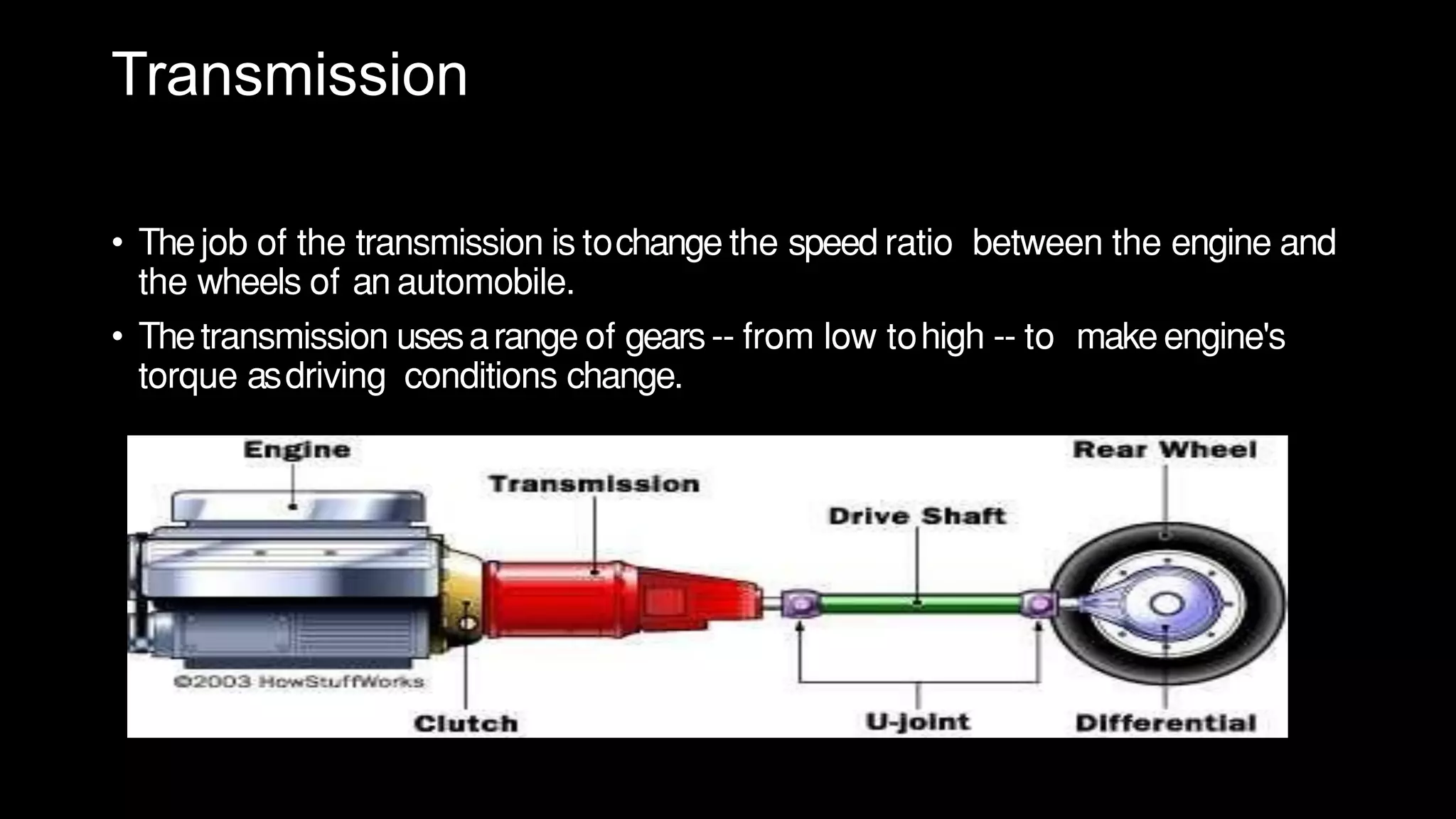
Transmission
• Thejob of the transmission is tochange the speed ratio between the engine and
the wheels of an automobile.
• Thetransmission usesarange of gears-- from low tohigh -- to make engine's
torque asdriving conditions change.
Introduction
• CVT is an advanced technology of automatic transmission.
• Unlike traditional automatic transmissions, continuously variable
transmissions don't have a gearbox with a set number of gears.
• single-speed transmission, gearless transmission, one-speed automatic,
variable pulley transmission.
• Shifts automatically with an infinite number of ratios.
• CVT allows for the operation at the lowest possible speed and highest
possible load, partially avoiding the low efficiency region of the engine
map.
Timeline
Leonardo Da Vinci________________________________1490s
Timeline
•1935 - Adiel Dodge receives U.S. patent for toroidal CVT
Austin 16
Timeline
Dutch DAF______________________________________1954
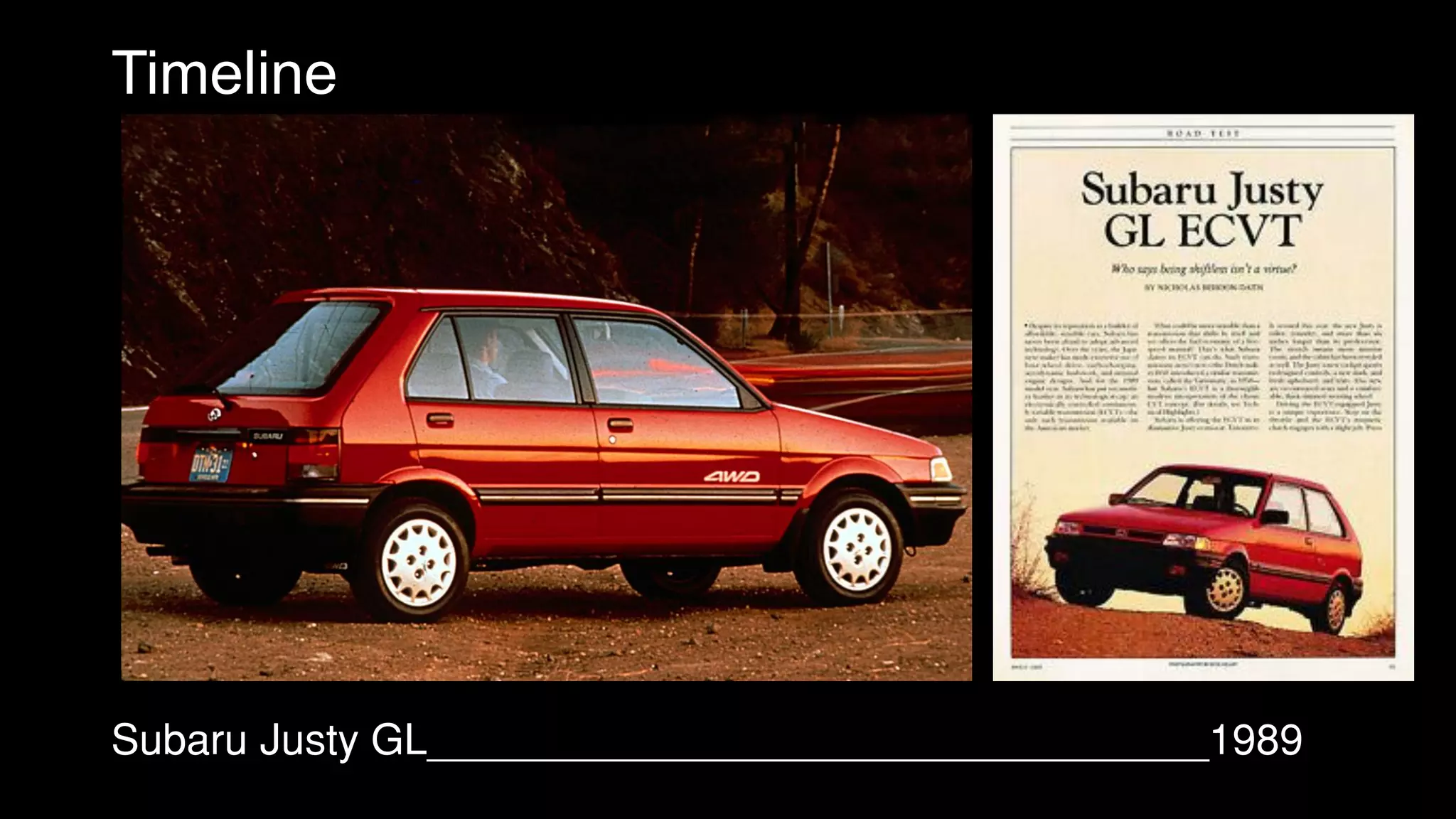
Timeline
Subaru Justy GL_________________________________1989
Timeline
Nissan March____________________________________1999
Timeline
Saturn Vue with CVT_______________________________2002
Saturn Vue
Timeline
________________________________________________2019
Manufacturers
Components
• Input shaft, output shaft, metal belt.
• Continuously variable RPM.
• Pulleys and sheaves.
• Cogged v-belt, metal belt, CVT chain.
• Variomatic with centrifugal weights.
• Use of hydraulic oil pump.
Components
Components
Components
How does it works…..?
Video clip
Types of CVT
Based on the Design...
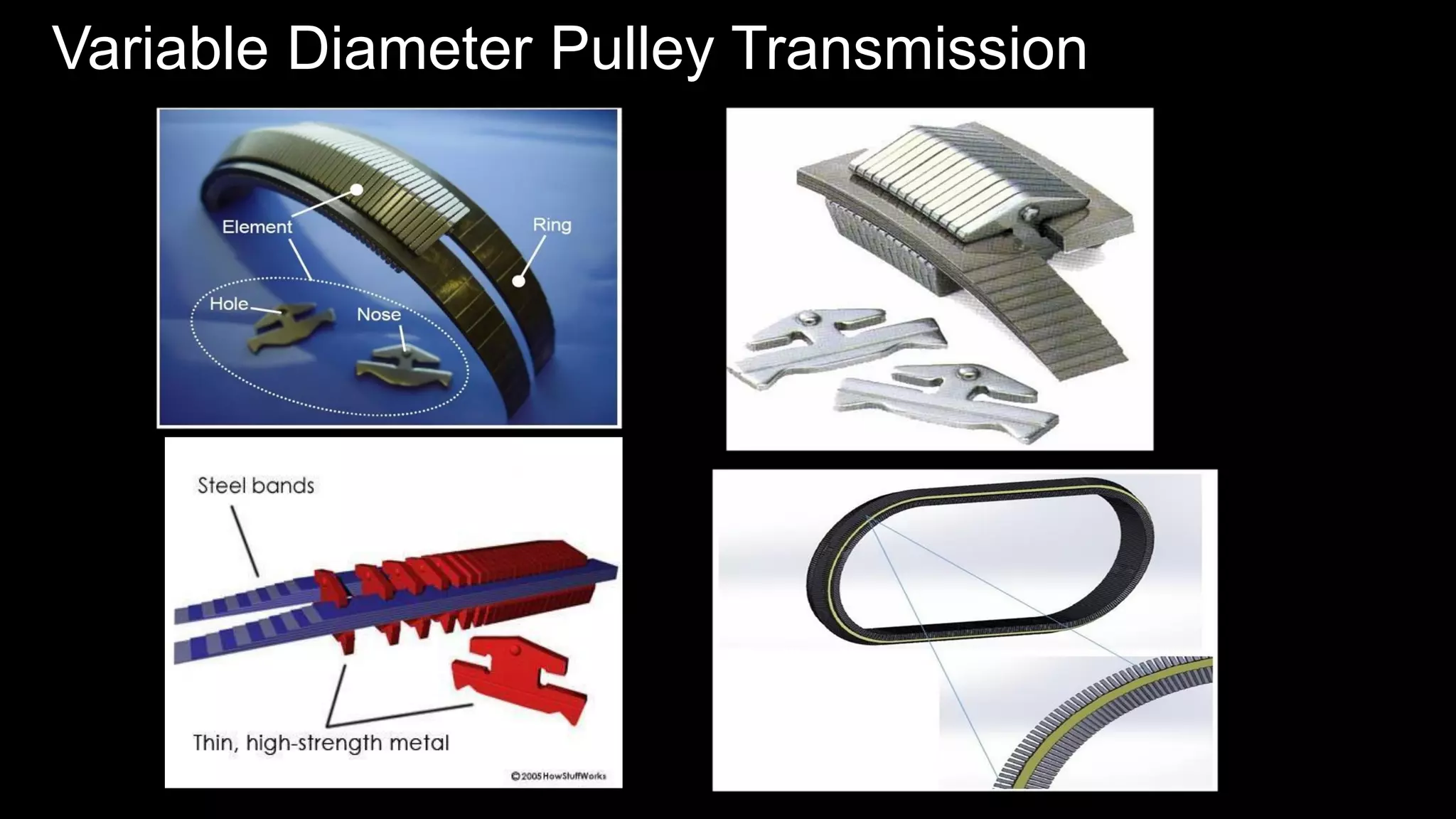
• Variable diameter pulley transmission.
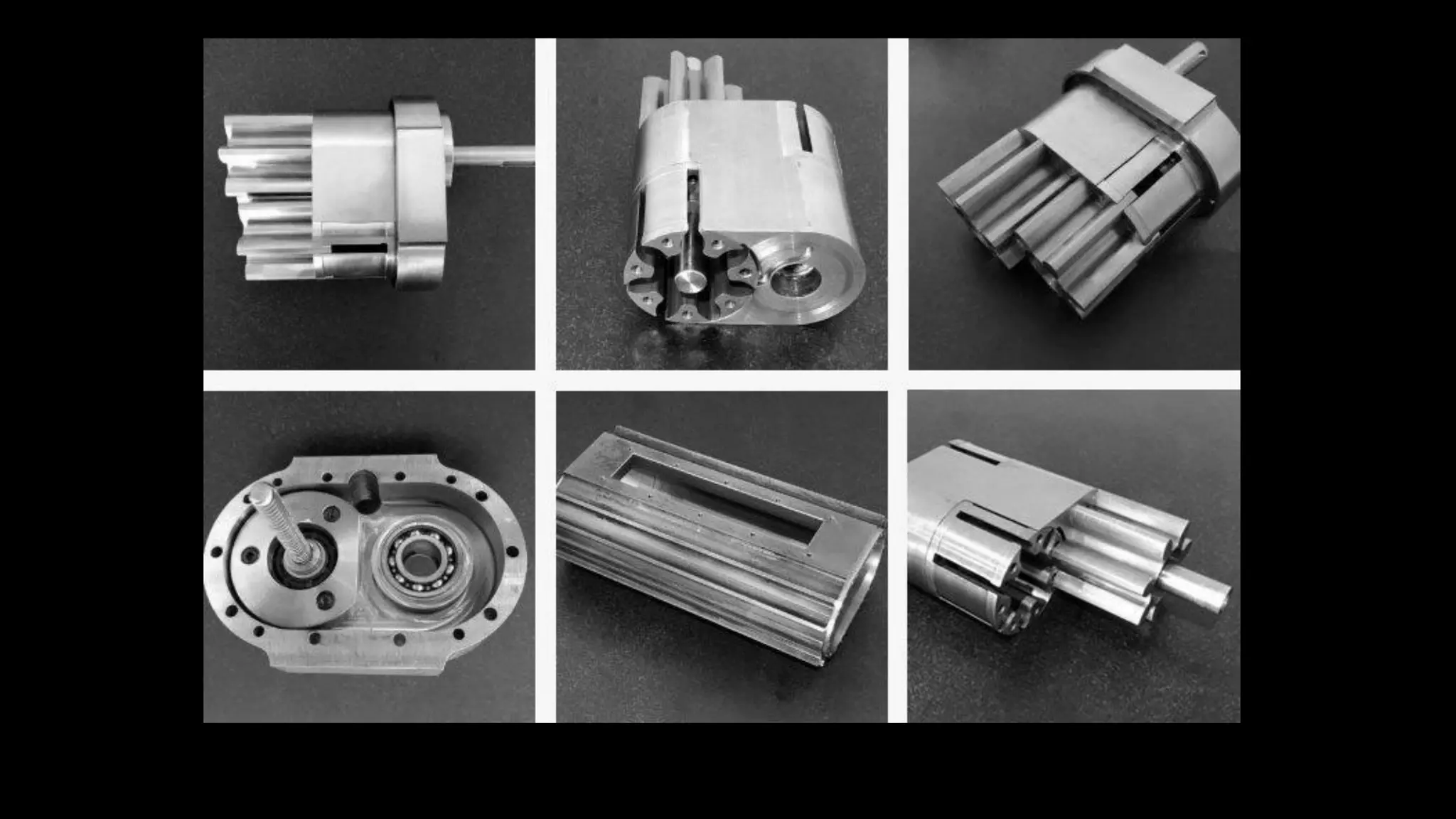
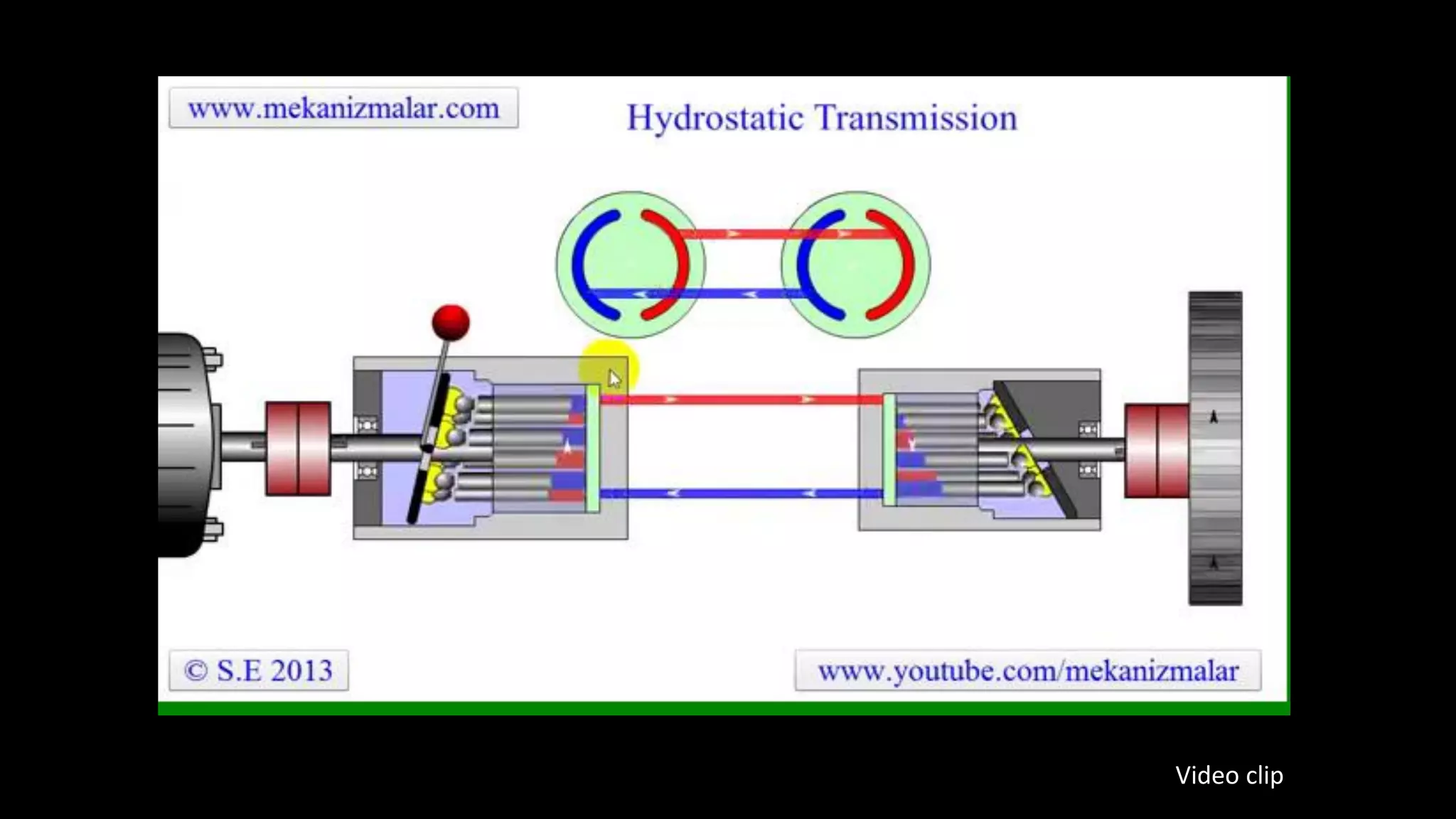
• Hydrostatic CVT.
• Frictional CVT.
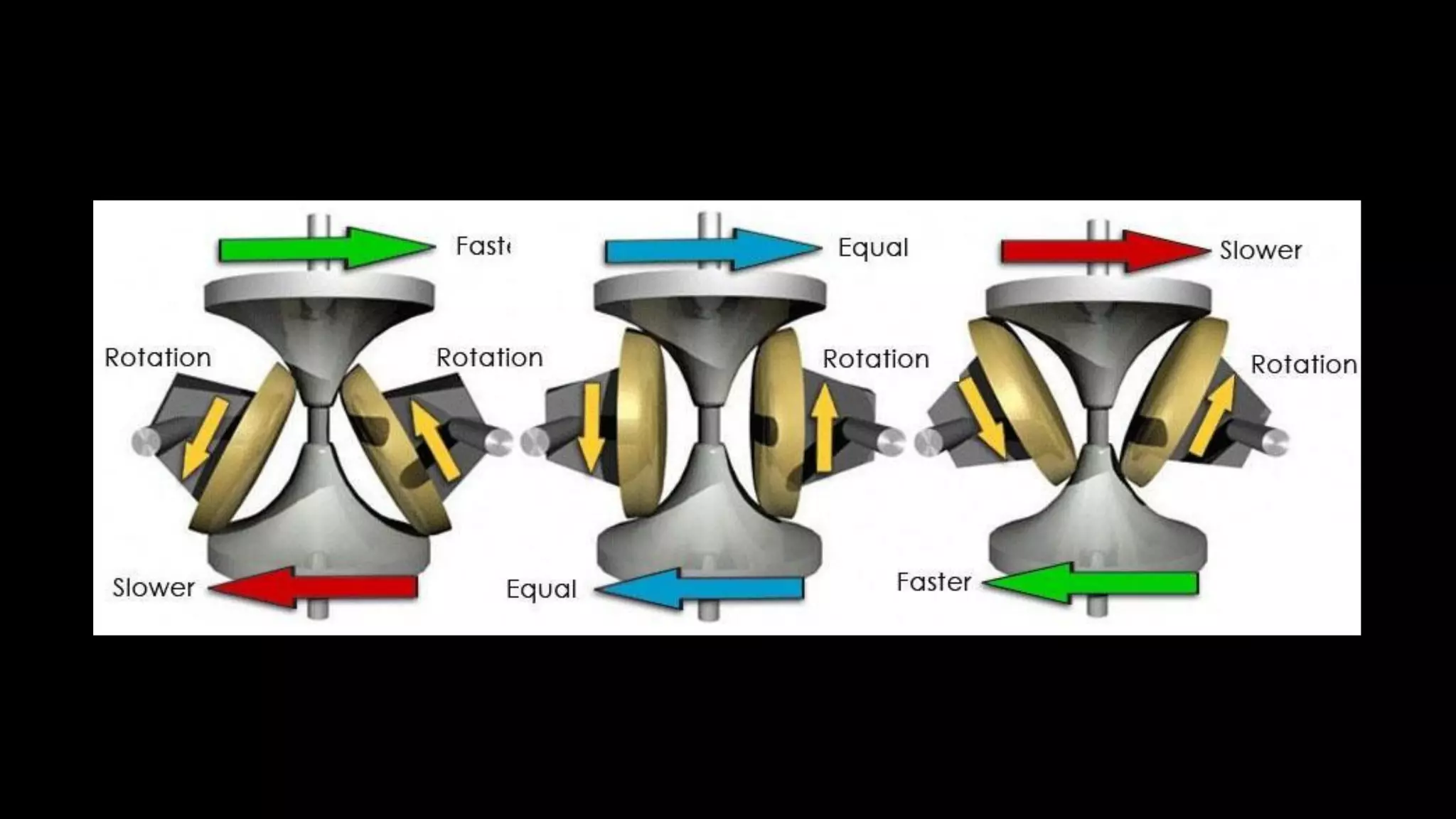
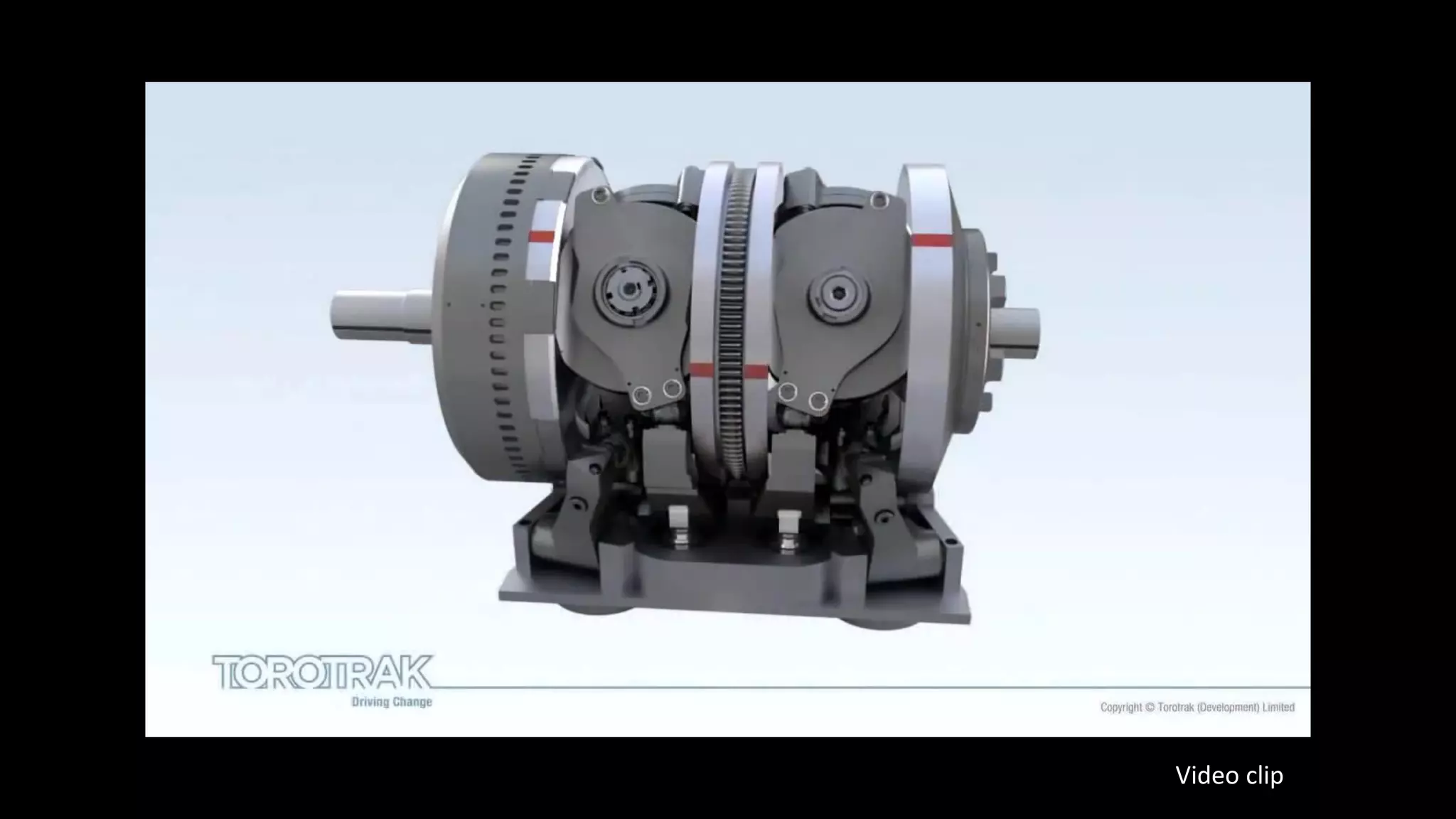
• Toroidal or roller based CVT.
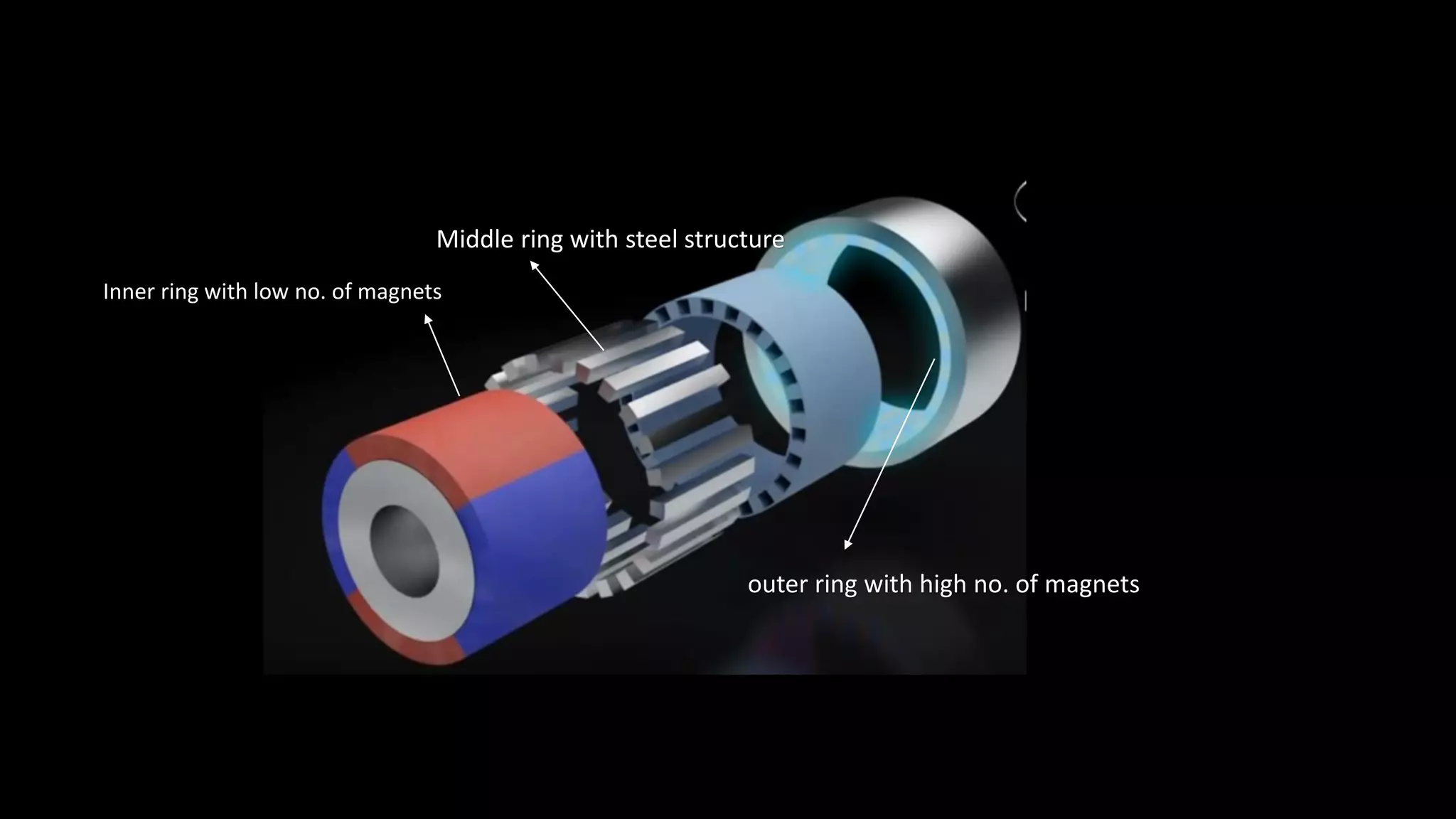
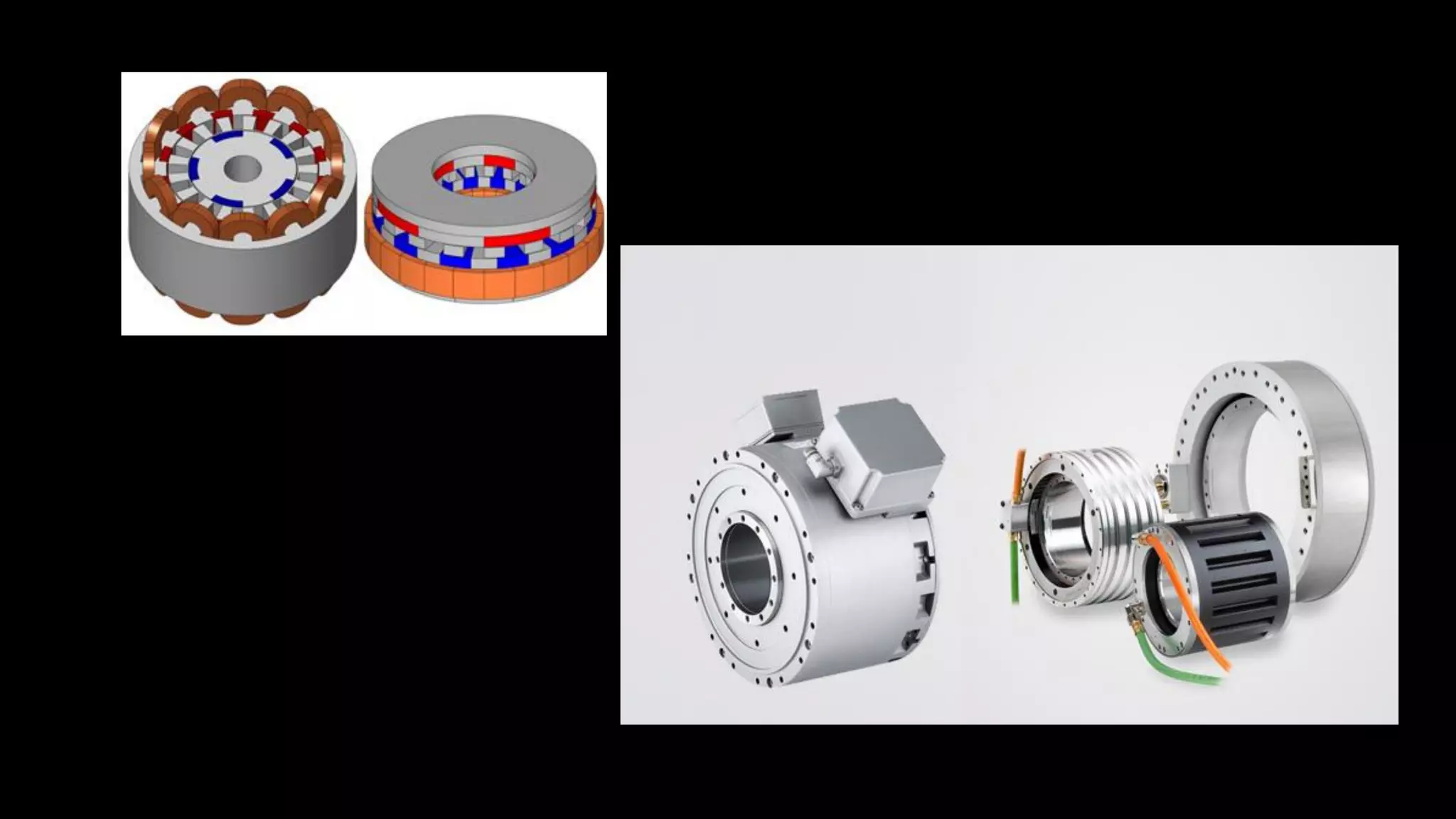
• Magnetic CVT.
Variable Diameter Pulley Transmission
Hydrostatic CVT
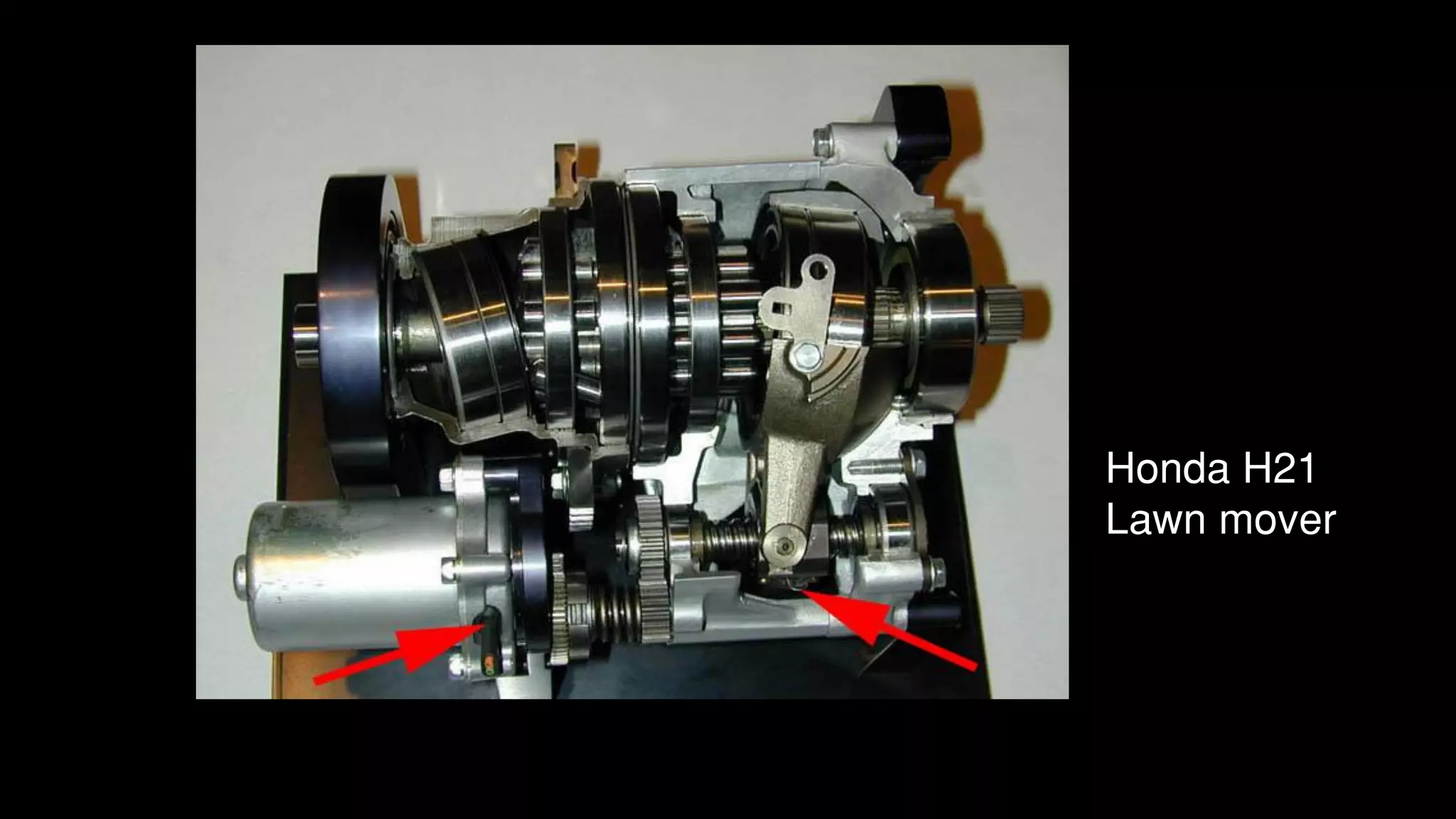
Honda H21
Lawn mover
Video clip
Frictional CVT
Tmax = Cf × FN × Ro
Moving belt
Output drive to workshop machinery
Driver input from power source
Toroidal CVT
Video clip
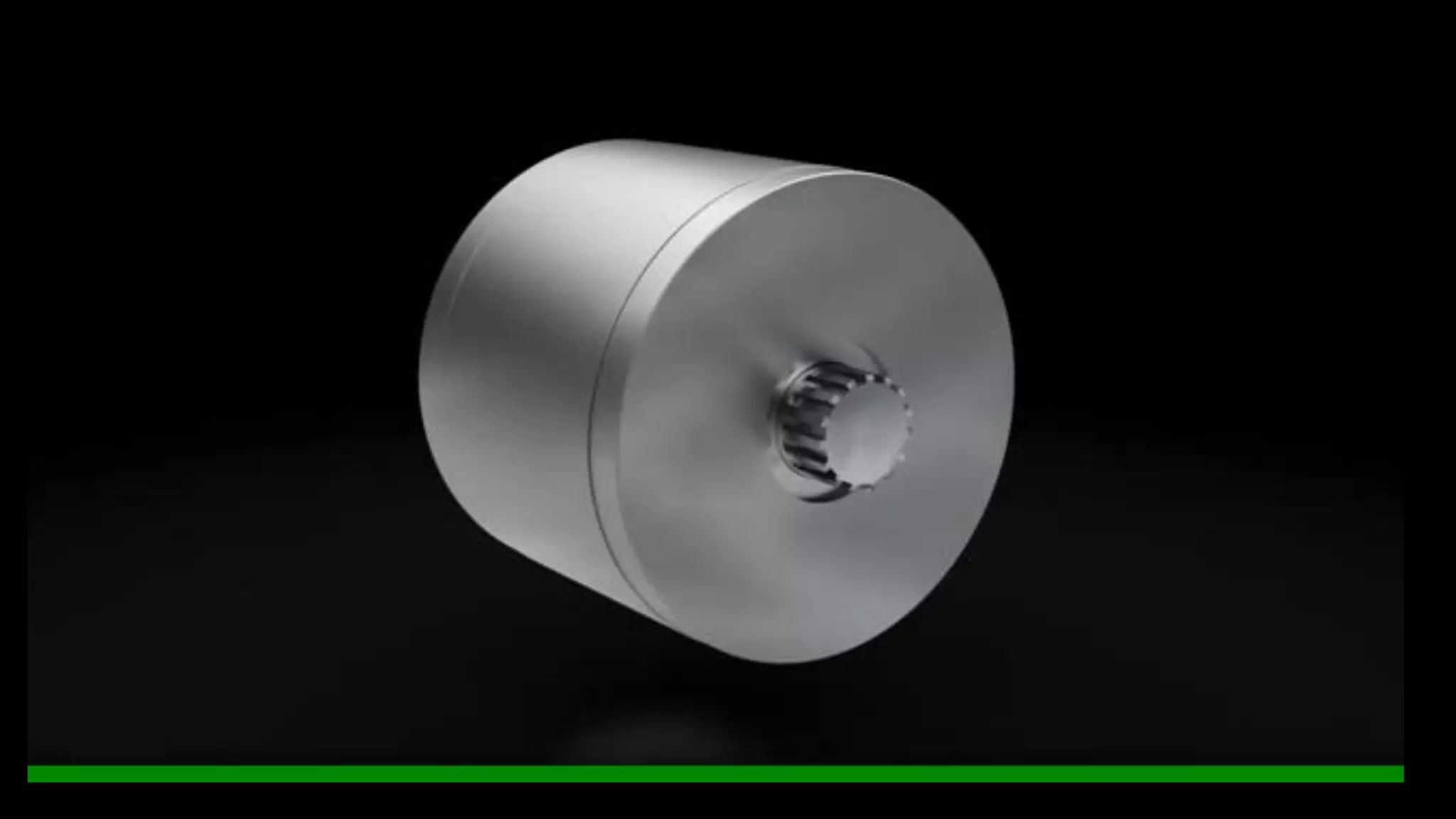
Magnetic CVT
Middle ring with steel structure
Inner ring with low no. of magnets
outer ring with high no. of magnets
Applications
• magnetic CVTs are used in hybrid vehicle powertrains for cars, buses, trucks and off-highway vehicles.
• Toroidal CVT are already being used in hybrid cars.
• Tractors.
• Golf Carts.
• Ride on Lawn Mowers.
• Motorized Wheelchairs.
• Bicycles.
• Power tools.
• Minimachines
Advantages & Disadvantages
Advantages
 Smoother operation than hydraulic automatic transmissions.
 CVTs offer a continuum of infinitely variable gear ratios.
 It consists of very few components.
Disadvantages
 Size and weight of CVTs.
 Difficulty in transmitting high torque at low operating speeds, which so far has limited their
use to small vehicles.
 Difficulty in transmitting high torque at low operating speeds, which so far has limited their
use to small vehicles due to usage of wear and tear materials like belt or chain.
Latest update in CVT
TOYOTA MOTOR DIRECT SHIFT GEAR TRAIN
NISSAN'S XTRONIC CVT
Conclusion
• The continuously variable transmission is a great innovation and will
have a great effect on the car industry and on society in general.
• The improved fuel consumption and improved control of the engine’s
speed range will help to reduce gas emissions.
• Different car companies have different designs which make each
unique to the builder, however they are based on the same basic
principles of the systems discussed here.
References
• www.howstuffsworks.com
• https://images.app.goo.gl/gfH1rdqpYoZLeRNT9
• http://juke-passion.info/viewtopic.php?t=554
• https://www.youtube.com/watch?v=qxZFSNITK-c
• https://www.youtube.com/watch?v=nf2JrppTClk
• https://www.youtube.com/watch?v=nayVR2PAWHo&t=101s
• https://autopolis.wordpress.com/2011/11/30/1987-1994-subaru-justy-standing-out-in-a-crowd/
• http://www.odec.ca/projects/2007/viva7s2/conclusion.htm

Continuous Variable Transmissionm, PPTX