Direct & Indirect Valuation
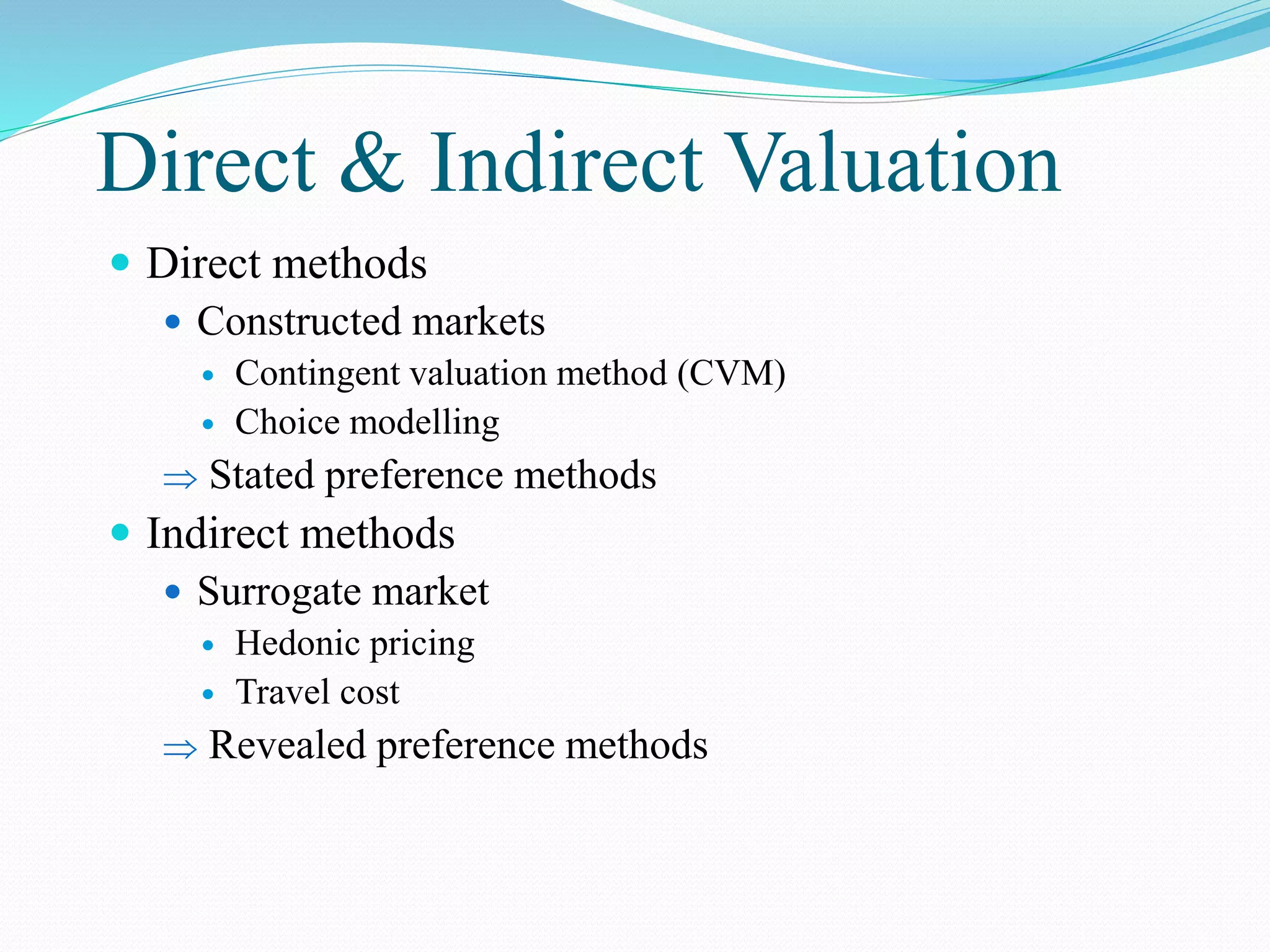
 Direct methods
 Constructed markets
 Contingent valuation method (CVM)
 Choice modelling
 Stated preference methods
 Indirect methods
 Surrogate market
 Hedonic pricing
 Travel cost
 Revealed preference methods
CVM
 CVM consists of asking people directly , via a
questionnaire or experimental techniques, what they
would be willing to pay for a benefit or what they
would be willing to receive as compensation for a
deterioration of their environment.
Environmental values
Environmental
Values
Use Values
Direct Use Values
(Timber, Food,
Recreation)
Indirect Use
Values
( Nutrient
Recycling)
Non-use Values
Optional Use
Values
(Gene pool)
Bequest Values
(Conservation
Rainforests)
Existence values
(Conservation of
Tiger)
Steps in a contingent valuation
study
 Define the good and the change in the good to be valued
 Define the geographical scope of the “market”
 Conduct focus groups on components of the survey
 Pre test the survey instrument (questionnaire)
 Administer the questionnaire to a stratified random
sample
 Test for the reliability and validity of results
Components of questionnaire
 Collect information on respondent’s past, present, and
expected future use of the good
 Present a hypothetical scenario describing the change
in the good to be valued
 Present the hypothetical payment mechanism and
related stipulations
 Elicit the respondent’s WTP (“bid elicitation
procedure”)
 Collect information on respondent’s socioeconomic
characteristics, available substitutes and complements
for good being valued
 Debrief respondent (e.g., check budget constraint)
and enumerator
 Trade-offs between environmental systems
 Used for use and non-use values
 Example
Wilderness or Hospital ?
Scenic beauty or Mobile network ?
 Difficult for some respondents to respond
Contingent Choice Method (CCM)
 Referendum method
 Ranking of environmental attributes
 Easy for the respondent
 Confusion if too many choices
Contingent Ranking Method (CRM)
Example: Drinking Water in Seoul
 A: Interviewer introduction
 purpose of the survey
 Indicate the time limits
 B: Background
 Opinion about current tap water quality
 Measures the household has taken in the last five years to
improve water
 Monthly household net income
 C: Value of water quality
 Describe pollution prevention system
 D: Socio-economic characteristics
 Age, highest level of education, number of household
members, average monthly water.
Advantages of CVM
 Based on economic utility theory and can
produce reliable estimates.
 Most biases can be eliminated by careful survey
design and implementation.
 Currently the only method available to measure
important non use values associated with natural
resources.
 Has been used successfully in a variety of
situations.
 Is being constantly improved to make the
methodology more reliable.
Advantages of conducting CVM studies in
developing countries
 Respondents are often quite receptive to listening
and considering questions posed
 Response rates are typically very high
 Survey costs are an order of magnitude lower
 can have larger sample sizes, which permits more split-
sample testing of survey procedures
Criticisms of CVM
 Respondents fail to take CVM questions seriously
because they are non-binding
 Respondents do not understand what they are being
asked to value
 Respondents strategically manipulate the process by
distorting their true WTP
 Respondents give answers that are inconsistent with
economic theory
 Stated intentions of willingness to pay may exceed true
feelings.
 Respondents may be unfamiliar with the good or
service being valued and not have an adequate basis
for articulating their true value
Contingent valuation method

Contingent valuation method

  • 2.
    Direct & IndirectValuation  Direct methods  Constructed markets  Contingent valuation method (CVM)  Choice modelling  Stated preference methods  Indirect methods  Surrogate market  Hedonic pricing  Travel cost  Revealed preference methods
  • 3.
    CVM  CVM consistsof asking people directly , via a questionnaire or experimental techniques, what they would be willing to pay for a benefit or what they would be willing to receive as compensation for a deterioration of their environment.
  • 4.
    Environmental values Environmental Values Use Values DirectUse Values (Timber, Food, Recreation) Indirect Use Values ( Nutrient Recycling) Non-use Values Optional Use Values (Gene pool) Bequest Values (Conservation Rainforests) Existence values (Conservation of Tiger)
  • 5.
    Steps in acontingent valuation study  Define the good and the change in the good to be valued  Define the geographical scope of the “market”  Conduct focus groups on components of the survey  Pre test the survey instrument (questionnaire)  Administer the questionnaire to a stratified random sample  Test for the reliability and validity of results
  • 6.
    Components of questionnaire Collect information on respondent’s past, present, and expected future use of the good  Present a hypothetical scenario describing the change in the good to be valued  Present the hypothetical payment mechanism and related stipulations
  • 7.
     Elicit therespondent’s WTP (“bid elicitation procedure”)  Collect information on respondent’s socioeconomic characteristics, available substitutes and complements for good being valued  Debrief respondent (e.g., check budget constraint) and enumerator
  • 8.
     Trade-offs betweenenvironmental systems  Used for use and non-use values  Example Wilderness or Hospital ? Scenic beauty or Mobile network ?  Difficult for some respondents to respond Contingent Choice Method (CCM)
  • 9.
     Referendum method Ranking of environmental attributes  Easy for the respondent  Confusion if too many choices Contingent Ranking Method (CRM)
  • 10.
    Example: Drinking Waterin Seoul  A: Interviewer introduction  purpose of the survey  Indicate the time limits  B: Background  Opinion about current tap water quality  Measures the household has taken in the last five years to improve water  Monthly household net income
  • 11.
     C: Valueof water quality  Describe pollution prevention system  D: Socio-economic characteristics  Age, highest level of education, number of household members, average monthly water.
  • 12.
    Advantages of CVM Based on economic utility theory and can produce reliable estimates.  Most biases can be eliminated by careful survey design and implementation.
  • 13.
     Currently theonly method available to measure important non use values associated with natural resources.  Has been used successfully in a variety of situations.  Is being constantly improved to make the methodology more reliable.
  • 14.
    Advantages of conductingCVM studies in developing countries  Respondents are often quite receptive to listening and considering questions posed  Response rates are typically very high  Survey costs are an order of magnitude lower  can have larger sample sizes, which permits more split- sample testing of survey procedures
  • 15.
    Criticisms of CVM Respondents fail to take CVM questions seriously because they are non-binding  Respondents do not understand what they are being asked to value  Respondents strategically manipulate the process by distorting their true WTP
  • 16.
     Respondents giveanswers that are inconsistent with economic theory  Stated intentions of willingness to pay may exceed true feelings.  Respondents may be unfamiliar with the good or service being valued and not have an adequate basis for articulating their true value