 Models are excellent tools to organize
knowledge and help to explore alternative
scenarios for the management of agricultural
systems.
 Farm simulation modelling is assuming
increasing importance; oriented to provide
short‐ and long‐term scenarios, it can be a
useful tool to improve the planning capability
of the agro‐energy farm.
 Models have also been useful as a depository
of accumulated knowledge about processes
operating in agricultural ecosystems (eg.
plant growth, soil physics etc).
 When constructing Farming system models
the major consideration was about the Short
versus long-term consequences of
crop/cropping systems management.
 A production system (or production rule system)
is a computer program typically used to provide
some form of artificial intelligence, which
consists primarily of a set of rules about
behavior.
 These rules, termed productions, are a
basic representation found useful in automated
planning, expert systems and action selection.
 A production system provides the mechanism
necessary to execute productions in order to
achieve some goal for the system.
 A management system is the framework
of processes and procedures used to ensure that
an organization can fulfill all tasks required to
achieve its objectives.
 an environmental management system enables
organizations to improve their environmental
performance through a process of continuous
improvement.
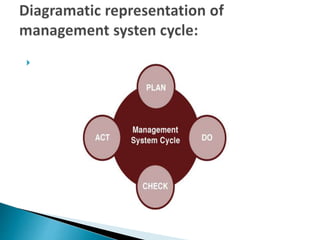
 An oversimplification is "Plan, Do, Check, Act".
 A more complete system would include
accountability (an assignment of personal
responsibility) and a schedule for activities to be
completed
 Examples of management system standards
include:
 ISO 9001 Quality Management,
 ISO 14001 Environmental Management,
 ILO-OSH Occupational Safety & Health
Management Systems,
 ISO/IEC 27001 Information Security
Management,
 SA8000 Social Accountability.

 The core idea of systems thinking is that the
whole is different from the sum of the parts.
 System thinking recognizes that it is the
interaction between the parts that give systems
their property of the whole, being different from
the sum of the parts.
 The dilemma is to establish what is the “whole”
you are interested in, so you do not have to solve
all the problems of the universe when tackling a
problem
 but can separate out to manage a complex issue
of interest within a particular ecosystem, farming
system or the like.
 Thus there are three levels in any system:
 The system of interest
 Its supra system( environment)
 Sub systems that make up the system
 Typically, the smaller units comprising a system
are called subsystems or components, and the
larger unit enclosing a system is called a supra
system or environment.
A supra system is the larger unit comprises
smaller units.
 For example a university has different branches
like Arts, science, computers, math’s etc.,
 each of these branches can be observed as a
smaller unit which functions independently.
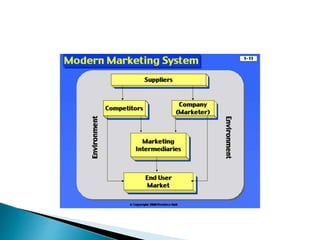
 A market system is any systematic process
enabling many market players to bid and ask:
helping bidders and sellers interact and make
deals.
 It is not just the mechanism but the entire
systemof regulation,qualification, credentials,
reputations and clearing that surrounds that
mechanism and makes it operate in a social
context.
 Agricultural systems are multifunctional
ecosystems that besides food production also
provide ecosystem services.
 Agricultural system management is a major
component of natural resource management
(NRM).
 Farming systems modelling has been
successfully used to develop understanding
of soil–plant–climate interactions and to
assist on-farm decision-making process.
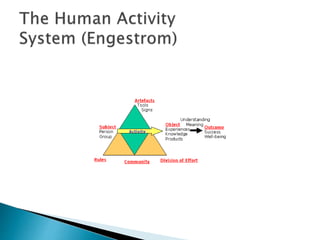
 It is an assembly of people and other
resources organized into a whole in order to
accomplish a purpose.
 The people in the system are affected by
being in the system, and by their
participation in the system they affect the
system.
 People in the system select and carry out
activities -- individually and collectively --
that will enable them to attain a collectively
identified purpose.
 (1) A system serves the purpose of its
collective entity.
 (2) It serves the purpose of its members.
 (3) It serves its environment ot the larger
system in which it is embedded.
 Development of the system from an activity
system perspective involves
 understanding the cultural and historic
factors that have resulted in the present
situation
 clarifying the current 'disturbances' in the
current form of the system - aspects that are
poorly aligned, inadequate, in opposition...
 and then working to resolve.
 http://aciar.gov.au/files/node/14068/farming_system_
modelling_and_conservation_agricult_19457.pdf
 Meinke, H. and Stone, R.C., Seasonal and interannual
climate forecasting: the new tool for increasing
preparedness to climate variability and change in
agricultural planning and operations, Climatic Change,
70, 221-253, 2005.
 Francesco Danusoa, Franco Rosab, Alvaro Roccaa and
Elena Bulfoni X- farm: modelling sustainable farming
systems and simulation Department of Agricultural
and Environmental Sciences, University of Udine, in
Methods and procedures for building sustainable
farming systems
Thank u

Farm modelling system

  • 2.
     Models areexcellent tools to organize knowledge and help to explore alternative scenarios for the management of agricultural systems.  Farm simulation modelling is assuming increasing importance; oriented to provide short‐ and long‐term scenarios, it can be a useful tool to improve the planning capability of the agro‐energy farm.
  • 3.
     Models havealso been useful as a depository of accumulated knowledge about processes operating in agricultural ecosystems (eg. plant growth, soil physics etc).  When constructing Farming system models the major consideration was about the Short versus long-term consequences of crop/cropping systems management.
  • 4.
     A productionsystem (or production rule system) is a computer program typically used to provide some form of artificial intelligence, which consists primarily of a set of rules about behavior.  These rules, termed productions, are a basic representation found useful in automated planning, expert systems and action selection.  A production system provides the mechanism necessary to execute productions in order to achieve some goal for the system.
  • 5.
     A managementsystem is the framework of processes and procedures used to ensure that an organization can fulfill all tasks required to achieve its objectives.  an environmental management system enables organizations to improve their environmental performance through a process of continuous improvement.  An oversimplification is "Plan, Do, Check, Act".  A more complete system would include accountability (an assignment of personal responsibility) and a schedule for activities to be completed
  • 6.
     Examples ofmanagement system standards include:  ISO 9001 Quality Management,  ISO 14001 Environmental Management,  ILO-OSH Occupational Safety & Health Management Systems,  ISO/IEC 27001 Information Security Management,  SA8000 Social Accountability.
  • 7.
  • 8.
     The coreidea of systems thinking is that the whole is different from the sum of the parts.  System thinking recognizes that it is the interaction between the parts that give systems their property of the whole, being different from the sum of the parts.  The dilemma is to establish what is the “whole” you are interested in, so you do not have to solve all the problems of the universe when tackling a problem  but can separate out to manage a complex issue of interest within a particular ecosystem, farming system or the like.
  • 9.
     Thus thereare three levels in any system:  The system of interest  Its supra system( environment)  Sub systems that make up the system
  • 10.
     Typically, thesmaller units comprising a system are called subsystems or components, and the larger unit enclosing a system is called a supra system or environment. A supra system is the larger unit comprises smaller units.  For example a university has different branches like Arts, science, computers, math’s etc.,  each of these branches can be observed as a smaller unit which functions independently.
  • 11.
     A marketsystem is any systematic process enabling many market players to bid and ask: helping bidders and sellers interact and make deals.  It is not just the mechanism but the entire systemof regulation,qualification, credentials, reputations and clearing that surrounds that mechanism and makes it operate in a social context.
  • 13.
     Agricultural systemsare multifunctional ecosystems that besides food production also provide ecosystem services.  Agricultural system management is a major component of natural resource management (NRM).  Farming systems modelling has been successfully used to develop understanding of soil–plant–climate interactions and to assist on-farm decision-making process.
  • 14.
     It isan assembly of people and other resources organized into a whole in order to accomplish a purpose.  The people in the system are affected by being in the system, and by their participation in the system they affect the system.  People in the system select and carry out activities -- individually and collectively -- that will enable them to attain a collectively identified purpose.
  • 15.
     (1) Asystem serves the purpose of its collective entity.  (2) It serves the purpose of its members.  (3) It serves its environment ot the larger system in which it is embedded.
  • 17.
     Development ofthe system from an activity system perspective involves  understanding the cultural and historic factors that have resulted in the present situation  clarifying the current 'disturbances' in the current form of the system - aspects that are poorly aligned, inadequate, in opposition...  and then working to resolve.
  • 18.
     http://aciar.gov.au/files/node/14068/farming_system_ modelling_and_conservation_agricult_19457.pdf  Meinke,H. and Stone, R.C., Seasonal and interannual climate forecasting: the new tool for increasing preparedness to climate variability and change in agricultural planning and operations, Climatic Change, 70, 221-253, 2005.  Francesco Danusoa, Franco Rosab, Alvaro Roccaa and Elena Bulfoni X- farm: modelling sustainable farming systems and simulation Department of Agricultural and Environmental Sciences, University of Udine, in Methods and procedures for building sustainable farming systems
  • 19.