MARKETING CHANNELS- shandis,
mandis, market yards, direct
procurement
CONTENT
• Meaning & Definition
• Role of Marketing Channels in marketing
strategy
• Different types of Marketing Channels
• Innovative Marketing Channels
• Reference
Meaning
• The routes through which agricultural products
move from Producer to Consumer.
• The length of the channel varies from
commodities
• A marketing channel is a useful tool for
management, and is crucial to creating an
effective and well-planned marketing strategy
Definition
• A marketing channel is a set of practices or
activities necessary to transfer the ownership of
goods, from the point of production to the point
of consumption.
( www.wikipedea.com)
The chain of intermediaries through whom the various
foodgrains pass from producers to consumers.
(Moore et.al.)
Alternative routes of product flows from
producer to consumer.
(Kohls & Uhl)
Roles of marketing channel in marketing
strategies
• Links producers to buyers
• Influences the firm's pricing strategy
• Affects product strategy through branding,
policies, willingness to stock
• Customizes profits, install, maintain, offer
credit, etc.
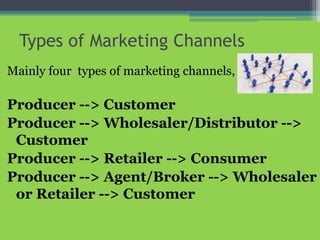
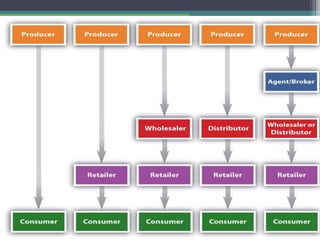
Types of Marketing Channels
Mainly four types of marketing channels,
Producer --> Customer
Producer --> Wholesaler/Distributor -->
Customer
Producer --> Retailer --> Consumer
Producer --> Agent/Broker --> Wholesaler
or Retailer --> Customer
Some Innovative marketing Channels
 Apni Mandi/ Kisan mandi(Punjab)
Hadaspar vegetable market(Pune)
Rythu Bazar(Andhra Pradesh)
Uzhuvar sandies(Tamil Nadu)
Shetkari Bazar(Maharashtra)
Krushak Bazar(Orissa)
Mother Dairy Booths(Delhi)
Safal market (Karnataka)
VFPCK (Kerala)
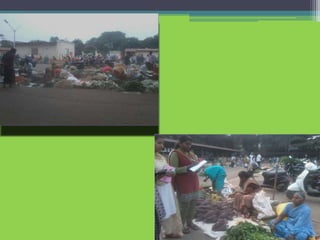
Mandis
• Presence of direct contact between farmer
producer & the buyer
• Farmers sell their produce without involvement
of middlemen
• Price spread is low
• These are similar to Saturday markets of UK
&USA
History
• Started in Punjab state (Chandigarh), in
February, 1987
• Initiatives were taken care by Punjab Mandi
Board
• Similarly in Haryana(Karnal), Rajasthan scheme
has been implemented
Functions
• Market committee where Mandi is located
provides space, water, sheds, counters, balances
etc.
• SAMB provide financial assistance to the market
committee…
• Middlemen were removed
• Reservation for the farmers
Sandies
• Established in the year 1999 by the State Gov. of
T.N
• Farmers enjoy better marketing infrastructure
free of cost & also receive considerably high
prices for the products
• Fresh vegetables and fruits at relatively lower
price compared to other markets
Objectives
• Establishing direct contact between farmer-
producer to Consumer
• To assure fair price
• To provide fresh vegetables to the consumers at
fair price
• To promote honest trading, and
• To ensure timely availability of vegetables &
fruits
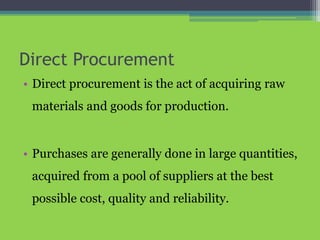
Direct Procurement
• Direct procurement is the act of acquiring raw
materials and goods for production.
• Purchases are generally done in large quantities,
acquired from a pool of suppliers at the best
possible cost, quality and reliability.
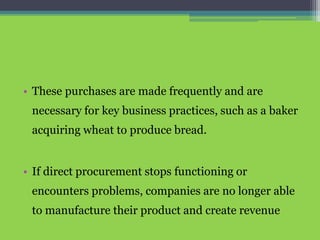
• These purchases are made frequently and are
necessary for key business practices, such as a baker
acquiring wheat to produce bread.
• If direct procurement stops functioning or
encounters problems, companies are no longer able
to manufacture their product and create revenue
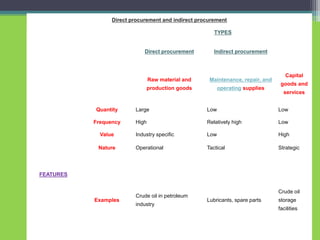
Direct procurement and indirect procurement
TYPES
Direct procurement Indirect procurement
Raw material and
production goods
Maintenance, repair, and
operating supplies
Capital
goods and
services
FEATURES
Quantity Large Low Low
Frequency High Relatively high Low
Value Industry specific Low High
Nature Operational Tactical Strategic
Examples
Crude oil in petroleum
industry
Lubricants, spare parts
Crude oil
storage
facilities
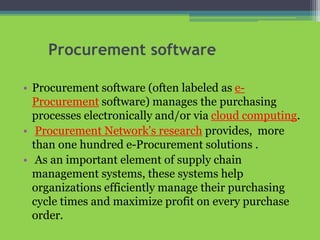
Procurement software
• Procurement software (often labeled as e-
Procurement software) manages the purchasing
processes electronically and/or via cloud computing.
• Procurement Network's research provides, more
than one hundred e-Procurement solutions .
• As an important element of supply chain
management systems, these systems help
organizations efficiently manage their purchasing
cycle times and maximize profit on every purchase
order.
• Many organizations produce their own ways of
working but some software does exist: SMART
by GEP, a cloud-based, end-to-end procurement
platform by GEP, Track8 by Future
Purchasing, Puridiom - procure-to-pay software,
Fishbowl Inventory - Inventory management
Functions
• The e-procurement value chain consists of
indent management, e-Tendering, e-Auctioning,
vendor management, catalogue management,
Purchase Order Integration, Order Status, Ship
Notice, e-Invoicing, e-Payment, and contract
management
References
Acharya . S.S and Agarwal . N.L. 2011,
Agricultural Marketing in India ,Oxford &IBH
publishing , New Delhi
www.en.wikipedia.com

Marketing channels

  • 1.
    MARKETING CHANNELS- shandis, mandis,market yards, direct procurement
  • 2.
    CONTENT • Meaning &Definition • Role of Marketing Channels in marketing strategy • Different types of Marketing Channels • Innovative Marketing Channels • Reference
  • 3.
    Meaning • The routesthrough which agricultural products move from Producer to Consumer. • The length of the channel varies from commodities • A marketing channel is a useful tool for management, and is crucial to creating an effective and well-planned marketing strategy
  • 4.
    Definition • A marketingchannel is a set of practices or activities necessary to transfer the ownership of goods, from the point of production to the point of consumption. ( www.wikipedea.com)
  • 5.
    The chain ofintermediaries through whom the various foodgrains pass from producers to consumers. (Moore et.al.) Alternative routes of product flows from producer to consumer. (Kohls & Uhl)
  • 6.
    Roles of marketingchannel in marketing strategies • Links producers to buyers • Influences the firm's pricing strategy • Affects product strategy through branding, policies, willingness to stock • Customizes profits, install, maintain, offer credit, etc.
  • 7.
    Types of MarketingChannels Mainly four types of marketing channels, Producer --> Customer Producer --> Wholesaler/Distributor --> Customer Producer --> Retailer --> Consumer Producer --> Agent/Broker --> Wholesaler or Retailer --> Customer
  • 9.
    Some Innovative marketingChannels  Apni Mandi/ Kisan mandi(Punjab) Hadaspar vegetable market(Pune) Rythu Bazar(Andhra Pradesh) Uzhuvar sandies(Tamil Nadu) Shetkari Bazar(Maharashtra)
  • 10.
    Krushak Bazar(Orissa) Mother DairyBooths(Delhi) Safal market (Karnataka) VFPCK (Kerala)
  • 11.
    Mandis • Presence ofdirect contact between farmer producer & the buyer • Farmers sell their produce without involvement of middlemen • Price spread is low • These are similar to Saturday markets of UK &USA
  • 12.
    History • Started inPunjab state (Chandigarh), in February, 1987 • Initiatives were taken care by Punjab Mandi Board • Similarly in Haryana(Karnal), Rajasthan scheme has been implemented
  • 13.
    Functions • Market committeewhere Mandi is located provides space, water, sheds, counters, balances etc. • SAMB provide financial assistance to the market committee… • Middlemen were removed • Reservation for the farmers
  • 14.
    Sandies • Established inthe year 1999 by the State Gov. of T.N • Farmers enjoy better marketing infrastructure free of cost & also receive considerably high prices for the products • Fresh vegetables and fruits at relatively lower price compared to other markets
  • 15.
    Objectives • Establishing directcontact between farmer- producer to Consumer • To assure fair price • To provide fresh vegetables to the consumers at fair price • To promote honest trading, and • To ensure timely availability of vegetables & fruits
  • 17.
    Direct Procurement • Directprocurement is the act of acquiring raw materials and goods for production. • Purchases are generally done in large quantities, acquired from a pool of suppliers at the best possible cost, quality and reliability.
  • 18.
    • These purchasesare made frequently and are necessary for key business practices, such as a baker acquiring wheat to produce bread. • If direct procurement stops functioning or encounters problems, companies are no longer able to manufacture their product and create revenue
  • 19.
    Direct procurement andindirect procurement TYPES Direct procurement Indirect procurement Raw material and production goods Maintenance, repair, and operating supplies Capital goods and services FEATURES Quantity Large Low Low Frequency High Relatively high Low Value Industry specific Low High Nature Operational Tactical Strategic Examples Crude oil in petroleum industry Lubricants, spare parts Crude oil storage facilities
  • 20.
    Procurement software • Procurementsoftware (often labeled as e- Procurement software) manages the purchasing processes electronically and/or via cloud computing. • Procurement Network's research provides, more than one hundred e-Procurement solutions . • As an important element of supply chain management systems, these systems help organizations efficiently manage their purchasing cycle times and maximize profit on every purchase order.
  • 21.
    • Many organizationsproduce their own ways of working but some software does exist: SMART by GEP, a cloud-based, end-to-end procurement platform by GEP, Track8 by Future Purchasing, Puridiom - procure-to-pay software, Fishbowl Inventory - Inventory management
  • 22.
    Functions • The e-procurementvalue chain consists of indent management, e-Tendering, e-Auctioning, vendor management, catalogue management, Purchase Order Integration, Order Status, Ship Notice, e-Invoicing, e-Payment, and contract management
  • 23.
    References Acharya . S.Sand Agarwal . N.L. 2011, Agricultural Marketing in India ,Oxford &IBH publishing , New Delhi www.en.wikipedia.com