Download as PDF, PPTX


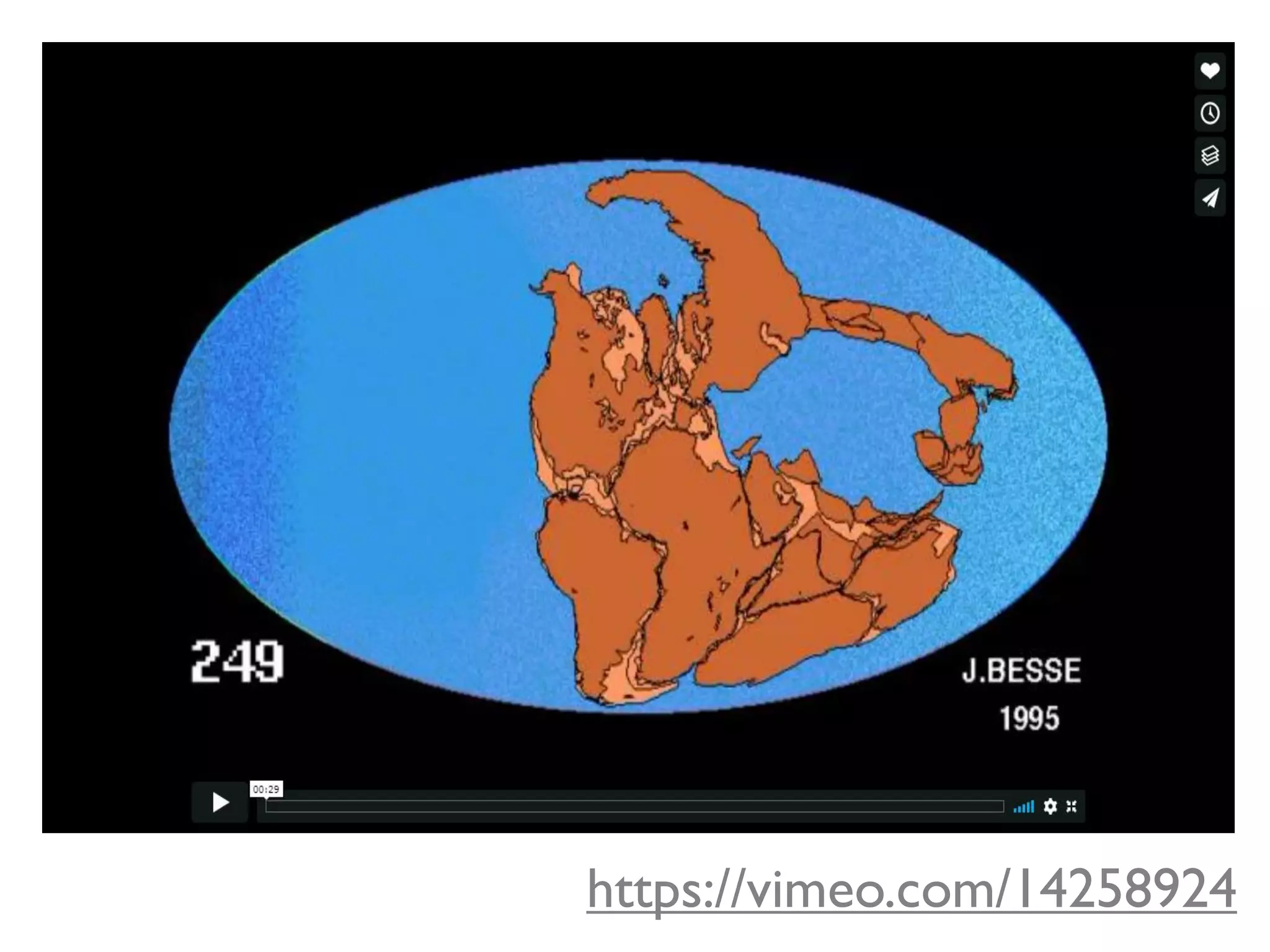

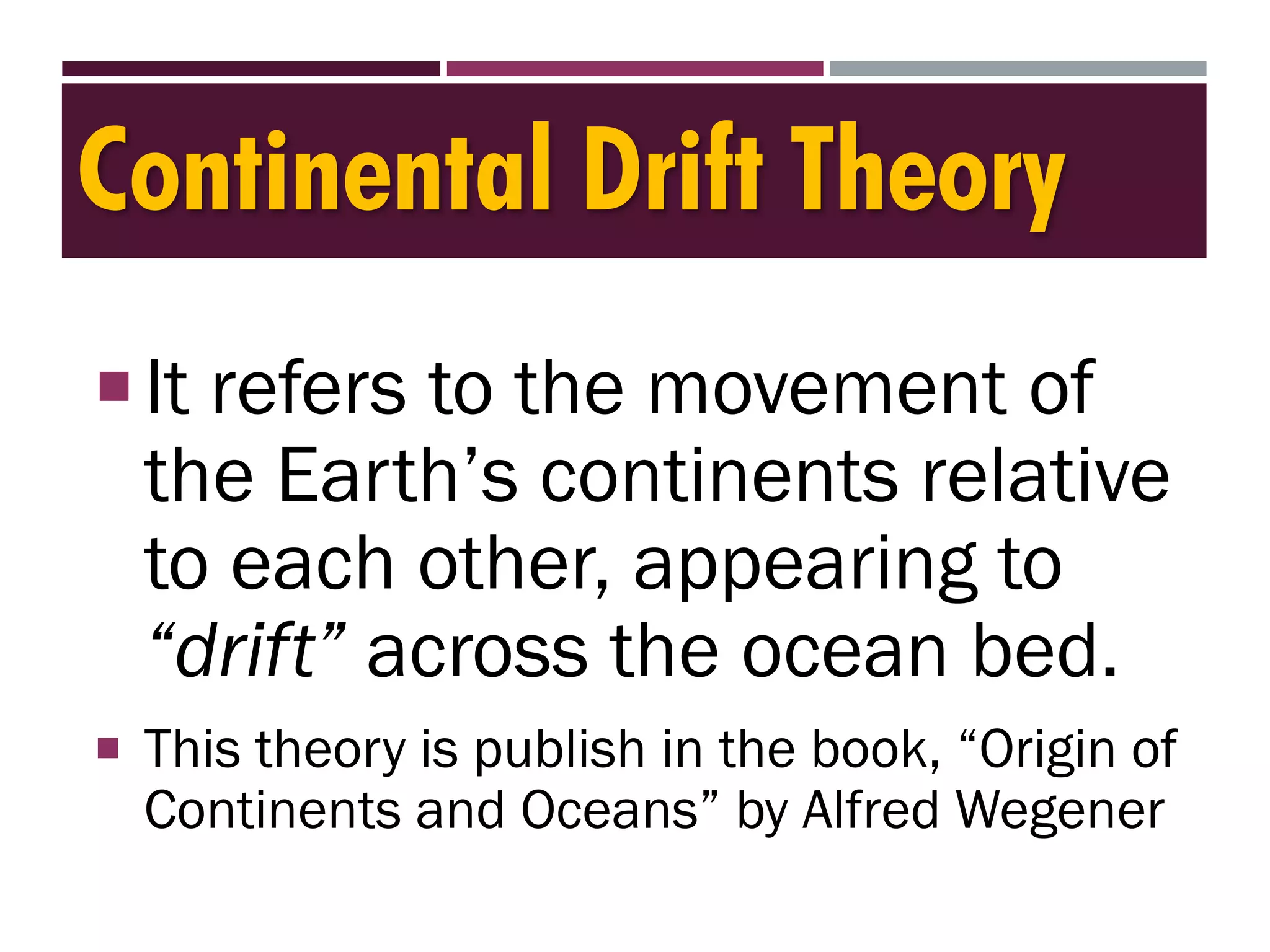

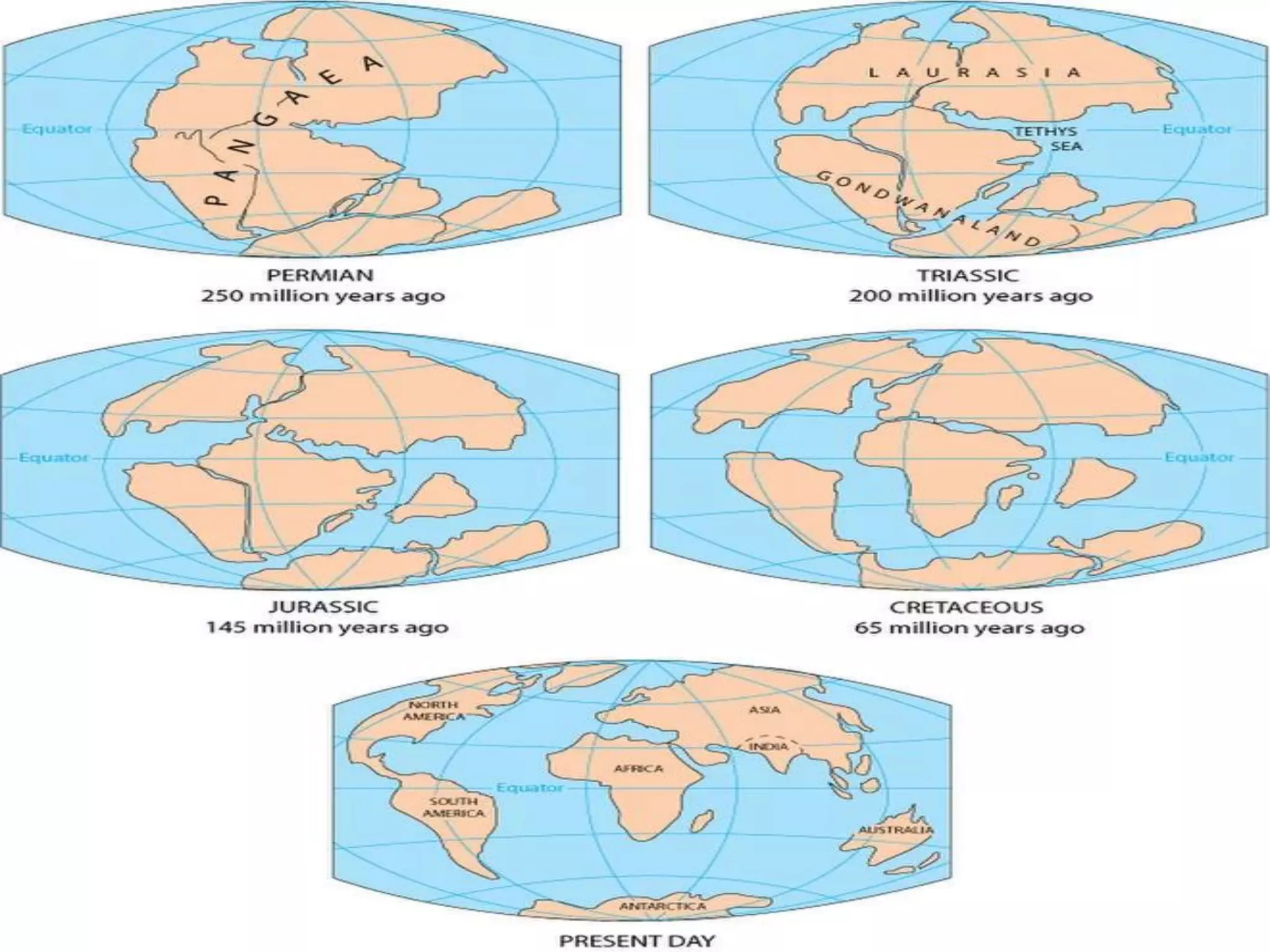

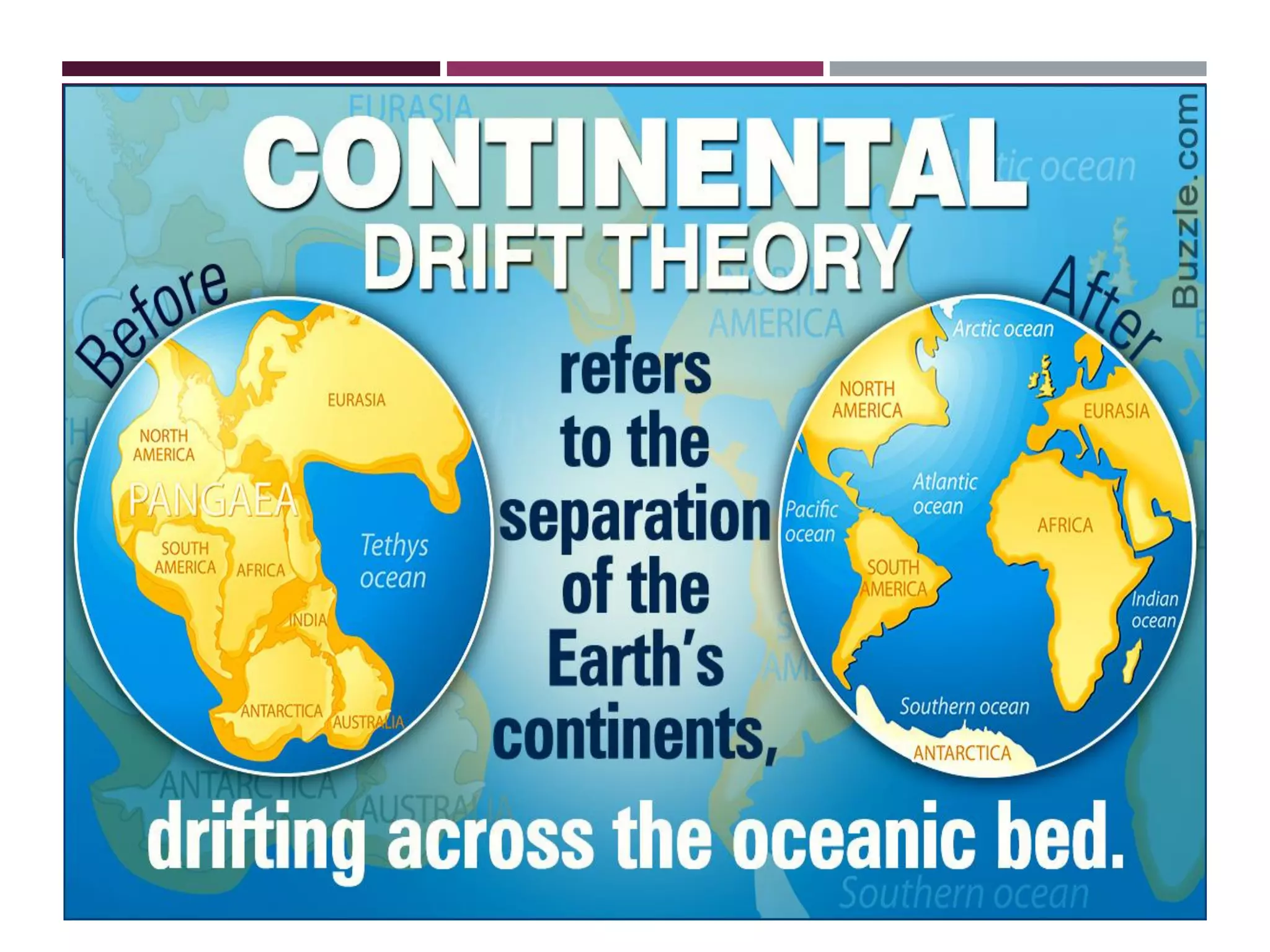


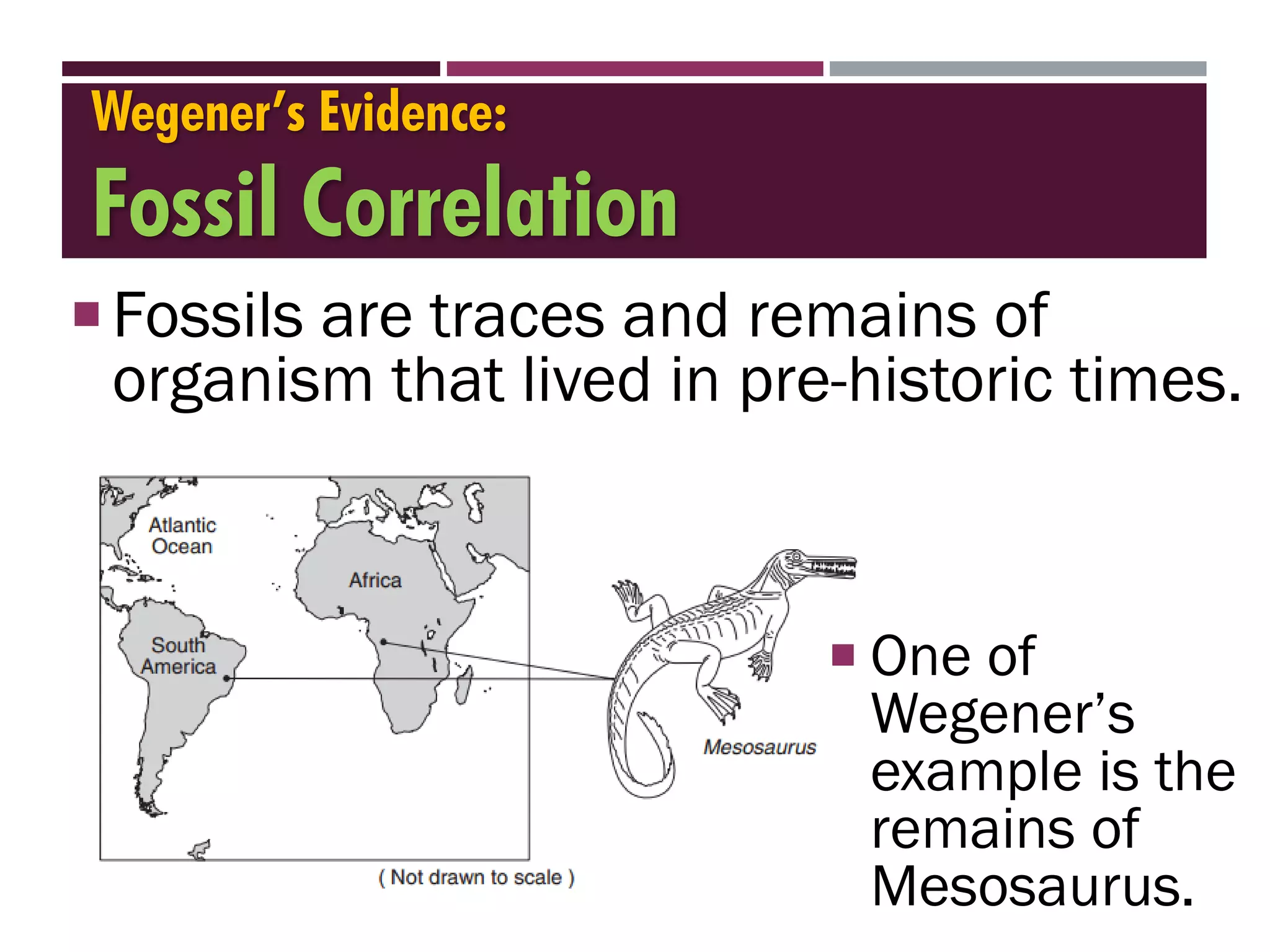
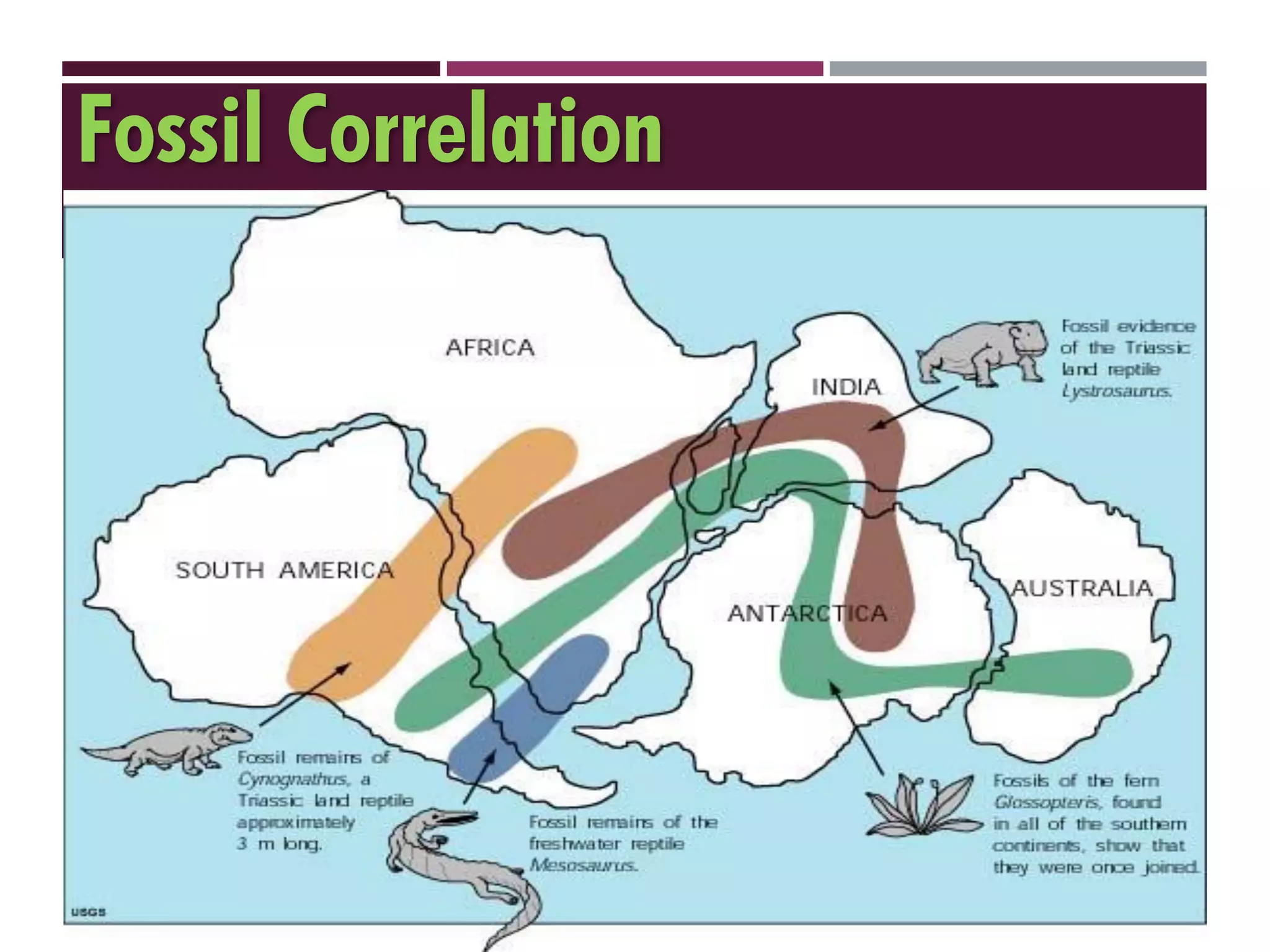
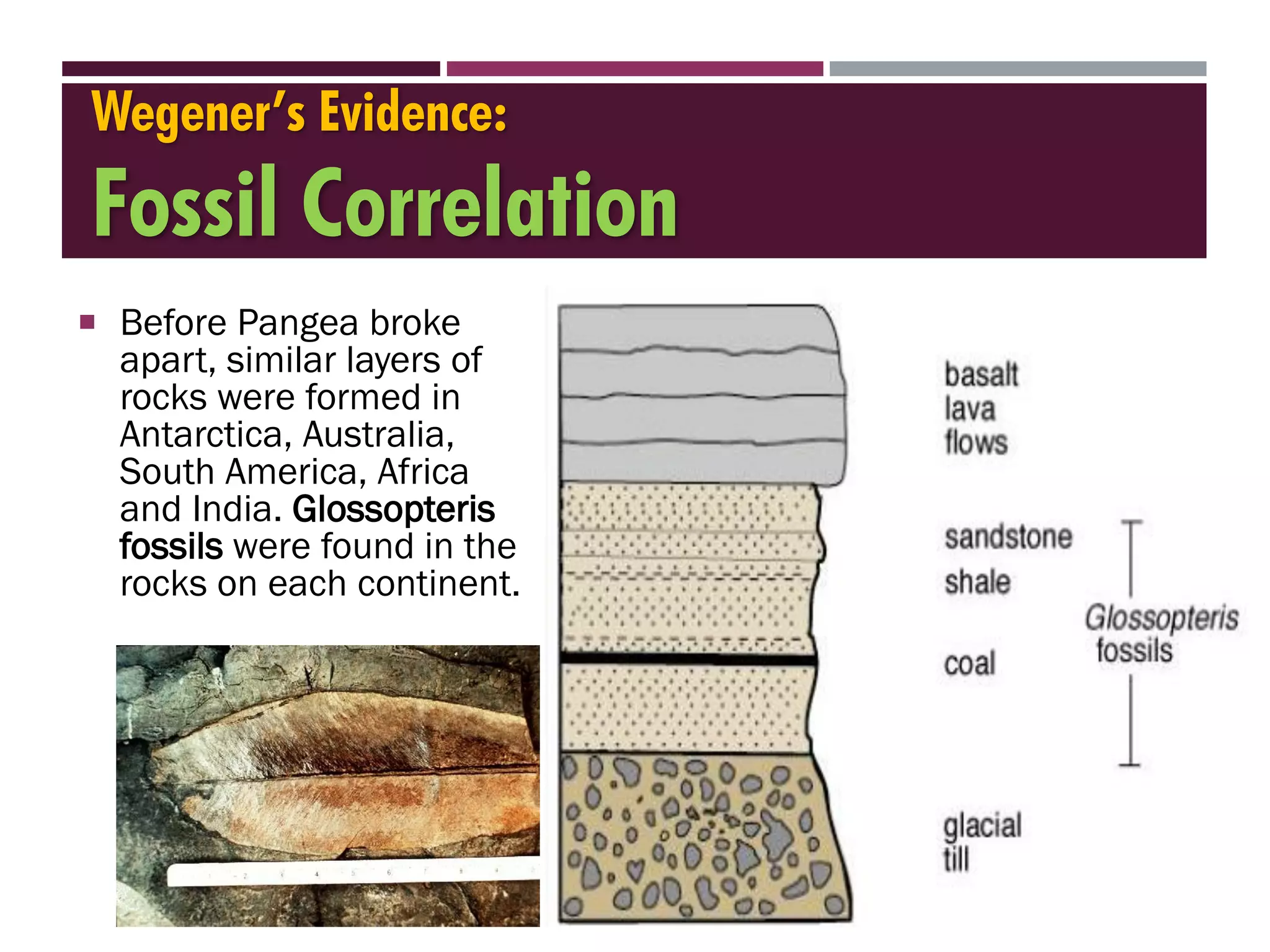

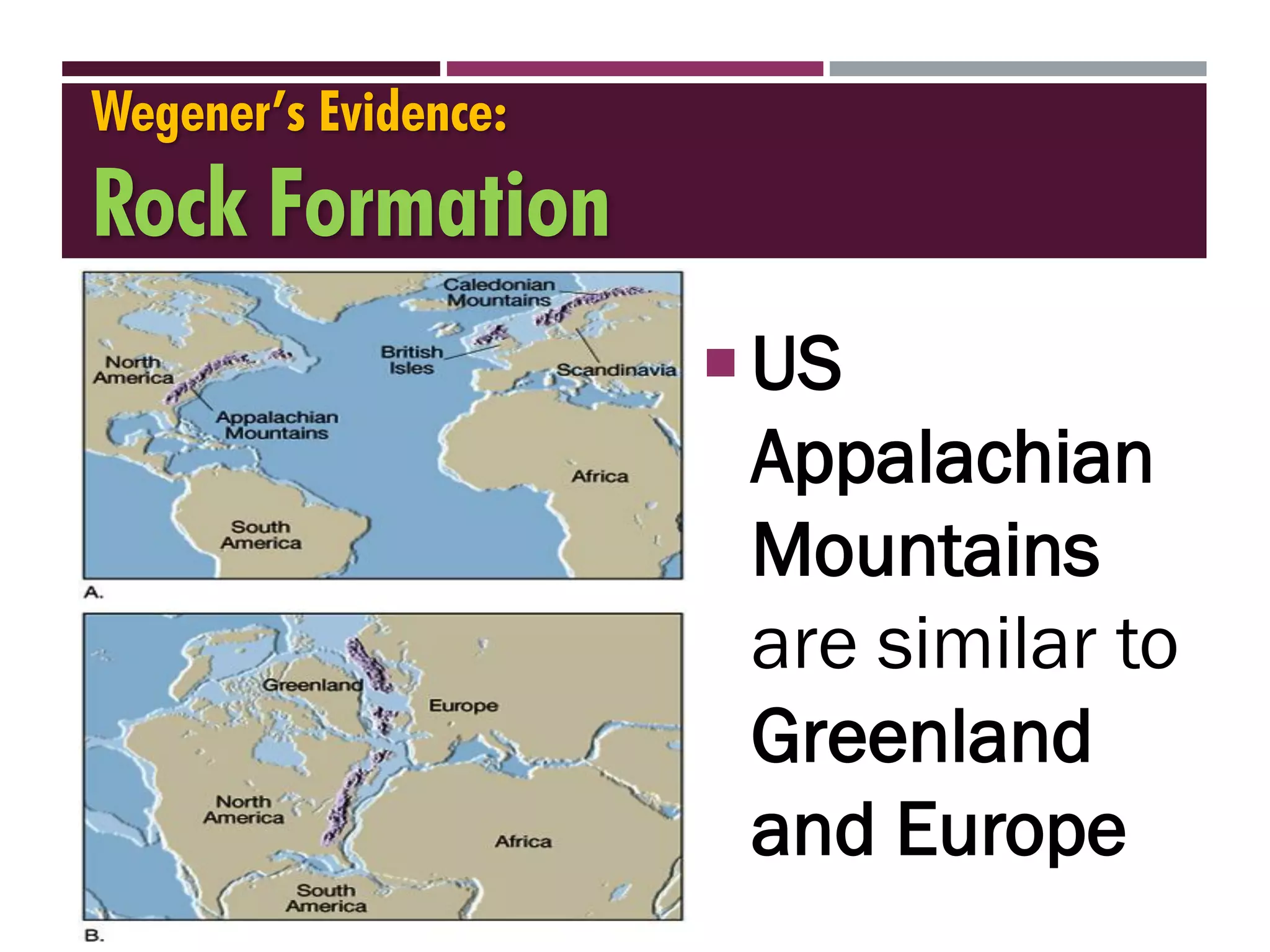

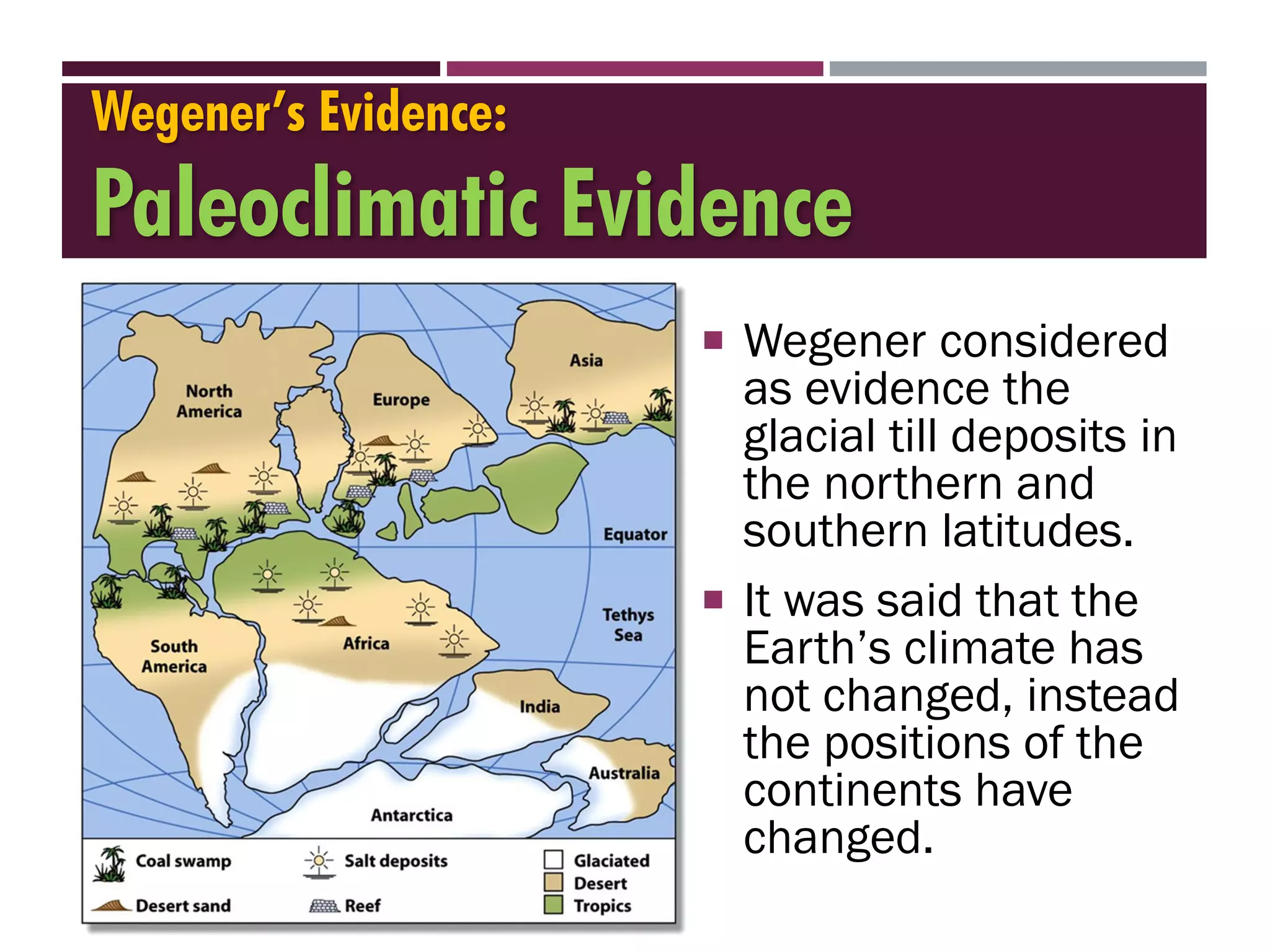
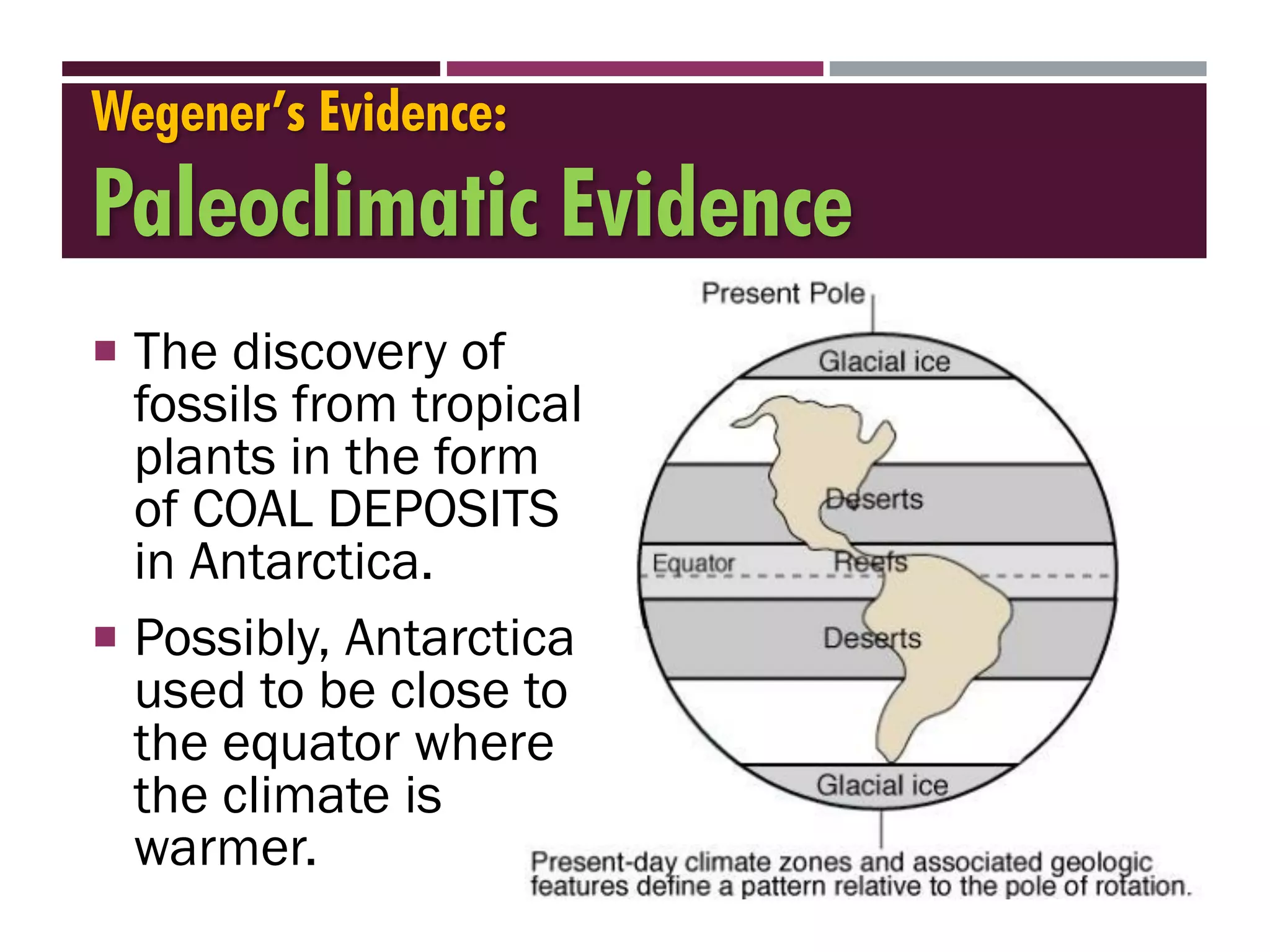




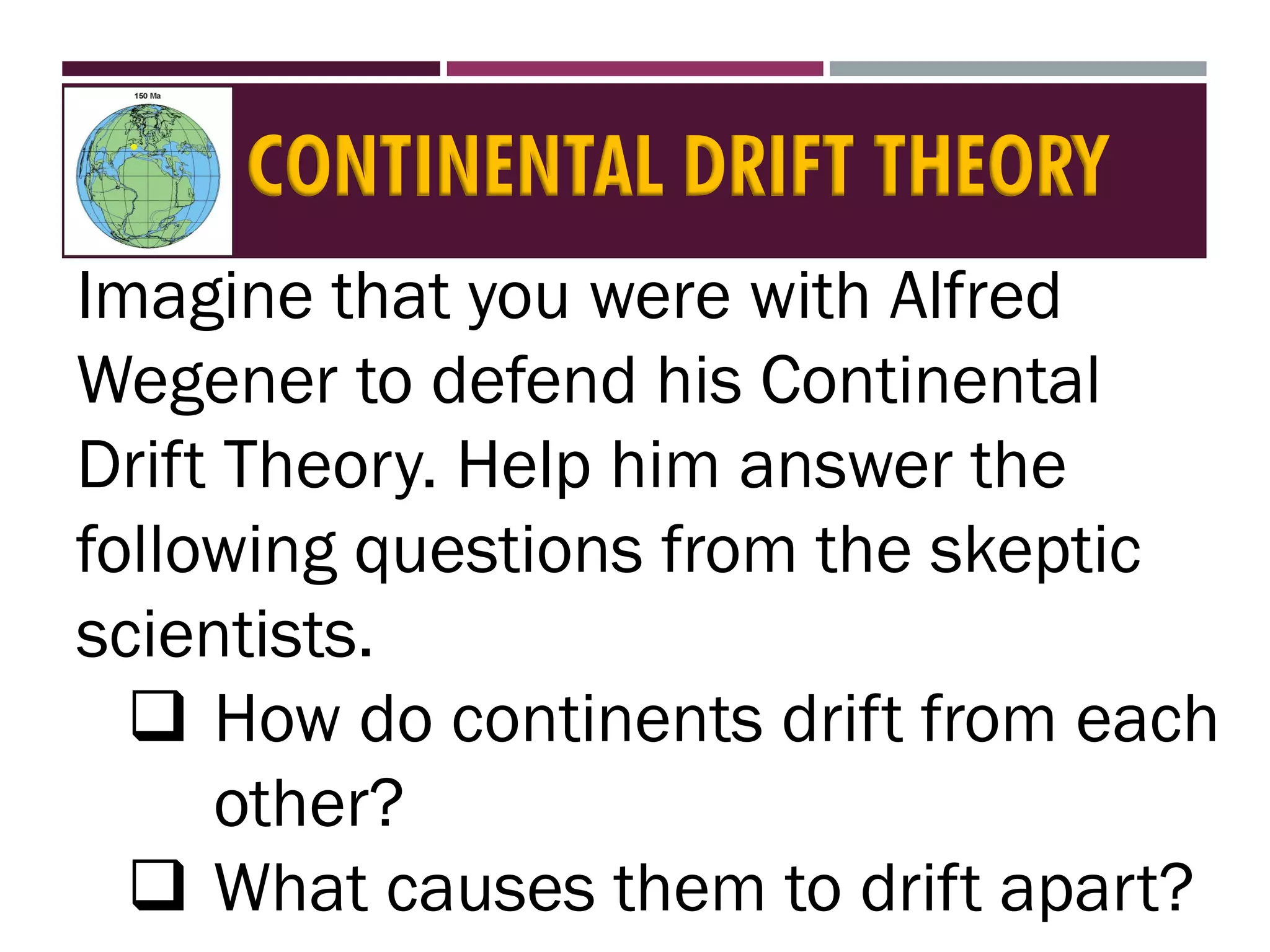


Alfred Wegener first proposed the theory of continental drift in the early 20th century. He noticed that the continents appeared to fit together and were once attached in a supercontinent called Pangaea. Wegener provided evidence from matching coastlines, fossil and rock formations, and paleoclimatic data to support his theory. However, he was unable to explain the mechanism of continental drift. Most geologists at the time rejected his theory due to the lack of a clear explanation for how and why the continents would move. It was not until the 1950s when the theory of plate tectonics was developed that Wegener's concept of continental drift became widely accepted.


![Integ Sci 10 Lesson 1 [Autosaved].pptx](https://cdn.slidesharecdn.com/ss_thumbnails/integsci10lesson1autosaved-230829103353-6f6fc3f8-thumbnail.jpg?width=640&height=640&fit=bounds)


