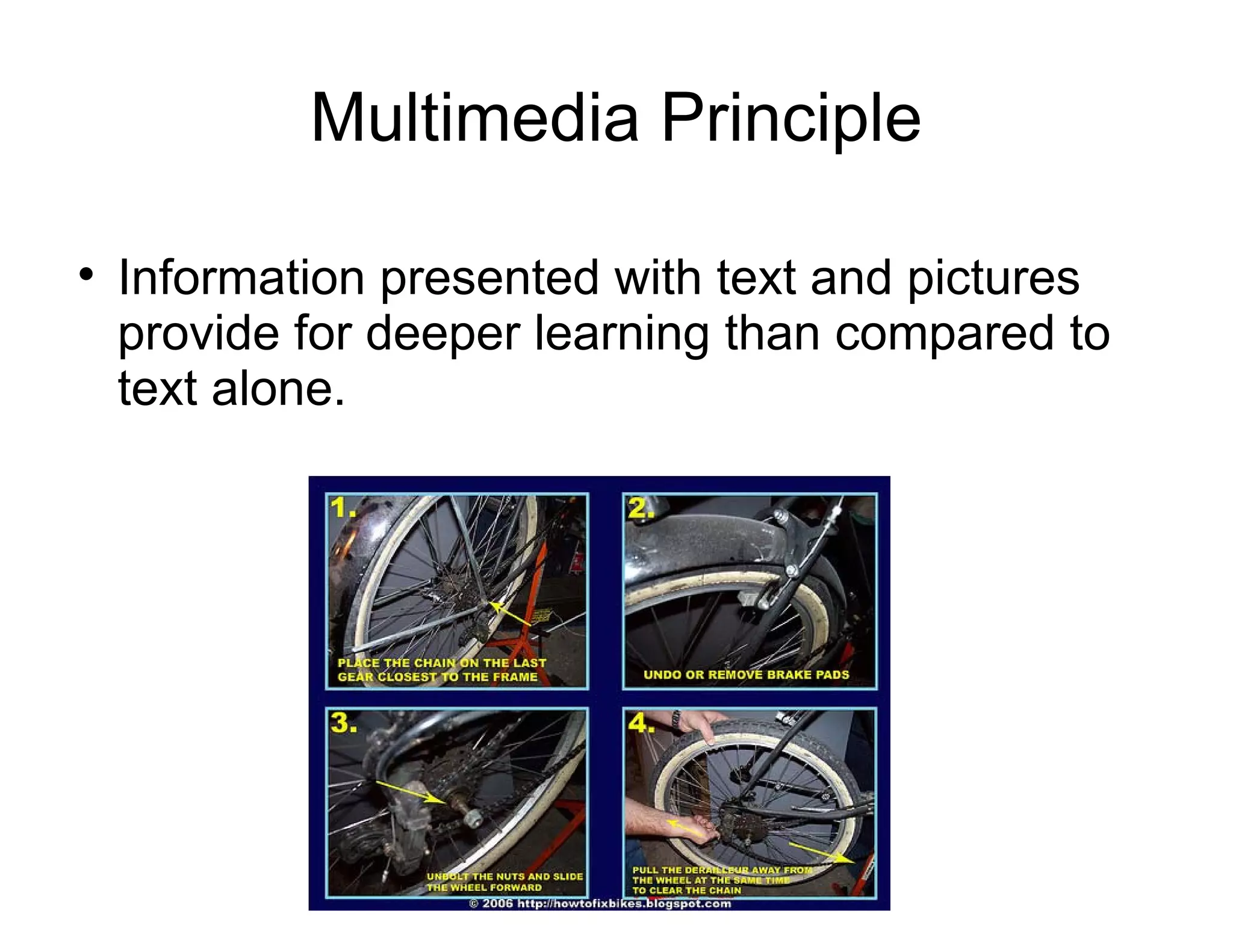
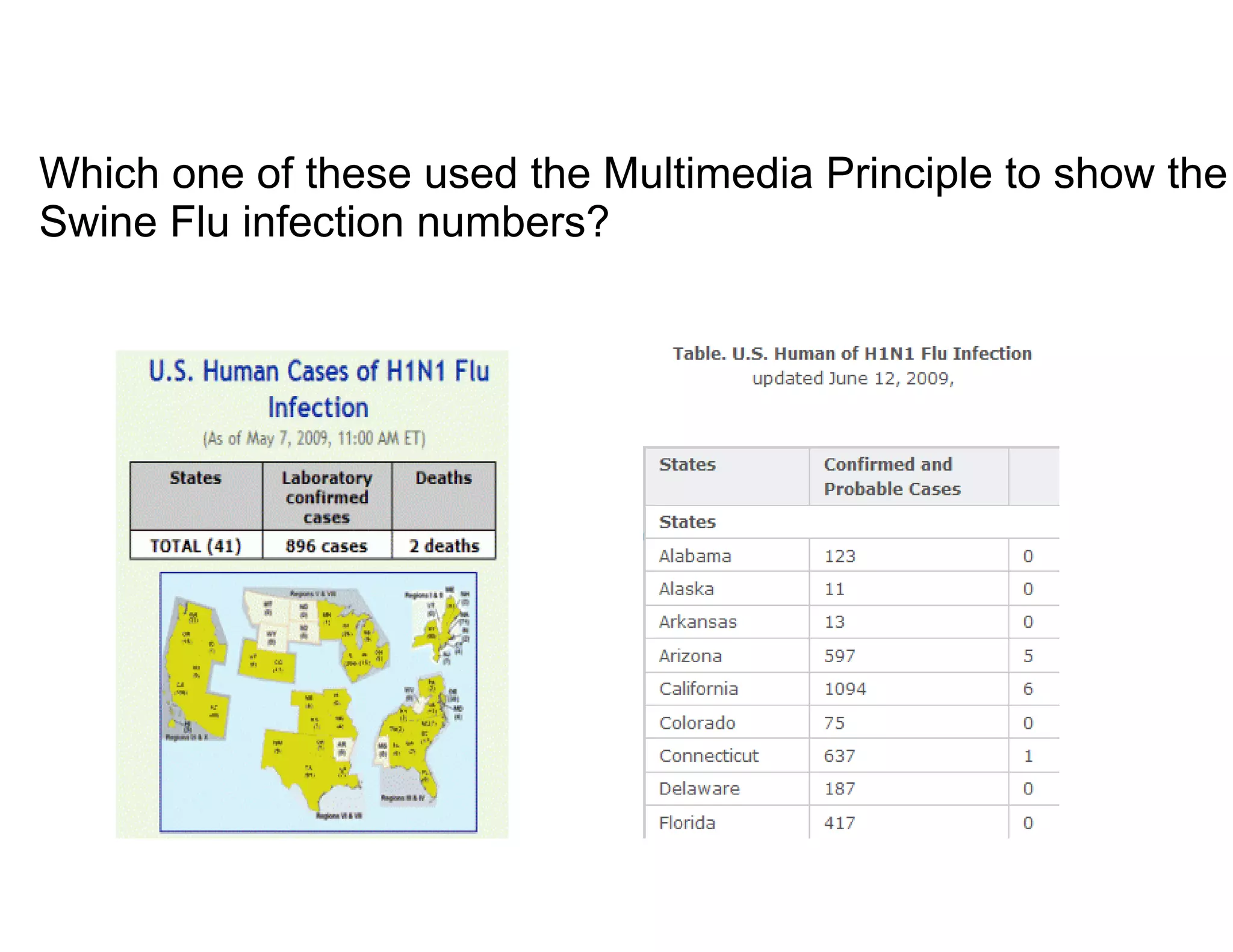
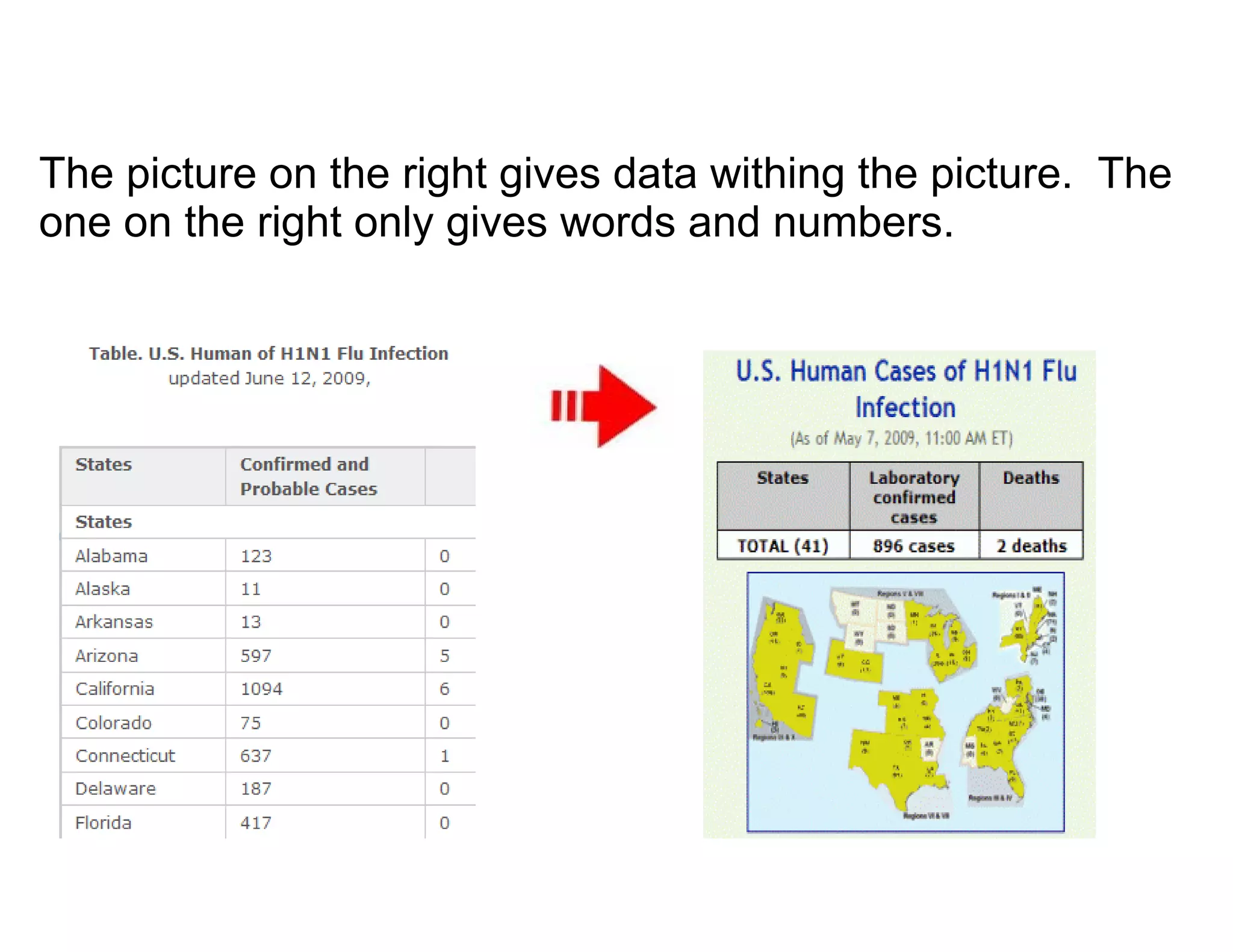
After this lesson, students will be able to identify and demonstrate examples of the Multimedia and Contiguity Principles. The Multimedia Principle states that information presented with both text and pictures provides deeper learning than text alone. The Contiguity Principle indicates that people learn more easily when text is located close to the visuals it describes or when spoken words and visuals are presented simultaneously.
Lesson Objectives
After thislesson, students will be able to identify
and demonstrate examples of the Multimedia
and Contiguity Principles through examples.
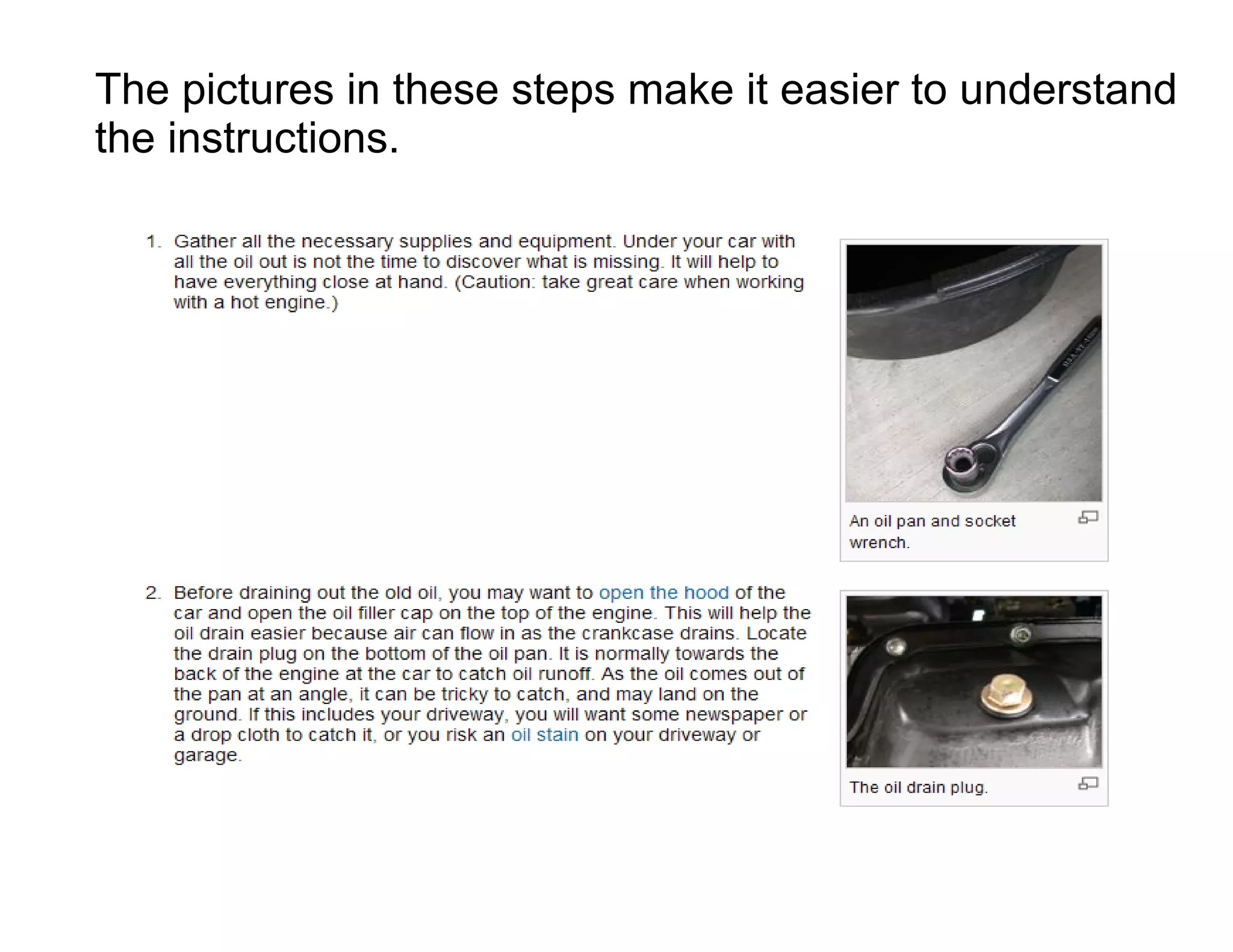
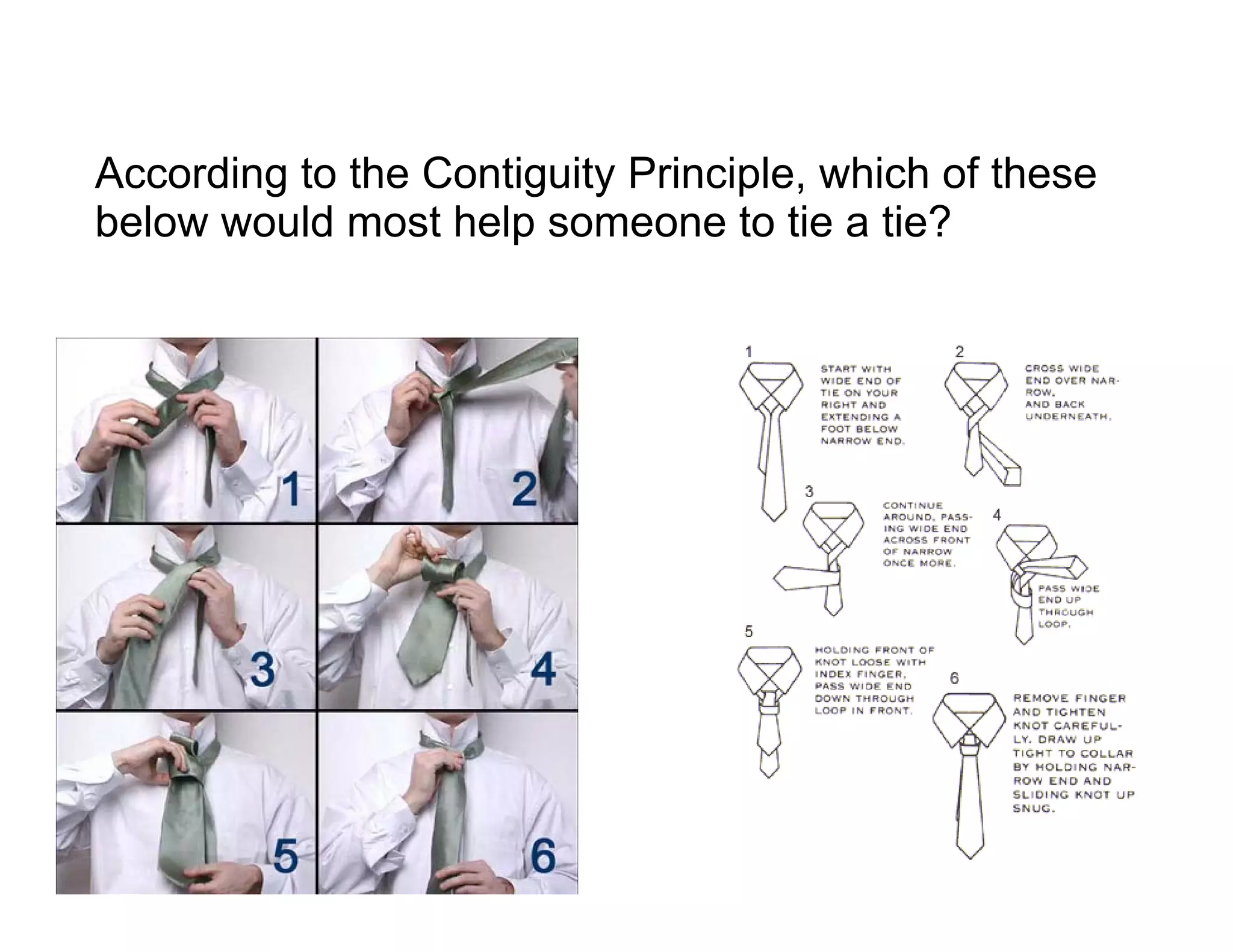
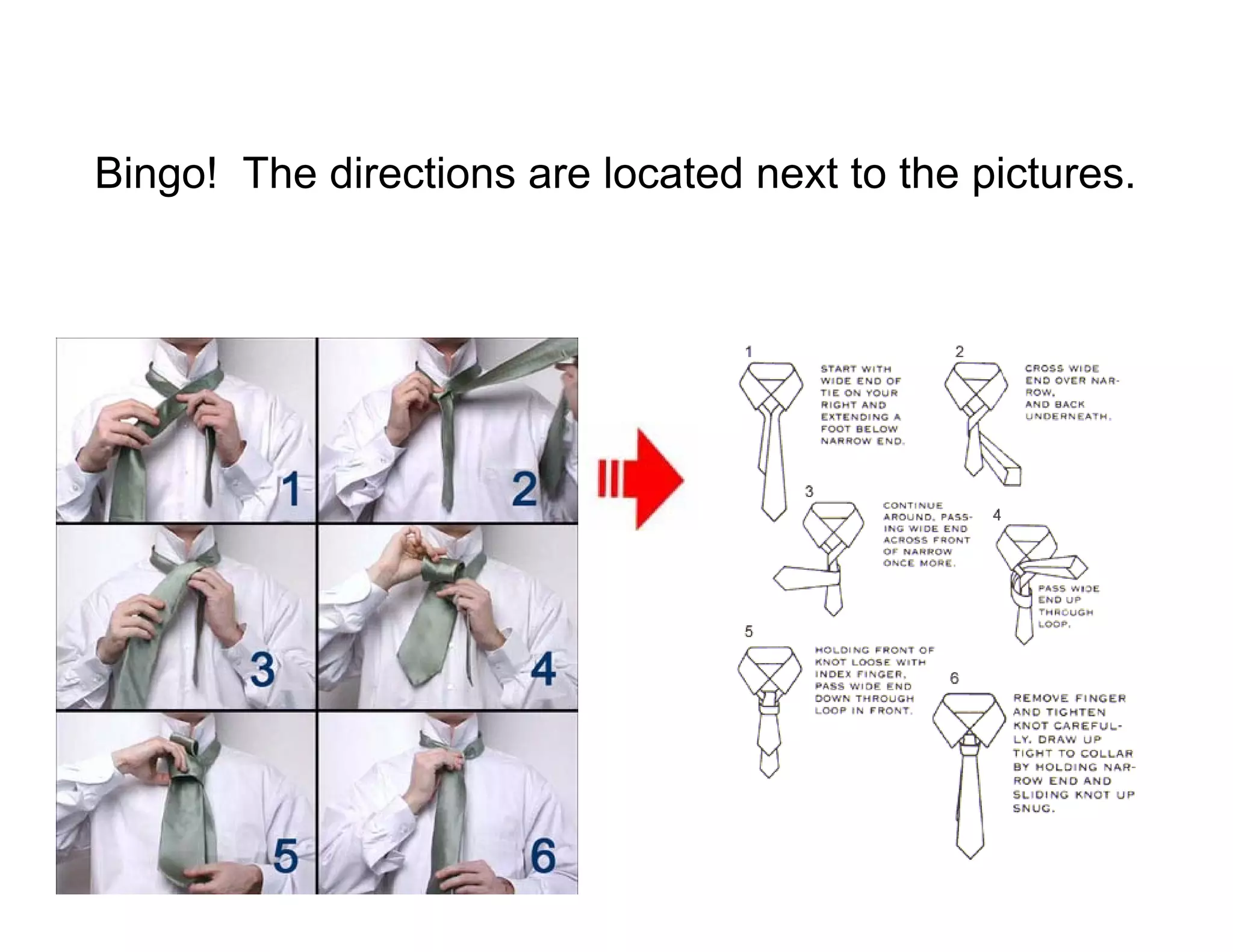
The pictures inthese steps make it easier to understand
the instructions.
4.
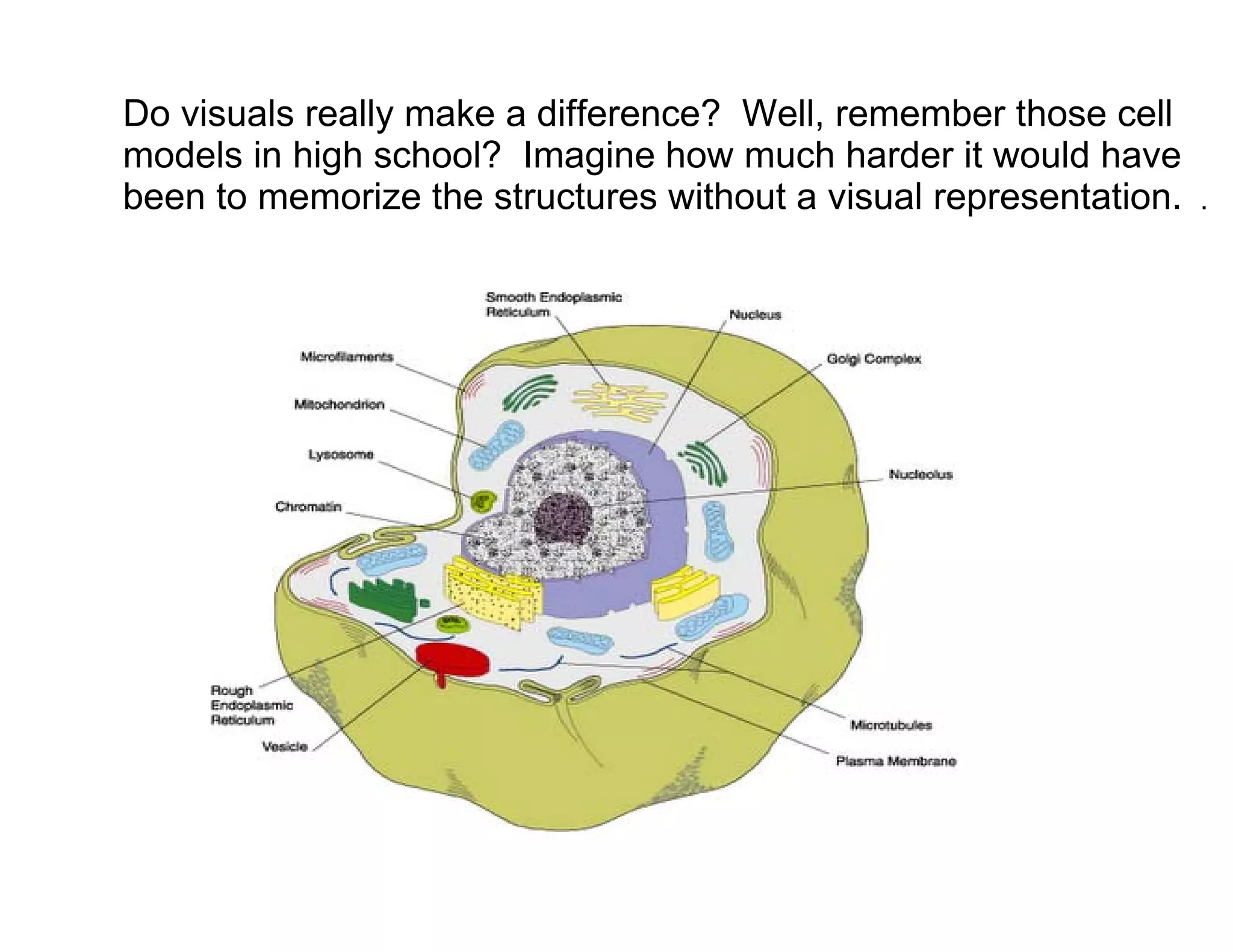
Do visuals reallymake a difference? Well, remember those cell
models in high school? Imagine how much harder it would have
been to memorize the structures without a visual representation. .
5.
Take a lookat some examples that do NOT follow
the Multimedia Principle.
6.
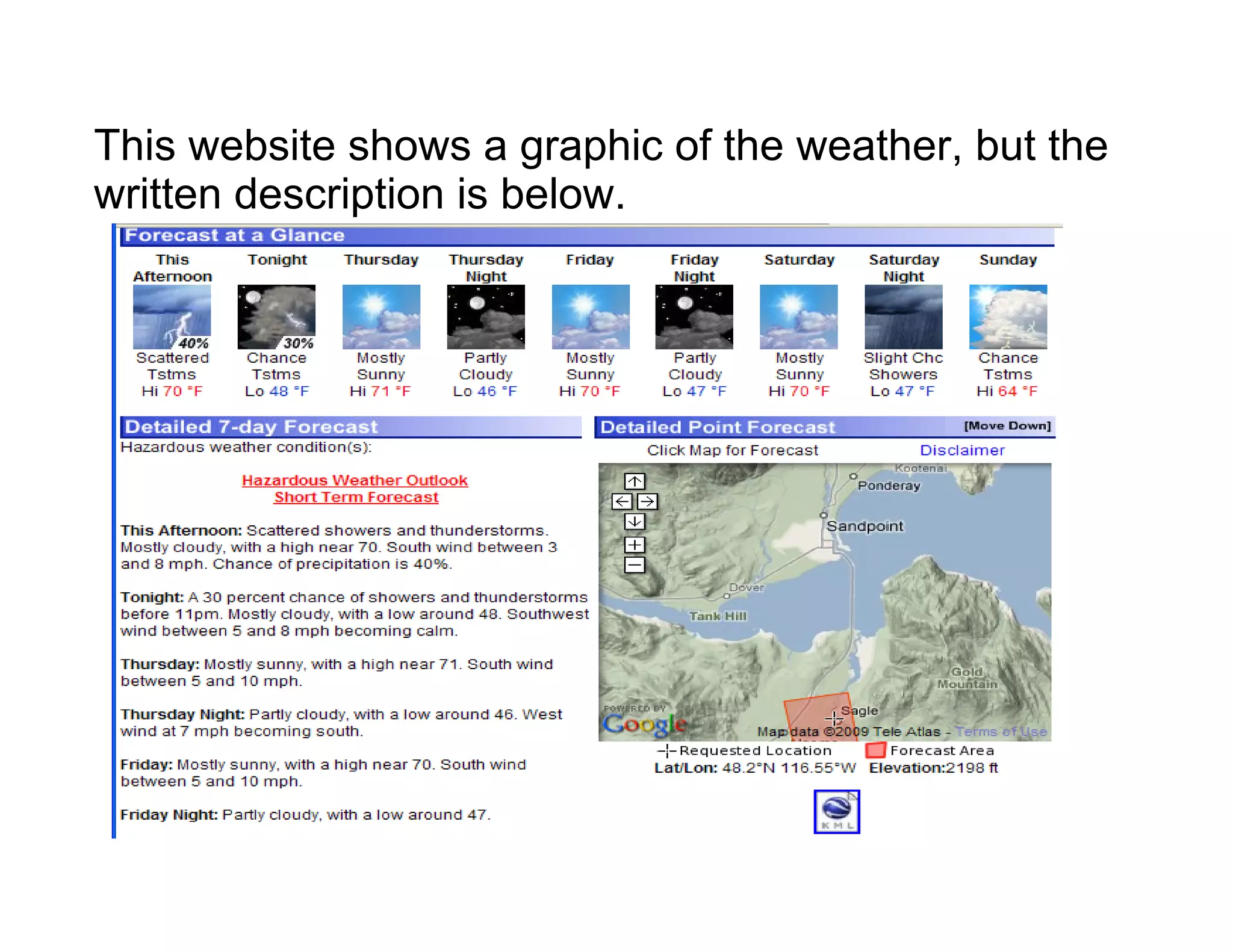
This website showsa graphic of the weather, but the
written description is below.
7.
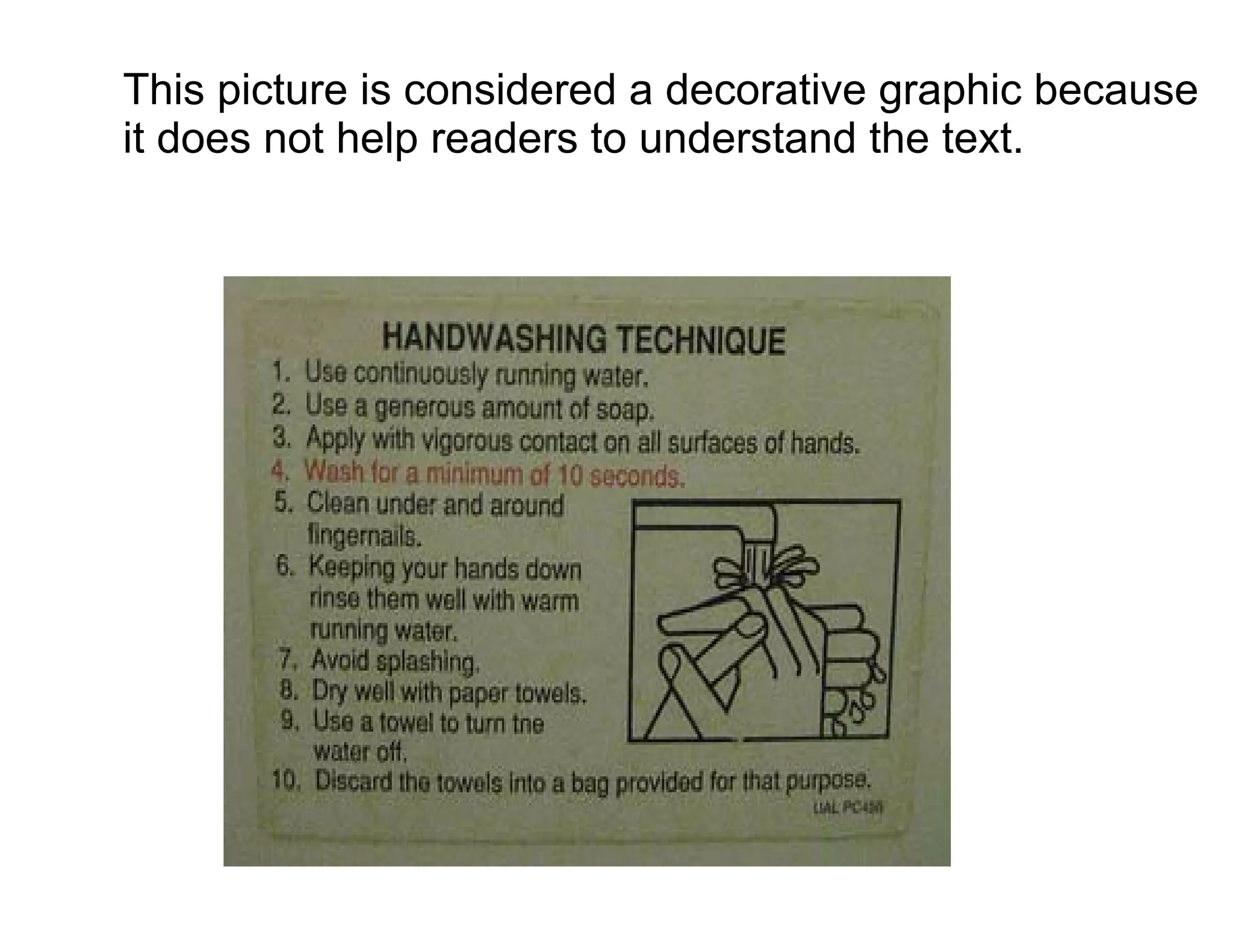
This picture isconsidered a decorative graphic because
it does not help readers to understand the text.
8.
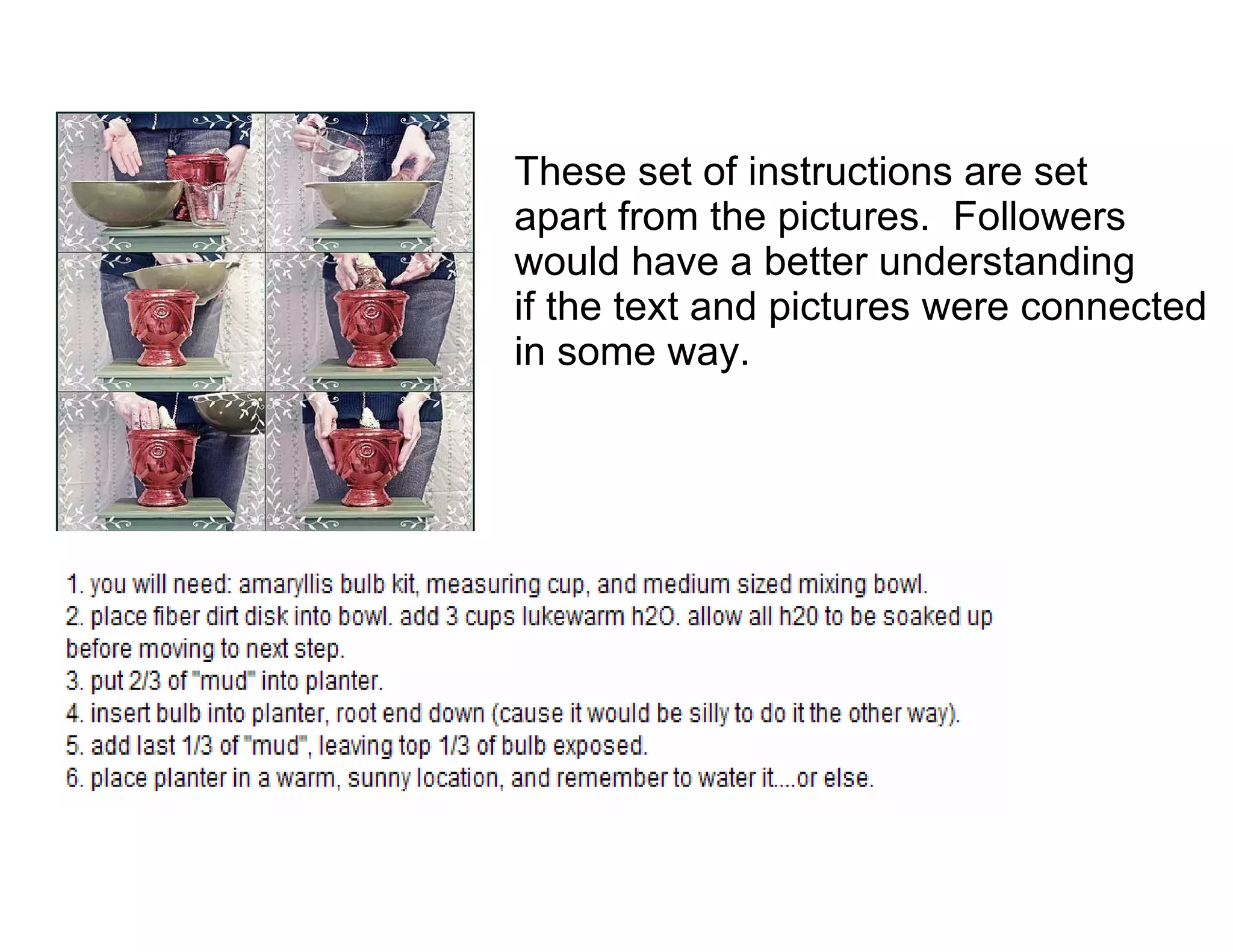
These set ofinstructions are set
apart from the pictures. Followers
would have a better understanding
if the text and pictures were connected
in some way.
9.
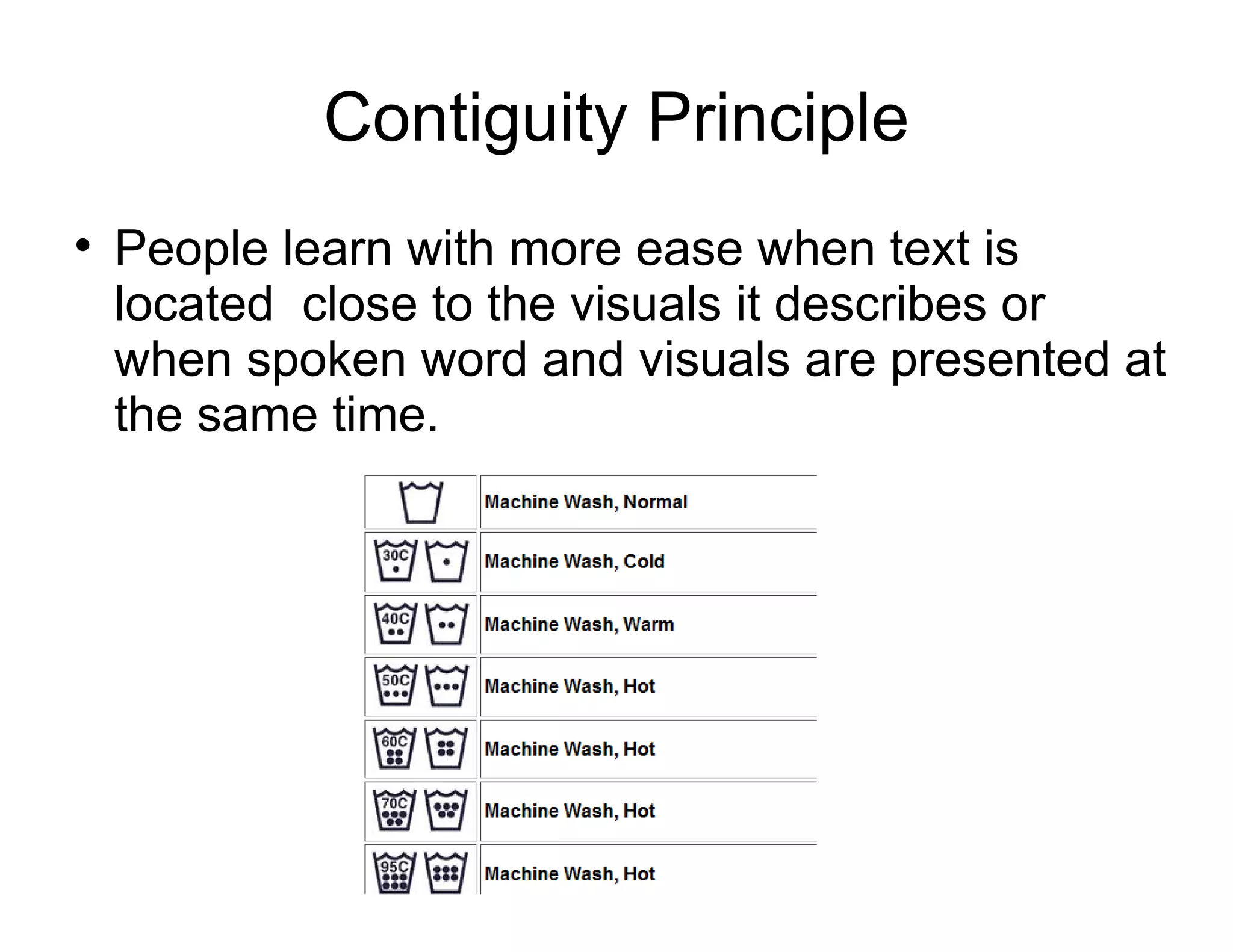
Contiguity Principle
People learnwith more ease when text is
located close to the visuals it describes or
when spoken word and visuals are presented at
the same time.
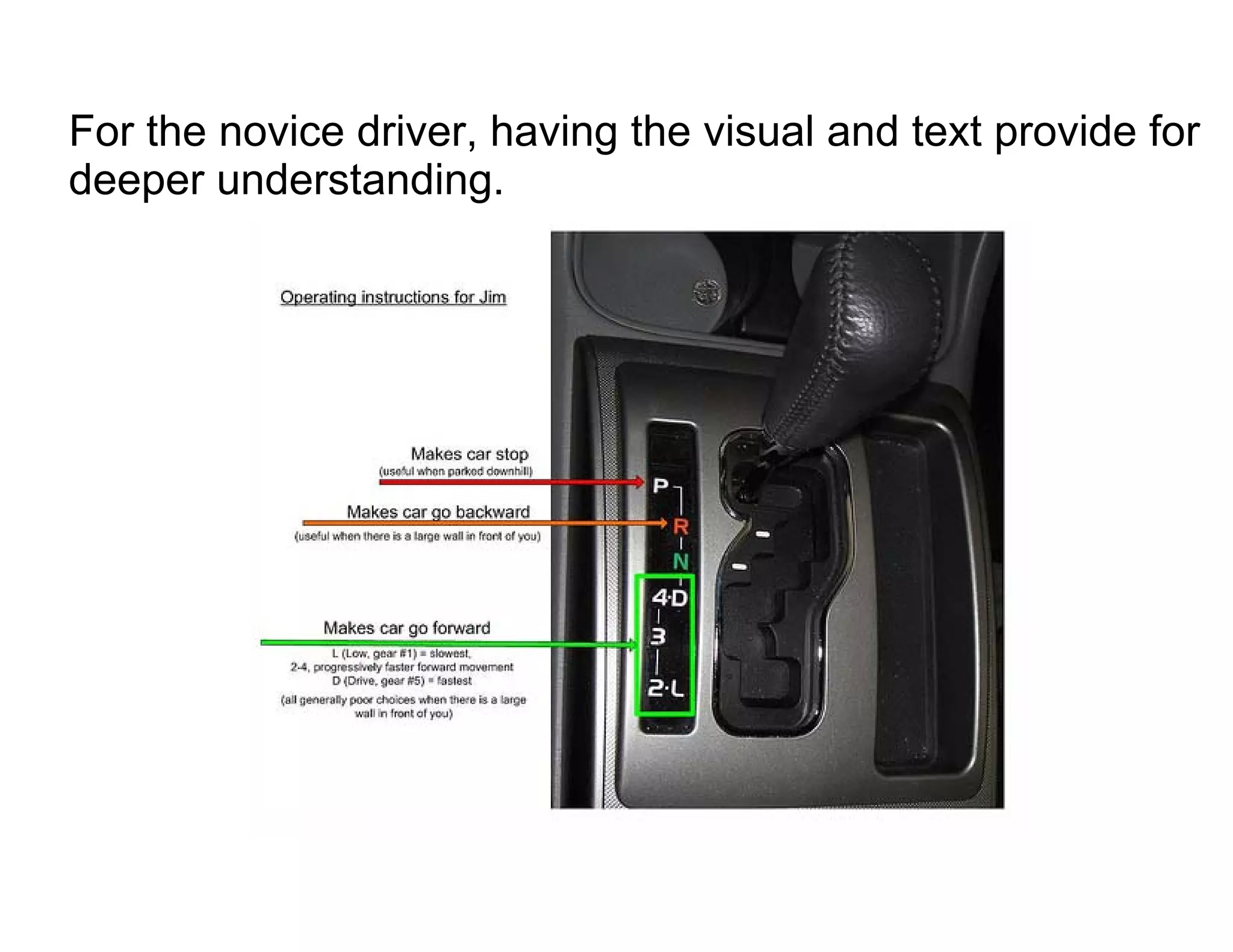
10.
For the novicedriver, having the visual and text provide for
deeper understanding.
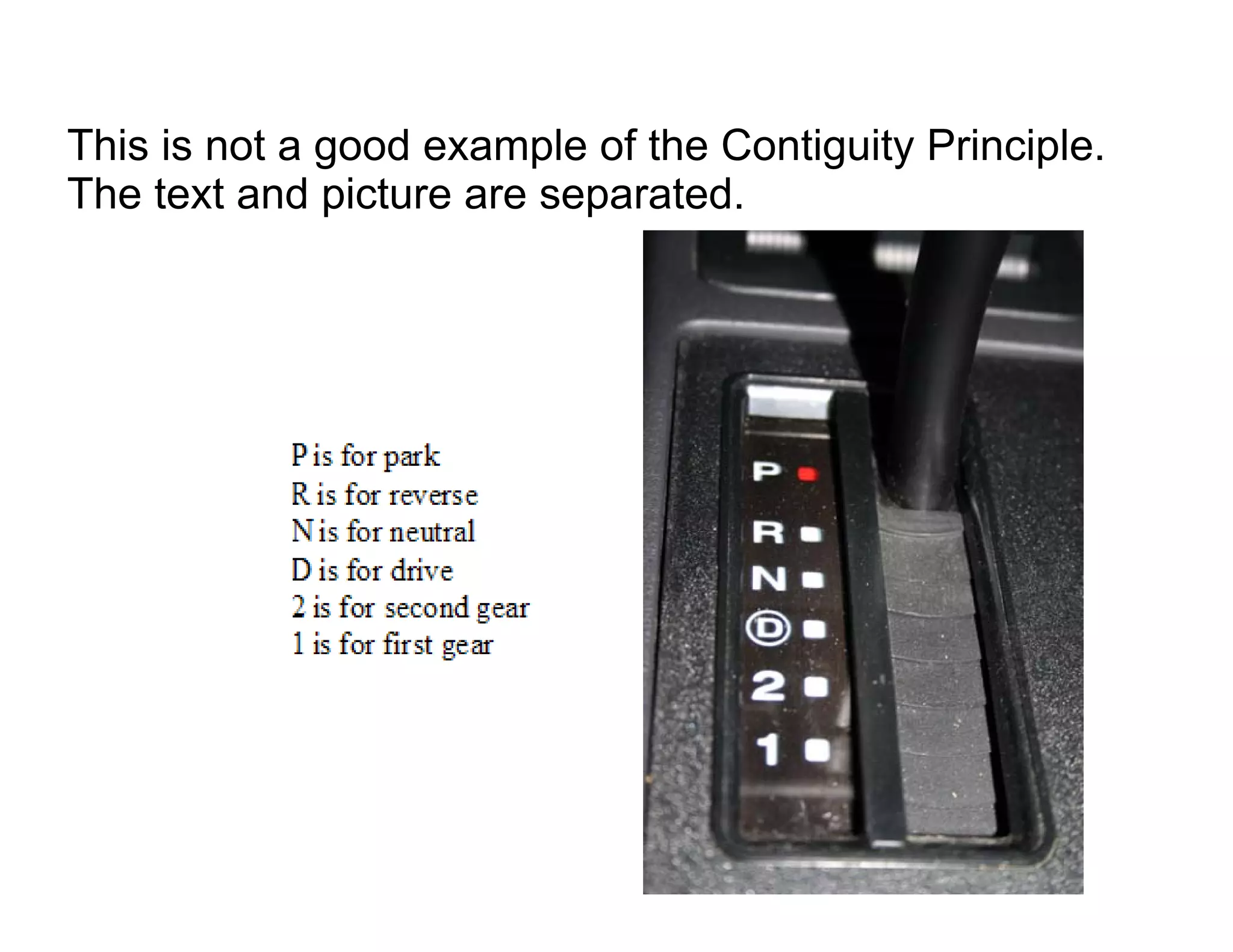
11.
This is nota good example of the Contiguity Principle.
The text and picture are separated.
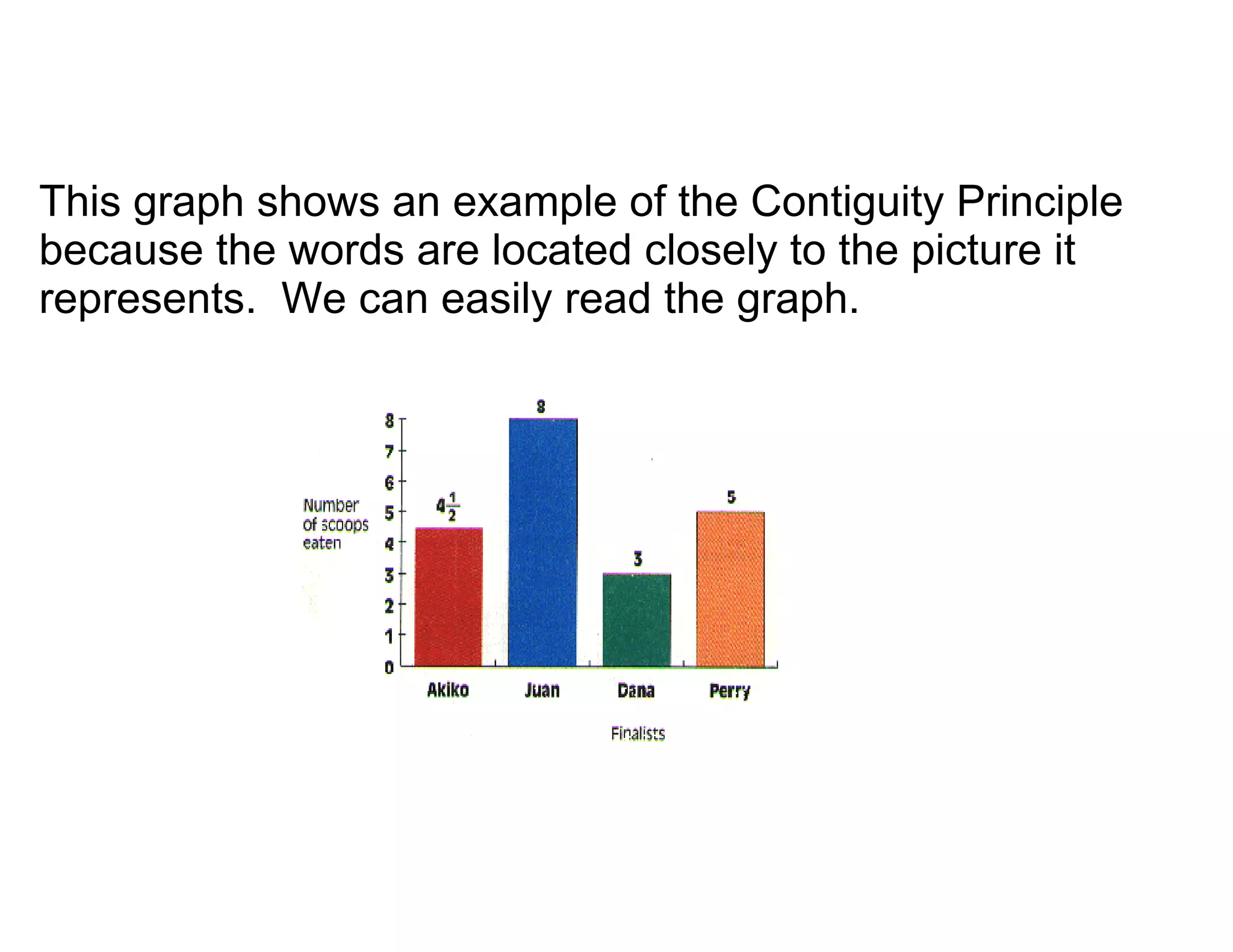
12.
This graph showsan example of the Contiguity Principle
because the words are located closely to the picture it
represents. We can easily read the graph.
13.
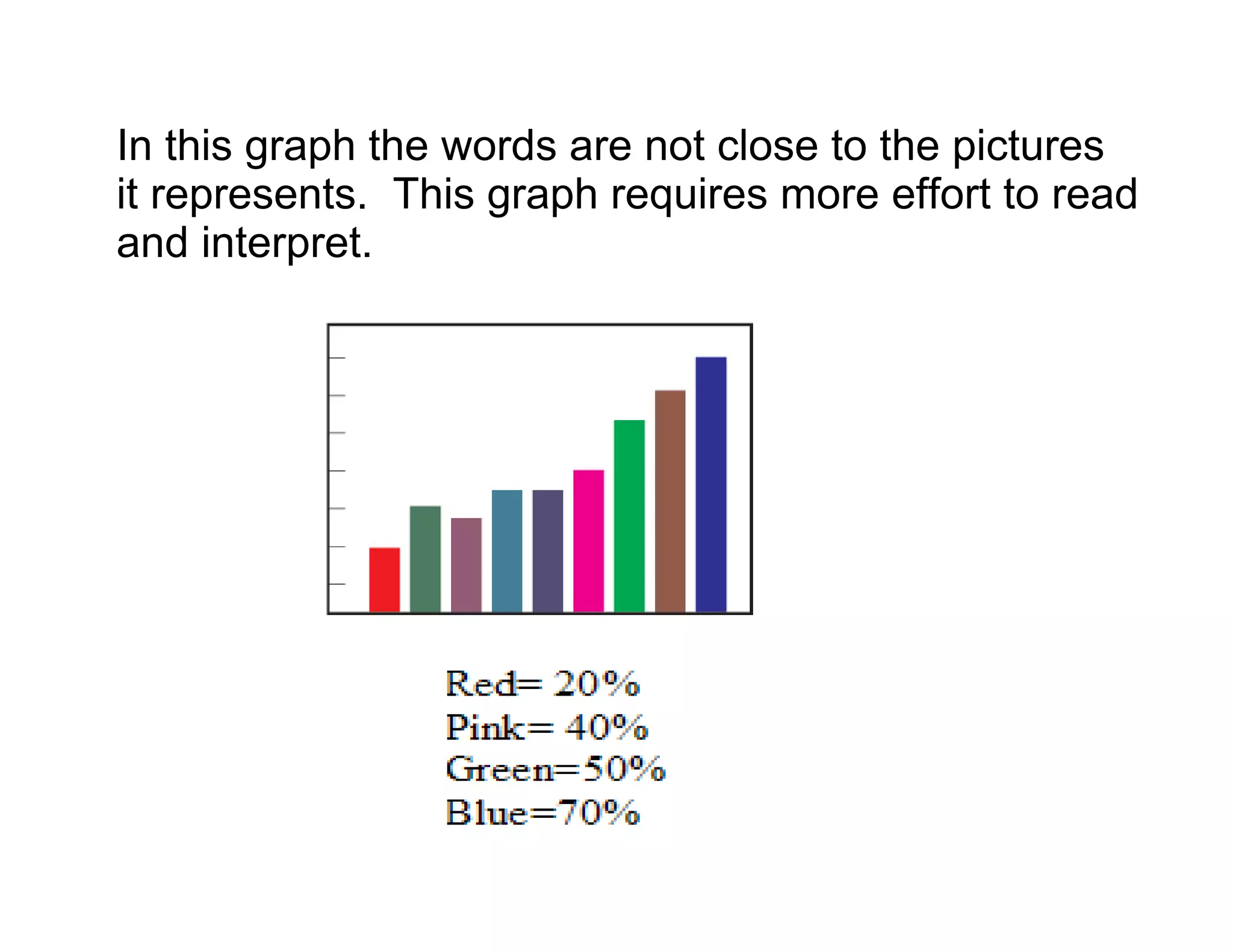
In this graphthe words are not close to the pictures
it represents. This graph requires more effort to read
and interpret.
14.
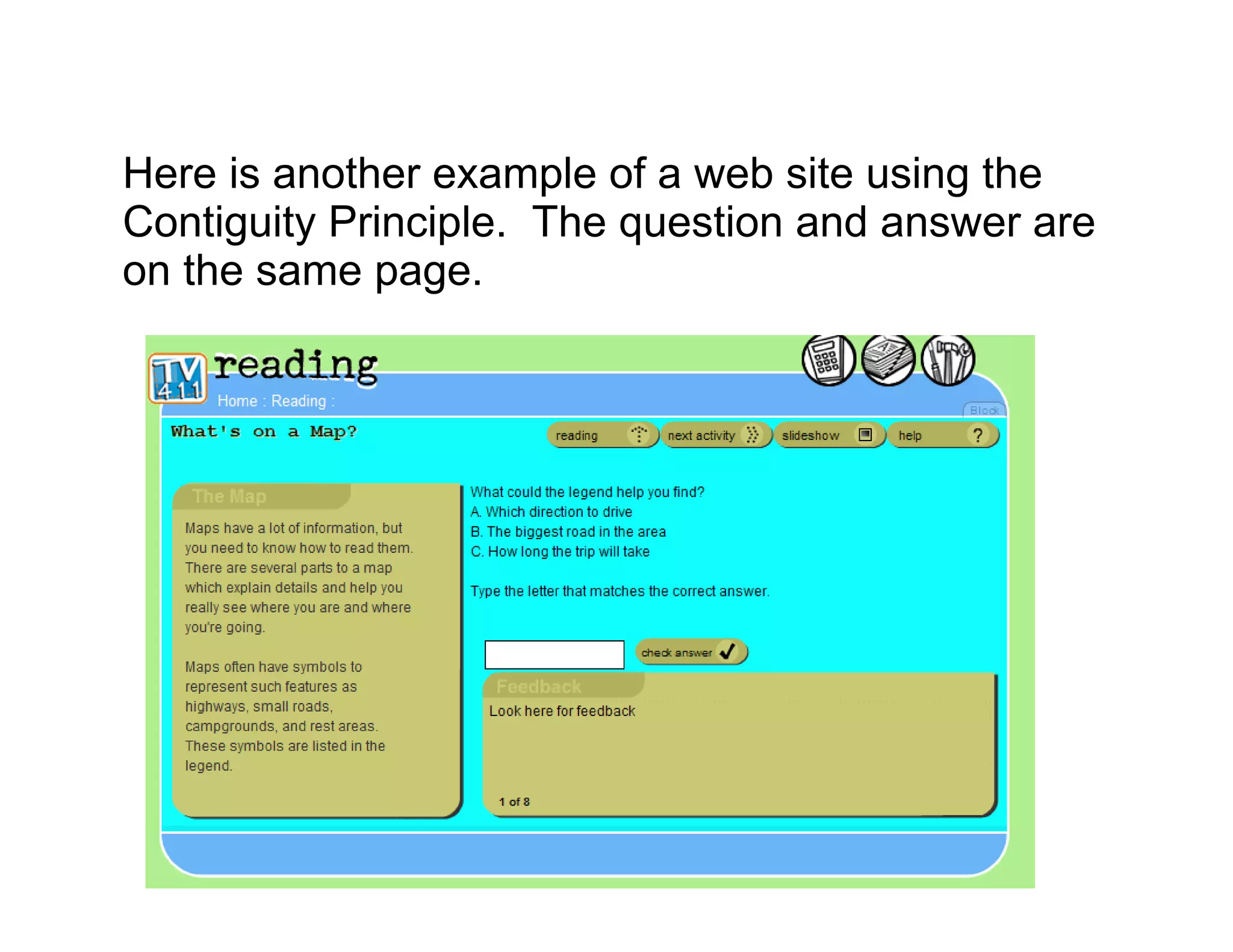
Here is anotherexample of a web site using the
Contiguity Principle. The question and answer are
on the same page.
15.
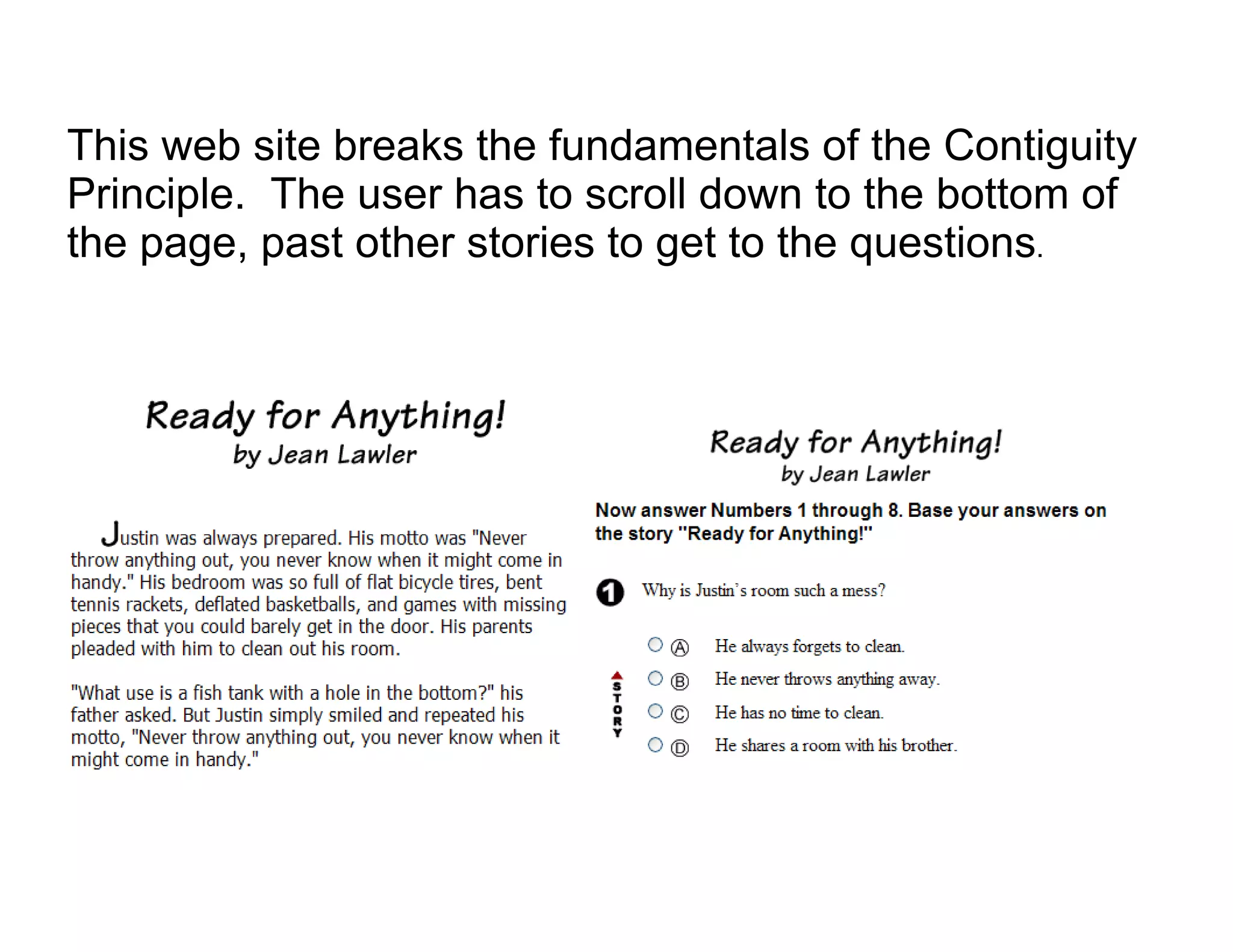
This web sitebreaks the fundamentals of the Contiguity
Principle. The user has to scroll down to the bottom of
the page, past other stories to get to the questions.
16.
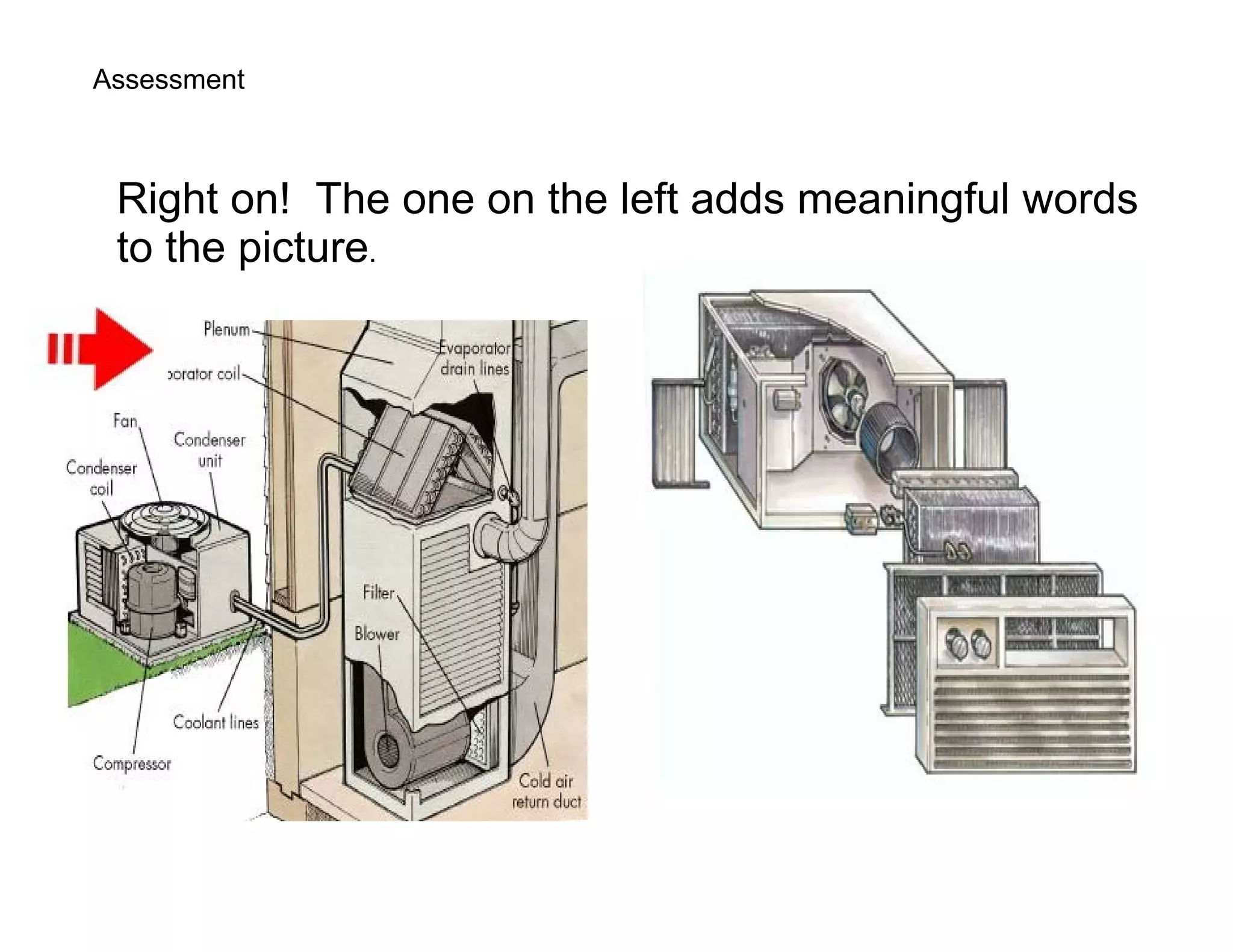
Assessment
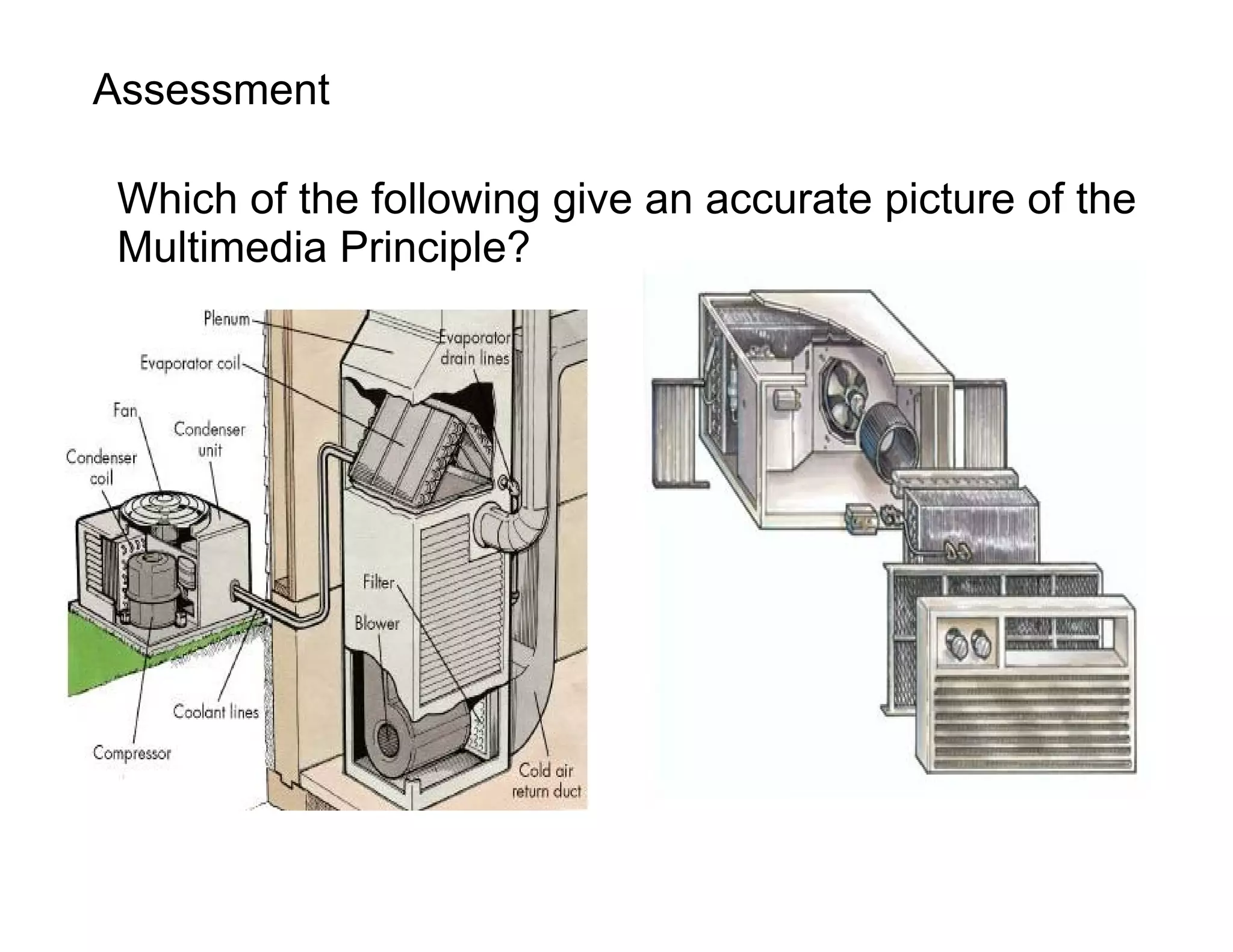
Which ofthe following give an accurate picture of the
Multimedia Principle?
Answer these questionstrue or false.
1. The Multimedia Principle can include the use of sound that goes along with
a visual presentation.
2. The Contiguity Principle allows for pictures and words to separated on the
screen they appear.
3. These principles are designed to enhance the quality of learning and decrease
the level of frustration on the part of the learner.
23.
Answers
1. The MultimediaPrinciple can include the use of sound that goes along with
a visual presentation. True
2. The Contiguity Principle allows for pictures and words to separated on the
screen they appear. False
3. These principles are designed to enhance the quality of learning and decrease
the level of frustration on the part of the learner. True
24.
Sources
Clark, R.C.,Mayer, R. E. (2008). E-Learning and the Science of Instruction.
San Francisco, Pfeiffer.
Flickr Creative Commons images
http://www.tv411.org/reading/
www.pearsonlongman.com/ae/marketing/sfesl/florida/.../grade8.pdf
www.noaa.gov


![Gagne's 9 example and template[1]](https://cdn.slidesharecdn.com/ss_thumbnails/gagnes9-exampleandtemplate1-180204121231-thumbnail.jpg?width=640&height=640&fit=bounds)


