Multimedia and Contiguity Principles  project 1 Elizabeth Akosah
Multimedia After viewing this instruction, the learner will be able to actively engage in Multimedia and Cognitive principles.
Multimedia What is Multimedia Upon completion of this module the learner will be able to define multimedia. Multimedia is the principle of applying words and graphics rather than words alone.(Clark, Meyer, 2008)
Do Visuals Make a Difference? Mayer describes potential benefits of multimedia. Since humans possess visual and auditory information processing capabilities, we need to take advantage of both capabilities at once.  In addition, these two channels process information quite differently, so the combination of multiple media is useful in calling on the capabilities of both systems.  Meaningful connections between text and graphics potentially allow for deeper understanding and better mental models than from either alone.
Static illustrations Objective:  The learner will be able to define Static illustrations Static illustration Stand-alone image A picture or graphic Static Illustration is a fixed picture or graphic
Example What does a static illustration do It is better to add graphic to words, and also use animation  or static illustration.  The image at the bottom  right is a graphic image but does not teach us the lesson at hand. This is just a decorative piece of static or graphic illustration .
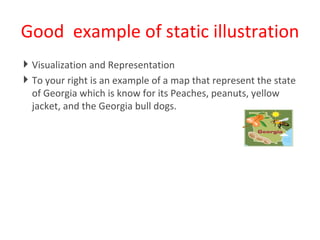
Good  example of static illustration Visualization and Representation To your right is an example of a map that represent the state of Georgia which is know for its Peaches, peanuts, yellow jacket, and the Georgia bull dogs.
Application Words and graphic are very important to learners who have very little knowledge of the domain.  The previous slide shows  picture, text and information that you can see and observe.  The learner can focus on the picture and text making cognitive relation possible .
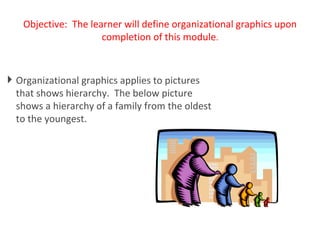
Objective:  The learner will define organizational graphics upon completion of this module . Organizational graphics applies to pictures that shows hierarchy.  The below picture shows a hierarchy of a family from the oldest to the youngest.
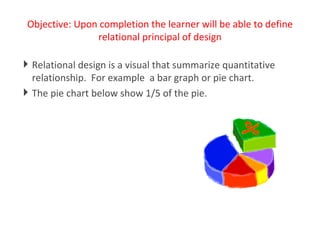
Objective: Upon completion the learner will be able to define relational principal of design Relational design is a visual that summarize quantitative relationship.  For example  a bar graph or pie chart.  The pie chart below show 1/5 of the pie.
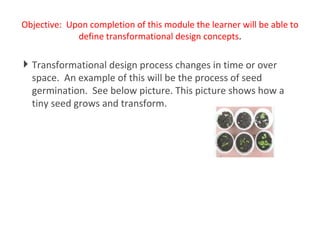
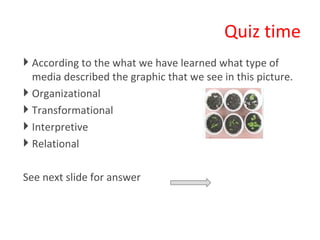
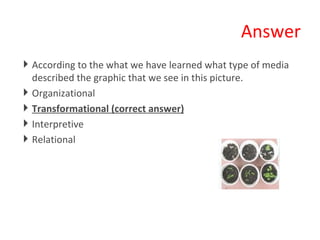
Objective:  Upon completion of this module the learner will be able to define transformational design concepts . Transformational design process changes in time or over space.  An example of this will be the process of seed germination.  See below picture. This picture shows how a tiny seed grows and transform.
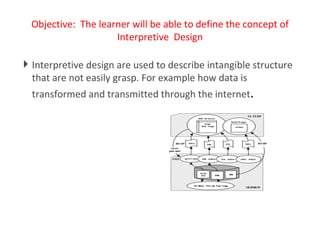
Objective:  The learner will be able to define the concept of Interpretive  Design Interpretive design are used to describe intangible structure that are not easily grasp. For example how data is transformed and transmitted through the internet .
Let us recap what we have learned Based on cognitive theory and research evidence  we recommend that e-learning course include words and graphic, rather that words alone. By words we mean printed text, by graphic we mean static illustrations. (Clark, Meyer, 2008)  After viewing these materials the learner will be able to identify structures with text to determine if the material meets the criteria’s definition .
Quiz time According to the what we have learned what type of media described the graphic that we see in this picture. Organizational  Transformational Interpretive Relational See next slide for answer
Answer According to the what we have learned what type of media described the graphic that we see in this picture. Organizational  Transformational (correct answer) Interpretive Relational
Quiz What type of graphic principle is applied to this image if you were in a science class. Organizational  Transformational Decorative Relational See next slide for answer
Answer What type of graphic principle is applied to this image if you were in a science class. Organizational  Transformational Decorative (correct answer) Relation al
Let us recap what Multimedia is one more time Multimedia is the principle of applying words and graphics rather than words alone.(Clark, Meyer, 2008).
Contiguity Principle What is Contiguity?
Objective The learner will be able to identify contiguity principles through examples upon completion of this exercise Let’s move on
Definition Contiguity is the aligning of words to corresponding graphics
Contiguity principle 1 Coordinate printed words and graphic
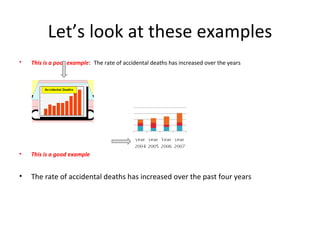
Let’s look at these examples This is a poor example :  The rate of accidental deaths has increased over the years This is a good example The rate of accidental deaths has increased over the past four years
Proximity What’s the difference?  In the first picture the descriptions were there but it appeared to be decorative items. In the second picture comments were used in proximity to the items the lesson is related to. The direction were on the screen instead of the learners guessing the years .
Principle 2 Synchronize spoken words with corresponding graphics
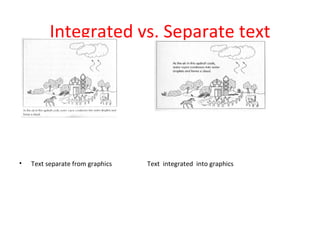
Overwhelming the learner Principle 2 talks about spoken words with corresponding  graphics.  This keeps the reader focused and not overwhelmed.  When a lesson separates corresponding words and graphic the learning cycle is broken and the reader focuses on the button to push rather than contents that is being taught. Let’s look at the next slide for an example.
Integrated vs. Separate text Text separate from graphics Text  integrated  into graphics
Facts Contiguity reduces load on working memory and thus increases learning.  Active learning involves constructing and connecting visual and verbal representations of material.
Audio /Visual Do not place text on a page with video and expect the reader to align the material contiguity . When the graphic is a video showing steps to perform a task the narration describing each step should be presented at the time as the action on the screen.
Why? We do not know how the learner interpret the conversation of words. We do not know the extent of detail processing the material. How the learner processed characteristics of the voice or tone of the material.
Let us recap what we have learned. Always remember to  Place printed words with graphics.  Why? Graphics facilitate active learning. Words alone may cause shallow learning. Synchronize spoken words with corresponding graphics. Why? This will keep the learner focused at the task at hand without wondering Audio /Visual.  Why?  We don’t know how the learner processed characteristics of the voice or tone of the material.
References: Clark, R C., & Meyer, R.E. (2008)  e-learning and the Science of Instruction. Second Edition. John Wiley and Sons Inc. Microsoft Clip Art, 2008. Images.google.com. Original works: Elizabeth Akosah

mini1

  • 1.
    Multimedia and ContiguityPrinciples project 1 Elizabeth Akosah
  • 2.
    Multimedia After viewingthis instruction, the learner will be able to actively engage in Multimedia and Cognitive principles.
  • 3.
    Multimedia What isMultimedia Upon completion of this module the learner will be able to define multimedia. Multimedia is the principle of applying words and graphics rather than words alone.(Clark, Meyer, 2008)
  • 4.
    Do Visuals Makea Difference? Mayer describes potential benefits of multimedia. Since humans possess visual and auditory information processing capabilities, we need to take advantage of both capabilities at once. In addition, these two channels process information quite differently, so the combination of multiple media is useful in calling on the capabilities of both systems. Meaningful connections between text and graphics potentially allow for deeper understanding and better mental models than from either alone.
  • 5.
    Static illustrations Objective: The learner will be able to define Static illustrations Static illustration Stand-alone image A picture or graphic Static Illustration is a fixed picture or graphic
  • 6.
    Example What doesa static illustration do It is better to add graphic to words, and also use animation or static illustration. The image at the bottom right is a graphic image but does not teach us the lesson at hand. This is just a decorative piece of static or graphic illustration .
  • 7.
    Good exampleof static illustration Visualization and Representation To your right is an example of a map that represent the state of Georgia which is know for its Peaches, peanuts, yellow jacket, and the Georgia bull dogs.
  • 8.
    Application Words andgraphic are very important to learners who have very little knowledge of the domain. The previous slide shows picture, text and information that you can see and observe. The learner can focus on the picture and text making cognitive relation possible .
  • 9.
    Objective: Thelearner will define organizational graphics upon completion of this module . Organizational graphics applies to pictures that shows hierarchy. The below picture shows a hierarchy of a family from the oldest to the youngest.
  • 10.
    Objective: Upon completionthe learner will be able to define relational principal of design Relational design is a visual that summarize quantitative relationship. For example a bar graph or pie chart. The pie chart below show 1/5 of the pie.
  • 11.
    Objective: Uponcompletion of this module the learner will be able to define transformational design concepts . Transformational design process changes in time or over space. An example of this will be the process of seed germination. See below picture. This picture shows how a tiny seed grows and transform.
  • 12.
    Objective: Thelearner will be able to define the concept of Interpretive Design Interpretive design are used to describe intangible structure that are not easily grasp. For example how data is transformed and transmitted through the internet .
  • 13.
    Let us recapwhat we have learned Based on cognitive theory and research evidence we recommend that e-learning course include words and graphic, rather that words alone. By words we mean printed text, by graphic we mean static illustrations. (Clark, Meyer, 2008) After viewing these materials the learner will be able to identify structures with text to determine if the material meets the criteria’s definition .
  • 14.
    Quiz time Accordingto the what we have learned what type of media described the graphic that we see in this picture. Organizational Transformational Interpretive Relational See next slide for answer
  • 15.
    Answer According tothe what we have learned what type of media described the graphic that we see in this picture. Organizational Transformational (correct answer) Interpretive Relational
  • 16.
    Quiz What typeof graphic principle is applied to this image if you were in a science class. Organizational Transformational Decorative Relational See next slide for answer
  • 17.
    Answer What typeof graphic principle is applied to this image if you were in a science class. Organizational Transformational Decorative (correct answer) Relation al
  • 18.
    Let us recapwhat Multimedia is one more time Multimedia is the principle of applying words and graphics rather than words alone.(Clark, Meyer, 2008).
  • 19.
  • 20.
    Objective The learnerwill be able to identify contiguity principles through examples upon completion of this exercise Let’s move on
  • 21.
    Definition Contiguity isthe aligning of words to corresponding graphics
  • 22.
    Contiguity principle 1Coordinate printed words and graphic
  • 23.
    Let’s look atthese examples This is a poor example : The rate of accidental deaths has increased over the years This is a good example The rate of accidental deaths has increased over the past four years
  • 24.
    Proximity What’s thedifference? In the first picture the descriptions were there but it appeared to be decorative items. In the second picture comments were used in proximity to the items the lesson is related to. The direction were on the screen instead of the learners guessing the years .
  • 25.
    Principle 2 Synchronizespoken words with corresponding graphics
  • 26.
    Overwhelming the learnerPrinciple 2 talks about spoken words with corresponding graphics. This keeps the reader focused and not overwhelmed. When a lesson separates corresponding words and graphic the learning cycle is broken and the reader focuses on the button to push rather than contents that is being taught. Let’s look at the next slide for an example.
  • 27.
    Integrated vs. Separatetext Text separate from graphics Text integrated into graphics
  • 28.
    Facts Contiguity reducesload on working memory and thus increases learning. Active learning involves constructing and connecting visual and verbal representations of material.
  • 29.
    Audio /Visual Donot place text on a page with video and expect the reader to align the material contiguity . When the graphic is a video showing steps to perform a task the narration describing each step should be presented at the time as the action on the screen.
  • 30.
    Why? We donot know how the learner interpret the conversation of words. We do not know the extent of detail processing the material. How the learner processed characteristics of the voice or tone of the material.
  • 31.
    Let us recapwhat we have learned. Always remember to Place printed words with graphics. Why? Graphics facilitate active learning. Words alone may cause shallow learning. Synchronize spoken words with corresponding graphics. Why? This will keep the learner focused at the task at hand without wondering Audio /Visual. Why? We don’t know how the learner processed characteristics of the voice or tone of the material.
  • 32.
    References: Clark, RC., & Meyer, R.E. (2008) e-learning and the Science of Instruction. Second Edition. John Wiley and Sons Inc. Microsoft Clip Art, 2008. Images.google.com. Original works: Elizabeth Akosah