Multimedia  +  Contiguity  Principles Understanding how to properly place and use  text  and  static images  in multimedia presentations to promote active learning
Learning  Objectives After watching this slideshow, the learner will be able to: Identify  the definitions of both the  multimedia  and  contiguity principles  with 100% accuracy Select— between two images—the graphic that properly uses both the  multimedia  and  contiguity principles  with 100% accuracy
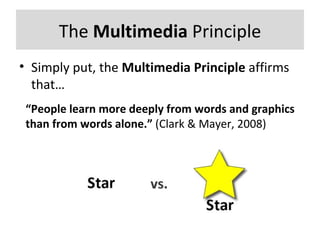
The  Multimedia  Principle Simply put, the  Multimedia Principle  affirms   that… “ People learn more deeply from words and graphics  than from words alone.”  (Clark & Mayer, 2008)
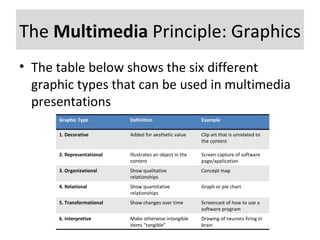
The table below shows the six different graphic types that can be used in multimedia presentations The  Multimedia  Principle: Graphics Graphic Type Definition Example 1. Decorative Added for aesthetic value Clip art that is unrelated to the content 2. Representational Illustrates an object in the  content Screen capture of software page/application  3. Organizational Show qualitative relationships Concept map 4. Relational Show quantitative relationships Graph or pie chart 5. Transformational  Show changes over time Screencast of how to use a software program  6. Interpretive Make otherwise intangible items “tangible” Drawing of neurons firing in brain
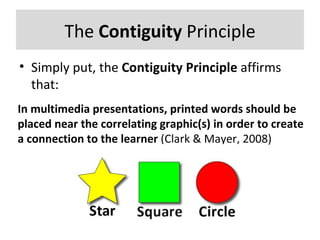
The  Contiguity  Principle Simply put, the  Contiguity Principle  affirms that: In multimedia presentations, printed words should be  placed near the correlating graphic(s) in order to create a connection to the learner  (Clark & Mayer, 2008)
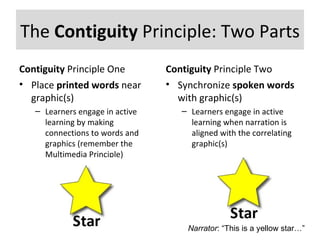
The  Contiguity  Principle: Two Parts Contiguity  Principle One Place  printed words  near graphic(s) Learners engage in active learning by making connections to words and graphics (remember the Multimedia Principle) Contiguity  Principle Two Synchronize  spoken words  with graphic(s) Learners engage in active learning when narration is aligned with the correlating graphic(s)  Narrator : “This is a yellow star…”
Multimedia / Contiguity : A Review The  Multimedia  Principle Research shows that people learn better when  both   words and graphics  are used in multimedia lessons, rather than just words alone The  Contiguity  Principle Research shows that people learn better when both printed and spoken words are  aligned in close proximity with the graphics  they represent
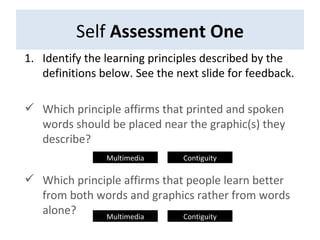
Self  Assessment One Identify the learning principles described by the definitions below. See the next slide for feedback. Which principle affirms that printed and spoken words should be placed near the graphic(s) they describe? Which principle affirms that people learn better from both words and graphics rather from words alone? Multimedia Contiguity Multimedia Contiguity
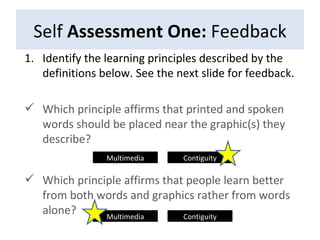
Self  Assessment One:  Feedback Identify the learning principles described by the definitions below. See the next slide for feedback. Which principle affirms that printed and spoken words should be placed near the graphic(s) they describe? Which principle affirms that people learn better from both words and graphics rather from words alone? Multimedia Contiguity Multimedia Contiguity
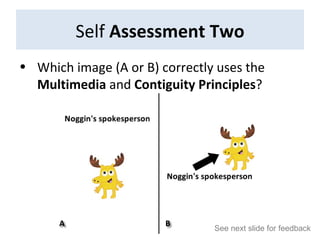
Self  Assessment Two Which image (A or B) correctly uses the  Multimedia  and  Contiguity Principles ?  See next slide for feedback
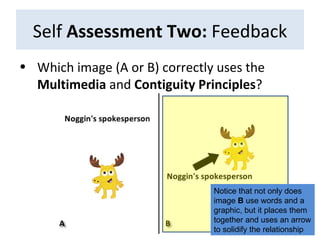
Self  Assessment Two:  Feedback Which image (A or B) correctly uses the  Multimedia  and  Contiguity Principles ?  Notice that not only does image  B  use words and a graphic, but it places them together and uses an arrow to solidify the relationship
Resources e-Learning and the Science of Instruction  (Clark & Mayer, 2008) www.noggin.com  (Moose A. Moose image)

Multimedia and Contiguity Principles

  • 1.
    Multimedia + Contiguity Principles Understanding how to properly place and use text and static images in multimedia presentations to promote active learning
  • 2.
    Learning ObjectivesAfter watching this slideshow, the learner will be able to: Identify the definitions of both the multimedia and contiguity principles with 100% accuracy Select— between two images—the graphic that properly uses both the multimedia and contiguity principles with 100% accuracy
  • 3.
    The Multimedia Principle Simply put, the Multimedia Principle affirms that… “ People learn more deeply from words and graphics than from words alone.” (Clark & Mayer, 2008)
  • 4.
    The table belowshows the six different graphic types that can be used in multimedia presentations The Multimedia Principle: Graphics Graphic Type Definition Example 1. Decorative Added for aesthetic value Clip art that is unrelated to the content 2. Representational Illustrates an object in the content Screen capture of software page/application 3. Organizational Show qualitative relationships Concept map 4. Relational Show quantitative relationships Graph or pie chart 5. Transformational Show changes over time Screencast of how to use a software program 6. Interpretive Make otherwise intangible items “tangible” Drawing of neurons firing in brain
  • 5.
    The Contiguity Principle Simply put, the Contiguity Principle affirms that: In multimedia presentations, printed words should be placed near the correlating graphic(s) in order to create a connection to the learner (Clark & Mayer, 2008)
  • 6.
    The Contiguity Principle: Two Parts Contiguity Principle One Place printed words near graphic(s) Learners engage in active learning by making connections to words and graphics (remember the Multimedia Principle) Contiguity Principle Two Synchronize spoken words with graphic(s) Learners engage in active learning when narration is aligned with the correlating graphic(s) Narrator : “This is a yellow star…”
  • 7.
    Multimedia / Contiguity: A Review The Multimedia Principle Research shows that people learn better when both words and graphics are used in multimedia lessons, rather than just words alone The Contiguity Principle Research shows that people learn better when both printed and spoken words are aligned in close proximity with the graphics they represent
  • 8.
    Self AssessmentOne Identify the learning principles described by the definitions below. See the next slide for feedback. Which principle affirms that printed and spoken words should be placed near the graphic(s) they describe? Which principle affirms that people learn better from both words and graphics rather from words alone? Multimedia Contiguity Multimedia Contiguity
  • 9.
    Self AssessmentOne: Feedback Identify the learning principles described by the definitions below. See the next slide for feedback. Which principle affirms that printed and spoken words should be placed near the graphic(s) they describe? Which principle affirms that people learn better from both words and graphics rather from words alone? Multimedia Contiguity Multimedia Contiguity
  • 10.
    Self AssessmentTwo Which image (A or B) correctly uses the Multimedia and Contiguity Principles ? See next slide for feedback
  • 11.
    Self AssessmentTwo: Feedback Which image (A or B) correctly uses the Multimedia and Contiguity Principles ? Notice that not only does image B use words and a graphic, but it places them together and uses an arrow to solidify the relationship
  • 12.
    Resources e-Learning andthe Science of Instruction (Clark & Mayer, 2008) www.noggin.com (Moose A. Moose image)