Simranjit Singh A-07
Irfan Balsania B-06
Karan Bhella B-07
Dipinder Chadha B-08
Rizwan Qureshi B-37
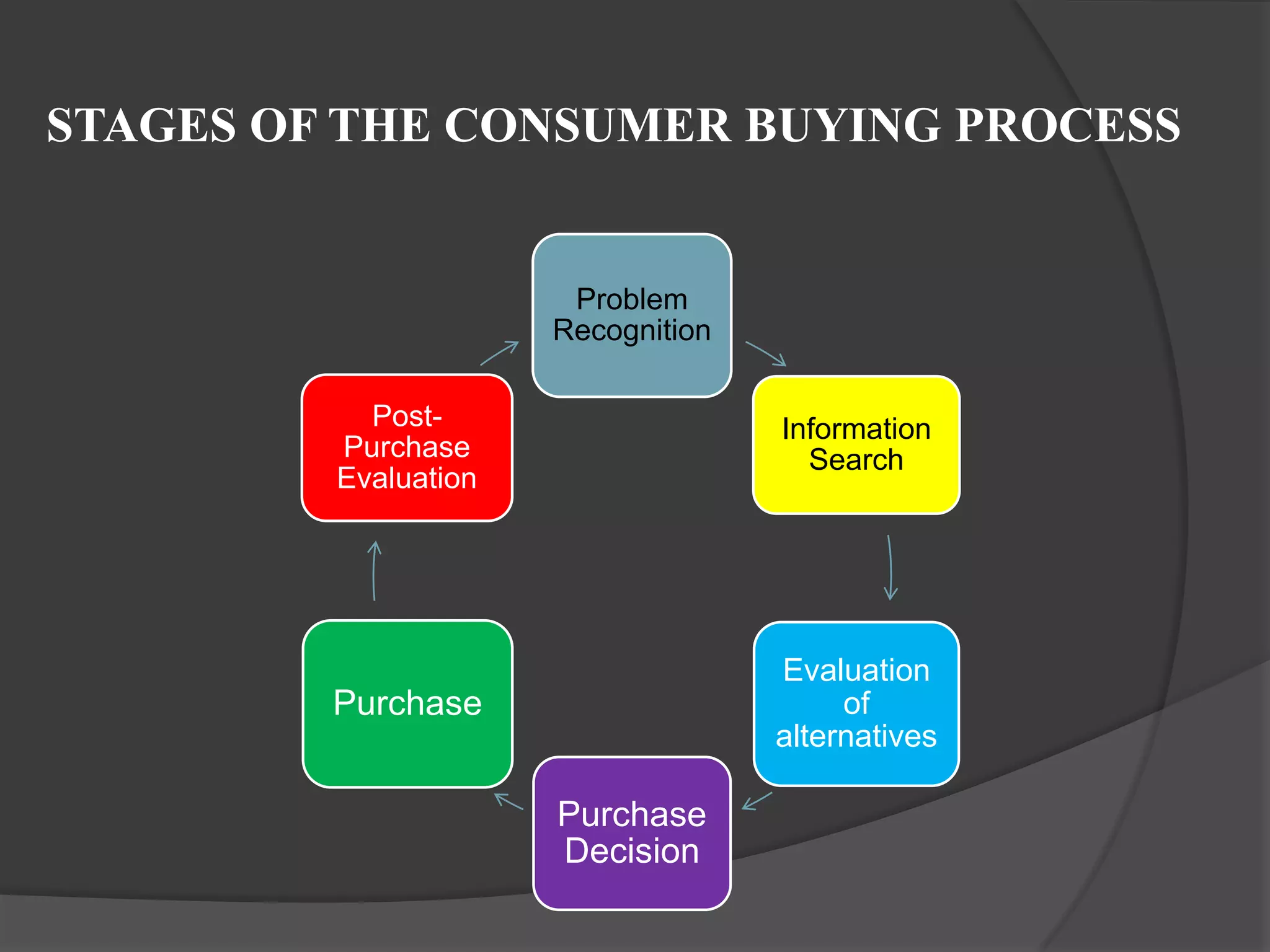
STAGES OF THE CONSUMER BUYING PROCESS


                       Problem
                      Recognition

           Post-                    Information
         Purchase                     Search
         Evaluation


                                    Evaluation
         Purchase                        of
                                    alternatives

                      Purchase
                      Decision
Problem recognition

   The consumer identifies that he has an unsatisfied need
    to be satisfied.
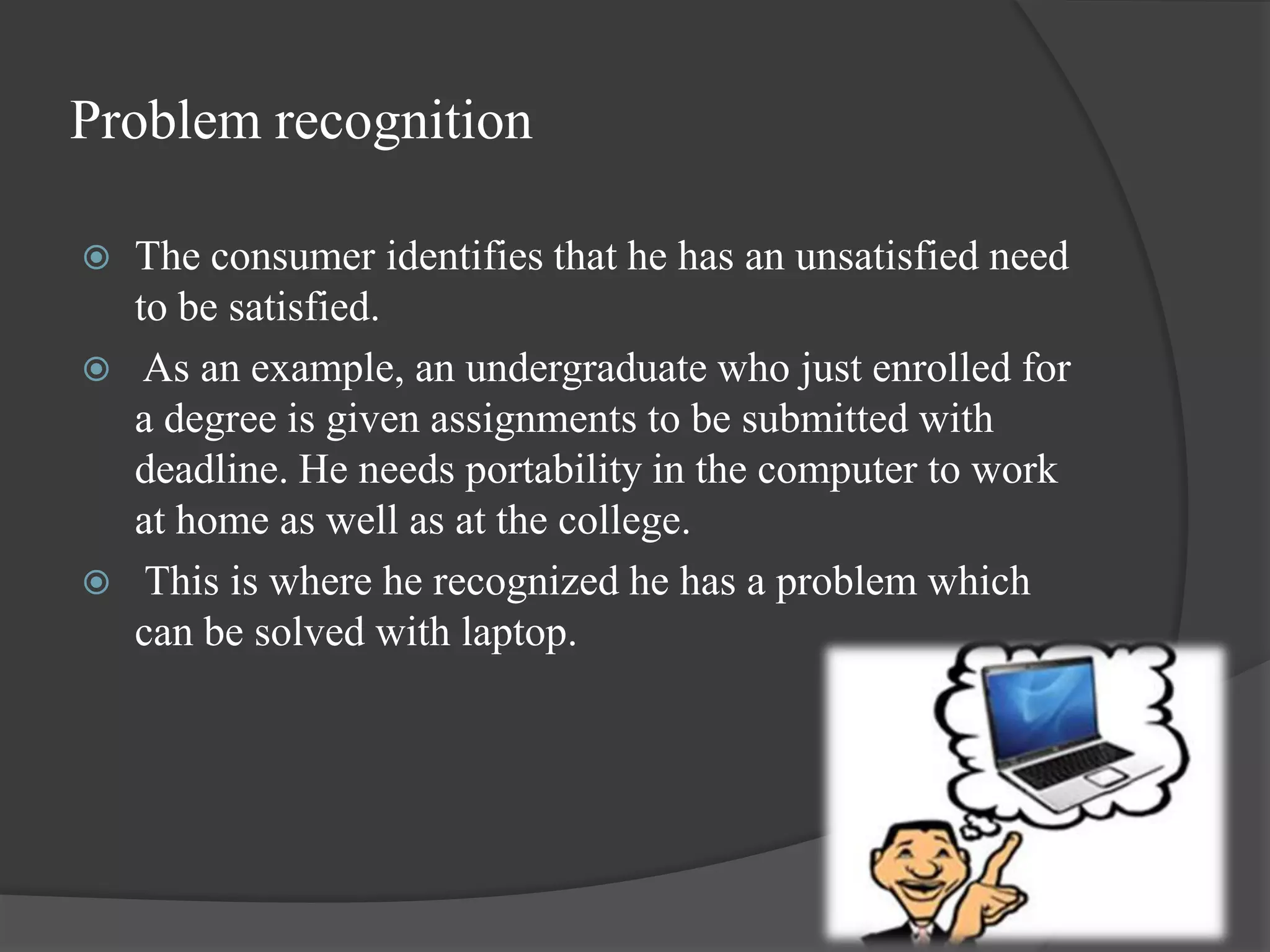
    As an example, an undergraduate who just enrolled for
    a degree is given assignments to be submitted with
    deadline. He needs portability in the computer to work
    at home as well as at the college.
    This is where he recognized he has a problem which
    can be solved with laptop.
Information search
   This is where the consumer starts searching information about
    the products that can satisfy his satisfied need.

 Internal Search:
        --- Memory
 External Search:
         --- Friends and Relatives
  A successful information search leaves a buyer with possible
  alternatives, the evoked set.

   example the undergraduate who wanted to buy a laptop would gather
    information about laptop brands such as HP, Dell, Mac and acer .
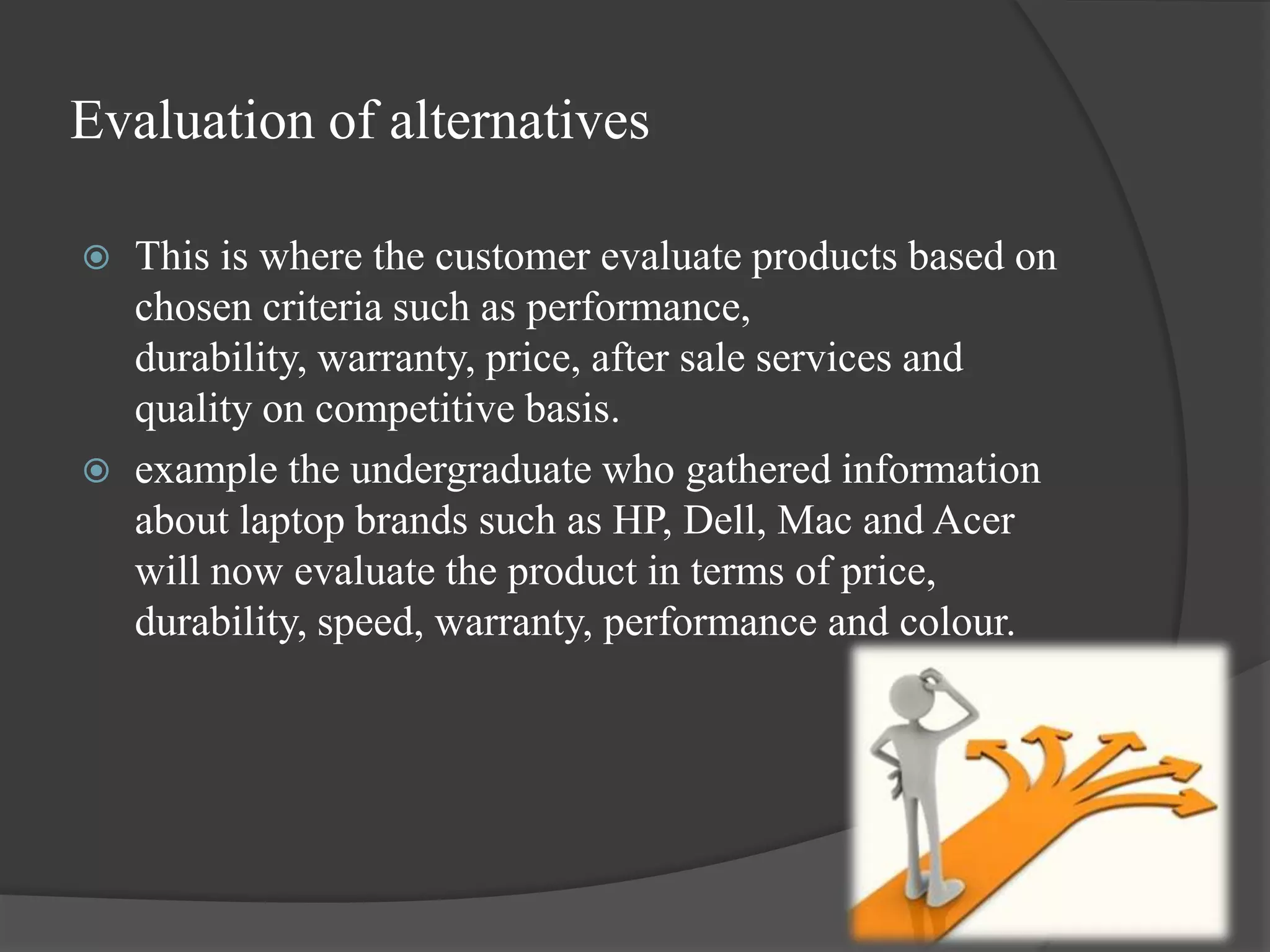
Evaluation of alternatives

   This is where the customer evaluate products based on
    chosen criteria such as performance,
    durability, warranty, price, after sale services and
    quality on competitive basis.
   example the undergraduate who gathered information
    about laptop brands such as HP, Dell, Mac and Acer
    will now evaluate the product in terms of price,
    durability, speed, warranty, performance and colour.
Purchase decision

   Choose buying alternative, includes product, package,
    store, method of purchase etc.
   example after the evaluation of many brands of laptop
    the undergraduate decides to purchase a HP laptop due
    to the high battery life.
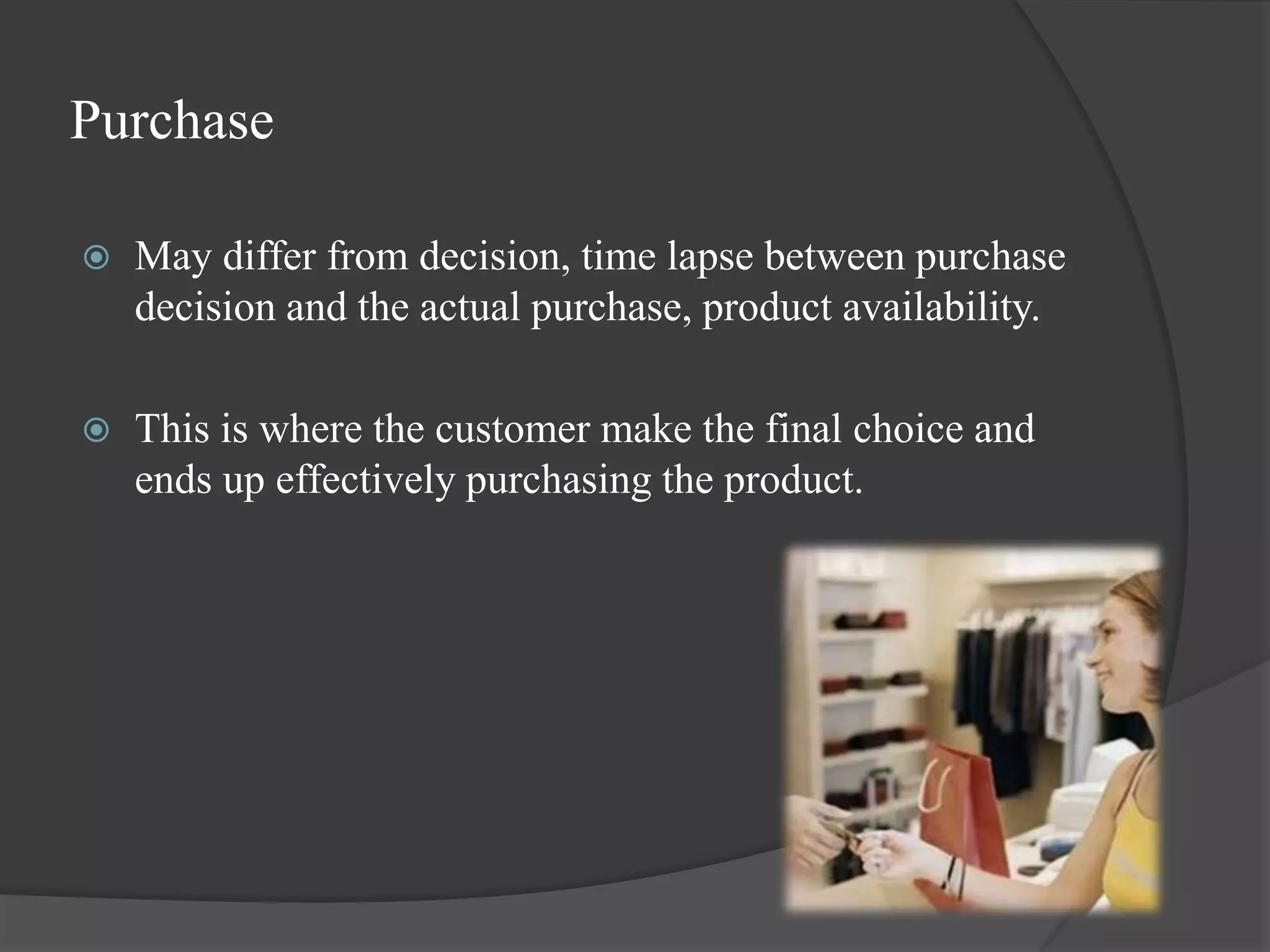
Purchase

   May differ from decision, time lapse between purchase
    decision and the actual purchase, product availability.

   This is where the customer make the final choice and
    ends up effectively purchasing the product.
Post purchase evaluation
Positive post purchase behaviour
 This is where the consumer holds a positive feedback about the
   product and happy with the product quality.
 example if the undergraduate is happy with the performance of the
   HP laptop he will recommend his fellow students to purchase a HP
   and will be brand loyal by purchasing more of HP products.
Negative post purchase behaviour
 This is where the customer is dissatisfied with the product and holds
   a negative feedback about the product.
 If the undergraduate who purchased the HP is not happy with the
   laptop he will persuade is friends not to buy a HP as his experience
   about HP is negative.
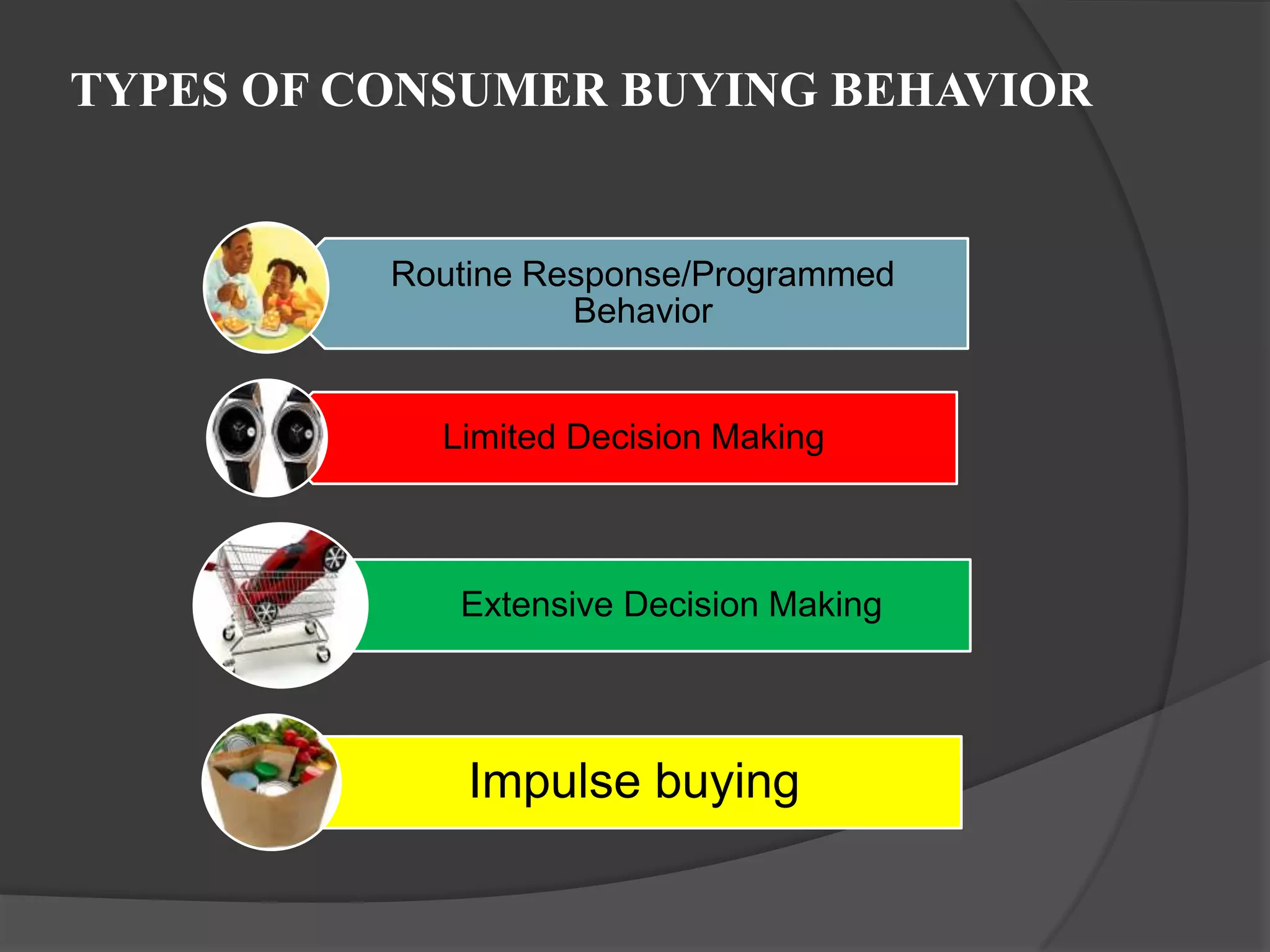
TYPES OF CONSUMER BUYING BEHAVIOR


          Routine Response/Programmed
                    Behavior


            Limited Decision Making


             Extensive Decision Making


              Impulse buying
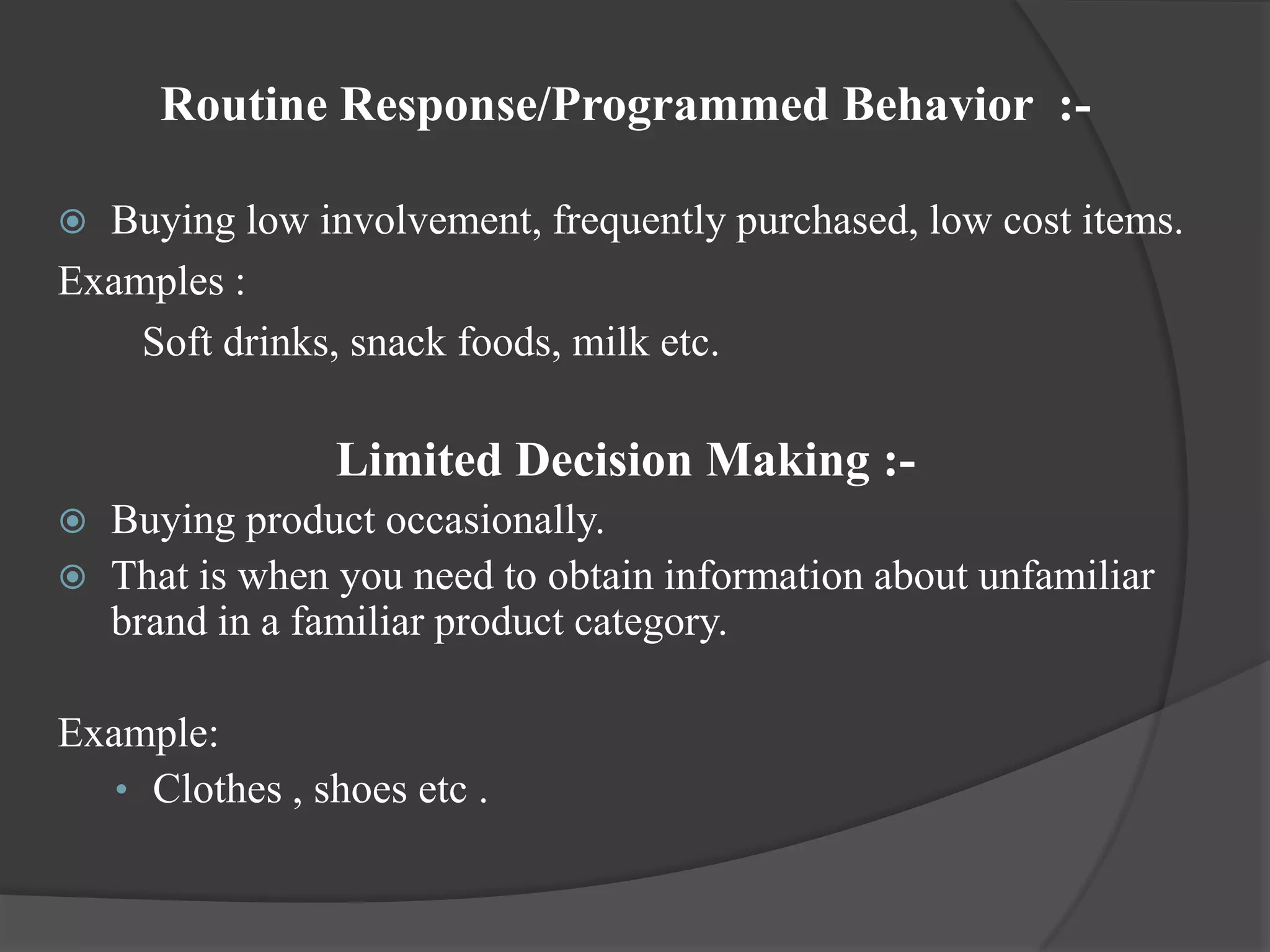
Routine Response/Programmed Behavior :-

 Buying low involvement, frequently purchased, low cost items.
Examples :
    Soft drinks, snack foods, milk etc.

                Limited Decision Making :-
   Buying product occasionally.
   That is when you need to obtain information about unfamiliar
    brand in a familiar product category.

Example:
   • Clothes , shoes etc .
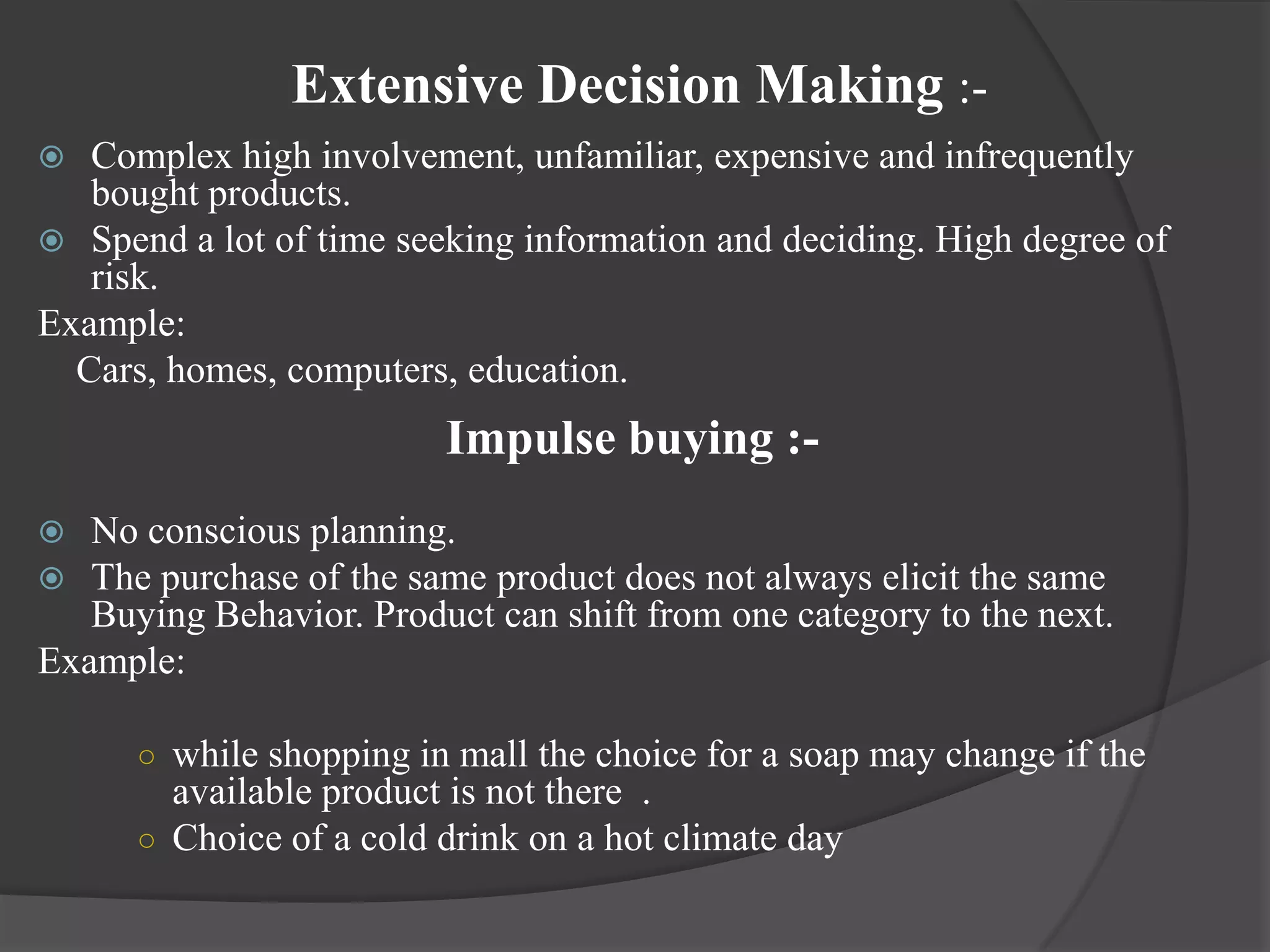
Extensive Decision Making :-
  Complex high involvement, unfamiliar, expensive and infrequently
   bought products.
 Spend a lot of time seeking information and deciding. High degree of
   risk.
Example:
  Cars, homes, computers, education.
                         Impulse buying :-
  No conscious planning.
  The purchase of the same product does not always elicit the same
   Buying Behavior. Product can shift from one category to the next.
Example:

      ○ while shopping in mall the choice for a soap may change if the
        available product is not there .
      ○ Choice of a cold drink on a hot climate day
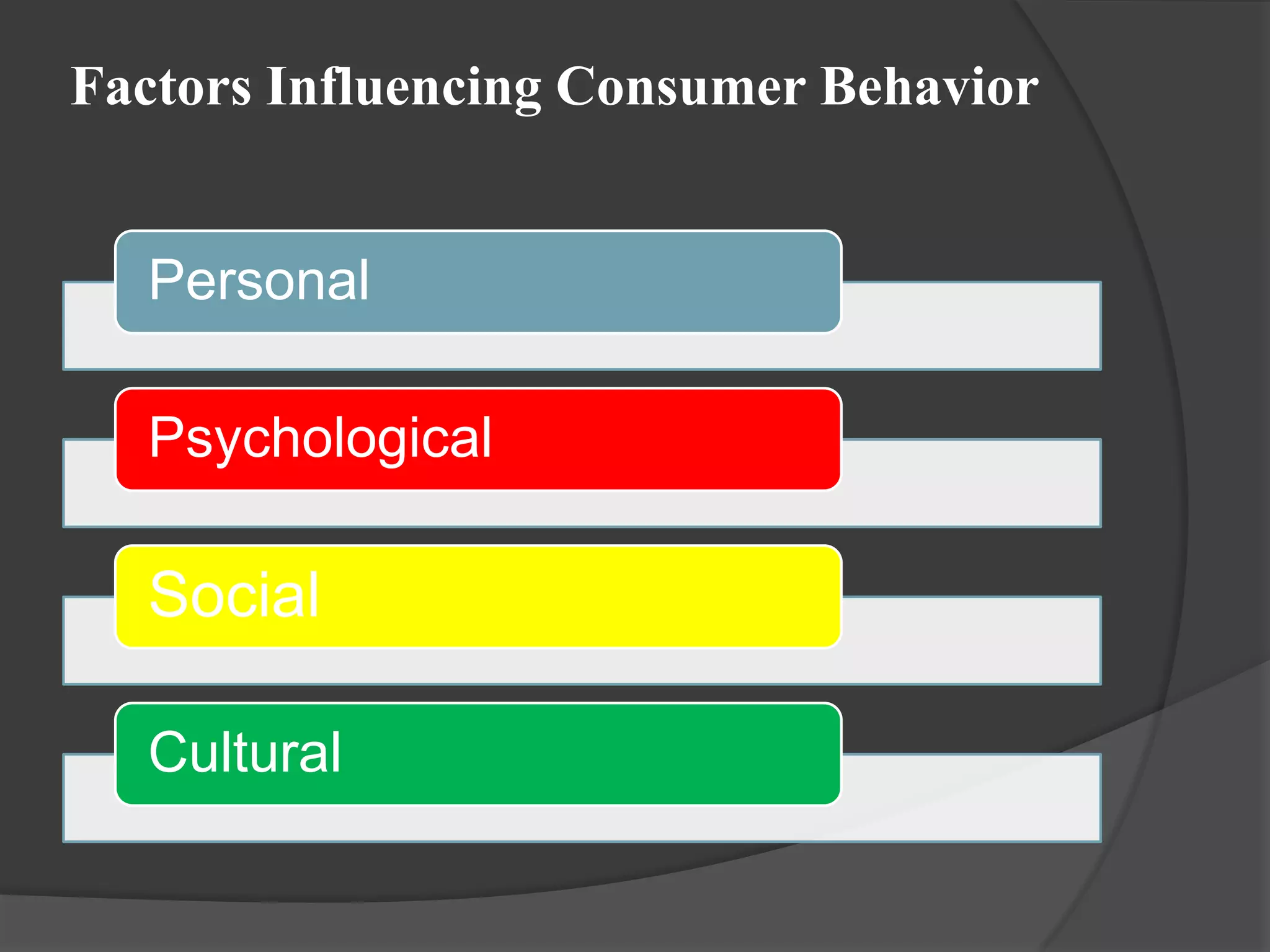
Factors Influencing Consumer Behavior


  Personal

  Psychological

  Social

  Cultural
Personal        Psychological
   Age                   Motivation
   Life-Cycle Stage      Perception
   Occupation            Learning
   Economic              Beliefs
    Circumstances
                          Attitudes
   Life Style
Social class                 Culture
   Maintaining the status       Adopting the culture

   Sharing similar values,       among the peers

    interests and behaviors      Pattern of usage and
                                  behavior among the
                                  group of individuals
                                  (family , friends )
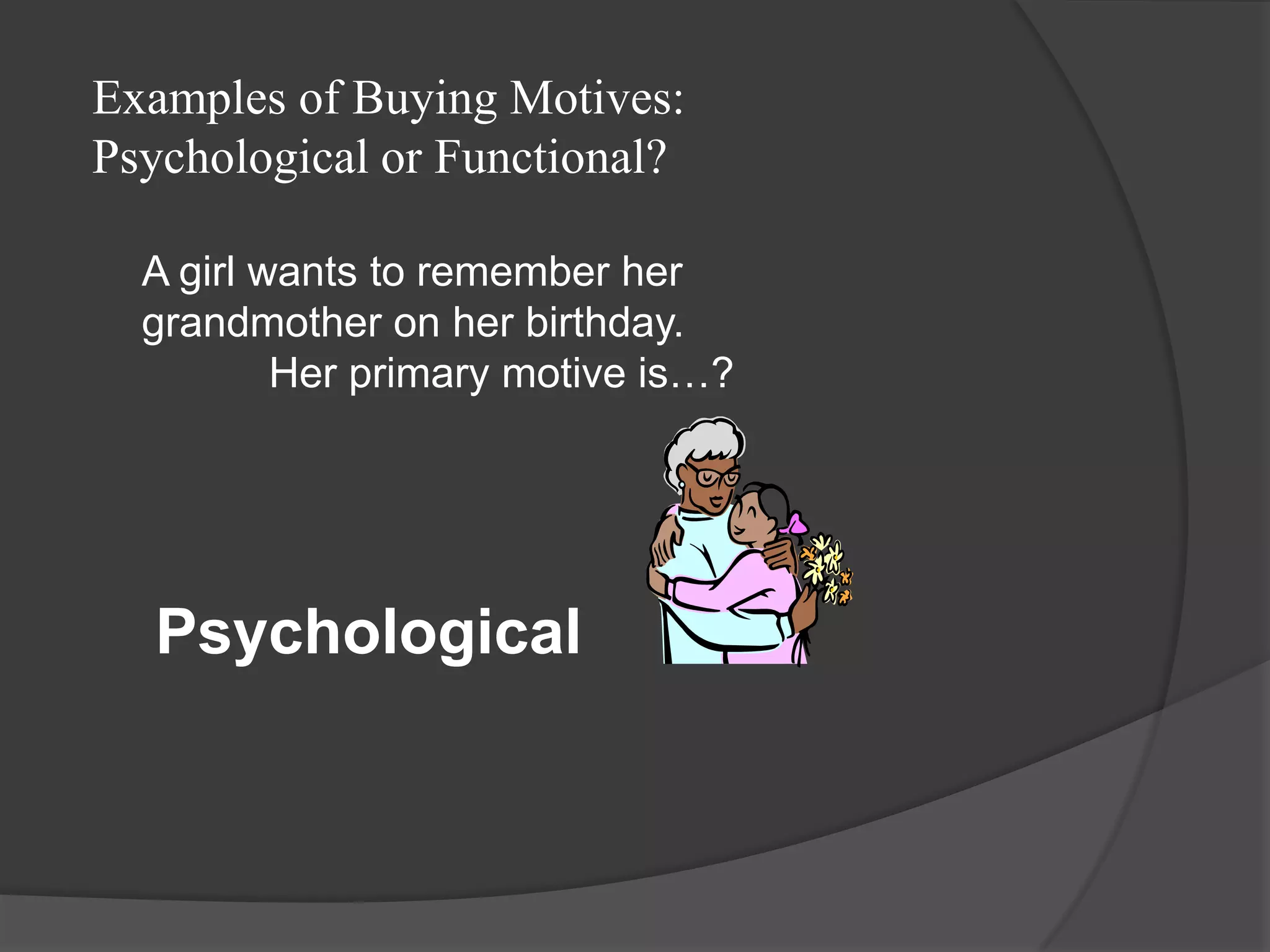
Examples of Buying Motives:
Psychological or Functional?

  A girl wants to remember her
  grandmother on her birthday.
          Her primary motive is…?


  Psychological
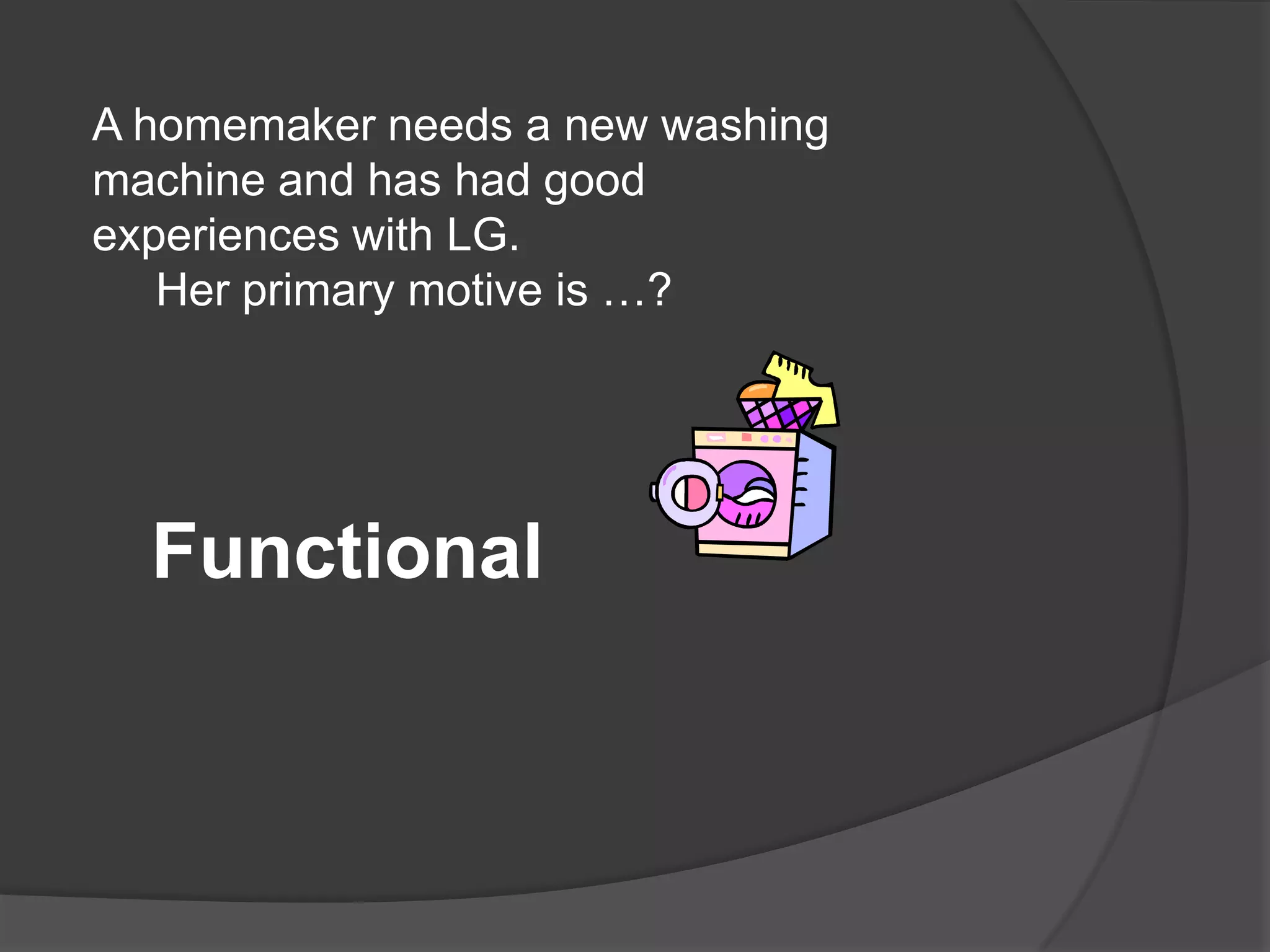
A homemaker needs a new washing
machine and has had good
experiences with LG.
   Her primary motive is …?


  Functional
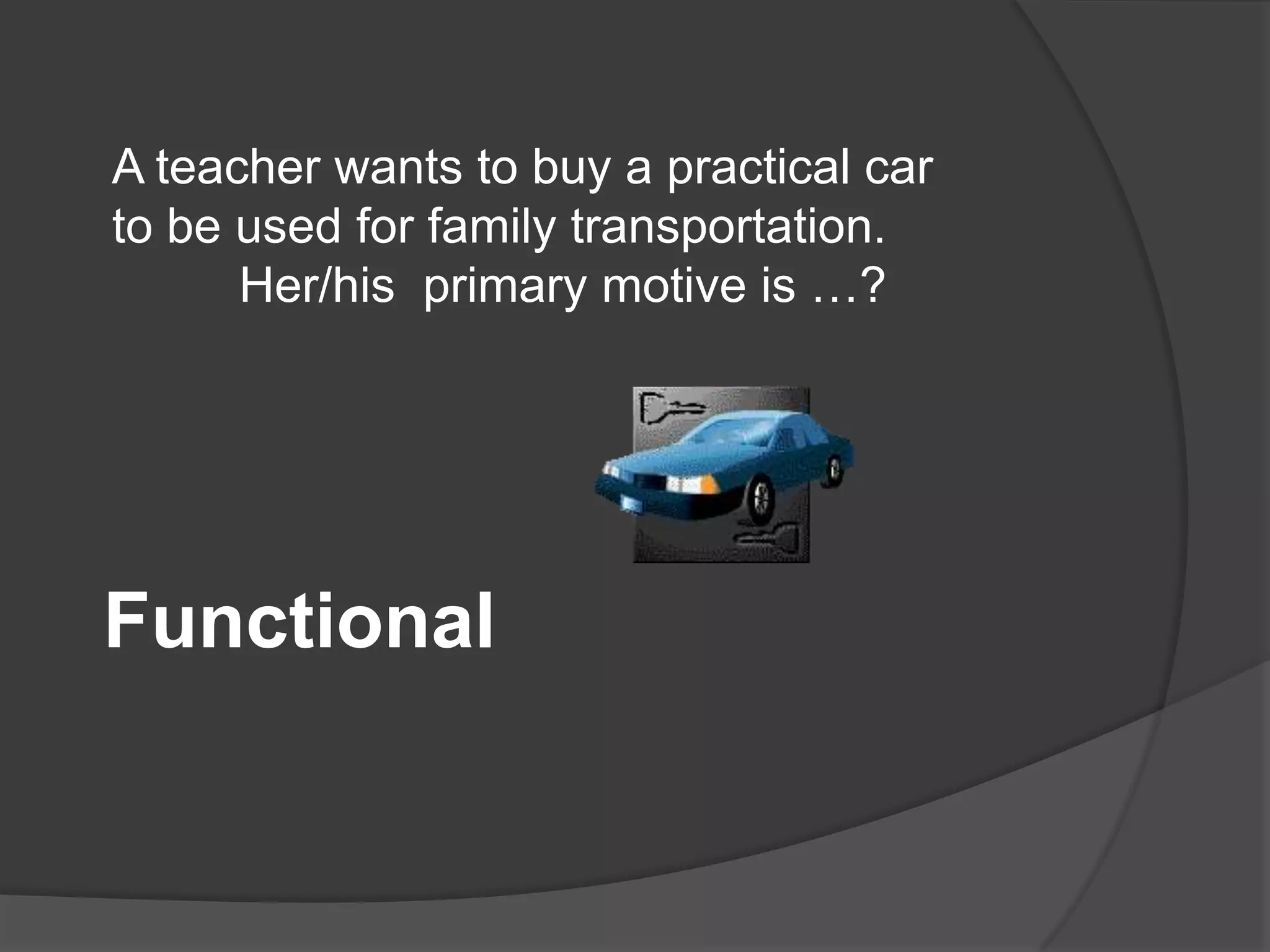
A teacher wants to buy a practical car
to be used for family transportation.
      Her/his primary motive is …?


Functional
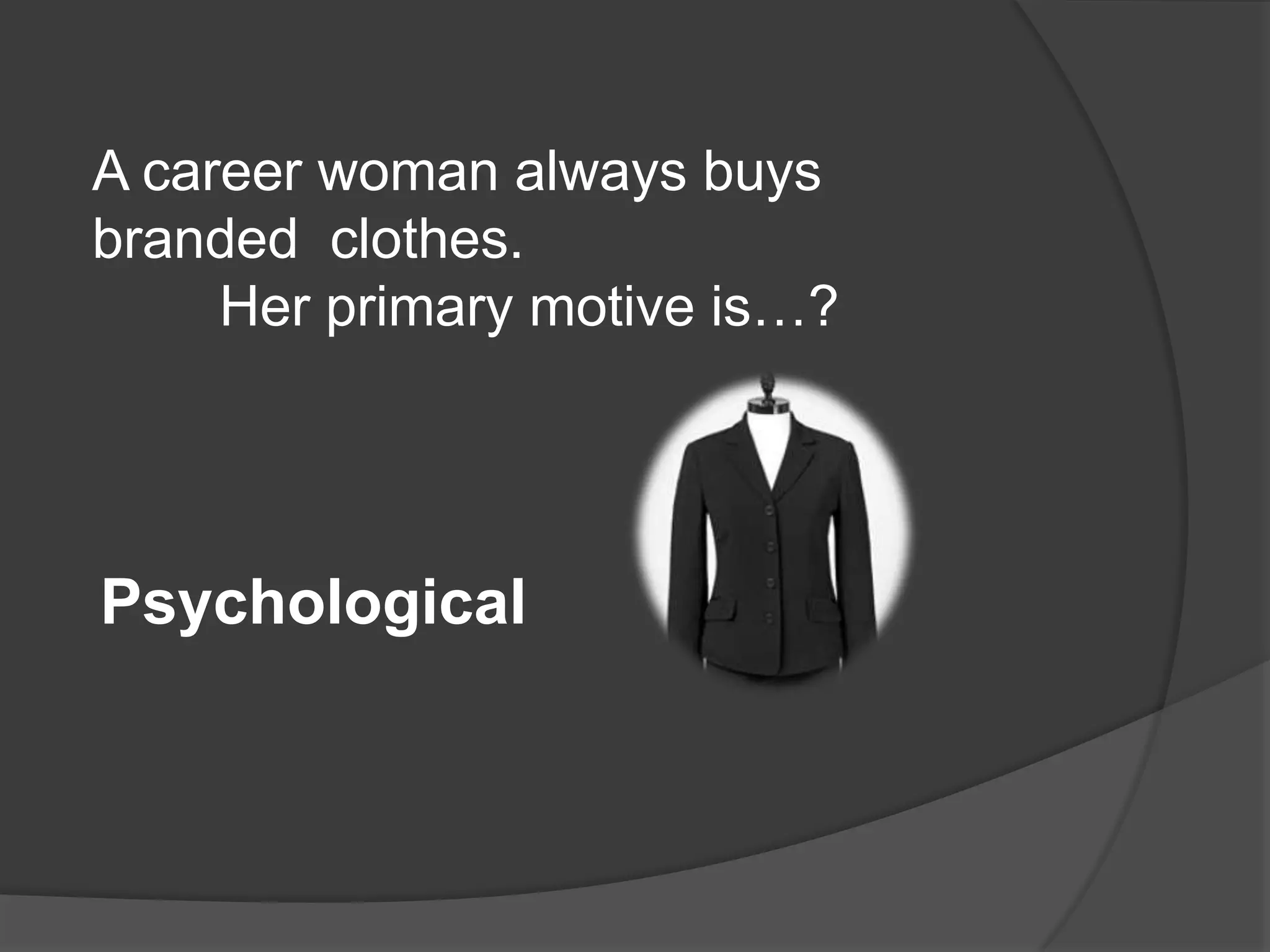
A career woman always buys
branded clothes.
     Her primary motive is…?


Psychological
Consumer buying behaviour for laptop’s

Consumer buying behaviour for laptop’s

  • 1.
    Simranjit Singh A-07 IrfanBalsania B-06 Karan Bhella B-07 Dipinder Chadha B-08 Rizwan Qureshi B-37
  • 2.
    STAGES OF THECONSUMER BUYING PROCESS Problem Recognition Post- Information Purchase Search Evaluation Evaluation Purchase of alternatives Purchase Decision
  • 3.
    Problem recognition  The consumer identifies that he has an unsatisfied need to be satisfied.  As an example, an undergraduate who just enrolled for a degree is given assignments to be submitted with deadline. He needs portability in the computer to work at home as well as at the college.  This is where he recognized he has a problem which can be solved with laptop.
  • 4.
    Information search  This is where the consumer starts searching information about the products that can satisfy his satisfied need.  Internal Search: --- Memory  External Search: --- Friends and Relatives A successful information search leaves a buyer with possible alternatives, the evoked set.  example the undergraduate who wanted to buy a laptop would gather information about laptop brands such as HP, Dell, Mac and acer .
  • 5.
    Evaluation of alternatives  This is where the customer evaluate products based on chosen criteria such as performance, durability, warranty, price, after sale services and quality on competitive basis.  example the undergraduate who gathered information about laptop brands such as HP, Dell, Mac and Acer will now evaluate the product in terms of price, durability, speed, warranty, performance and colour.
  • 6.
    Purchase decision  Choose buying alternative, includes product, package, store, method of purchase etc.  example after the evaluation of many brands of laptop the undergraduate decides to purchase a HP laptop due to the high battery life.
  • 7.
    Purchase  May differ from decision, time lapse between purchase decision and the actual purchase, product availability.  This is where the customer make the final choice and ends up effectively purchasing the product.
  • 8.
    Post purchase evaluation Positivepost purchase behaviour  This is where the consumer holds a positive feedback about the product and happy with the product quality.  example if the undergraduate is happy with the performance of the HP laptop he will recommend his fellow students to purchase a HP and will be brand loyal by purchasing more of HP products. Negative post purchase behaviour  This is where the customer is dissatisfied with the product and holds a negative feedback about the product.  If the undergraduate who purchased the HP is not happy with the laptop he will persuade is friends not to buy a HP as his experience about HP is negative.
  • 9.
    TYPES OF CONSUMERBUYING BEHAVIOR Routine Response/Programmed Behavior Limited Decision Making Extensive Decision Making Impulse buying
  • 10.
    Routine Response/Programmed Behavior:-  Buying low involvement, frequently purchased, low cost items. Examples : Soft drinks, snack foods, milk etc. Limited Decision Making :-  Buying product occasionally.  That is when you need to obtain information about unfamiliar brand in a familiar product category. Example: • Clothes , shoes etc .
  • 11.
    Extensive Decision Making:-  Complex high involvement, unfamiliar, expensive and infrequently bought products.  Spend a lot of time seeking information and deciding. High degree of risk. Example: Cars, homes, computers, education. Impulse buying :-  No conscious planning.  The purchase of the same product does not always elicit the same Buying Behavior. Product can shift from one category to the next. Example: ○ while shopping in mall the choice for a soap may change if the available product is not there . ○ Choice of a cold drink on a hot climate day
  • 12.
    Factors Influencing ConsumerBehavior Personal Psychological Social Cultural
  • 13.
    Personal Psychological  Age  Motivation  Life-Cycle Stage  Perception  Occupation  Learning  Economic  Beliefs Circumstances  Attitudes  Life Style
  • 14.
    Social class Culture  Maintaining the status  Adopting the culture  Sharing similar values, among the peers interests and behaviors  Pattern of usage and behavior among the group of individuals (family , friends )
  • 15.
    Examples of BuyingMotives: Psychological or Functional? A girl wants to remember her grandmother on her birthday. Her primary motive is…? Psychological
  • 16.
    A homemaker needsa new washing machine and has had good experiences with LG. Her primary motive is …? Functional
  • 17.
    A teacher wantsto buy a practical car to be used for family transportation. Her/his primary motive is …? Functional
  • 18.
    A career womanalways buys branded clothes. Her primary motive is…? Psychological