Construction Management
New trends to manage construction projects.
Created By:
Ahmed El-Askalany, CSTE, CSQA, PMP, CQIA, ITIL
https://www.facebook.com/EdgeConsultancyInc
E-mail: EdgeConsultancyInc@Gmail.com
Agenda
1. Construction Management
2. Construction Technology
3. Construction Planning and Management Systems using Primavera
4. Fundamentals of Construction Costs and Estimating
5. Plumbing Systems I: Code and Engineering
6. Construction Changes and Claims Documentation
7. Legal Aspects of Construction Projects and Contracts
8. Principles of Structural Analysis
9. Advanced Estimating and Management of Project Costs in the Preconstruction and
Construction Phases
10. Construction Surveying and Metrics
11. Construction Budget and Cost Control
12. Construction Job Site Management
13. Construction Project Management Using MS Project
14. Reading Construction Blueprints
15. Electrical Design and Construction
16. The Solar Energy Solution: Harnessing Solar Power in the Home and Office
17. Leadership in Energy and Environmental Design
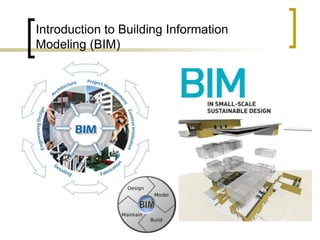
18. Introduction to Building Information Modeling
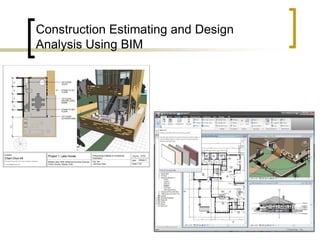
19. Construction Estimating and Design Analysis Using BIM
20. Land Development Procedures
Construction Management
Cover the basic principles and responsibilities in construction
management, including a description of the relationship between
builder and owner, and the many contract types and project delivery
methods. By defining and controlling the scope of a project, CM learn
the functions of the construction manager: planning, organizing,
staffing, directing, and managing other team members. Other topics
include management principles, estimating, scheduling, budgeting,
purchasing, design, safety, insurance, and construction techniques.
Construction Management
Construction Technology
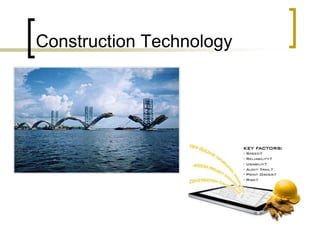
This area studies construction materials, equipment,
methods, and regulatory influences. Topics include
construction for site and civil work, seismic resistance,
technology of basic building materials, interior and exterior
finishes, plumbing and electrical and mechanical systems.
Current developments in materials, systems, and
construction techniques are discussed in light of changing
factors of production, regulatory constraints, and current
trends.
Construction Technology
Construction Planning P3
Construction Planning and Management Systems Using Primavera
(Hybrid)
An in-depth use and application of the current systems and techniques
applied in construction planning, scheduling, control, and delay impact
analysis. Project emphasizes the Critical Path Method approach to
developing baseline schedules, progress measurement, earned value,
integrated management systems, and as-planned versus as-built
analysis. It needs hands-on computerized scheduling using Primavera
Systems software.
Construction Planning P3
Construction Cost and Estimation
Overview of the basic procedures for estimating general
construction costs. Topics include the preparation of quantity
surveys (take-offs) and the development of material, labor, and
equipment costs, including pricing of contractor and subcontractor
work from actual working drawings and specifications.
Construction Cost and Estimation
Plumbing Systems I: Code and
Engineering Fundamentals
Reviews codes and basic engineering principles and graphic
presentations related to plumbing systems design, including load
calculations, piping design, and equipment selection, based upon
the latest issue of several plumbing codes. It covers plumbing
fixtures and piping material selection. Topics include a brief
plumbing history, plumbing fixtures, sanitary waste and vent, traps,
pumps and sewage ejectors, potable hot and cold water, and storm
water
Plumbing Systems I: Code and
Engineering Fundamentals
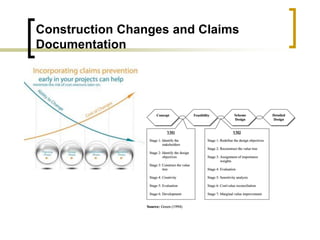
Construction Changes and Claims
Documentation
An overview of the change, order, and claims procedures for private and
public work contracts. Identification, notification, documentation,
preparation, presentation, and negotiation of change orders and claims are
covered, as well as avoiding changes, risk control, claims management,
inefficiency, and consequential damages. These topics are explained from
the perspective of both the contractor and owner. We includes using
Primavera System software to analyze the impact of change orders.
Construction Changes and Claims
Documentation
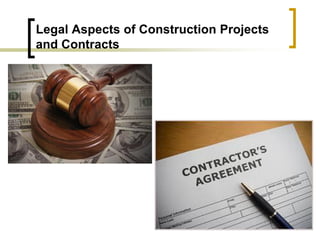
Legal Aspects of Construction Projects
and Contracts
This area covers common construction law errors, basic contract and real
estate principles in the construction context, contractor licensing, and
bidding. Instruction also examines "standard" construction industry
documents, including AIA 201 general conditions, breach by owner, breach
by contractor, construction claims and damages, warranties and insurance,
construction lending and deeds of trust, mechanics' liens, bonds, stop
notices, and litigation and arbitration.
Legal Aspects of Construction Projects
and Contracts
Principles of Structural Analysis
An understanding of the fundamental structural
concepts that individuals working in the field of
construction management need to have. It
provides an introduction to structural analysis, and
focuses on classification of structural elements;
analysis of statically determinate trusses, beams,
and frames; deflections in elementary structures;
and load calculations.
Principles of Structural Analysis
Advanced Construction Costs and
Estimating
Overviews processes and strategies to control project
costs from conception through completion. It covers
the development of full project estimates, conceptual
estimating, value engineering, competitive bidding,
CM at risk, the preconstruction process, incorporating
sustainability, self-performed work, working with
subcontractors, change order management, and
maximization of profits.
Advanced Estimating and Management of Project Costs in the
Preconstruction and Construction Phases
Advanced Construction Costs and
Estimating
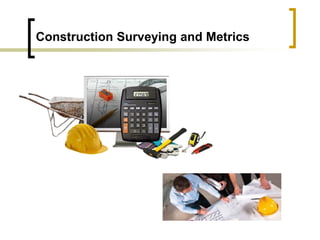
Construction Surveying and Metrics
An introduction to the mathematics and
measurement procedures for surveying and
construction layout. Topics include the fundamentals
of surveying, the principles of distance and angular
measurement, traverse surveys and computations,
and leveling with specific application to construction.
Construction Surveying and Metrics
Construction Budget and Cost Control
It covers the methods and procedures used in
budgeting, procuring, and controlling the cost of
commercial construction projects, as well as
forecasting, monitoring, and appraising project
cost performance through the use of manual and
computer techniques. CM needs to apply
methods of controlling and projecting material,
labor, and equipment costs in order to identify
problem areas during construction and take the
necessary steps to avoid financial losses.
Construction Budget and Cost Control
Job Site Management
This Area addresses construction project management
components from the contractor's perspective,
with an emphasis on publicly owned projects. You
examine all facets of project management tools on
jobsite and the expected roles of the site
management team (project managers, project/field
engineers and superintendents) as well as all
aspects of a typical, large-sized project from
project planning to closeout. CM needs
management skills and techniques to effectively
manage construction jobsite projects..
Job Site Management
Construction Management MS Project
It presents the software programs used to manage
and control construction projects. Instruction
features hands-on training in the use of Microsoft
Project 2010 Professional software to conduct
multiple tasks such as preparing construction
schedules which include definitions of detailed
activities and assignments of logic relationships;
defining and managing costs and resources (labor,
equipment, and materials); sorting and
categorizing information; preparing monthly
updates of schedules; reviewing, analyzing, and
troubleshooting schedules; developing, analyzing,
and presenting delay issues; and producing
reports and graphics
Construction Management MS Project
Reading Construction Blueprints
An introduction to the reading and analysis of
construction blueprints. Topics include a review of
the necessary mathematics, symbols and drawn
line interpretations, dimensioning, a survey of
specifications, plot plans, foundations, framing,
plumbing, HVAC, electrical and masonry plans.
CM will works with small groups to resolve typical
problems encountered by the working professional
today, such as errors, omissions, and code non-
compliance. As it is common in today's
construction industry, participants change groups
continually.
Reading Construction Blueprints
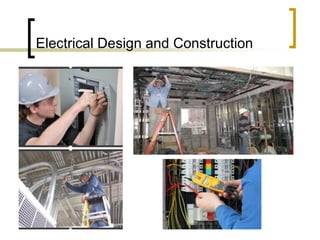
Electrical Design and Construction
As a specialty trade in the construction industry, electrical
systems can be complex and confusing to the non-expert.
CM will know the essentials of electrical systems for
commercial construction with an overview of fundamentals,
construction procedures, electrical equipment, electrical
design, and regulatory requirements. Instruction emphasizes
the integration of electrical systems with project site
development and related construction trades. CM will need
to know the current requirements of the California Electrical
Code and other building and construction regulations as well
as applicability to green building design and sustainability
development. Topics also include Electrical plan reading,
single-line diagram design, panel schedule design, and load
calculations
Electrical Design and Construction
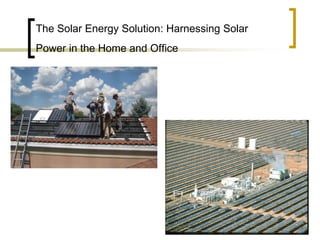
The Solar Energy Solution: Harnessing Solar
Power in the Home and Office
Area about how to augment your home and/or business power requirements with solar energy.
CM will know a general overview of the knowledge needed to choose and ultimately
design an appropriate system. CM will know the various forms of solar energy with a
specific emphasis on solar electricity (i.e., how electricity can be generated, stored and
utilized in the home and workplace through solar energy). In addition, Solar Areas
covers typical solar system models in order to understand how the prerequisite
subsystems and their associated components are integrated into a final conceptual
working system. CM need to know how to calculate anticipated electrical load
requirements and the system sizing required to meet these objectives. Additional topics
include: proper installation techniques, methods of monitoring systems performance,
and the maintenance procedures required to assure maximum system efficiency. CM
should be interested in and concerned about the financial, environmental, and self-
sufficient aspects of solar energy. A basic electrical/mechanical educational
background is helpful due to the technology. Home and business owners, contractors,
sales people, entrepreneurs seeking business opportunities, and those who have a
keen interest in solar technology significantly benefit from this Area.
The Solar Energy Solution: Harnessing Solar
Power in the Home and Office
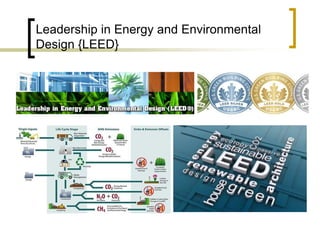
Leadership in Energy and Environmental
Design {LEED}
Green buildings embody a design intent on balancing
environmental responsiveness and responsibility,
resource efficiency and cultural and community sensitivity.
CM need to know LEED® version 3 Rating System,
currently the centerpiece of the most innovative, effective
aspects of green design. Topics range from an exploration
of what are sustainable principles, current sustainable
design and building practices, to specific elements of the
LEED® rating system. CM needs to be hands-on in their
role in the design and construction of a green building, as
well as anyone with a curiosity and burning interest in
understanding the basic nuances of green building.
Leadership in Energy and Environmental
Design {LEED}
Introduction to Building Information
Modeling (BIM)
Building Information Modeling (BIM) focuses on Autodesk's Revit
Architecture as a platform for learning key principles in the application of
digital media in the design and documentation of building elements within a
parametric environment.
Fundamental training is provided so CM can progress to more advanced
subject matter in design computation and its application in the construction
industry. Through a series of lectures and exercises, basic BIM concepts
that apply to all parametrically driven CAD systems are explored.
Introduction to Building Information
Modeling (BIM)
Construction Estimating and Design
Analysis Using BIM
An overview of construction cost estimating and design analysis using the
latest BIM (Building Information Modeling) technology, which is rapidly
transforming the way buildings are designed, estimated, and constructed.
Using cutting-edge BIM estimating products including Autodesk Revit,
Autodesk QTO, Autodesk Navisworks, and Sage-Timberline Estimating,
CM receive hands-on training by estimating and analyzing a number of
projects built in Southern California.
This knowledge area benefits project managers, architects, designers,
engineers and contractors seeking to maximize their professional potential
in the fast growing field of BIM technology in construction.
Construction Estimating and Design
Analysis Using BIM
Land Development Procedures
This Knowledge Area benefits individuals who want to understand the essentials of
residential land development in California, and teaches CM about how residentially
designated vacant land can be transformed into fully developed, single family residential
subdivisions.
The Topic examines how to turn physical and regulatory land development constraints
into opportunities for creative project development, how to exceed homebuyer demands,
and how to ensure your residential development makes a valuable, lasting contribution to
the community--and meets your profit expectations.
It Helps you as a professional construction manager who has worked as both a city
planner and as a residential developer, topics include target market analysis, site
selection and analysis, environmental regulation, the entitlement process, site
engineering, and development of the residential Master Plan.
Land Development Procedures
Contact Us
Linked In - Ahmed El-Askalany, CSTE, CSQA, PMP,
CQIA, ITIL | LinkedIn
https://www.facebook.com/EdgeConsultancyInc
E-mail: EdgeConsultancyInc@Gmail.com

Construction Management - New Trends

  • 1.
    Construction Management New trendsto manage construction projects. Created By: Ahmed El-Askalany, CSTE, CSQA, PMP, CQIA, ITIL https://www.facebook.com/EdgeConsultancyInc E-mail: EdgeConsultancyInc@Gmail.com
  • 2.
    Agenda 1. Construction Management 2.Construction Technology 3. Construction Planning and Management Systems using Primavera 4. Fundamentals of Construction Costs and Estimating 5. Plumbing Systems I: Code and Engineering 6. Construction Changes and Claims Documentation 7. Legal Aspects of Construction Projects and Contracts 8. Principles of Structural Analysis 9. Advanced Estimating and Management of Project Costs in the Preconstruction and Construction Phases 10. Construction Surveying and Metrics 11. Construction Budget and Cost Control 12. Construction Job Site Management 13. Construction Project Management Using MS Project 14. Reading Construction Blueprints 15. Electrical Design and Construction 16. The Solar Energy Solution: Harnessing Solar Power in the Home and Office 17. Leadership in Energy and Environmental Design 18. Introduction to Building Information Modeling 19. Construction Estimating and Design Analysis Using BIM 20. Land Development Procedures
  • 3.
    Construction Management Cover thebasic principles and responsibilities in construction management, including a description of the relationship between builder and owner, and the many contract types and project delivery methods. By defining and controlling the scope of a project, CM learn the functions of the construction manager: planning, organizing, staffing, directing, and managing other team members. Other topics include management principles, estimating, scheduling, budgeting, purchasing, design, safety, insurance, and construction techniques.
  • 4.
  • 5.
    Construction Technology This areastudies construction materials, equipment, methods, and regulatory influences. Topics include construction for site and civil work, seismic resistance, technology of basic building materials, interior and exterior finishes, plumbing and electrical and mechanical systems. Current developments in materials, systems, and construction techniques are discussed in light of changing factors of production, regulatory constraints, and current trends.
  • 6.
  • 7.
    Construction Planning P3 ConstructionPlanning and Management Systems Using Primavera (Hybrid) An in-depth use and application of the current systems and techniques applied in construction planning, scheduling, control, and delay impact analysis. Project emphasizes the Critical Path Method approach to developing baseline schedules, progress measurement, earned value, integrated management systems, and as-planned versus as-built analysis. It needs hands-on computerized scheduling using Primavera Systems software.
  • 8.
  • 9.
    Construction Cost andEstimation Overview of the basic procedures for estimating general construction costs. Topics include the preparation of quantity surveys (take-offs) and the development of material, labor, and equipment costs, including pricing of contractor and subcontractor work from actual working drawings and specifications.
  • 10.
  • 11.
    Plumbing Systems I:Code and Engineering Fundamentals Reviews codes and basic engineering principles and graphic presentations related to plumbing systems design, including load calculations, piping design, and equipment selection, based upon the latest issue of several plumbing codes. It covers plumbing fixtures and piping material selection. Topics include a brief plumbing history, plumbing fixtures, sanitary waste and vent, traps, pumps and sewage ejectors, potable hot and cold water, and storm water
  • 12.
    Plumbing Systems I:Code and Engineering Fundamentals
  • 13.
    Construction Changes andClaims Documentation An overview of the change, order, and claims procedures for private and public work contracts. Identification, notification, documentation, preparation, presentation, and negotiation of change orders and claims are covered, as well as avoiding changes, risk control, claims management, inefficiency, and consequential damages. These topics are explained from the perspective of both the contractor and owner. We includes using Primavera System software to analyze the impact of change orders.
  • 14.
    Construction Changes andClaims Documentation
  • 15.
    Legal Aspects ofConstruction Projects and Contracts This area covers common construction law errors, basic contract and real estate principles in the construction context, contractor licensing, and bidding. Instruction also examines "standard" construction industry documents, including AIA 201 general conditions, breach by owner, breach by contractor, construction claims and damages, warranties and insurance, construction lending and deeds of trust, mechanics' liens, bonds, stop notices, and litigation and arbitration.
  • 16.
    Legal Aspects ofConstruction Projects and Contracts
  • 17.
    Principles of StructuralAnalysis An understanding of the fundamental structural concepts that individuals working in the field of construction management need to have. It provides an introduction to structural analysis, and focuses on classification of structural elements; analysis of statically determinate trusses, beams, and frames; deflections in elementary structures; and load calculations.
  • 18.
  • 19.
    Advanced Construction Costsand Estimating Overviews processes and strategies to control project costs from conception through completion. It covers the development of full project estimates, conceptual estimating, value engineering, competitive bidding, CM at risk, the preconstruction process, incorporating sustainability, self-performed work, working with subcontractors, change order management, and maximization of profits. Advanced Estimating and Management of Project Costs in the Preconstruction and Construction Phases
  • 20.
  • 21.
    Construction Surveying andMetrics An introduction to the mathematics and measurement procedures for surveying and construction layout. Topics include the fundamentals of surveying, the principles of distance and angular measurement, traverse surveys and computations, and leveling with specific application to construction.
  • 22.
  • 23.
    Construction Budget andCost Control It covers the methods and procedures used in budgeting, procuring, and controlling the cost of commercial construction projects, as well as forecasting, monitoring, and appraising project cost performance through the use of manual and computer techniques. CM needs to apply methods of controlling and projecting material, labor, and equipment costs in order to identify problem areas during construction and take the necessary steps to avoid financial losses.
  • 24.
  • 25.
    Job Site Management ThisArea addresses construction project management components from the contractor's perspective, with an emphasis on publicly owned projects. You examine all facets of project management tools on jobsite and the expected roles of the site management team (project managers, project/field engineers and superintendents) as well as all aspects of a typical, large-sized project from project planning to closeout. CM needs management skills and techniques to effectively manage construction jobsite projects..
  • 26.
  • 27.
    Construction Management MSProject It presents the software programs used to manage and control construction projects. Instruction features hands-on training in the use of Microsoft Project 2010 Professional software to conduct multiple tasks such as preparing construction schedules which include definitions of detailed activities and assignments of logic relationships; defining and managing costs and resources (labor, equipment, and materials); sorting and categorizing information; preparing monthly updates of schedules; reviewing, analyzing, and troubleshooting schedules; developing, analyzing, and presenting delay issues; and producing reports and graphics
  • 28.
  • 29.
    Reading Construction Blueprints Anintroduction to the reading and analysis of construction blueprints. Topics include a review of the necessary mathematics, symbols and drawn line interpretations, dimensioning, a survey of specifications, plot plans, foundations, framing, plumbing, HVAC, electrical and masonry plans. CM will works with small groups to resolve typical problems encountered by the working professional today, such as errors, omissions, and code non- compliance. As it is common in today's construction industry, participants change groups continually.
  • 30.
  • 31.
    Electrical Design andConstruction As a specialty trade in the construction industry, electrical systems can be complex and confusing to the non-expert. CM will know the essentials of electrical systems for commercial construction with an overview of fundamentals, construction procedures, electrical equipment, electrical design, and regulatory requirements. Instruction emphasizes the integration of electrical systems with project site development and related construction trades. CM will need to know the current requirements of the California Electrical Code and other building and construction regulations as well as applicability to green building design and sustainability development. Topics also include Electrical plan reading, single-line diagram design, panel schedule design, and load calculations
  • 32.
  • 33.
    The Solar EnergySolution: Harnessing Solar Power in the Home and Office Area about how to augment your home and/or business power requirements with solar energy. CM will know a general overview of the knowledge needed to choose and ultimately design an appropriate system. CM will know the various forms of solar energy with a specific emphasis on solar electricity (i.e., how electricity can be generated, stored and utilized in the home and workplace through solar energy). In addition, Solar Areas covers typical solar system models in order to understand how the prerequisite subsystems and their associated components are integrated into a final conceptual working system. CM need to know how to calculate anticipated electrical load requirements and the system sizing required to meet these objectives. Additional topics include: proper installation techniques, methods of monitoring systems performance, and the maintenance procedures required to assure maximum system efficiency. CM should be interested in and concerned about the financial, environmental, and self- sufficient aspects of solar energy. A basic electrical/mechanical educational background is helpful due to the technology. Home and business owners, contractors, sales people, entrepreneurs seeking business opportunities, and those who have a keen interest in solar technology significantly benefit from this Area.
  • 34.
    The Solar EnergySolution: Harnessing Solar Power in the Home and Office
  • 35.
    Leadership in Energyand Environmental Design {LEED} Green buildings embody a design intent on balancing environmental responsiveness and responsibility, resource efficiency and cultural and community sensitivity. CM need to know LEED® version 3 Rating System, currently the centerpiece of the most innovative, effective aspects of green design. Topics range from an exploration of what are sustainable principles, current sustainable design and building practices, to specific elements of the LEED® rating system. CM needs to be hands-on in their role in the design and construction of a green building, as well as anyone with a curiosity and burning interest in understanding the basic nuances of green building.
  • 36.
    Leadership in Energyand Environmental Design {LEED}
  • 37.
    Introduction to BuildingInformation Modeling (BIM) Building Information Modeling (BIM) focuses on Autodesk's Revit Architecture as a platform for learning key principles in the application of digital media in the design and documentation of building elements within a parametric environment. Fundamental training is provided so CM can progress to more advanced subject matter in design computation and its application in the construction industry. Through a series of lectures and exercises, basic BIM concepts that apply to all parametrically driven CAD systems are explored.
  • 38.
    Introduction to BuildingInformation Modeling (BIM)
  • 39.
    Construction Estimating andDesign Analysis Using BIM An overview of construction cost estimating and design analysis using the latest BIM (Building Information Modeling) technology, which is rapidly transforming the way buildings are designed, estimated, and constructed. Using cutting-edge BIM estimating products including Autodesk Revit, Autodesk QTO, Autodesk Navisworks, and Sage-Timberline Estimating, CM receive hands-on training by estimating and analyzing a number of projects built in Southern California. This knowledge area benefits project managers, architects, designers, engineers and contractors seeking to maximize their professional potential in the fast growing field of BIM technology in construction.
  • 40.
    Construction Estimating andDesign Analysis Using BIM
  • 41.
    Land Development Procedures ThisKnowledge Area benefits individuals who want to understand the essentials of residential land development in California, and teaches CM about how residentially designated vacant land can be transformed into fully developed, single family residential subdivisions. The Topic examines how to turn physical and regulatory land development constraints into opportunities for creative project development, how to exceed homebuyer demands, and how to ensure your residential development makes a valuable, lasting contribution to the community--and meets your profit expectations. It Helps you as a professional construction manager who has worked as both a city planner and as a residential developer, topics include target market analysis, site selection and analysis, environmental regulation, the entitlement process, site engineering, and development of the residential Master Plan.
  • 42.
  • 43.
    Contact Us Linked In- Ahmed El-Askalany, CSTE, CSQA, PMP, CQIA, ITIL | LinkedIn https://www.facebook.com/EdgeConsultancyInc E-mail: EdgeConsultancyInc@Gmail.com