
Web 2.0 :  Connect   to Survive  (the Digital Divide) Steve Dale Knowledge & Information Consultant 10 June 2008 A presentation for local government
What I will cover Web 2.0 – the new knowledge paradigm (embrace or perish?) Web 2.0 - socio-demographics affecting the local government workforce Consultation and the digital divide
 
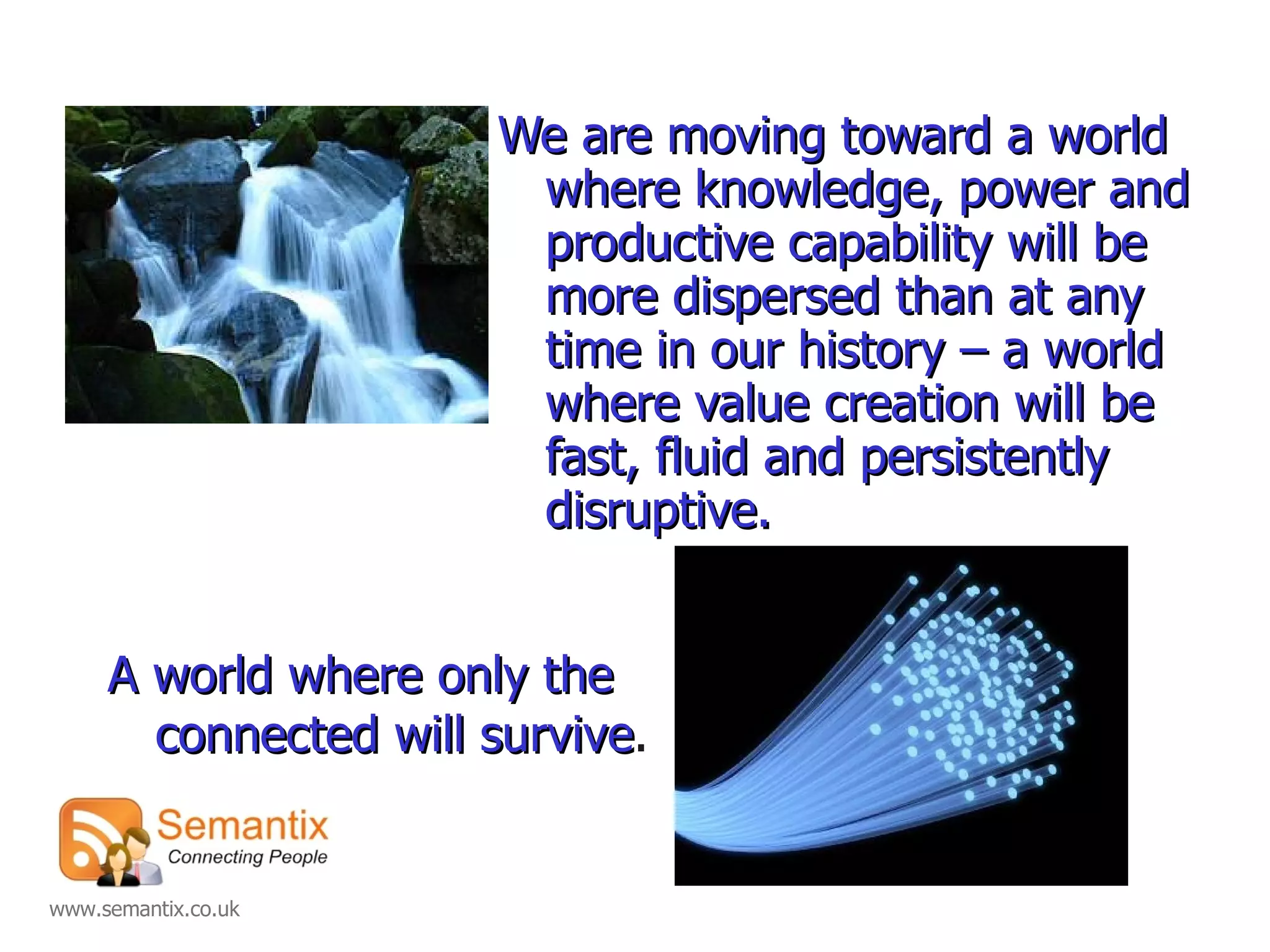
We are moving toward a world where knowledge, power and productive capability will be more dispersed than at any time in our history – a world where value creation will be fast, fluid and persistently disruptive. A world where only the connected will survive .
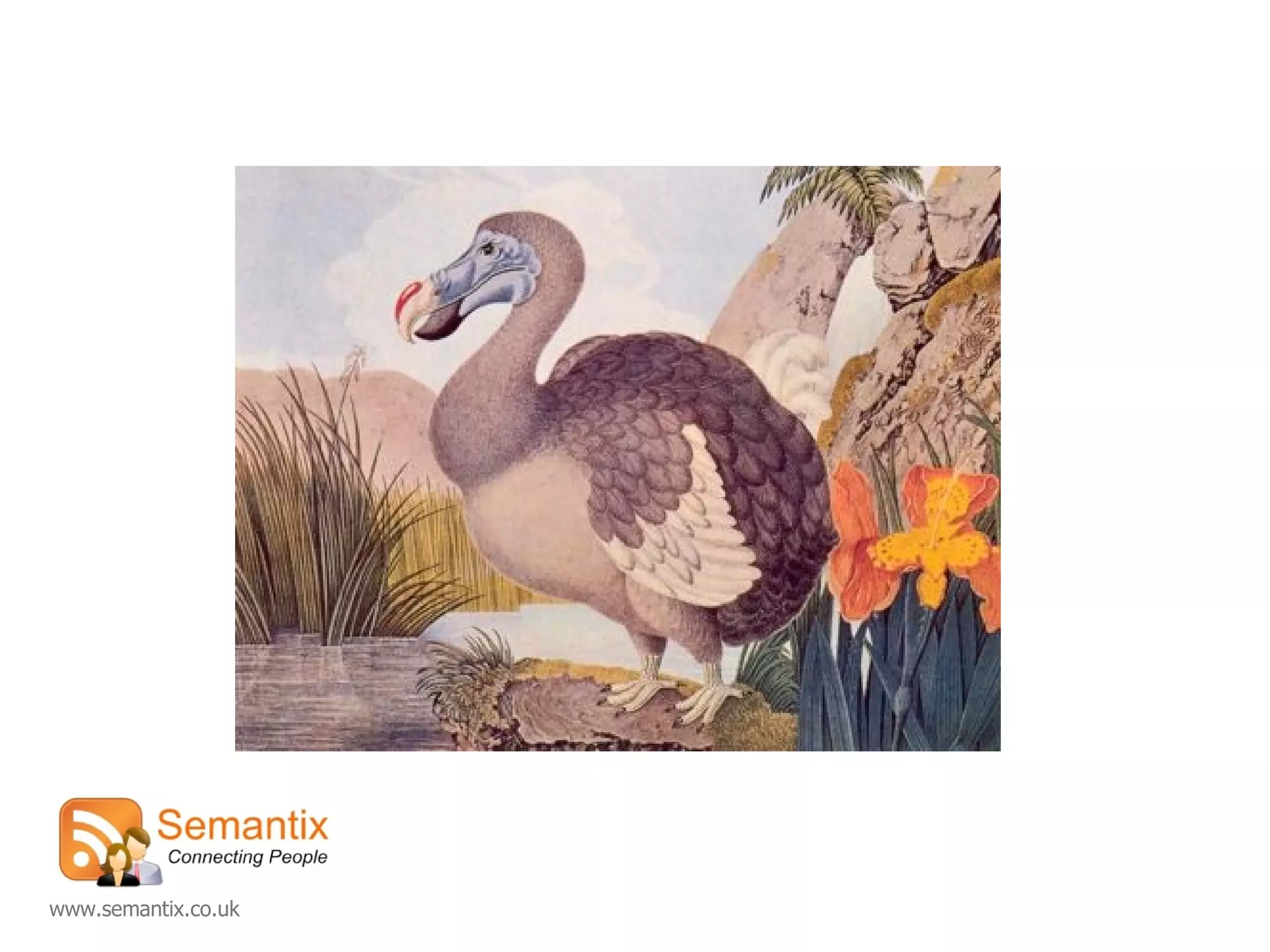
Should you be worried? A power shift is underway, and a tough new business rule is emerging: Harness the new collaboration or perish. Those who fail to grasp this will find themselves ever more isolated – cut off from the networks that are sharing, adapting and updating knowledge to create value.
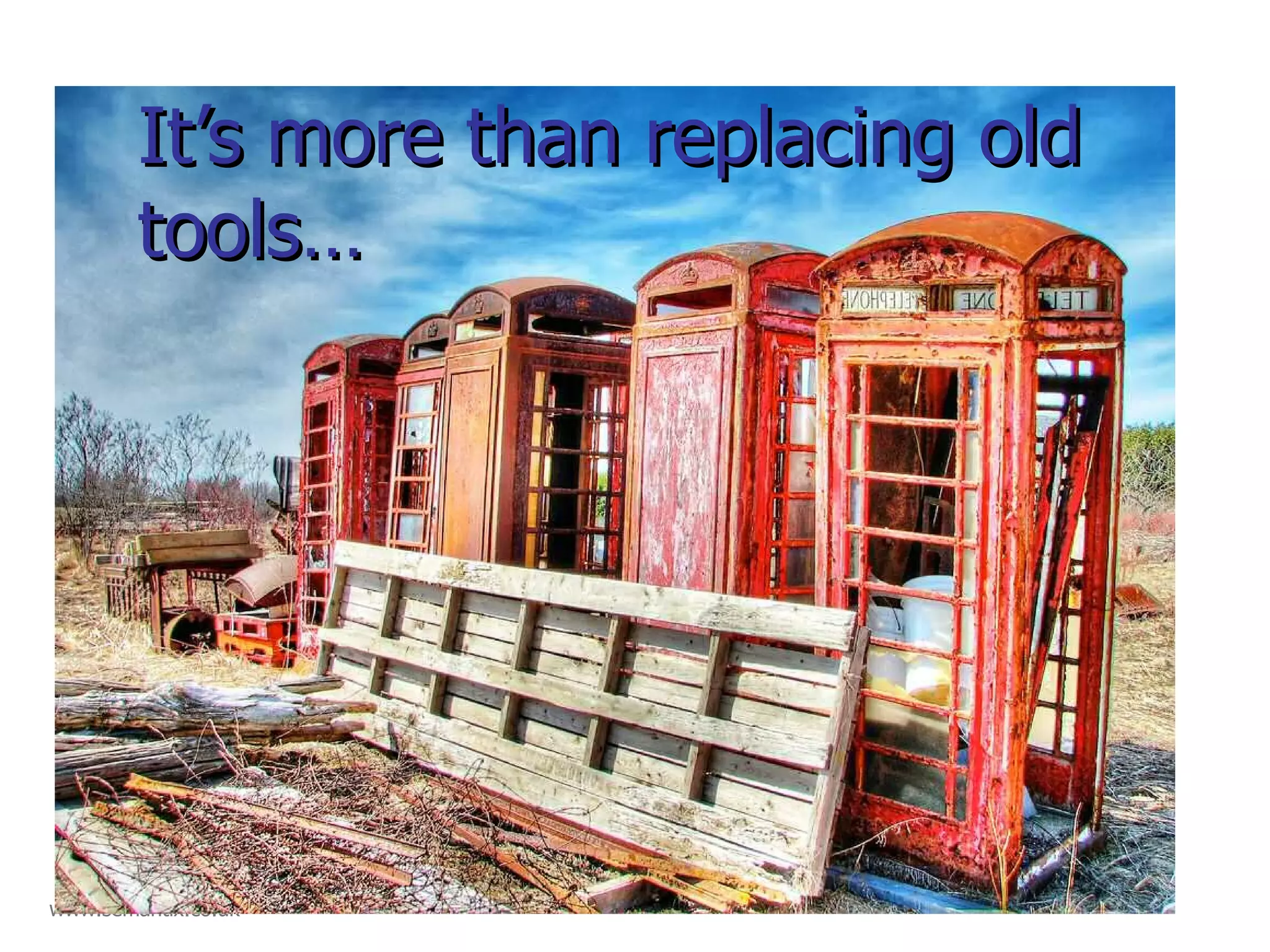
It’s more than replacing old tools…
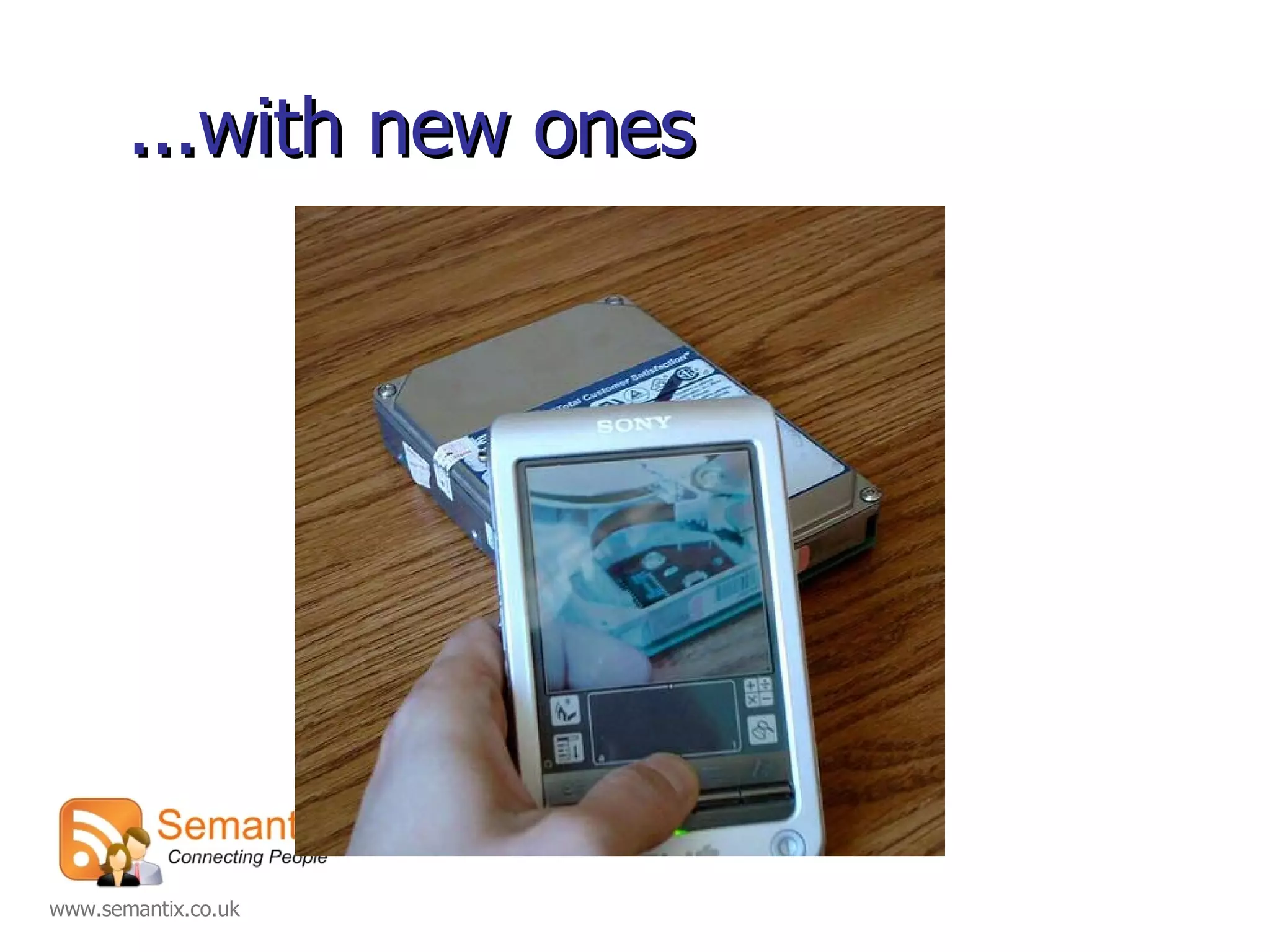
...with new ones
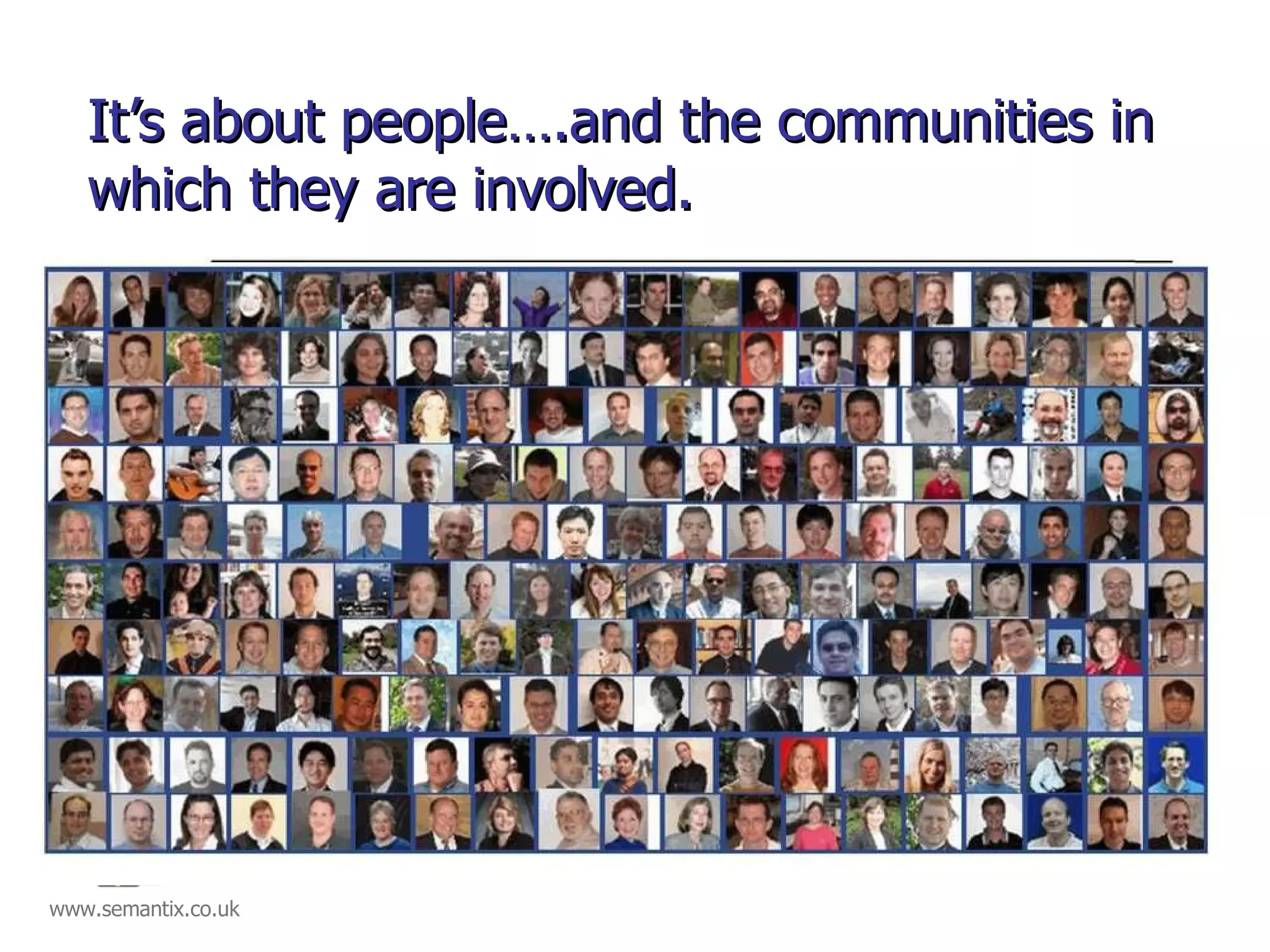
It’s about people….and the communities in which they are involved.
It’s about connecting and collaborating
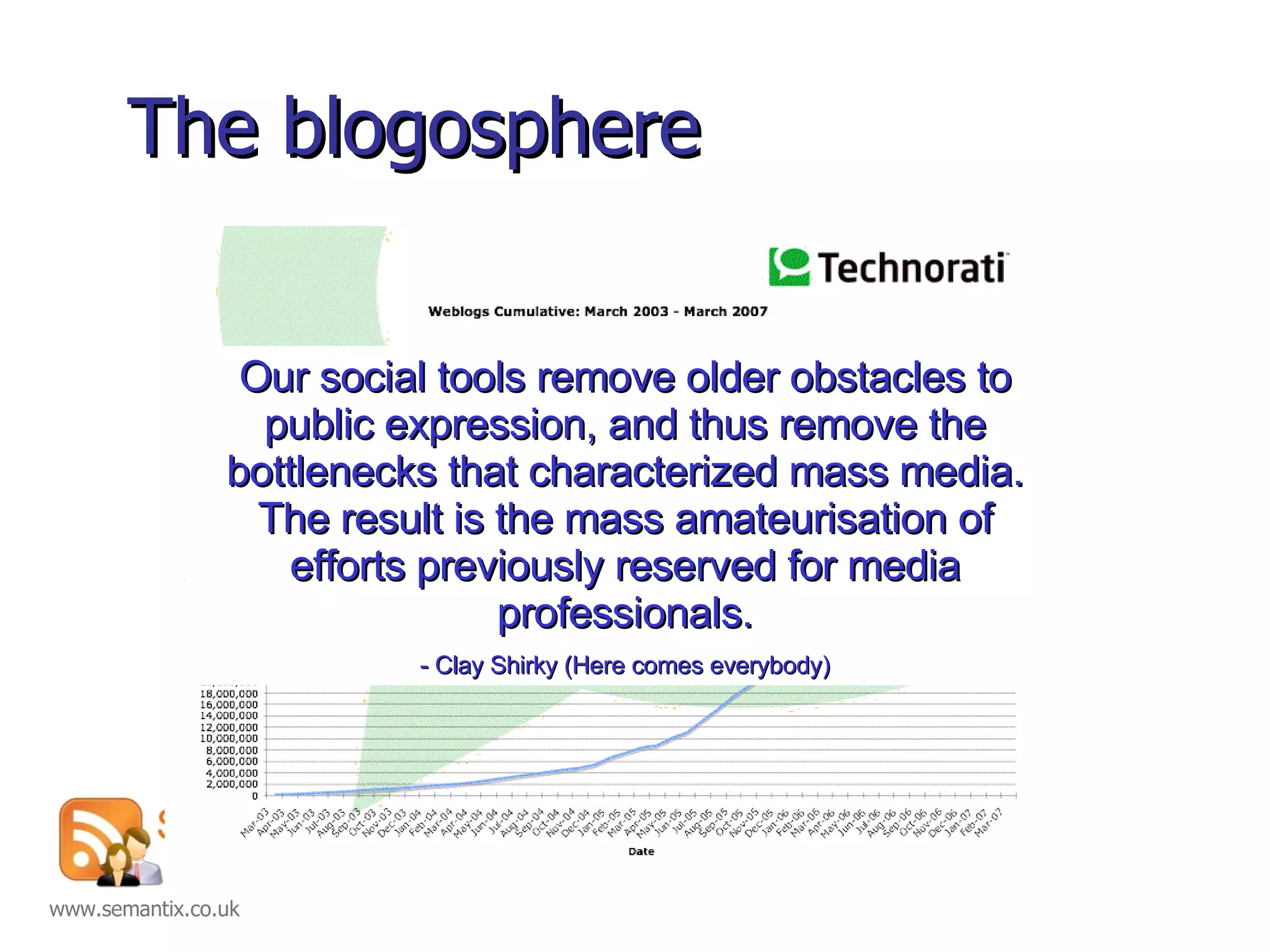
The blogosphere Our social tools remove older obstacles to public expression, and thus remove the bottlenecks that characterized mass media. The result is the mass amateurisation of efforts previously reserved for media professionals. - Clay Shirky (Here comes everybody)
So what is this new knowledge paradigm?
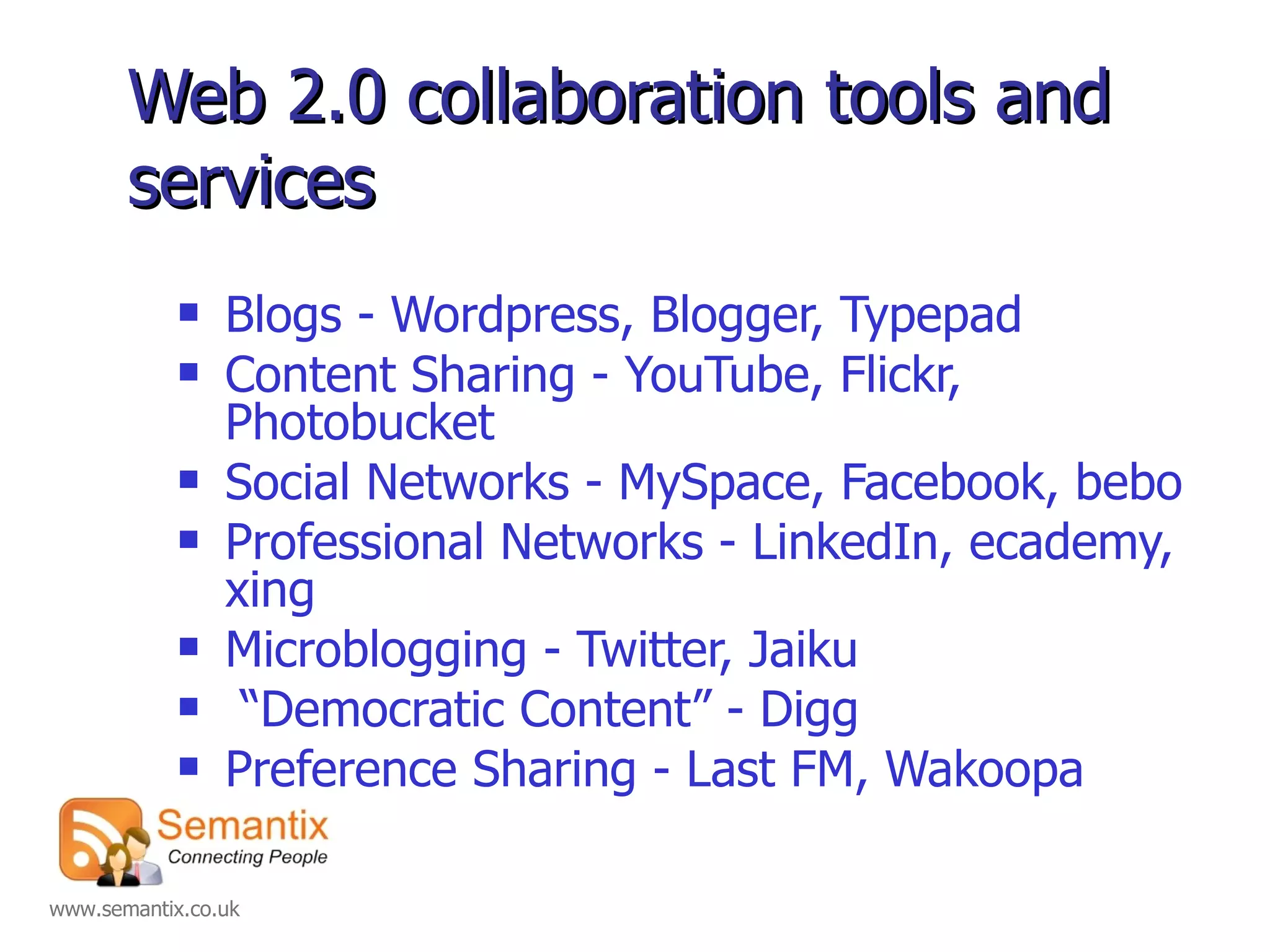
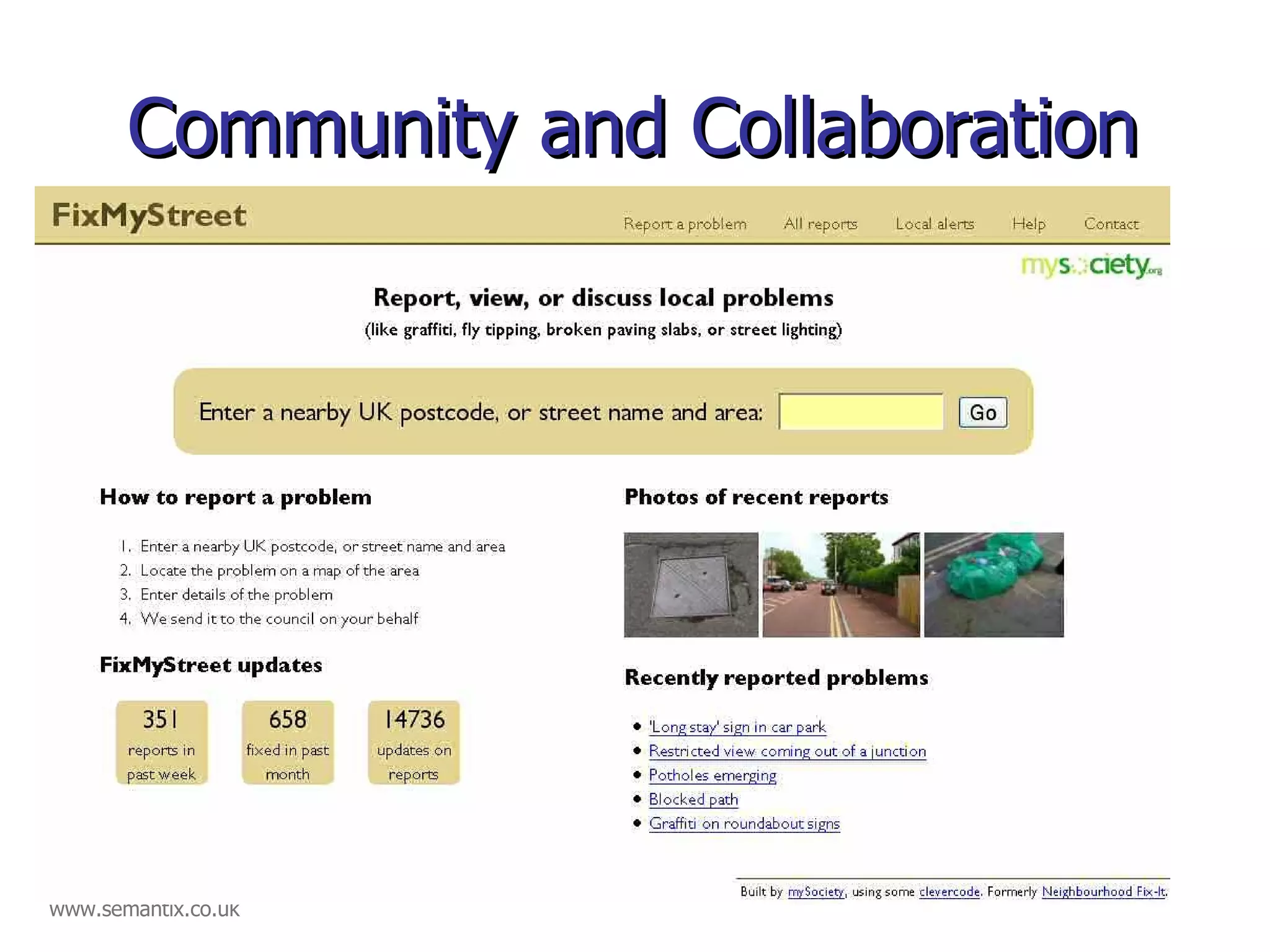
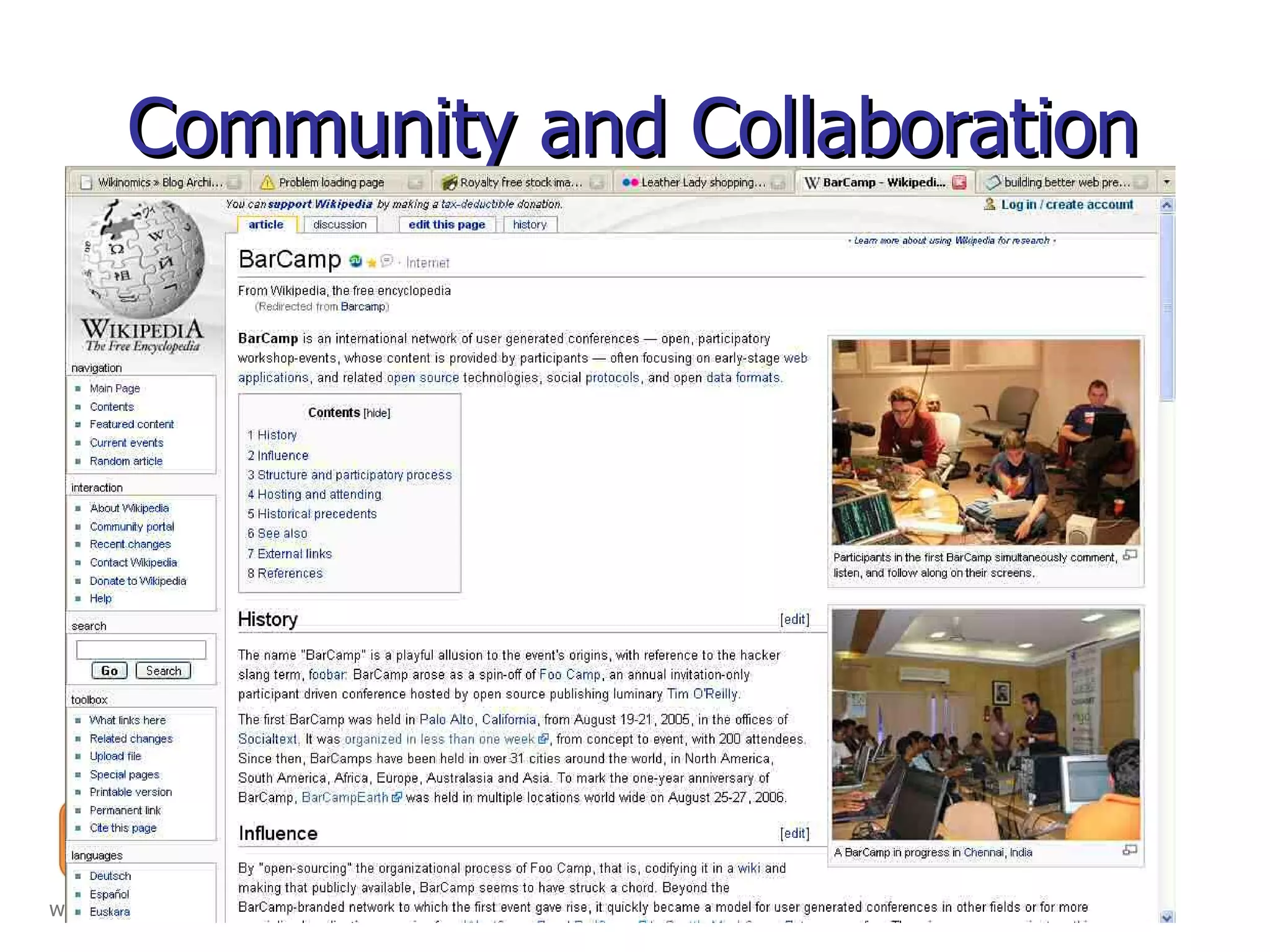
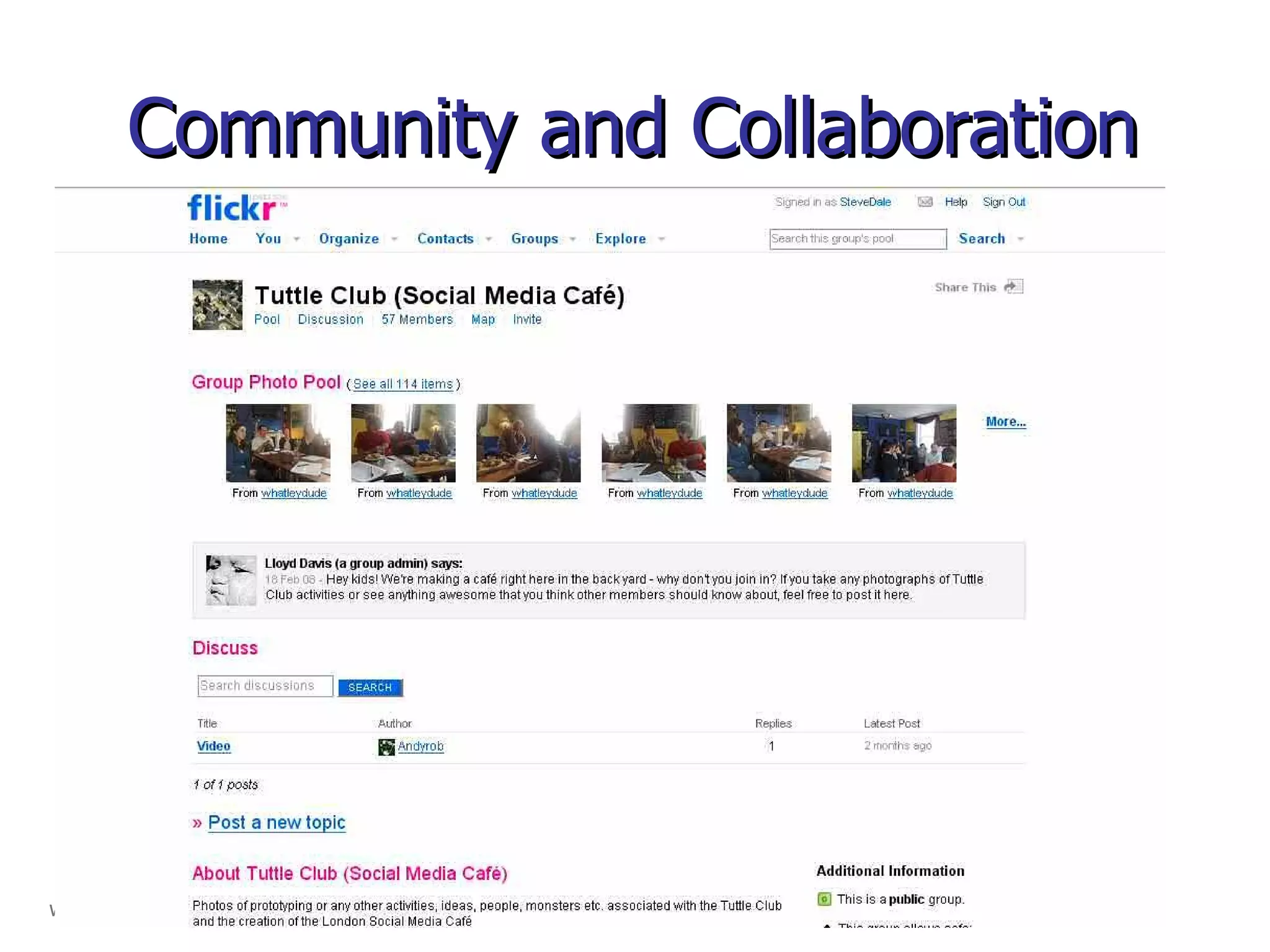
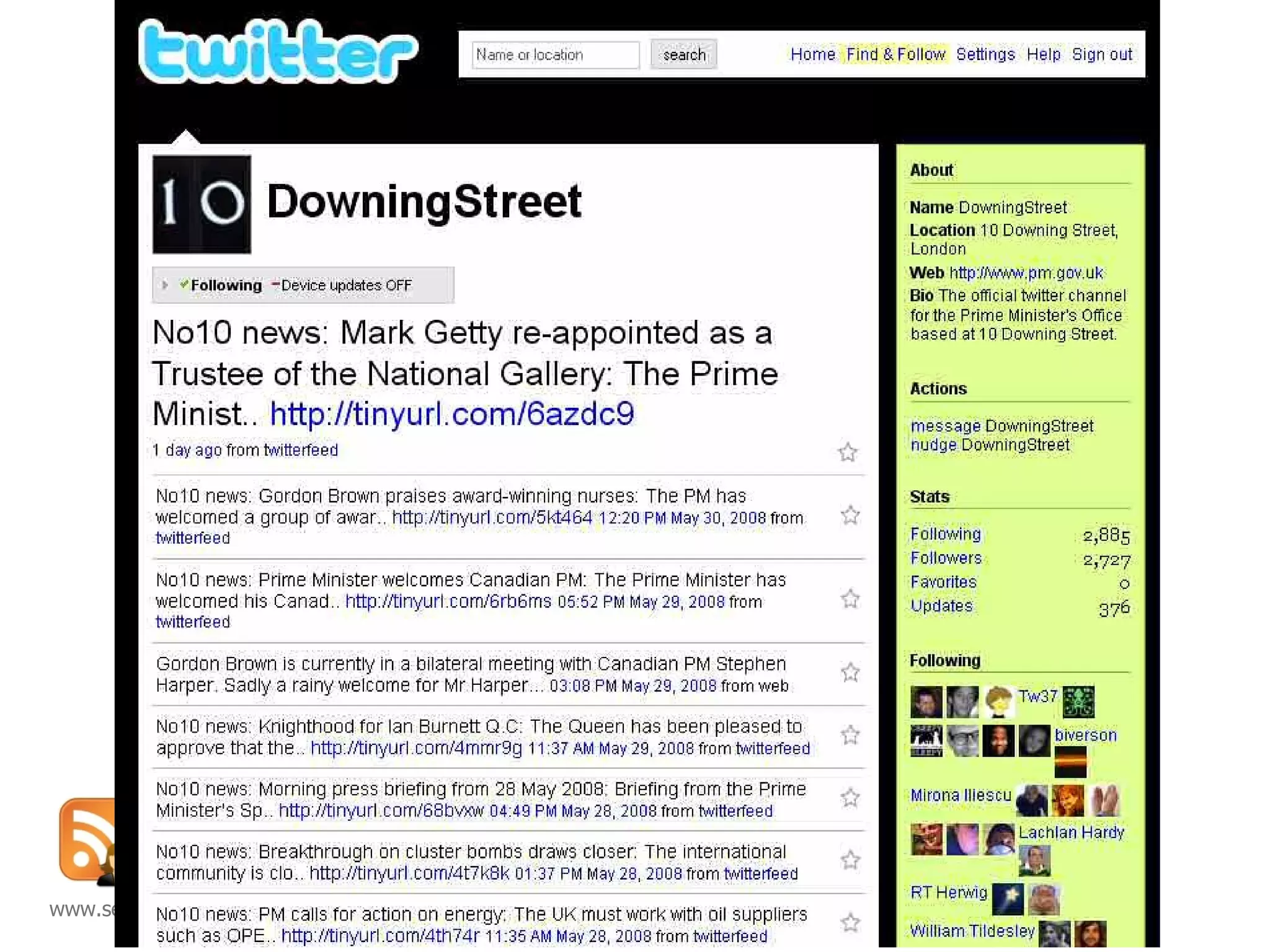
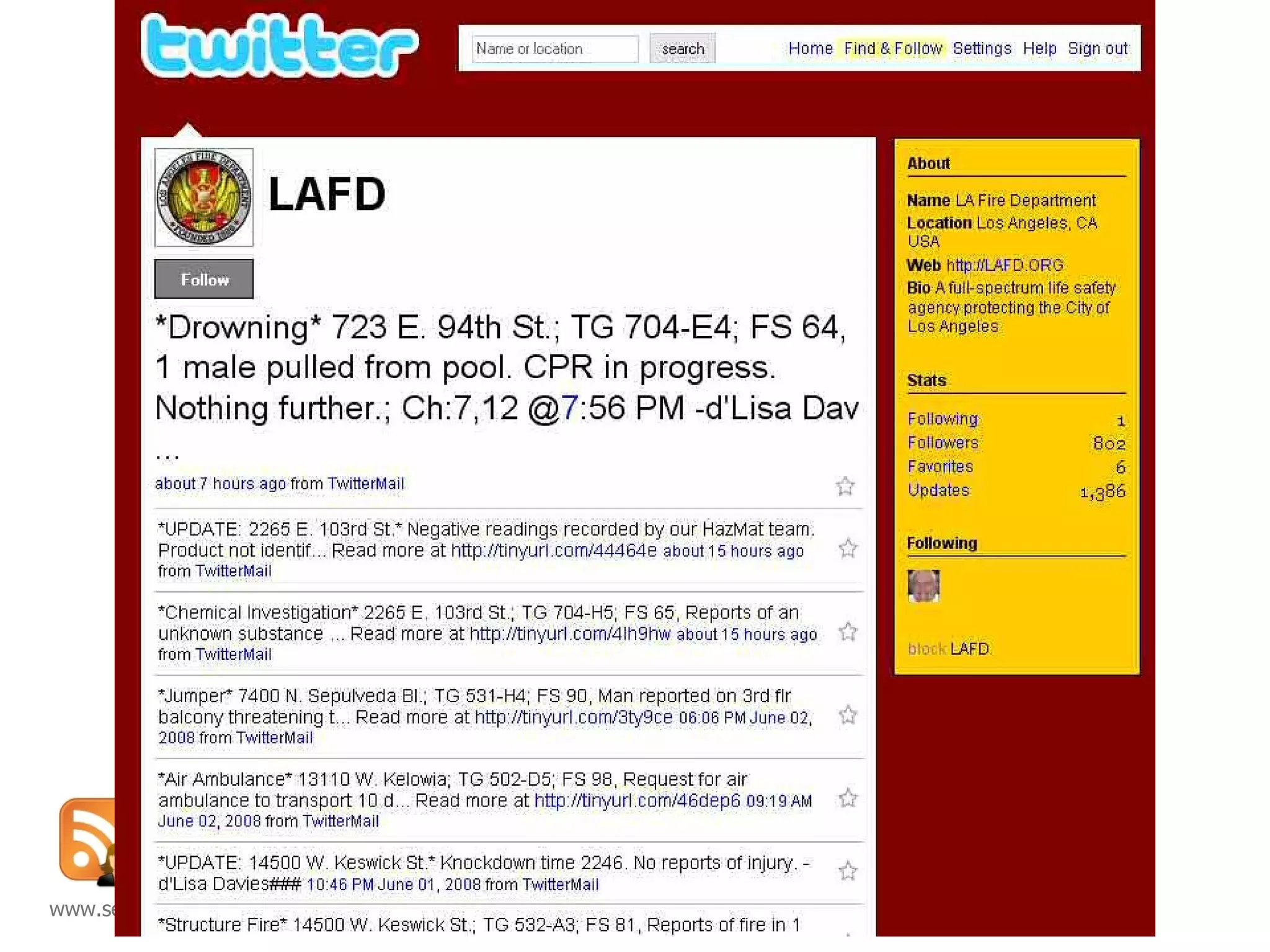
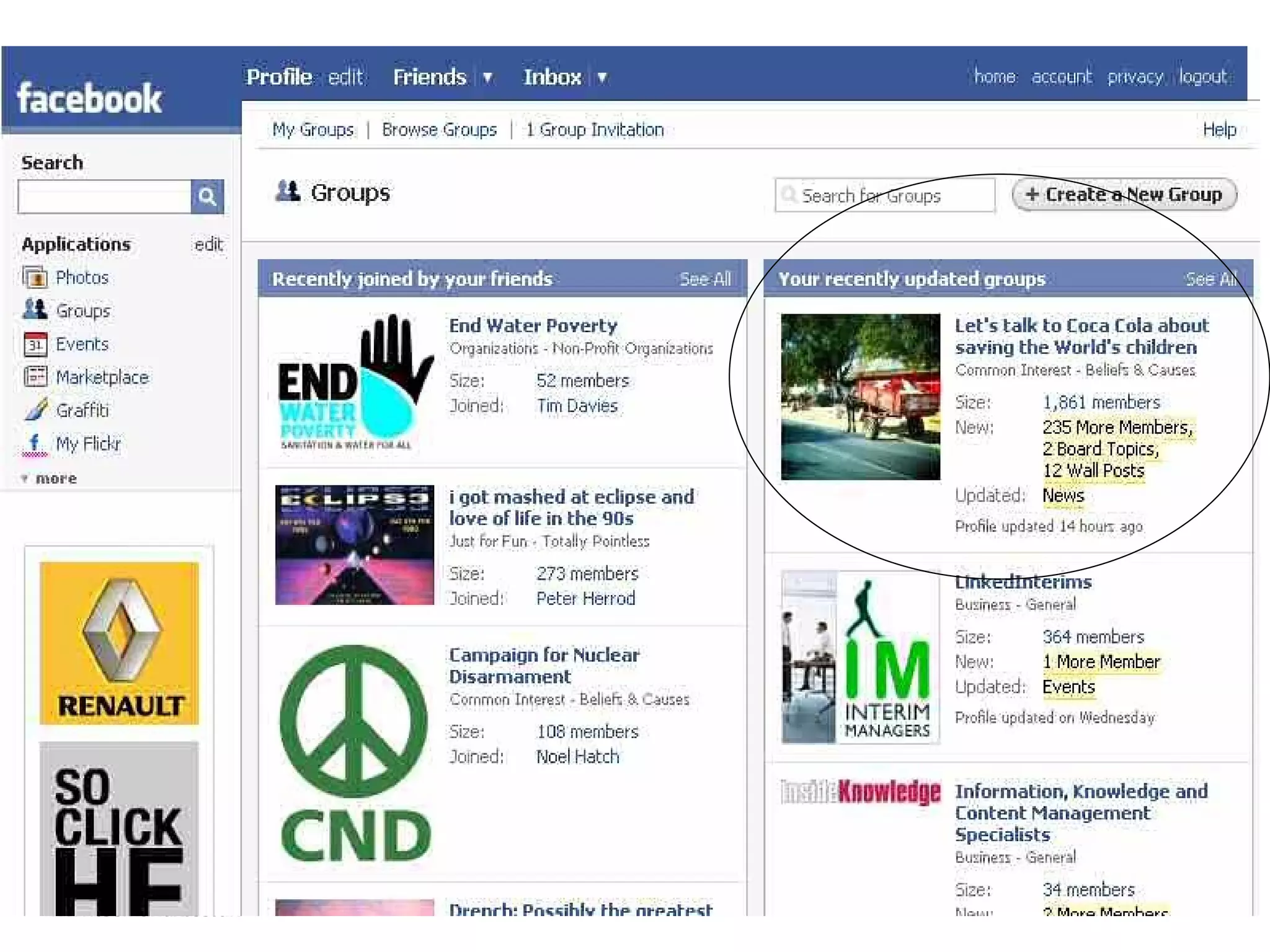
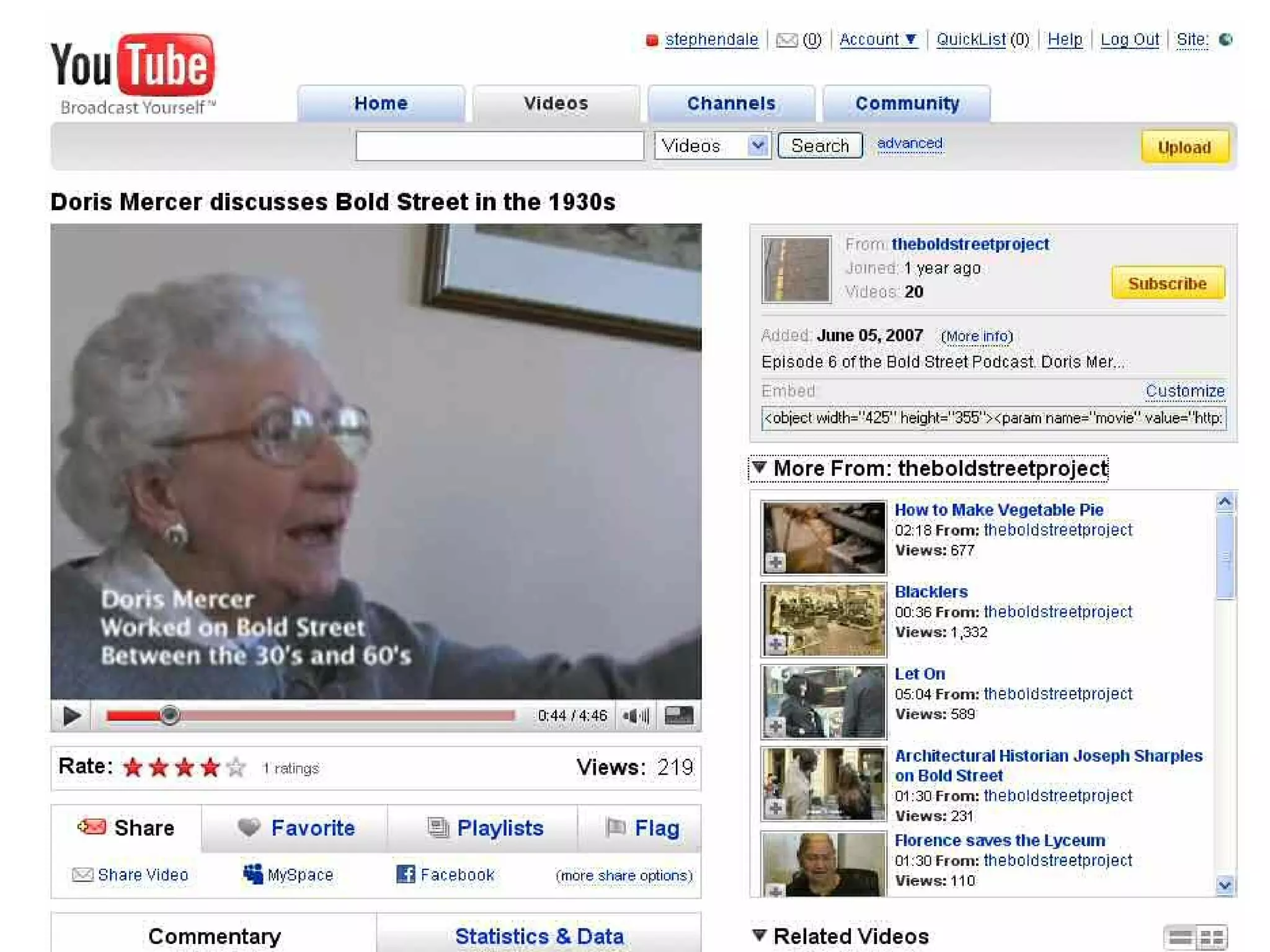
Web 2.0 collaboration tools and services Blogs - Wordpress, Blogger, Typepad Content Sharing - YouTube, Flickr, Photobucket Social Networks - MySpace, Facebook, bebo Professional Networks - LinkedIn, ecademy, xing Microblogging - Twitter, Jaiku “ Democratic Content” - Digg Preference Sharing - Last FM, Wakoopa
Community and Collaboration


2. Web 2.0 and the socio-demographic challenge to the local government workforce.
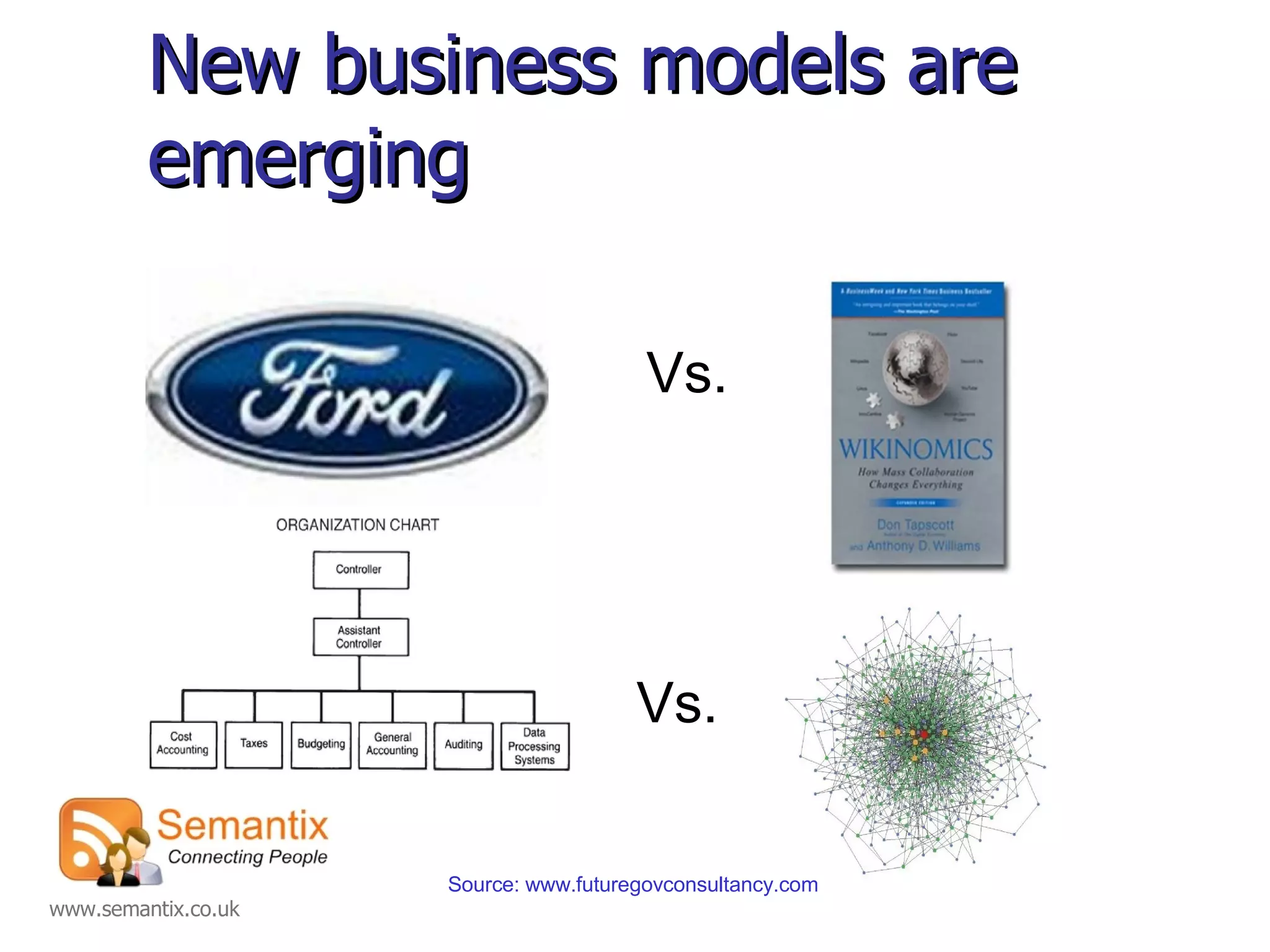
New business models are emerging Source: www.futuregovconsultancy.com Vs. Vs.
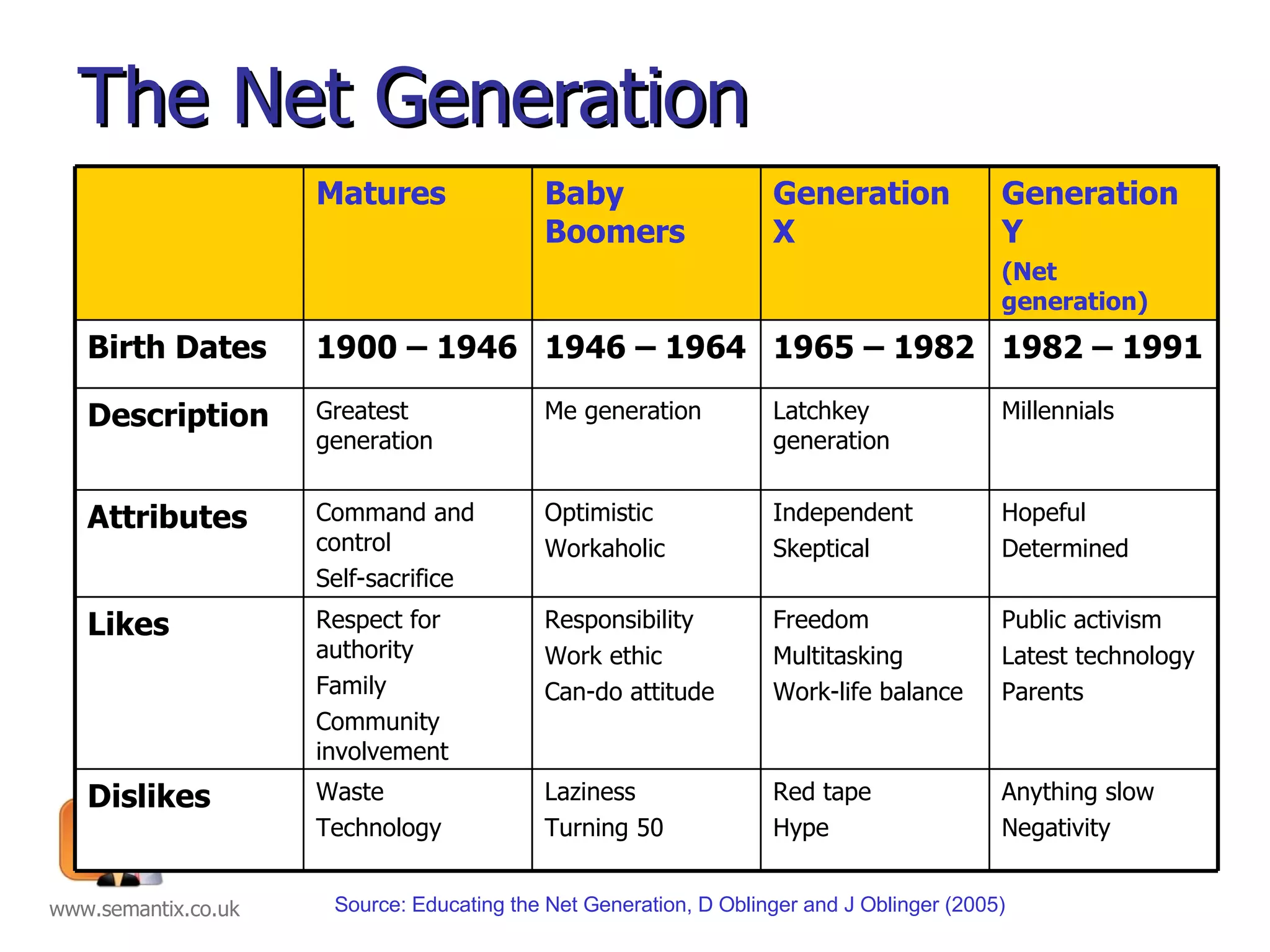
The Net Generation Source: Educating the Net Generation, D Oblinger and J Oblinger (2005) Anything slow Negativity Red tape Hype Laziness Turning 50 Waste Technology Dislikes Public activism Latest technology Parents Freedom Multitasking Work-life balance Responsibility Work ethic Can-do attitude Respect for authority Family Community involvement Likes Hopeful Determined Independent Skeptical Optimistic Workaholic Command and control Self-sacrifice Attributes Millennials Latchkey generation Me generation Greatest generation Description 1982 – 1991 1965 – 1982 1946 – 1964 1900 – 1946 Birth Dates Generation Y (Net generation) Generation X Baby Boomers Matures
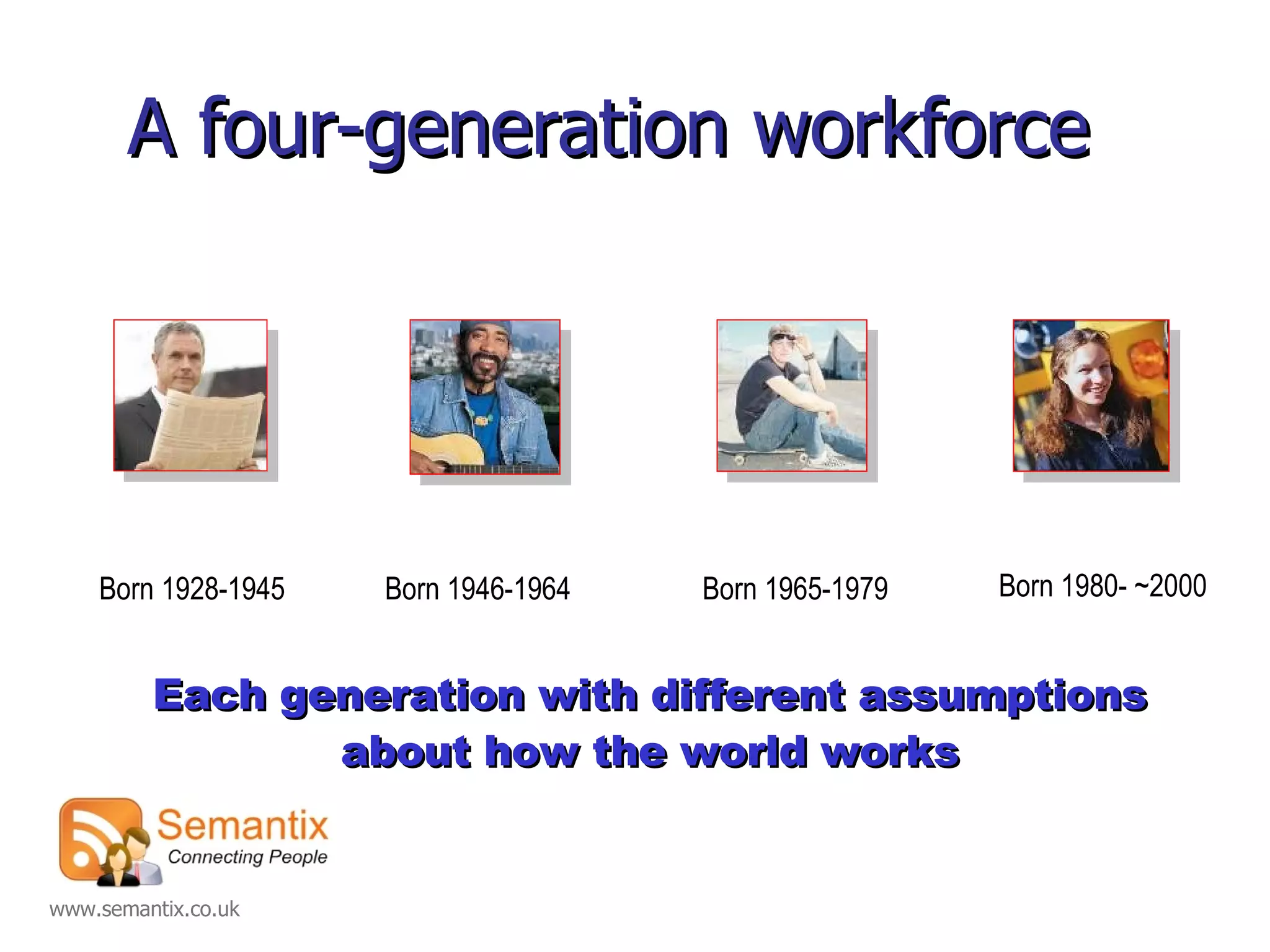
A four-generation workforce Each generation with different assumptions about how the world works Born 1928-1945 Born 1946-1964 Born 1965-1979 Born 1980- ~2000
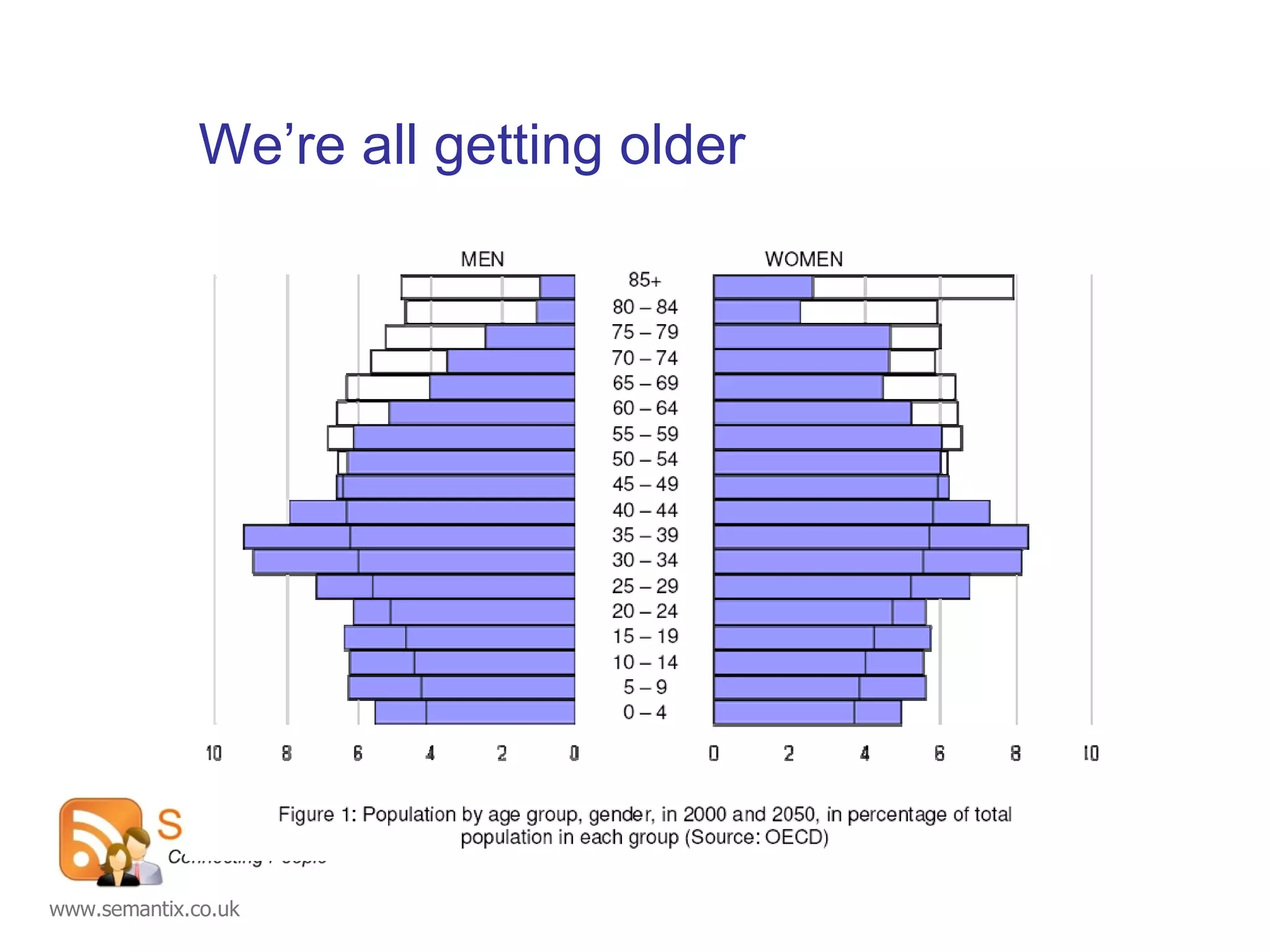
We’re all getting older
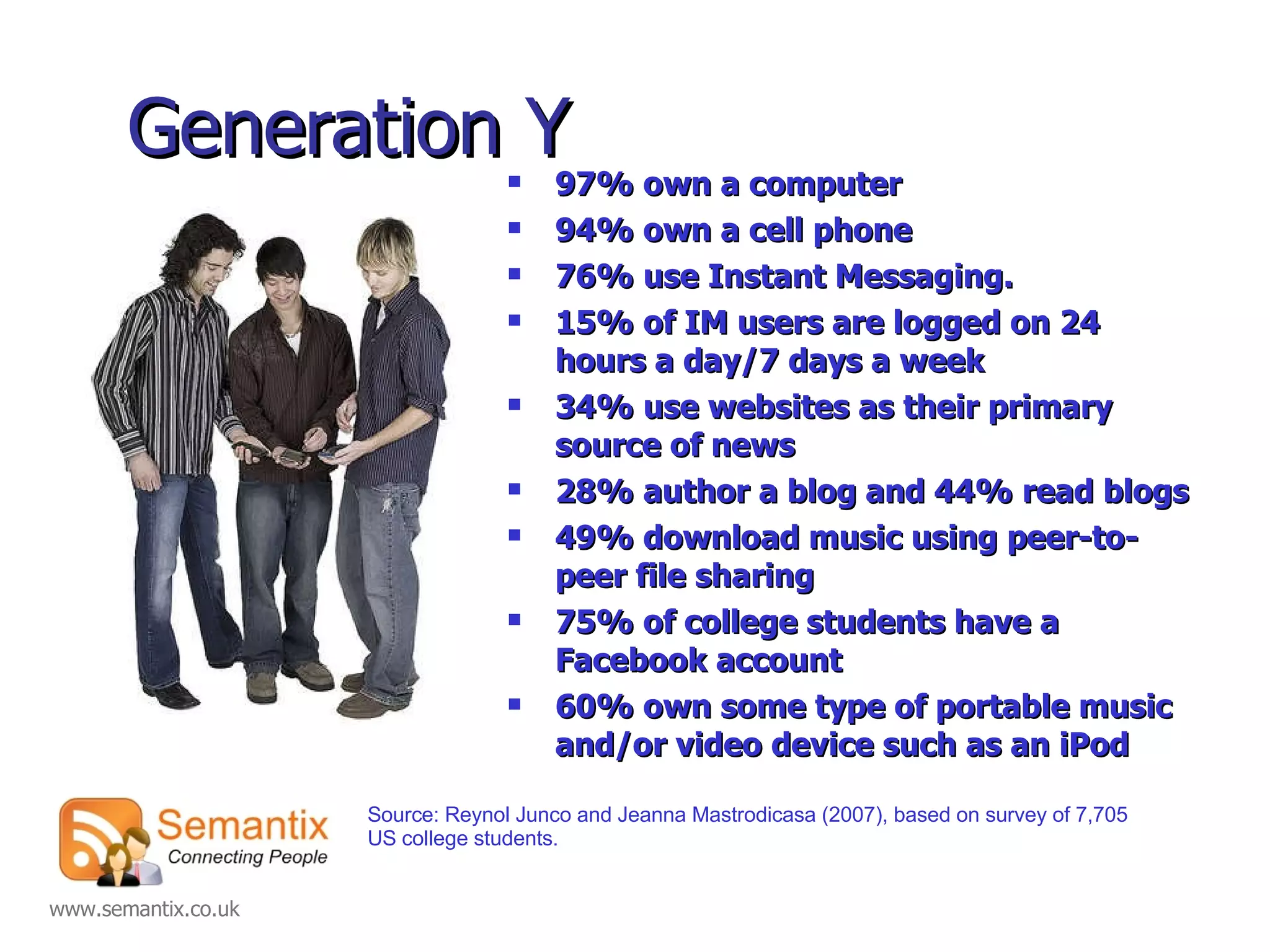
Generation Y 97% own a computer  94% own a cell phone  76% use Instant Messaging.  15% of IM users are logged on 24 hours a day/7 days a week  34% use websites as their primary source of news  28% author a blog and 44% read blogs  49% download music using peer-to-peer file sharing  75% of college students have a Facebook account 60% own some type of portable music and/or video device such as an iPod Source: Reynol Junco and Jeanna Mastrodicasa (2007), based on survey of 7,705 US college students.
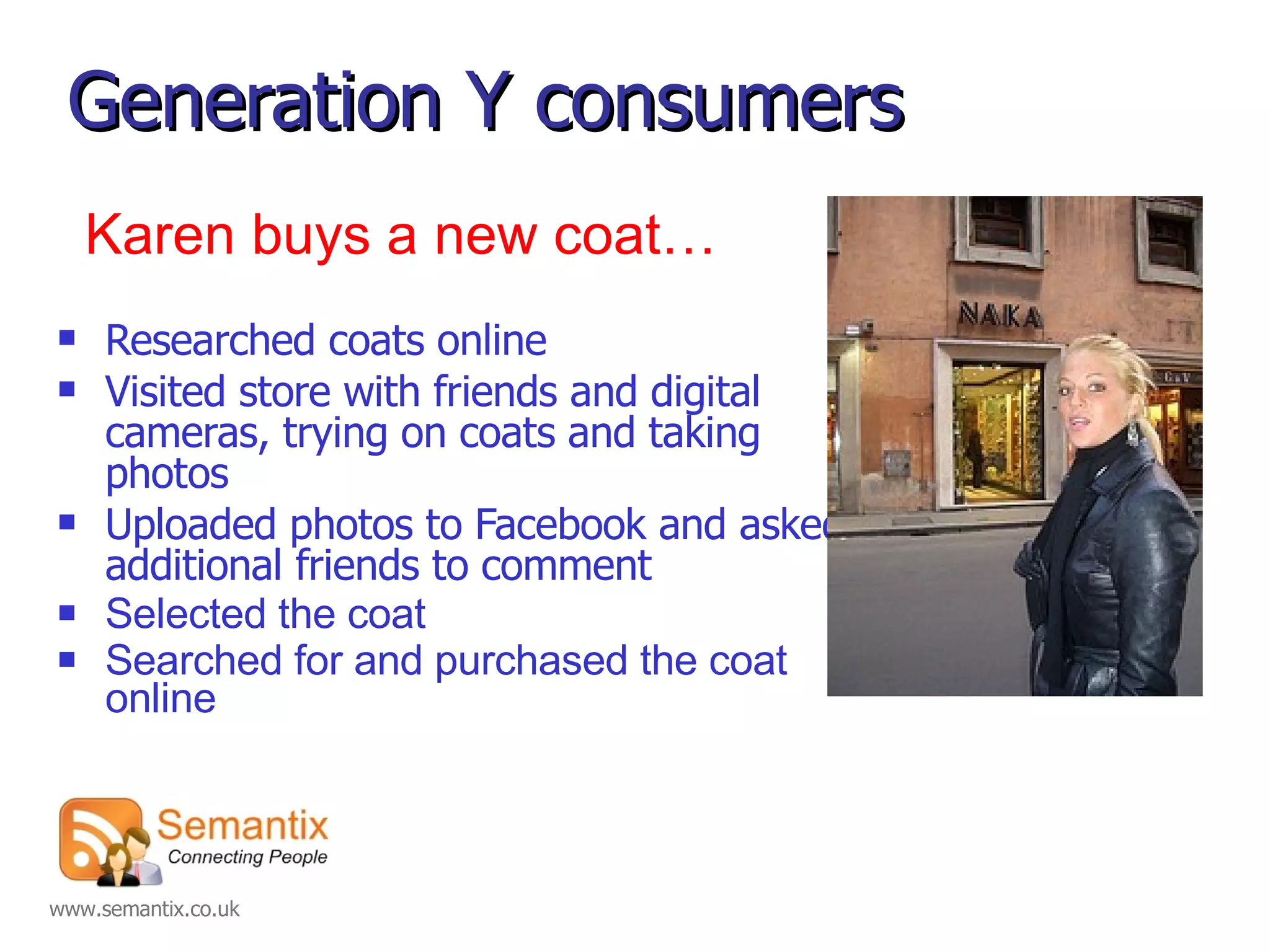
Generation Y consumers Researched coats online  Visited store with friends and digital cameras, trying on coats and taking photos Uploaded photos to Facebook and asked additional friends to comment  Selected the coat  Searched for and purchased the coat online   Karen buys a new coat…
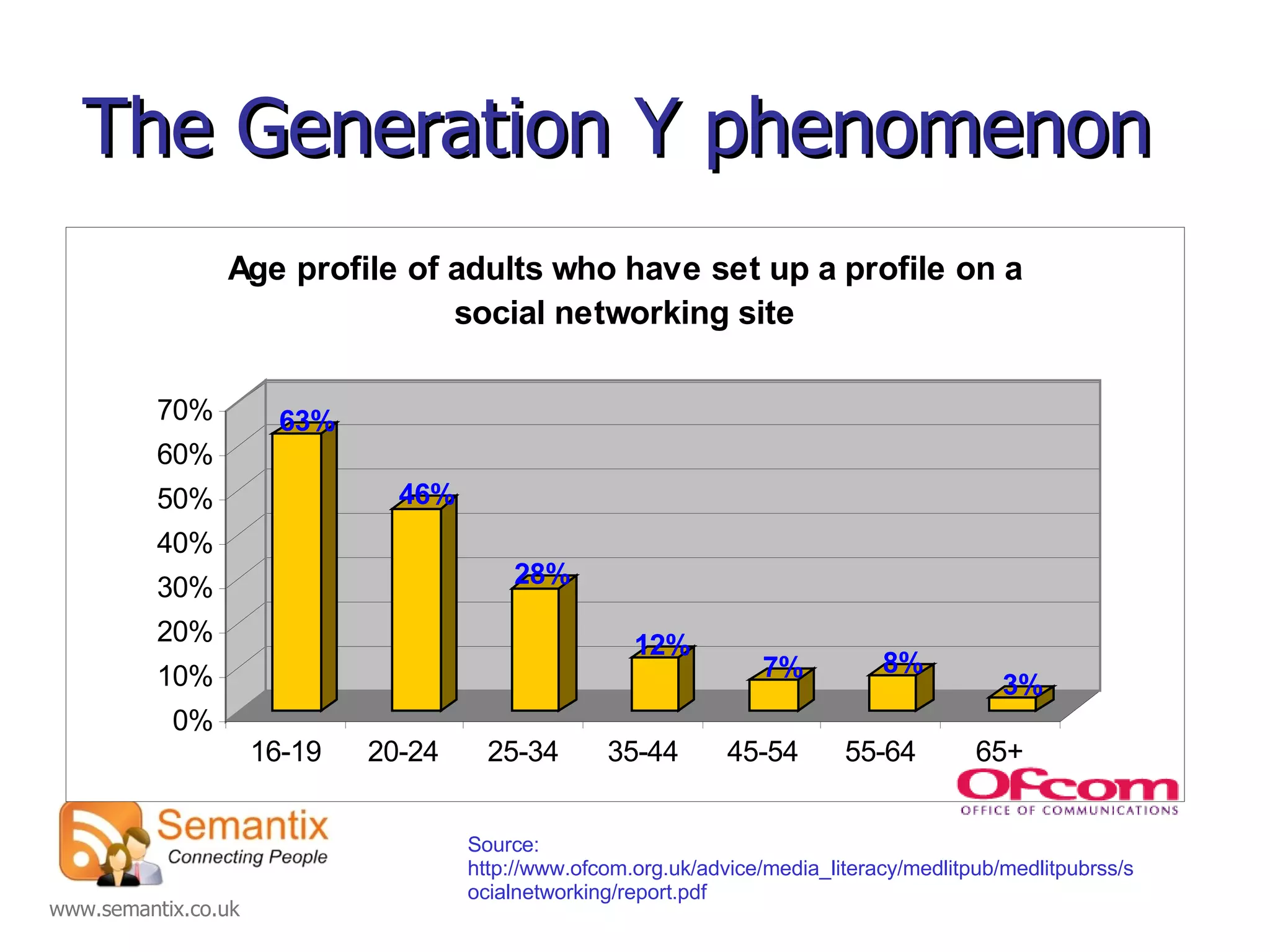
The Generation Y phenomenon Source: http://www.ofcom.org.uk/advice/media_literacy/medlitpub/medlitpubrss/socialnetworking/report.pdf
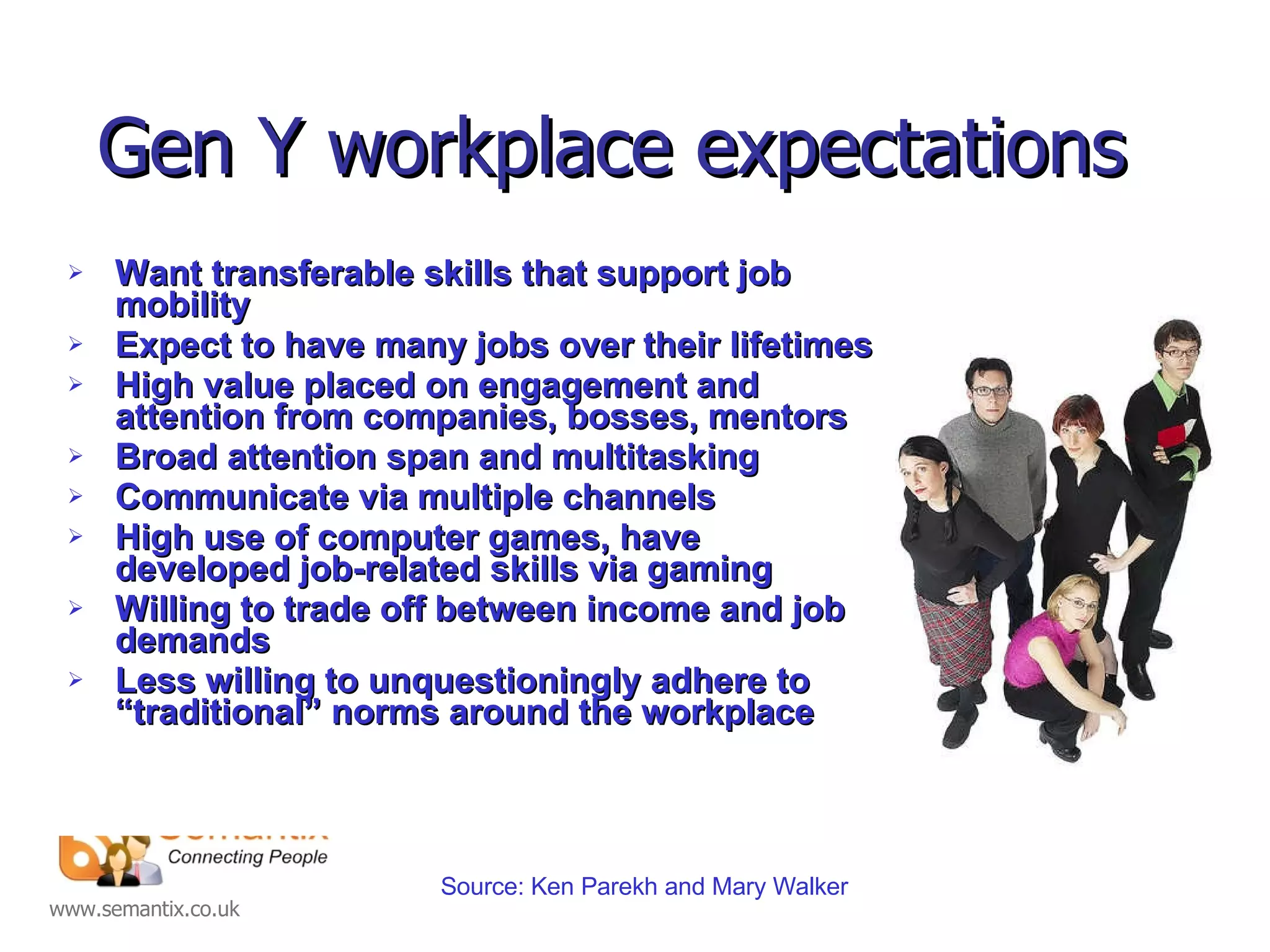
Gen Y workplace expectations Want transferable skills that support job mobility  Expect to have many jobs over their lifetimes  High value placed on engagement and attention from companies, bosses, mentors  Broad attention span and multitasking  Communicate via multiple channels  High use of computer games, have developed job-related skills via gaming  Willing to trade off between income and job demands  Less willing to unquestioningly adhere to “traditional” norms around the workplace Source: Ken Parekh and Mary Walker
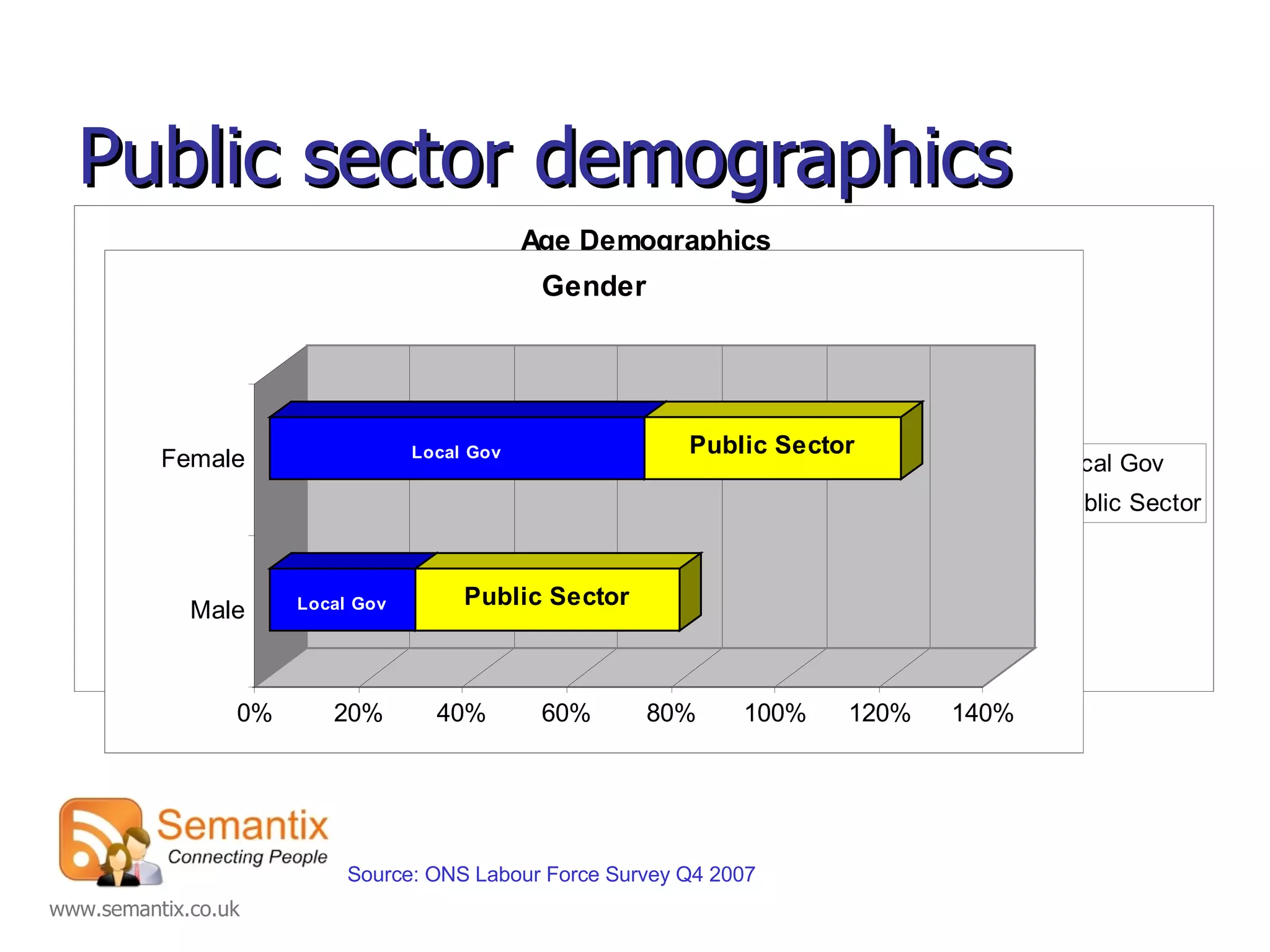
Public sector demographics Source: ONS Labour Force Survey Q4 2007
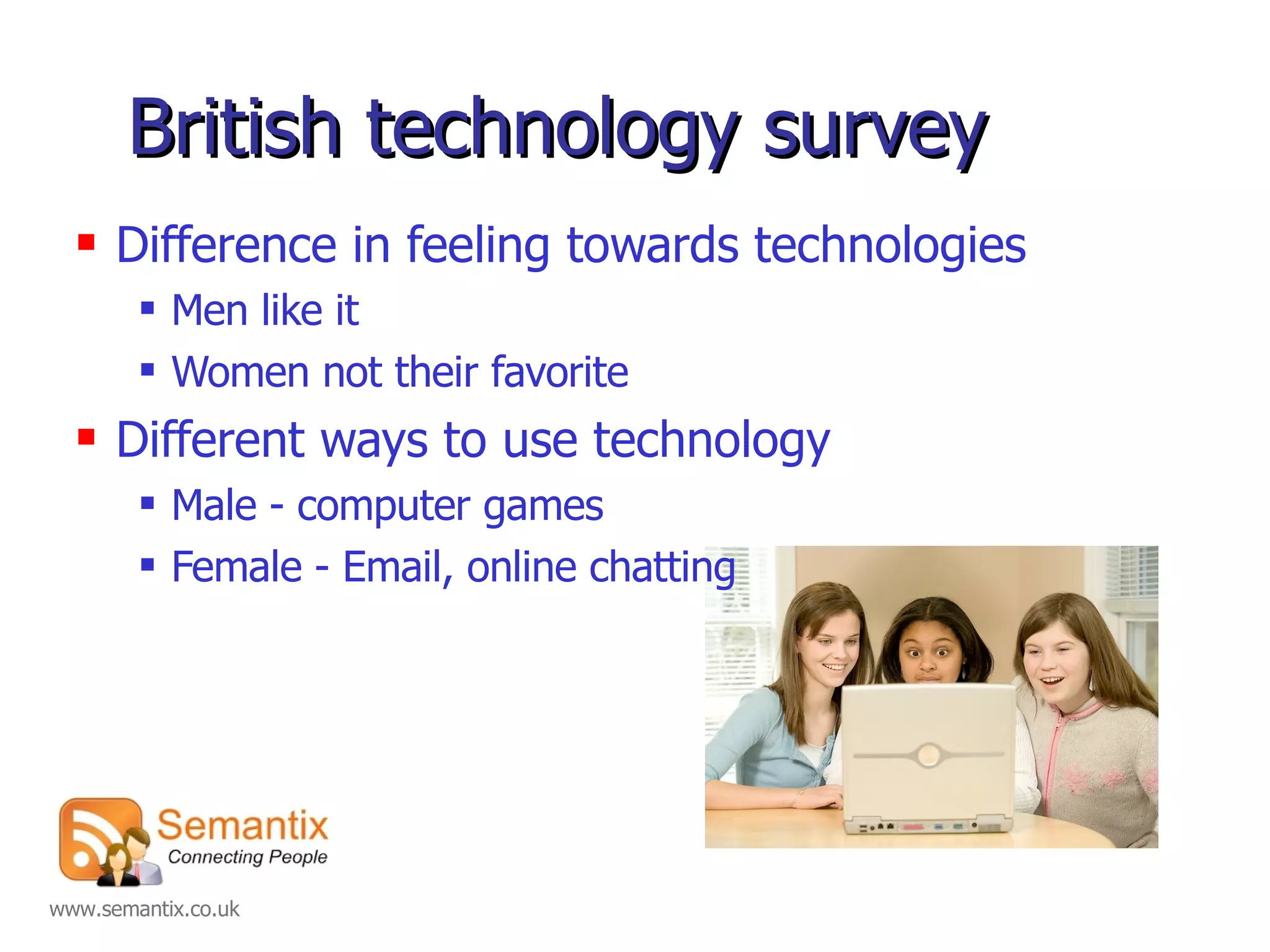
British technology survey Difference in feeling towards technologies Men like it Women not their favorite Different ways to use technology Male - computer games Female - Email, online chatting
British technology survey Gender gap closing Data Found:- Cell phones used more by men Women had anxiety with internet use Men self-taught, Women assisted
The 21 st  Century Knowledge Worker - summary There won’t be enough of them 2. Their expectations will be different 3. Technologies will transform when, where and how work is done.
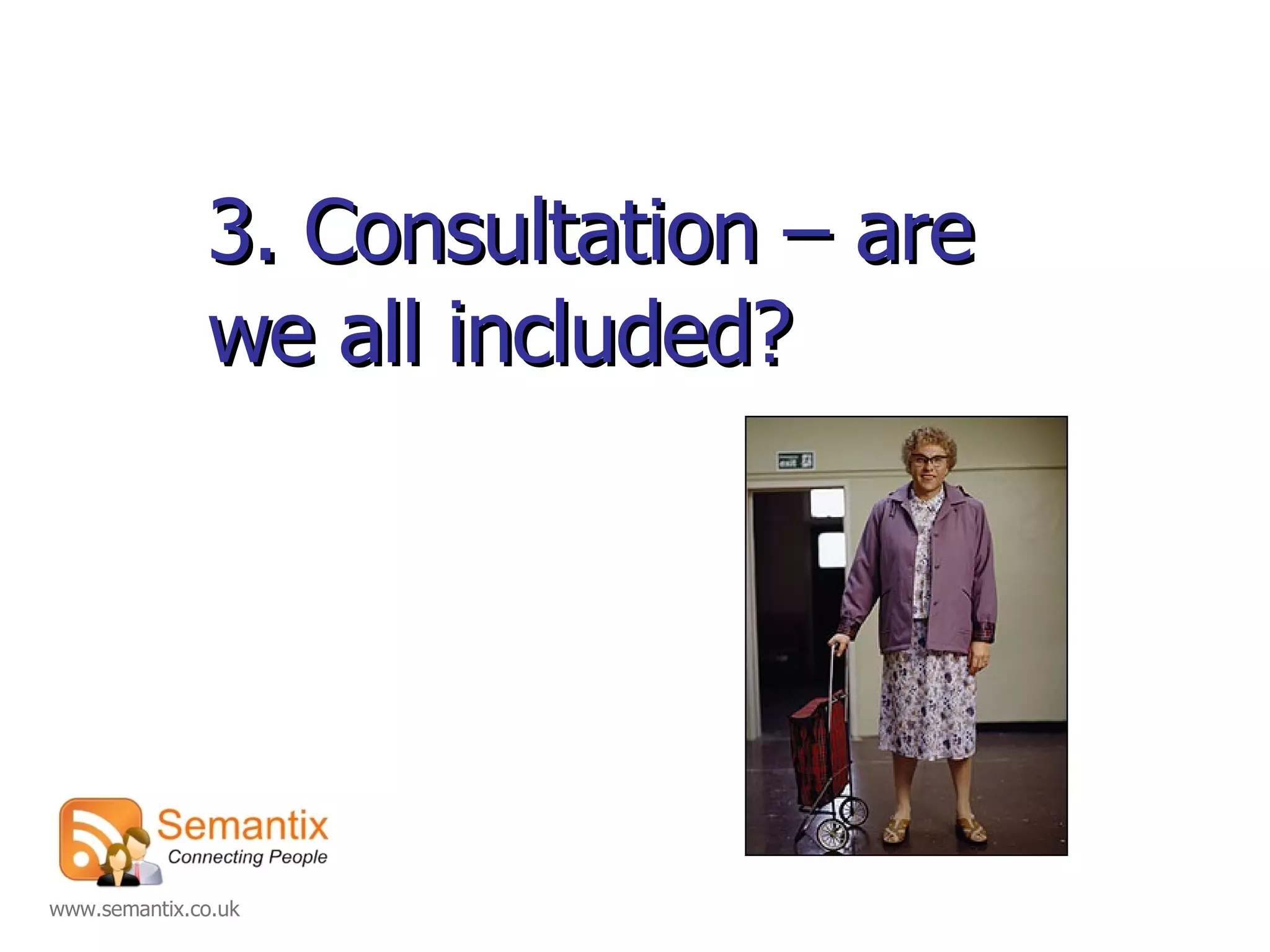
3. Consultation – are we all included?
Consultation Consultation is an essential part of government activity today, with organisations of all sizes working to provide opportunities for better public and stakeholder engagement at every stage of the process. Source: Government
Are we all included? Online consultation  offers a number of real benefits for public sector organisations – widening participation and accessibility. Improving efficiency and accuracy, as well as reducing the frustration and costs associated with the consultation process. Source: Software services vendor
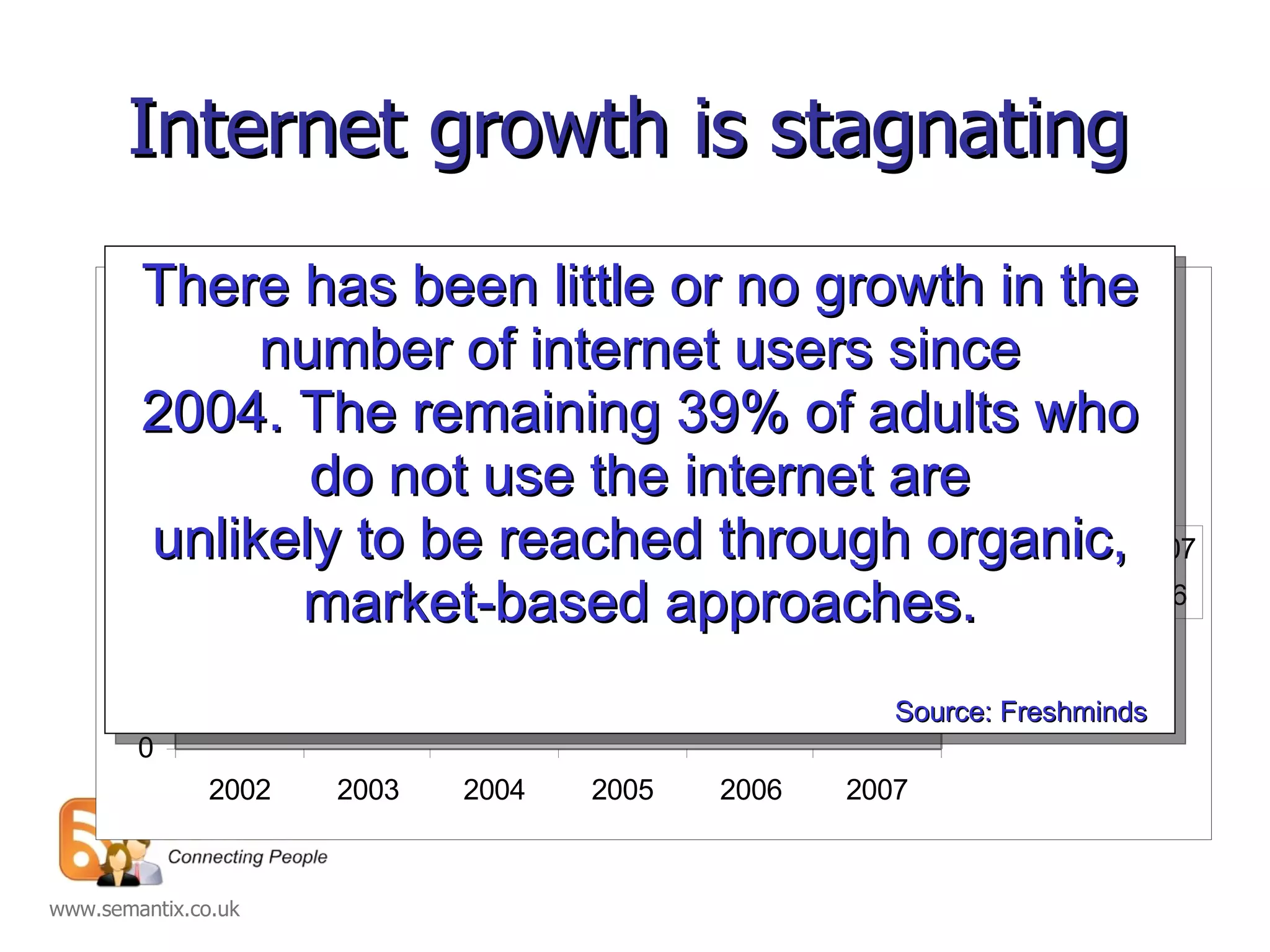
Internet growth is stagnating There has been little or no growth in the number of internet users since 2004. The remaining 39% of adults who do not use the internet are unlikely to be reached through organic, market-based approaches. Source: Freshminds
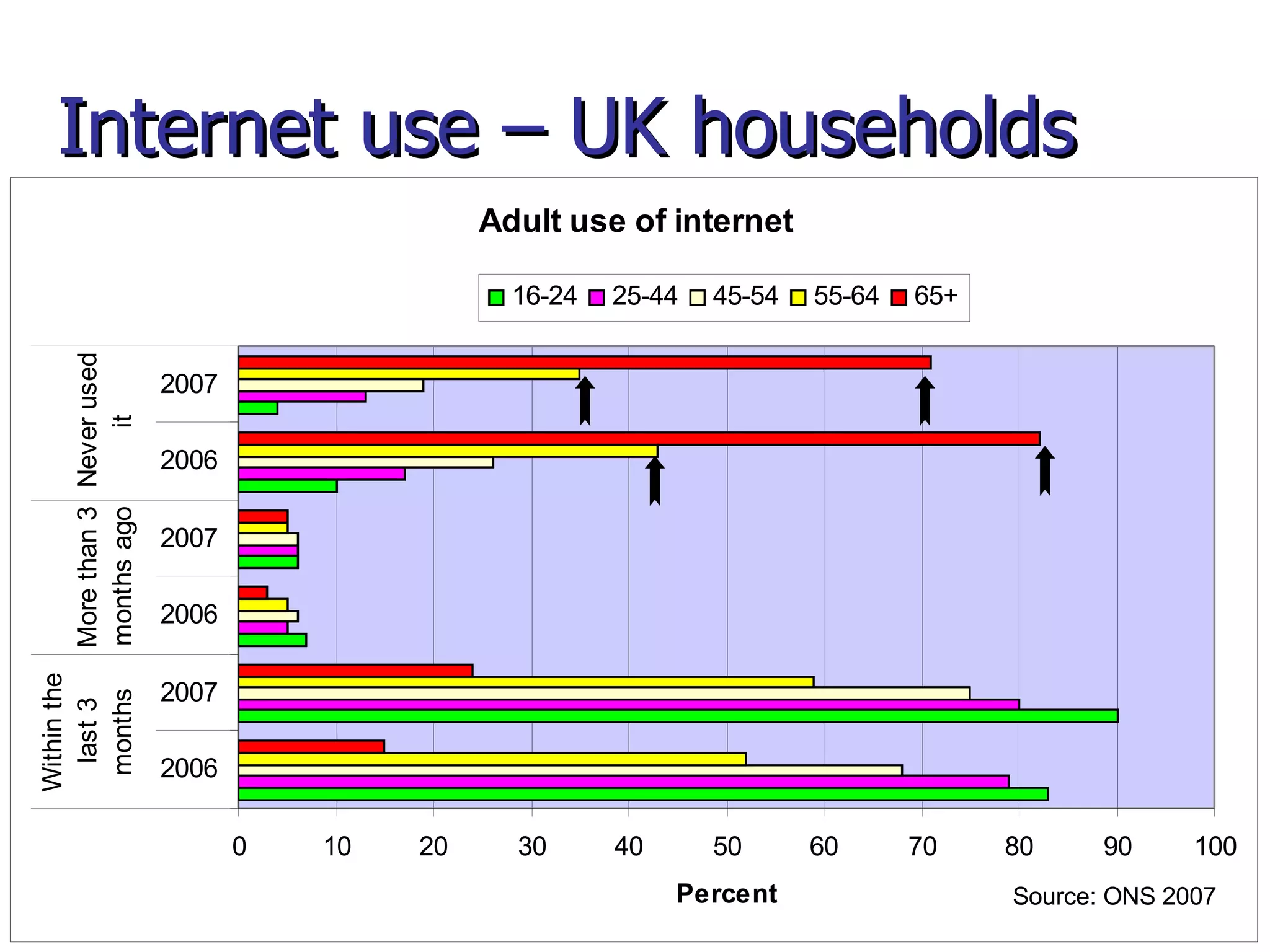
Internet use – UK households Source: ONS 2007
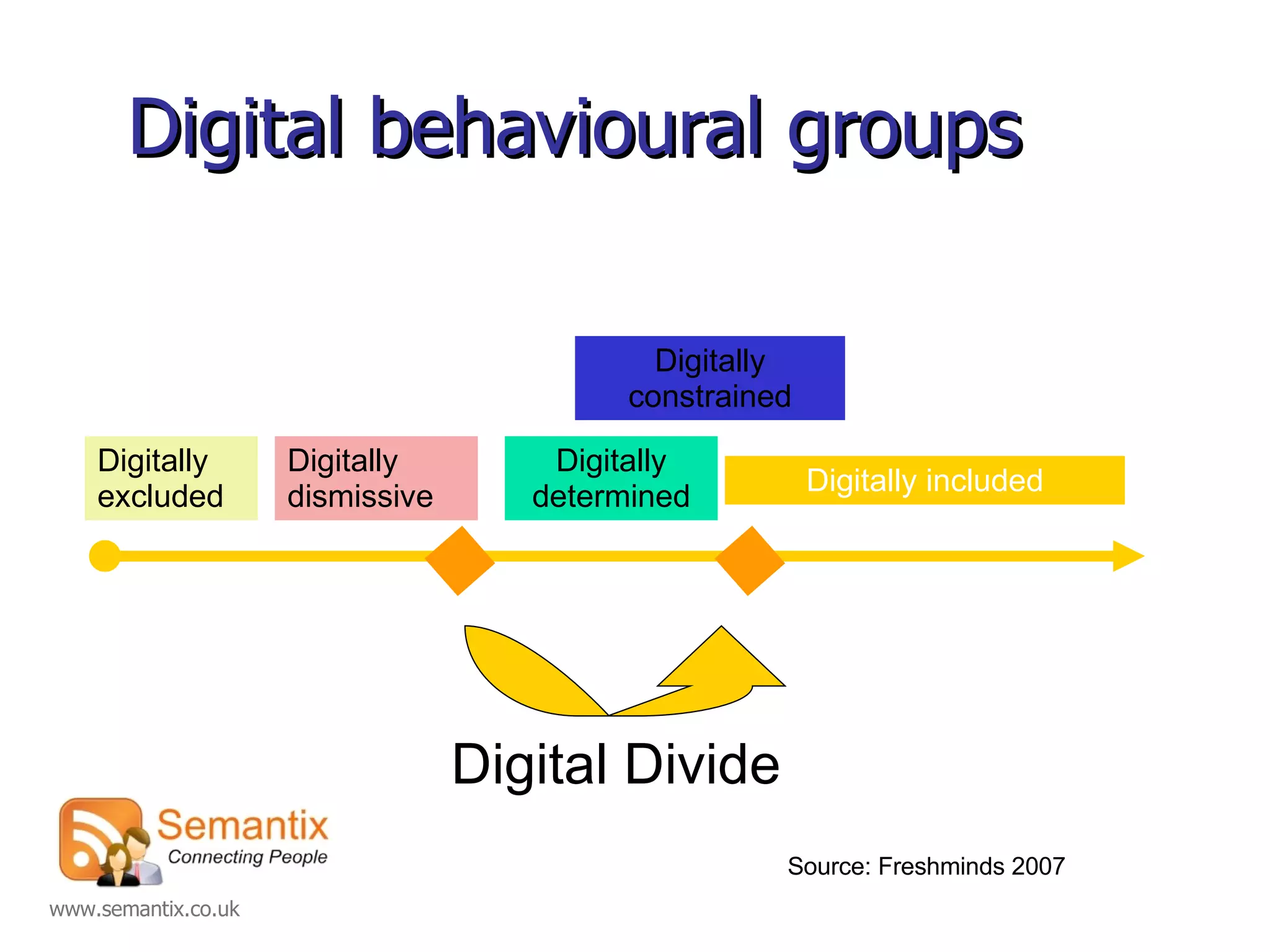
Digital behavioural groups Digitally excluded Digitally dismissive Digitally constrained Digitally determined Digitally included Digital Divide Source: Freshminds 2007
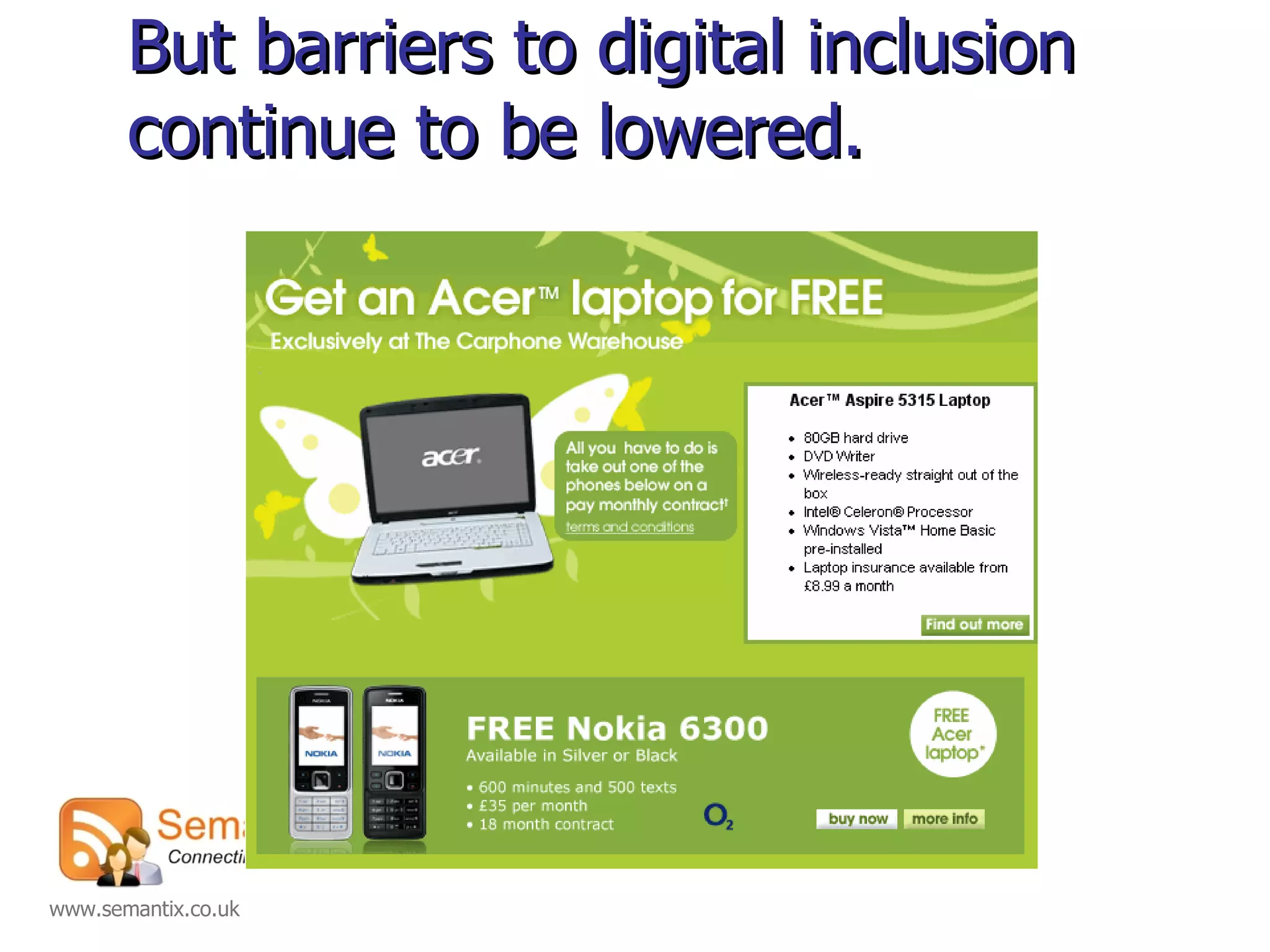
But barriers to digital inclusion continue to be lowered.
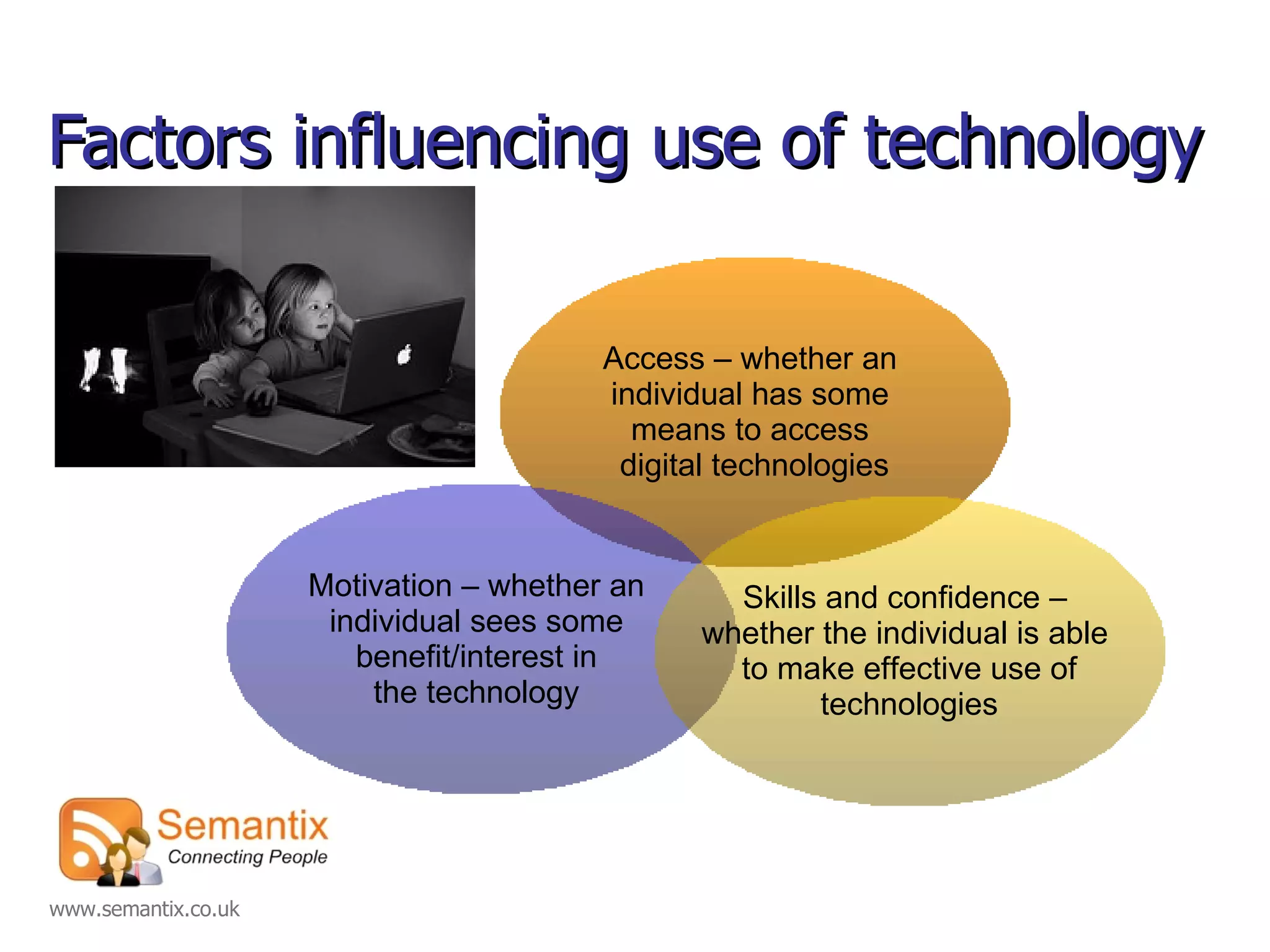
Factors influencing use of technology Access – whether an  individual has some  means to access  digital technologies Motivation – whether an  individual sees some  benefit/interest in  the technology  Skills and confidence –  whether the individual is able  to make effective use of technologies
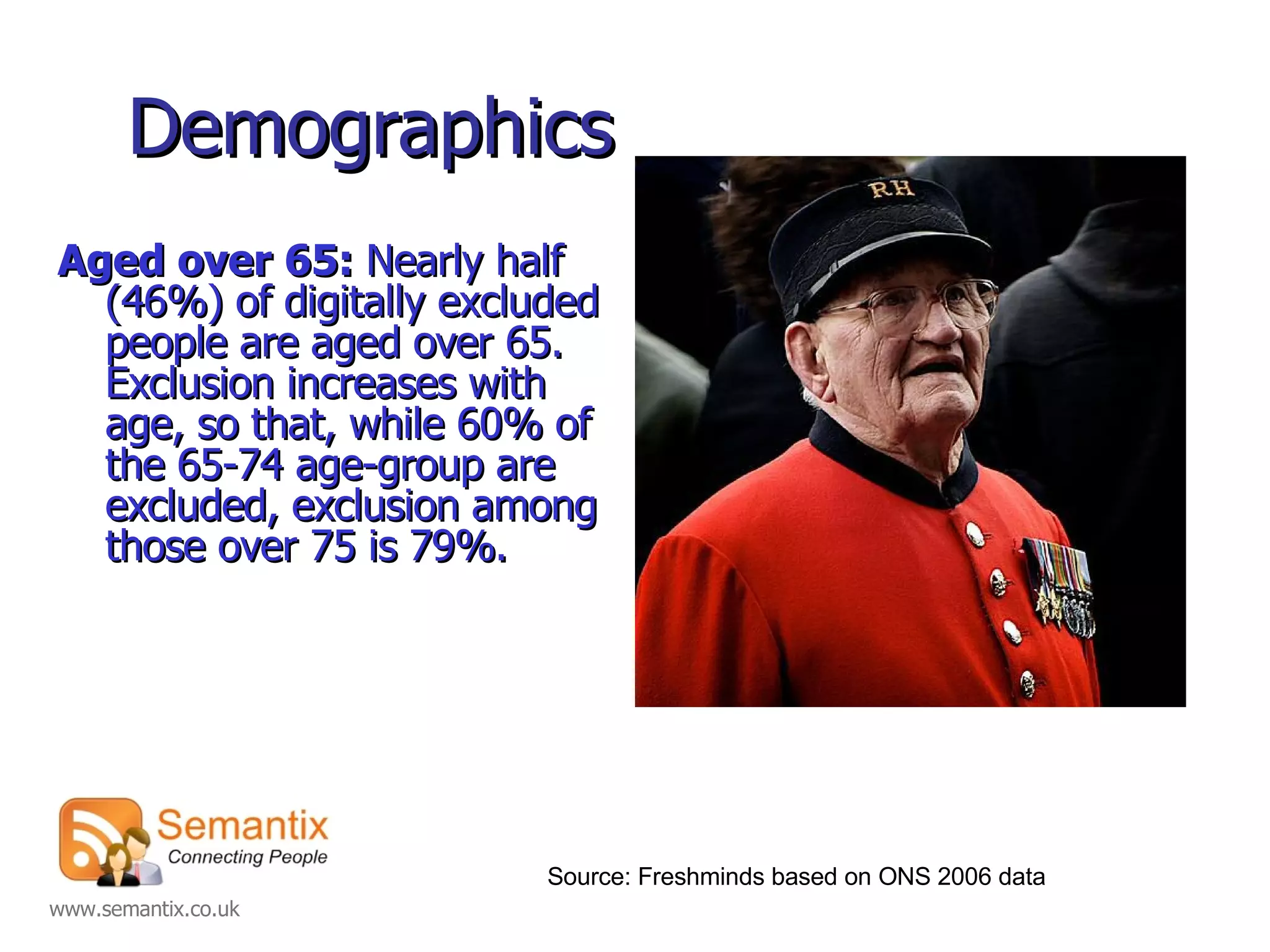
Demographics Aged over 65:  Nearly half (46%) of digitally excluded people are aged over 65. Exclusion increases with age, so that, while 60% of the 65-74 age-group are excluded, exclusion among those over 75 is 79%. Source: Freshminds based on ONS 2006 data
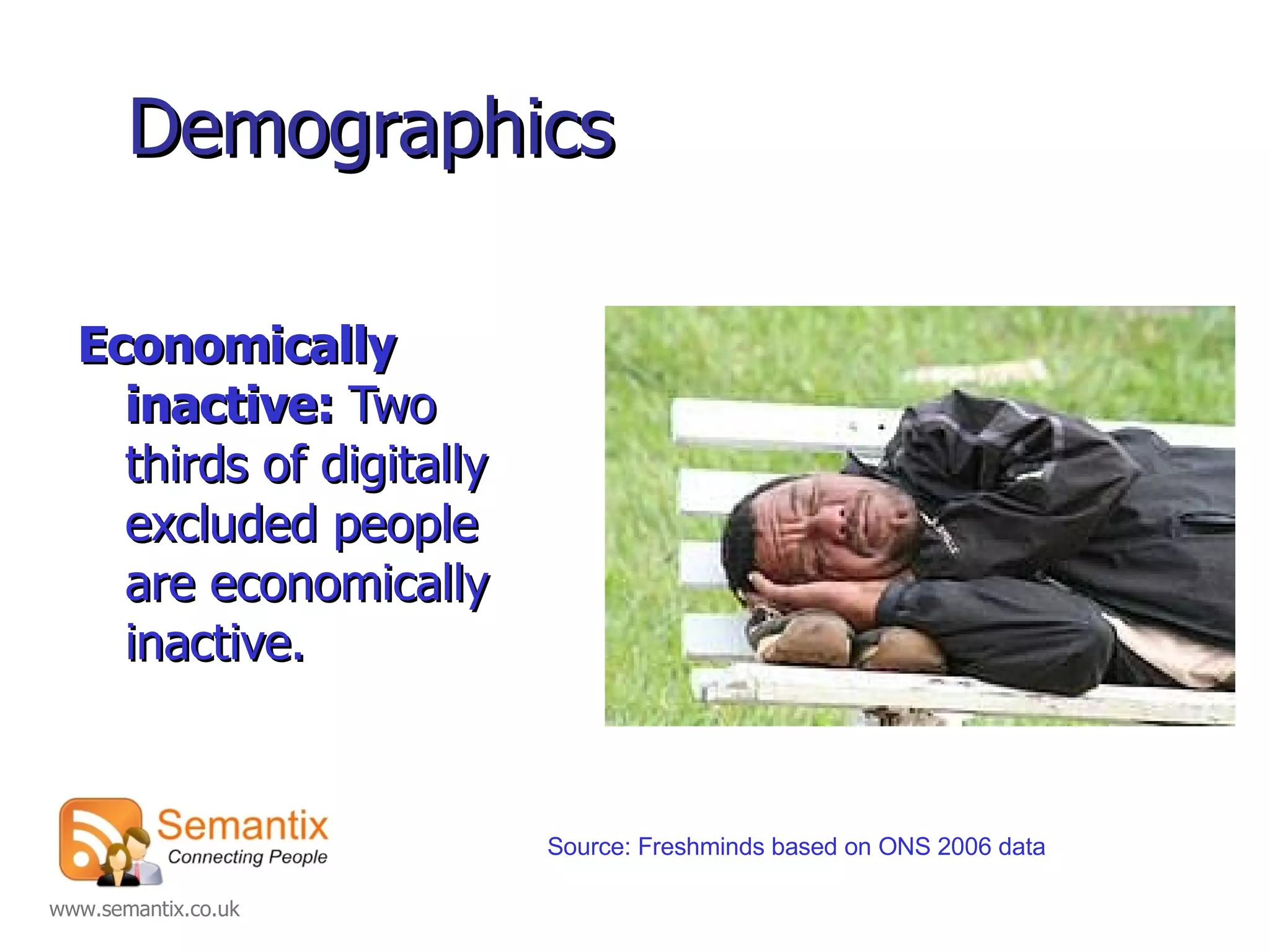
Demographics Economically inactive:  Two thirds of digitally excluded people are economically inactive.   Source: Freshminds based on ONS 2006 data
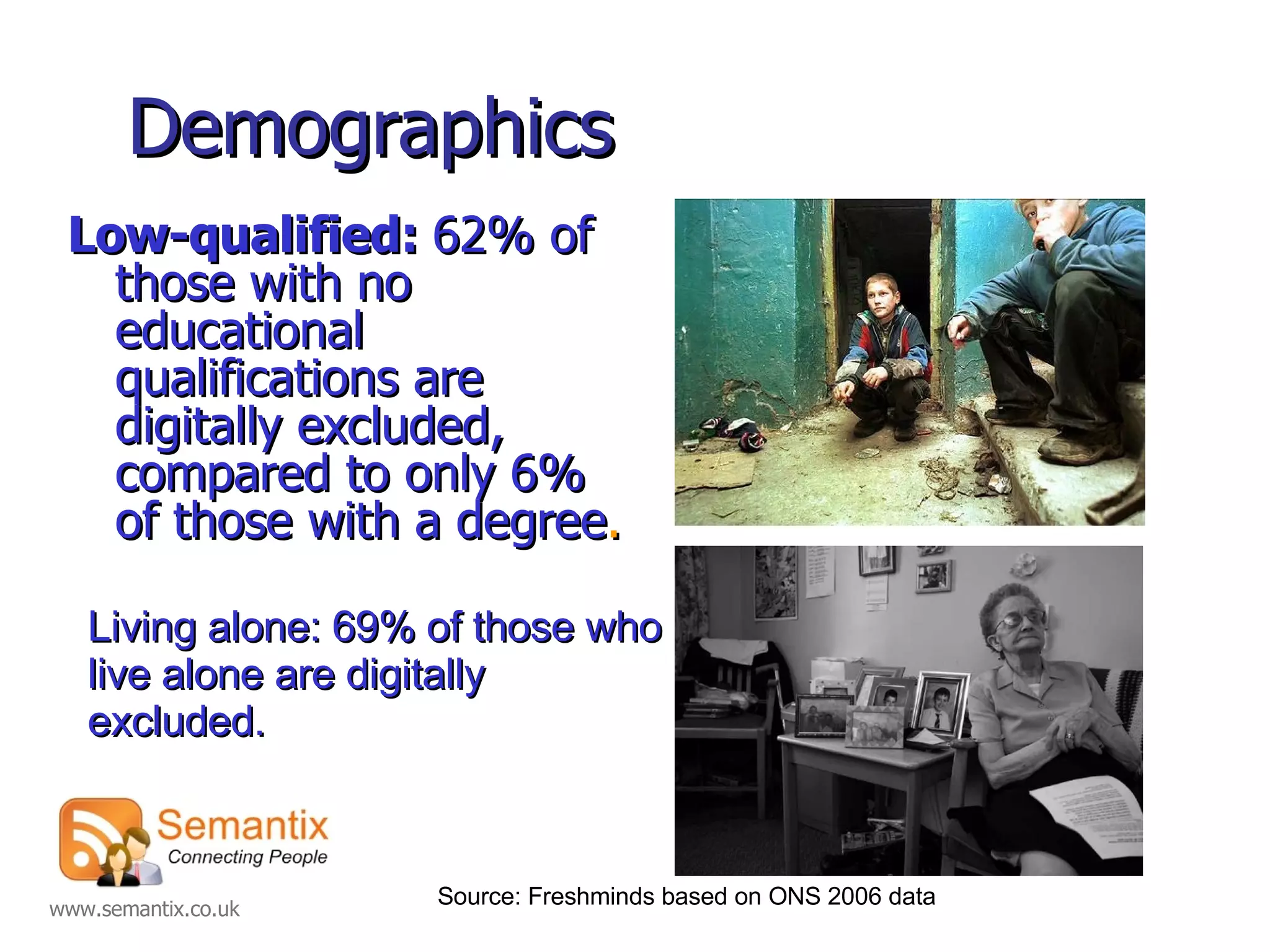
Demographics Low-qualified:  62% of those with no educational qualifications are digitally excluded, compared to only 6% of those with a degree . Living alone: 69% of those who live alone are digitally excluded. Source: Freshminds based on ONS 2006 data
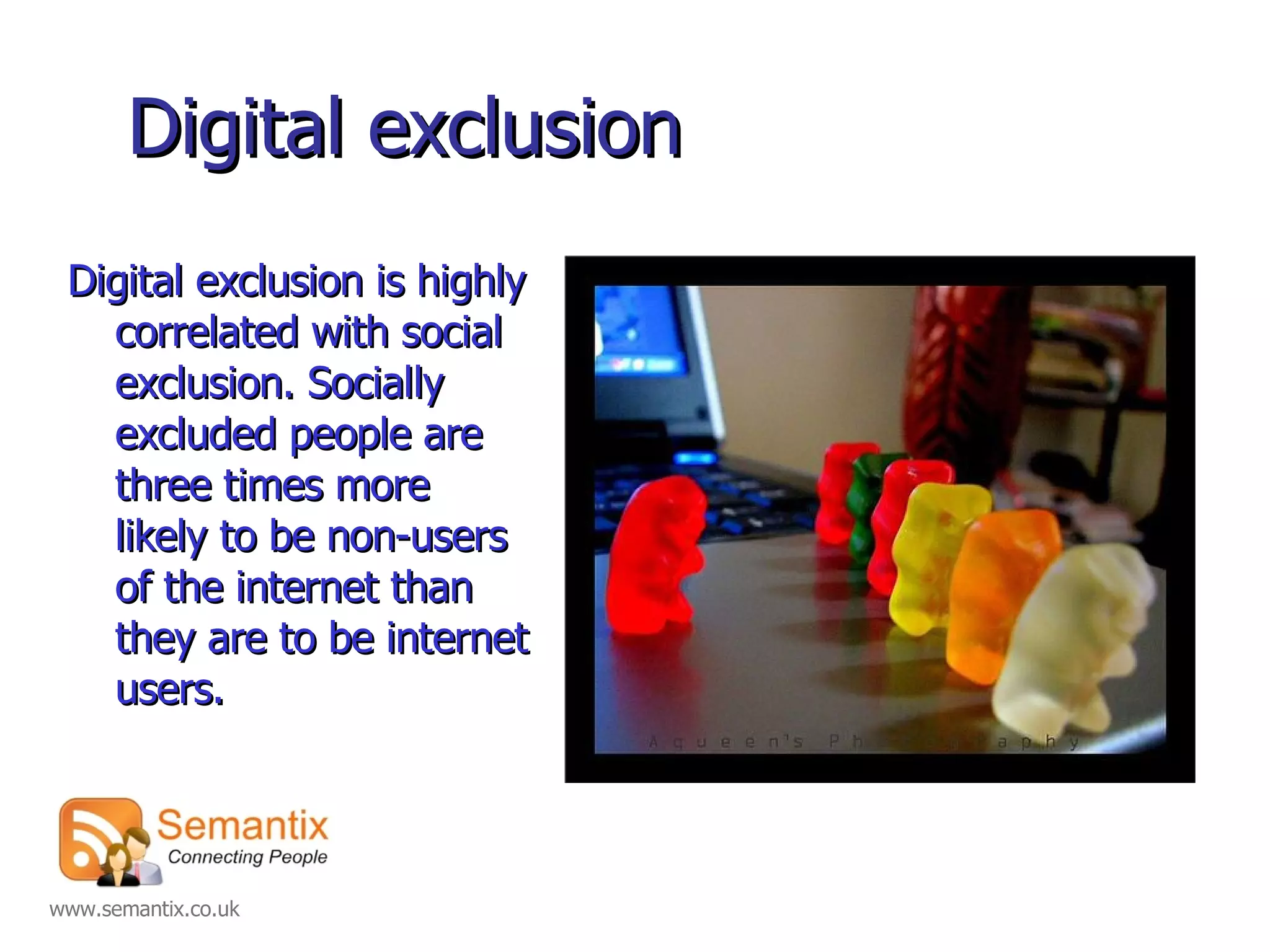
Digital exclusion Digital exclusion is highly correlated with social exclusion. Socially excluded people are three times more likely to be non-users of the internet than they are to be internet users.
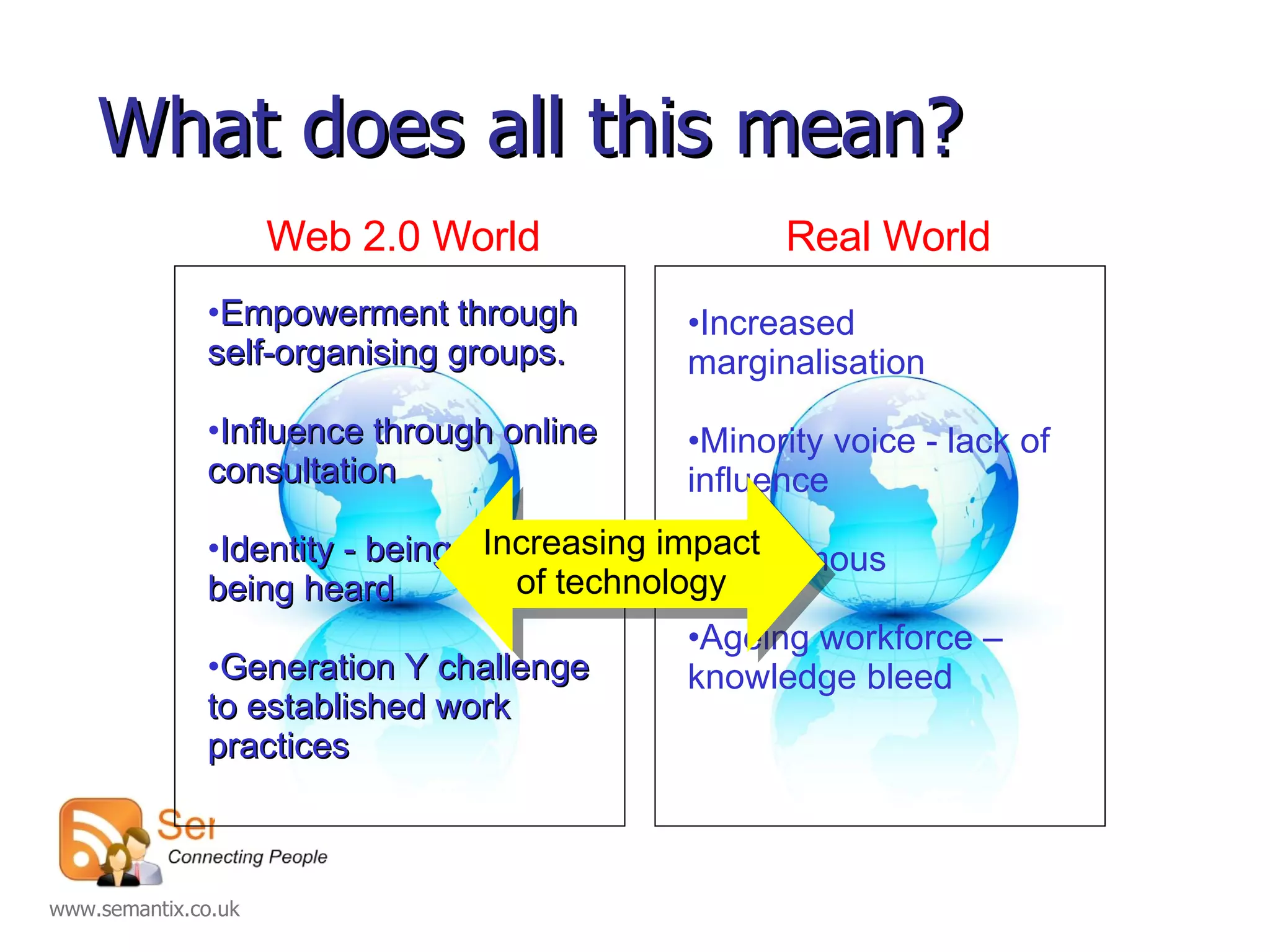
What does all this mean? Empowerment through self-organising groups. Influence through online consultation Identity - being seen, being heard Generation Y challenge to established work practices   Web 2.0 World Increased marginalisation Minority voice - lack of influence Anonymous Ageing workforce – knowledge bleed Real World Increasing impact of technology
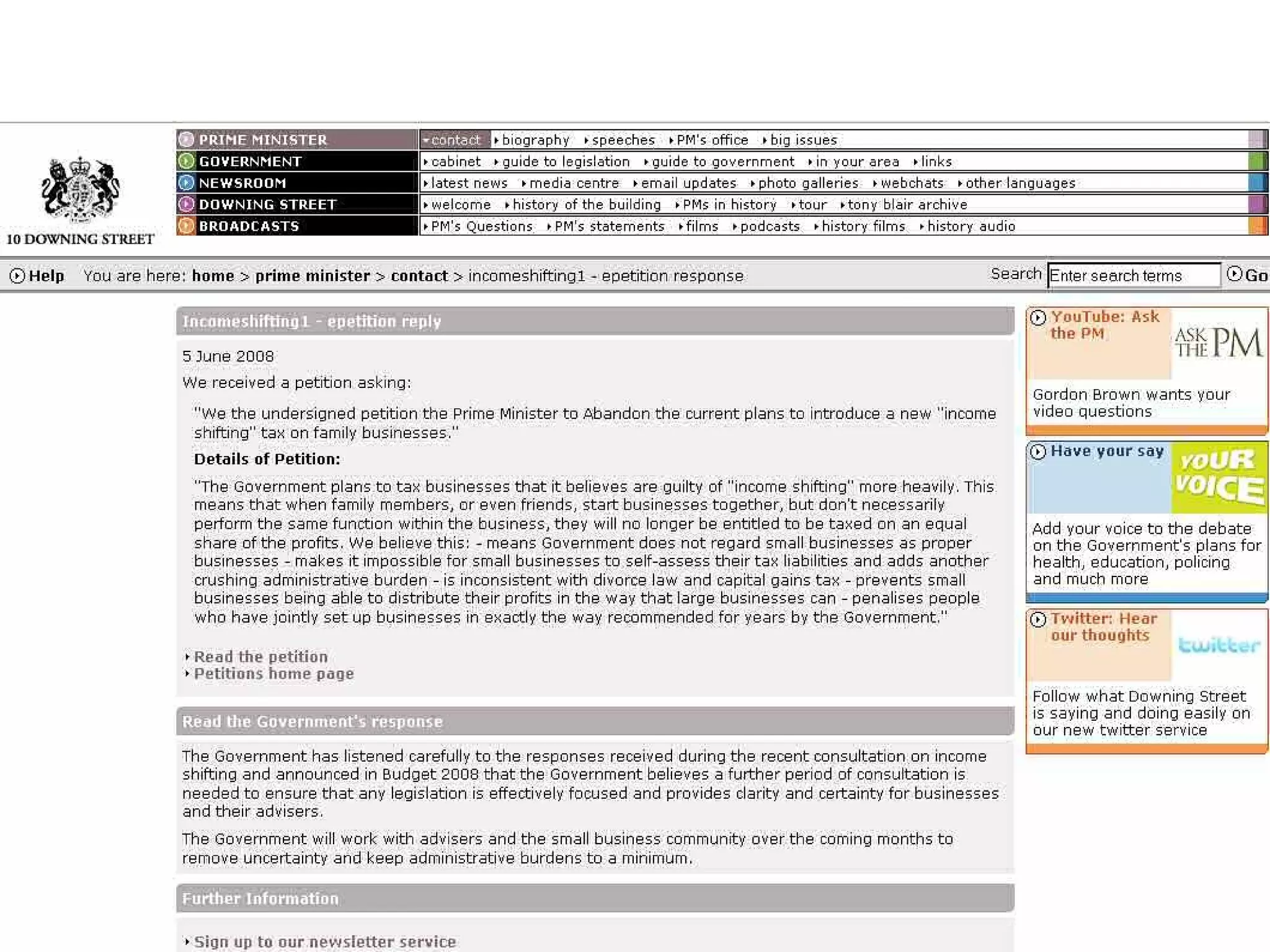
… but it won’t happen overnight!  “ Never mistake a clear view for a short distance.”  Folk saying, in current times attributed to Paul Saffo  Thank you Steve Dale Email: steve.dale@semantix.co.uk Blog: http://steve-dale.net Twitter: http://twitter.com/stephendale
References, acknowledgements and further reading Office of National statistics households and individuals document link http://www.statistics.gov.uk/pdfdir/inta0807.pdf  http://www.statistics.gov.uk/CCI/SearchRes.asp?term=internet  http://www.humanresourcesmagazine.com.au/articles/b7/0c042cb7.asp http://web.fumsi.com/go/article/manage/2662 http://www.steptwo.com.au/papers/kmc_kmstrategy/index.html Workforce ageing: the challenges for 21st century management Margaret Patrickson Rob Ranzijn http://www.dwp.gov.uk/asd/asd5/rports2007-2008/rrep455.pdf http://www.ofcom.org.uk/advice/media_literacy/medlitpub/medlitpubrss/socialnetworking/report.pdf Public-Sector Challenges: The Aging Workforce Jeanne C. Meister Understanding Digital Inclusion, Freshminds research summary 2007

Connect To Survive - The Digital Divide

  • 1.
    Web 2.0 : Connect to Survive (the Digital Divide) Steve Dale Knowledge & Information Consultant 10 June 2008 A presentation for local government
  • 2.
    What I willcover Web 2.0 – the new knowledge paradigm (embrace or perish?) Web 2.0 - socio-demographics affecting the local government workforce Consultation and the digital divide
  • 3.
  • 4.
    We are movingtoward a world where knowledge, power and productive capability will be more dispersed than at any time in our history – a world where value creation will be fast, fluid and persistently disruptive. A world where only the connected will survive .
  • 5.
    Should you beworried? A power shift is underway, and a tough new business rule is emerging: Harness the new collaboration or perish. Those who fail to grasp this will find themselves ever more isolated – cut off from the networks that are sharing, adapting and updating knowledge to create value.
  • 6.
    It’s more thanreplacing old tools…
  • 7.
  • 8.
    It’s about people….andthe communities in which they are involved.
  • 9.
    It’s about connectingand collaborating
  • 10.
    The blogosphere Oursocial tools remove older obstacles to public expression, and thus remove the bottlenecks that characterized mass media. The result is the mass amateurisation of efforts previously reserved for media professionals. - Clay Shirky (Here comes everybody)
  • 11.
    So what isthis new knowledge paradigm?
  • 12.
    Web 2.0 collaborationtools and services Blogs - Wordpress, Blogger, Typepad Content Sharing - YouTube, Flickr, Photobucket Social Networks - MySpace, Facebook, bebo Professional Networks - LinkedIn, ecademy, xing Microblogging - Twitter, Jaiku “ Democratic Content” - Digg Preference Sharing - Last FM, Wakoopa
  • 13.
  • 14.
  • 15.
  • 16.
  • 17.
  • 18.
  • 19.
  • 20.
  • 21.
    2. Web 2.0and the socio-demographic challenge to the local government workforce.
  • 22.
    New business modelsare emerging Source: www.futuregovconsultancy.com Vs. Vs.
  • 23.
    The Net GenerationSource: Educating the Net Generation, D Oblinger and J Oblinger (2005) Anything slow Negativity Red tape Hype Laziness Turning 50 Waste Technology Dislikes Public activism Latest technology Parents Freedom Multitasking Work-life balance Responsibility Work ethic Can-do attitude Respect for authority Family Community involvement Likes Hopeful Determined Independent Skeptical Optimistic Workaholic Command and control Self-sacrifice Attributes Millennials Latchkey generation Me generation Greatest generation Description 1982 – 1991 1965 – 1982 1946 – 1964 1900 – 1946 Birth Dates Generation Y (Net generation) Generation X Baby Boomers Matures
  • 24.
    A four-generation workforceEach generation with different assumptions about how the world works Born 1928-1945 Born 1946-1964 Born 1965-1979 Born 1980- ~2000
  • 25.
  • 26.
    Generation Y 97%own a computer 94% own a cell phone 76% use Instant Messaging. 15% of IM users are logged on 24 hours a day/7 days a week 34% use websites as their primary source of news 28% author a blog and 44% read blogs 49% download music using peer-to-peer file sharing 75% of college students have a Facebook account 60% own some type of portable music and/or video device such as an iPod Source: Reynol Junco and Jeanna Mastrodicasa (2007), based on survey of 7,705 US college students.
  • 27.
    Generation Y consumersResearched coats online Visited store with friends and digital cameras, trying on coats and taking photos Uploaded photos to Facebook and asked additional friends to comment Selected the coat Searched for and purchased the coat online Karen buys a new coat…
  • 28.
    The Generation Yphenomenon Source: http://www.ofcom.org.uk/advice/media_literacy/medlitpub/medlitpubrss/socialnetworking/report.pdf
  • 29.
    Gen Y workplaceexpectations Want transferable skills that support job mobility Expect to have many jobs over their lifetimes High value placed on engagement and attention from companies, bosses, mentors Broad attention span and multitasking Communicate via multiple channels High use of computer games, have developed job-related skills via gaming Willing to trade off between income and job demands Less willing to unquestioningly adhere to “traditional” norms around the workplace Source: Ken Parekh and Mary Walker
  • 30.
    Public sector demographicsSource: ONS Labour Force Survey Q4 2007
  • 31.
    British technology surveyDifference in feeling towards technologies Men like it Women not their favorite Different ways to use technology Male - computer games Female - Email, online chatting
  • 32.
    British technology surveyGender gap closing Data Found:- Cell phones used more by men Women had anxiety with internet use Men self-taught, Women assisted
  • 33.
    The 21 st Century Knowledge Worker - summary There won’t be enough of them 2. Their expectations will be different 3. Technologies will transform when, where and how work is done.
  • 34.
    3. Consultation –are we all included?
  • 35.
    Consultation Consultation isan essential part of government activity today, with organisations of all sizes working to provide opportunities for better public and stakeholder engagement at every stage of the process. Source: Government
  • 36.
    Are we allincluded? Online consultation offers a number of real benefits for public sector organisations – widening participation and accessibility. Improving efficiency and accuracy, as well as reducing the frustration and costs associated with the consultation process. Source: Software services vendor
  • 37.
    Internet growth isstagnating There has been little or no growth in the number of internet users since 2004. The remaining 39% of adults who do not use the internet are unlikely to be reached through organic, market-based approaches. Source: Freshminds
  • 38.
    Internet use –UK households Source: ONS 2007
  • 39.
    Digital behavioural groupsDigitally excluded Digitally dismissive Digitally constrained Digitally determined Digitally included Digital Divide Source: Freshminds 2007
  • 40.
    But barriers todigital inclusion continue to be lowered.
  • 41.
    Factors influencing useof technology Access – whether an individual has some means to access digital technologies Motivation – whether an individual sees some benefit/interest in the technology Skills and confidence – whether the individual is able to make effective use of technologies
  • 42.
    Demographics Aged over65: Nearly half (46%) of digitally excluded people are aged over 65. Exclusion increases with age, so that, while 60% of the 65-74 age-group are excluded, exclusion among those over 75 is 79%. Source: Freshminds based on ONS 2006 data
  • 43.
    Demographics Economically inactive: Two thirds of digitally excluded people are economically inactive. Source: Freshminds based on ONS 2006 data
  • 44.
    Demographics Low-qualified: 62% of those with no educational qualifications are digitally excluded, compared to only 6% of those with a degree . Living alone: 69% of those who live alone are digitally excluded. Source: Freshminds based on ONS 2006 data
  • 45.
    Digital exclusion Digitalexclusion is highly correlated with social exclusion. Socially excluded people are three times more likely to be non-users of the internet than they are to be internet users.
  • 46.
    What does allthis mean? Empowerment through self-organising groups. Influence through online consultation Identity - being seen, being heard Generation Y challenge to established work practices Web 2.0 World Increased marginalisation Minority voice - lack of influence Anonymous Ageing workforce – knowledge bleed Real World Increasing impact of technology
  • 47.
    … but itwon’t happen overnight! “ Never mistake a clear view for a short distance.” Folk saying, in current times attributed to Paul Saffo Thank you Steve Dale Email: steve.dale@semantix.co.uk Blog: http://steve-dale.net Twitter: http://twitter.com/stephendale
  • 48.
    References, acknowledgements andfurther reading Office of National statistics households and individuals document link http://www.statistics.gov.uk/pdfdir/inta0807.pdf http://www.statistics.gov.uk/CCI/SearchRes.asp?term=internet http://www.humanresourcesmagazine.com.au/articles/b7/0c042cb7.asp http://web.fumsi.com/go/article/manage/2662 http://www.steptwo.com.au/papers/kmc_kmstrategy/index.html Workforce ageing: the challenges for 21st century management Margaret Patrickson Rob Ranzijn http://www.dwp.gov.uk/asd/asd5/rports2007-2008/rrep455.pdf http://www.ofcom.org.uk/advice/media_literacy/medlitpub/medlitpubrss/socialnetworking/report.pdf Public-Sector Challenges: The Aging Workforce Jeanne C. Meister Understanding Digital Inclusion, Freshminds research summary 2007