CONGENITAL
HYPEREXTENSION AND
DISLOCATION OF THE
KNEE
BY: DR. MAHWISH KHAN
Introduction
 Spectrum of disease including
 positional contractures
 rigid dislocation
Introduction Cont…
 Associated conditions
 often associated with developmental dysplasia of the
hip, clubfoot, and metatarsus adductus
 50% of patients with congenital knee dislocations will have
hip dysplasia affect one or both hips
Structural Components
 anterior capsule of the knee and quadriceps mechanism are
contracted
 intraarticular adhesions
 hypoplasia or absence of the patella
 fibrosis and loss of bulk of the vastus lateralis muscle
 suprapatellar pouch was obliterated by the adherent quadriceps
tendon
 Lateral displacement of patella
Clinical
Presentation
Presents with hyperextend
knee at birth
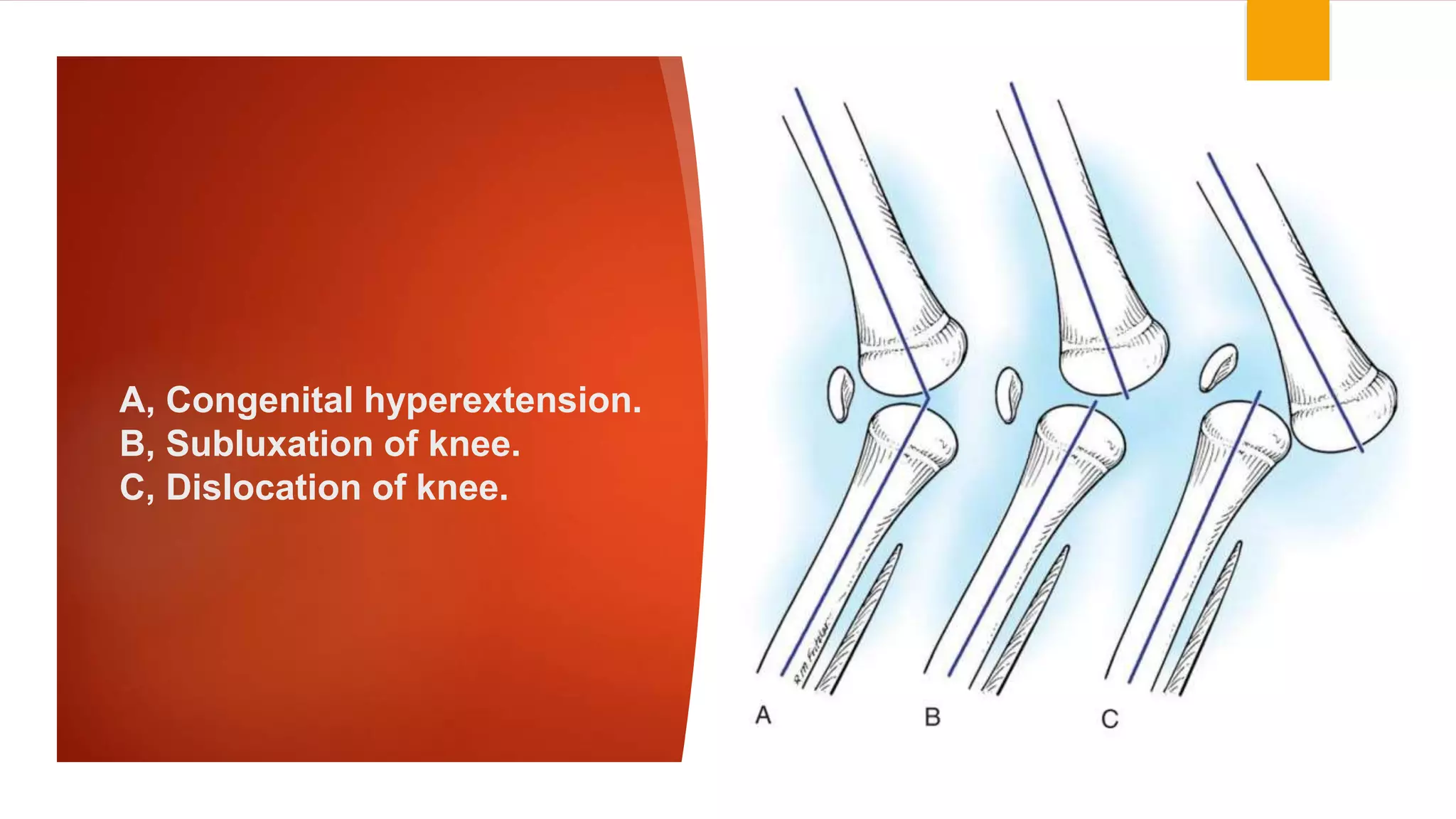
Grades of Congenital Hyperextension of
the Knee
 Congenital hyperextension of the knee is divided into three grades
according to severity:
 Grade 1, congenital hyperextension
 Grade 2, congenital hyperextension with anterior subluxation of the
tibia on the femur and
 Grade 3, congenital hyperextension with anterior dislocation of the
tibia on the femur
A, Congenital hyperextension.
B, Subluxation of knee.
C, Dislocation of knee.
Newborn with bilateral
dislocations
Note prominence of
femoral condyles
posterior to anteriorly
dislocated tibia and
fibula
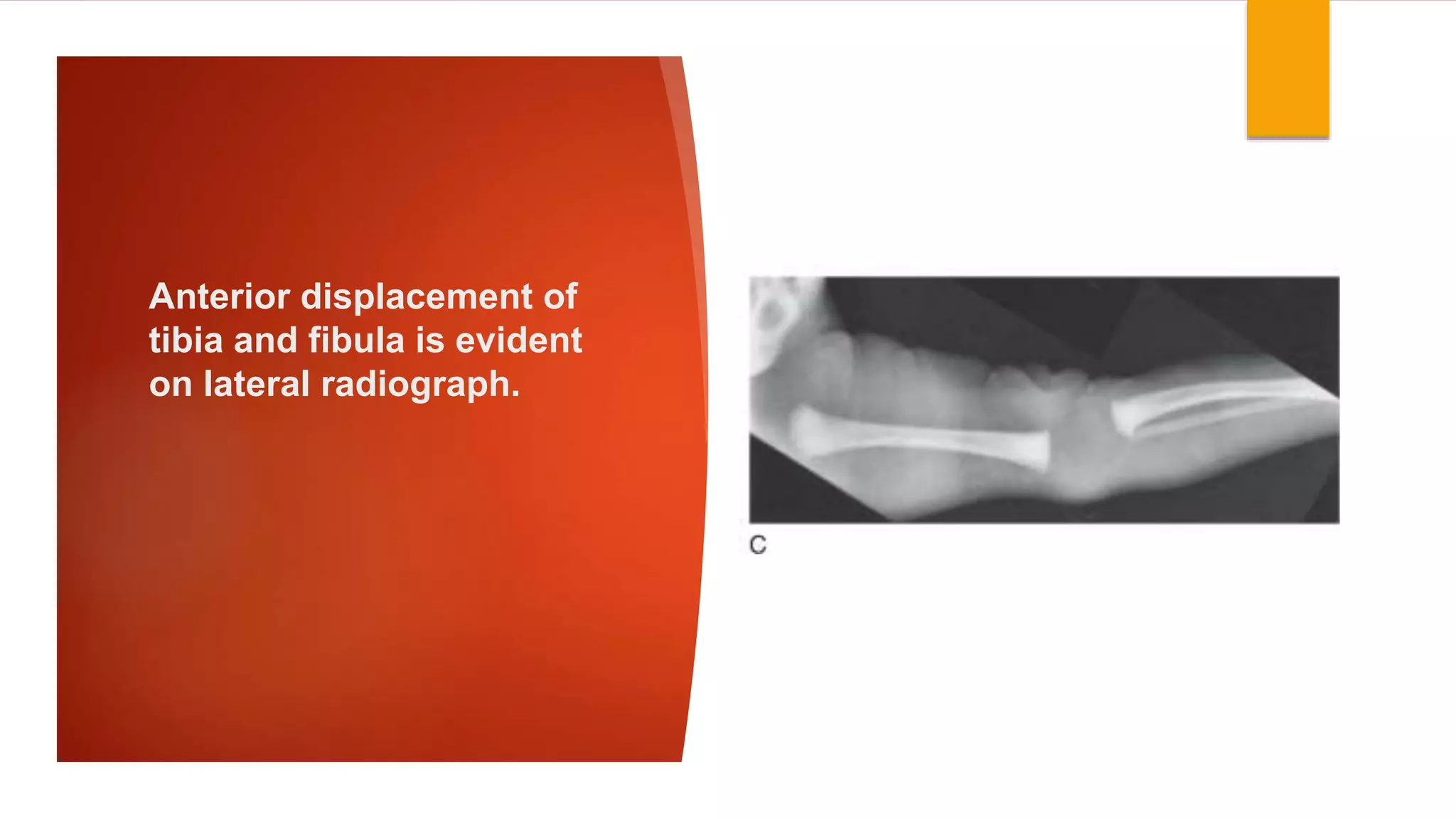
Anterior displacement of
tibia and fibula is evident
on lateral radiograph.
Treatment
 Depends upon
 Severity of subluxation or dislocation and
 The age of the patient
Non Operative Treatment
 Reduction with manual manipulation and casting
 indications
 most cases can be treated non-operatively
 if both knee and hip dislocated, then treat knee first
 technique
 long leg casting on weekly basis
Excellent results at 5-Year Follow up
In non-responders------skeletal traction for correction is an
option.
Newborn with mild-to-moderate
hyperextension or subluxation
Operative Treatment
 Surgical soft tissue release
Indications
if failure to gain 30 degrees of flexion after 3 months of
casting
Operative Treatment cont…
 Goal Of Surgery : 90 degrees of flexion with
 quadriceps tendon lengthening (V-Y quadricepsplasty or Z lengthening)
 anterior joint capsule release
 hamstring tendon posterior transposition
 collateral ligaments mobilization
Curtis and
Fisher technique
Lines of incision to release
anterior capsule medially and
laterally and medial and lateral
retinaculum of quadriceps
mechanism
Curtis and
Fisher technique
Correction after soft-tissue
release and lengthening of
rectus femoris muscle
Operative Treatment cont…
 Postoperative
 cast in 45 to 60 degrees of flexion for 3 to 4 weeks
 Rare Cases osteotomy of the femur or tibia may be required
in an older child.
After Treatment
 cast changed at 2 weeks
 At 4 to 6 weeks,
 the cast is removed
 active and passive exercises are begun
 In Older Patients
 continuous passive motion can be used to regain motion during the first 3 to 6
weeks after surgery
 long leg brace is worn for 6 to 12 months to prevent hyperextension of the knee.
Congenital knee dislocation

Congenital knee dislocation

  • 2.
    CONGENITAL HYPEREXTENSION AND DISLOCATION OFTHE KNEE BY: DR. MAHWISH KHAN
  • 3.
    Introduction  Spectrum ofdisease including  positional contractures  rigid dislocation
  • 4.
    Introduction Cont…  Associatedconditions  often associated with developmental dysplasia of the hip, clubfoot, and metatarsus adductus  50% of patients with congenital knee dislocations will have hip dysplasia affect one or both hips
  • 5.
    Structural Components  anteriorcapsule of the knee and quadriceps mechanism are contracted  intraarticular adhesions  hypoplasia or absence of the patella  fibrosis and loss of bulk of the vastus lateralis muscle  suprapatellar pouch was obliterated by the adherent quadriceps tendon  Lateral displacement of patella
  • 6.
  • 7.
    Grades of CongenitalHyperextension of the Knee  Congenital hyperextension of the knee is divided into three grades according to severity:  Grade 1, congenital hyperextension  Grade 2, congenital hyperextension with anterior subluxation of the tibia on the femur and  Grade 3, congenital hyperextension with anterior dislocation of the tibia on the femur
  • 8.
    A, Congenital hyperextension. B,Subluxation of knee. C, Dislocation of knee.
  • 9.
  • 10.
    Note prominence of femoralcondyles posterior to anteriorly dislocated tibia and fibula
  • 11.
    Anterior displacement of tibiaand fibula is evident on lateral radiograph.
  • 12.
    Treatment  Depends upon Severity of subluxation or dislocation and  The age of the patient
  • 13.
    Non Operative Treatment Reduction with manual manipulation and casting  indications  most cases can be treated non-operatively  if both knee and hip dislocated, then treat knee first  technique  long leg casting on weekly basis
  • 14.
    Excellent results at5-Year Follow up In non-responders------skeletal traction for correction is an option. Newborn with mild-to-moderate hyperextension or subluxation
  • 15.
    Operative Treatment  Surgicalsoft tissue release Indications if failure to gain 30 degrees of flexion after 3 months of casting
  • 16.
    Operative Treatment cont… Goal Of Surgery : 90 degrees of flexion with  quadriceps tendon lengthening (V-Y quadricepsplasty or Z lengthening)  anterior joint capsule release  hamstring tendon posterior transposition  collateral ligaments mobilization
  • 17.
    Curtis and Fisher technique Linesof incision to release anterior capsule medially and laterally and medial and lateral retinaculum of quadriceps mechanism
  • 18.
    Curtis and Fisher technique Correctionafter soft-tissue release and lengthening of rectus femoris muscle
  • 19.
    Operative Treatment cont… Postoperative  cast in 45 to 60 degrees of flexion for 3 to 4 weeks  Rare Cases osteotomy of the femur or tibia may be required in an older child.
  • 20.
    After Treatment  castchanged at 2 weeks  At 4 to 6 weeks,  the cast is removed  active and passive exercises are begun  In Older Patients  continuous passive motion can be used to regain motion during the first 3 to 6 weeks after surgery  long leg brace is worn for 6 to 12 months to prevent hyperextension of the knee.