Astha Laghate 383
Mayank Garg 466
Sagar Manocha 414
Raj Kumar Gupta 454
 Conflicts
 Views of Conflict
 Sources Of Conflict
 Types of Conflict
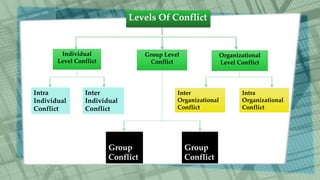
 Levels of Conflict
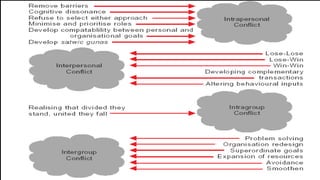
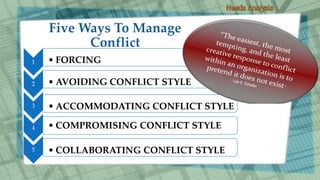
 Ways to manage conflicts
• Conflict is an expressed struggle between at least two
interdependent parties who perceive incompatible goals,
scarce resources, and interference from other party from
achieving their goals.
• A process that begins when one party perceives that
another party has negatively affected or about to affect
something that he cares about
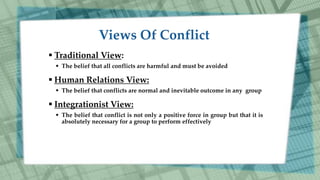
 Traditional View:
 The belief that all conflicts are harmful and must be avoided
 Human Relations View:
 The belief that conflicts are normal and inevitable outcome in any group
 Integrationist View:
 The belief that conflict is not only a positive force in group but that it is
absolutely necessary for a group to perform effectively
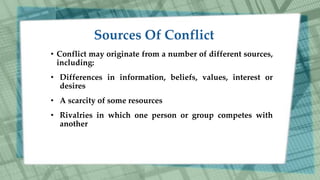
• Conflict may originate from a number of different sources,
including:
• Differences in information, beliefs, values, interest or
desires
• A scarcity of some resources
• Rivalries in which one person or group competes with
another
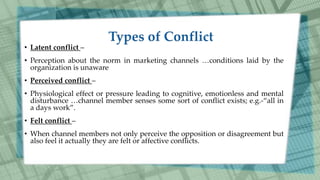
• Latent conflict –
• Perception about the norm in marketing channels …conditions laid by the
organization is unaware
• Perceived conflict –
• Physiological effect or pressure leading to cognitive, emotionless and mental
disturbance …channel member senses some sort of conflict exists; e.g.-“all in
a days work”.
• Felt conflict –
• When channel members not only perceive the opposition or disagreement but
also feel it actually they are felt or affective conflicts.
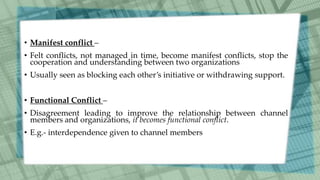
• Manifest conflict –
• Felt conflicts, not managed in time, become manifest conflicts, stop the
cooperation and understanding between two organizations
• Usually seen as blocking each other’s initiative or withdrawing support.
• Functional Conflict –
• Disagreement leading to improve the relationship between channel
members and organizations, it becomes functional conflict.
• E.g.- interdependence given to channel members
Levels Of Conflict
Individual
Level Conflict
Group Level
Conflict
Organizational
Level Conflict
Intra
Individual
Conflict
Inter
Individual
Conflict
Inter
Group
Conflict
Intra
Group
Conflict
Inter
Organizational
Conflict
Intra
Organizational
Conflict
1 • FORCING
2 • AVOIDING CONFLICT STYLE
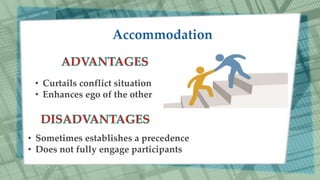
3 • ACCOMMODATING CONFLICT STYLE
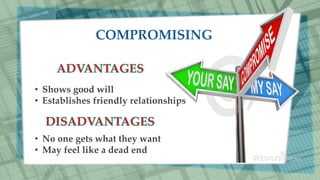
4 • COMPROMISING CONFLICT STYLE
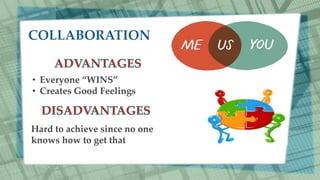
5 • COLLABORATING CONFLICT STYLE
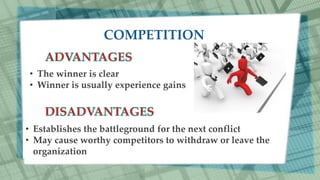
• The winner is clear
• Winner is usually experience gains
• Establishes the battleground for the next conflict
• May cause worthy competitors to withdraw or leave the
organization
• Curtails conflict situation
• Enhances ego of the other
• Sometimes establishes a precedence
• Does not fully engage participants
• Shows good will
• Establishes friendly relationships
• No one gets what they want
• May feel like a dead end
• Everyone “WINS”
• Creates Good Feelings
Hard to achieve since no one
knows how to get that
Conflict In Sales

Conflict In Sales

  • 1.
    Astha Laghate 383 MayankGarg 466 Sagar Manocha 414 Raj Kumar Gupta 454
  • 2.
     Conflicts  Viewsof Conflict  Sources Of Conflict  Types of Conflict  Levels of Conflict  Ways to manage conflicts
  • 3.
    • Conflict isan expressed struggle between at least two interdependent parties who perceive incompatible goals, scarce resources, and interference from other party from achieving their goals. • A process that begins when one party perceives that another party has negatively affected or about to affect something that he cares about
  • 4.
     Traditional View: The belief that all conflicts are harmful and must be avoided  Human Relations View:  The belief that conflicts are normal and inevitable outcome in any group  Integrationist View:  The belief that conflict is not only a positive force in group but that it is absolutely necessary for a group to perform effectively
  • 5.
    • Conflict mayoriginate from a number of different sources, including: • Differences in information, beliefs, values, interest or desires • A scarcity of some resources • Rivalries in which one person or group competes with another
  • 6.
    • Latent conflict– • Perception about the norm in marketing channels …conditions laid by the organization is unaware • Perceived conflict – • Physiological effect or pressure leading to cognitive, emotionless and mental disturbance …channel member senses some sort of conflict exists; e.g.-“all in a days work”. • Felt conflict – • When channel members not only perceive the opposition or disagreement but also feel it actually they are felt or affective conflicts.
  • 7.
    • Manifest conflict– • Felt conflicts, not managed in time, become manifest conflicts, stop the cooperation and understanding between two organizations • Usually seen as blocking each other’s initiative or withdrawing support. • Functional Conflict – • Disagreement leading to improve the relationship between channel members and organizations, it becomes functional conflict. • E.g.- interdependence given to channel members
  • 8.
    Levels Of Conflict Individual LevelConflict Group Level Conflict Organizational Level Conflict Intra Individual Conflict Inter Individual Conflict Inter Group Conflict Intra Group Conflict Inter Organizational Conflict Intra Organizational Conflict
  • 10.
    1 • FORCING 2• AVOIDING CONFLICT STYLE 3 • ACCOMMODATING CONFLICT STYLE 4 • COMPROMISING CONFLICT STYLE 5 • COLLABORATING CONFLICT STYLE
  • 11.
    • The winneris clear • Winner is usually experience gains • Establishes the battleground for the next conflict • May cause worthy competitors to withdraw or leave the organization
  • 12.
    • Curtails conflictsituation • Enhances ego of the other • Sometimes establishes a precedence • Does not fully engage participants
  • 13.
    • Shows goodwill • Establishes friendly relationships • No one gets what they want • May feel like a dead end
  • 14.
    • Everyone “WINS” •Creates Good Feelings Hard to achieve since no one knows how to get that