Normality &
Abnormality
Semester I
MA Psychology
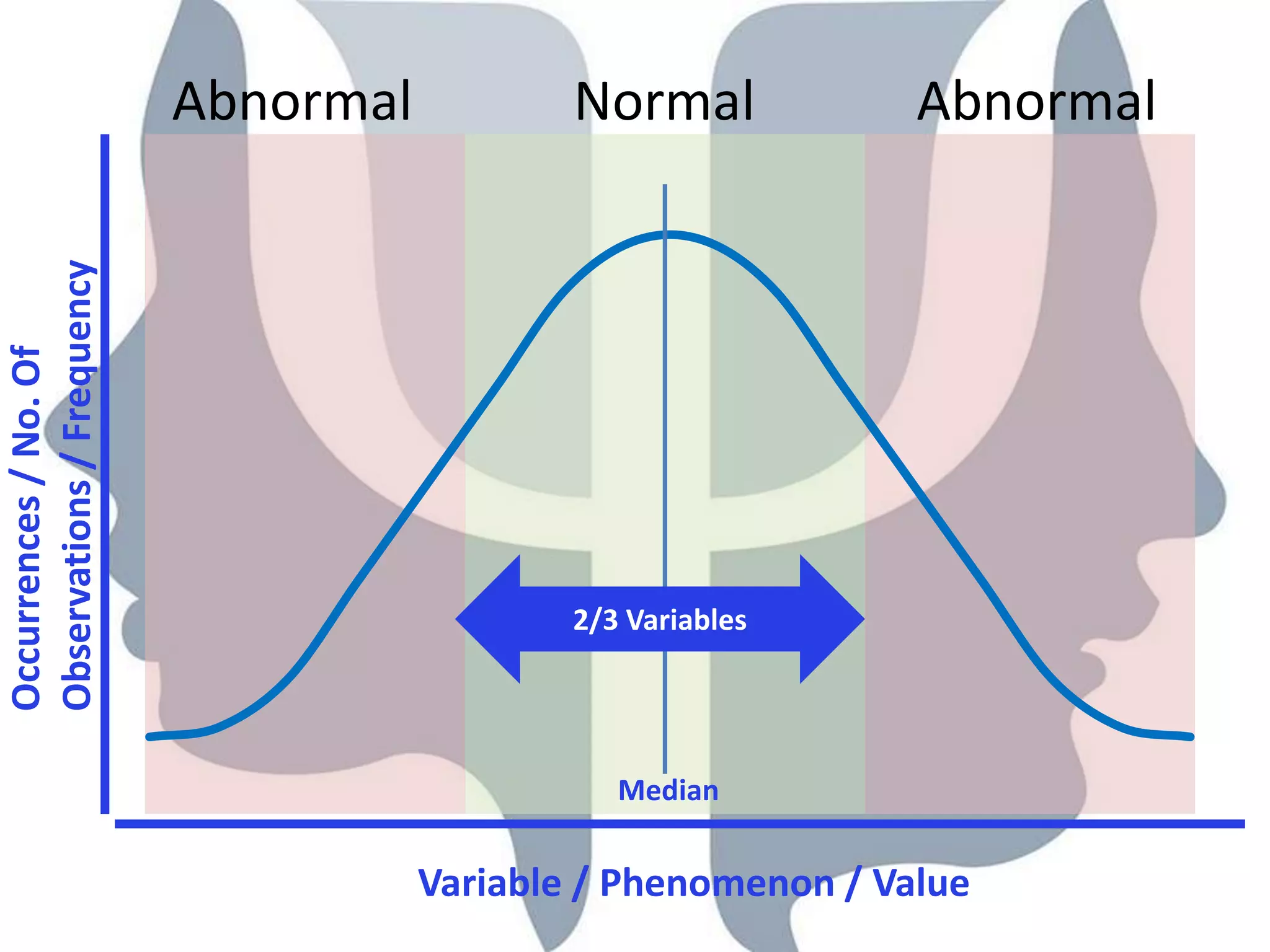
Abnormal Normal Abnormal
Occurrences
/
No.
Of
Observations
/
Frequency
Variable / Phenomenon / Value
Median
2/3 Variables
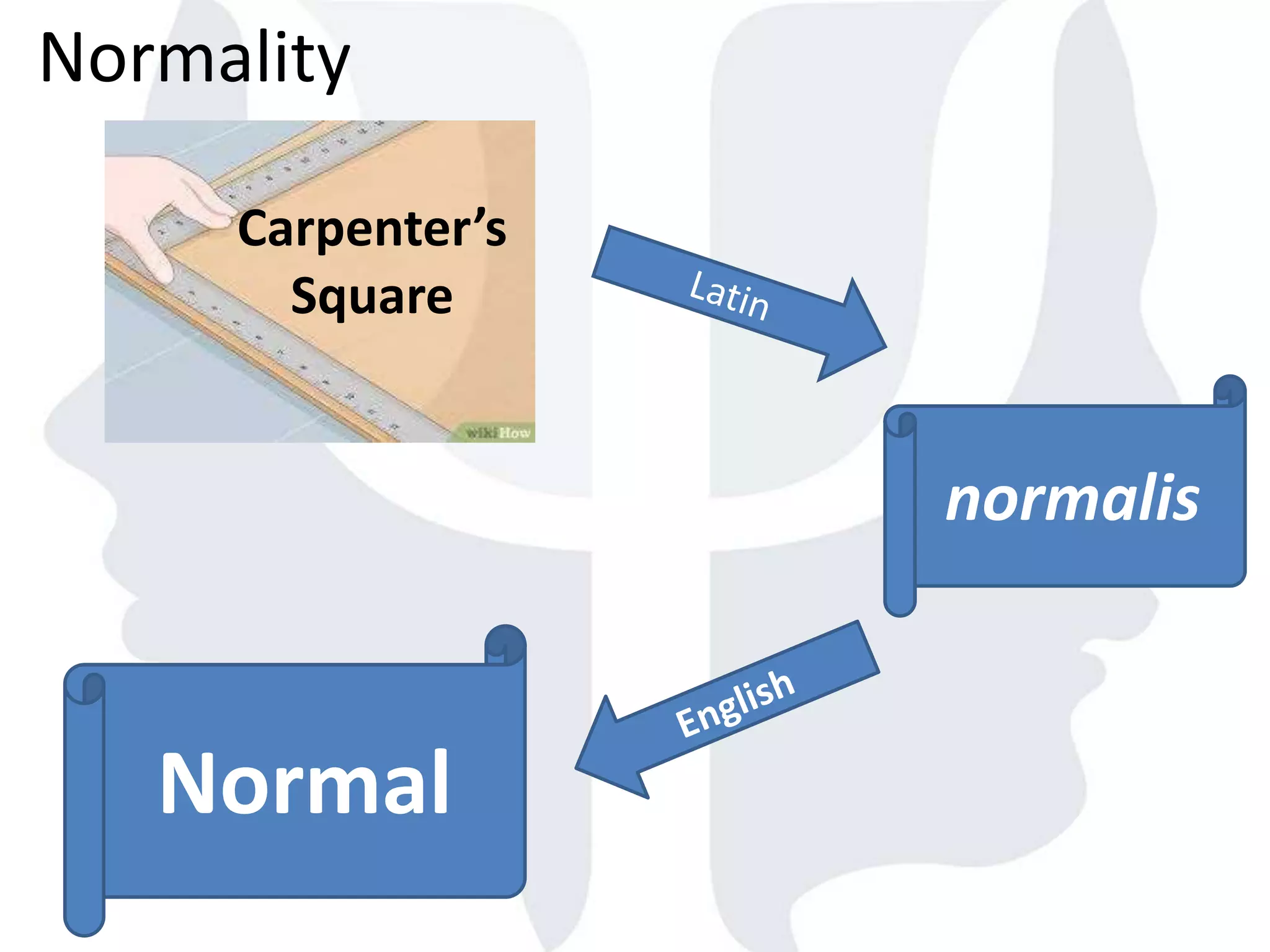
Normality
Carpenter’s
Square
normalis
Normal
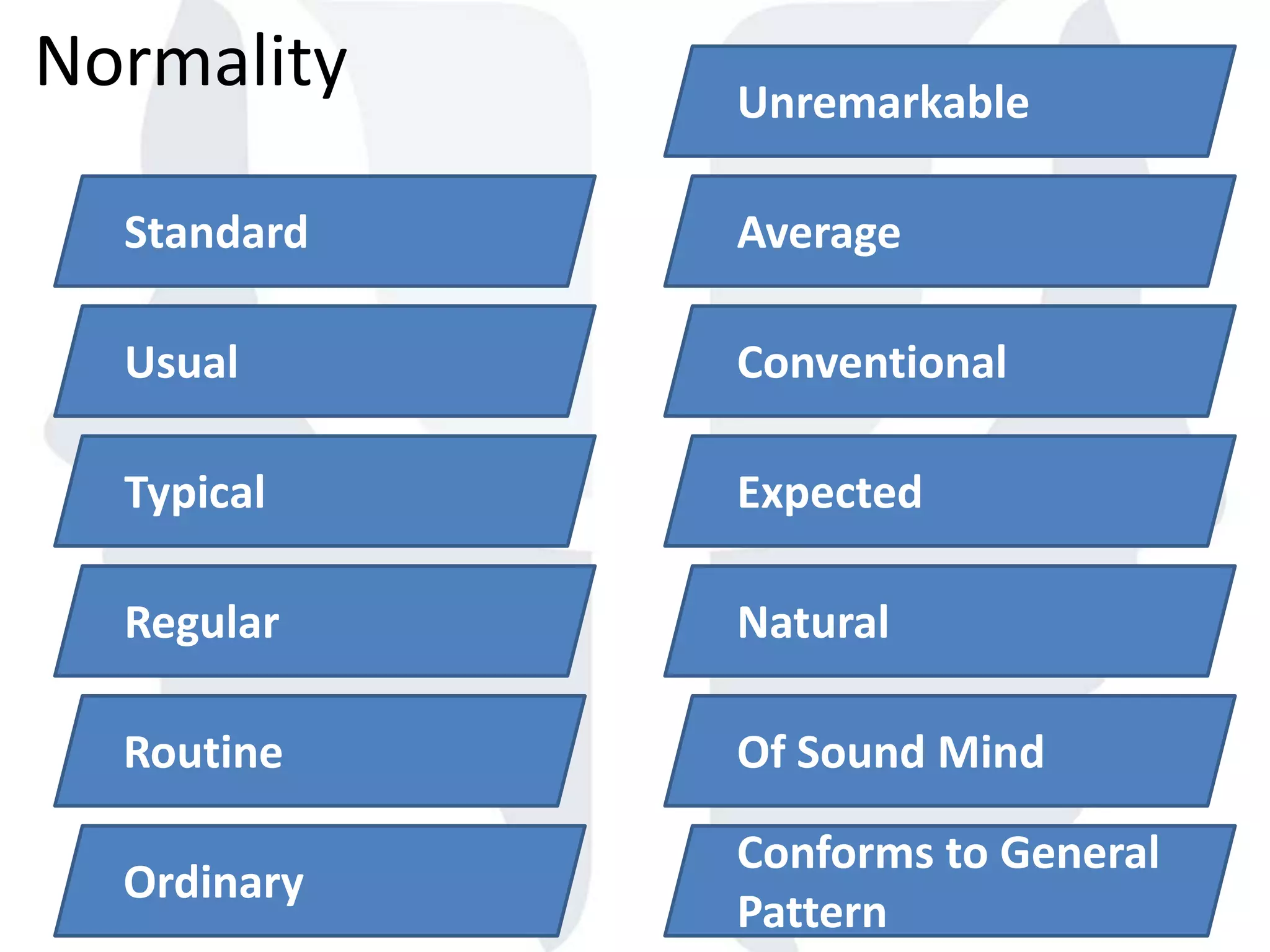
Normality
Of Sound Mind
Average
Usual
Typical
Regular
Routine
Ordinary
Unremarkable
Standard
Conventional
Expected
Natural
Conforms to General
Pattern
Normality
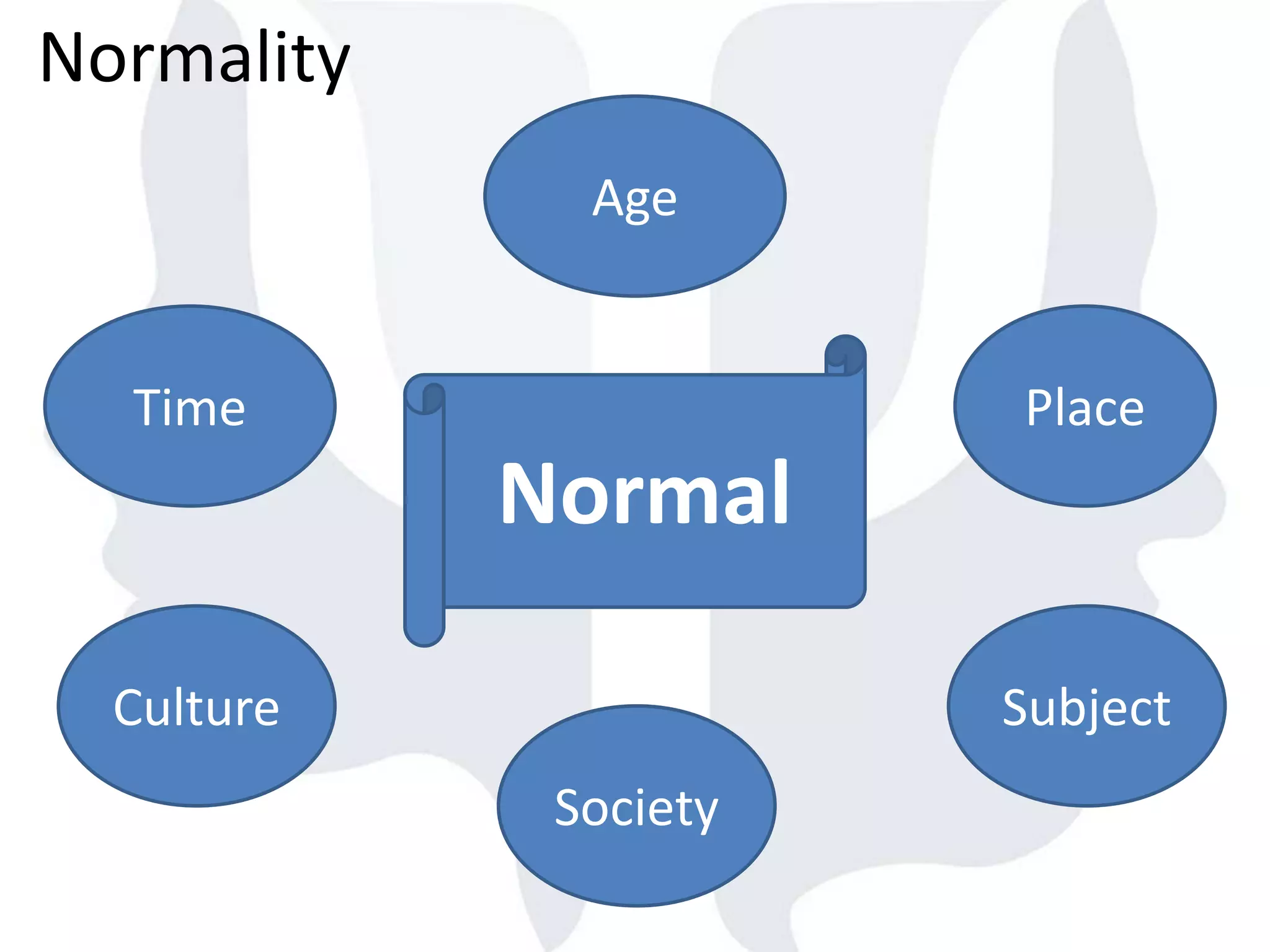
Normal
Time Place
Age
Culture Subject
Society
Normality
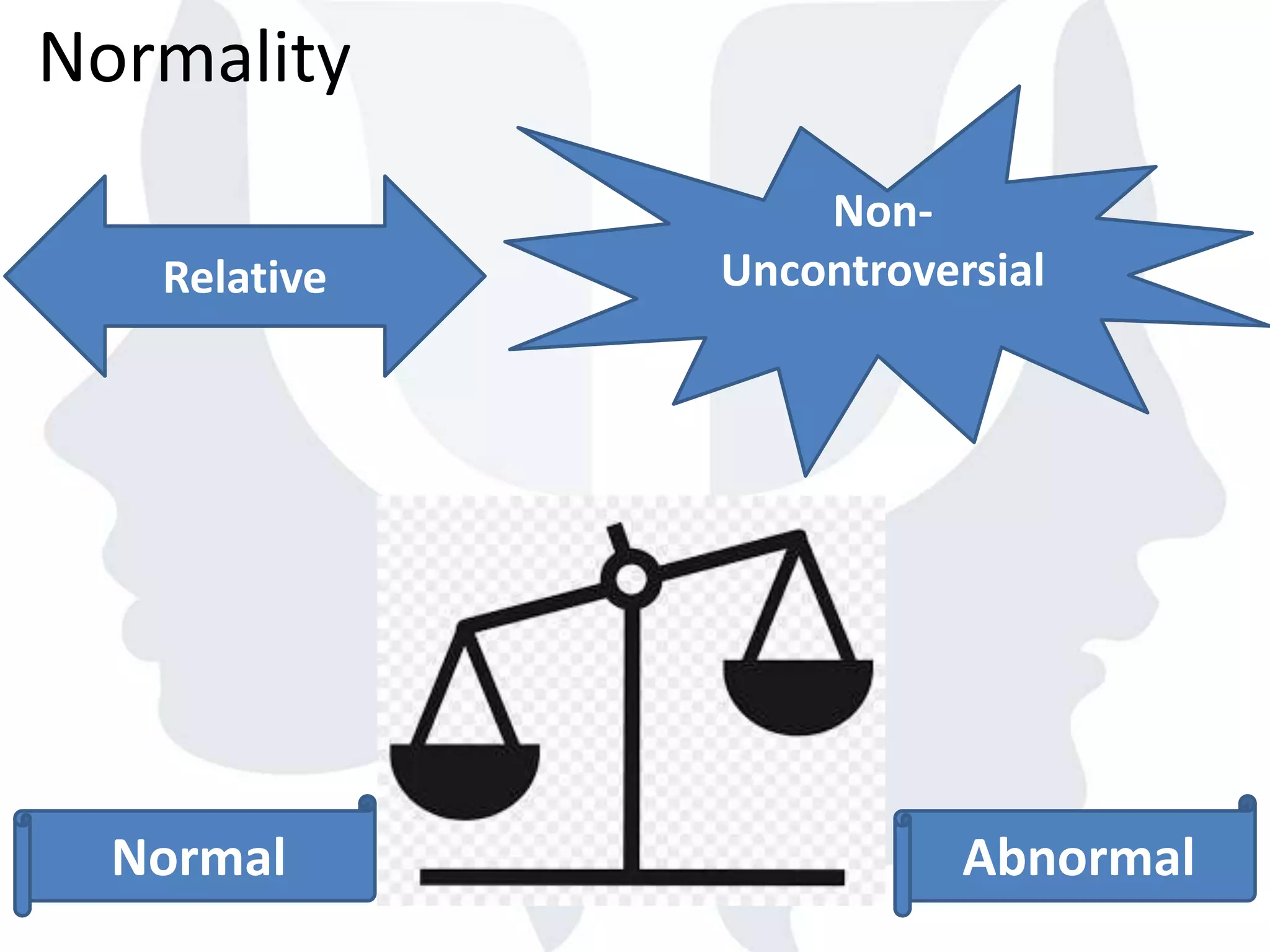
Relative
Non-
Uncontroversial
Normal Abnormal
Normality
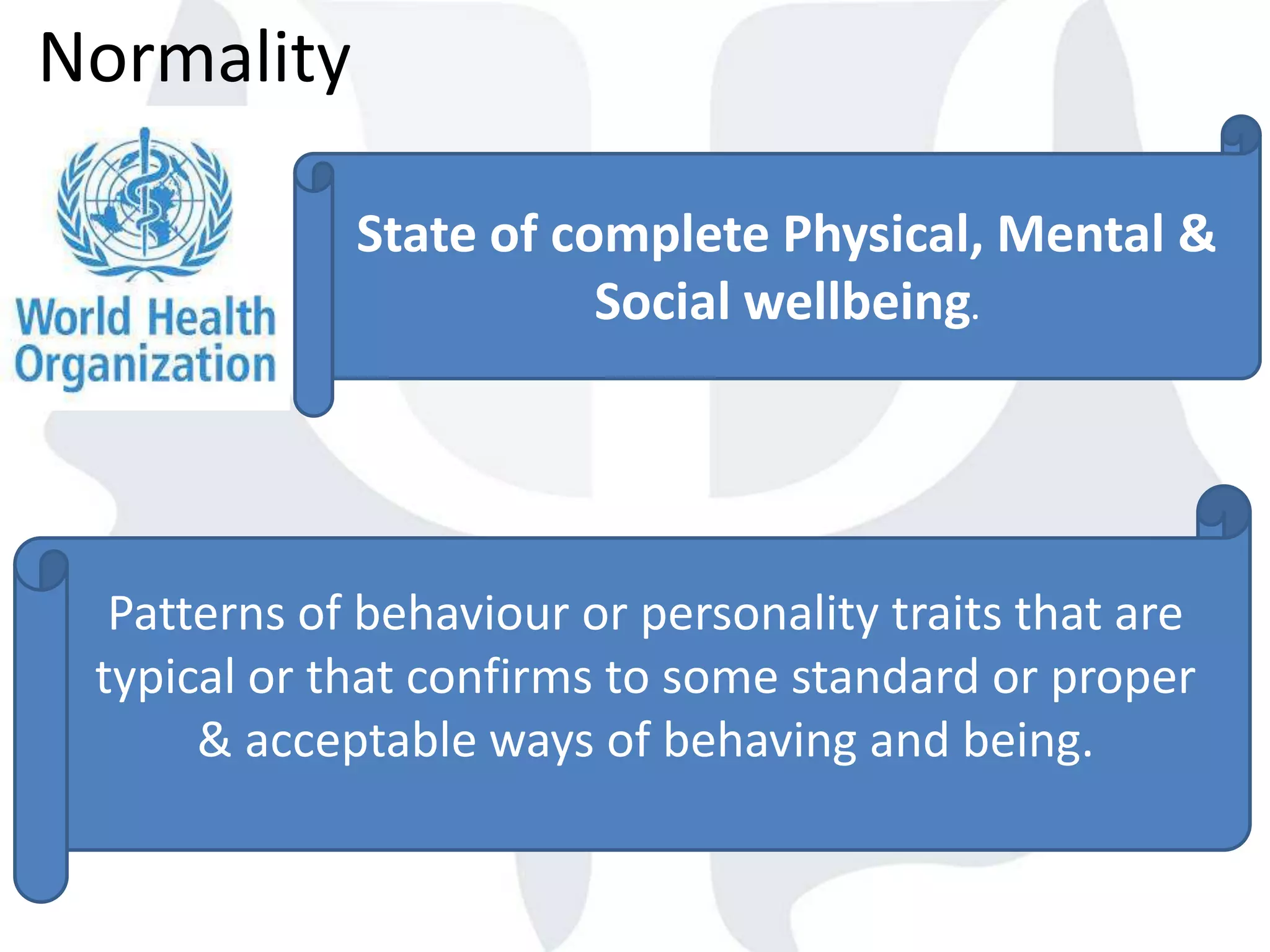
State of complete Physical, Mental &
Social wellbeing.
Patterns of behaviour or personality traits that are
typical or that confirms to some standard or proper
& acceptable ways of behaving and being.
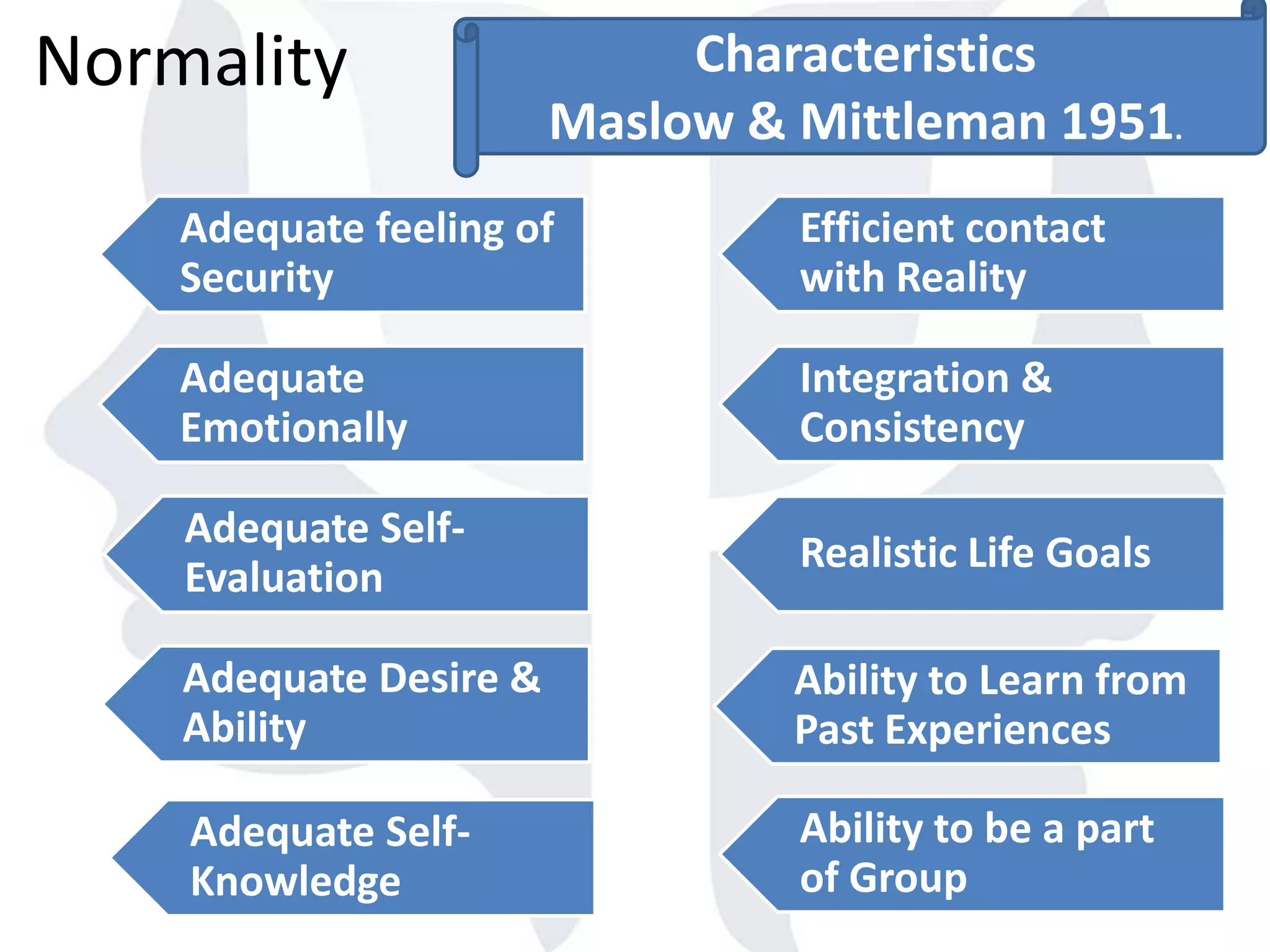
Normality Characteristics
Maslow & Mittleman 1951.
Adequate feeling of
Security
Adequate
Emotionally
Adequate Self-
Evaluation
Adequate Desire &
Ability
Adequate Self-
Knowledge
Efficient contact
with Reality
Integration &
Consistency
Realistic Life Goals
Ability to Learn from
Past Experiences
Ability to be a part
of Group
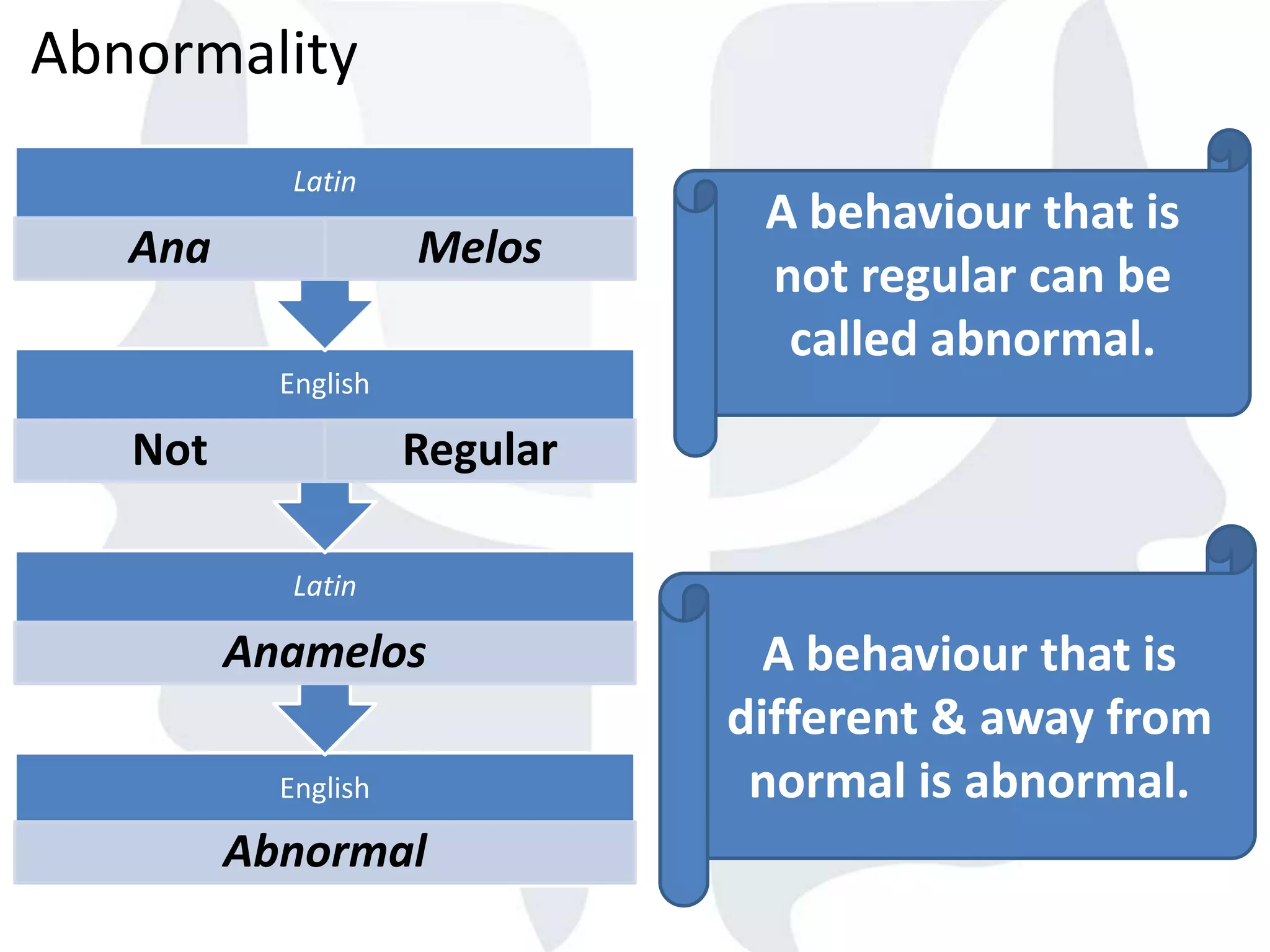
Abnormality
English
Abnormal
Latin
Anamelos
English
Not Regular
Latin
Ana Melos
A behaviour that is
not regular can be
called abnormal.
A behaviour that is
different & away from
normal is abnormal.
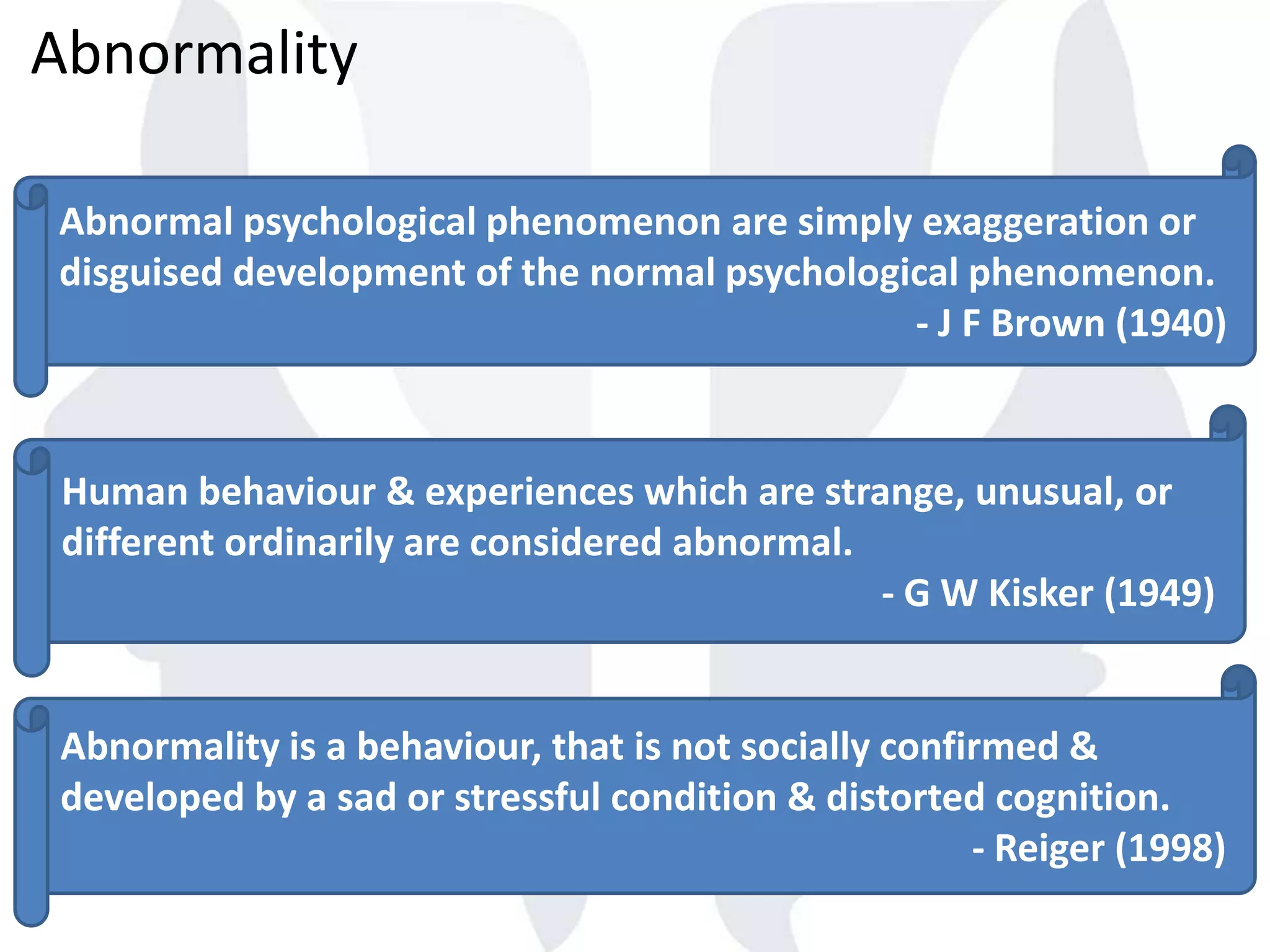
Abnormality
Human behaviour & experiences which are strange, unusual, or
different ordinarily are considered abnormal.
- G W Kisker (1949)
Abnormality is a behaviour, that is not socially confirmed &
developed by a sad or stressful condition & distorted cognition.
- Reiger (1998)
Abnormal psychological phenomenon are simply exaggeration or
disguised development of the normal psychological phenomenon.
- J F Brown (1940)
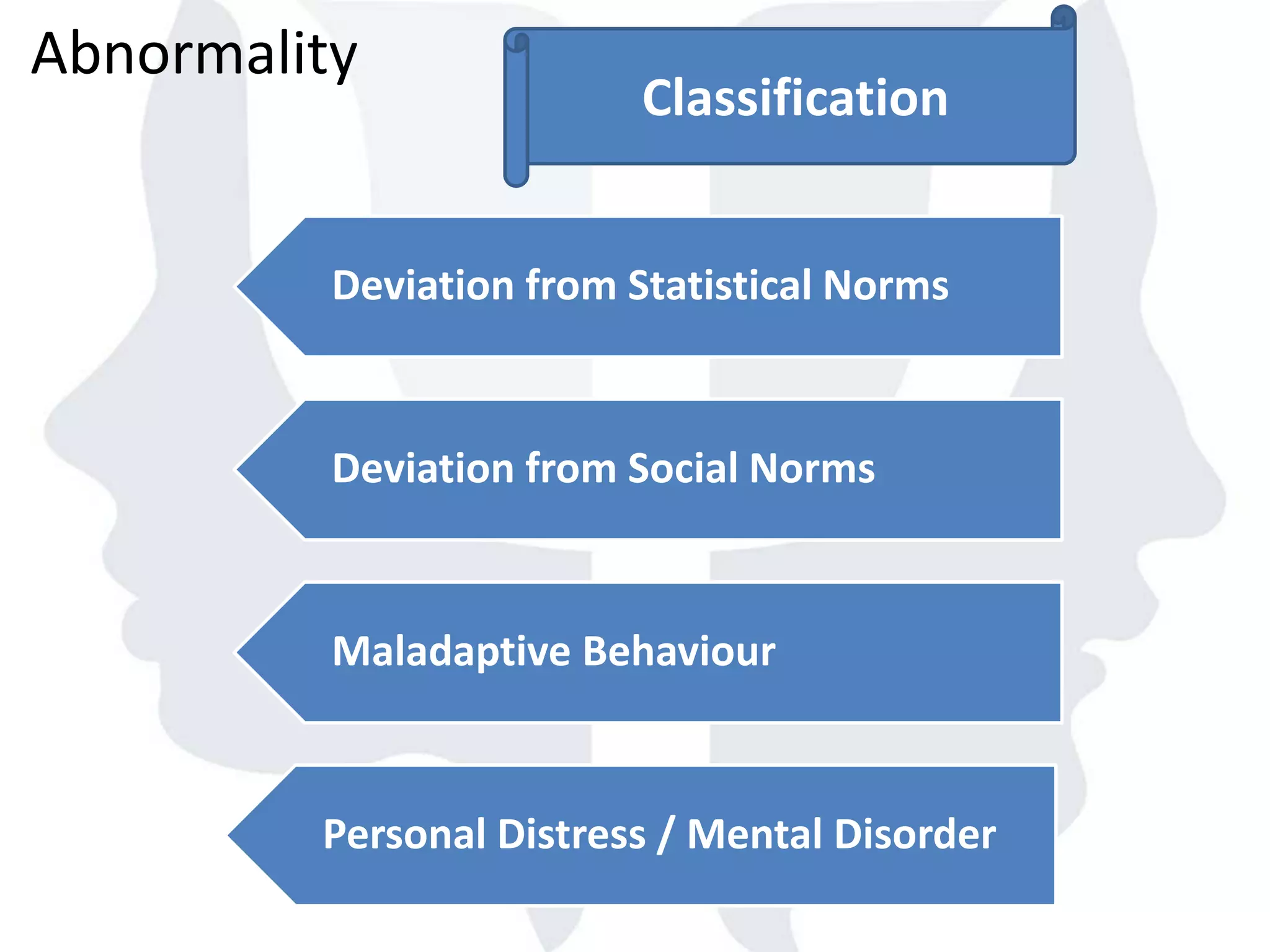
Abnormality
Classification
Deviation from Statistical Norms
Deviation from Social Norms
Maladaptive Behaviour
Personal Distress / Mental Disorder
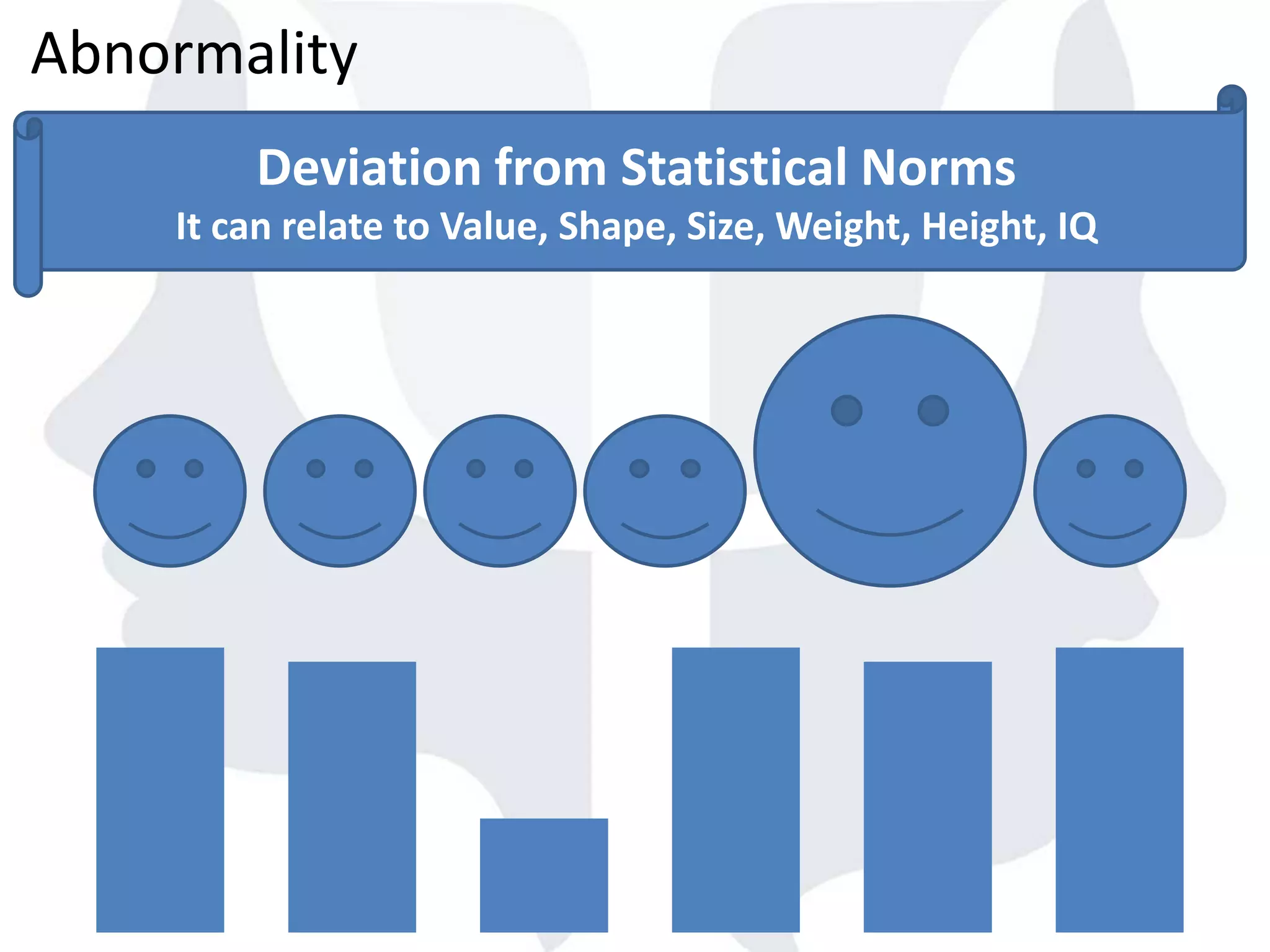
Abnormality
Deviation from Statistical Norms
It can relate to Value, Shape, Size, Weight, Height, IQ
Abnormality
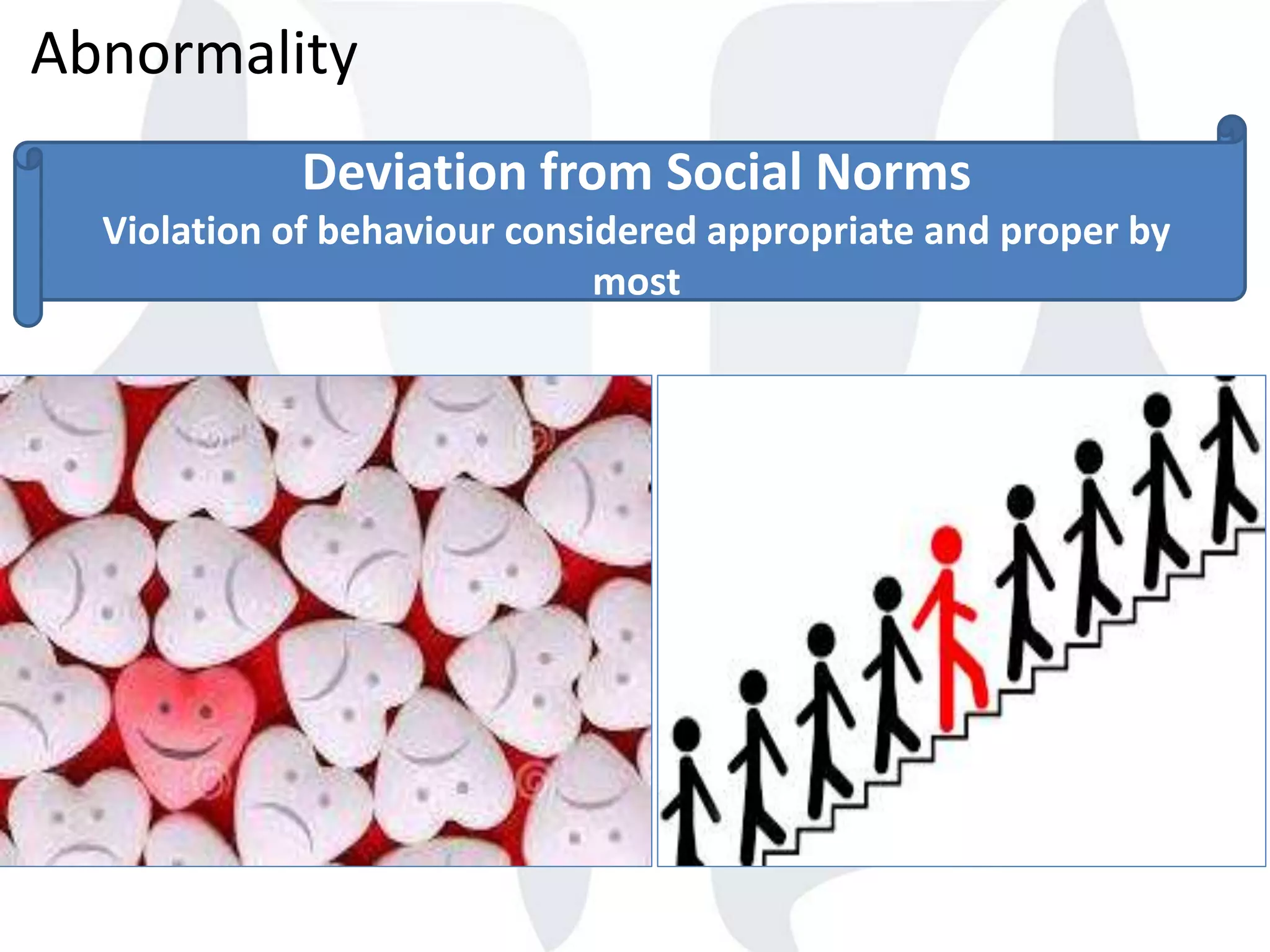
Deviation from Social Norms
Violation of behaviour considered appropriate and proper by
most
Abnormality
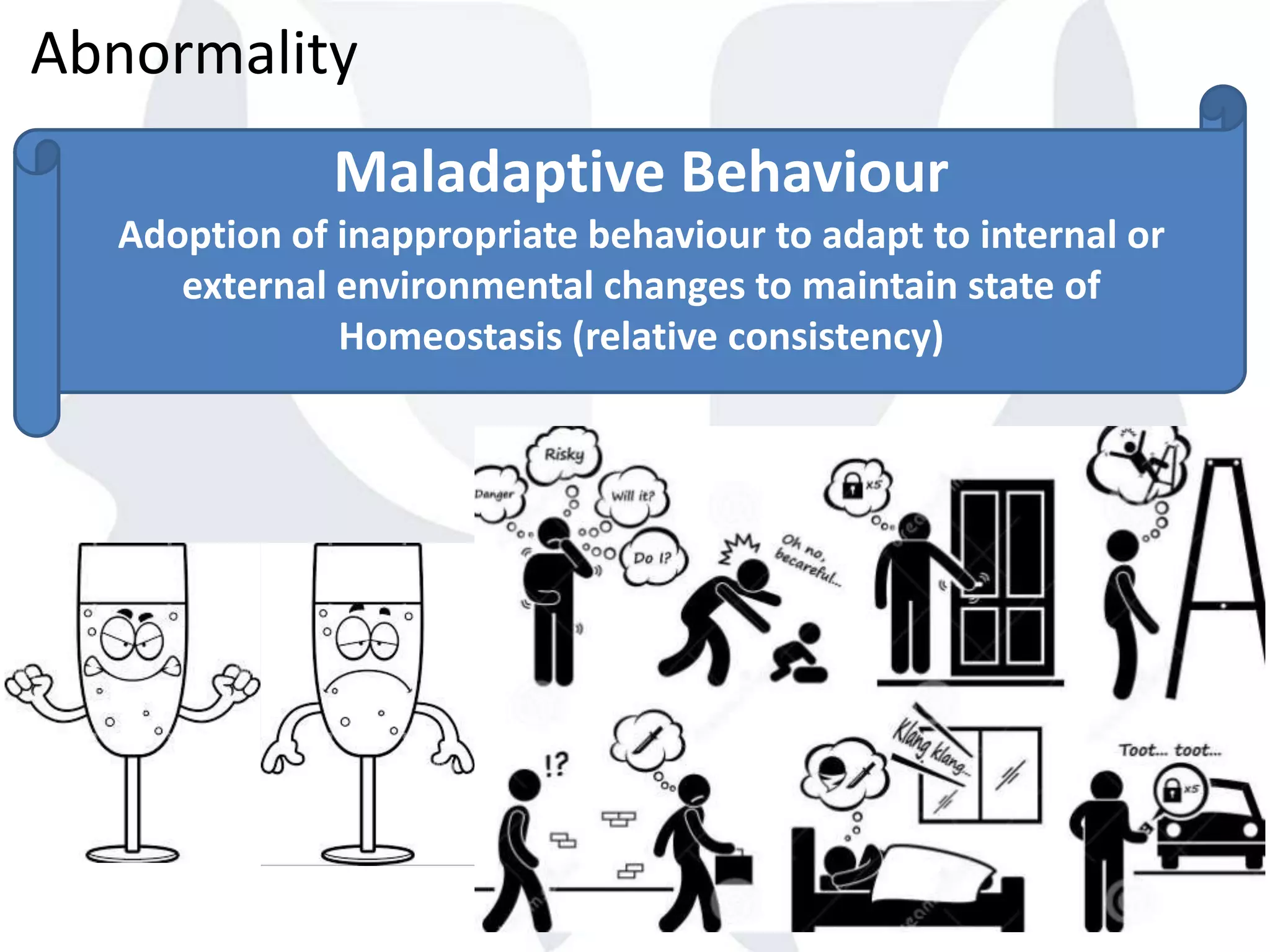
Maladaptive Behaviour
Adoption of inappropriate behaviour to adapt to internal or
external environmental changes to maintain state of
Homeostasis (relative consistency)
Abnormality
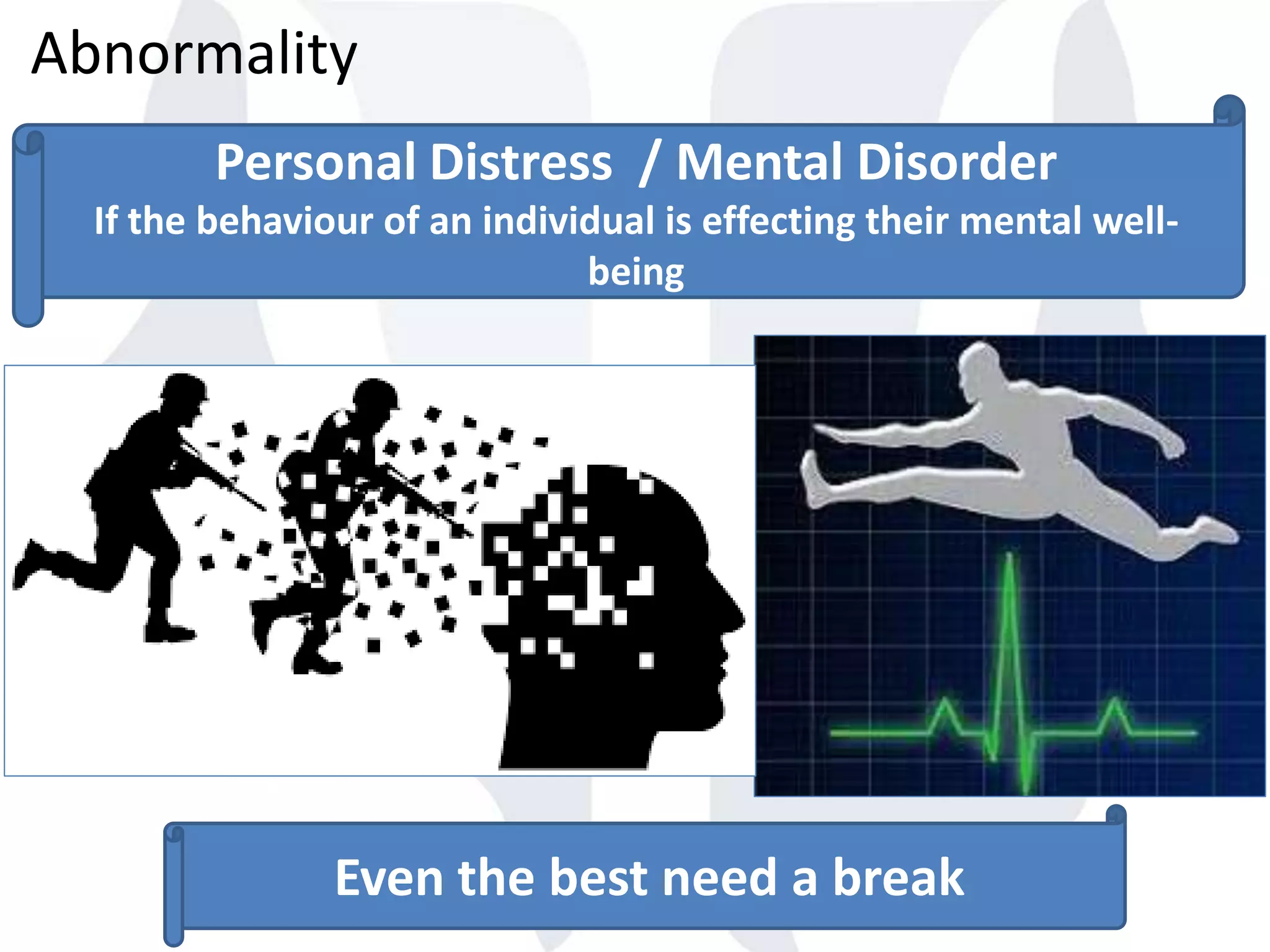
Personal Distress / Mental Disorder
If the behaviour of an individual is effecting their mental well-
being
Even the best need a break
Abnormality
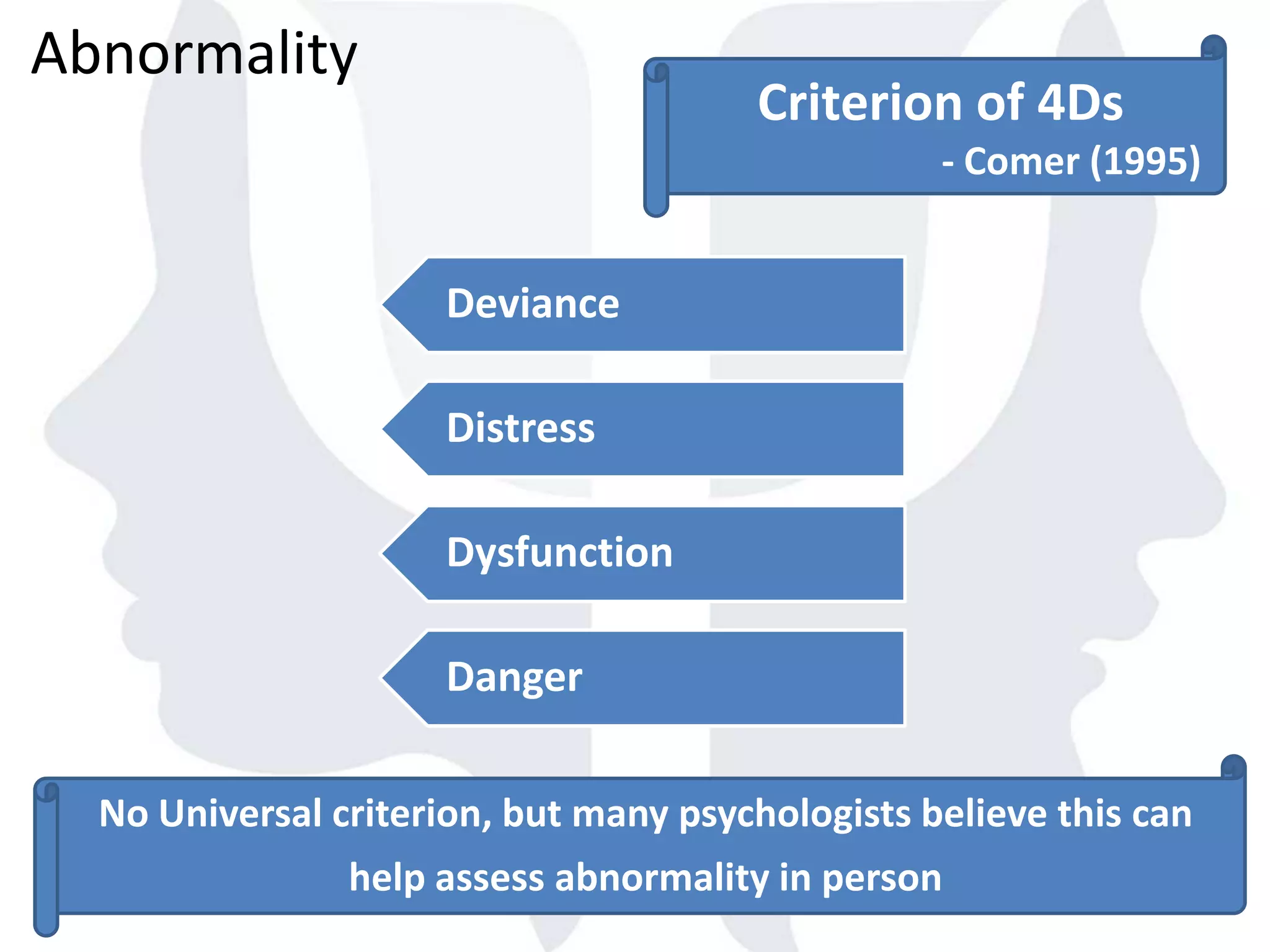
Criterion of 4Ds
- Comer (1995)
No Universal criterion, but many psychologists believe this can
help assess abnormality in person
Deviance
Distress
Dysfunction
Danger
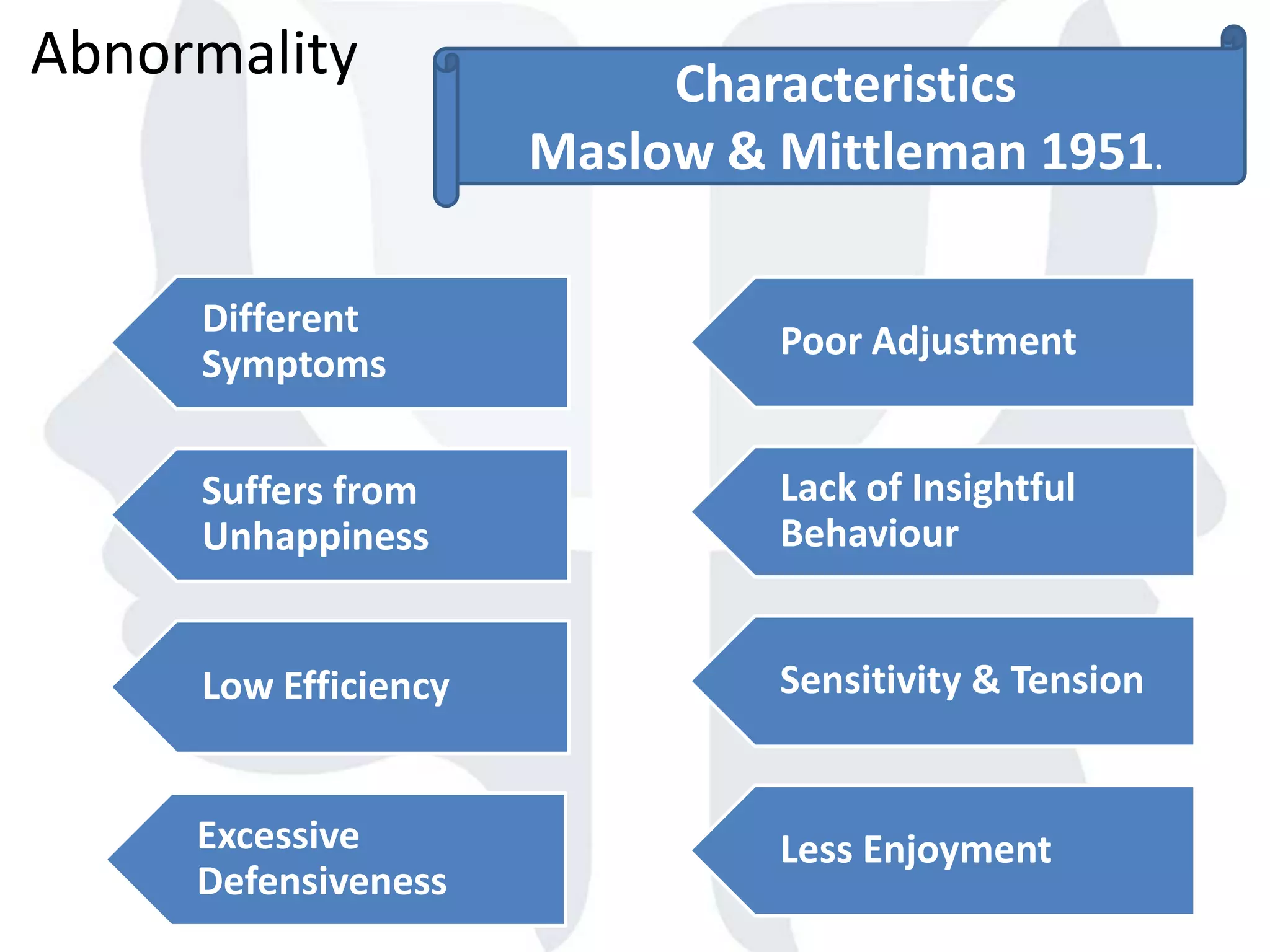
Abnormality Characteristics
Maslow & Mittleman 1951.
Different
Symptoms
Suffers from
Unhappiness
Low Efficiency
Excessive
Defensiveness
Poor Adjustment
Lack of Insightful
Behaviour
Sensitivity & Tension
Less Enjoyment
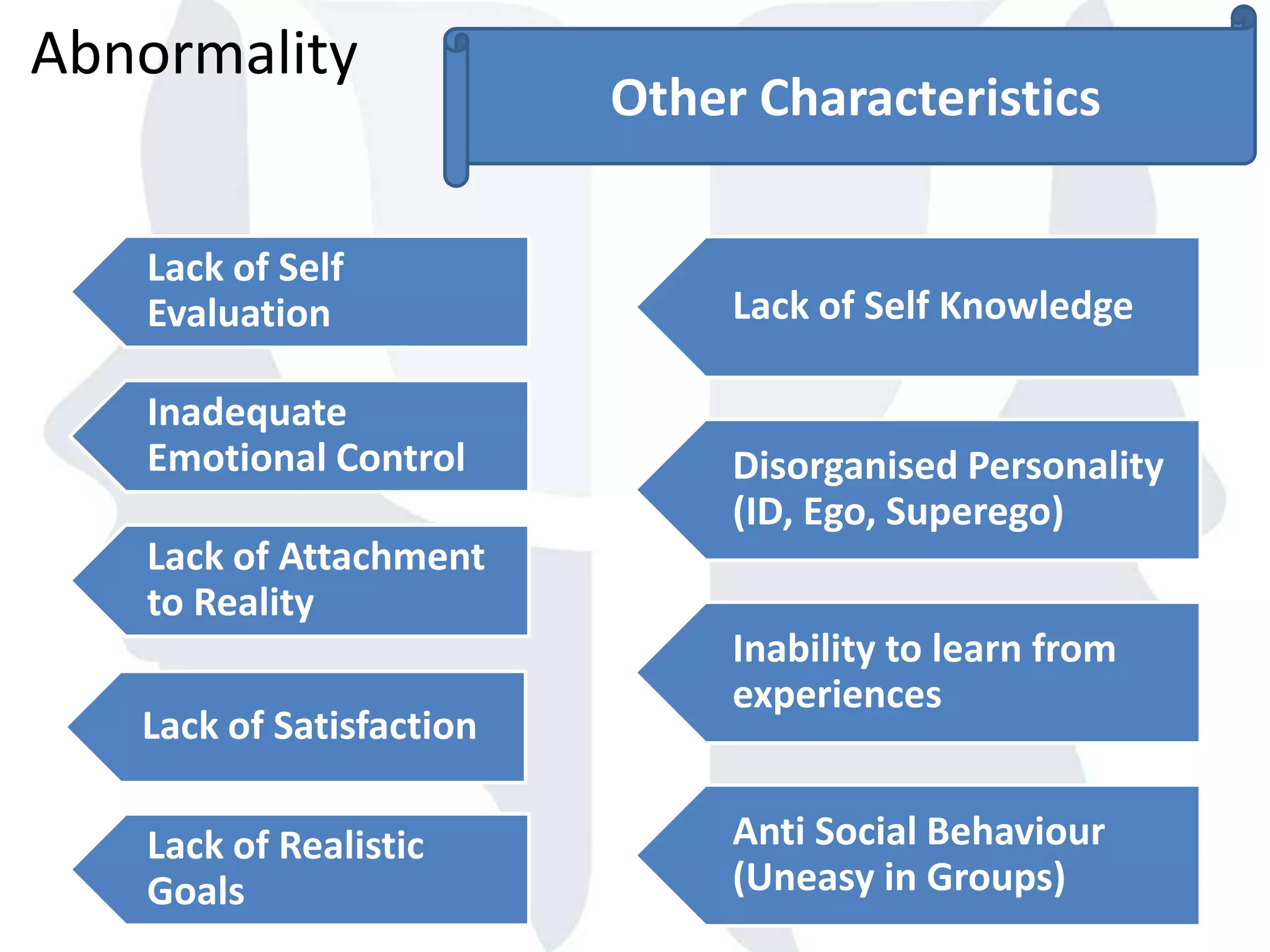
Abnormality
Other Characteristics
Lack of Self
Evaluation
Inadequate
Emotional Control
Lack of Attachment
to Reality
Lack of Satisfaction
Lack of Realistic
Goals
Lack of Self Knowledge
Disorganised Personality
(ID, Ego, Superego)
Inability to learn from
experiences
Anti Social Behaviour
(Uneasy in Groups)
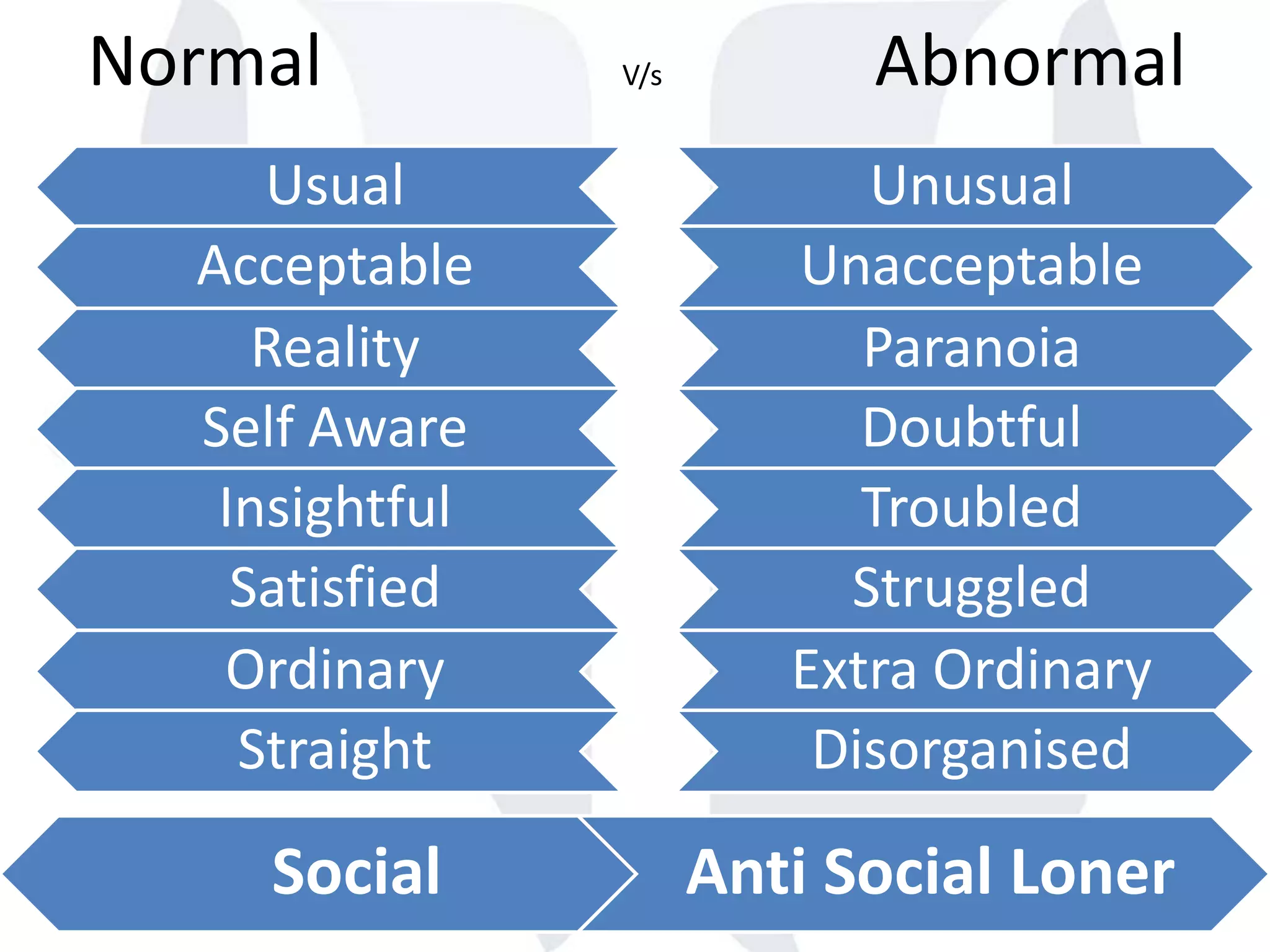
Normal V/s Abnormal
Usual Unusual
Acceptable Unacceptable
Reality Paranoia
Self Aware Doubtful
Insightful Troubled
Satisfied Struggled
Ordinary Extra Ordinary
Straight Disorganised
Social Anti Social Loner
Girish D. Kishnani

Concepts of Normality and Abnormality.pdf