CONCEPTS OF
NORMATIVE
BEHAVIOR
MAMATA COLLEGE OF
NURSING
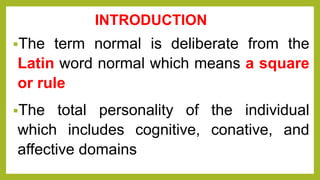
INTRODUCTION
The term normal is deliberate from the
Latin word normal which means a square
or rule
The total personality of the individual
which includes cognitive, conative, and
affective domains
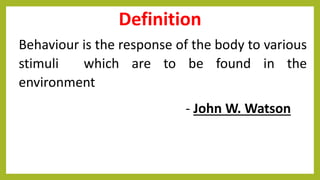
Definition
Behaviour is the response of the body to various
stimuli which are to be found in the
environment
- John W. Watson
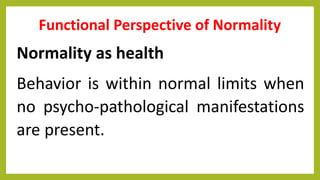
Functional Perspective of Normality
Normality as health
Behavior is within normal limits when
no psycho-pathological manifestations
are present.
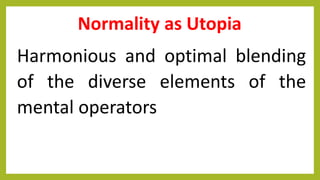
Normality as Utopia
Harmonious and optimal blending
of the diverse elements of the
mental operators
Normality as Average
It is based on the statistical principle of
the bill-shaped curve.
It consists of the middle range as
normal
Normality as Process
•Normative behavior is the result of an
interacting system
• Normalities as a process which
stresses the changes in behavior
Normality as Socially Acceptable
Behavior can only be judged in terms of
the social context within which it occurs
normality with confirm it to the rules
regulations standards
Psychoanalytic Theories of Normality
It is the ability of the individual to perform
the activities and get enjoyment in
working
 Sigmund Freud says that normalize the
ability to love and two work
Different views
Heinz Hartman's view
It is the autonomous functions of the Eco
corn flex free internal environment which
includes perception in tuition
comprehension thinking language learning
Intelligence and certain aspects of motor
development
Kurt Eisler's view
A normal person masturbates
away of his or her thoughts and
feelings
Erik Erikson's view
•Normalities the ability to master the periods of life
he described five psychological stages of childhood
trust versus mistrust (infancy) autonomy versus
shame and doubt (toddler) initiative versus guilt
•(Preschool) industry versus inferiority (school age)
identity versus roll function (adolescence)
Lawrence Kubie's view
Normality is the ability to learn by
experience to be flexible and to
adaptor to a changing environment
Karl Menninger's view
Normalities the ability to adjust to the
external world with contentment
Alfred Adler's view
The person’s capacity to adjust socially
and to be productive is related to mental
health the ability to work
RE Money Kryle’s view
Normality is the ability to achieve
inside into one's self and ability
that is never fully accomplished
Otto Rank’s view
Normality is the capacity to live
without fear guilt or anxiety
Did you take responsibility for your
actions?
CONCEPT OF
ABNORMALITY
Introduction
The term abnormal with its prefix ab from signifies
the deviance or variation from the normal
Abnormality is a negative concept synonymous
with abnormal behaviour or psychopathology
maladapted to behaviour disorganised behaviour
abnormal psychology mental disorder
Definitions
The disturbance is seen in behavior which manifests in
the cognitive Domain (thinking knowing intelligence
levels memory reasoning power) affective domain
(emotions are feelings) and the conetive domain (by
doing acting psycho motor activity) individual Expresses
his mental distance through thoughts feelings and actions
-K.P. Neeraj
Characteristics of Deviated Personality
1. Causes to the individual and the entire family
2. Change in a person’s thinking process memory perception and judgment
3. Abnormality in talking pattern
4. Disturbance in day-to-day activities
5. Work efficiency will be reduced
6. Anxious worried
7. Forgetfulness
8. This interest in routine life
9. Neglected behaviour
10. UN happiness
Lunatics are a mental person
An individual is mentally incompetent to
manage his affairs are forces the
consequences of his actions
Maladaptive Behaviour
Any behavior that has undesirable
consequences either to the
individual or to the community
Mental Disorder
A behavioral or psychological syndrome
or pattern that is associated with
distress like painful symptoms and
disability
Behavior Disorder
The disorders are the distance from faulty
learning either failure to learn needed
competencies or the learning of maladaptive
coping patterns
Thank you

Abnormality.pdfAbnormality.pdfAbnormality.pdf

  • 1.
  • 2.
    INTRODUCTION The term normalis deliberate from the Latin word normal which means a square or rule The total personality of the individual which includes cognitive, conative, and affective domains
  • 3.
    Definition Behaviour is theresponse of the body to various stimuli which are to be found in the environment - John W. Watson
  • 4.
    Functional Perspective ofNormality Normality as health Behavior is within normal limits when no psycho-pathological manifestations are present.
  • 5.
    Normality as Utopia Harmoniousand optimal blending of the diverse elements of the mental operators
  • 6.
    Normality as Average Itis based on the statistical principle of the bill-shaped curve. It consists of the middle range as normal
  • 7.
    Normality as Process •Normativebehavior is the result of an interacting system • Normalities as a process which stresses the changes in behavior
  • 8.
    Normality as SociallyAcceptable Behavior can only be judged in terms of the social context within which it occurs normality with confirm it to the rules regulations standards
  • 9.
    Psychoanalytic Theories ofNormality It is the ability of the individual to perform the activities and get enjoyment in working  Sigmund Freud says that normalize the ability to love and two work
  • 10.
  • 11.
    Heinz Hartman's view Itis the autonomous functions of the Eco corn flex free internal environment which includes perception in tuition comprehension thinking language learning Intelligence and certain aspects of motor development
  • 12.
    Kurt Eisler's view Anormal person masturbates away of his or her thoughts and feelings
  • 13.
    Erik Erikson's view •Normalitiesthe ability to master the periods of life he described five psychological stages of childhood trust versus mistrust (infancy) autonomy versus shame and doubt (toddler) initiative versus guilt •(Preschool) industry versus inferiority (school age) identity versus roll function (adolescence)
  • 14.
    Lawrence Kubie's view Normalityis the ability to learn by experience to be flexible and to adaptor to a changing environment
  • 15.
    Karl Menninger's view Normalitiesthe ability to adjust to the external world with contentment
  • 16.
    Alfred Adler's view Theperson’s capacity to adjust socially and to be productive is related to mental health the ability to work
  • 17.
    RE Money Kryle’sview Normality is the ability to achieve inside into one's self and ability that is never fully accomplished
  • 18.
    Otto Rank’s view Normalityis the capacity to live without fear guilt or anxiety Did you take responsibility for your actions?
  • 19.
  • 20.
    Introduction The term abnormalwith its prefix ab from signifies the deviance or variation from the normal Abnormality is a negative concept synonymous with abnormal behaviour or psychopathology maladapted to behaviour disorganised behaviour abnormal psychology mental disorder
  • 21.
    Definitions The disturbance isseen in behavior which manifests in the cognitive Domain (thinking knowing intelligence levels memory reasoning power) affective domain (emotions are feelings) and the conetive domain (by doing acting psycho motor activity) individual Expresses his mental distance through thoughts feelings and actions -K.P. Neeraj
  • 22.
    Characteristics of DeviatedPersonality 1. Causes to the individual and the entire family 2. Change in a person’s thinking process memory perception and judgment 3. Abnormality in talking pattern 4. Disturbance in day-to-day activities 5. Work efficiency will be reduced 6. Anxious worried 7. Forgetfulness 8. This interest in routine life 9. Neglected behaviour 10. UN happiness
  • 23.
    Lunatics are amental person An individual is mentally incompetent to manage his affairs are forces the consequences of his actions
  • 24.
    Maladaptive Behaviour Any behaviorthat has undesirable consequences either to the individual or to the community
  • 25.
    Mental Disorder A behavioralor psychological syndrome or pattern that is associated with distress like painful symptoms and disability
  • 26.
    Behavior Disorder The disordersare the distance from faulty learning either failure to learn needed competencies or the learning of maladaptive coping patterns
  • 27.