++++++++++++++++++++++++++++
++++++++++++++++++++++++++++
++++++++++++++++++++++++++++
++++++++++++++++++++++++++++
++++++++++++++++++++++++++++
++++++++++++++++++++++++++++
++++++++++++++++++++++++++++
++++++++++++++++++++++++++++
++++++++++++++++++++++++++++
++++++++++++++++++++++++++++
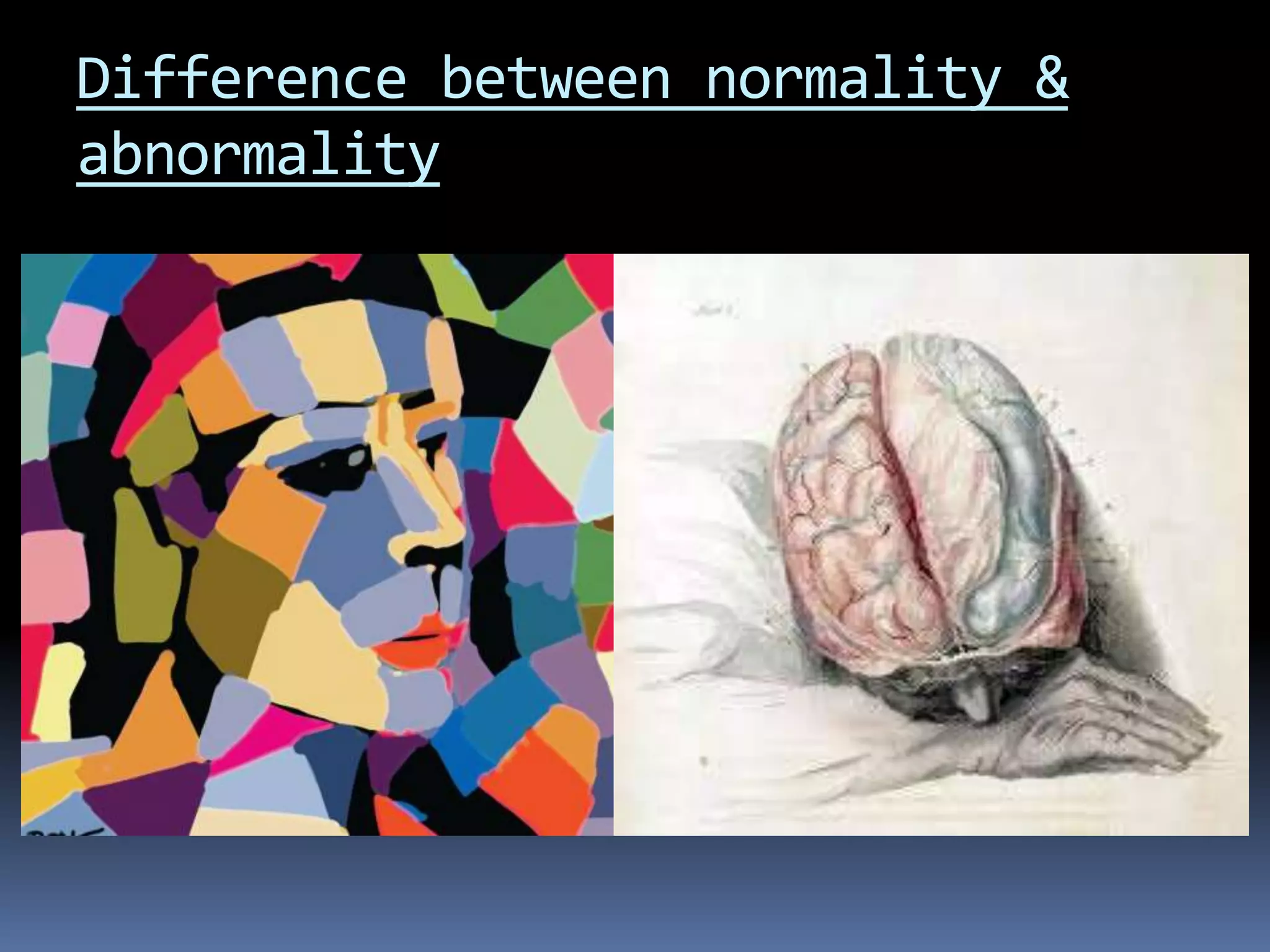
Difference between normality &
abnormality
Psychological disorders
 Anxiety disorder
 Mood disorder
 Schizophrenia
 Personality disorder
 Mental disorder
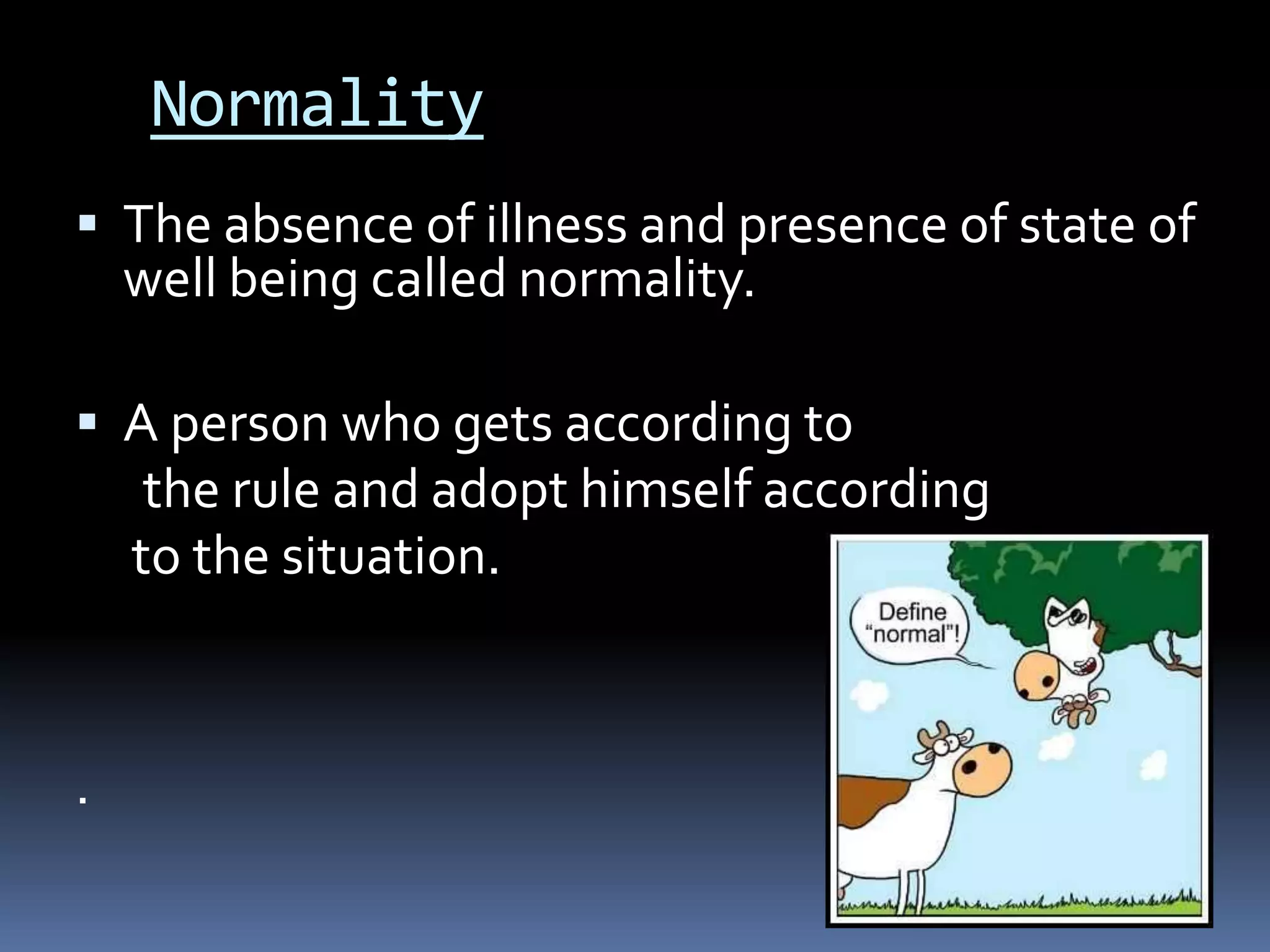
Normality
 The absence of illness and presence of state of
well being called normality.
 A person who gets according to
the rule and adopt himself according
to the situation.
.
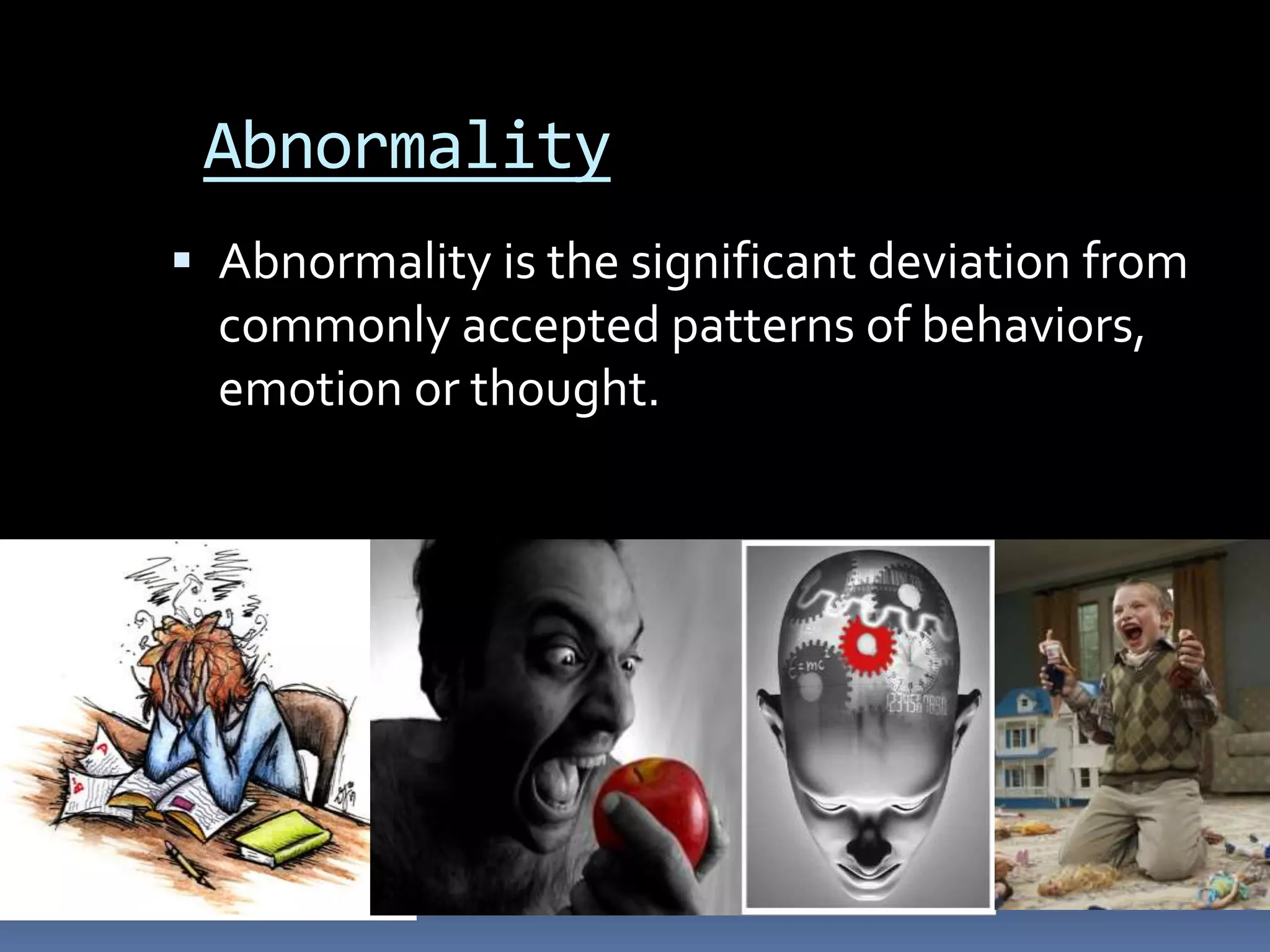
Abnormality
 Abnormality is the significant deviation from
commonly accepted patterns of behaviors,
emotion or thought.
Abnormality definitions:
 Statistical infrequency:
 It does not account for social acceptance e . g. very
high intelligence.
 Violation of social norms:
 Social norms vary from society to society e.g.
violation of religion’s rule
 Personal distress:
 It includes mentally ill or physically defective people.
 legal act: violation of country’s rule.
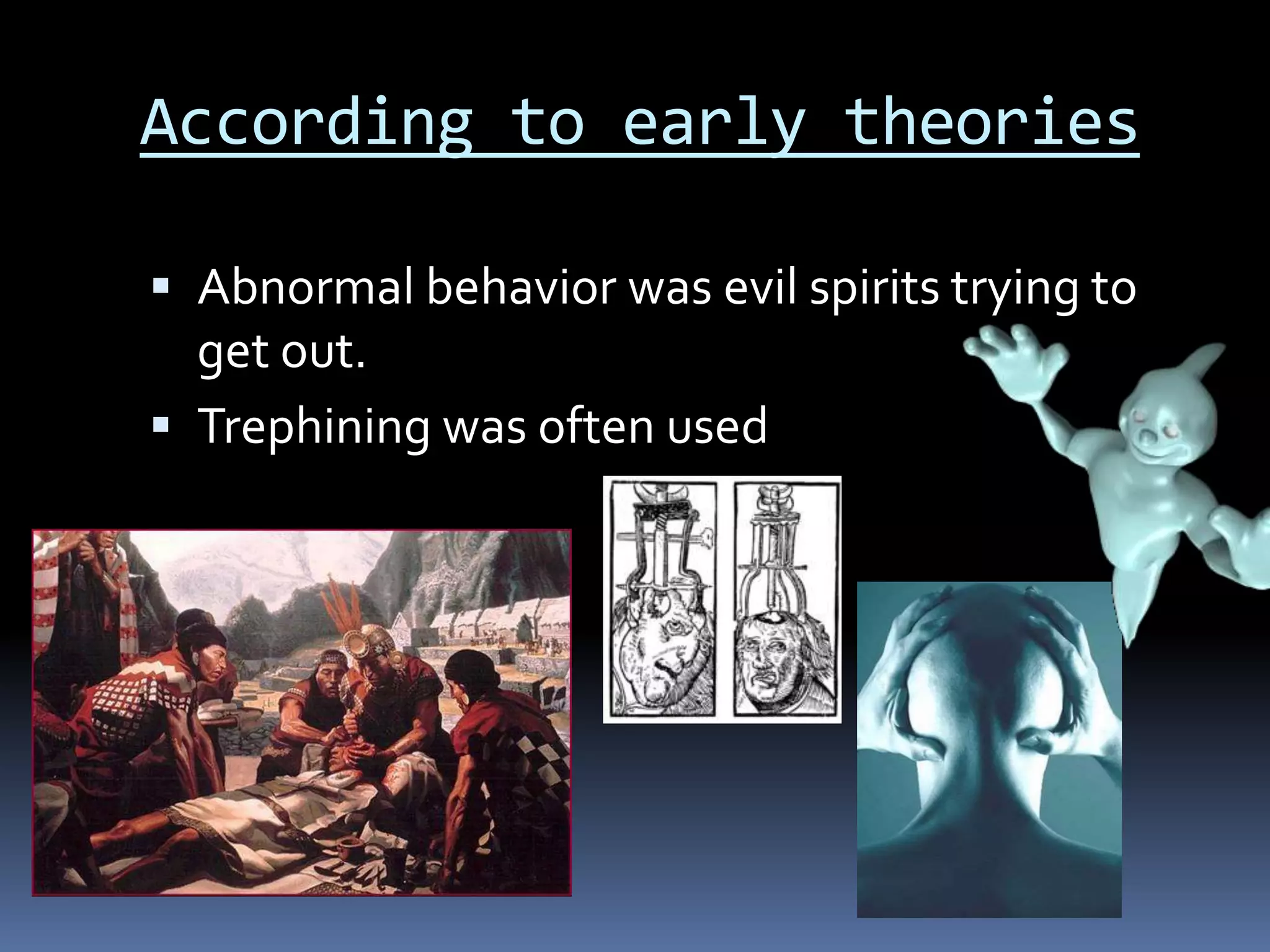
According to early theories
 Abnormal behavior was evil spirits trying to
get out.
 Trephining was often used
8
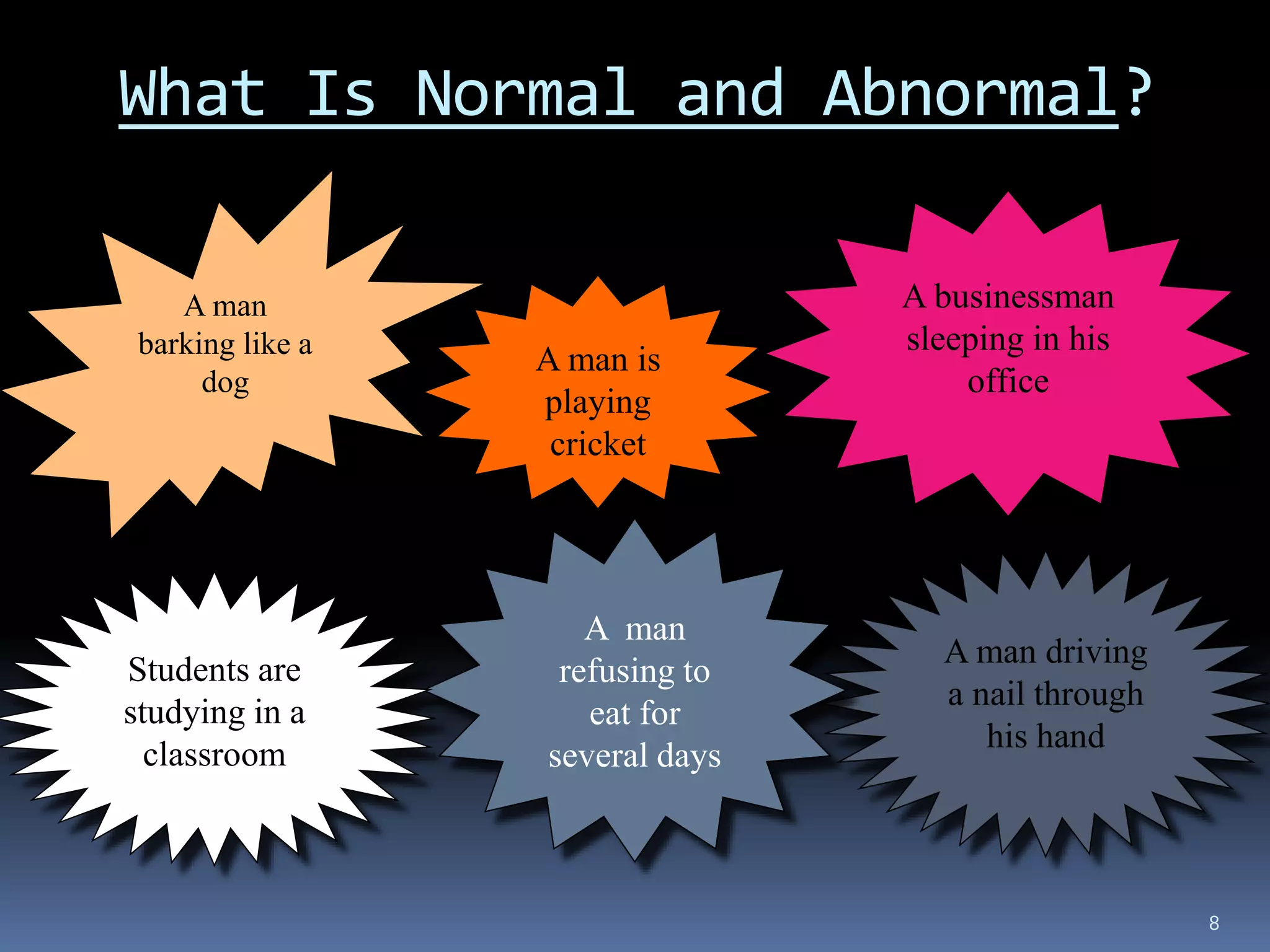
What Is Normal and Abnormal?
A man
barking like a
dog
A man is
playing
cricket
A man driving
a nail through
his hand
A man
refusing to
eat for
several days
Students are
studying in a
classroom
A businessman
sleeping in his
office
Difference between normality
& abnormality
 Normal behavior is socially acceptable while the
abnormal behavior is not acceptable.
Causes of abnormal behavior
 There may be of three kinds of causes :
 Biological
 Psychological
 Sociocultural
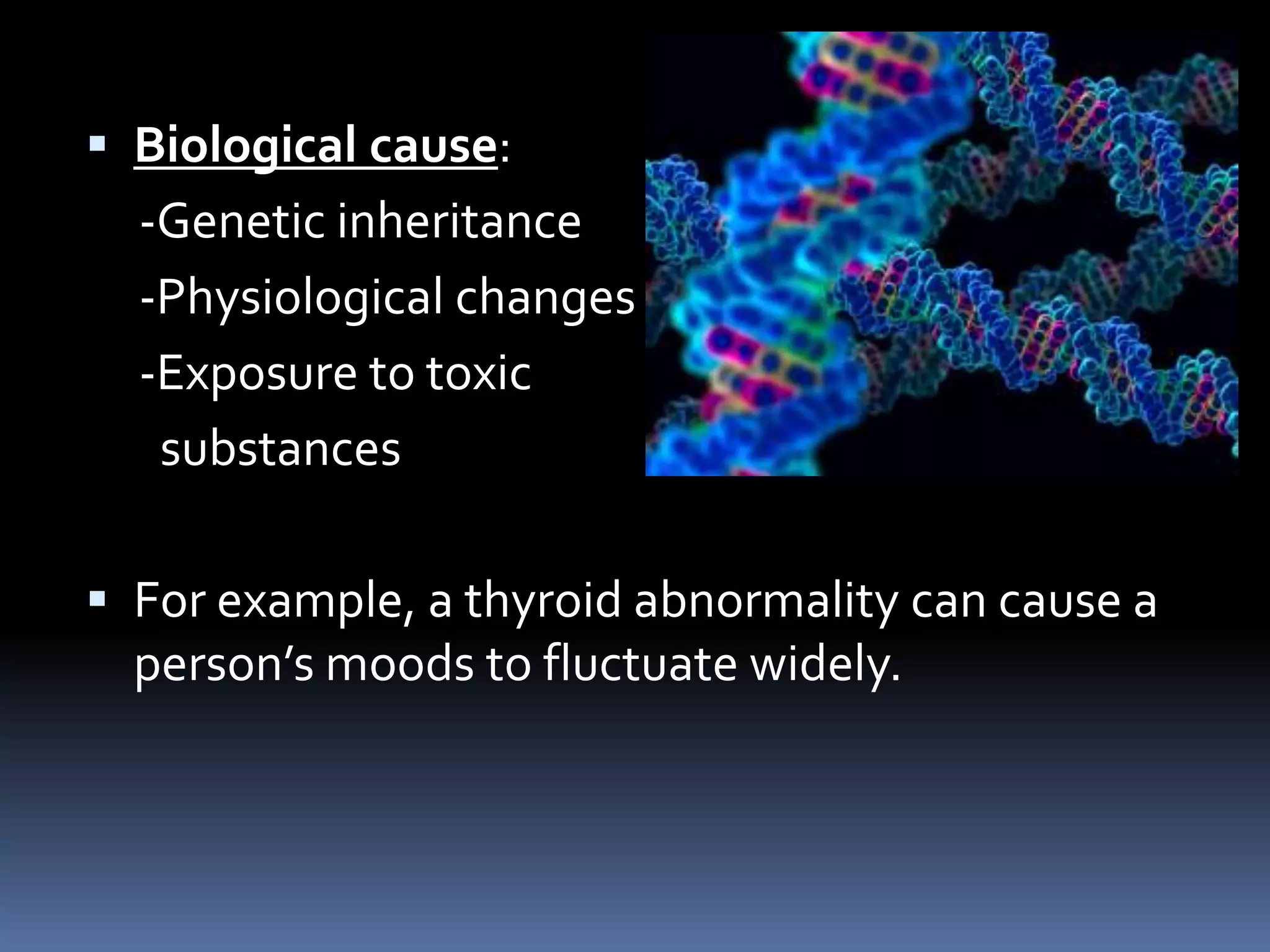
 Biological cause:
-Genetic inheritance
-Physiological changes
-Exposure to toxic
substances
 For example, a thyroid abnormality can cause a
person’s moods to fluctuate widely.
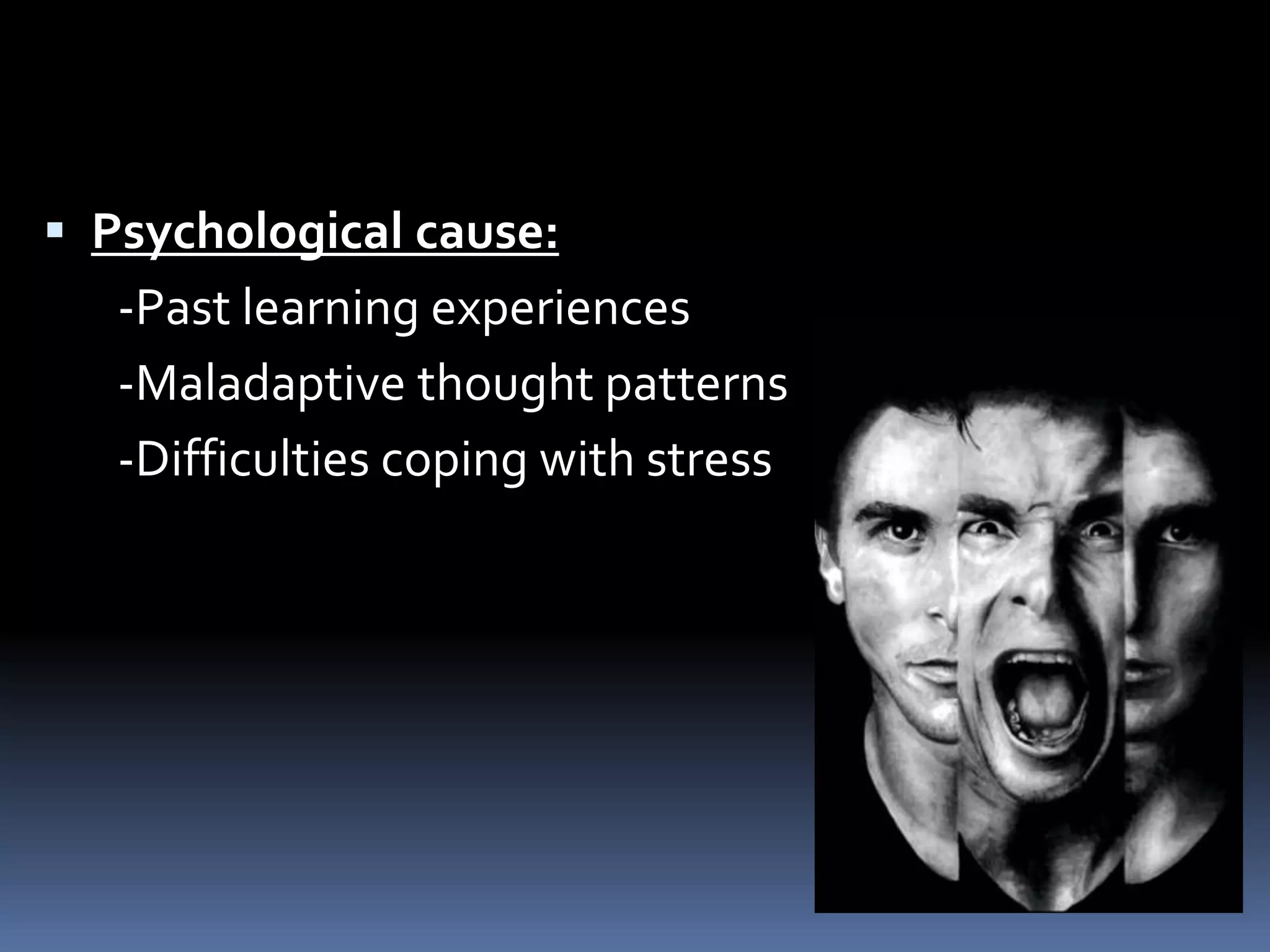
 Psychological cause:
-Past learning experiences
-Maladaptive thought patterns
-Difficulties coping with stress
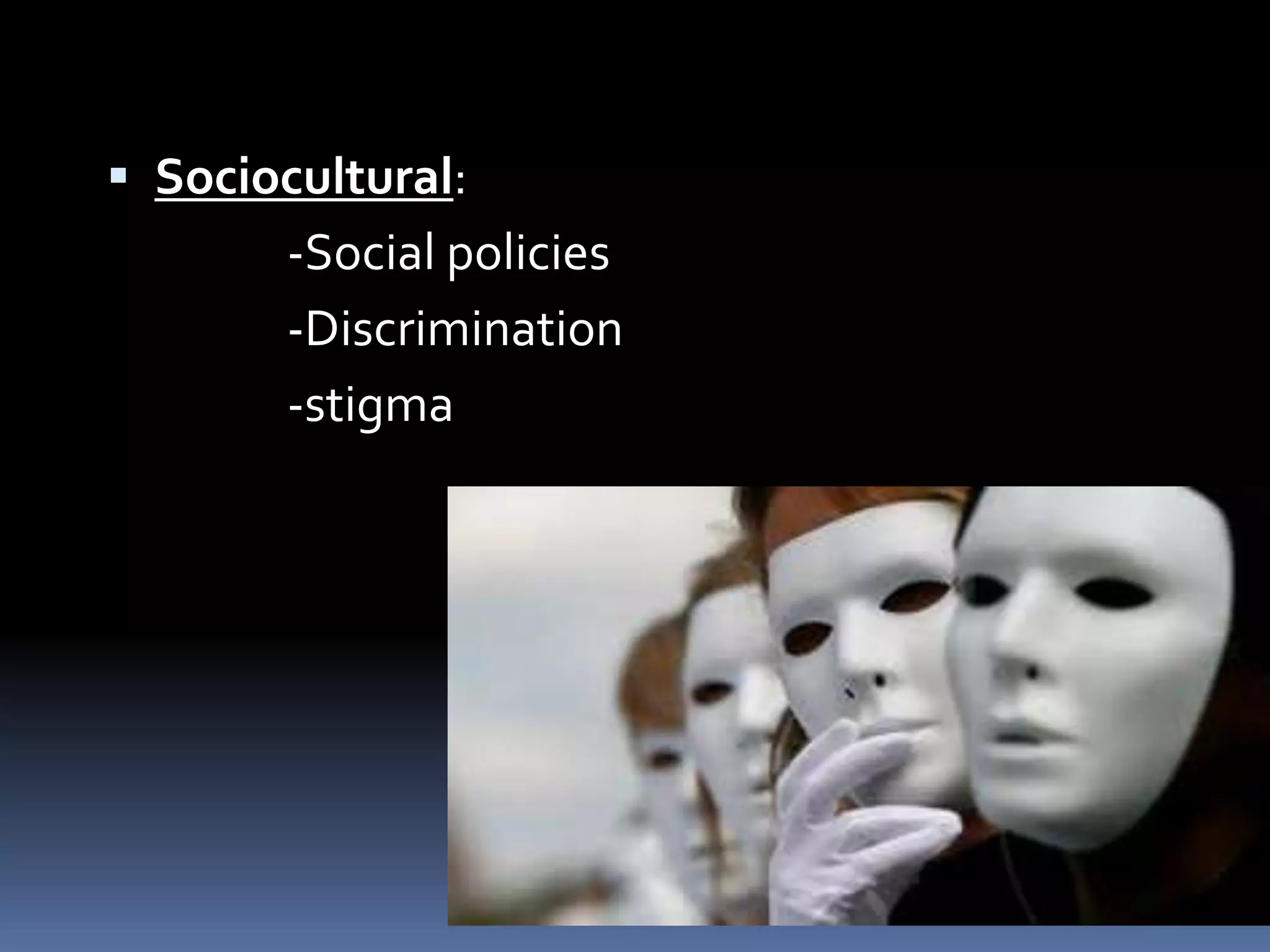
 Sociocultural:
-Social policies
-Discrimination
-stigma
DSM
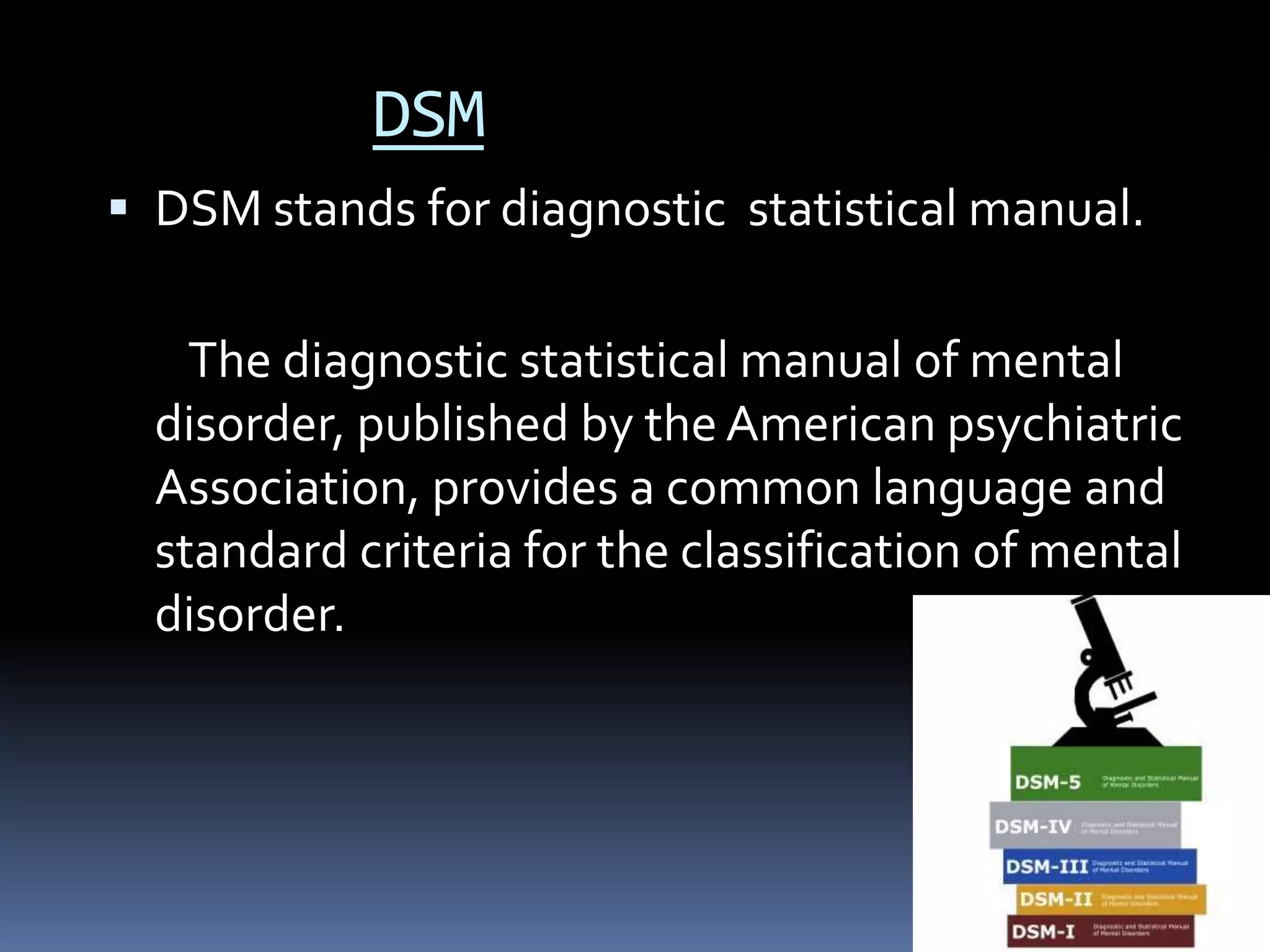
 DSM stands for diagnostic statistical manual.
The diagnostic statistical manual of mental
disorder, published by the American psychiatric
Association, provides a common language and
standard criteria for the classification of mental
disorder.
According to DSM
 According to the DSM-IV-TR, behaviors may be
considered abnormal if they are associated with
disability, personal distress, the violation of social
norms, or dysfunction.
 The DSM system like the medical model , treats
abnormal behaviors as signs and symptoms of
underlying disorders and pathologies.
According to Axis 4
 Axis IV is for reporting psychosocial and
environmental problems. A psychosocial or
environmental problem may be a negative life
event, an environmental difficulty or deficiency.
 For example
 Problems with primary support group:
 death of a family member , divorce neglect of child.
 Problems related to the social environment:
 living alone adjustment to life-cycle transition (such
as retirement).
 Educational problems:
 academic problem ,bad school environment.
According to axis4
 academic problems ,bad school environment.
 Occupational problems:
 unemployment; threat of job loss; stressful work
schedule.
 Housing problems:
 Homelessness, discord with neighbors or landlord.
 Economic problems:
 Extreme poverty.
 Other psychosocial and environmental problems:
 Exposure to disasters, war
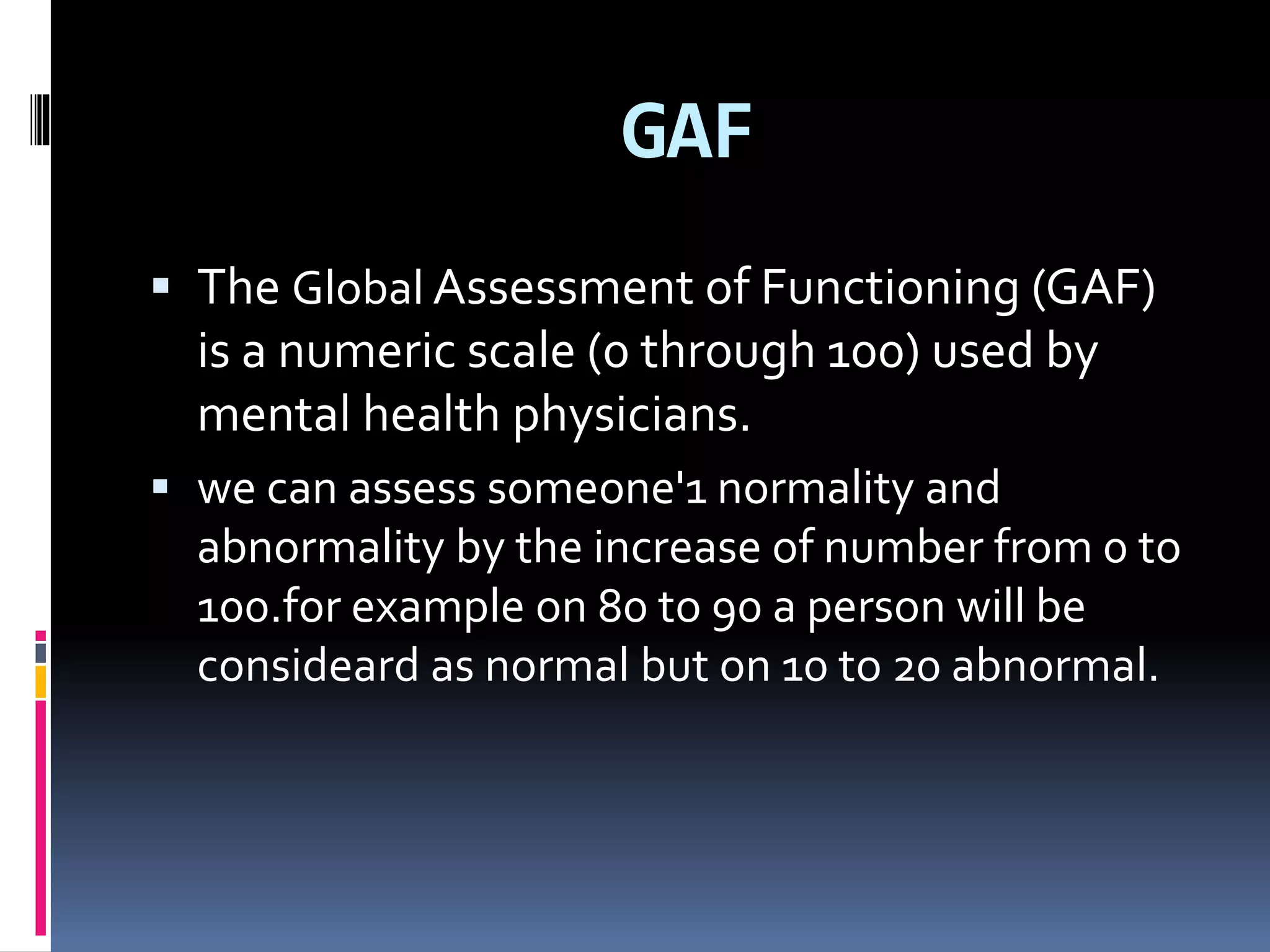
GAF
 The Global Assessment of Functioning (GAF)
is a numeric scale (0 through 100) used by
mental health physicians.
 we can assess someone'1 normality and
abnormality by the increase of number from 0 to
100.for example on 80 to 90 a person will be
consideard as normal but on 10 to 20 abnormal.
NIDA RABBANI
Presented by:

Normality & abnormality

  • 1.
  • 2.
  • 3.
    Psychological disorders  Anxietydisorder  Mood disorder  Schizophrenia  Personality disorder  Mental disorder
  • 4.
    Normality  The absenceof illness and presence of state of well being called normality.  A person who gets according to the rule and adopt himself according to the situation. .
  • 5.
    Abnormality  Abnormality isthe significant deviation from commonly accepted patterns of behaviors, emotion or thought.
  • 6.
    Abnormality definitions:  Statisticalinfrequency:  It does not account for social acceptance e . g. very high intelligence.  Violation of social norms:  Social norms vary from society to society e.g. violation of religion’s rule  Personal distress:  It includes mentally ill or physically defective people.  legal act: violation of country’s rule.
  • 7.
    According to earlytheories  Abnormal behavior was evil spirits trying to get out.  Trephining was often used
  • 8.
    8 What Is Normaland Abnormal? A man barking like a dog A man is playing cricket A man driving a nail through his hand A man refusing to eat for several days Students are studying in a classroom A businessman sleeping in his office
  • 9.
    Difference between normality &abnormality  Normal behavior is socially acceptable while the abnormal behavior is not acceptable.
  • 10.
    Causes of abnormalbehavior  There may be of three kinds of causes :  Biological  Psychological  Sociocultural
  • 11.
     Biological cause: -Geneticinheritance -Physiological changes -Exposure to toxic substances  For example, a thyroid abnormality can cause a person’s moods to fluctuate widely.
  • 12.
     Psychological cause: -Pastlearning experiences -Maladaptive thought patterns -Difficulties coping with stress
  • 13.
  • 14.
    DSM  DSM standsfor diagnostic statistical manual. The diagnostic statistical manual of mental disorder, published by the American psychiatric Association, provides a common language and standard criteria for the classification of mental disorder.
  • 15.
    According to DSM According to the DSM-IV-TR, behaviors may be considered abnormal if they are associated with disability, personal distress, the violation of social norms, or dysfunction.  The DSM system like the medical model , treats abnormal behaviors as signs and symptoms of underlying disorders and pathologies.
  • 16.
    According to Axis4  Axis IV is for reporting psychosocial and environmental problems. A psychosocial or environmental problem may be a negative life event, an environmental difficulty or deficiency.  For example  Problems with primary support group:  death of a family member , divorce neglect of child.  Problems related to the social environment:  living alone adjustment to life-cycle transition (such as retirement).  Educational problems:  academic problem ,bad school environment.
  • 17.
    According to axis4 academic problems ,bad school environment.  Occupational problems:  unemployment; threat of job loss; stressful work schedule.  Housing problems:  Homelessness, discord with neighbors or landlord.  Economic problems:  Extreme poverty.  Other psychosocial and environmental problems:  Exposure to disasters, war
  • 18.
    GAF  The GlobalAssessment of Functioning (GAF) is a numeric scale (0 through 100) used by mental health physicians.  we can assess someone'1 normality and abnormality by the increase of number from 0 to 100.for example on 80 to 90 a person will be consideard as normal but on 10 to 20 abnormal.
  • 20.