

SUBMITTED BY
Neenu babu
N0:28
CONTENTS
• Definition
• What empowerment is?
• New system versus old system
• Empowering leadership
• Developing empowering attitude
• Facilitators
• Barriers
• Process of empowerment
• conclusion
• Managerial technique to
release the full potential
of every individual in an
organization
Empowerment is based on the idea that
giving employees skills, resources, authority,
opportunity, motivation, as well as holding
them responsible and accountable for
outcomes of their actions, will contribute to
their competence and satisfaction.
What empowerment is?
• Authority of subordinate to decide and act
• People can empowered by involving themselves
in work through process of inclusion
• Process of reorientation of all forces, values and
beliefs that determine human behavior in
organization
• Process releases full potential of every individual
to contribute to the common enterprise
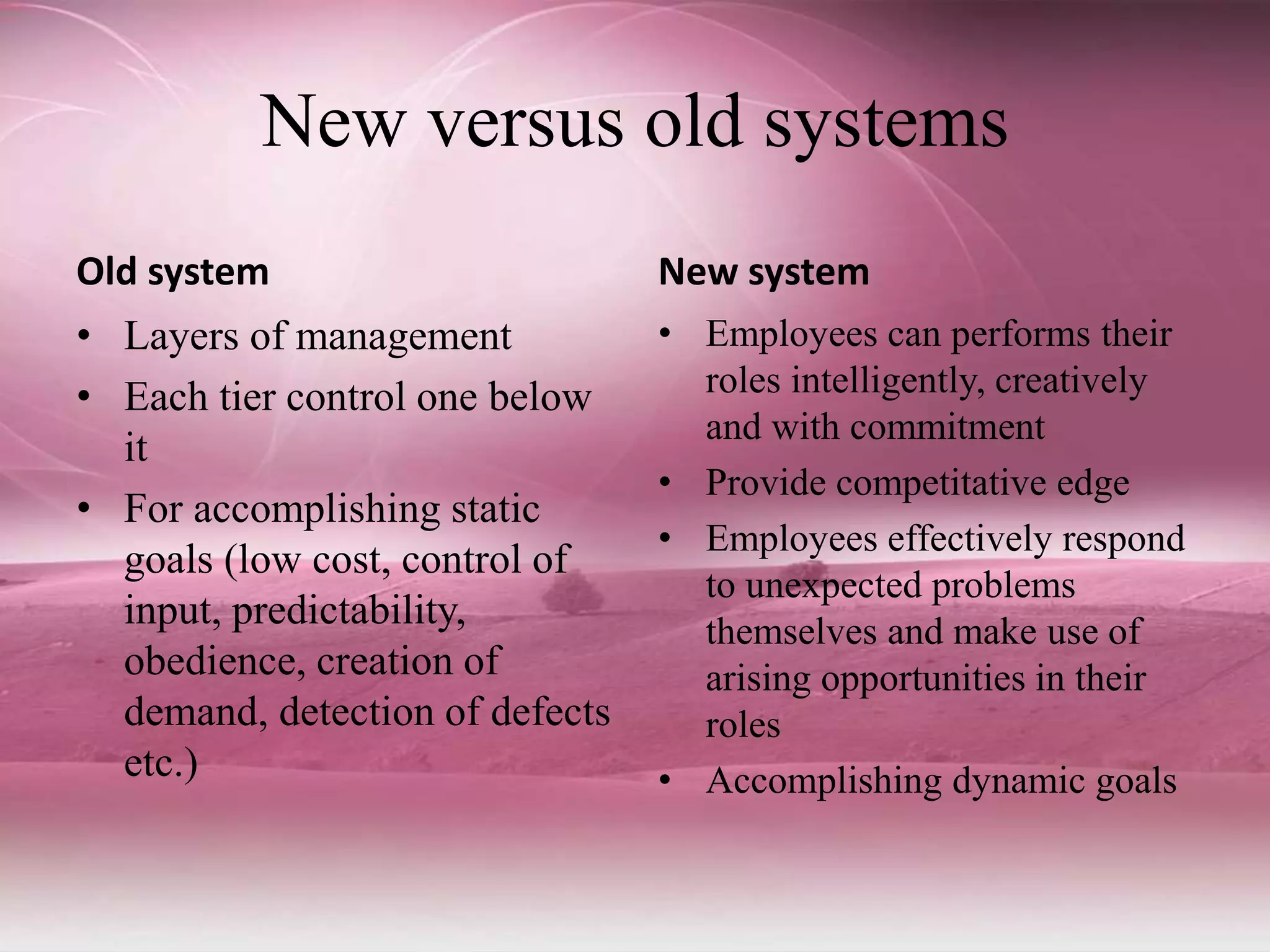
New versus old systems
Old system
• Layers of management
• Each tier control one below
it
• For accomplishing static
goals (low cost, control of
input, predictability,
obedience, creation of
demand, detection of defects
etc.)
New system
• Employees can performs their
roles intelligently, creatively
and with commitment
• Provide competitative edge
• Employees effectively respond
to unexpected problems
themselves and make use of
arising opportunities in their
roles
• Accomplishing dynamic goals
Empowering leadership
• Develop leaders who understand the strength and weakness of their
people and support them
• For utilizing their talents and skills
• To develop situational sensitivity to prevent any physical or social
disabilities that hamper employee performance
• Empowering leadership can facilitate the process of liberating the
organization by developing organizational structure that necessitate
collective involvement in decision making
Developing empowering attitude
• Implies various solution to problem depending
upon situational factors
• Expecting the best (rather than worst) from
people
• Realizing that there is no right (rather than
only one) answer
• Perceiving the unity(rather than separation)of
brain and hand
FACILITATORS
• Participation
• Innovation
• Access to information
• Accountability
• Delegation
BARRIERS
• Unwilling employees
• Fear of lose of control
• Lack of training
• Need for more power among managers
Process of empowerment
• Valuing employees
• Sharing vision
• Trust
• Provision of decision making information
• Feedback
• Solving problem
• Social reinforcement
• Training
• Emotional support
consists of a few simple steps and
lot of persistence and sharing
leadership and accountabilities
concept of empowerment

concept of empowerment

  • 1.
  • 2.
    CONTENTS • Definition • Whatempowerment is? • New system versus old system • Empowering leadership • Developing empowering attitude • Facilitators • Barriers • Process of empowerment • conclusion
  • 4.
    • Managerial techniqueto release the full potential of every individual in an organization
  • 5.
    Empowerment is basedon the idea that giving employees skills, resources, authority, opportunity, motivation, as well as holding them responsible and accountable for outcomes of their actions, will contribute to their competence and satisfaction.
  • 6.
    What empowerment is? •Authority of subordinate to decide and act • People can empowered by involving themselves in work through process of inclusion • Process of reorientation of all forces, values and beliefs that determine human behavior in organization • Process releases full potential of every individual to contribute to the common enterprise
  • 7.
    New versus oldsystems Old system • Layers of management • Each tier control one below it • For accomplishing static goals (low cost, control of input, predictability, obedience, creation of demand, detection of defects etc.) New system • Employees can performs their roles intelligently, creatively and with commitment • Provide competitative edge • Employees effectively respond to unexpected problems themselves and make use of arising opportunities in their roles • Accomplishing dynamic goals
  • 8.
    Empowering leadership • Developleaders who understand the strength and weakness of their people and support them • For utilizing their talents and skills • To develop situational sensitivity to prevent any physical or social disabilities that hamper employee performance • Empowering leadership can facilitate the process of liberating the organization by developing organizational structure that necessitate collective involvement in decision making
  • 9.
    Developing empowering attitude •Implies various solution to problem depending upon situational factors • Expecting the best (rather than worst) from people • Realizing that there is no right (rather than only one) answer • Perceiving the unity(rather than separation)of brain and hand
  • 10.
    FACILITATORS • Participation • Innovation •Access to information • Accountability • Delegation
  • 12.
    BARRIERS • Unwilling employees •Fear of lose of control • Lack of training • Need for more power among managers
  • 13.
    Process of empowerment •Valuing employees • Sharing vision • Trust • Provision of decision making information • Feedback • Solving problem • Social reinforcement • Training • Emotional support
  • 14.
    consists of afew simple steps and lot of persistence and sharing leadership and accountabilities