HON. ANNASAHEB DANGE COlLEGE OF
ENGINEERING AND TECHNOLOGY
Department of civil engineering
A
Presentation
On
Concept of ECOSYSTEM its structure &functions
BY
Shridhar Kudache (203)
ECOSYSTEM
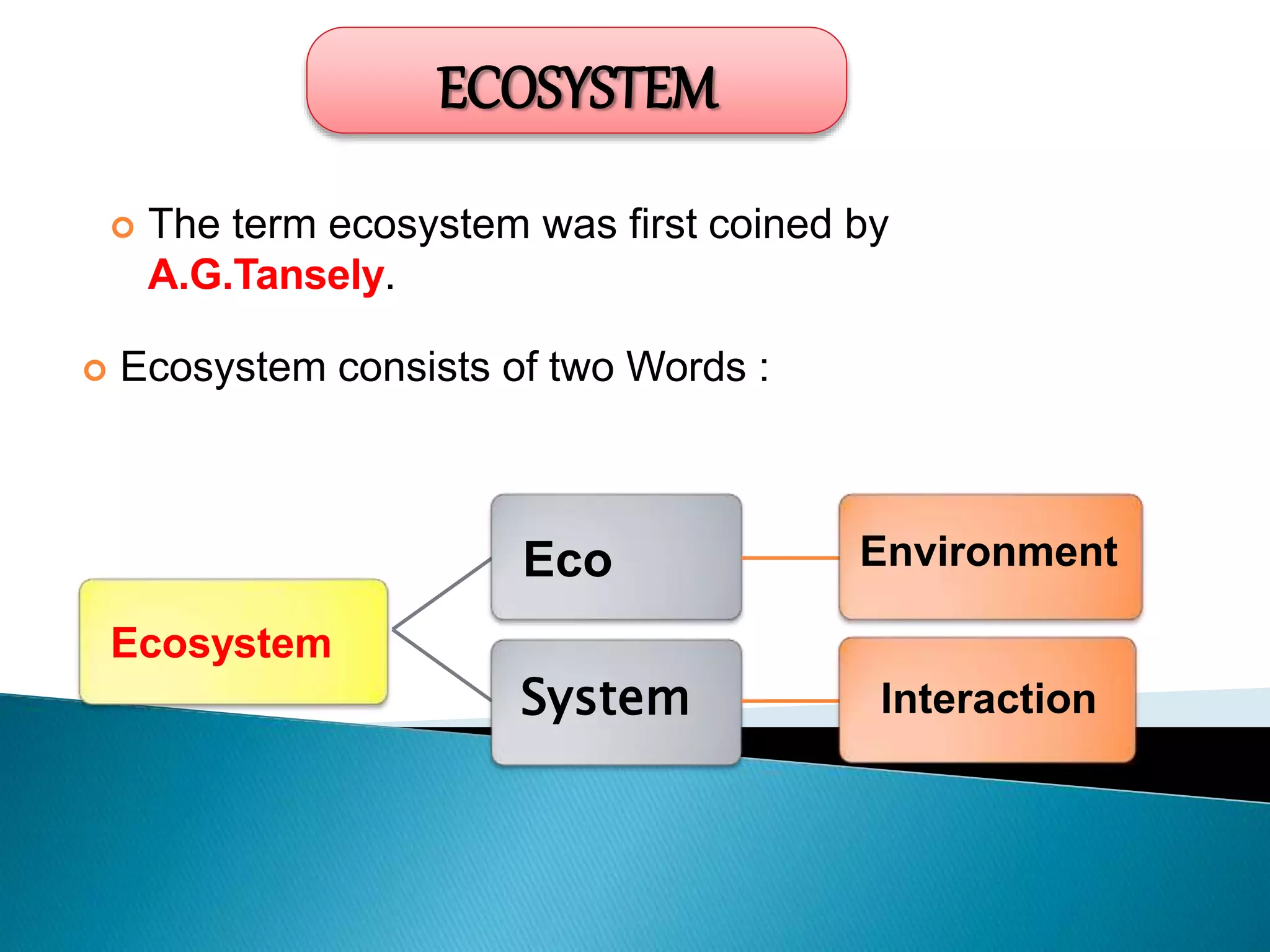
 The term ecosystem was first coined by
A.G.Tansely.
 Ecosystem consists of two Words :
Ecosystem
Eco
System
Environment
Interaction
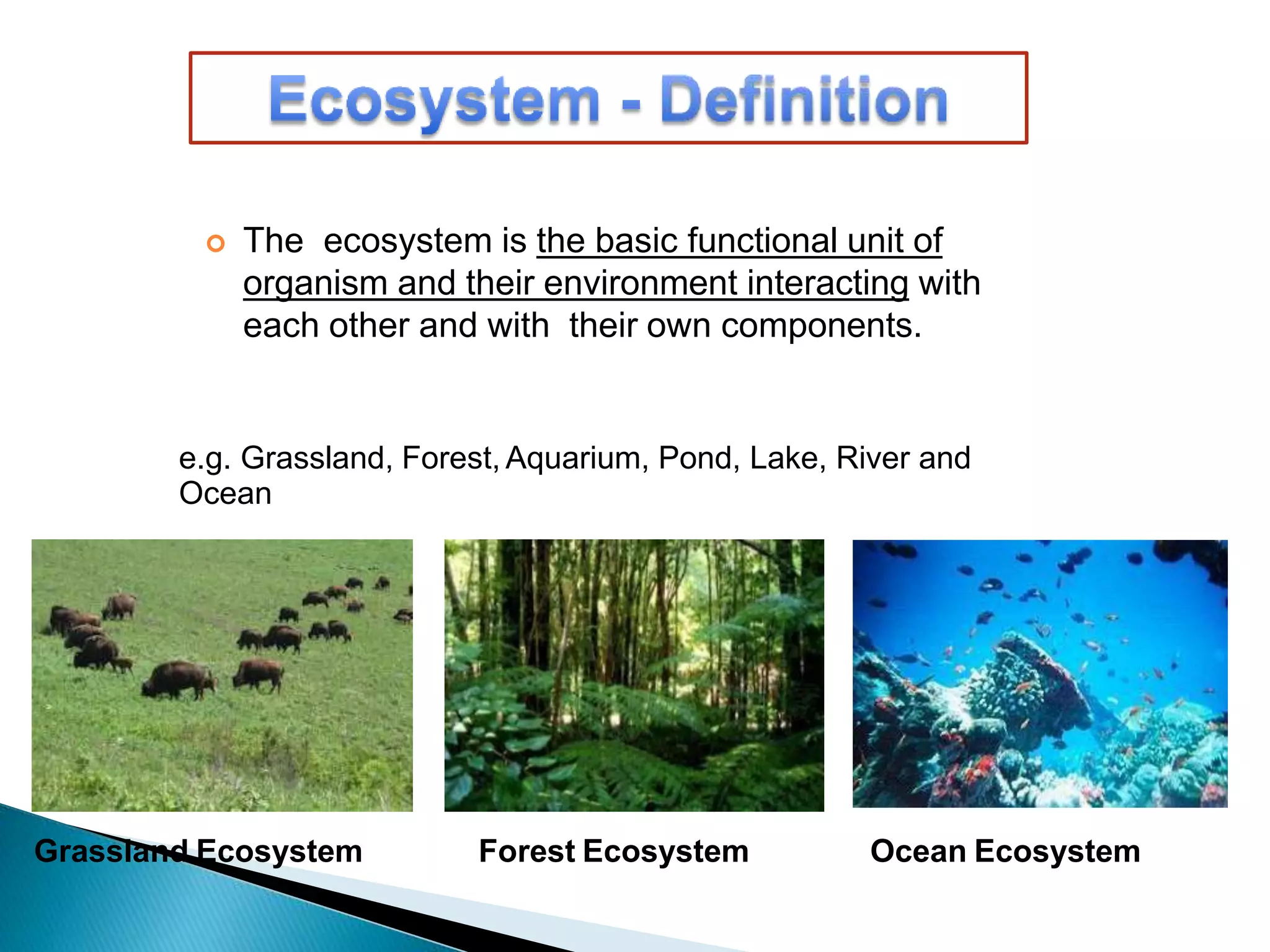
 The ecosystem is the basic functional unit of
organism and their environment interacting with
each other and with their own components.
e.g. Grassland, Forest, Aquarium, Pond, Lake, River and
Ocean
Grassland Ecosystem Forest Ecosystem Ocean Ecosystem
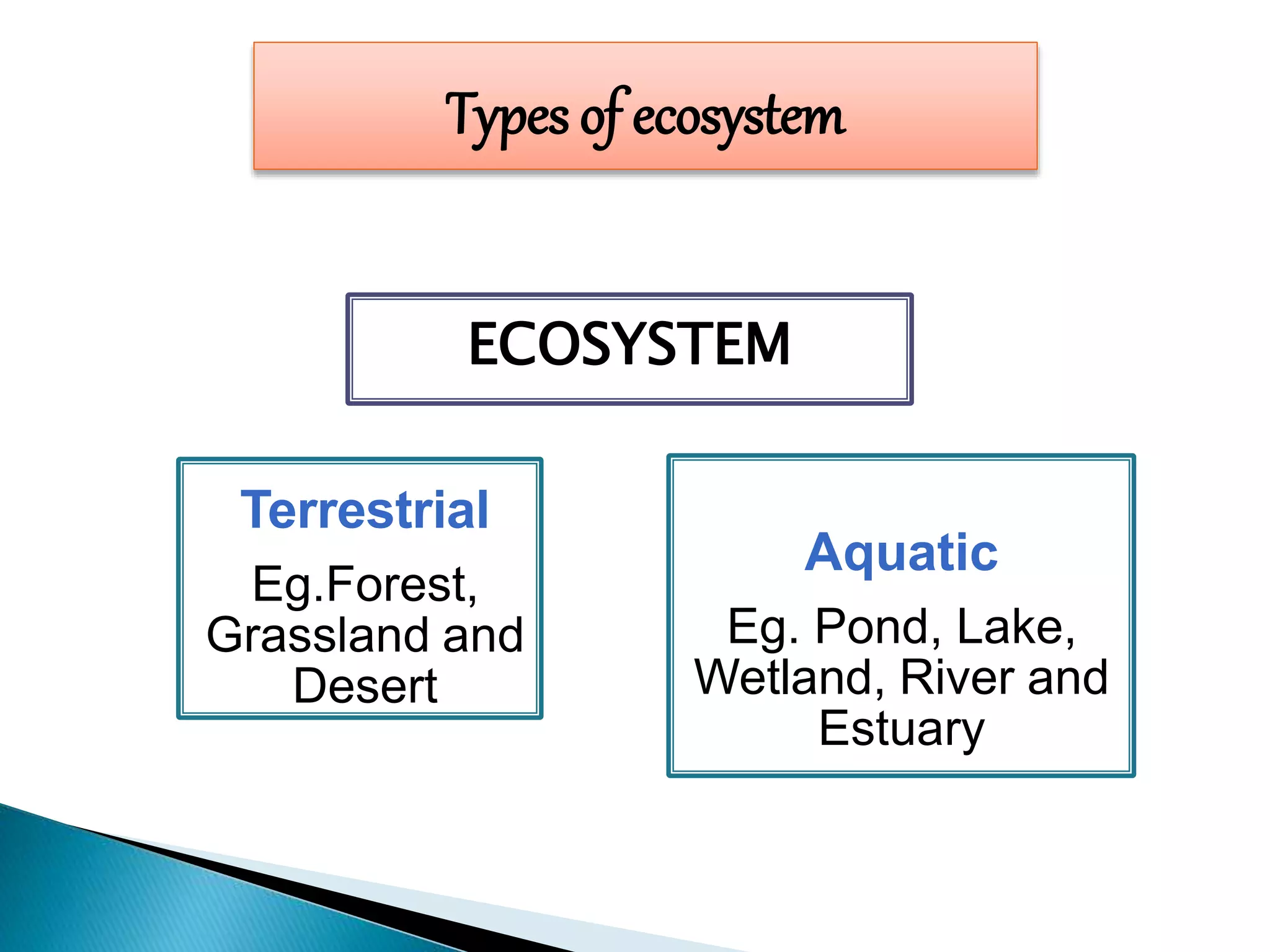
Types of ecosystem
ECOSYSTEM
Aquatic
Eg. Pond, Lake,
Wetland, River and
Estuary
Terrestrial
Eg.Forest,
Grassland and
Desert
Ecosystem
Abiotic
non-living
Eg. soil, water, light,
inorganic nutrients and
weather
Biotic
living
Eg. producers and
consumers
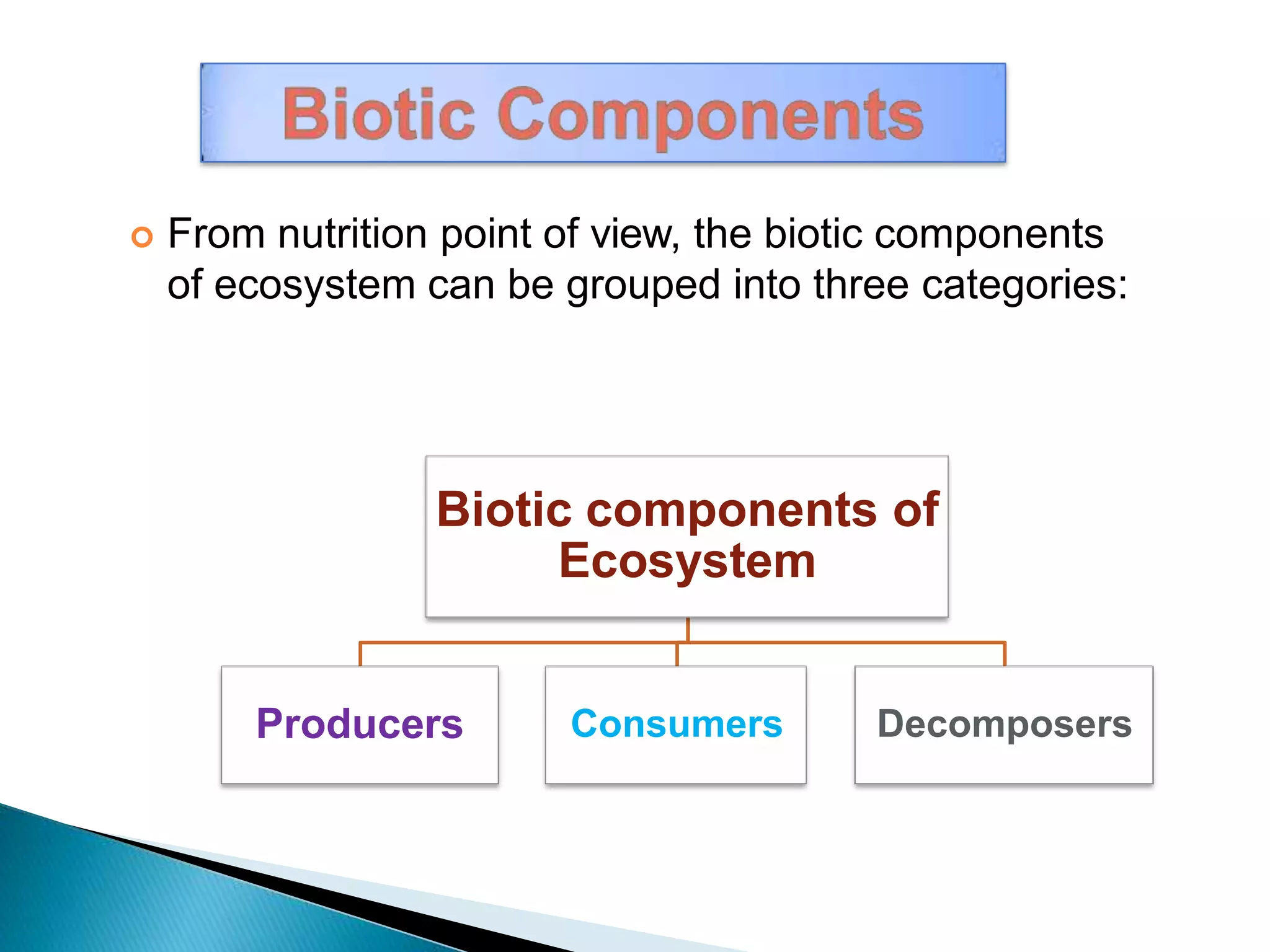
 From nutrition point of view, the biotic components
of ecosystem can be grouped into three categories:
Biotic components of
Ecosystem
Producers Consumers Decomposers
• Autotrophic Elements
• Eg. Green Plants
• Photosynthesis O2 Essential for all living things
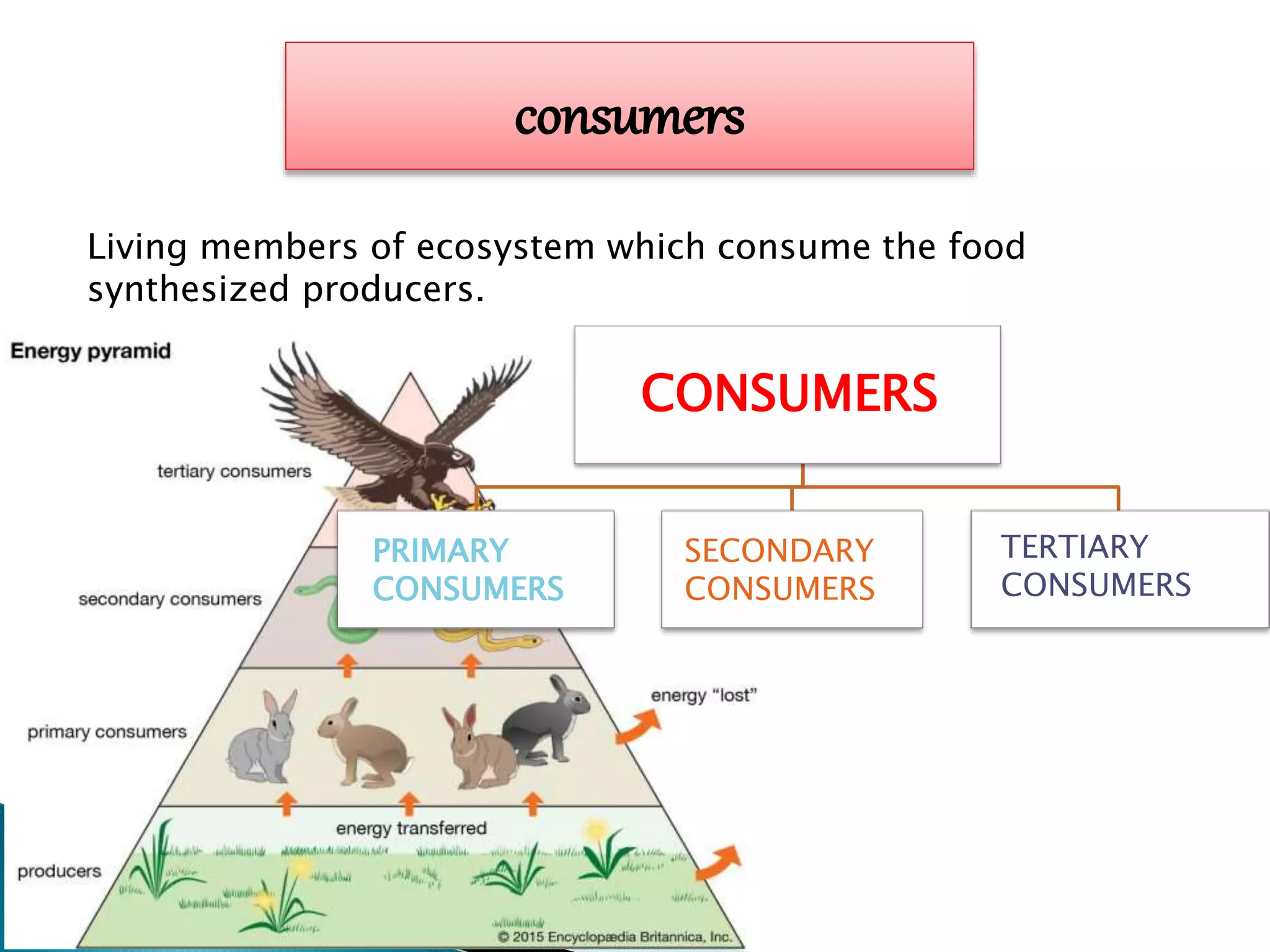
consumers
Living members of ecosystem which consume the food
synthesized producers.
CONSUMERS
PRIMARY
CONSUMERS
SECONDARY
CONSUMERS
TERTIARY
CONSUMERS
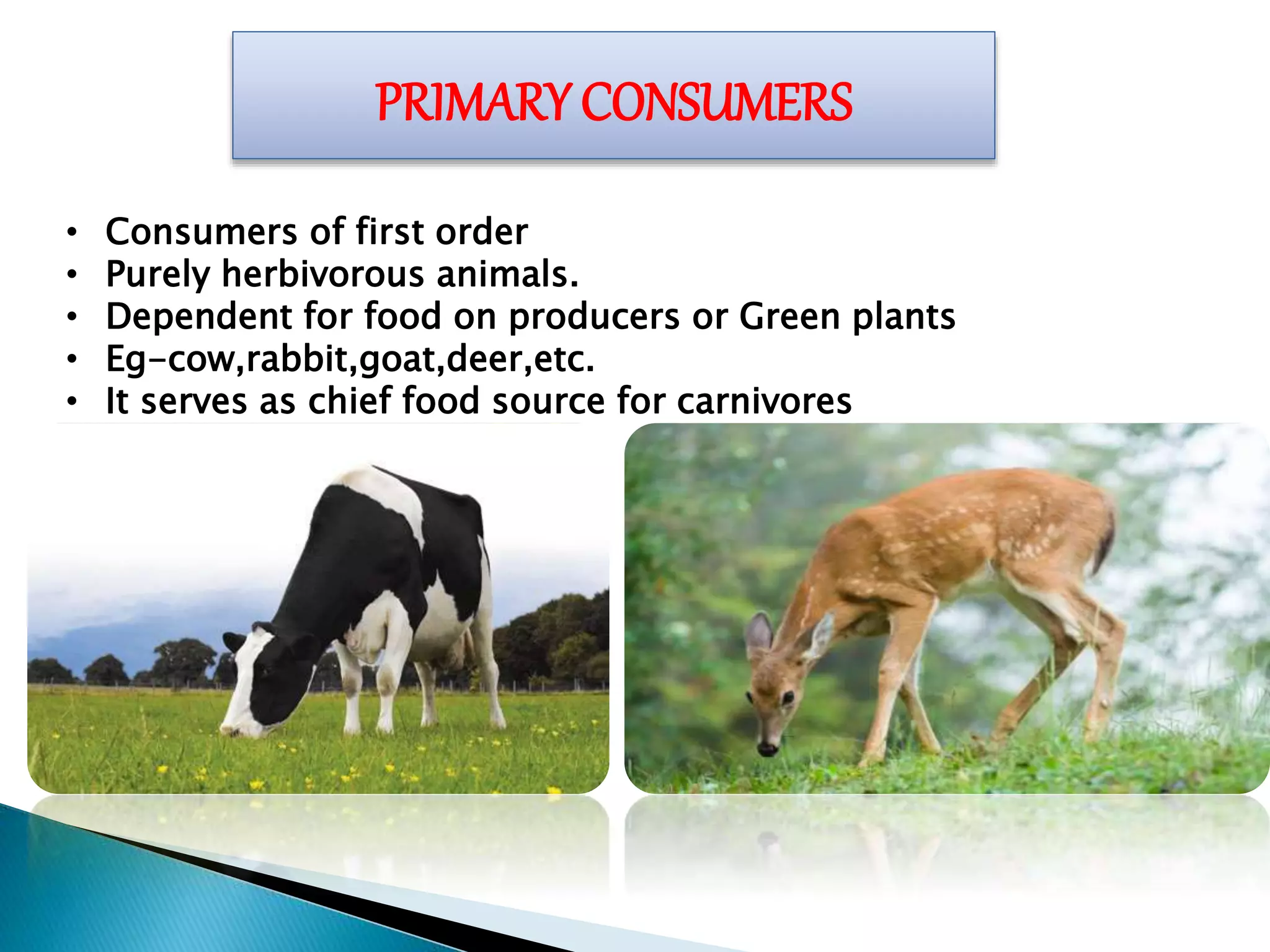
PRIMARY CONSUMERS
• Consumers of first order
• Purely herbivorous animals.
• Dependent for food on producers or Green plants
• Eg-cow,rabbit,goat,deer,etc.
• It serves as chief food source for carnivores
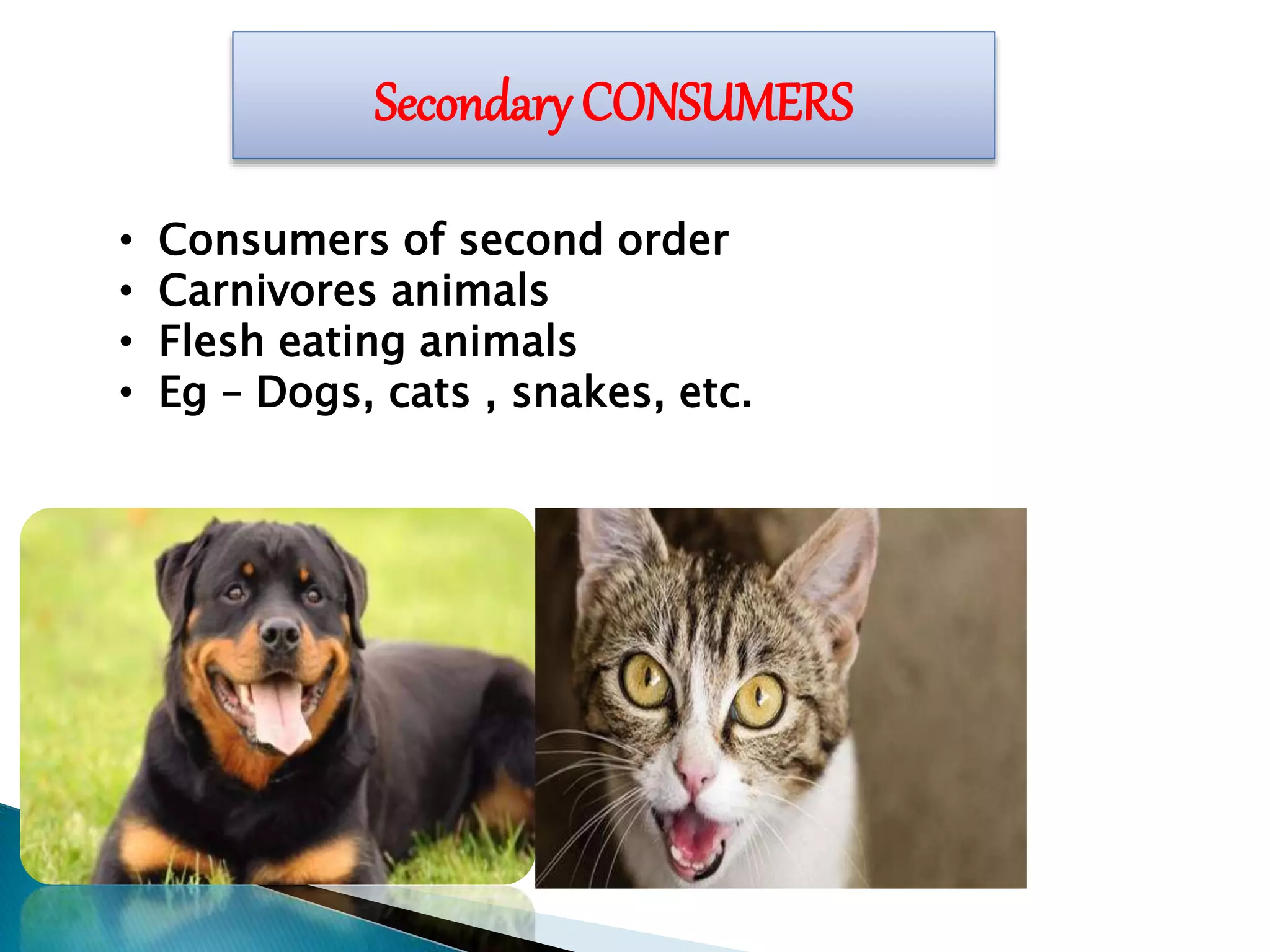
Secondary CONSUMERS
• Consumers of second order
• Carnivores animals
• Flesh eating animals
• Eg – Dogs, cats , snakes, etc.
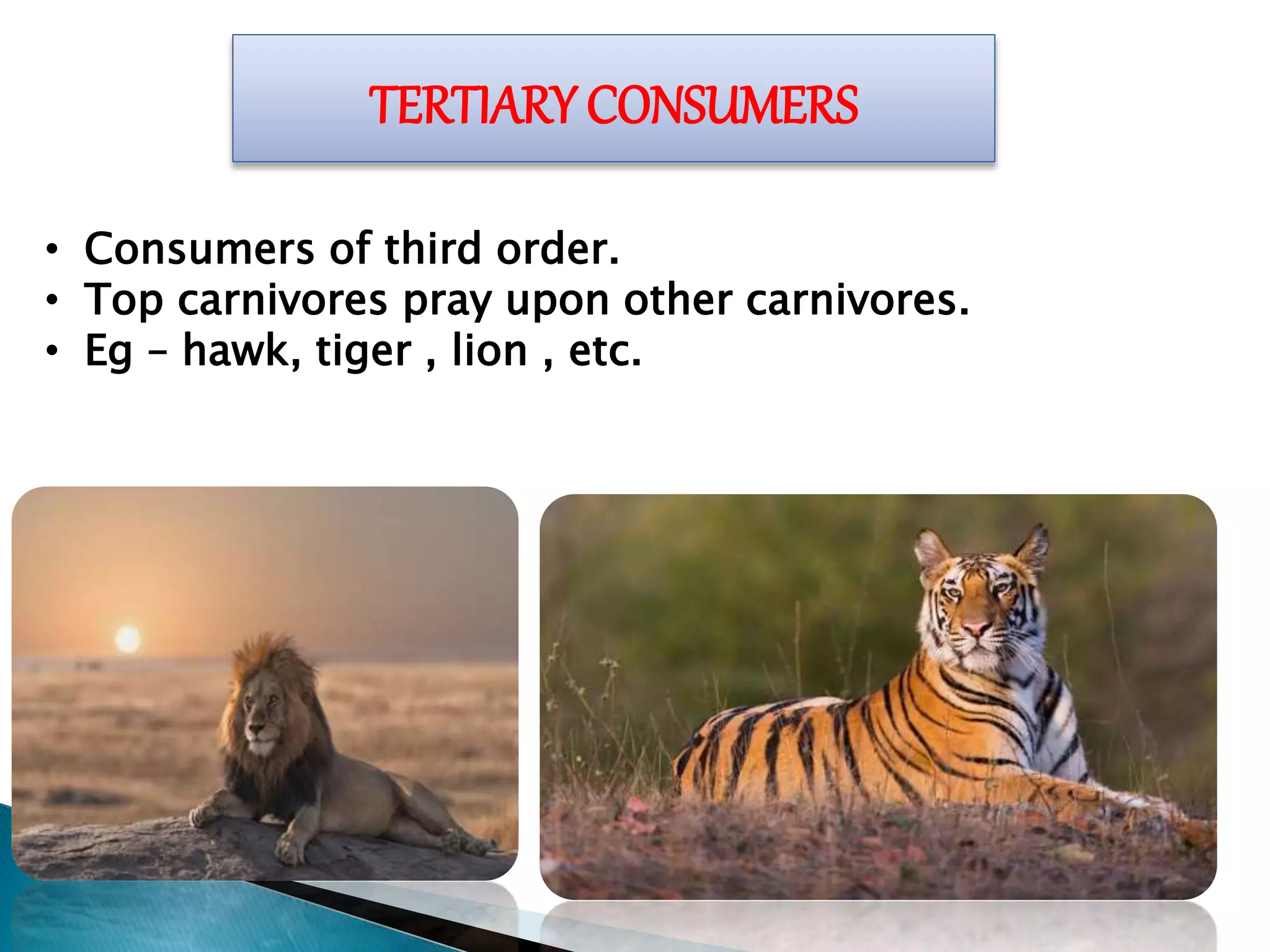
TERTIARY CONSUMERS
• Consumers of third order.
• Top carnivores pray upon other carnivores.
• Eg – hawk, tiger , lion , etc.
DECOMPOSERS
• Attack the dead remains of producers & compose
• Converts complex organic substance into simpler
compounds
• Again get attacked by another kind of bacteria to transform
organic compound into inorganic compound
• Which is suitable for reuse by producers .
• Eg – fungi and Bacteria
FUNCTIONS OF ECOSYSTEM
The components of the ecosystem are seen to
function as a unit when we consider the
following aspects:
 Productivity
 Decomposition
 Energy flow
 Nutrient cycling
PRODUCTIVITY
Productivity - The rate of biomass production is called
productivity.
• Gross primary productivity - The rate of production of
organic matter during photosynthesis is called gross
primary productivity.
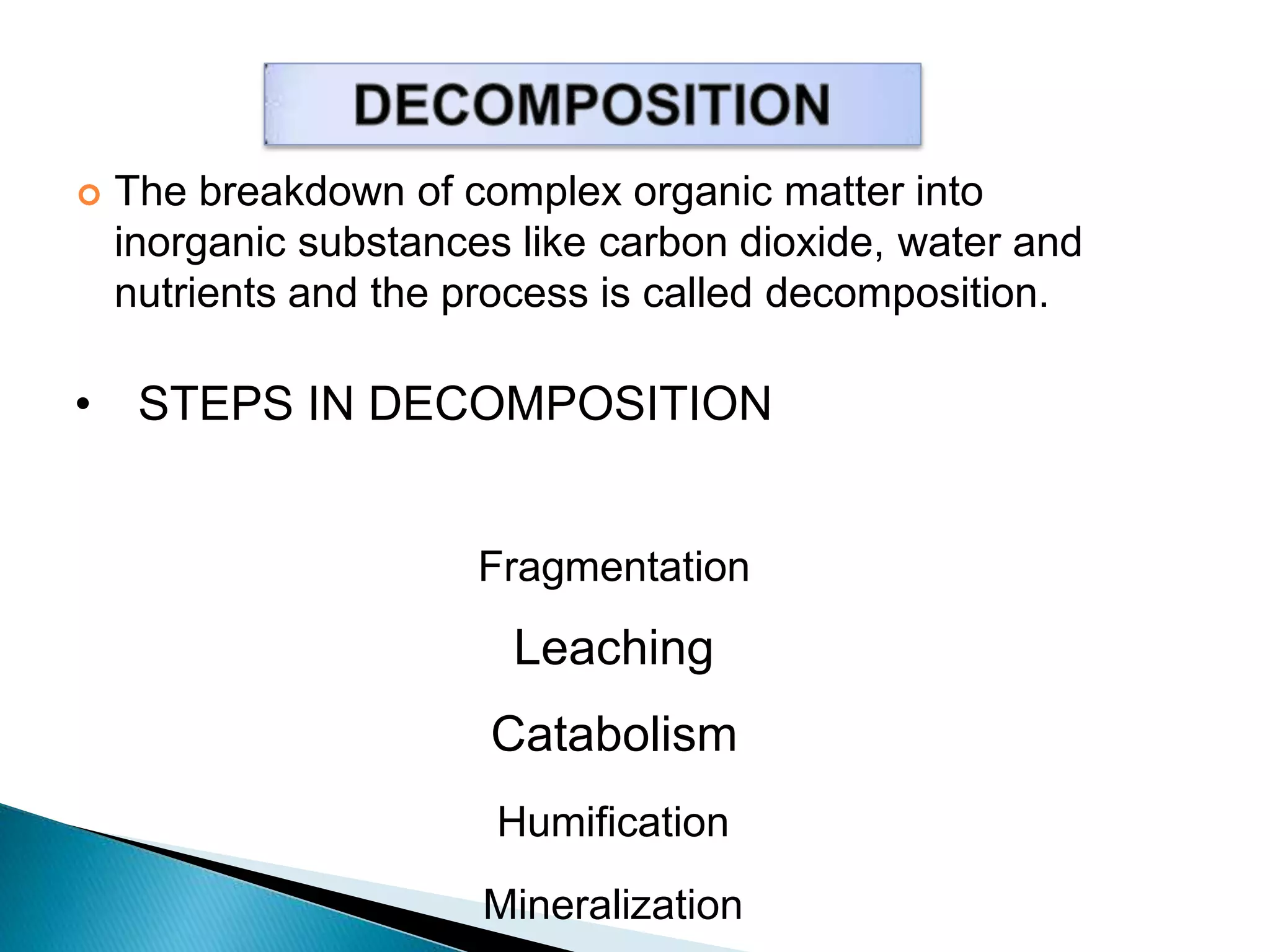
 The breakdown of complex organic matter into
inorganic substances like carbon dioxide, water and
nutrients and the process is called decomposition.
• STEPS IN DECOMPOSITION
ps in decomposition
Fragmentation
Leaching
Catabolism
Humification
Mineralization
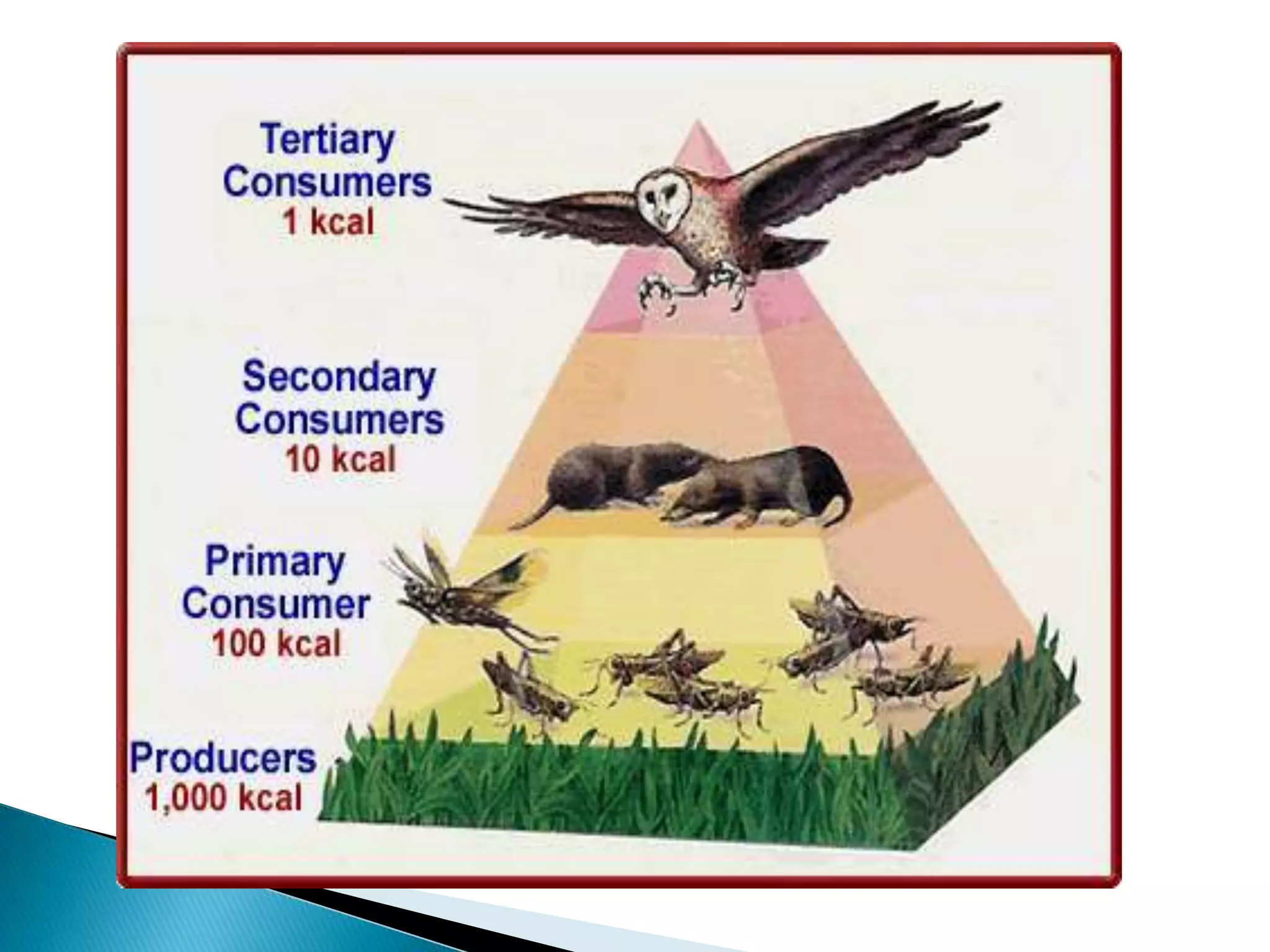
-The flow of energy is one way direction
Producer consumers decomposers
-However, a part of the energy is lost as heat and
agrees with the phenomenon of second law of
Thermodynamics
 Pyramid of energy is always upright.
 It can never be inverted.
concept of ecosystem

concept of ecosystem

  • 1.
    HON. ANNASAHEB DANGECOlLEGE OF ENGINEERING AND TECHNOLOGY Department of civil engineering A Presentation On Concept of ECOSYSTEM its structure &functions BY Shridhar Kudache (203)
  • 2.
    ECOSYSTEM  The termecosystem was first coined by A.G.Tansely.  Ecosystem consists of two Words : Ecosystem Eco System Environment Interaction
  • 3.
     The ecosystemis the basic functional unit of organism and their environment interacting with each other and with their own components. e.g. Grassland, Forest, Aquarium, Pond, Lake, River and Ocean Grassland Ecosystem Forest Ecosystem Ocean Ecosystem
  • 4.
    Types of ecosystem ECOSYSTEM Aquatic Eg.Pond, Lake, Wetland, River and Estuary Terrestrial Eg.Forest, Grassland and Desert
  • 5.
    Ecosystem Abiotic non-living Eg. soil, water,light, inorganic nutrients and weather Biotic living Eg. producers and consumers
  • 6.
     From nutritionpoint of view, the biotic components of ecosystem can be grouped into three categories: Biotic components of Ecosystem Producers Consumers Decomposers
  • 7.
    • Autotrophic Elements •Eg. Green Plants • Photosynthesis O2 Essential for all living things
  • 8.
    consumers Living members ofecosystem which consume the food synthesized producers. CONSUMERS PRIMARY CONSUMERS SECONDARY CONSUMERS TERTIARY CONSUMERS
  • 9.
    PRIMARY CONSUMERS • Consumersof first order • Purely herbivorous animals. • Dependent for food on producers or Green plants • Eg-cow,rabbit,goat,deer,etc. • It serves as chief food source for carnivores
  • 10.
    Secondary CONSUMERS • Consumersof second order • Carnivores animals • Flesh eating animals • Eg – Dogs, cats , snakes, etc.
  • 11.
    TERTIARY CONSUMERS • Consumersof third order. • Top carnivores pray upon other carnivores. • Eg – hawk, tiger , lion , etc.
  • 12.
    DECOMPOSERS • Attack thedead remains of producers & compose • Converts complex organic substance into simpler compounds • Again get attacked by another kind of bacteria to transform organic compound into inorganic compound • Which is suitable for reuse by producers . • Eg – fungi and Bacteria
  • 13.
    FUNCTIONS OF ECOSYSTEM Thecomponents of the ecosystem are seen to function as a unit when we consider the following aspects:  Productivity  Decomposition  Energy flow  Nutrient cycling
  • 14.
    PRODUCTIVITY Productivity - Therate of biomass production is called productivity. • Gross primary productivity - The rate of production of organic matter during photosynthesis is called gross primary productivity.
  • 15.
     The breakdownof complex organic matter into inorganic substances like carbon dioxide, water and nutrients and the process is called decomposition. • STEPS IN DECOMPOSITION ps in decomposition Fragmentation Leaching Catabolism Humification Mineralization
  • 17.
    -The flow ofenergy is one way direction Producer consumers decomposers -However, a part of the energy is lost as heat and agrees with the phenomenon of second law of Thermodynamics
  • 18.
     Pyramid ofenergy is always upright.  It can never be inverted.