Computerization of the Hospital
Management Information System


      - Noel D. Lawas M.D. -
Current Developments of
      Information Technology
• Major Areas of Development
  – Computer Hardware
  – Gadgets
  – Knowledge
  – Information Systems Development
    • Software Development
    • Networking and the Internet
    • Information Systems Design and Management
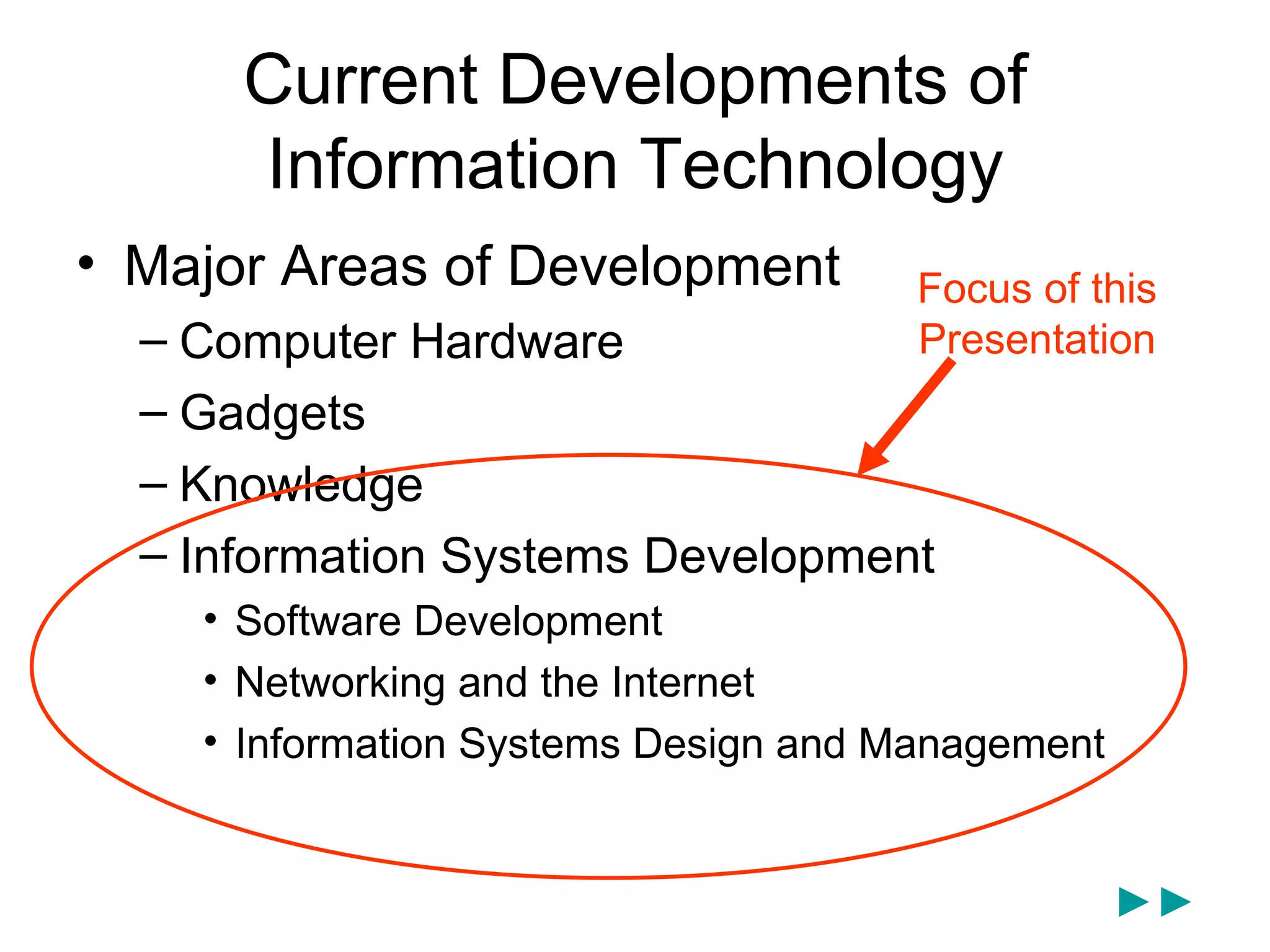
Current Developments of
      Information Technology
• Major Areas of Development          Focus of this
  – Computer Hardware                 Presentation
  – Gadgets
  – Knowledge
  – Information Systems Development
    • Software Development
    • Networking and the Internet
    • Information Systems Design and Management


                                                  ►►
Objective of this Session
• To present the current developments in
  the field of Information Systems
  Development
• To discuss how the current technologies
  can be utilized to improve the
  effectiveness and efficiency of managing
  health care institutions
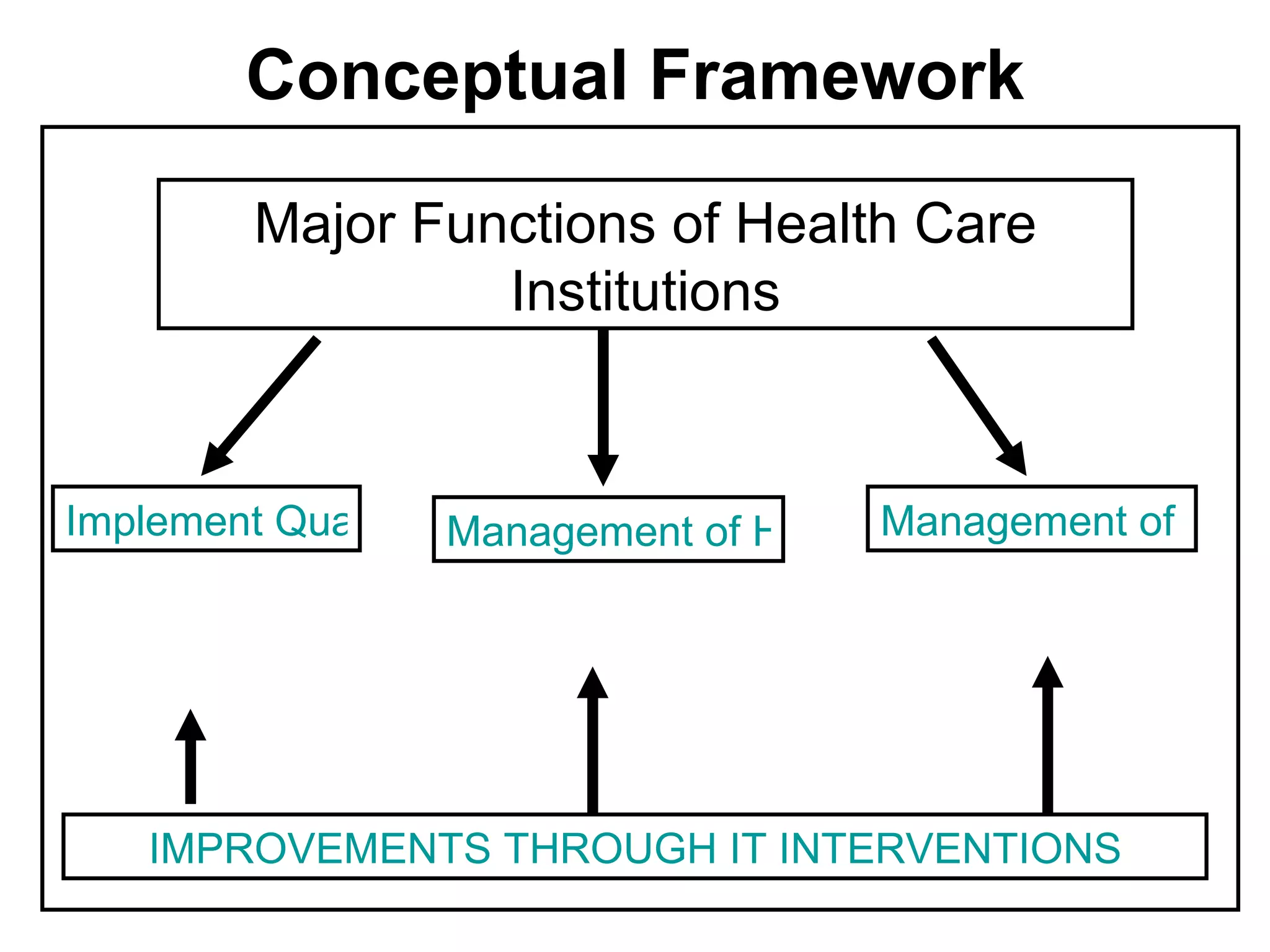
Conceptual Framework

         Major Functions of Health Care
                  Institutions


Implement Quality Health Service ProgramsManagement of Orga
                   Management of Health Service Programs


    IMPROVEMENTS THROUGH IT INTERVENTIONS
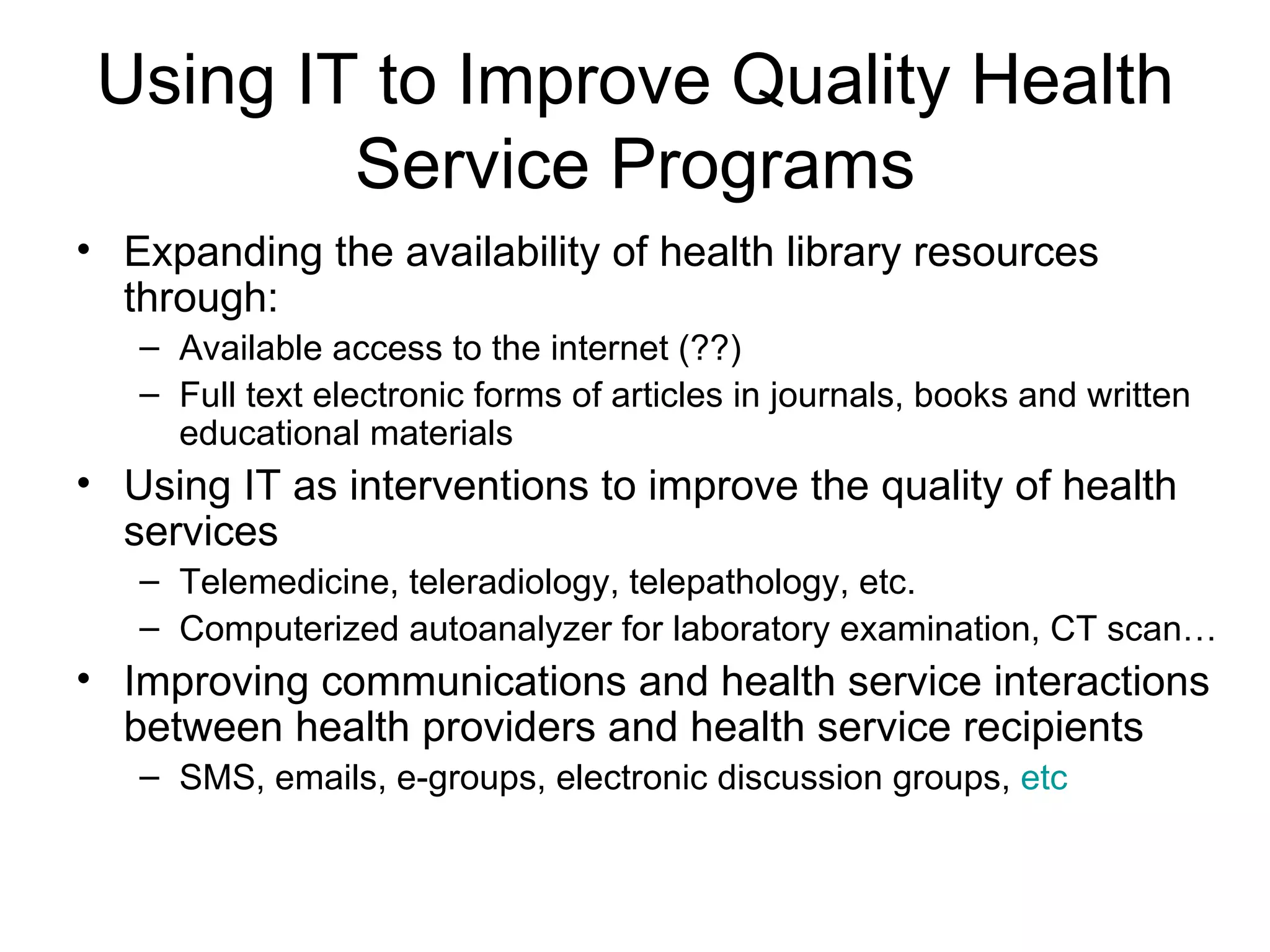
Using IT to Improve Quality Health
         Service Programs
• Expanding the availability of health library resources
  through:
   – Available access to the internet (??)
   – Full text electronic forms of articles in journals, books and written
     educational materials
• Using IT as interventions to improve the quality of health
  services
   – Telemedicine, teleradiology, telepathology, etc.
   – Computerized autoanalyzer for laboratory examination, CT scan…
• Improving communications and health service interactions
  between health providers and health service recipients
   – SMS, emails, e-groups, electronic discussion groups, etc
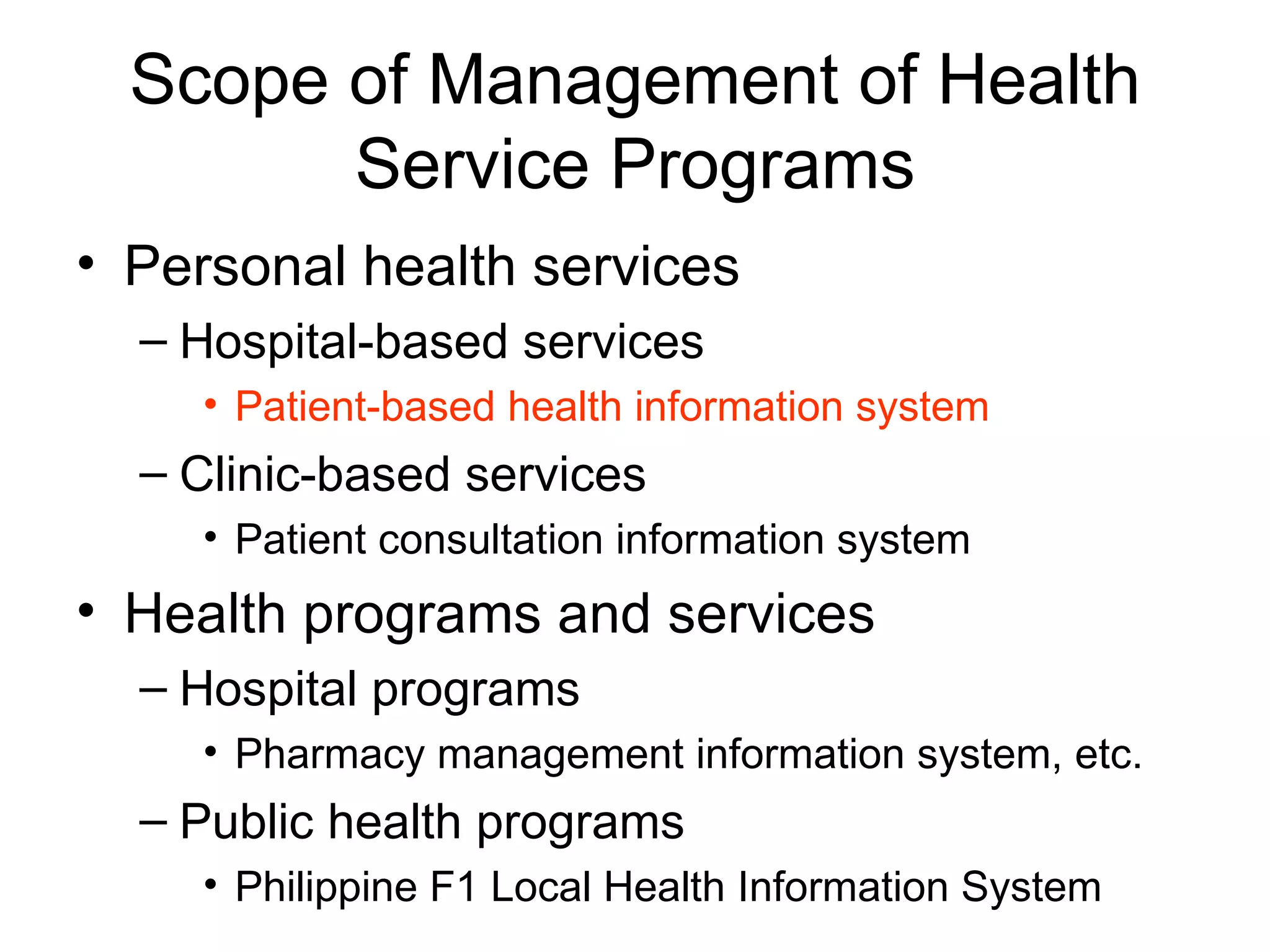
Scope of Management of Health
        Service Programs
• Personal health services
  – Hospital-based services
    • Patient-based health information system
  – Clinic-based services
    • Patient consultation information system
• Health programs and services
  – Hospital programs
    • Pharmacy management information system, etc.
  – Public health programs
    • Philippine F1 Local Health Information System
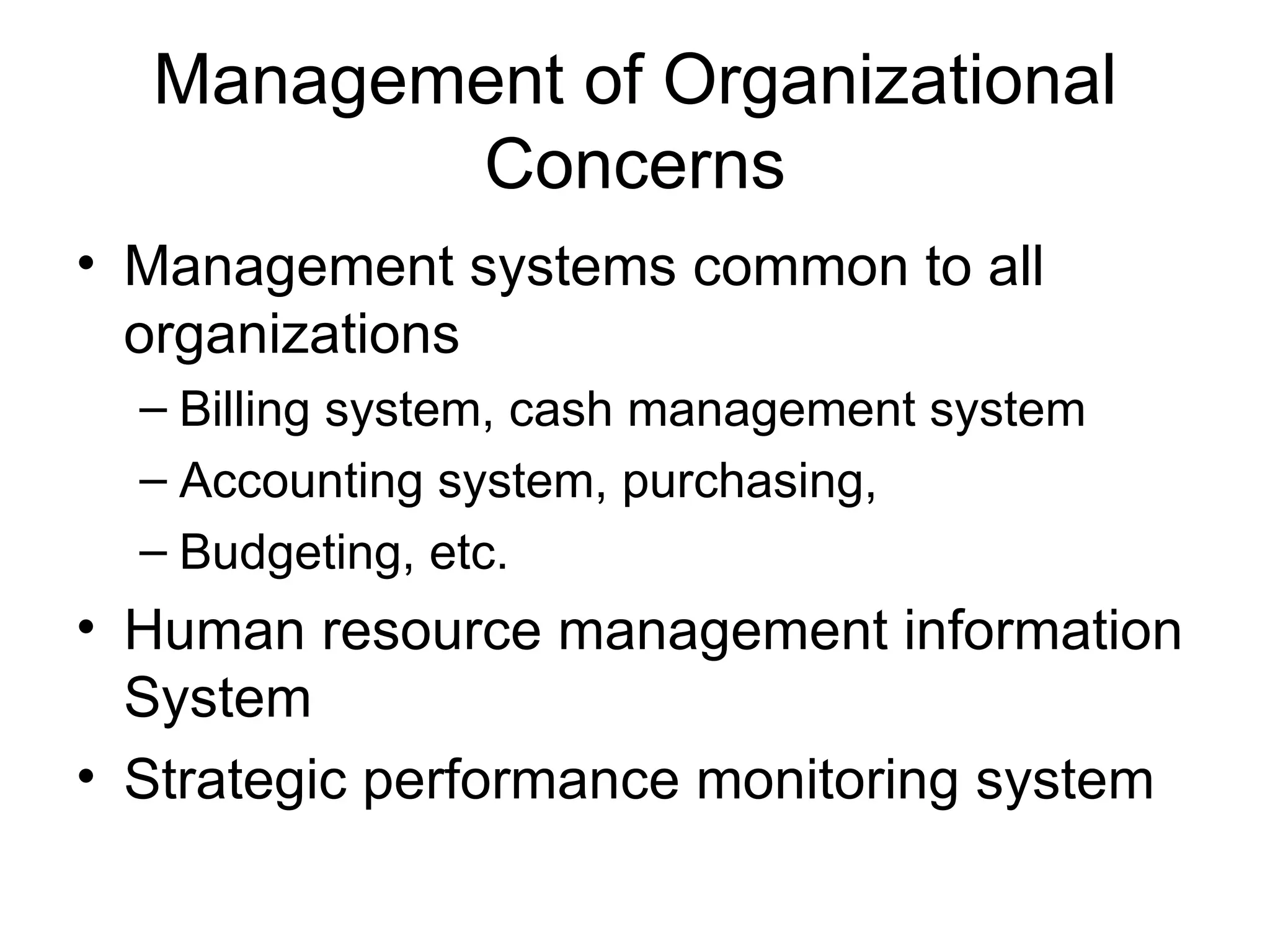
Management of Organizational
         Concerns
• Management systems common to all
  organizations
  – Billing system, cash management system
  – Accounting system, purchasing,
  – Budgeting, etc.
• Human resource management information
  System
• Strategic performance monitoring system
Fundamental Principle #1
• The use of information technology in
  management should be viewed as a means of
  supporting the improvement of programs and
  services of an organization
  – Because of this, the objective of using IT in
    management should focus on the improvement of
    effectiveness and efficiency of services of both
    personal health and health programs
  – In using IT to improve effectiveness and efficiency,
    one should start with the current practices of providing
    health services as references for improvement
     ◄ ►
e
Som Areas   of Computerization of Patient
            Services in a Hospital
     • At the OPD
        –   Patient registration
        –   Clinic consultation
        –   Pharmacy services
        –   Laboratory / X-ray Services
     • At the Inpatient Unit
        –   Admission
        –   Nursing Care
        –   Operations and Special Procedures
        –   Laboratory / X-ray Services
        –   Pharmacy services
                                           ►    ►►
Common Problem Encountered
• Computerizing separately each hospital
  services may result in faster processing
  and reporting of each service outputs …,
• BUT, without integration, benefits derived
  are limited.


                                   ◄     ►►
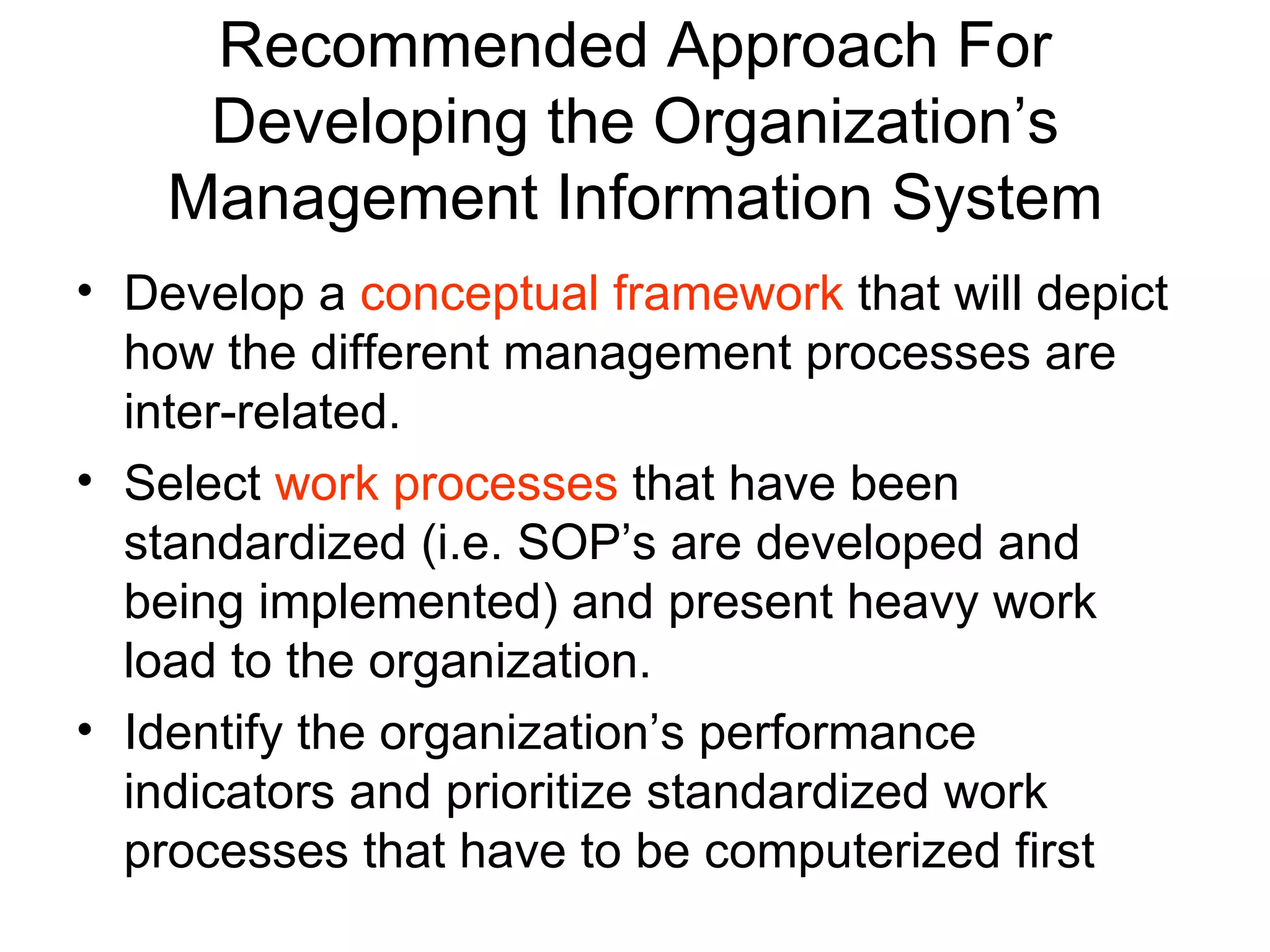
Recommended Approach For
   Developing Patient-based Health
         Information System
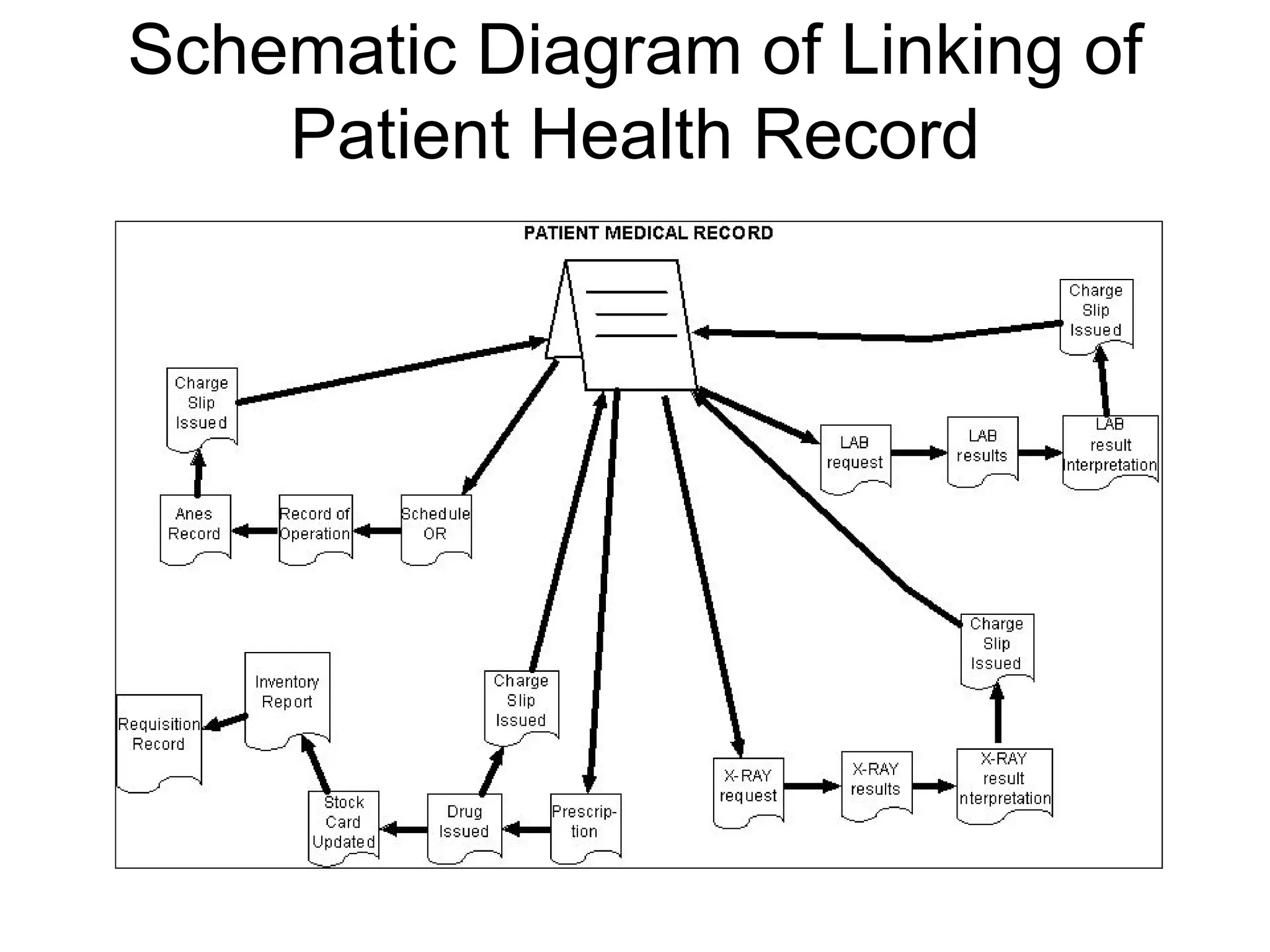
• In computerizing the patient-based health
  information system, design the entire info
  system by identifying all records/forms
  used in providing all available services to
  the patient and schematically show how
  one record is linked (or related) to the
  other records.
• After identifying these records, plan for
  developing them in phases
Recommended Approach For
     Developing the Organization’s
    Management Information System
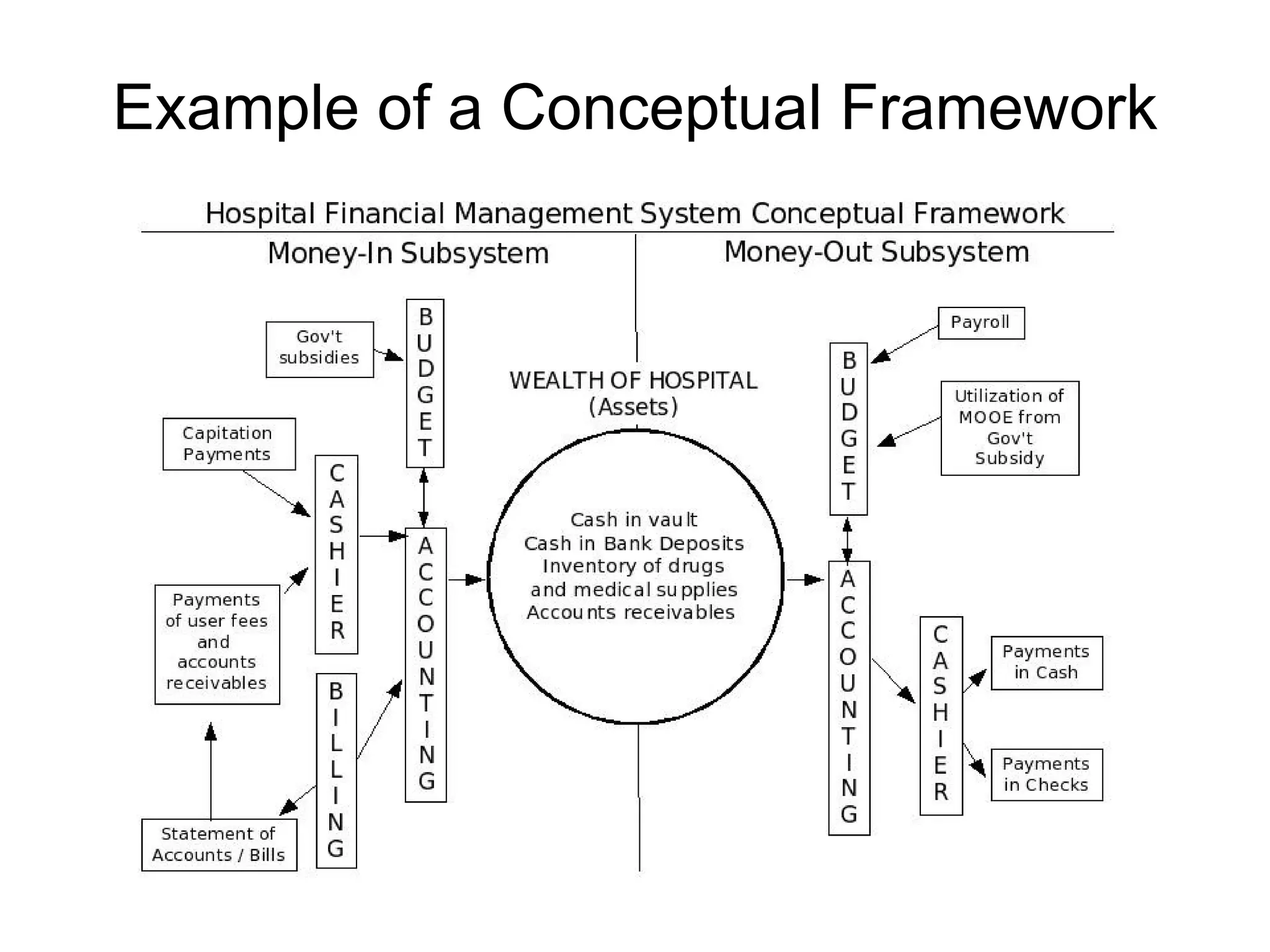
• Develop a conceptual framework that will depict
  how the different management processes are
  inter-related.
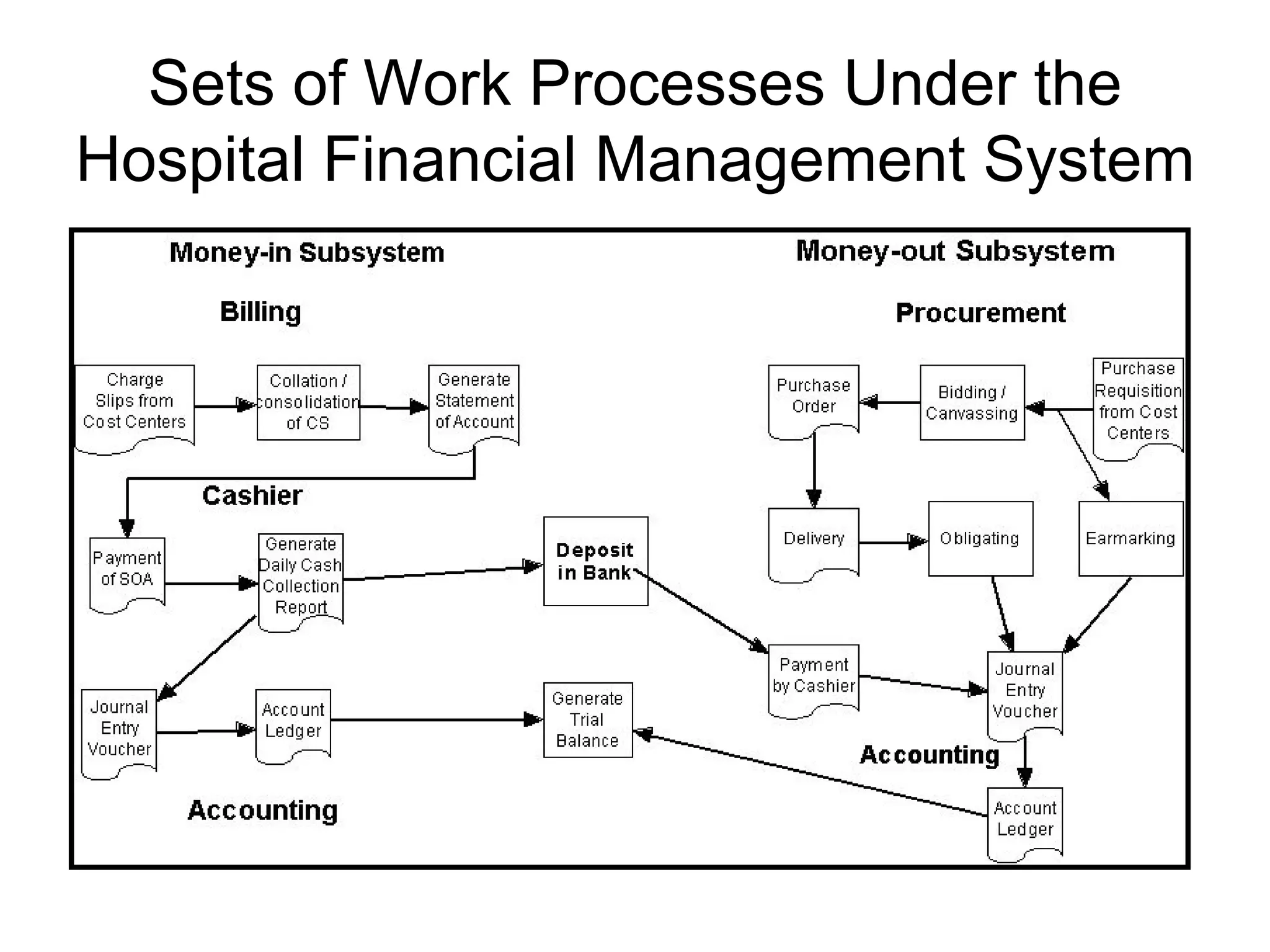
• Select work processes that have been
  standardized (i.e. SOP’s are developed and
  being implemented) and present heavy work
  load to the organization.
• Identify the organization’s performance
  indicators and prioritize standardized work
  processes that have to be computerized first
Schematic Diagram of Linking of
    Patient Health Record
Example of a Conceptual Framework
Sets of Work Processes Under the
Hospital Financial Management System
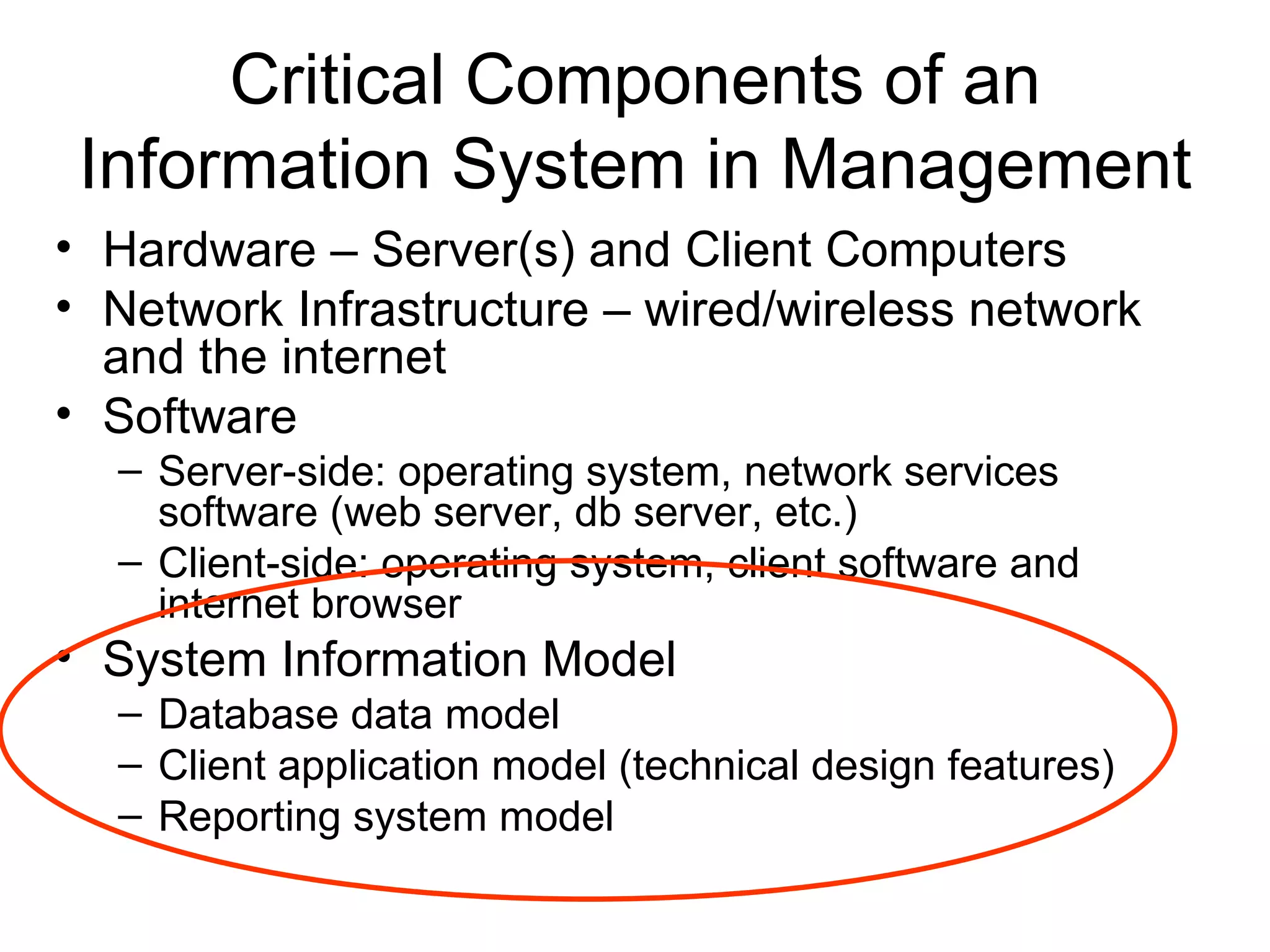
Critical Components of an
 Information System in Management
• Hardware – Server(s) and Client Computers
• Network Infrastructure – wired/wireless network
  and the internet
• Software
  – Server-side: operating system, network services
    software (web server, db server, etc.)
  – Client-side: operating system, client software and
    internet browser
• System Information Model
  – Database data model
  – Client application model (technical design features)
  – Reporting system model
Critical Components of the
       Database Data Model
• Data Tables – each contain a set of a
  specific information record
  – Transaction records
     • Eg. admission record, lab results report, OR record
  – Library records for look-up of specific
    information
     • Eg. price list of lab examinations, list of doctors
• Developer-defined relationships between
  data tables
Critical Components of a Client
       Application Model
   • Functional features
        • Data entry/edit,
        • Data processing, and
        • Reporting
   • Mode of communication
   • Security features
        • Authentication process
        • Encrypted network
          transmission
Thank you !

Computerization of the hospital management information system

  • 1.
    Computerization of theHospital Management Information System - Noel D. Lawas M.D. -
  • 2.
    Current Developments of Information Technology • Major Areas of Development – Computer Hardware – Gadgets – Knowledge – Information Systems Development • Software Development • Networking and the Internet • Information Systems Design and Management
  • 3.
    Current Developments of Information Technology • Major Areas of Development Focus of this – Computer Hardware Presentation – Gadgets – Knowledge – Information Systems Development • Software Development • Networking and the Internet • Information Systems Design and Management ►►
  • 4.
    Objective of thisSession • To present the current developments in the field of Information Systems Development • To discuss how the current technologies can be utilized to improve the effectiveness and efficiency of managing health care institutions
  • 5.
    Conceptual Framework Major Functions of Health Care Institutions Implement Quality Health Service ProgramsManagement of Orga Management of Health Service Programs IMPROVEMENTS THROUGH IT INTERVENTIONS
  • 6.
    Using IT toImprove Quality Health Service Programs • Expanding the availability of health library resources through: – Available access to the internet (??) – Full text electronic forms of articles in journals, books and written educational materials • Using IT as interventions to improve the quality of health services – Telemedicine, teleradiology, telepathology, etc. – Computerized autoanalyzer for laboratory examination, CT scan… • Improving communications and health service interactions between health providers and health service recipients – SMS, emails, e-groups, electronic discussion groups, etc
  • 7.
    Scope of Managementof Health Service Programs • Personal health services – Hospital-based services • Patient-based health information system – Clinic-based services • Patient consultation information system • Health programs and services – Hospital programs • Pharmacy management information system, etc. – Public health programs • Philippine F1 Local Health Information System
  • 8.
    Management of Organizational Concerns • Management systems common to all organizations – Billing system, cash management system – Accounting system, purchasing, – Budgeting, etc. • Human resource management information System • Strategic performance monitoring system
  • 9.
    Fundamental Principle #1 •The use of information technology in management should be viewed as a means of supporting the improvement of programs and services of an organization – Because of this, the objective of using IT in management should focus on the improvement of effectiveness and efficiency of services of both personal health and health programs – In using IT to improve effectiveness and efficiency, one should start with the current practices of providing health services as references for improvement ◄ ►
  • 10.
    e Som Areas of Computerization of Patient Services in a Hospital • At the OPD – Patient registration – Clinic consultation – Pharmacy services – Laboratory / X-ray Services • At the Inpatient Unit – Admission – Nursing Care – Operations and Special Procedures – Laboratory / X-ray Services – Pharmacy services ► ►►
  • 11.
    Common Problem Encountered •Computerizing separately each hospital services may result in faster processing and reporting of each service outputs …, • BUT, without integration, benefits derived are limited. ◄ ►►
  • 12.
    Recommended Approach For Developing Patient-based Health Information System • In computerizing the patient-based health information system, design the entire info system by identifying all records/forms used in providing all available services to the patient and schematically show how one record is linked (or related) to the other records. • After identifying these records, plan for developing them in phases
  • 13.
    Recommended Approach For Developing the Organization’s Management Information System • Develop a conceptual framework that will depict how the different management processes are inter-related. • Select work processes that have been standardized (i.e. SOP’s are developed and being implemented) and present heavy work load to the organization. • Identify the organization’s performance indicators and prioritize standardized work processes that have to be computerized first
  • 14.
    Schematic Diagram ofLinking of Patient Health Record
  • 15.
    Example of aConceptual Framework
  • 16.
    Sets of WorkProcesses Under the Hospital Financial Management System
  • 17.
    Critical Components ofan Information System in Management • Hardware – Server(s) and Client Computers • Network Infrastructure – wired/wireless network and the internet • Software – Server-side: operating system, network services software (web server, db server, etc.) – Client-side: operating system, client software and internet browser • System Information Model – Database data model – Client application model (technical design features) – Reporting system model
  • 18.
    Critical Components ofthe Database Data Model • Data Tables – each contain a set of a specific information record – Transaction records • Eg. admission record, lab results report, OR record – Library records for look-up of specific information • Eg. price list of lab examinations, list of doctors • Developer-defined relationships between data tables
  • 19.
    Critical Components ofa Client Application Model • Functional features • Data entry/edit, • Data processing, and • Reporting • Mode of communication • Security features • Authentication process • Encrypted network transmission
  • 20.