Chapter 6 Nursing and Health Care Informatics
Objectives Upon completion of this chapter, the reader should be able to: List the components that define a nursing specialty and discuss how nursing informatics meets these requirements Discuss educational opportunities for nurses interested in pursuing a career in nursing informatics Describe current challenges for health information applications
Objectives Describe current challenges for health information technology applications Discuss how ubiquitous computing and virtual reality have the potential to influence nursing education and practice Used established criteria to evaluate the content of health-related sites found on the World Wide Web Identify the role of informatics in evidence- based practice and patient safety
Nursing Informatics Recognized specialty group who function to integrate nursing, its information, and information management with information processing and communication technology to support the health of people worldwide The use of information technology by nurses carrying out their duties in relation to any function in the purview of nursing
Focus of Nursing Informatics Technology focused Conceptually focused Role oriented
E-health Multiple functions Health care and information delivered or enhanced through the Internet Involves medical informatics, public health, and business Commitment for networked, global thinking to improve health care locally, regionally, and worldwide
Telehealth Delivery of health-related services and information via telecommunications technology May be simple or complex
Elements of Nursing Informatics Computerized order entry Electronic health record Patient decision tools Laboratory and x-ray results Electronic prescribing and order entry including barcoding Community and population health management and information
Elements of Nursing Informatics Communication, staffing, and administrative systems Evidenced-based knowledge and information retrieval systems Quality improvement data collection/data summary systems Documentation and care planning Patient monitoring and problem alerts
Implementation of Health Information Technologies Standards needed so all health care providers can share patient information which is timely, patient-centered, and portable Office of the National Coordinator for Health Information Technology (ONC) established 2004 The Joint Commission established National Patient Safety Goals
Recommended Changes Care based on continuous healing relationships Customized care based on patient needs and values The patient as the source of control Shared knowledge and the free flow of information Evidenced-based decision making Safety as a system property The need for transparency Anticipation of needs Continuous decrease in waste
Core Competencies  Provide patient-centered care  Work in interdisciplinary teams  Employ evidenced-based practice Apply quality improvement Utilize informatics
Specialty of Nursing Informatics  Use decision-making systems or artificial intelligence to support the nursing process Use software application to support health care organizations Integrate IT into patient education Use computer-aided learning for nursing education Develop and use nursing databases Use research related to nurses’ information management and communication
Clinical Information System A computer-based system Used to inform clinicians about tests, procedures, and treatment  Used to improve the quality of care through real-time assistance in decision making  Used to increase the efficiency and effectiveness of care delivery Can be patient focused or department focused
Computerized Patient Records Replacement for the paper record Permits health information to be used to support the generation and communication of knowledge Multiple functions and requirements Capture data Store data Process and retrieve data
Information Communication Interoperability of systems and linkages for exchange of data across disparate systems Must be secure Security functions must be designed to ensure compliance with applicable laws, regulations, and standards
Security Privacy The right of individuals to keep information about themselves from being disclosed to anyone Confidentiality Limiting disclosure of private matters Security The means to control access and protect information from accidental or intentional disclosure to unauthorized persons
Trends in Computing Computer literacy The knowledge and understanding of computers combined with the ability to use them effectively Information literacy The understanding of the architecture of information The ability to navigate among print and electronic tools
Virtual Reality Allows a person to see, move through, and react to computer-simulated items or environments Has allowed surgeons to develop minimally invasive surgical techniques PDA software has the potential to bring evidence-based care to the bedside
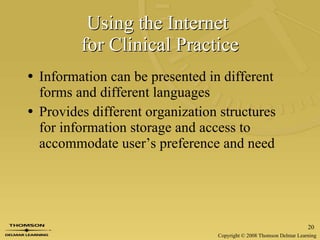
Using the Internet  for Clinical Practice Information can be presented in different forms and different languages Provides different organization structures for information storage and access to accommodate user’s preference and need
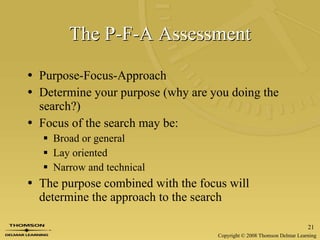
The P-F-A Assessment Purpose-Focus-Approach Determine your purpose (why are you doing the search?) Focus of the search may be: Broad or general  Lay oriented  Narrow and technical The purpose combined with the focus will determine the approach to the search
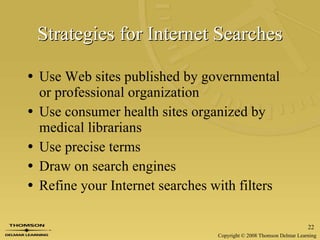
Strategies for Internet Searches Use Web sites published by governmental or professional organization Use consumer health sites organized by medical librarians Use precise terms Draw on search engines Refine your Internet searches with filters
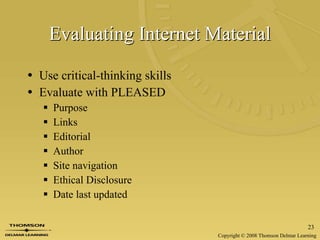
Evaluating Internet Material Use critical-thinking skills Evaluate with PLEASED Purpose Links Editorial Author Site navigation Ethical Disclosure Date last updated

Chapter6

  • 1.
    Chapter 6 Nursingand Health Care Informatics
  • 2.
    Objectives Upon completionof this chapter, the reader should be able to: List the components that define a nursing specialty and discuss how nursing informatics meets these requirements Discuss educational opportunities for nurses interested in pursuing a career in nursing informatics Describe current challenges for health information applications
  • 3.
    Objectives Describe currentchallenges for health information technology applications Discuss how ubiquitous computing and virtual reality have the potential to influence nursing education and practice Used established criteria to evaluate the content of health-related sites found on the World Wide Web Identify the role of informatics in evidence- based practice and patient safety
  • 4.
    Nursing Informatics Recognizedspecialty group who function to integrate nursing, its information, and information management with information processing and communication technology to support the health of people worldwide The use of information technology by nurses carrying out their duties in relation to any function in the purview of nursing
  • 5.
    Focus of NursingInformatics Technology focused Conceptually focused Role oriented
  • 6.
    E-health Multiple functionsHealth care and information delivered or enhanced through the Internet Involves medical informatics, public health, and business Commitment for networked, global thinking to improve health care locally, regionally, and worldwide
  • 7.
    Telehealth Delivery ofhealth-related services and information via telecommunications technology May be simple or complex
  • 8.
    Elements of NursingInformatics Computerized order entry Electronic health record Patient decision tools Laboratory and x-ray results Electronic prescribing and order entry including barcoding Community and population health management and information
  • 9.
    Elements of NursingInformatics Communication, staffing, and administrative systems Evidenced-based knowledge and information retrieval systems Quality improvement data collection/data summary systems Documentation and care planning Patient monitoring and problem alerts
  • 10.
    Implementation of HealthInformation Technologies Standards needed so all health care providers can share patient information which is timely, patient-centered, and portable Office of the National Coordinator for Health Information Technology (ONC) established 2004 The Joint Commission established National Patient Safety Goals
  • 11.
    Recommended Changes Carebased on continuous healing relationships Customized care based on patient needs and values The patient as the source of control Shared knowledge and the free flow of information Evidenced-based decision making Safety as a system property The need for transparency Anticipation of needs Continuous decrease in waste
  • 12.
    Core Competencies Provide patient-centered care  Work in interdisciplinary teams Employ evidenced-based practice Apply quality improvement Utilize informatics
  • 13.
    Specialty of NursingInformatics Use decision-making systems or artificial intelligence to support the nursing process Use software application to support health care organizations Integrate IT into patient education Use computer-aided learning for nursing education Develop and use nursing databases Use research related to nurses’ information management and communication
  • 14.
    Clinical Information SystemA computer-based system Used to inform clinicians about tests, procedures, and treatment Used to improve the quality of care through real-time assistance in decision making Used to increase the efficiency and effectiveness of care delivery Can be patient focused or department focused
  • 15.
    Computerized Patient RecordsReplacement for the paper record Permits health information to be used to support the generation and communication of knowledge Multiple functions and requirements Capture data Store data Process and retrieve data
  • 16.
    Information Communication Interoperabilityof systems and linkages for exchange of data across disparate systems Must be secure Security functions must be designed to ensure compliance with applicable laws, regulations, and standards
  • 17.
    Security Privacy Theright of individuals to keep information about themselves from being disclosed to anyone Confidentiality Limiting disclosure of private matters Security The means to control access and protect information from accidental or intentional disclosure to unauthorized persons
  • 18.
    Trends in ComputingComputer literacy The knowledge and understanding of computers combined with the ability to use them effectively Information literacy The understanding of the architecture of information The ability to navigate among print and electronic tools
  • 19.
    Virtual Reality Allowsa person to see, move through, and react to computer-simulated items or environments Has allowed surgeons to develop minimally invasive surgical techniques PDA software has the potential to bring evidence-based care to the bedside
  • 20.
    Using the Internet for Clinical Practice Information can be presented in different forms and different languages Provides different organization structures for information storage and access to accommodate user’s preference and need
  • 21.
    The P-F-A AssessmentPurpose-Focus-Approach Determine your purpose (why are you doing the search?) Focus of the search may be: Broad or general Lay oriented Narrow and technical The purpose combined with the focus will determine the approach to the search
  • 22.
    Strategies for InternetSearches Use Web sites published by governmental or professional organization Use consumer health sites organized by medical librarians Use precise terms Draw on search engines Refine your Internet searches with filters
  • 23.
    Evaluating Internet MaterialUse critical-thinking skills Evaluate with PLEASED Purpose Links Editorial Author Site navigation Ethical Disclosure Date last updated