Computer Organization
Deals with structural relationships
that may not be visible to the
programmer.
Levels of Computer Organization
>Highest Level
> Lowest Level
>Processor-- center for manipulation and control
>Memory – storage for instructions and data for
currently executing programs
>I/O system – controller which communicate with “
external” devices: secondary memory, display
devices, networks
>Data-path & control – collection of parallel wires,
transmits data, instructions, or control signal
A stored program computer has the following
basic units:
Brief History of
Computing
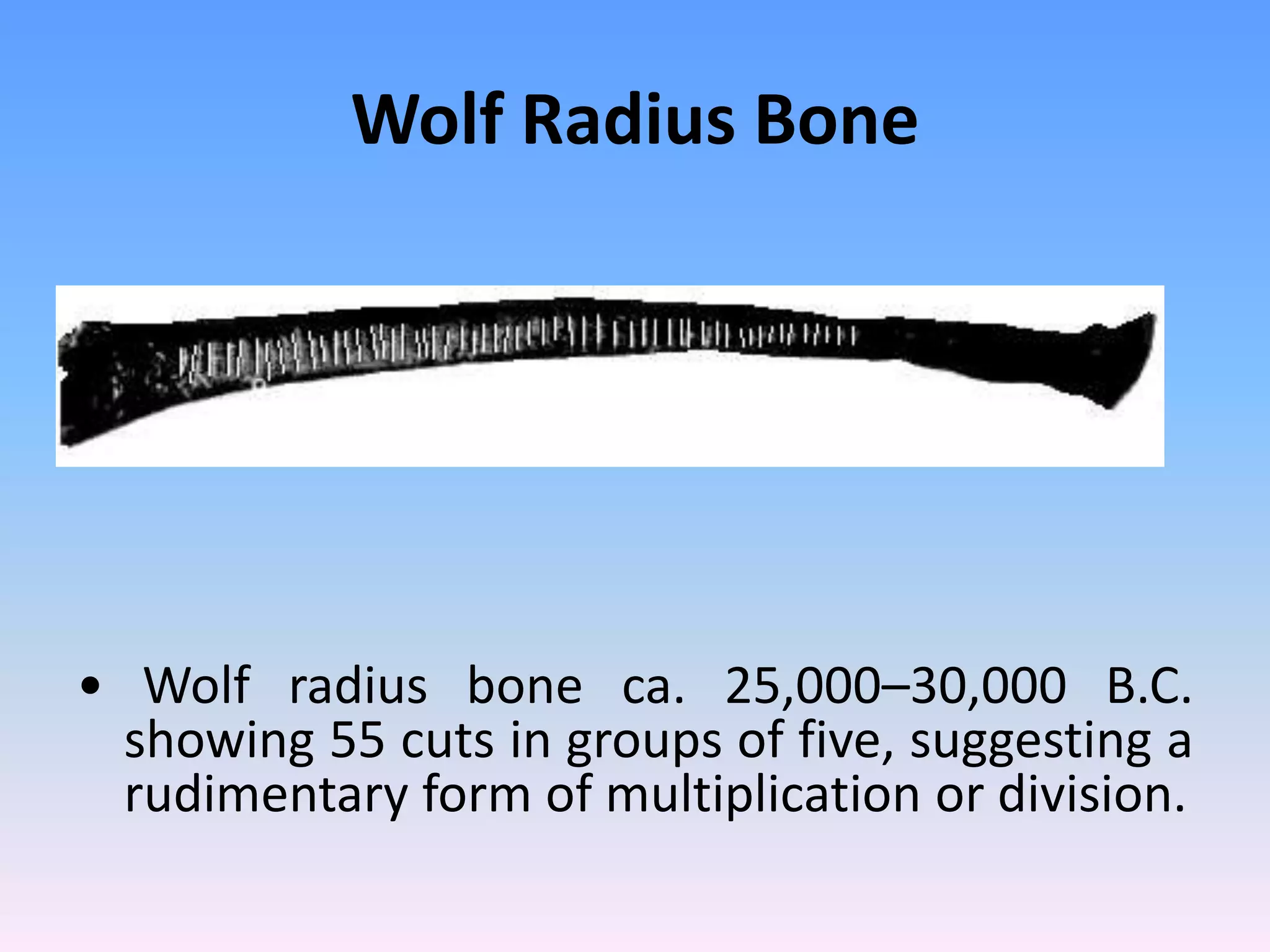
Wolf Radius Bone
• Wolf radius bone ca. 25,000–30,000 B.C.
showing 55 cuts in groups of five, suggesting a
rudimentary form of multiplication or division.
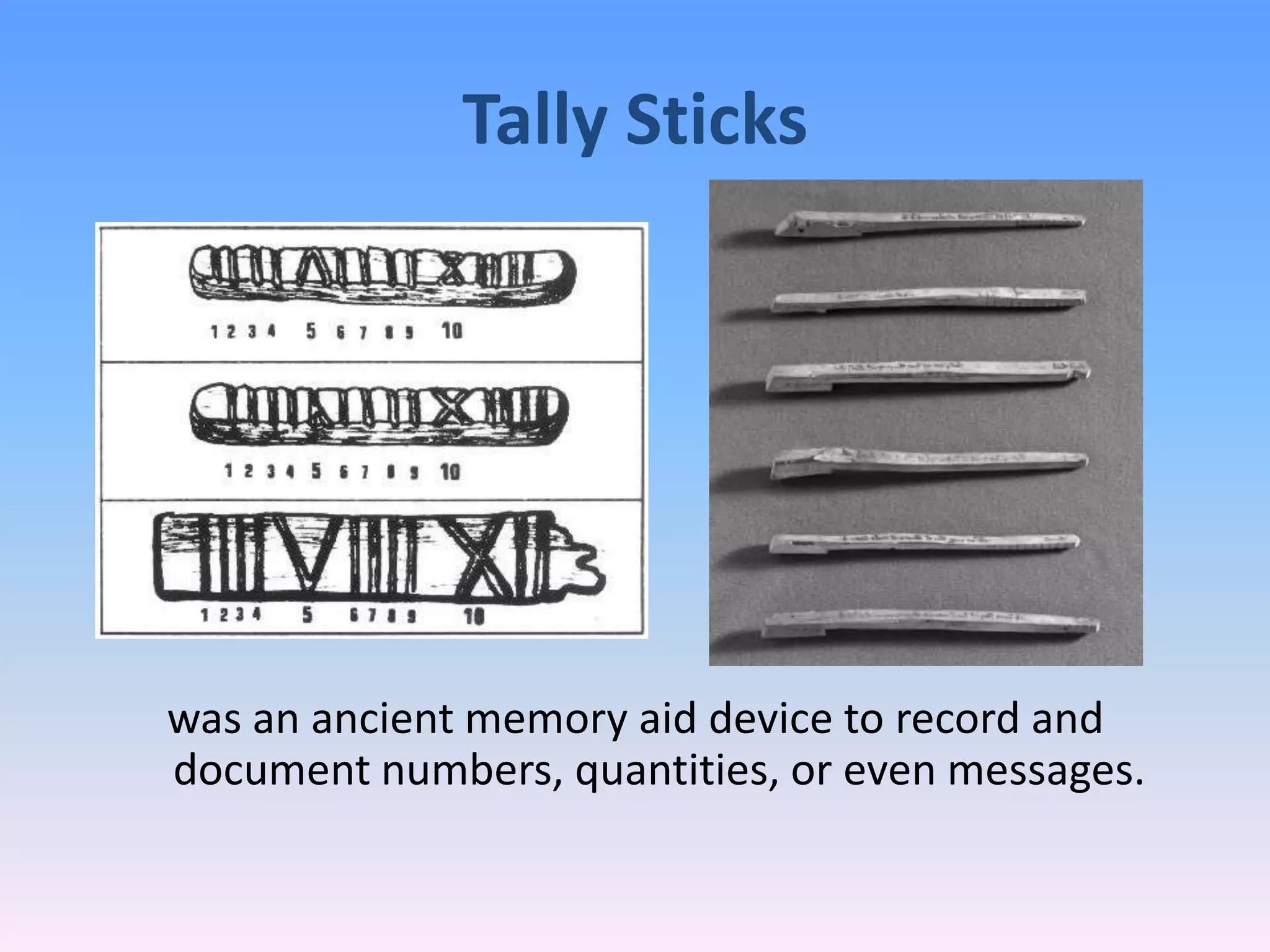
Tally Sticks
was an ancient memory aid device to record and
document numbers, quantities, or even messages.
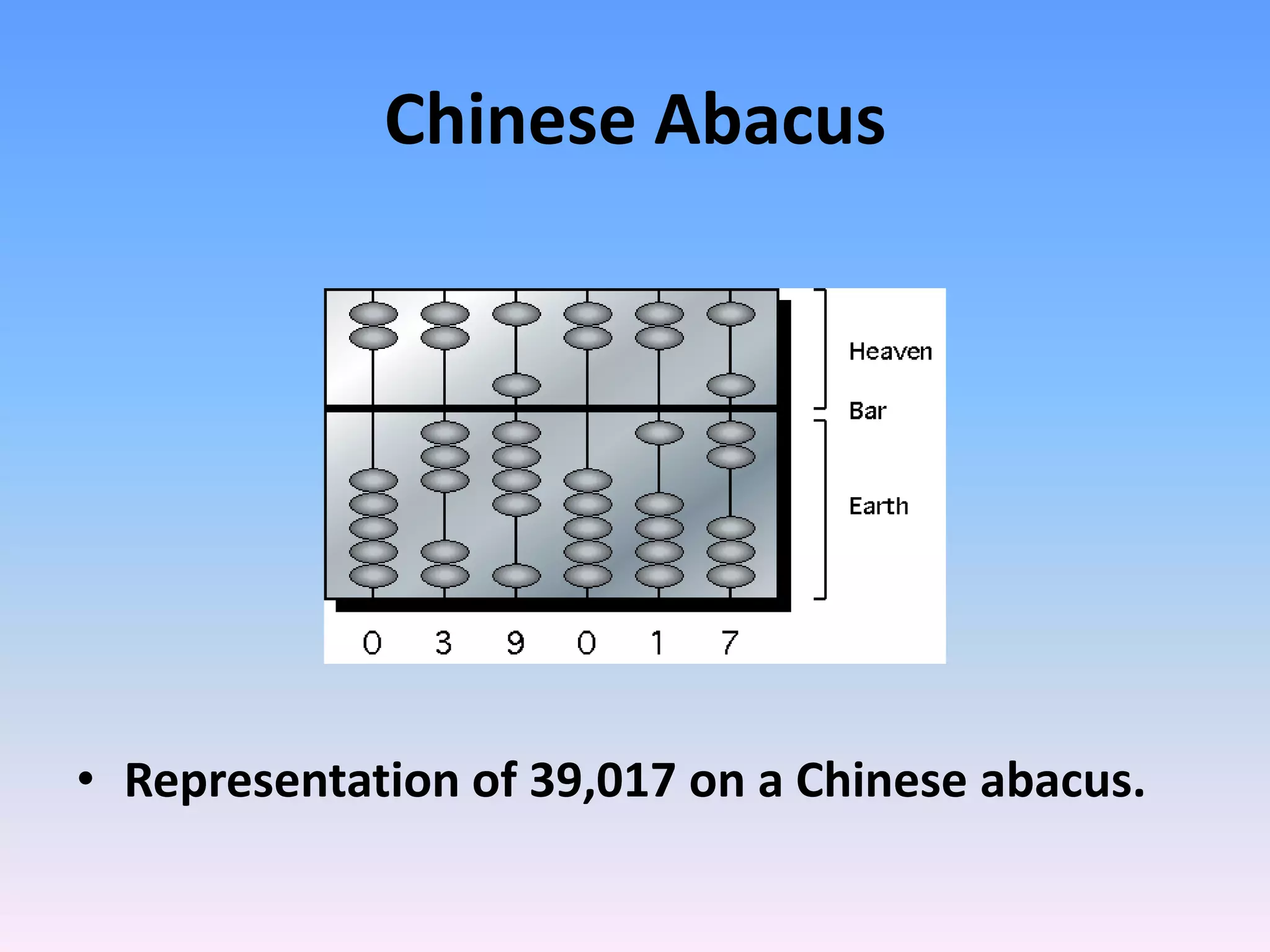
Chinese Abacus
• Representation of 39,017 on a Chinese abacus.
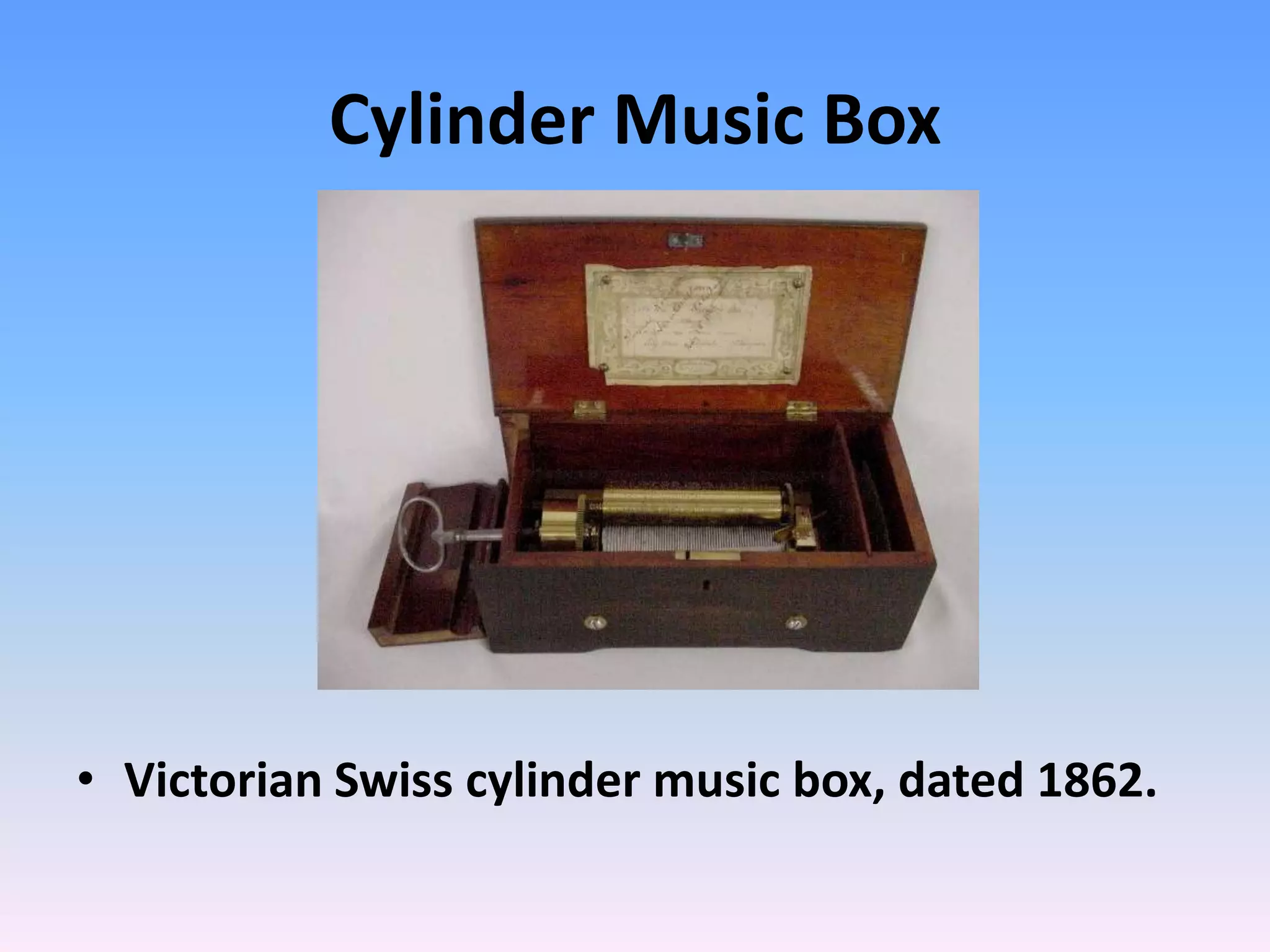
Cylinder Music Box
• Victorian Swiss cylinder music box, dated 1862.
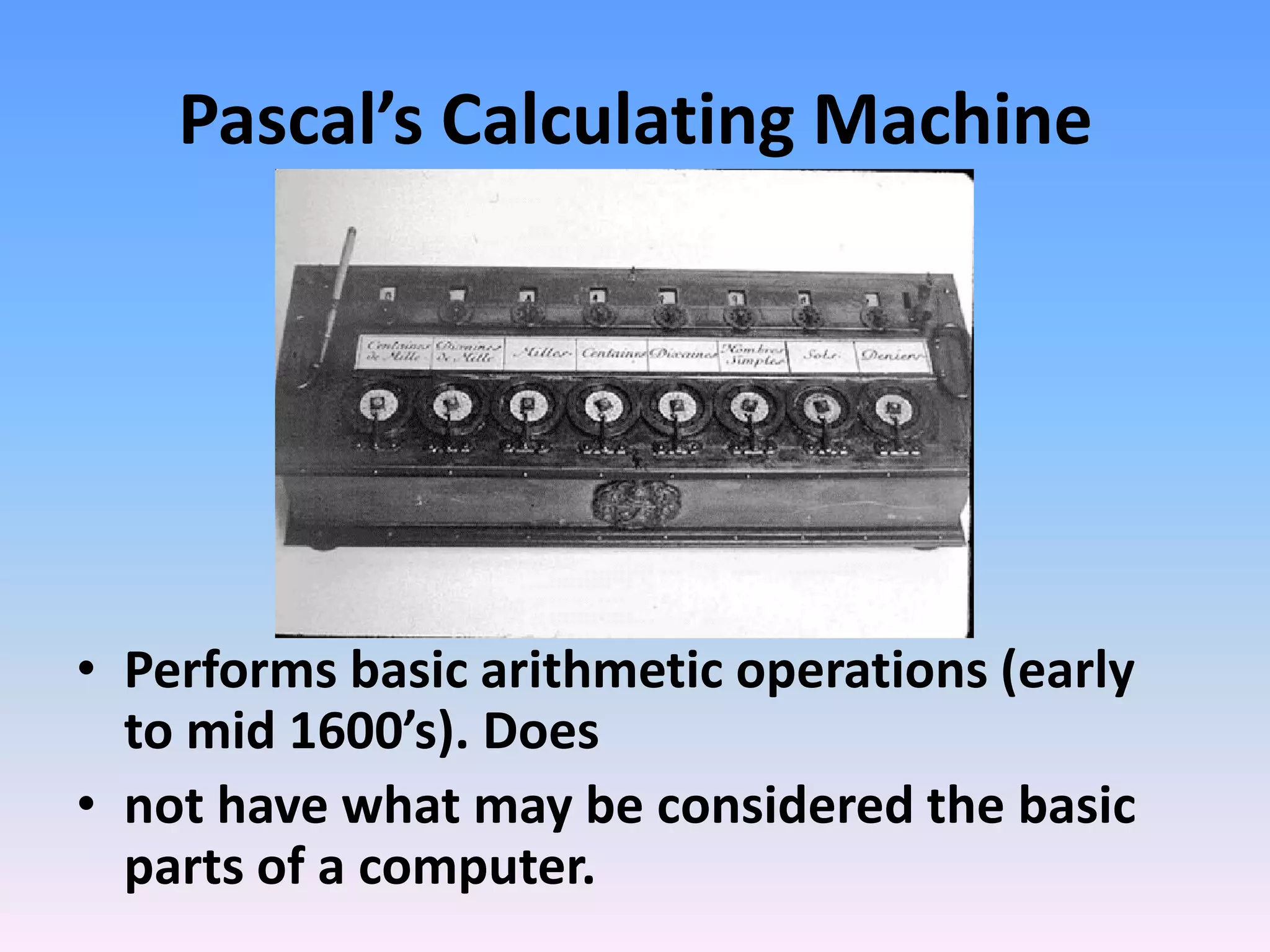
Pascal’s Calculating Machine
• Performs basic arithmetic operations (early
to mid 1600’s). Does
• not have what may be considered the basic
parts of a computer.
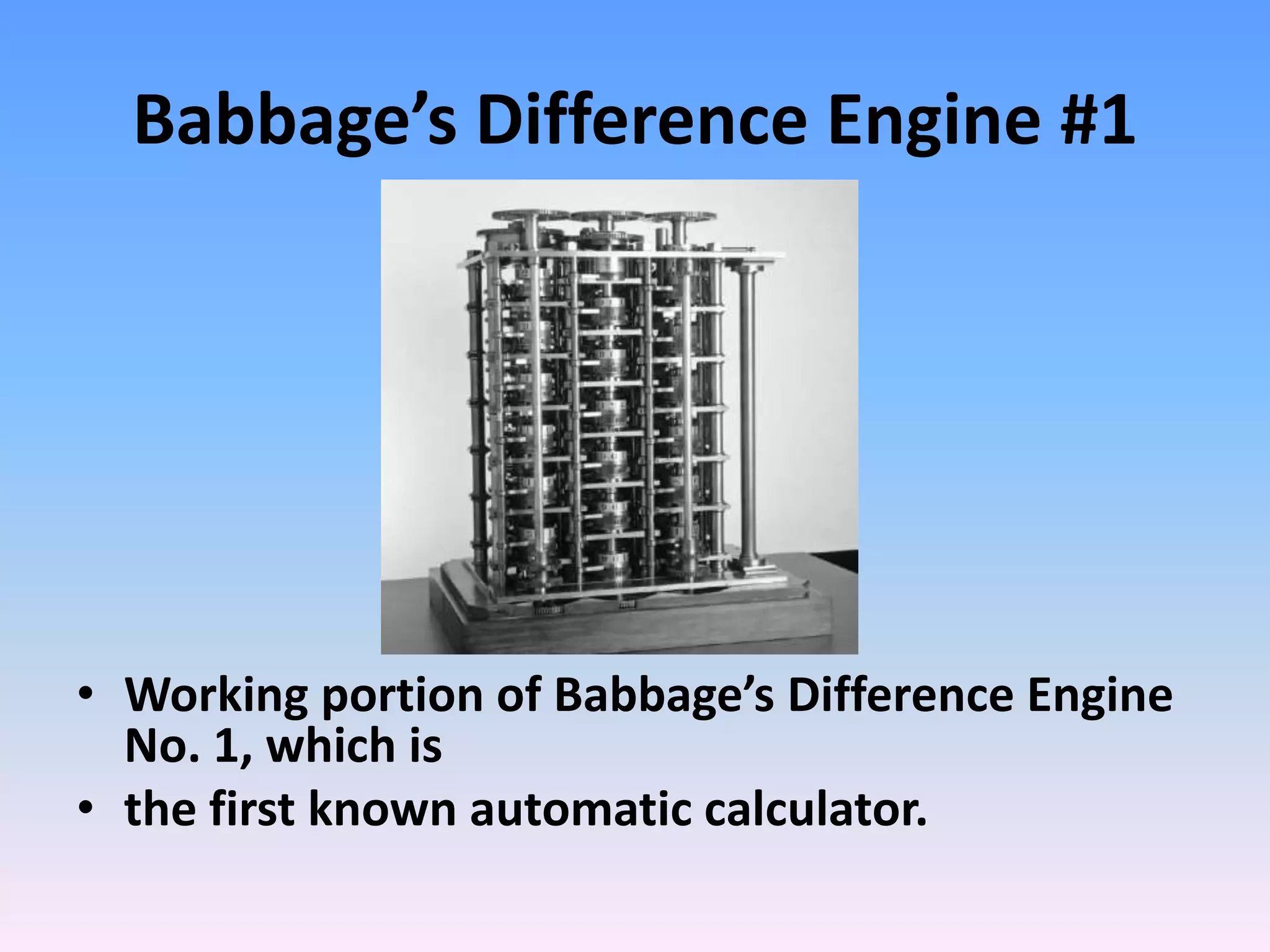
Babbage’s Difference Engine #1
• Working portion of Babbage’s Difference Engine
No. 1, which is
• the first known automatic calculator.
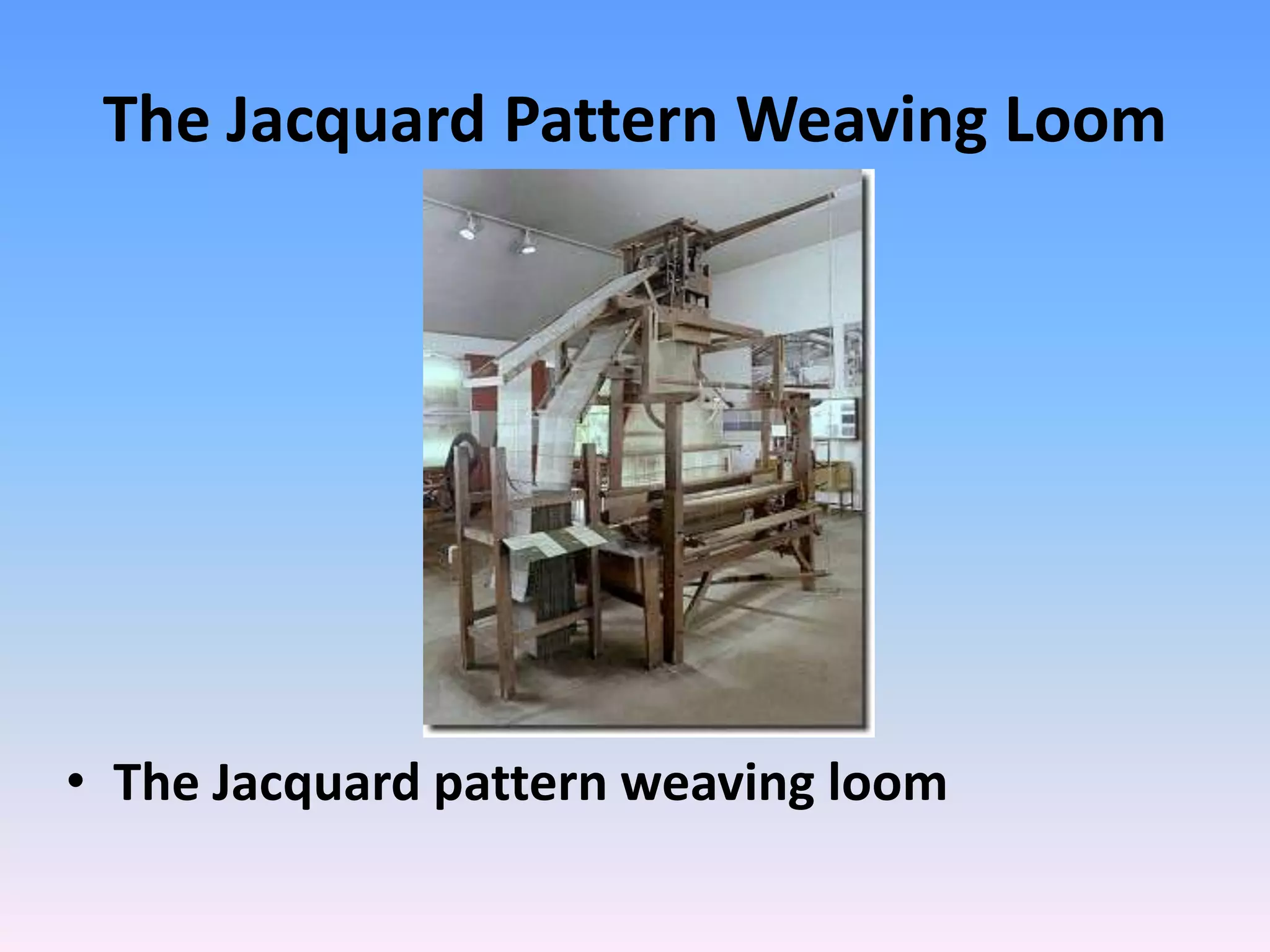
The Jacquard Pattern Weaving Loom
• The Jacquard pattern weaving loom
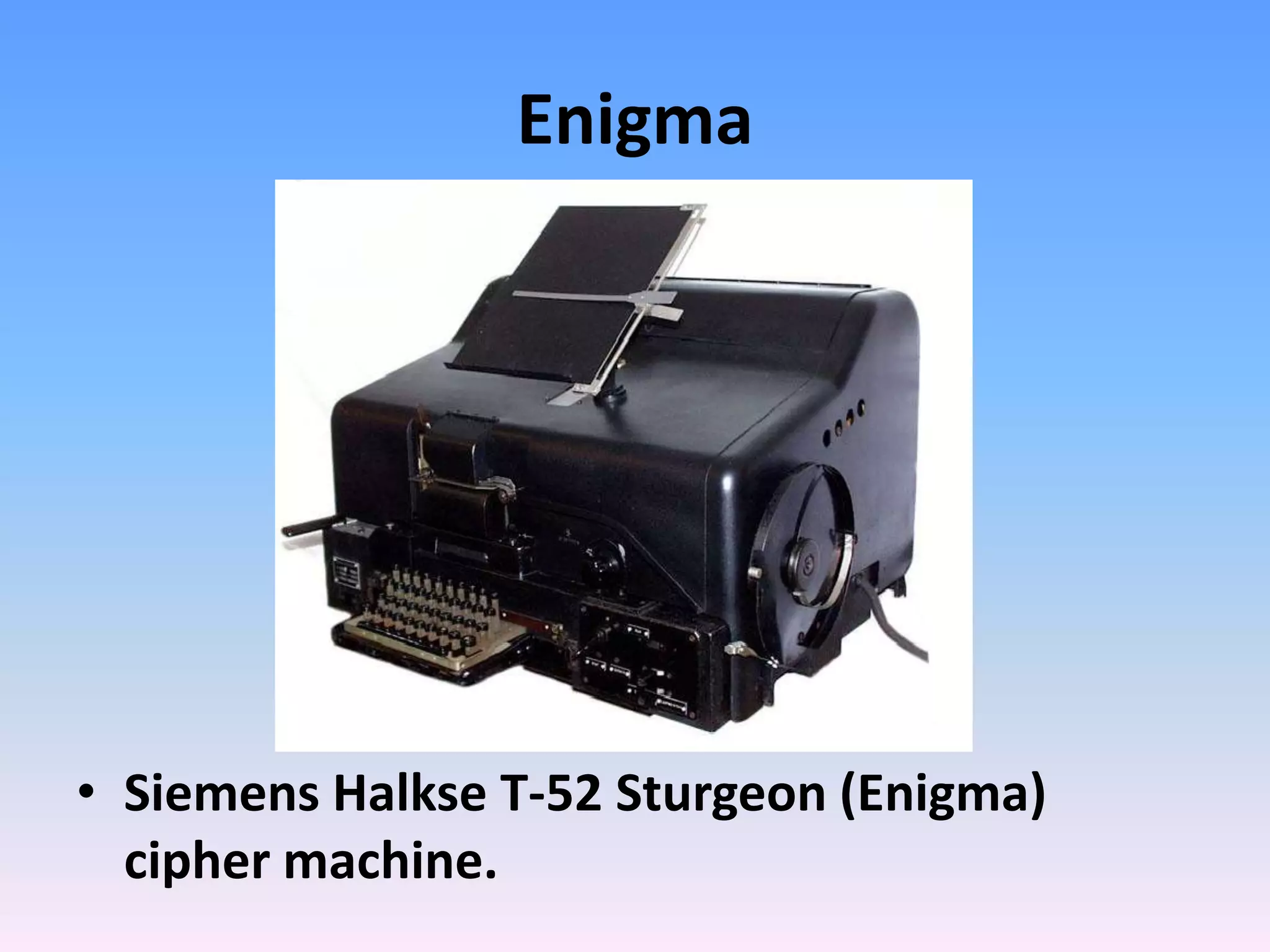
Enigma
• Siemens Halkse T-52 Sturgeon (Enigma)
cipher machine.
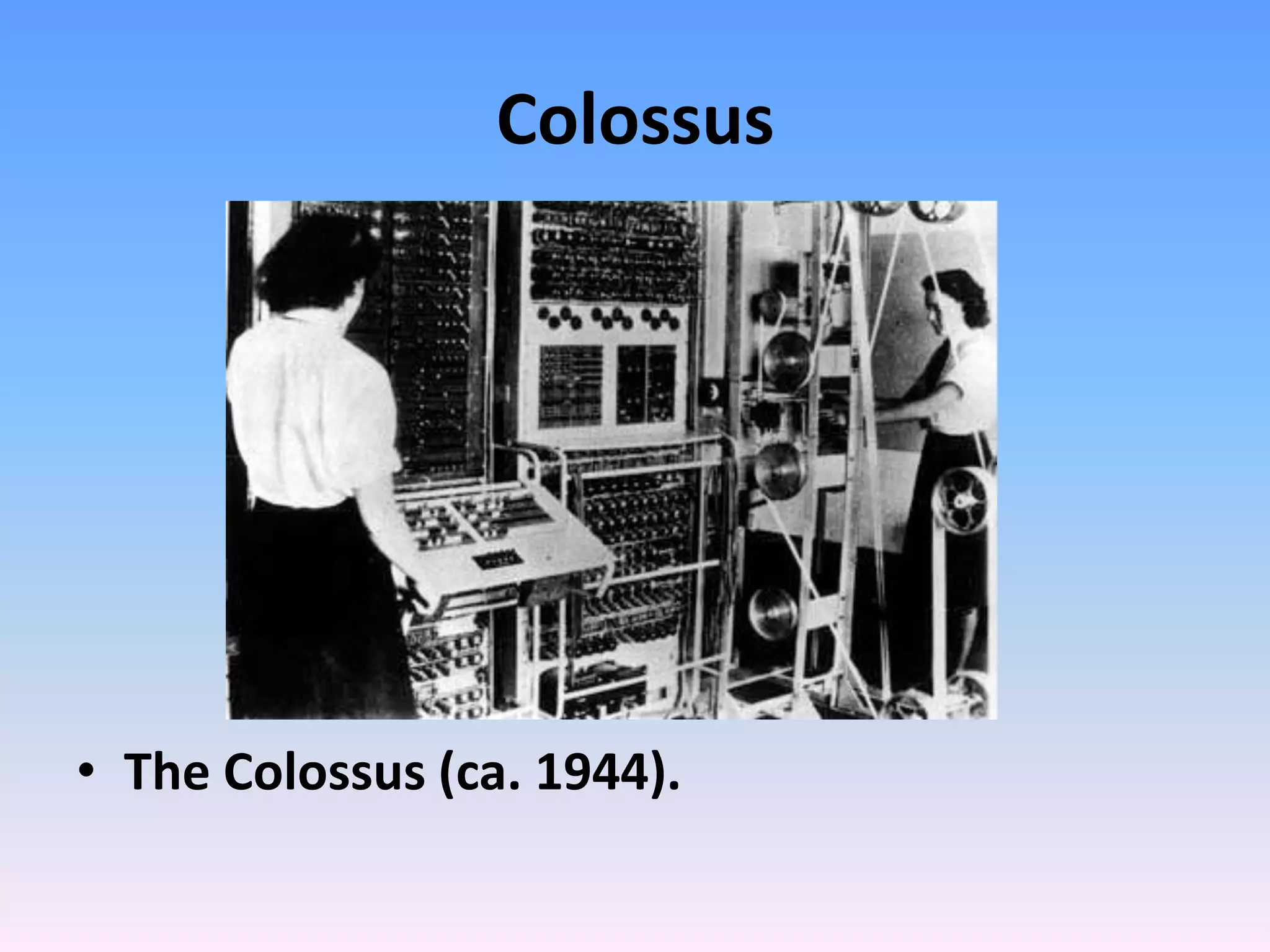
Colossus
• The Colossus (ca. 1944).
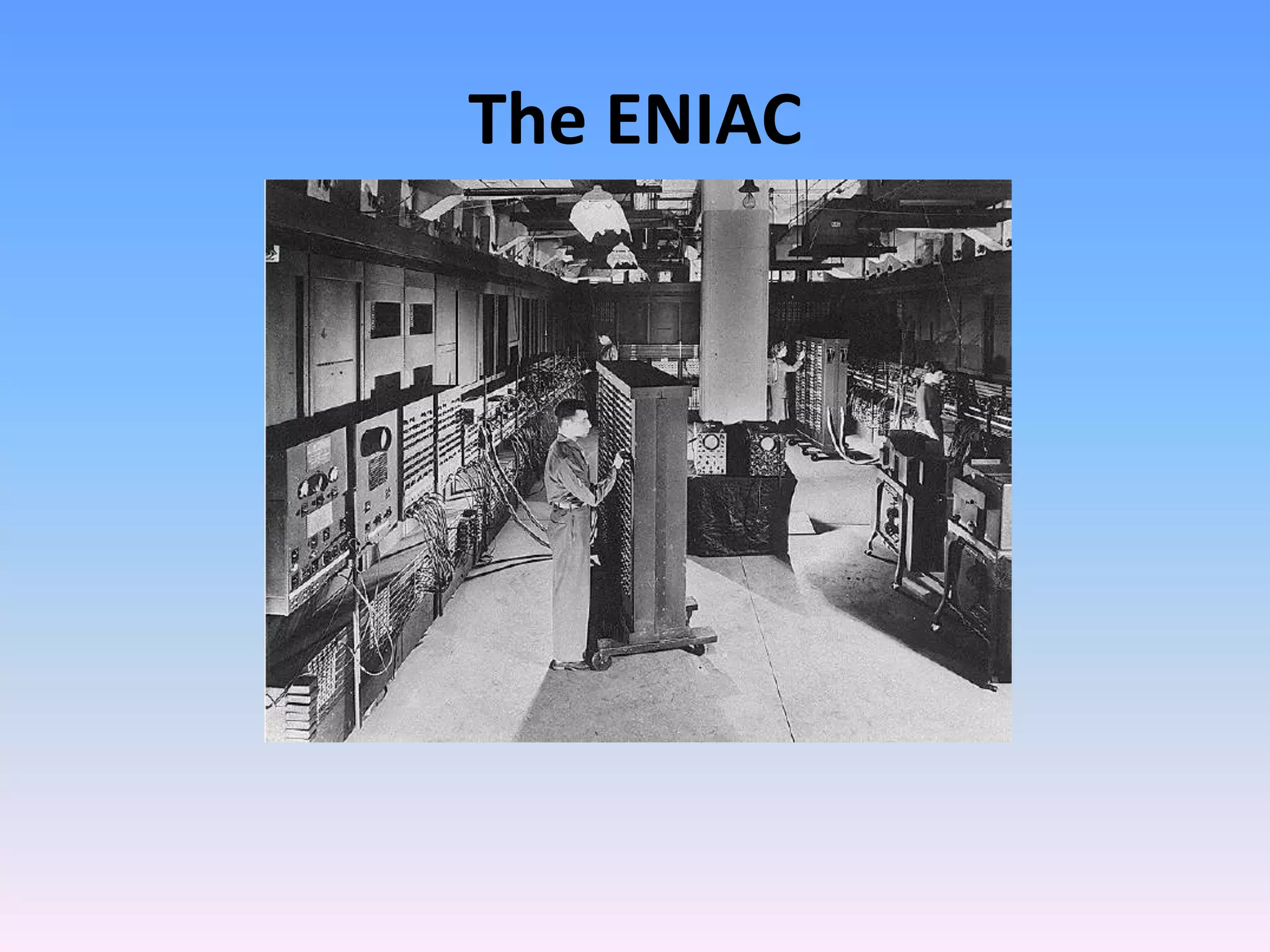
The ENIAC
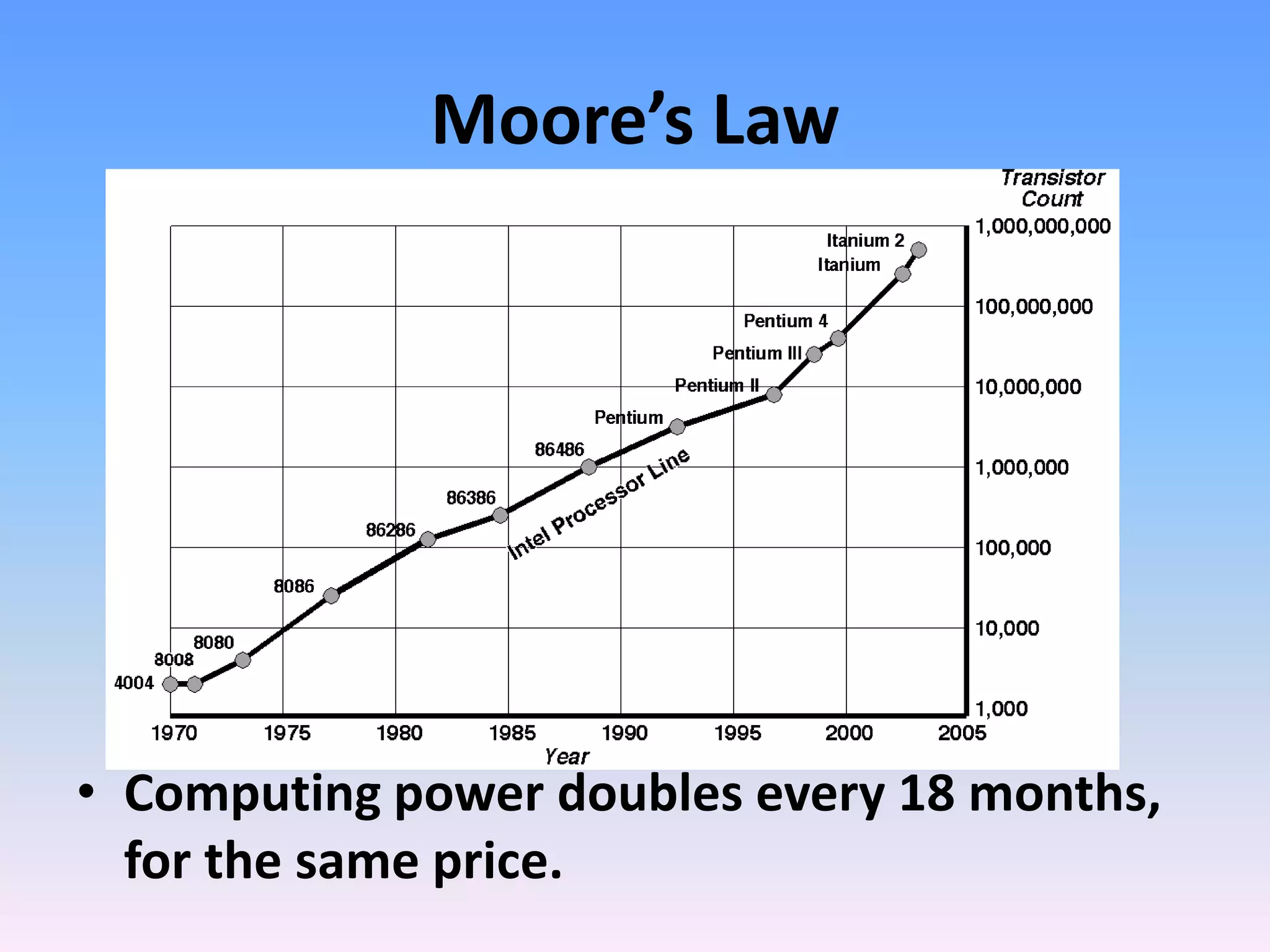
Moore’s Law
• Computing power doubles every 18 months,
for the same price.
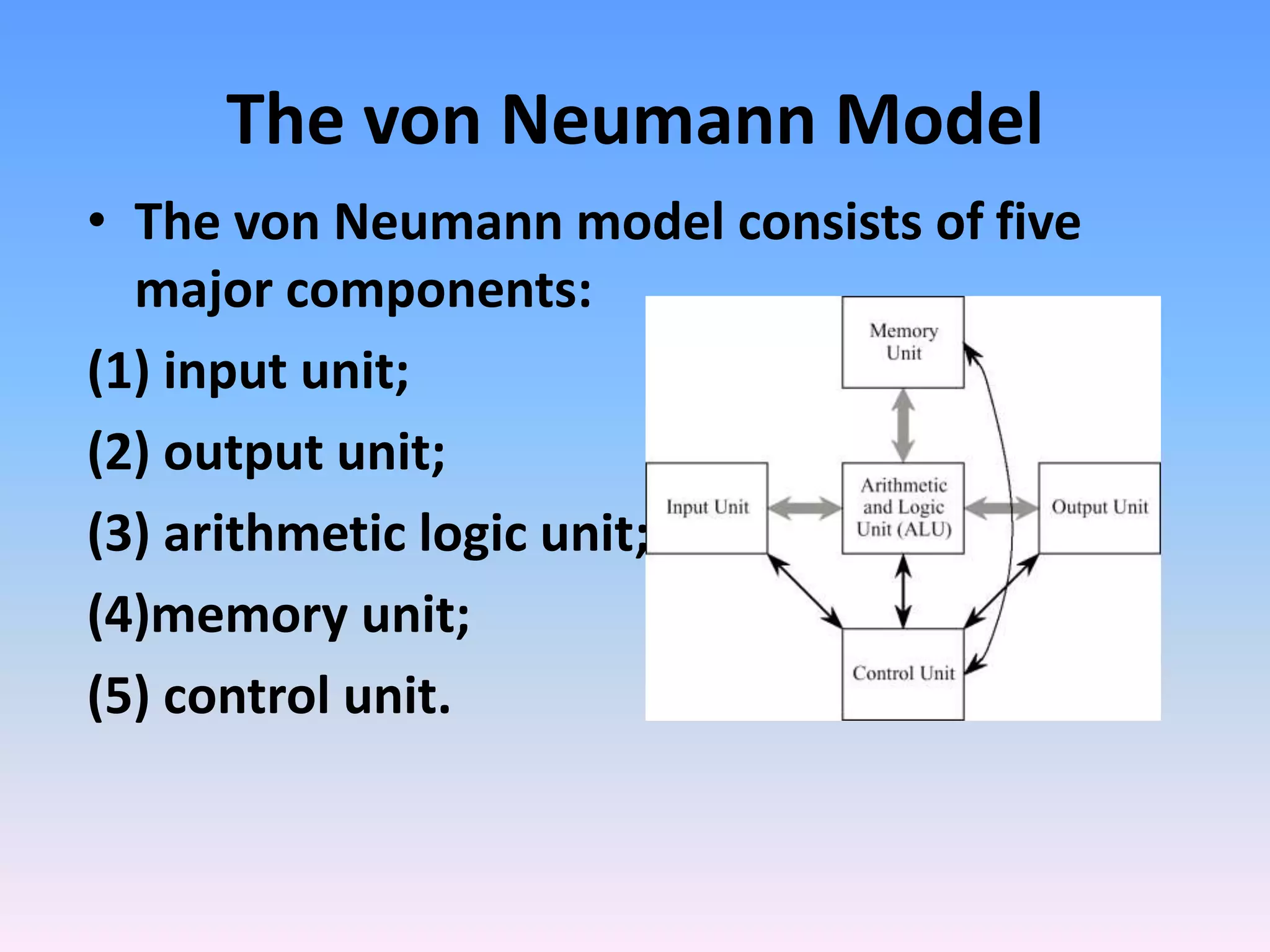
The von Neumann Model
• The von Neumann model consists of five
major components:
(1) input unit;
(2) output unit;
(3) arithmetic logic unit;
(4)memory unit;
(5) control unit.
BASIC COMPUTER OPERATIONS
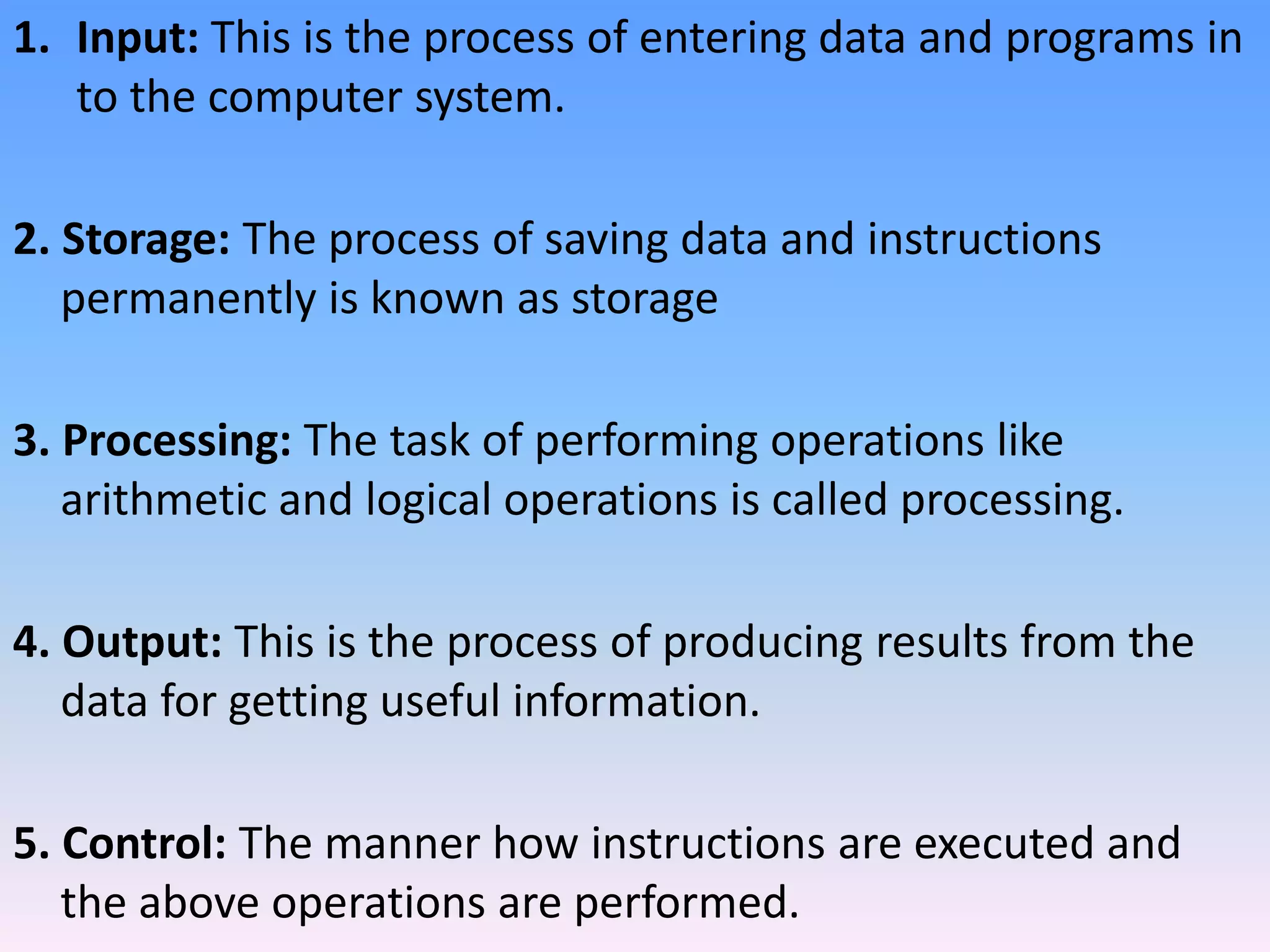
A computer performs basically five major operations
or functions irrespective of their size and make.
These are
1) it accepts data or instructions by way of input,
2) it stores data,
3) it can process data as required by the user,
4) it gives results in the form of output, and
5) it controls all operations inside a computer. We
discuss below each of these operations.
1. Input: This is the process of entering data and programs in
to the computer system.
2. Storage: The process of saving data and instructions
permanently is known as storage
3. Processing: The task of performing operations like
arithmetic and logical operations is called processing.
4. Output: This is the process of producing results from the
data for getting useful information.
5. Control: The manner how instructions are executed and
the above operations are performed.
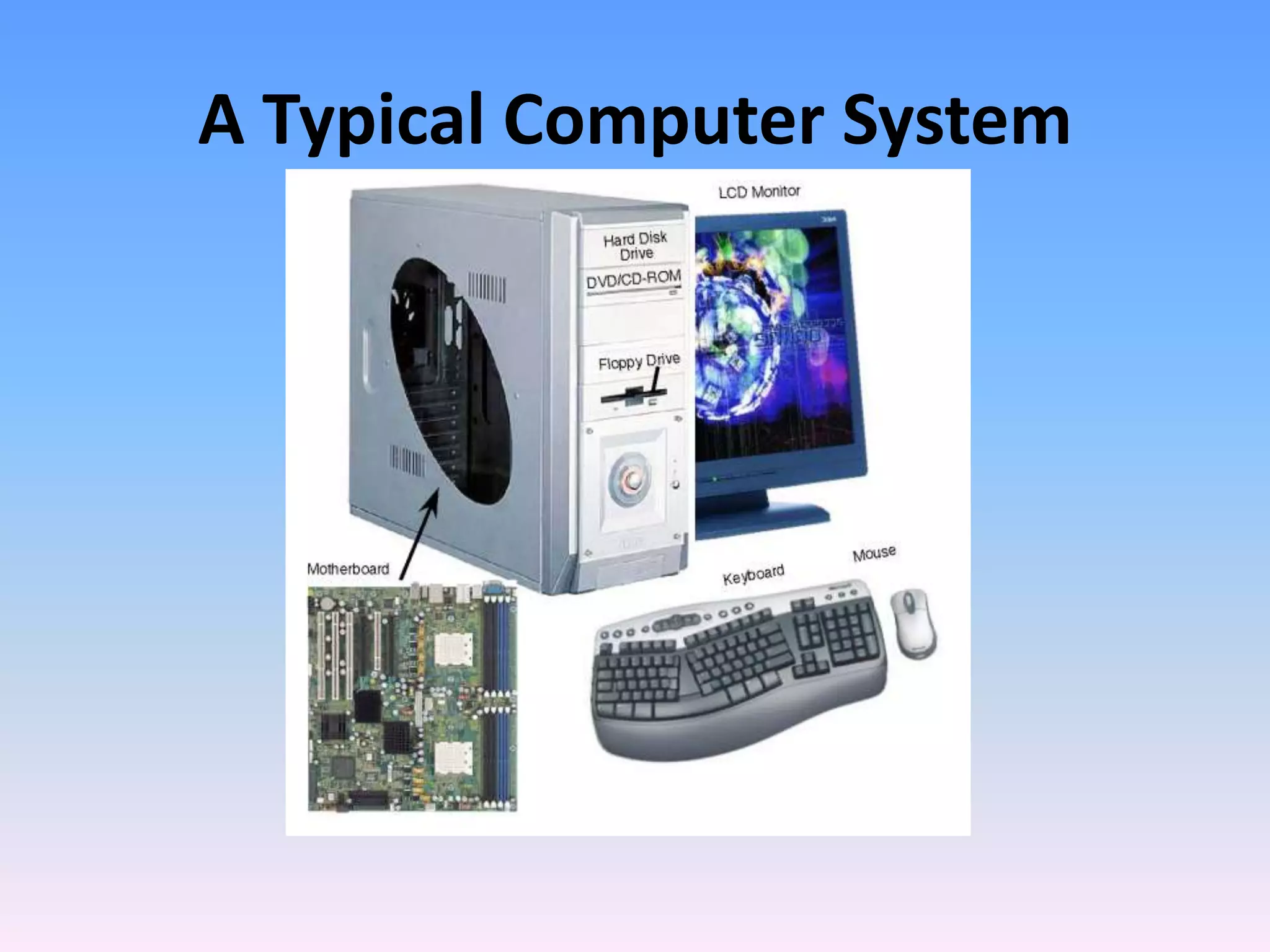
A Typical Computer System

Computer organization

  • 1.
    Computer Organization Deals withstructural relationships that may not be visible to the programmer.
  • 2.
    Levels of ComputerOrganization >Highest Level > Lowest Level
  • 3.
    >Processor-- center formanipulation and control >Memory – storage for instructions and data for currently executing programs >I/O system – controller which communicate with “ external” devices: secondary memory, display devices, networks >Data-path & control – collection of parallel wires, transmits data, instructions, or control signal A stored program computer has the following basic units:
  • 4.
  • 5.
    Wolf Radius Bone •Wolf radius bone ca. 25,000–30,000 B.C. showing 55 cuts in groups of five, suggesting a rudimentary form of multiplication or division.
  • 6.
    Tally Sticks was anancient memory aid device to record and document numbers, quantities, or even messages.
  • 7.
    Chinese Abacus • Representationof 39,017 on a Chinese abacus.
  • 8.
    Cylinder Music Box •Victorian Swiss cylinder music box, dated 1862.
  • 9.
    Pascal’s Calculating Machine •Performs basic arithmetic operations (early to mid 1600’s). Does • not have what may be considered the basic parts of a computer.
  • 10.
    Babbage’s Difference Engine#1 • Working portion of Babbage’s Difference Engine No. 1, which is • the first known automatic calculator.
  • 11.
    The Jacquard PatternWeaving Loom • The Jacquard pattern weaving loom
  • 12.
    Enigma • Siemens HalkseT-52 Sturgeon (Enigma) cipher machine.
  • 13.
  • 14.
  • 15.
    Moore’s Law • Computingpower doubles every 18 months, for the same price.
  • 16.
    The von NeumannModel • The von Neumann model consists of five major components: (1) input unit; (2) output unit; (3) arithmetic logic unit; (4)memory unit; (5) control unit.
  • 17.
    BASIC COMPUTER OPERATIONS Acomputer performs basically five major operations or functions irrespective of their size and make. These are 1) it accepts data or instructions by way of input, 2) it stores data, 3) it can process data as required by the user, 4) it gives results in the form of output, and 5) it controls all operations inside a computer. We discuss below each of these operations.
  • 18.
    1. Input: Thisis the process of entering data and programs in to the computer system. 2. Storage: The process of saving data and instructions permanently is known as storage 3. Processing: The task of performing operations like arithmetic and logical operations is called processing. 4. Output: This is the process of producing results from the data for getting useful information. 5. Control: The manner how instructions are executed and the above operations are performed.
  • 19.