Computer Graphics
Presented by
R.Sakthivel Murugan,
AP/Mech,
KCET.
Why we need graphics?
• Movies.
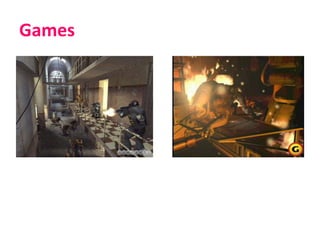
• Games.
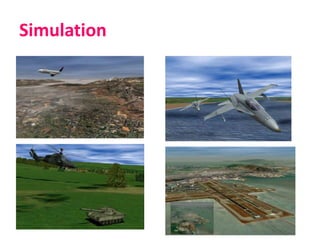
• Simulation
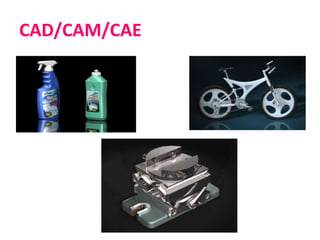
• CAD/CAM/CAE
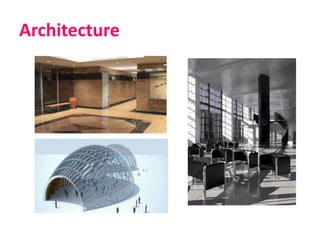
• Architecture
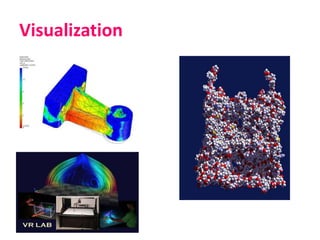
• Visualization
All the above are achieved by computer software
using various algorithms.
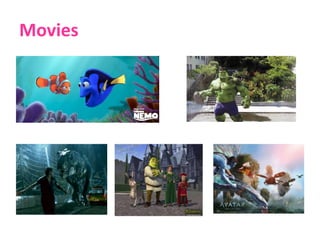
Movies
Games
Simulation
CAD/CAM/CAE
Architecture
Visualization
Rendering
Rendering converts a model into an image either
by simulating light transport to get physically-
based photorealistic images, or by applying
some kind of style as in non-photorealistic
rendering.
Rendering includes
• Basic Concepts, OpenGL
• Lighting
• Ray Tracing
• Acceleration of Ray Tracing
• Texture
• Shadow
• Radiosity
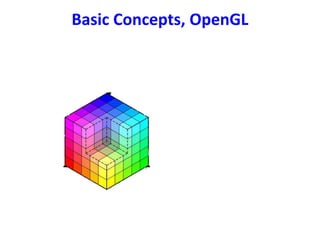
Basic Concepts, OpenGL
Lighting
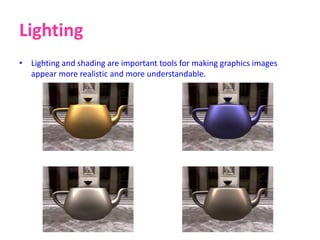
• Lighting and shading are important tools for making graphics images
appear more realistic and more understandable.
Ray Tracing
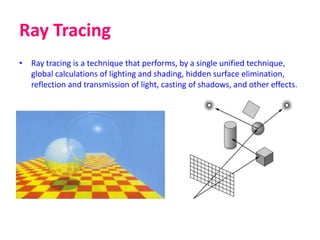
• Ray tracing is a technique that performs, by a single unified technique,
global calculations of lighting and shading, hidden surface elimination,
reflection and transmission of light, casting of shadows, and other effects.
Acceleration of Ray Tracing
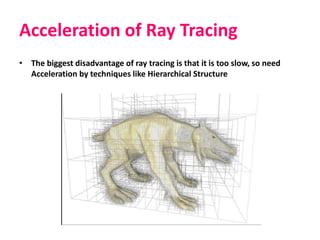
• The biggest disadvantage of ray tracing is that it is too slow, so need
Acceleration by techniques like Hierarchical Structure
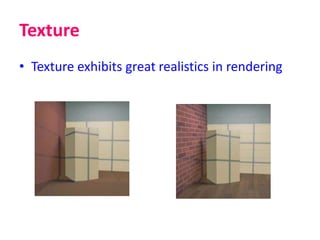
Texture
• Texture exhibits great realistics in rendering
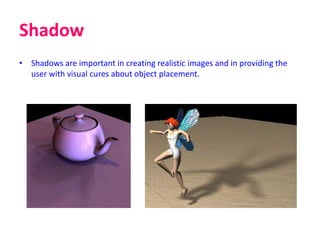
Shadow
• Shadows are important in creating realistic images and in providing the
user with visual cures about object placement.
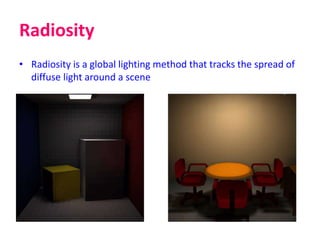
Radiosity
• Radiosity is a global lighting method that tracks the spread of
diffuse light around a scene
Advanced Research Topics
• Rendering
• Computer Animation
• Geometry
• Video-based rendering

Computer Graphics