Computer-Aided Drug
Designing (CADD)
Aakshay Subramaniam
Aniketh Rao
Bioinformatics
oAn application of Computer Science to biological and Drug
Development science
oBioinformatics is the field of science in which biology,
computer science, and information technology merge to form
a single discipline
oThe ultimate goal of the field is to enable the discovery of
new biological insights
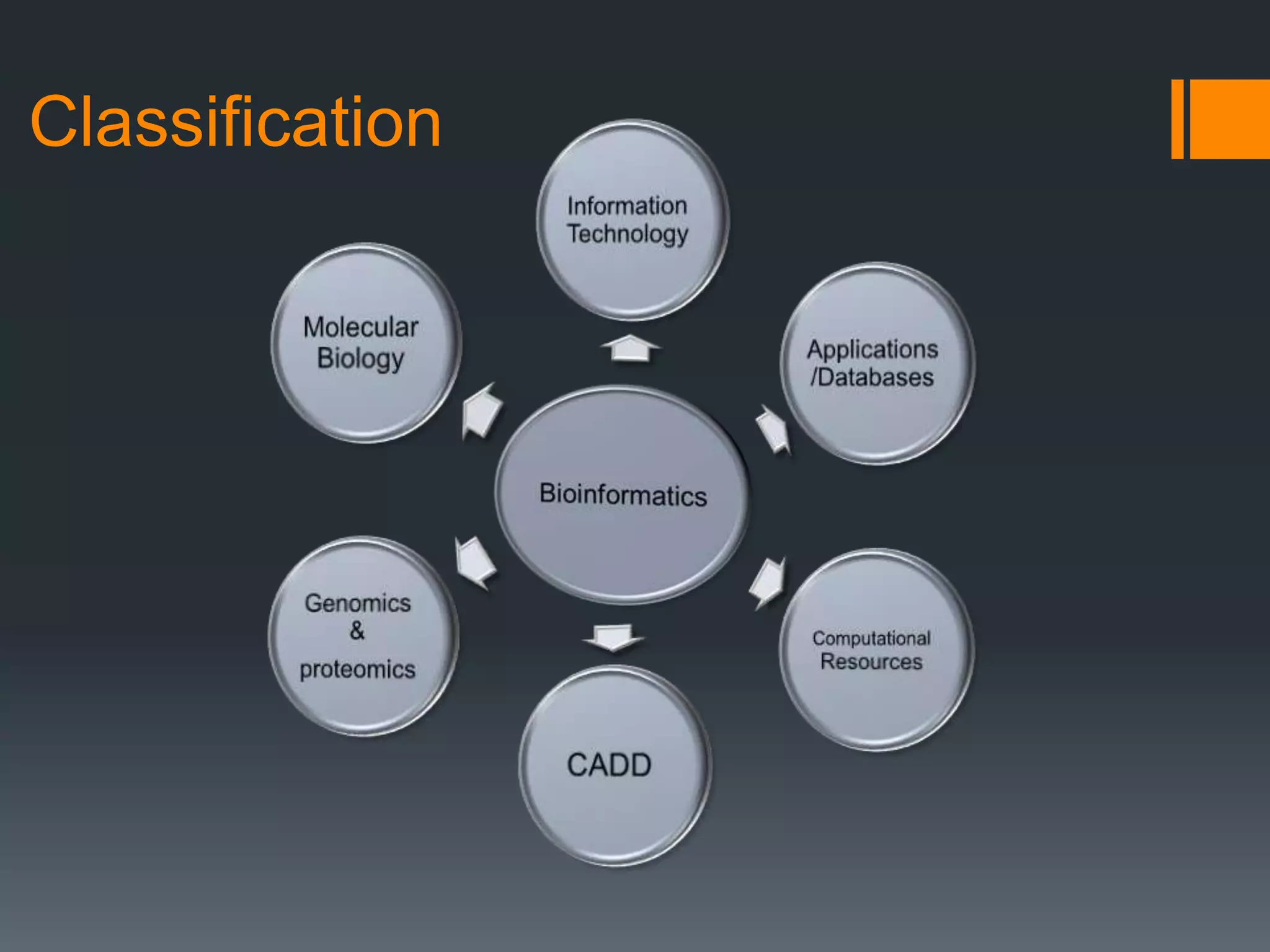
Classification
Computer-Aided Drug Designing (CADD)
oComputer-Aided Drug Designing (CADD) is a
specialized discipline that uses computational
methods to simulate drug-receptor interactions
oCADD methods are heavily dependent on
bioinformatics tools, applications and databases
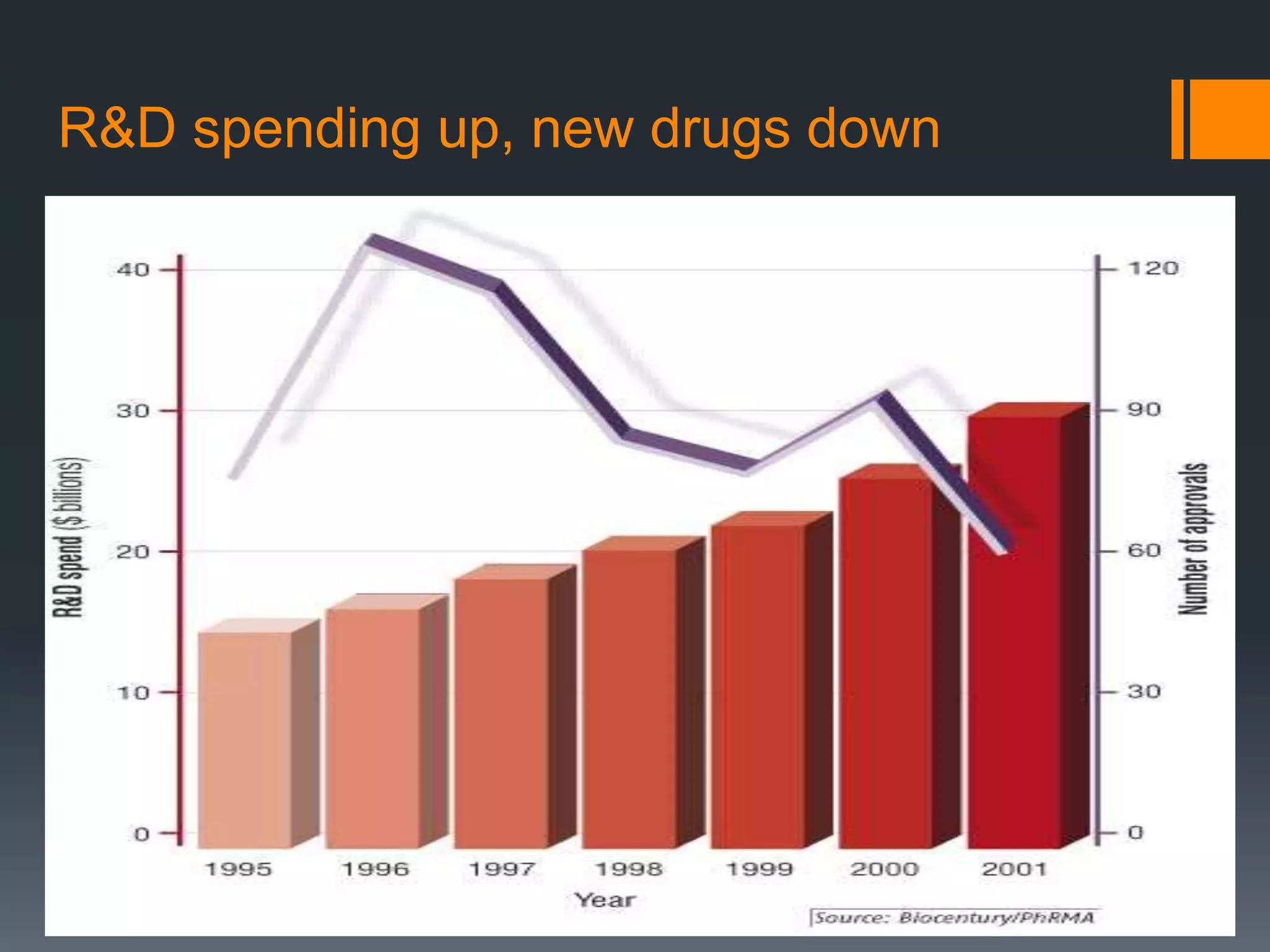
R&D spending up, new drugs down
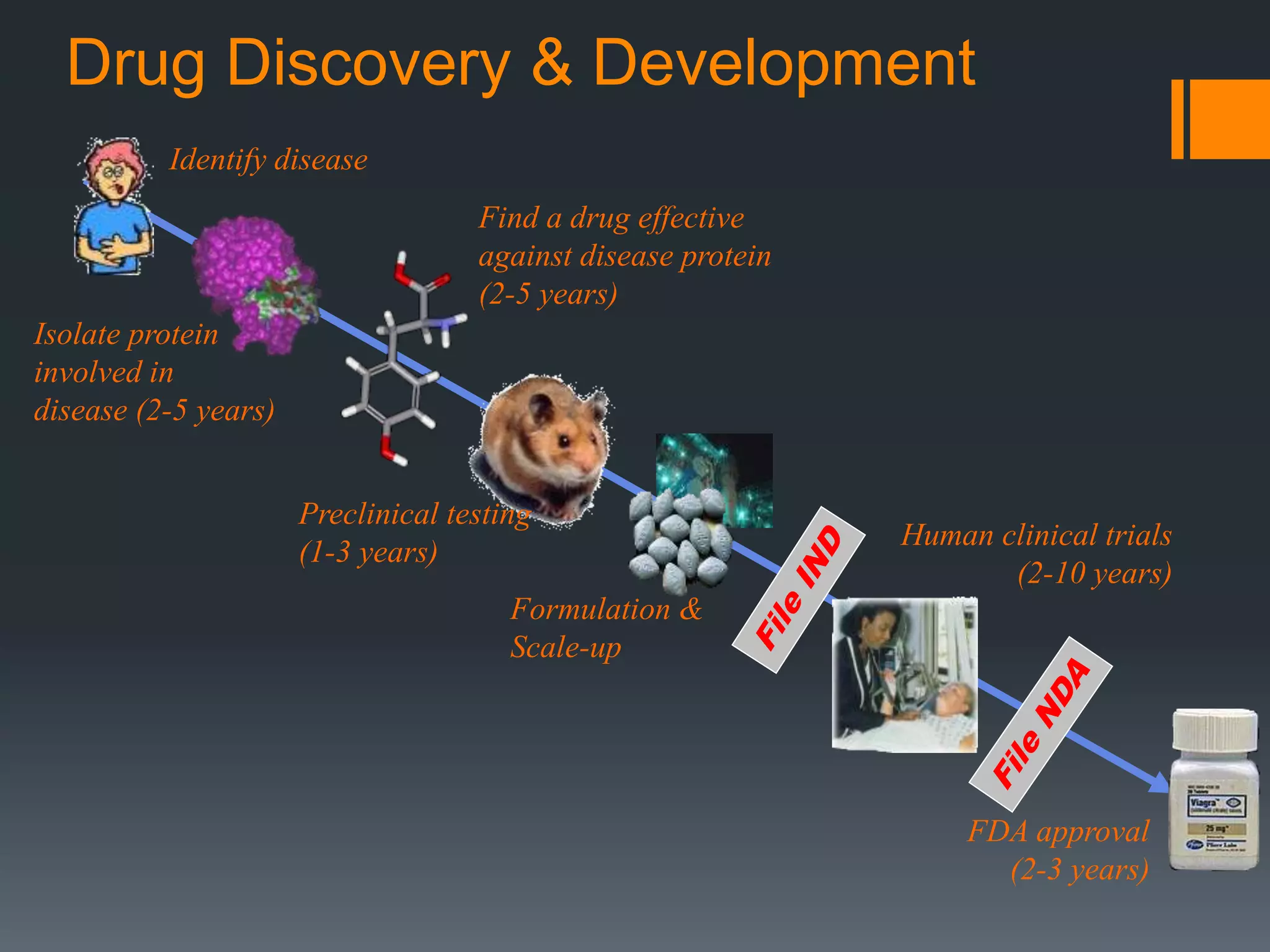
Drug Discovery & Development
Identify disease
Isolate protein
involved in
disease (2-5 years)
Find a drug effective
against disease protein
(2-5 years)
Preclinical testing
(1-3 years)
Formulation &
Scale-up
Human clinical trials
(2-10 years)
FDA approval
(2-3 years)
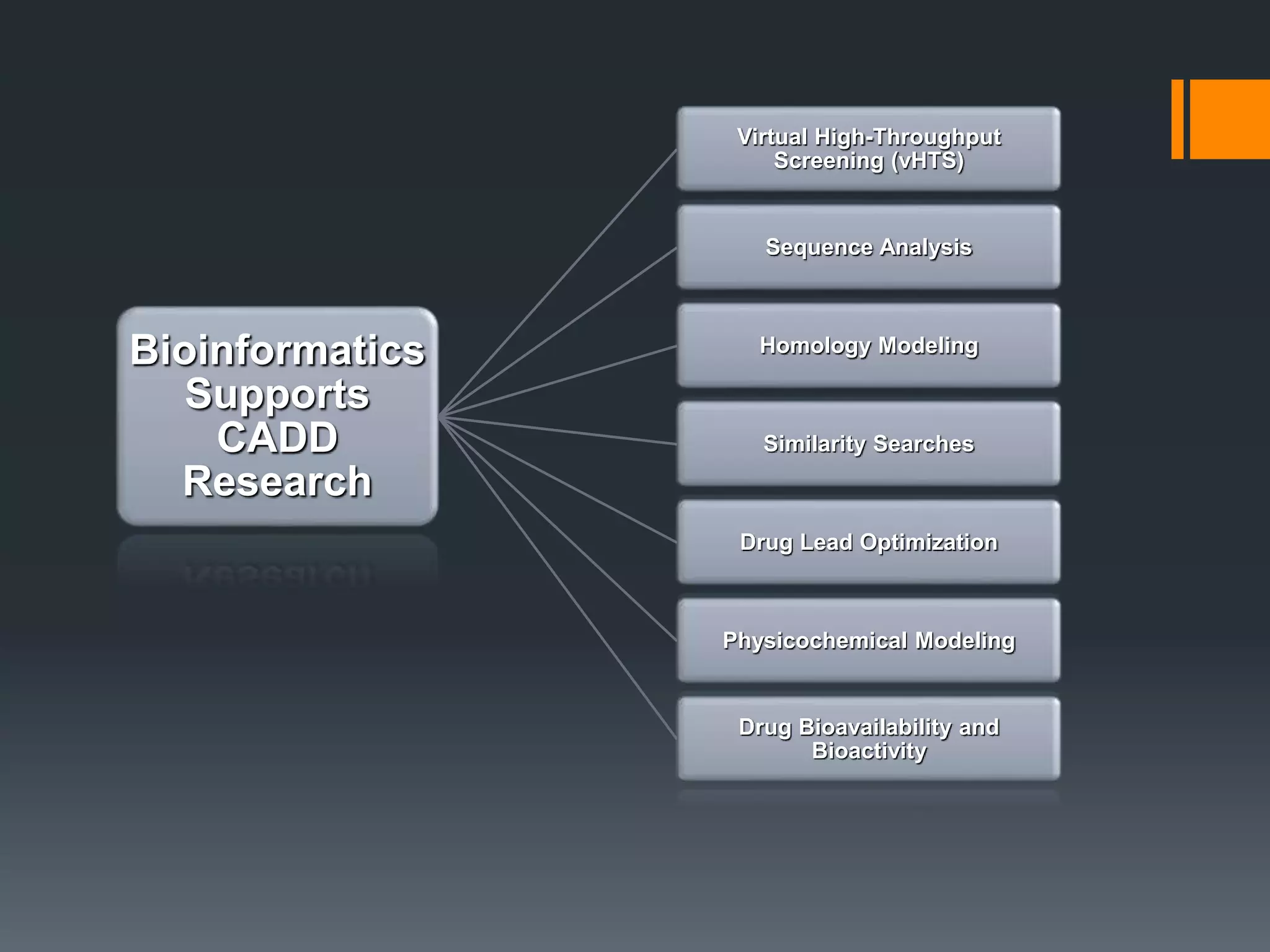
Bioinformatics
Supports
CADD
Research
Virtual High-Throughput
Screening (vHTS)
Sequence Analysis
Homology Modeling
Similarity Searches
Drug Lead Optimization
Physicochemical Modeling
Drug Bioavailability and
Bioactivity
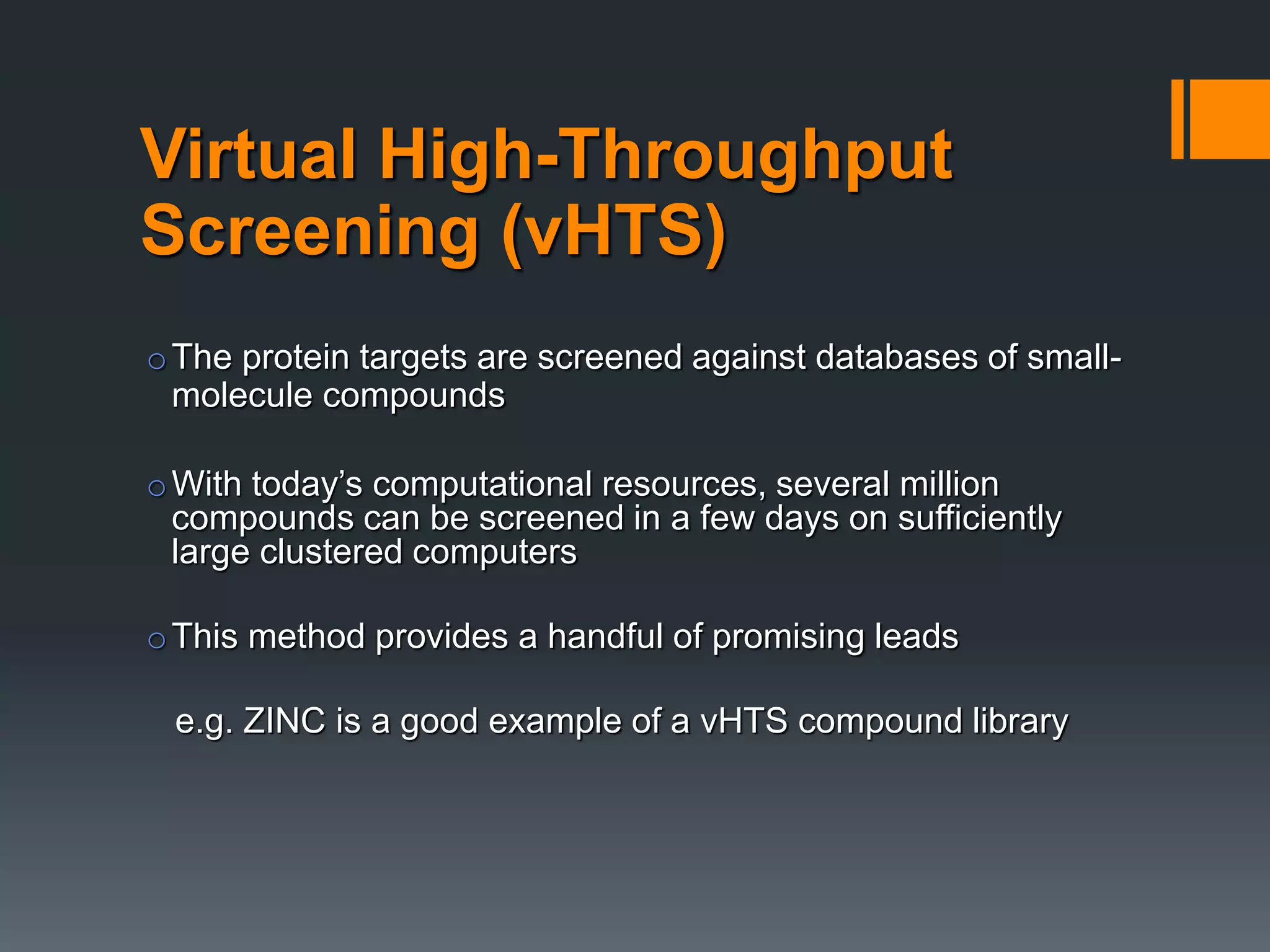
Virtual High-Throughput
Screening (vHTS)
oThe protein targets are screened against databases of small-
molecule compounds
oWith today’s computational resources, several million
compounds can be screened in a few days on sufficiently
large clustered computers
oThis method provides a handful of promising leads
e.g. ZINC is a good example of a vHTS compound library
Sequence Analysis
oIt is very useful to determine how similar or dissimilar the
organisms are based on gene or protein sequences
oWith this information one can infer the evolutionary
relationships of the organisms
oThere are many bioinformatic sequence analysis tools that
can be used to determine the level of sequence similarity
e.g. DNA sequence analysis, gel electrophoresis
Homology Modeling
oA common challenge in CADD research is determining the
3-D structure of proteins
oThe 3-D structure for only a small fraction of the proteins is
known
oBioinformatics software tools are then used to predict the 3-D
structure of the target based on the known 3-D structures of
the templates
oE.g. MODELLER
SWISS-MODEL Repository
Similarity Searches
o A common activity in biopharmaceutical companies is the
search for drug analogues
o Starting with a promising drug molecule, one can search for
chemical compounds with similar structure or properties to a
known compound
o A variety of bioinformatic tools and search engines are
available for this work
Benefits of CADD
oThe Tufts Report suggests that the cost of drug discovery
and development has reached $800 million for each drug
successfully brought to market
oMany biopharmaceutical companies now use computational
methods and bioinformatics tools to reduce this cost burden
Benefits of CADD
oVirtual screening, lead optimization and predictions of
bioavailability and bioactivity can help guide experimental
research
oOnly the most promising experimental lines of inquiry can be
followed and experimental dead-ends can be avoided early
based on the results of CADD simulations
Benefits of CADD
Time-to-Market:
oCADD has predictive power
oIt focuses drug research on specific lead candidates and
avoids potential “dead-end” compounds
Benefits of CADD
Insight:
oCADD provides a deep insight to the drug-receptor
interactions acquired by the researchers
oMolecular models of drug compounds can reveal intricate,
atomic scale binding properties that are difficult to envision
in any other way
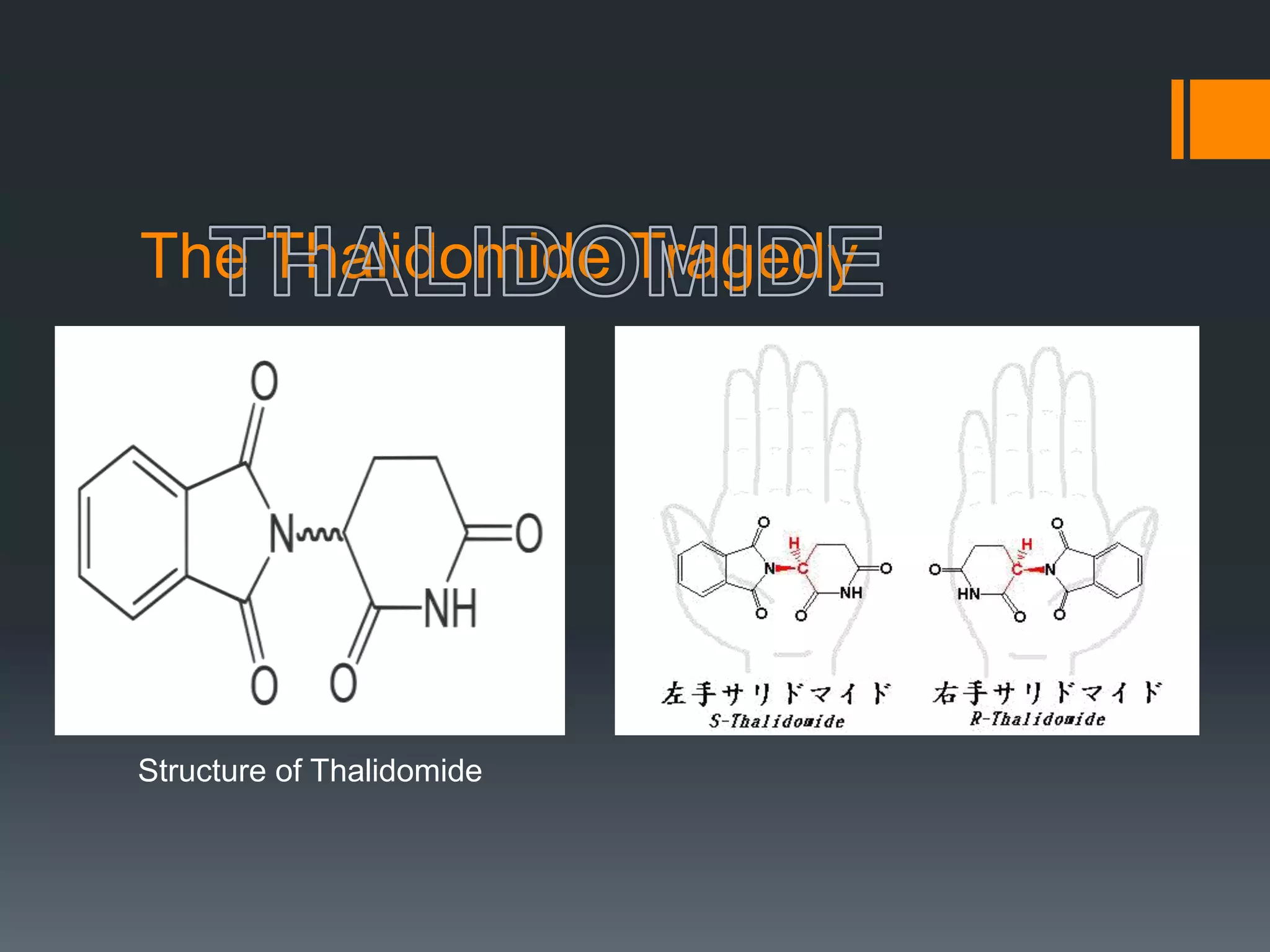
The Thalidomide Tragedy
Structure of Thalidomide
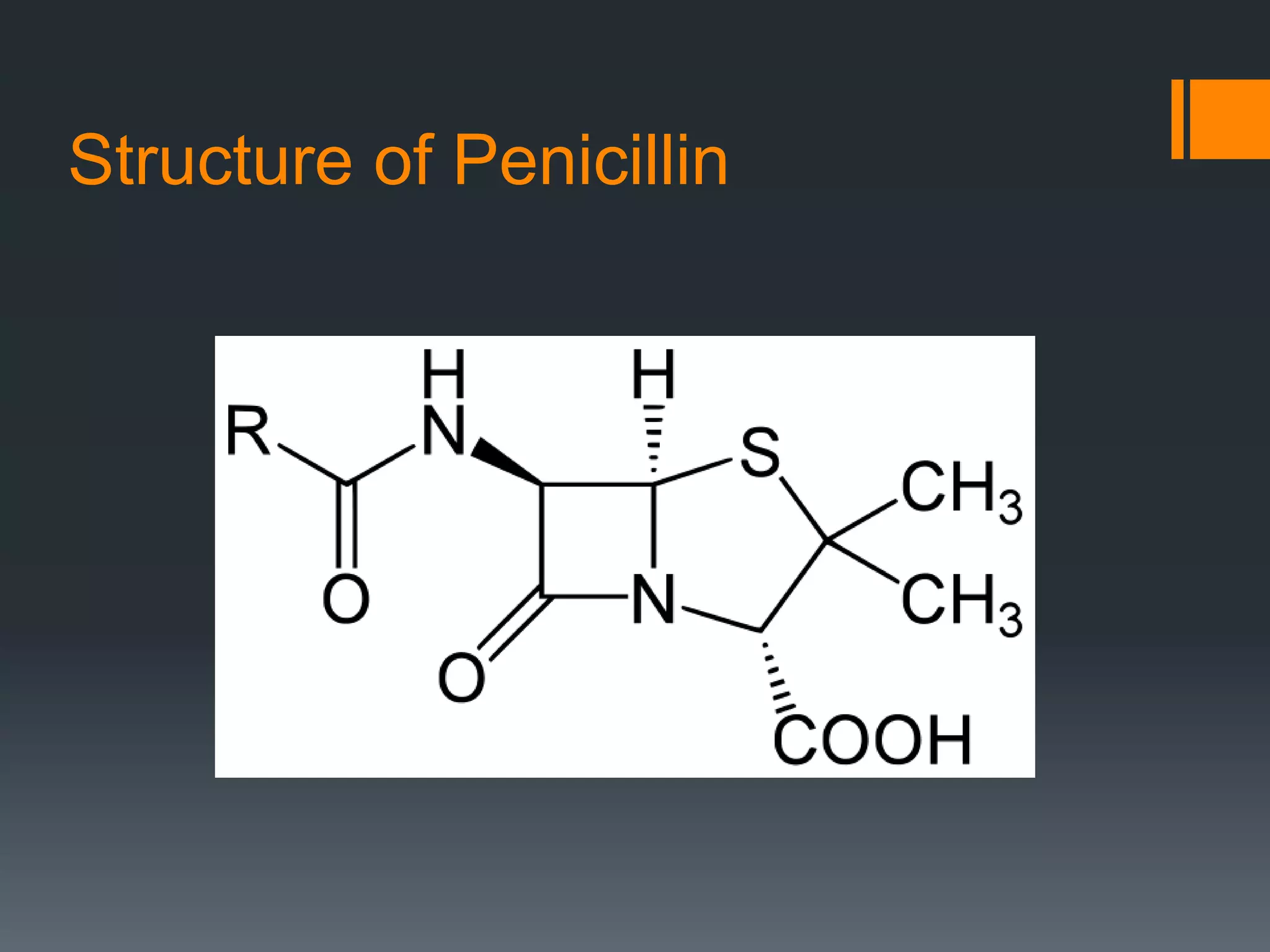
Structure of Penicillin
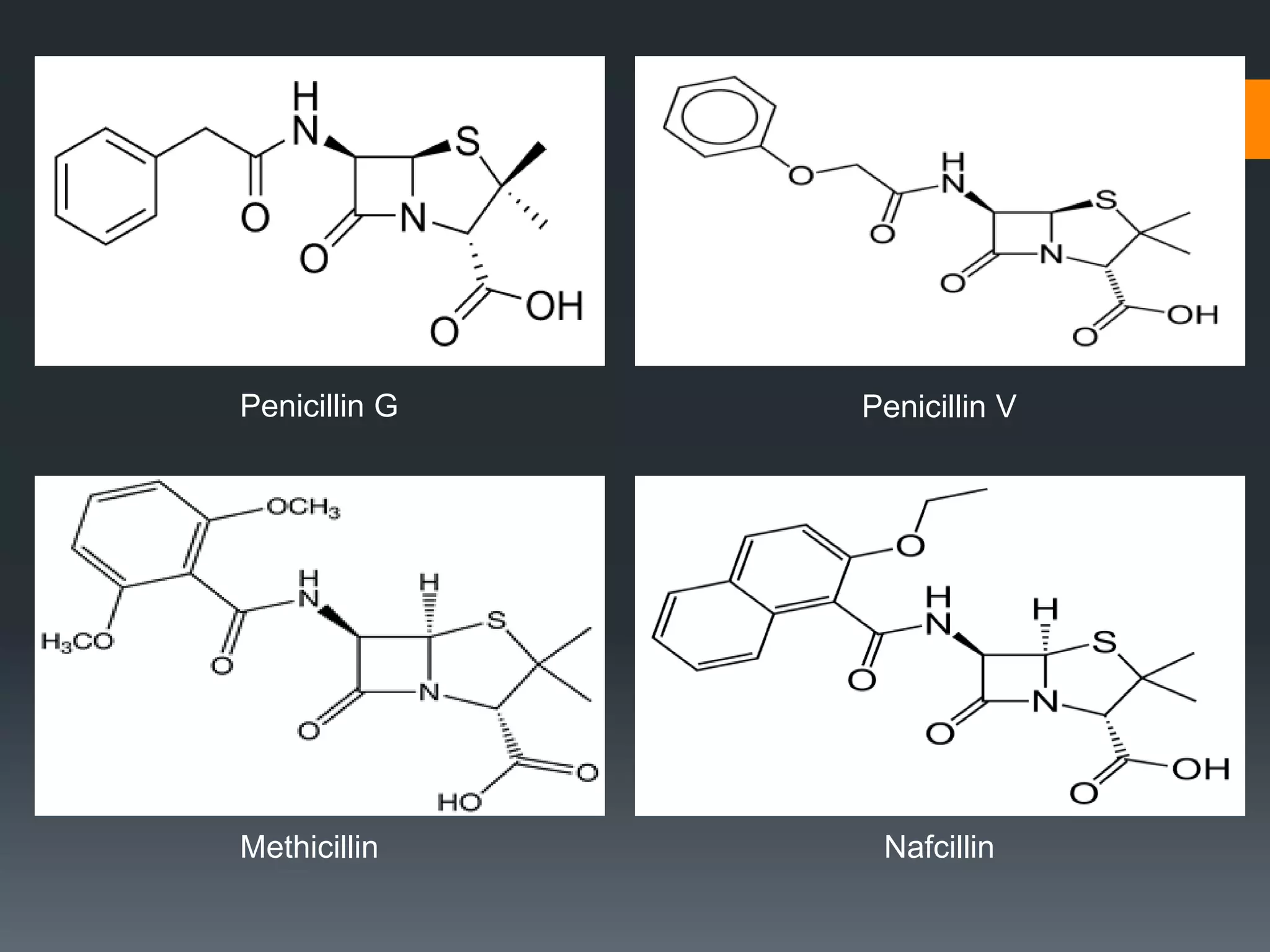
Penicillin G Penicillin V
NafcillinMethicillin
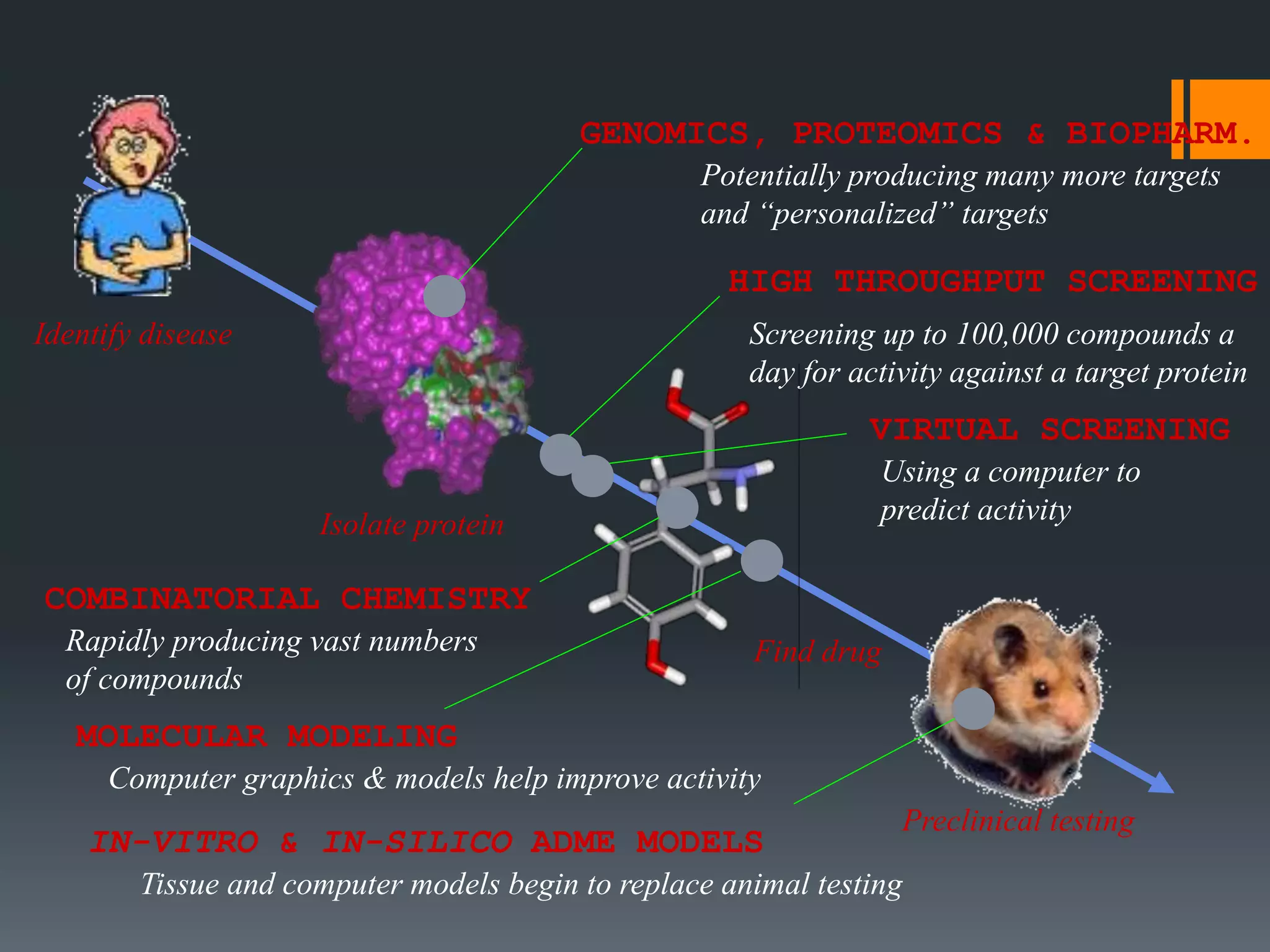
Identify disease
Isolate protein
Find drug
Preclinical testing
GENOMICS, PROTEOMICS & BIOPHARM.
HIGH THROUGHPUT SCREENING
MOLECULAR MODELING
VIRTUAL SCREENING
COMBINATORIAL CHEMISTRY
IN-VITRO & IN-SILICO ADME MODELS
Potentially producing many more targets
and “personalized” targets
Screening up to 100,000 compounds a
day for activity against a target protein
Using a computer to
predict activity
Rapidly producing vast numbers
of compounds
Computer graphics & models help improve activity
Tissue and computer models begin to replace animal testing
CADD and bioinformatics together are
a powerful combination in drug
research and development.
Research Achievements
oSoftware developed
oBioinformatics database developed
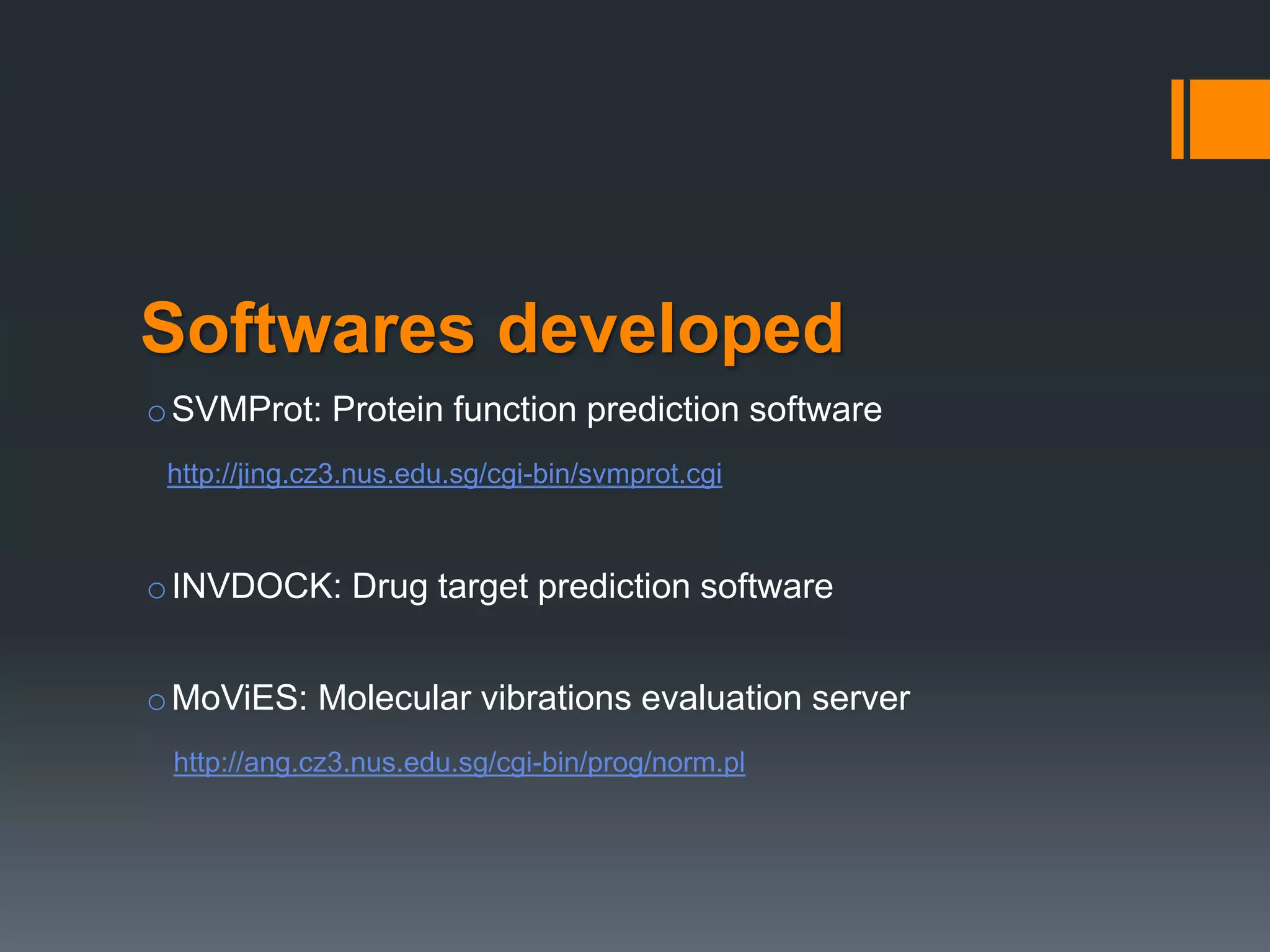
Softwares developed
oSVMProt: Protein function prediction software
http://jing.cz3.nus.edu.sg/cgi-bin/svmprot.cgi
oINVDOCK: Drug target prediction software
oMoViES: Molecular vibrations evaluation server
http://ang.cz3.nus.edu.sg/cgi-bin/prog/norm.pl
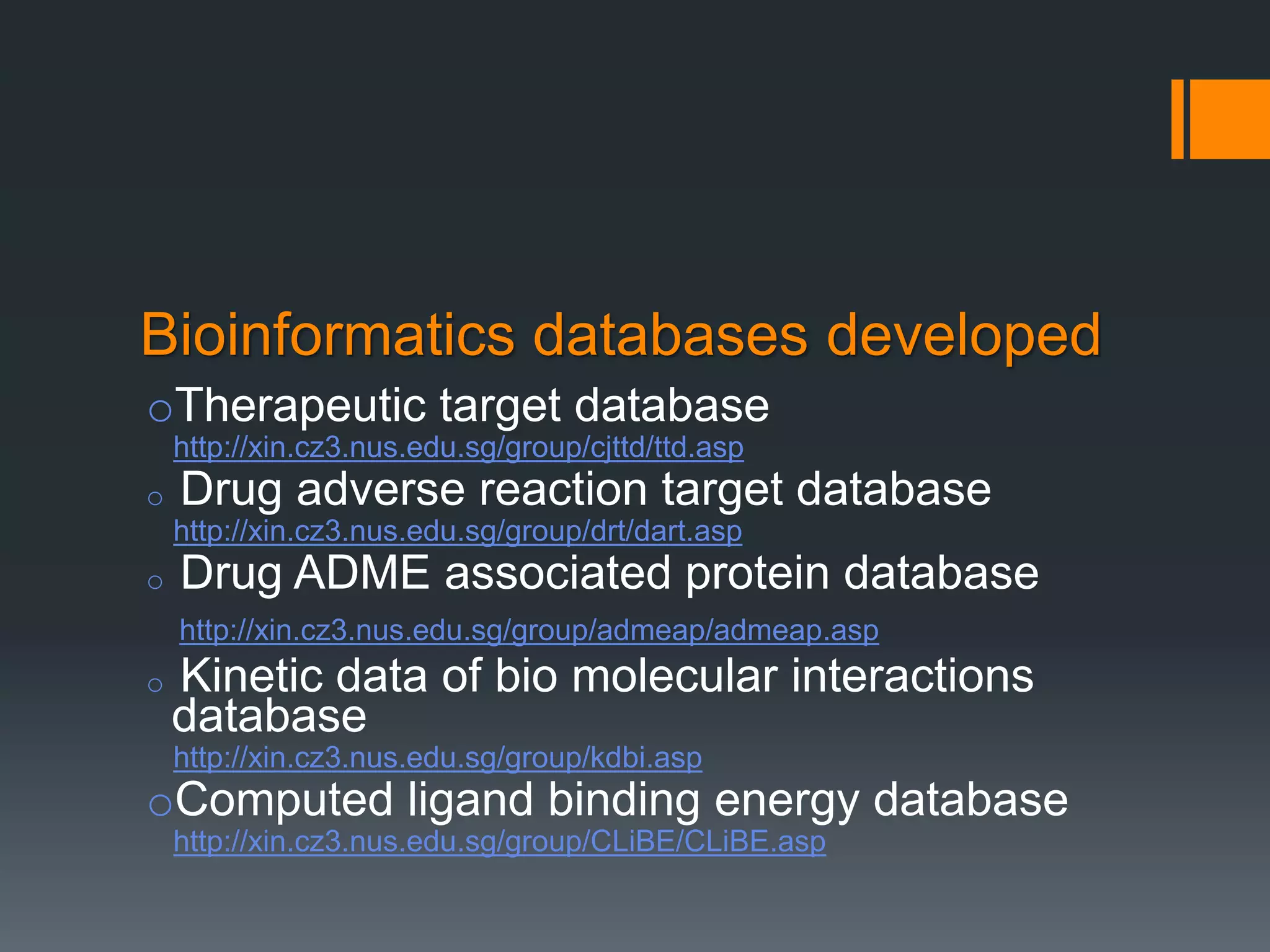
Bioinformatics databases developed
oTherapeutic target database
http://xin.cz3.nus.edu.sg/group/cjttd/ttd.asp
o Drug adverse reaction target database
http://xin.cz3.nus.edu.sg/group/drt/dart.asp
o Drug ADME associated protein database
http://xin.cz3.nus.edu.sg/group/admeap/admeap.asp
o Kinetic data of bio molecular interactions
database
http://xin.cz3.nus.edu.sg/group/kdbi.asp
oComputed ligand binding energy database
http://xin.cz3.nus.edu.sg/group/CLiBE/CLiBE.asp
Computer aided drug designing (CADD)

Computer aided drug designing (CADD)

  • 1.
  • 2.
    Bioinformatics oAn application ofComputer Science to biological and Drug Development science oBioinformatics is the field of science in which biology, computer science, and information technology merge to form a single discipline oThe ultimate goal of the field is to enable the discovery of new biological insights
  • 3.
  • 4.
    Computer-Aided Drug Designing(CADD) oComputer-Aided Drug Designing (CADD) is a specialized discipline that uses computational methods to simulate drug-receptor interactions oCADD methods are heavily dependent on bioinformatics tools, applications and databases
  • 5.
    R&D spending up,new drugs down
  • 6.
    Drug Discovery &Development Identify disease Isolate protein involved in disease (2-5 years) Find a drug effective against disease protein (2-5 years) Preclinical testing (1-3 years) Formulation & Scale-up Human clinical trials (2-10 years) FDA approval (2-3 years)
  • 7.
    Bioinformatics Supports CADD Research Virtual High-Throughput Screening (vHTS) SequenceAnalysis Homology Modeling Similarity Searches Drug Lead Optimization Physicochemical Modeling Drug Bioavailability and Bioactivity
  • 8.
    Virtual High-Throughput Screening (vHTS) oTheprotein targets are screened against databases of small- molecule compounds oWith today’s computational resources, several million compounds can be screened in a few days on sufficiently large clustered computers oThis method provides a handful of promising leads e.g. ZINC is a good example of a vHTS compound library
  • 9.
    Sequence Analysis oIt isvery useful to determine how similar or dissimilar the organisms are based on gene or protein sequences oWith this information one can infer the evolutionary relationships of the organisms oThere are many bioinformatic sequence analysis tools that can be used to determine the level of sequence similarity e.g. DNA sequence analysis, gel electrophoresis
  • 10.
    Homology Modeling oA commonchallenge in CADD research is determining the 3-D structure of proteins oThe 3-D structure for only a small fraction of the proteins is known oBioinformatics software tools are then used to predict the 3-D structure of the target based on the known 3-D structures of the templates oE.g. MODELLER SWISS-MODEL Repository
  • 11.
    Similarity Searches o Acommon activity in biopharmaceutical companies is the search for drug analogues o Starting with a promising drug molecule, one can search for chemical compounds with similar structure or properties to a known compound o A variety of bioinformatic tools and search engines are available for this work
  • 12.
    Benefits of CADD oTheTufts Report suggests that the cost of drug discovery and development has reached $800 million for each drug successfully brought to market oMany biopharmaceutical companies now use computational methods and bioinformatics tools to reduce this cost burden
  • 13.
    Benefits of CADD oVirtualscreening, lead optimization and predictions of bioavailability and bioactivity can help guide experimental research oOnly the most promising experimental lines of inquiry can be followed and experimental dead-ends can be avoided early based on the results of CADD simulations
  • 14.
    Benefits of CADD Time-to-Market: oCADDhas predictive power oIt focuses drug research on specific lead candidates and avoids potential “dead-end” compounds
  • 15.
    Benefits of CADD Insight: oCADDprovides a deep insight to the drug-receptor interactions acquired by the researchers oMolecular models of drug compounds can reveal intricate, atomic scale binding properties that are difficult to envision in any other way
  • 16.
  • 17.
  • 18.
    Penicillin G PenicillinV NafcillinMethicillin
  • 19.
    Identify disease Isolate protein Finddrug Preclinical testing GENOMICS, PROTEOMICS & BIOPHARM. HIGH THROUGHPUT SCREENING MOLECULAR MODELING VIRTUAL SCREENING COMBINATORIAL CHEMISTRY IN-VITRO & IN-SILICO ADME MODELS Potentially producing many more targets and “personalized” targets Screening up to 100,000 compounds a day for activity against a target protein Using a computer to predict activity Rapidly producing vast numbers of compounds Computer graphics & models help improve activity Tissue and computer models begin to replace animal testing
  • 20.
    CADD and bioinformaticstogether are a powerful combination in drug research and development.
  • 21.
  • 22.
    Softwares developed oSVMProt: Proteinfunction prediction software http://jing.cz3.nus.edu.sg/cgi-bin/svmprot.cgi oINVDOCK: Drug target prediction software oMoViES: Molecular vibrations evaluation server http://ang.cz3.nus.edu.sg/cgi-bin/prog/norm.pl
  • 23.
    Bioinformatics databases developed oTherapeutictarget database http://xin.cz3.nus.edu.sg/group/cjttd/ttd.asp o Drug adverse reaction target database http://xin.cz3.nus.edu.sg/group/drt/dart.asp o Drug ADME associated protein database http://xin.cz3.nus.edu.sg/group/admeap/admeap.asp o Kinetic data of bio molecular interactions database http://xin.cz3.nus.edu.sg/group/kdbi.asp oComputed ligand binding energy database http://xin.cz3.nus.edu.sg/group/CLiBE/CLiBE.asp