COMPUTER AIDED DRUG DESIGN
~ PRANAVI UPPULURI
1
Pranavi Uppuluri
BACKGROUND OF COMPUTER AIDED DRUG DESIGN
(CADD)
PART 1
2
Pranavi Uppuluri
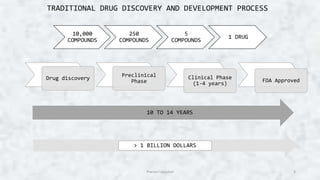
10,000
COMPOUNDS
250
COMPOUNDS
5
COMPOUNDS
1 DRUG
Drug discovery
Preclinical
Phase
Clinical Phase
(1-4 years)
FDA Approved
10 TO 14 YEARS
> 1 BILLION DOLLARS
TRADITIONAL DRUG DISCOVERY AND DEVELOPMENT PROCESS
3
Pranavi Uppuluri
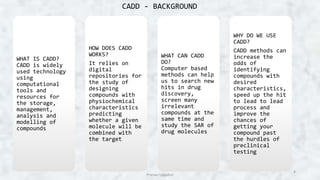
WHAT IS CADD?
CADD is widely
used technology
using
computational
tools and
resources for
the storage,
management,
analysis and
modelling of
compounds
HOW DOES CADD
WORKS?
It relies on
digital
repositories for
the study of
designing
compounds with
physiochemical
characteristics
predicting
whether a given
molecule will be
combined with
the target
WHAT CAN CADD
DO?
Computer based
methods can help
us to search new
hits in drug
discovery,
screen many
irrelevant
compounds at the
same time and
study the SAR of
drug molecules
WHY DO WE USE
CADD?
CADD methods can
increase the
odds of
identifying
compounds with
desired
characteristics,
speed up the hit
to lead to lead
process and
improve the
chances of
getting your
compound past
the hurdles of
preclinical
testing
4
CADD - BACKGROUND
Pranavi Uppuluri
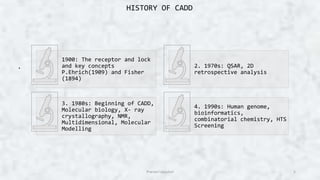
HISTORY OF CADD
.
5
1900: The receptor and lock
and key concepts
P.Ehrich(1909) and Fisher
(1894)
2. 1970s: QSAR, 2D
retrospective analysis
3. 1980s: Beginning of CADD,
Molecular biology, X- ray
crystallography, NMR,
Multidimensional, Molecular
Modelling
4. 1990s: Human genome,
bioinformatics,
combinatorial chemistry, HTS
Screening
Pranavi Uppuluri
CONCEPT OF CADD
6
Computer-aided Drug Design
A method of designing and optimizing lead compounds based
on compound chemistry, through computer simulations,
calculation and the relationship between drugs and receptor
macromolecules Computer-aided drug design actually
optimizes and designs lead compounds by simulating and
calculating this interaction between the receptor and the
ligand
Pranavi Uppuluri
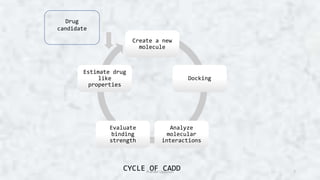
Create a new
molecule
Docking
Analyze
molecular
interactions
Evaluate
binding
strength
Estimate drug
like
properties
Drug
candidate
CYCLE OF CADD 7
Pranavi Uppuluri
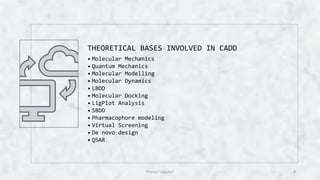
THEORETICAL BASES INVOLVED IN CADD
‱ Molecular Mechanics
‱ Quantum Mechanics
‱ Molecular Modelling
‱ Molecular Dynamics
‱ LBDD
‱ Molecular Docking
‱ LigPlot Analysis
‱ SBDD
‱ Pharmacophore modeling
‱ Virtual Screening
‱ De novo design
‱ QSAR
8
Pranavi Uppuluri
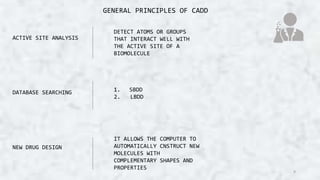
GENERAL PRINCIPLES OF CADD
9
ACTIVE SITE ANALYSIS
DATABASE SEARCHING
NEW DRUG DESIGN
DETECT ATOMS OR GROUPS
THAT INTERACT WELL WITH
THE ACTIVE SITE OF A
BIOMOLECULE
1. SBDD
2. LBDD
IT ALLOWS THE COMPUTER TO
AUTOMATICALLY CNSTRUCT NEW
MOLECULES WITH
COMPLEMENTARY SHAPES AND
PROPERTIES
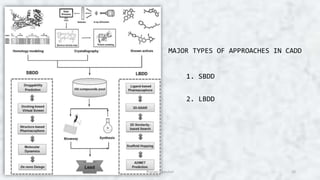
MAJOR TYPES OF APPROACHES IN CADD
10
1. SBDD
2. LBDD
Pranavi Uppuluri
11
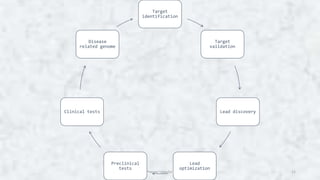
Target
identification
Target
validation
Lead discovery
Lead
optimization
Preclinical
tests
Clinical tests
Disease
related genome
Pranavi Uppuluri
APPLICATIONS OF CADD
12
PART 2
Pranavi Uppuluri
1. FAST
2. EFFICIENT :
3. INSIGHTFUL:
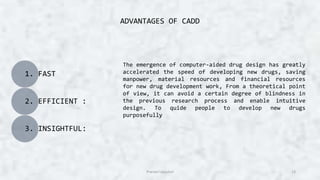
ADVANTAGES OF CADD
13
The emergence of computer-aided drug design has greatly
accelerated the speed of developing new drugs, saving
manpower, material resources and financial resources
for new drug development work, From a theoretical point
of view, it can avoid a certain degree of blindness in
the previous research process and enable intuitive
design. To quide people to develop new drugs
purposefully
Pranavi Uppuluri
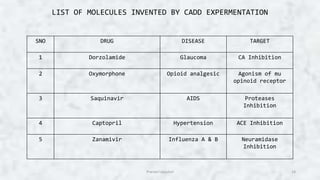
SNO DRUG DISEASE TARGET
1 Dorzolamide Glaucoma CA Inhibition
2 Oxymorphone Opioid analgesic Agonism of mu
opinoid receptor
3 Saquinavir AIDS Proteases
Inhibition
4 Captopril Hypertension ACE Inhibition
5 Zanamivir Influenza A & B Neuramidase
Inhibition
LIST OF MOLECULES INVENTED BY CADD EXPERMENTATION
14
Pranavi Uppuluri
15
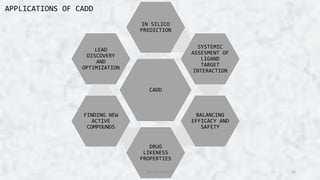
APPLICATIONS OF CADD
CADD
IN SILICO
PREDICTION
SYSTEMIC
ASSESMENT OF
LIGAND
TARGET
INTERACTION
BALANCING
EFFICACY AND
SAFETY
DRUG
LIKENESS
PROPERTIES
FINDING NEW
ACTIVE
COMPOUNDS
LEAD
DISCOVERY
AND
OPTIMIZATION
Pranavi Uppuluri
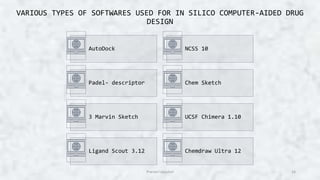
VARIOUS TYPES OF SOFTWARES USED FOR IN SILICO COMPUTER-AIDED DRUG
DESIGN
AutoDock NCSS 10
Padel- descriptor Chem Sketch
3 Marvin Sketch UCSF Chimera 1.10
Ligand Scout 3.12 Chemdraw Ultra 12
16
Pranavi Uppuluri
"CADD is the bridge where computational science meets the
complexities of drug discovery, guiding us to potential
therapeutic solutions."
17
Pranavi Upuluri

CADD Presentation by Pranavi.pptx

  • 1.
    COMPUTER AIDED DRUGDESIGN ~ PRANAVI UPPULURI 1 Pranavi Uppuluri
  • 2.
    BACKGROUND OF COMPUTERAIDED DRUG DESIGN (CADD) PART 1 2 Pranavi Uppuluri
  • 3.
    10,000 COMPOUNDS 250 COMPOUNDS 5 COMPOUNDS 1 DRUG Drug discovery Preclinical Phase ClinicalPhase (1-4 years) FDA Approved 10 TO 14 YEARS > 1 BILLION DOLLARS TRADITIONAL DRUG DISCOVERY AND DEVELOPMENT PROCESS 3 Pranavi Uppuluri
  • 4.
    WHAT IS CADD? CADDis widely used technology using computational tools and resources for the storage, management, analysis and modelling of compounds HOW DOES CADD WORKS? It relies on digital repositories for the study of designing compounds with physiochemical characteristics predicting whether a given molecule will be combined with the target WHAT CAN CADD DO? Computer based methods can help us to search new hits in drug discovery, screen many irrelevant compounds at the same time and study the SAR of drug molecules WHY DO WE USE CADD? CADD methods can increase the odds of identifying compounds with desired characteristics, speed up the hit to lead to lead process and improve the chances of getting your compound past the hurdles of preclinical testing 4 CADD - BACKGROUND Pranavi Uppuluri
  • 5.
    HISTORY OF CADD . 5 1900:The receptor and lock and key concepts P.Ehrich(1909) and Fisher (1894) 2. 1970s: QSAR, 2D retrospective analysis 3. 1980s: Beginning of CADD, Molecular biology, X- ray crystallography, NMR, Multidimensional, Molecular Modelling 4. 1990s: Human genome, bioinformatics, combinatorial chemistry, HTS Screening Pranavi Uppuluri
  • 6.
    CONCEPT OF CADD 6 Computer-aidedDrug Design A method of designing and optimizing lead compounds based on compound chemistry, through computer simulations, calculation and the relationship between drugs and receptor macromolecules Computer-aided drug design actually optimizes and designs lead compounds by simulating and calculating this interaction between the receptor and the ligand Pranavi Uppuluri
  • 7.
    Create a new molecule Docking Analyze molecular interactions Evaluate binding strength Estimatedrug like properties Drug candidate CYCLE OF CADD 7 Pranavi Uppuluri
  • 8.
    THEORETICAL BASES INVOLVEDIN CADD ‱ Molecular Mechanics ‱ Quantum Mechanics ‱ Molecular Modelling ‱ Molecular Dynamics ‱ LBDD ‱ Molecular Docking ‱ LigPlot Analysis ‱ SBDD ‱ Pharmacophore modeling ‱ Virtual Screening ‱ De novo design ‱ QSAR 8 Pranavi Uppuluri
  • 9.
    GENERAL PRINCIPLES OFCADD 9 ACTIVE SITE ANALYSIS DATABASE SEARCHING NEW DRUG DESIGN DETECT ATOMS OR GROUPS THAT INTERACT WELL WITH THE ACTIVE SITE OF A BIOMOLECULE 1. SBDD 2. LBDD IT ALLOWS THE COMPUTER TO AUTOMATICALLY CNSTRUCT NEW MOLECULES WITH COMPLEMENTARY SHAPES AND PROPERTIES
  • 10.
    MAJOR TYPES OFAPPROACHES IN CADD 10 1. SBDD 2. LBDD Pranavi Uppuluri
  • 11.
  • 12.
    APPLICATIONS OF CADD 12 PART2 Pranavi Uppuluri
  • 13.
    1. FAST 2. EFFICIENT: 3. INSIGHTFUL: ADVANTAGES OF CADD 13 The emergence of computer-aided drug design has greatly accelerated the speed of developing new drugs, saving manpower, material resources and financial resources for new drug development work, From a theoretical point of view, it can avoid a certain degree of blindness in the previous research process and enable intuitive design. To quide people to develop new drugs purposefully Pranavi Uppuluri
  • 14.
    SNO DRUG DISEASETARGET 1 Dorzolamide Glaucoma CA Inhibition 2 Oxymorphone Opioid analgesic Agonism of mu opinoid receptor 3 Saquinavir AIDS Proteases Inhibition 4 Captopril Hypertension ACE Inhibition 5 Zanamivir Influenza A & B Neuramidase Inhibition LIST OF MOLECULES INVENTED BY CADD EXPERMENTATION 14 Pranavi Uppuluri
  • 15.
    15 APPLICATIONS OF CADD CADD INSILICO PREDICTION SYSTEMIC ASSESMENT OF LIGAND TARGET INTERACTION BALANCING EFFICACY AND SAFETY DRUG LIKENESS PROPERTIES FINDING NEW ACTIVE COMPOUNDS LEAD DISCOVERY AND OPTIMIZATION Pranavi Uppuluri
  • 16.
    VARIOUS TYPES OFSOFTWARES USED FOR IN SILICO COMPUTER-AIDED DRUG DESIGN AutoDock NCSS 10 Padel- descriptor Chem Sketch 3 Marvin Sketch UCSF Chimera 1.10 Ligand Scout 3.12 Chemdraw Ultra 12 16 Pranavi Uppuluri
  • 17.
    "CADD is thebridge where computational science meets the complexities of drug discovery, guiding us to potential therapeutic solutions." 17 Pranavi Upuluri